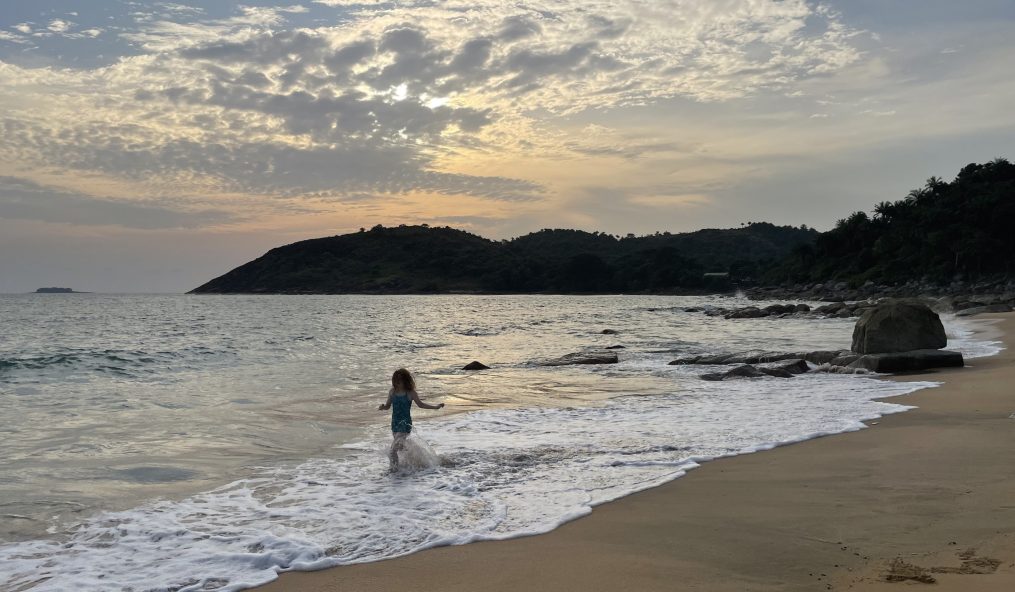
This is the fourth installment of my daughter’s and my trip to Kosovo, Albania, and Montenegro in August 2026.

On the sixth day of our trip and our third day in Montenegro, we took the car and drove about 30 minutes north along the Kotor Bay road to the small town of Perast. Although Perast was also Venetian, it was not enclosed by city walls like Kotor, Budva, or Sveti Stefan; instead, it was protected by nine defensive towers and a fortress. Also, unlike the other towns, Perast has not outgrown its historic location; it has no modern buildings and no roads through it. There are only the traditional stone houses and baroque palaces. And in its bay, the Church of Our Lady of the Rocks.
Since I’d read that parking in Perast fills up quickly during the peak summer season, I wanted us to get there early. Although we’d beaten jet lag from day one, we’d fallen into a routine of waking up around 8 AM and leisurely getting ready for a 9 AM start. As we approached Perast, we could see that several small lots were already full, and cars were parking alongside the roadway and walking further. But the Gods of Parking must have been shining down on me as we pulled into the lot closest to the town, the man at the entrance made eye contact with me and offered me his space IF I also purchased a ticket from him for the boat out to Our Lady of the Rocks. Done!
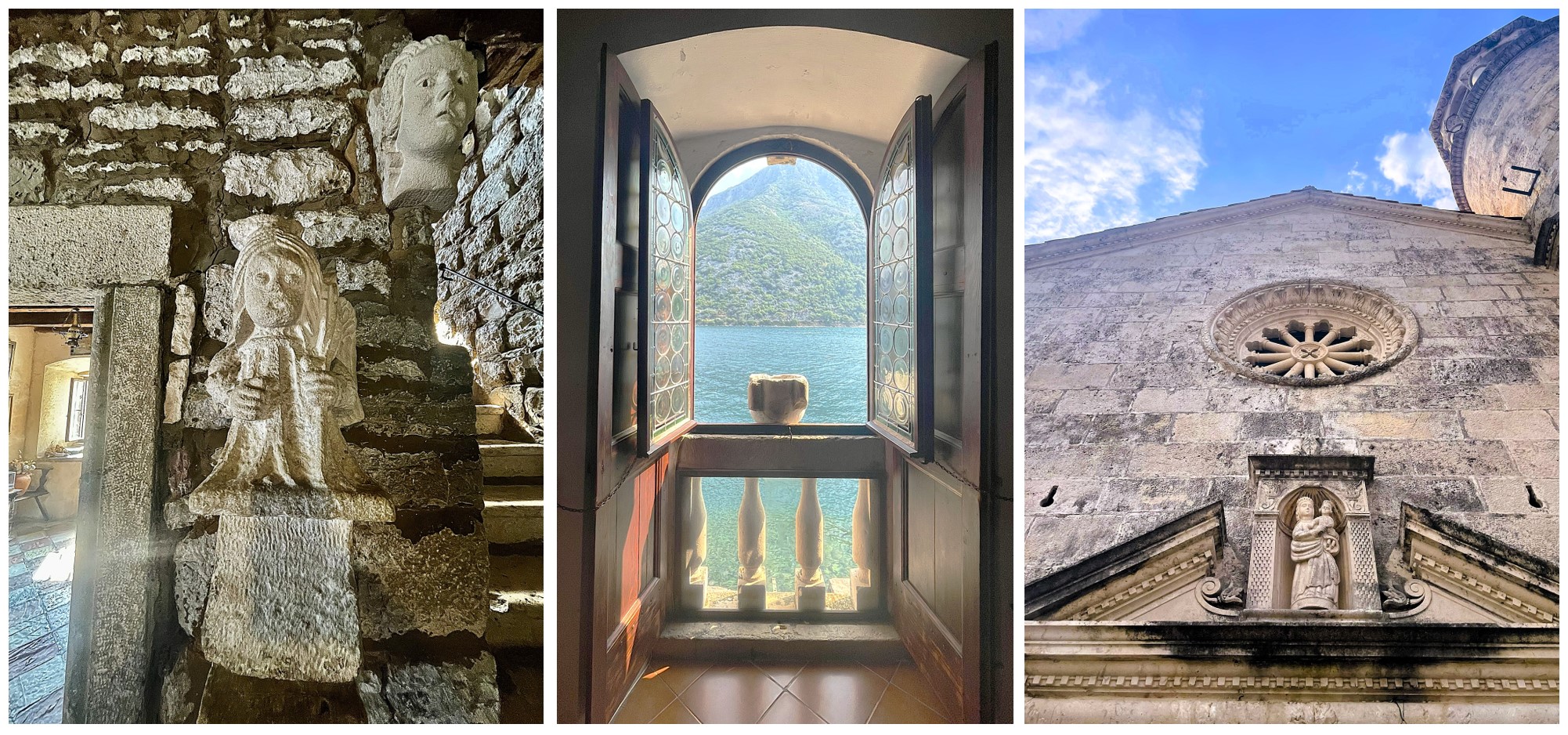
The 17th-century church Our Lady of the Rocks stands on an artificial island that townspeople began creating around 1452 by dropping rocks and sinking old ships. A young man with impeccable English (so much so that I asked if he was North American) ferried us over to the island, giving us half an hour to explore before returning to pick us up.
We made the most of our time, making sure to circle the church to take in all its exterior details, and also joining a tour that led us through its beautiful interior. The island is small and doesn’t take much time to explore, but it was crowded, and the number of people allowed inside the church at any one time was limited. Had we been alone on the island, 30 minutes would probably have been fine, but on our visit, I felt a little rushed. But, it would have to do.
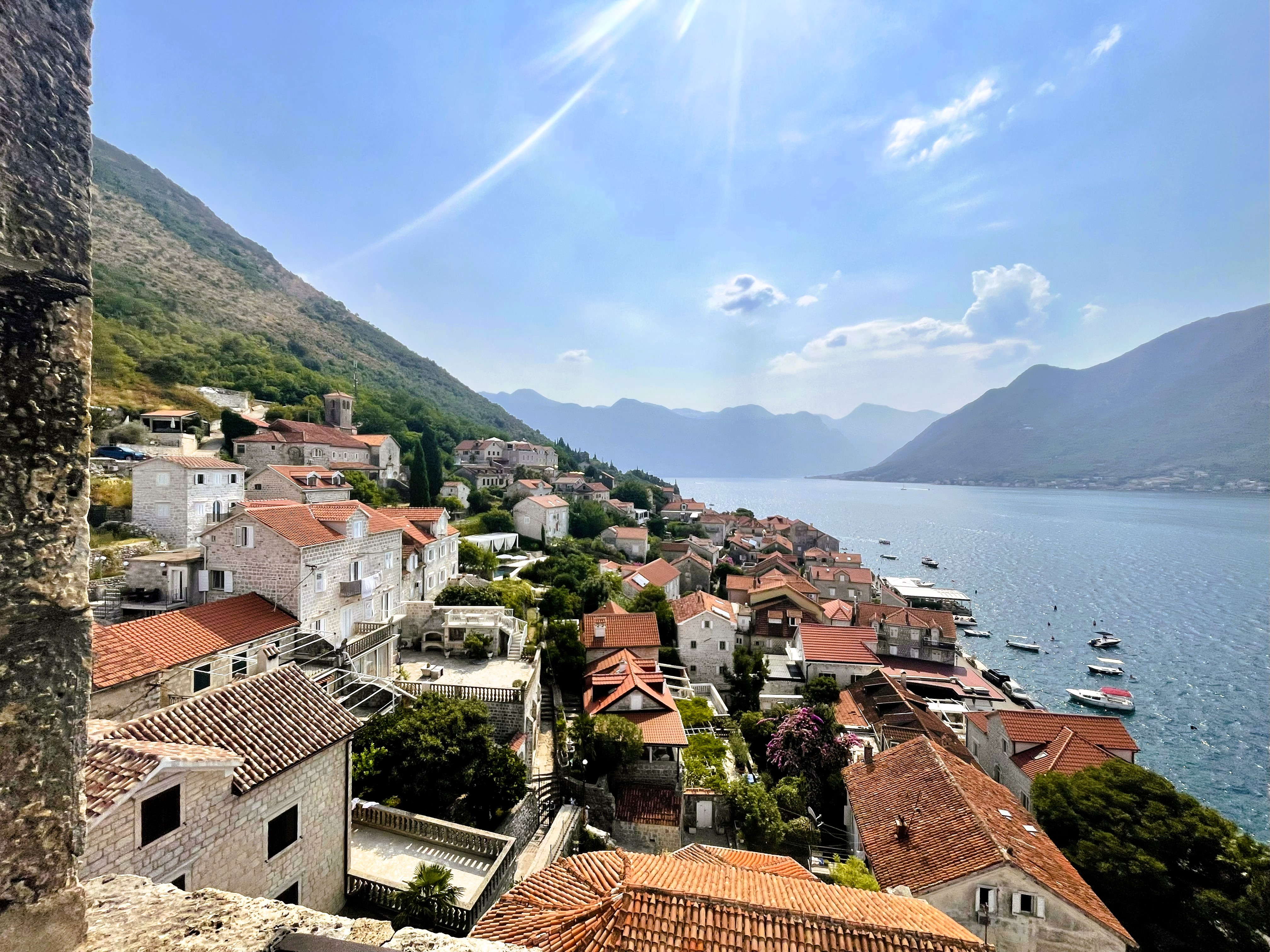
Back in Perast, we did a bit of sightseeing and climbed the very narrow stone steps to the top of the bell tower at the Church of St. Nicholas. I later learned that children under 15 aren’t supposed to climb, but no one asked about C’s age, nor did they say a word to us. I guess our one-euro payment was enough to overlook that little detail. We finished our walking tour with a bit of gelato, because why not have some for brunch when on vacation in Europe?
Our next stop was the Mausoleum of Njegoš. It was only about an hour’s drive from Kotor, but much of the route wound along a serpentine road climbing up Mt. Lovćen. I’ve done plenty of driving in all sorts of places, so I was mostly fine with the road, but it demanded a lot of concentration and patience with so many others making the same journey. We broke up the journey with lunch at a restaurant high up on the mountainside with a tremendous view of the Bay of Kotor.

After lunch, we continued our climb, navigating a few more dramatic twists and turns before the road finally leveled out near the top. We entered Lovćen National Park and followed the winding route on to the Mausoleum of Njegoš, perched atop Jezerski Peak — the second-highest of Mount Lovćen’s two summits — at 5,436 feet above sea level. The mausoleum honors Petar II Petrović-Njegoš, a 19th-century ruler and poet, who chose this peak for his resting place because of its sweeping views over the land he cherished.
We parked in the parking lot and took the 461 steps, most of which are located in a tunnel that goes through the mountain itself, up to the mausoleum. I was not prepared for what greeted us at the top—the solemn light granite structure with an entrance flanked by statues of two women in traditional Montenegrin dress and the breathtaking 360-degree views over Lovćen National Park. I can understand choosing such a spot as one’s final resting place. I felt contemplative and even blessed to be able to visit. I had almost given this place a pass.

Unfortunately, the quickest way back to Kotor was the same serpentine road we had taken up. The drive down felt both less stressful — because we knew what to expect — and more stressful, thanks to heavier traffic. Several times we had to pull as close as possible to one edge or the other to let another vehicle pass. At one point, we were caught in a logjam when several full-sized buses tried to navigate an especially narrow stretch. Thankfully, a few people got out of their cars to direct traffic — some drivers were asked to back up, others (including me) to inch along the cliffside — until there was finally enough room for the buses to squeeze through. Once back in Kotor, I breathed a sigh of relief. With plenty of excitement for the day, we picked up some groceries, made a meal of sandwiches and chips on our balcony, and had a quiet evening.
On our final day in the Kotor area, we started with a ride on the cable car, which climbs another part of Mount Lovćen. From the lower station, it travels 3,900 meters (about 12,795 feet) in just 11 minutes to reach the upper station, perched 1,316 meters (4,218 feet) above sea level. Along the way, the views are breathtaking — stretching across the mountains, over the Bay of Kotor toward the side near the airport, and almost all the way to the Adriatic Sea.
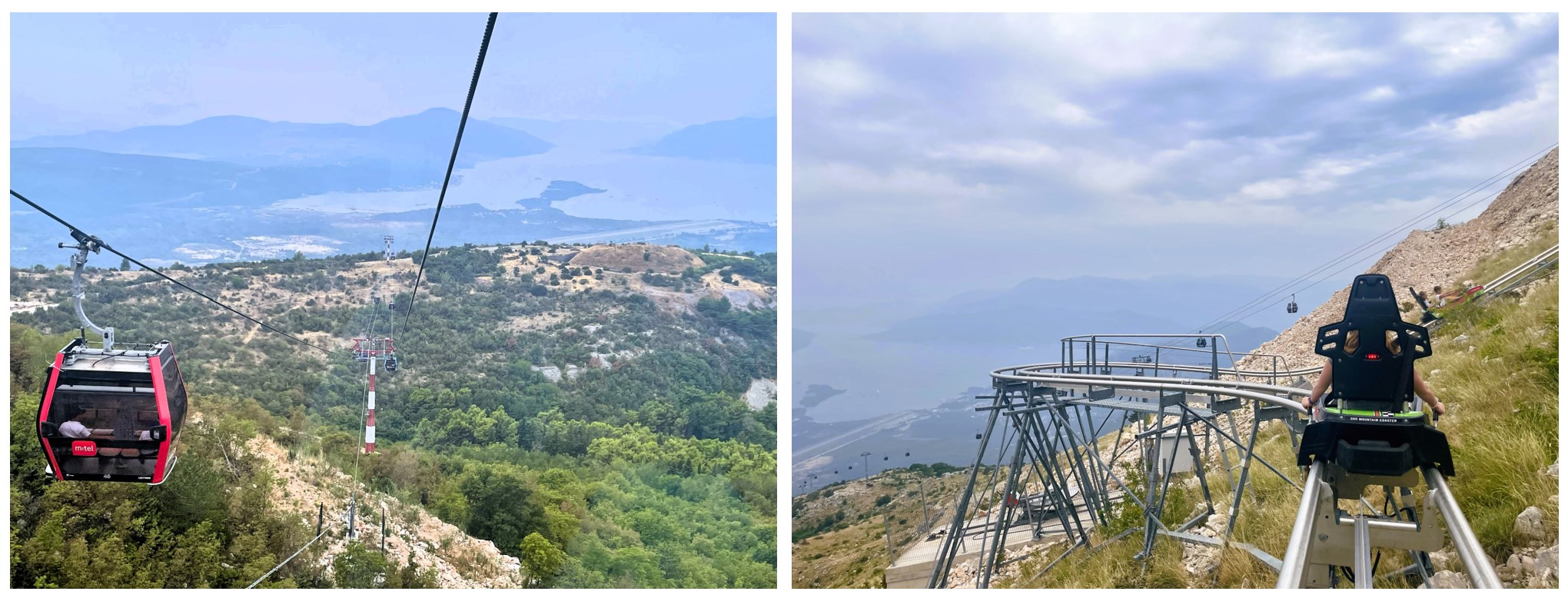
The cable car ride itself was pleasant enough, and the views were well worth it, even as the first clouds of our trip began to roll in. At the upper station, however, a new attraction awaited: the alpine coaster — a self-controlled mountain ride where riders regulate their own speed with a brake lever. C and I have ridden similar coasters in Jamaica (at Ocho Rios) and the Great Wall of China, both of which offered thrills. But the coaster in Kotor takes it up a notch, perched dramatically on the edge of a mountain. Though two people can ride together, C opted for her own car. As the car sped down the first hill and headed toward the edge, I really wondered what I was thinking! But we both loved it so much, we rode it two more times!
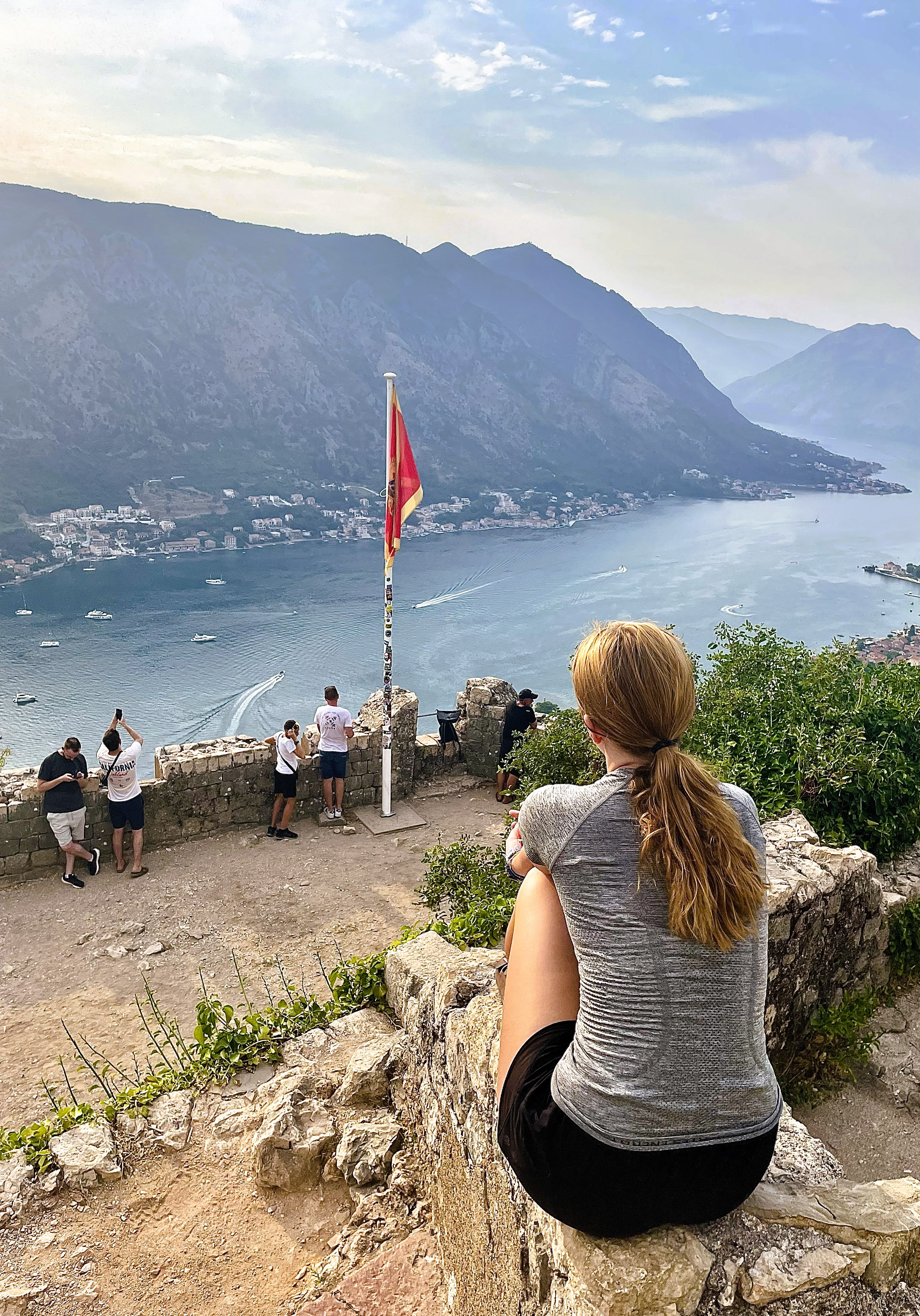
Back in Kotor, we had one more thing to do: climb to the 6th-century St. John’s Fortress, which sits like a sentinel above the old Venetian city. Starting from the back of the old town, we paid the 8 Euro entrance fee and then followed a steep path along the fortifications that clung to the near-vertical slope of St. John’s Hill. It was not easy going; it was hot, we were a bit tired, and the steps were uneven or non-existent. As we climbed, C frequently asked if we could just stop or if I would leave her somewhere to wait, but then she would reluctantly press on. There were times when I, too, thought, maybe this point is good enough? But I really wanted to reach the top. The views along the way—and especially from the top at St. John’s Fortress—were amazing, and once at the fortress, C conceded that maybe it had been worth it.
Accomplished, we made our way back down, rewarding ourselves with some gelato in town before we headed back to the guest room. We needed to prepare for the next part of our journey.
 The Wanderlust Diaries