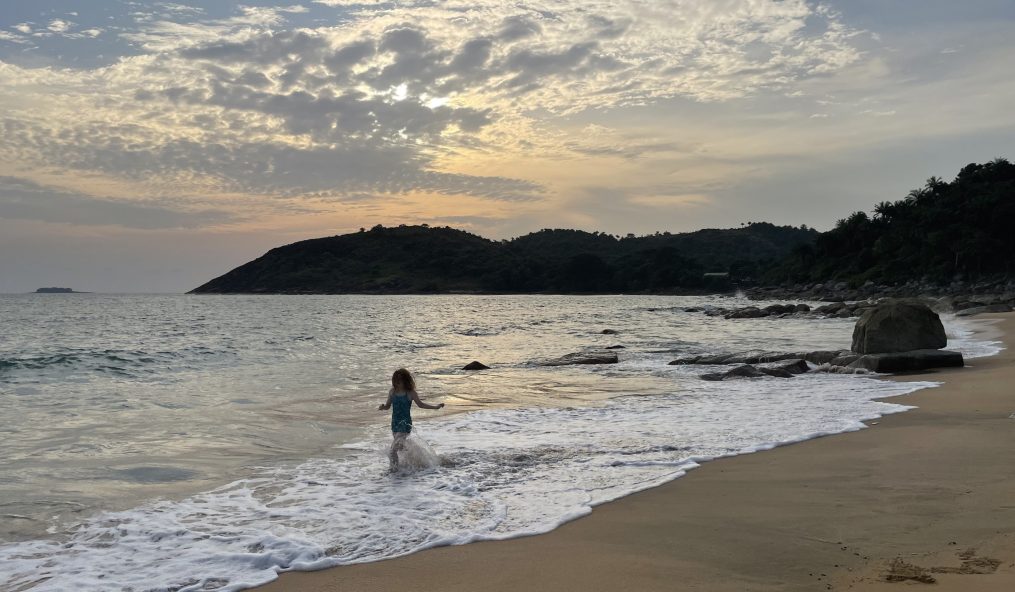
This is the seventh and final installment of my daughter’s and my trip to Kosovo, Albania, and Montenegro in August 2026.

We left Peja and headed east toward Kosovo’s capital, Pristina — trading the mountains that had framed so much of our trip for rolling hills. Pristina sits in a flat valley, and at one point along the highway encircling the city, we caught a sweeping view of the entire capital spread out below us. It felt almost strange to see such a wide, open landscape after so many days of winding mountain roads.
We checked into our hotel in central Pristina. I had originally booked our final two nights near the airport but changed plans so we could spend a day exploring the city more easily. Once we settled into our room, we headed out for lunch nearby and then began a self-guided walking tour. Our first stop was the Newborn Monument, a large block-letter sculpture that celebrates Kosovo’s declaration of independence from Serbia on February 17, 2008. The monument changes its colors and design each year on that date, symbolizing the country’s evolving identity. Across the street, we visited the Heroines Monument, which depicts an Albanian woman formed from 20,145 metal pins — each representing the contributions and sacrifices of Albanian women during the 1989-1999 Kosovo War. The Newborn Monument felt celebratory and hopeful, while the Heroines Monument carried a quieter, somber weight. Facing one another, the two together formed a powerful message about the devastation of war and the hope that follows in its wake.

From there, we continued our walk along Mother Teresa Boulevard, a broad, pedestrian-only avenue lined with shops, cafés, and people out enjoying the day. We passed a statue of Mother Teresa herself — an important figure in Kosovo, as she was ethnic Albanian and is said to have found her spiritual calling in the small village of Letnica, in southern Kosovo. We followed the boulevard until we reached the Kosovo Parliament building, then crossed the street to the Çarshi Mosque. Built in 1389 to commemorate the Ottoman victory in the Battle of Kosovo, it is the oldest surviving building in Pristina. Behind it stands the National Museum of Kosovo, housed in an Austro-Hungarian building from 1889, though unfortunately it was closed for renovation during our visit.
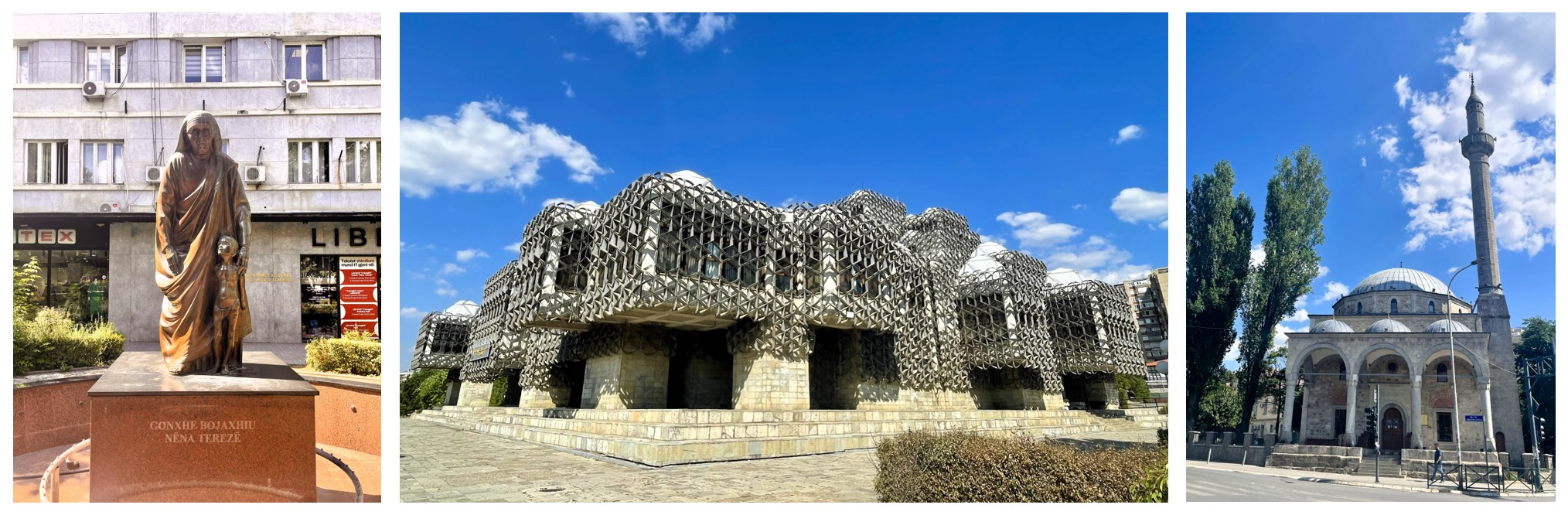
We continued on to the campus of the University of Pristina to see the National Library, famous for its striking architecture — a brutalist design with a distinctive futuristic appearance. C, who has an interest in architecture and a surprising fondness for Brutalism (perhaps thanks to Washington, D.C.’s share of concrete buildings), had especially wanted to see it. Our final stop was the Cathedral of Saint Mother Teresa. Built between 2007 and 2017 and officially consecrated in 2017, it is the largest structure in Kosovo and the first cathedral built in the country since the 16th century.
In just a few hours of walking, I felt as though we had passed through centuries of Kosovo’s history — from Ottoman rule to war to hard-won independence. It was a beautiful day and a satisfying walk, but it carried a certain weight. While there isn’t an overwhelming amount to see in terms of traditional sightseeing, Pristina clearly has momentum. Construction cranes dotted the skyline, signs of an economic boom fueled in part by the Kosovar diaspora. The city felt youthful and hopeful. We spent the rest of the afternoon and evening resting up for our final day in the country.

On our last day, we packed up the car for one final sightseeing drive, heading to the town of Gračanica, just five miles from Pristina. Our goal was the 14th-century Serbian Orthodox Gračanica Monastery — the fourth and final of the UNESCO-designated Medieval Monuments in Kosovo that we would visit. Like the others, the monastery centers on a stand-alone church within a walled complex, its interior lined with offices and living quarters. Inside, the church walls are covered with magnificent frescoes depicting scenes from the Bible — vivid, detailed, and deeply expressive. It was beautiful, though also the busiest of the four UNESCO sites we’d seen, and the strictest about what visitors could and could not do.
Outside the monastery, we took a short walk around town. One of the first things we noticed — or rather, C did, with her knack for recognizing flags — was the presence of Serbian flags and the use of the Serbian language. It was a noticeable change from what we had seen elsewhere: in Prizren and Peja, Albanian flags and symbols were everywhere, while in Pristina, we had seen a modest number of Kosovar flags. Here, the Serbian presence was unmistakable. A statue of the legendary Serbian knight Miloš Obilić stands prominently in the town center, and nearby is the Missing Monument, a somber memorial honoring the Serbs who were kidnapped or went missing during and after the Kosovo War.
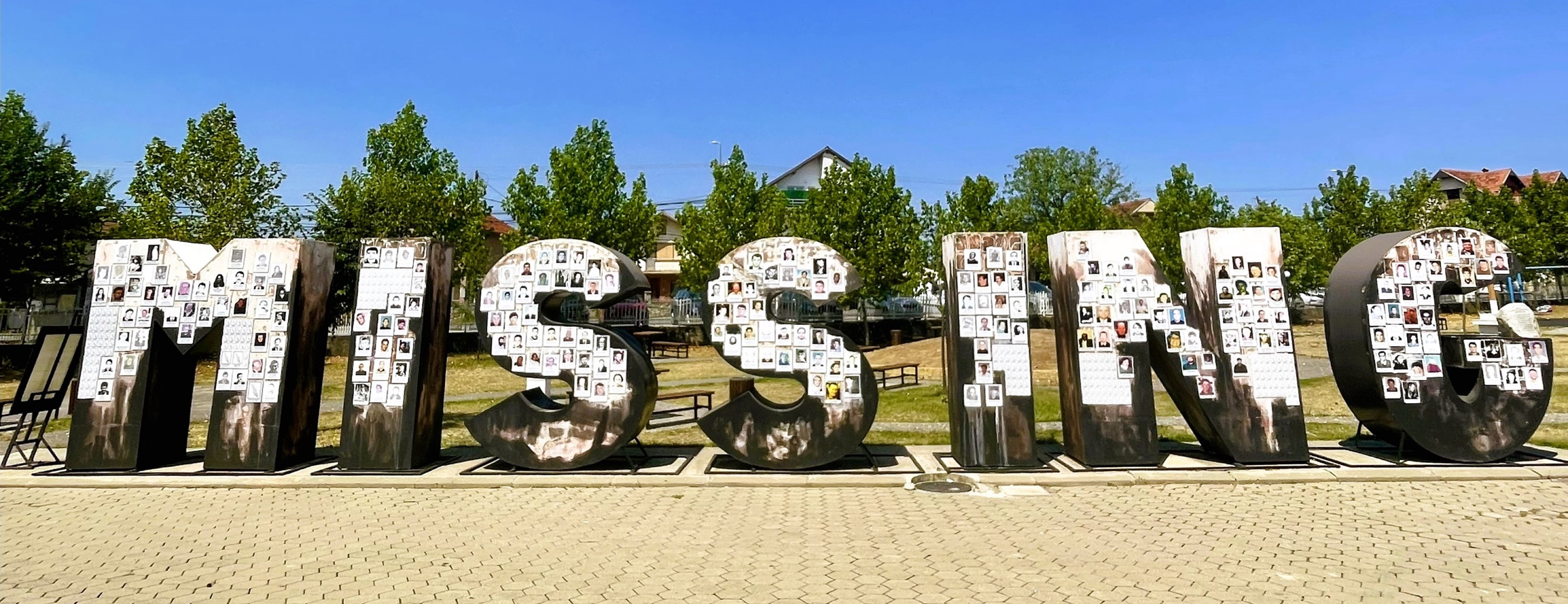
Even amid Kosovo’s visible economic growth and youthful optimism, reminders of the region’s divided past remain close at hand. I had thought I’d managed to keep politics at bay during our trip, but it was impossible to ignore the quiet signs everywhere — reminders of how deeply history, identity, and faith are still woven into daily life here, and how the past continues to shape the present.
For a change of pace — and to end our trip on a lighter note — we drove to the Bear Sanctuary Prishtina, a rescue center that provides care for brown bears once kept in captivity in Kosovo and Albania. The sanctuary is set on forested land by a lake, and the bears have large enclosures that give them room to roam and explore. It felt spacious and well-run, and as we followed the winding paths up and down the hillside, C and I got quite a workout. Watching the bears lounging and playing was a lovely way to close out our travels.
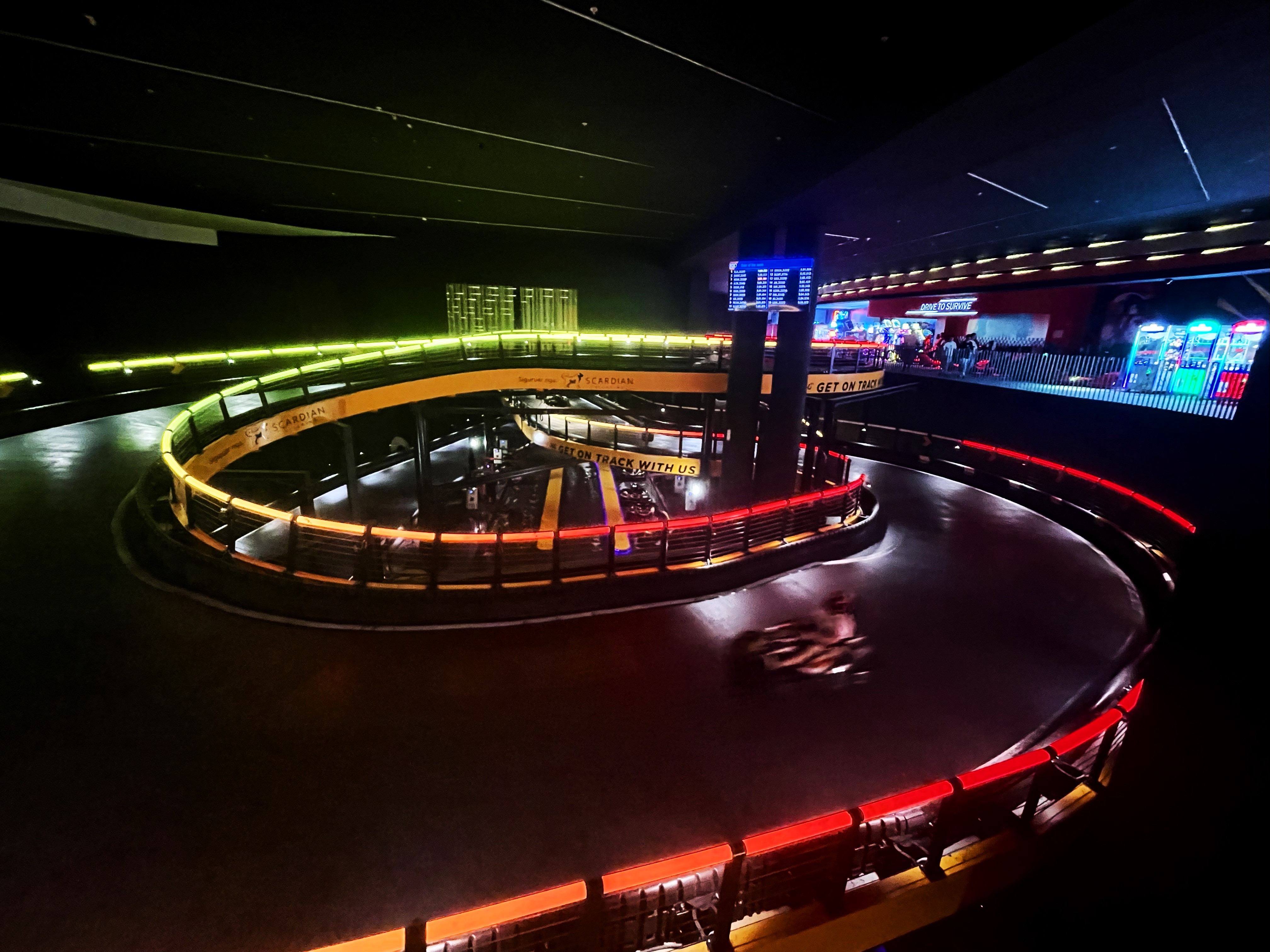
I had one last surprise for C: for our final final activity of the vacation, we went to Prishtina Mall. At 1,233,140 square feet, it’s the largest shopping and entertainment center in southeastern Europe. We had lunch, did some window shopping, got gelato, and drove go-karts on a cool indoor track — yes, right inside the mall! It was the first time either of us had gone go-karting, and it was an absolute blast. Afterward, we drove to our hotel near the airport, returned the rental car, and spent our last night in Europe before the early morning flight that would begin our journey home.
Our two weeks in Kosovo, Albania, and Montenegro were everything I could have hoped for — full of adventure, discovery, and connection. We packed so much into those days, from mountain drives and monasteries to coastal towns and caves. More than anything, it was a memorable mother-daughter journey, one that I know neither of us will forget.
 The Wanderlust Diaries