Balkans Bound, Part Two: Northern Albania

This is the second installment of my daughter’s and my trip to Kosovo, Albania, and Montenegro in August 2026.
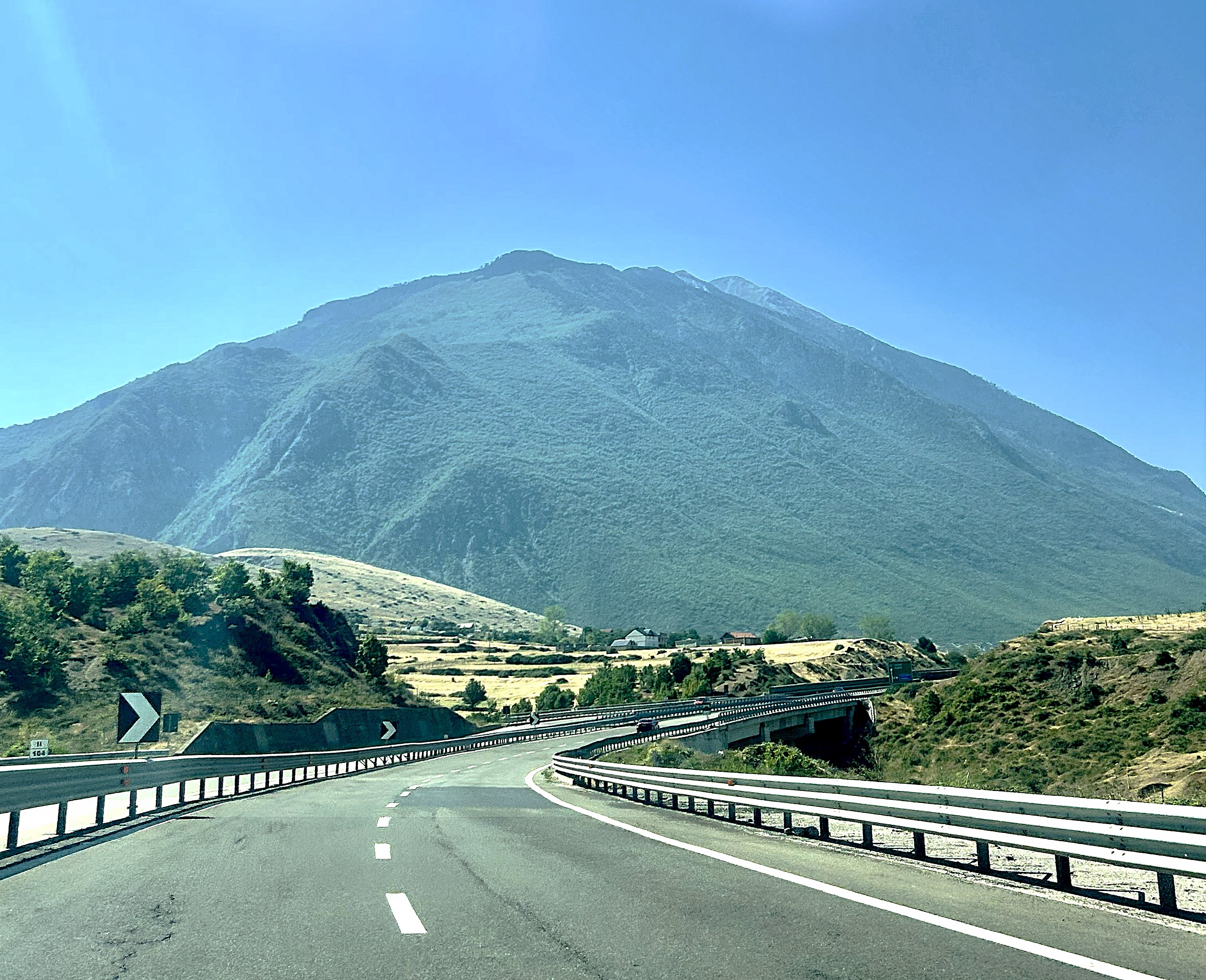
Along the road in northern Albania from Prizren, Kosovo

On the second day of our trip, C and I woke up in Prizren, Kosovo, ready to head out on the next part of our journey. When I was first planning our trip, I thought we would visit only Kosovo and Montenegro. Yet, as I looked at the map and the places I most wanted to visit, I realized it would make more sense for us to drive through northern Albania to get to coastal Montenegro from Kosovo. Otherwise, we would spend more time backtracking and driving over some of the same ground.

Back in 2000, I had planned a trip to Albania from Macedonia that had not gone quite right. Though I had then planned to visit Tirana and Durres, not northern Albania, and had instead ended up with a hilariously strange three hours in Sarande in the south, this still felt like righting a past travel wrong. C, always keen to add another country to her belt, was definitely up for it.

Sights along Shkodër’s main pedestrian thoroughfare in the city center

We first needed to fill up on gas before entering Albania and tackling the 2.5-hour drive. This led to a humorous stop at a petrol station just outside Prizren. With my non-existent Albanian and the attendant’s broken English, I managed to get the car filled up and the fuel paid for. Then we were on our way. The border with Albania is only a 20-minute drive from downtown Prizren, though I made it take longer due to finding an out-of-the-way petrol station and taking a wrong turn or two. I had no idea how long it might take at the border and was very surprised to find that it took no time at all. Neither the Kosovars nor Albanians paid our car any mind. Though I stopped at the window to hand over my passport, the three immigration agents were engaged in a conversation amongst themselves and waved me through without a glance. This was wildly different from the difficult time I had with Albanian immigration in 2000.

Our first hour in Albania went smoothly. The A1 Highway to the Kosovar border was wide and smooth. The views as we drove through the mountainous area were stunning. Then, I received a notification of a serious accident where the A1 met the road north, which would lead to delays of at least an hour. Having already departed Prizren later than expected and then losing time due to my fueling adventure, I was not eager to delay further. I turned off the A1, hoping the small roads would get me there. Oh, they did, but it still took a bloody long time.

One of the many striking photographs at the Marubi Museum that capture a snapshot of the ethnic, religious, cultural, costume, and trade history of the region; I especially loved this photo as my mom owned that exact style of Singer sewing machine

We rolled into Shkodër, Albania’s main northern city, around 1:30 in the afternoon. Unfortunately, it took about 30 more minutes to figure out the hotel parking. Google directions kept leading me down a very narrow back alley that turned into one way (the opposite direction) just before reaching the gated parking area. In the other direction, one had to drive a short way down a pedestrian-only road, then hope the bored parking attendant was in his little booth (he wasn’t at first) and then crawl behind him as he walked the 200 meters to the parking lot and unlocked it. Nerve-wracking!

We quickly checked in and headed out to a late lunch. After filling our bellies, we went for a bit of a sightseeing stroll. We felt like melting as we walked along the pedestrian street. It was 103 degrees out; a heat wave was sweeping southern Europe. We did not last long in the heat and decided to duck into the Marubi National Museum of Photography. It is a small but interesting display that marries the history of a family of Albanian photographers (the Marubbi), celebrates the art of photography, and displays a period of Albanian history captured in photographs.

We cut short our midday walk, defeated by the heat and the fatigue of having been in the car four hours that morning. When the temperature dropped a little at the golden hour of dusk, we stepped out again for another short stroll. Then we returned to our hotel, just across from the Ebe Beker Mosque, and rested up for the next day’s adventure.

On our second day in Albania, we woke up a little earlier so we could drive west, into the wonderfully-named Accursed Mountains to the picturesque hamlet of Theth. Having spent so many hours driving to Shkodër the day before, I was not overly thrilled to get back in the car again for another long drive. I had spent the night before researching other options, but nothing sounded anywhere near as appealing as Theth. So, Theth it was!

Along the road to Theth

I am so grateful that we elected to stick to our plan. The weather cooperated magnificently, and the drive delivered stunning vistas around nearly every turn. The road, though narrow and often capable of giving some drivers vertigo as it clung to mountainsides, was well-paved. I would, however, not want to make that journey in bad weather or at night. After two hours, we arrived in the hamlet at the heart of Theth National Park.

C in the Theth River, Albania

The small hamlet of Theth has a population of perhaps 300, though I cannot imagine many of them remaining in the isolated valley through the harsh winter when that winding road is impassable. Yet this stunning location draws some 5,000-10,000 tourists during the summer months.

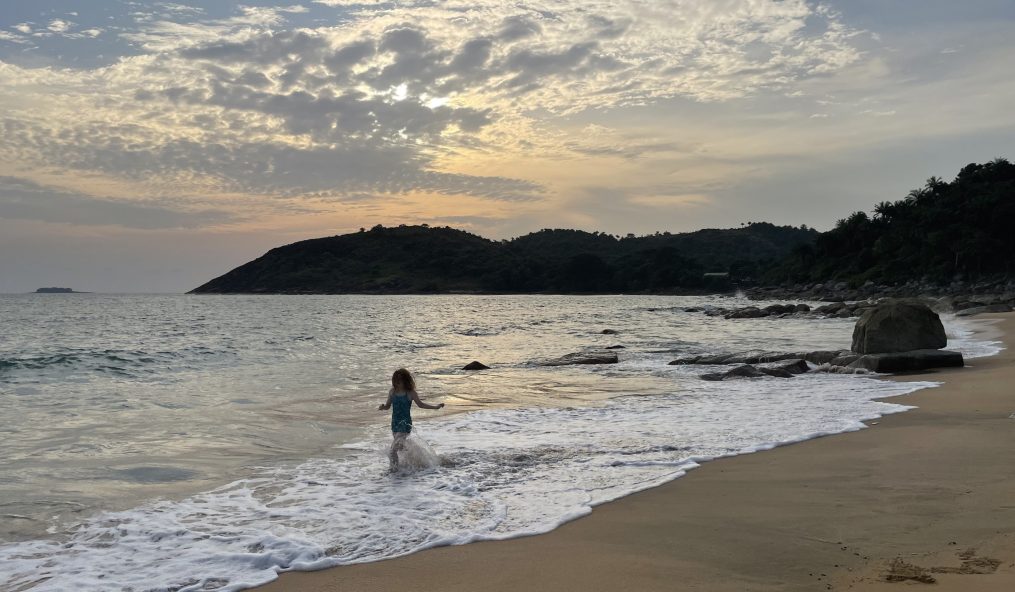
We parked beside the very popular Pizzeria Jezerca, which fronted a small bathing beach and the Theth River. It seems that nearly all the visitors that day were at the Pizzeria. We had a great lunch and then went down to the river. Though the heat wave continued, the temperature was a few degrees cooler in Theth, maybe 95? But that river was ice cold! So cold it felt like pins prickling our skin. But oh, how beautiful the setting! And I even watched a striped snake swim nearby, slipping beneath the rocks.
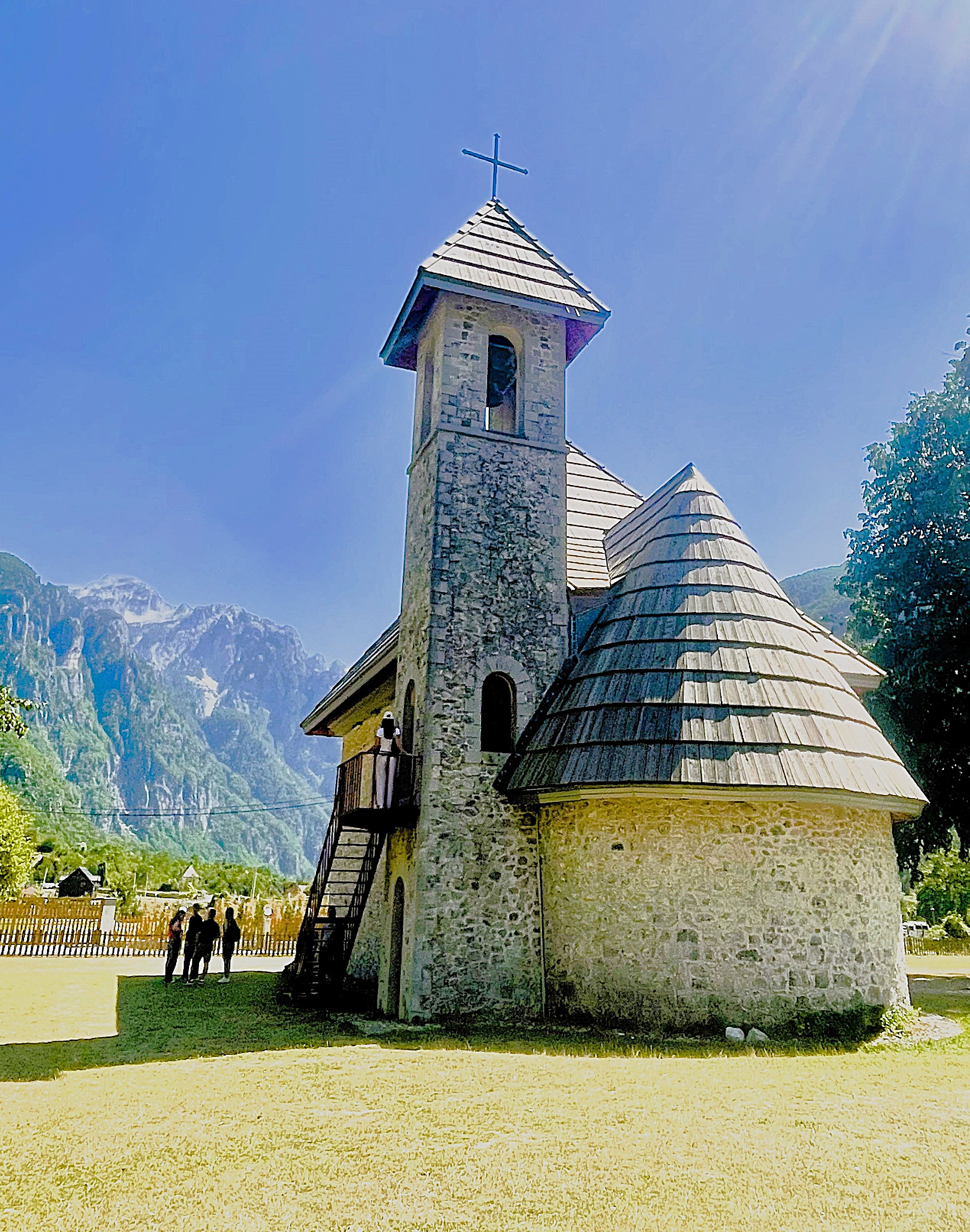
The stunningly simple Kisha e Thetit or Church of Theth

After our dip, we wandered down into the hamlet to visit its most famous landmark: the simple yet striking 1892 church. While charming in its own right as a piece of architecture, what truly sets it apart is its setting — nestled in a grassy, fenced-in field and surrounded by the towering Albanian Alps. We circled the church slowly, alternating between quietly taking it in and snapping photos.

I’m mindful that my teenager might only tolerate so much quiet admiration of historic buildings, but C seemed just as captivated as I was. After a decent pause, we continued on to the 400-year-old Reconciliation Tower — a stout, two-story stone structure once used to mediate blood feuds. Those accused in local conflicts were locked inside for protection, giving the community time to cool down and resolve tensions before resorting to violence.

By this time, the heat was again getting to us as we meandered our way back to the car. We had debated about doing the recently added zipline, but ultimately decided it made sense to begin the drive back. Although we had not really experienced any jet lag, I did not want fatigue—whether from jet lag, long driving, or the heat—to become an issue on that mountainous road. And, there was more for us to see!

The Mesi Bridge

Just outside Shkodër stands the Mesi Bridge, a stone relic of the Ottoman era built in 1770. It was designed to span the Kir River — though when we visited, the riverbed was bone-dry; there was not a trickle in sight. Yet even without water beneath it, the bridge remained an impressive and beautiful monument to Ottoman engineering. The Mesi Bridge is the longest Ottoman bridge in Albania, and one of the best-preserved in the entire region

To wrap up our amazing day, we next headed to the ruins of Rozafa Castle. Located on a stony promontory outside Shkodër proper and overlooking the confluence of the Drin and Buna Rivers, the ruins of the largely Venetian stronghold (though also used by the Ottomans) are a popular place to take in the sunset.

We parked in a small lot in the front yard of an enterprising family who happened to live just across from the lower entrance. The man of the residence took time to criticize my parking, but it was in such an amusing way that I took it in stride. We then made our way up the steep stone driveway to the top entrance; I am so glad that we parked where we did, as the upper lot was small and most definitely full.
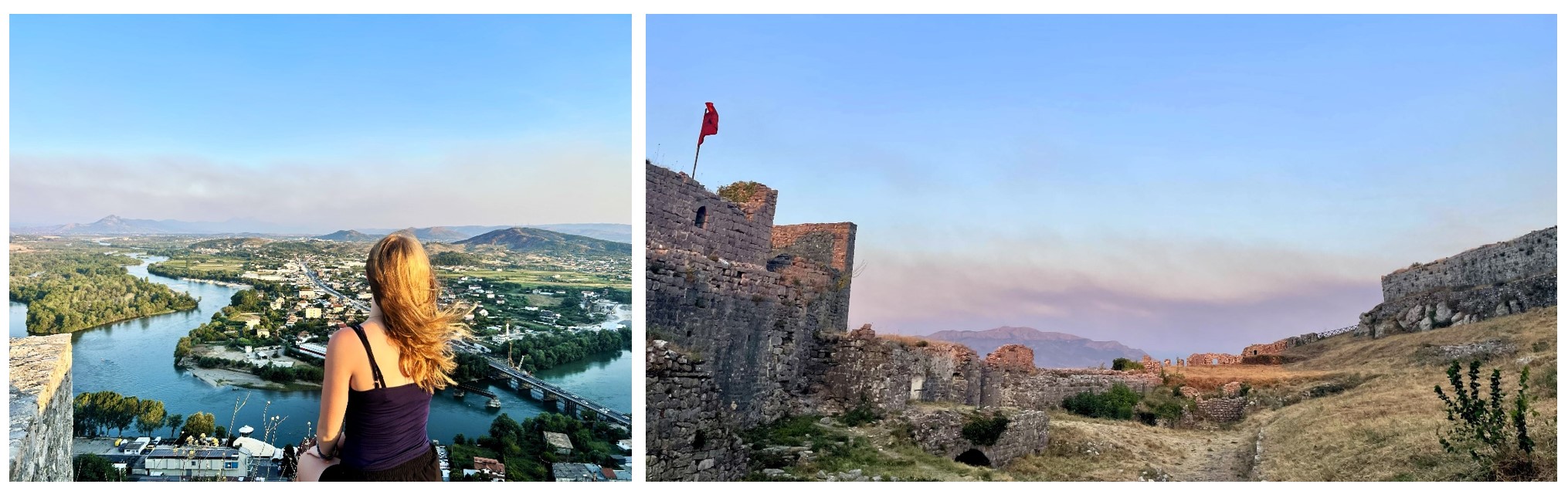
Left: C looks out from the Rozafa ruins; Right: Part of the Rozafa ruins at sunset

We easily spent an hour at the ruins. The area is quite extensive, and there were a surprising number of tour groups, yet except at a few very photogenic spots, it did not feel crowded.

I would have liked a little longer at Rozafa, but we had been on the go all day. It did not feel possible that we had done so much, seen so much in a day. Our stopover in Albania had been perfect, but it was time to head on to our next destination.
I Love You Backpacking Long Time – Part Five Macedonia to Albania

Things became only more interesting in Macedonia.

After checking into the hostel in Skopje I contacted the US Embassy nurse. Although the doctor in Sofia had said the likelihood of rabies was very small, he still suggested I receive the shots. I contacted the nurse on her cell phone and it was costing me a lot of money so I asked if I could call her back on a regular line. She told me to call her back in 10 minutes as she was walking back to her office and she would think what to do. I called back every 10 minutes for the next hour and could not get through. I left two messages, one with the telephone number of the hotel. I stayed there two nights and she never called. The worst part was when I did first talk to her she asked me when I had been bitten and she told me “well, then it is too late.” And even then she never called me back. My first experience with a US Embassy nurse was not a good one.

DSCF0411

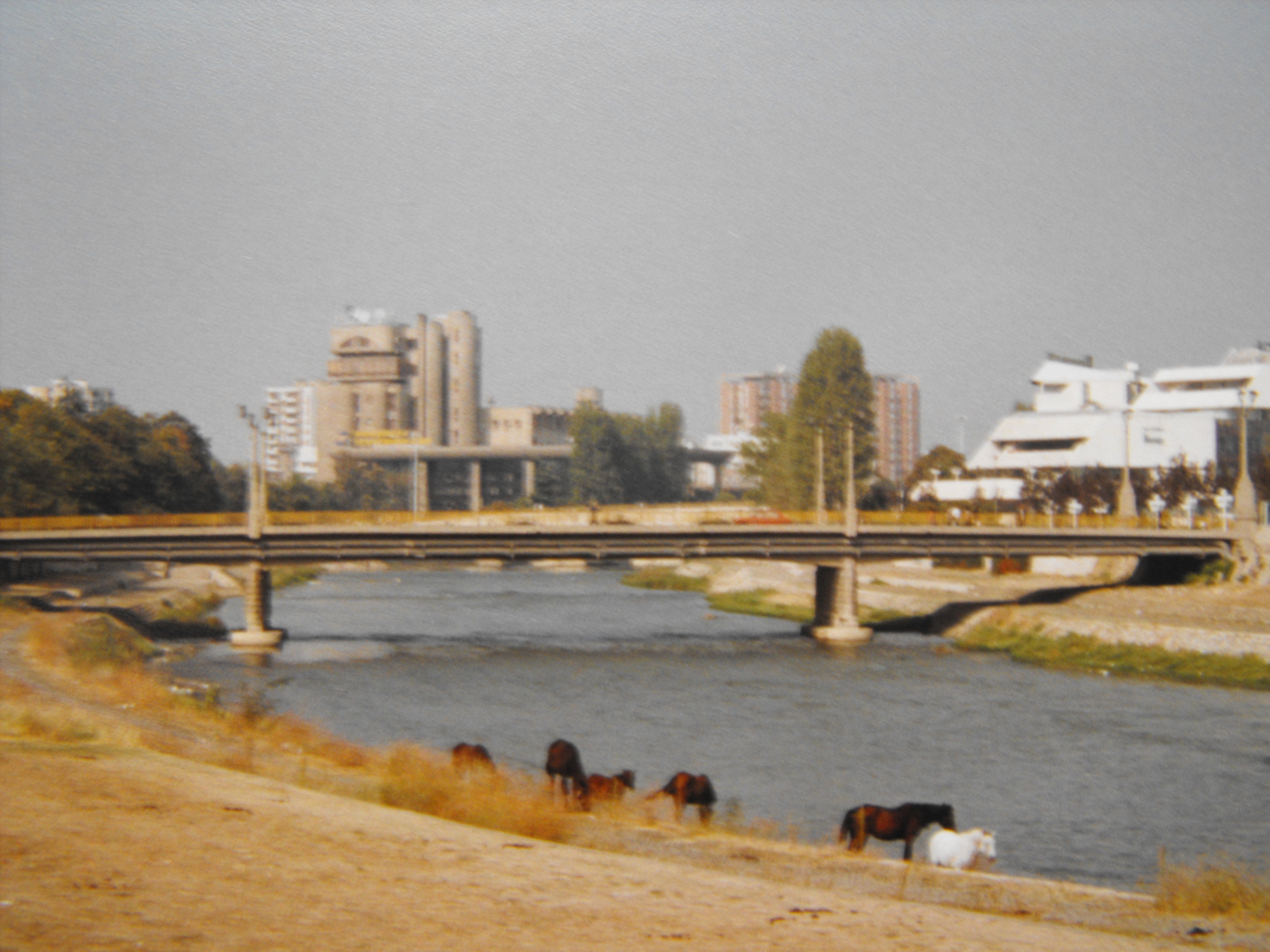
Skopje. Dry, horses (!), and ugly modern architecture.

Skopje was warm and dry. The Vadar River though was pretty full and gave the city it’s only real color. The dry grass along its banks, the ecru stone and red tile roofs of traditional areas, and the unfortunate modern structures all rather blended together. There were horses drinking from the river which seemed about as crazy a thing to see in a capital city of Europe; they might as well have been giraffes! What I remember most about Skopje were the rude whistles from men as I toured the old town, the games of chance – high stakes ball under shells – played on the Stone Bridge, and meeting GM from Australia. She arrived to share my room in the hostel as I awaiting the call that would never come from the Embassy nurse. We hit it off right away and chatted for hours until dinner, and then walked together to the new town for some alfresco dining, continuing to talk. She only stayed the one night, heading off to her next destination the following morning, but when she left it was as if we had known one another for a much longer time.

DSCF0418

Beautiful Ohrid. Byzantine churches set on a gorgeous lake.

Next I headed to Ohrid, a town on the banks of the lake of the same name. Both the city and the lake are UNESCO World Heritage Sites, the lake for its importance as a Biosphere Reserve and the city for its incredible cultural and architectural sites; it is the site of one of the oldest human settlements in Europe and the location of some pretty spectacular Byzantine churches. It was beautiful. The narrow, winding stone streets of the old town were spectacular. Yet I remember most seeing the US and NATO troops on leave from Kosovo.

I had originally planned to cross into Albania from Ohrid, but the closest I came was taking a bus to the Sveti Naum monastery and from there the return bus to Ohrid drove up to the Albanian border and then turned around. I had been trying to follow the news along the way and it seemed that the government was not functioning too well, so I decided to give it a miss and head south to Greece.

Happy Birthday to me. I am now in the Greek town of Florina after crossing the border from Macedonia. I took a bus from Ohrid to Bitola and from there a taxi to the border, then caught a taxi on the other side to Florina. I had intended to take a bus on to Kalambaka today. But I learned at 1 pm at the bus station there are only two buses a day at 8:30 am and 8:30 pm and the later bus would get me in at 12:30. So here I am celebrating my birthday in a hotel room in rainy border town Florina.

I missed the morning bus the next day too when I showed up at 8:15 am to discover that the bus had already departed. Another time change although I had traveled due south – an example of some political disagreements between countries even affecting the time! I was not impressed with Florina: my first impressions of Greece are not improving. The men all seem on the dirty side. They smoke, stare hard at women, and there are those gems with gold chains resting in the mound of chest hair visible because their shirts are unbuttoned so low. Loud arguments erupt everywhere for no apparent reason.

DSCF0432

Meteorea. Breathtaking if the clouds clear. And yes, there was a Bond move set here.

I skipped waiting again for a direct bus from Florina and opted to instead take the terribly draining four bus route to get to the town of Kastraki. The rain had let up; although it was still cloudy I could see the amazing rock formations that give Meteora its name. However, when I awoke this morning, it was raining once again. Therefore I decided to take the 3:20 bus to Ioannina, but spent the early part of the day going to see at least the biggest monastery. Even though standing across the chasm that separated the parking area from the monastery rock, I could barely make out anything. The fog certainly made things interesting, because standing on the edge of the cliff I could not see anything of what was below. Luckily the rain had stopped and for fifteen minutes the fog around the monastery disappeared and lo and behold there were two more monasteries perched atop their own needle-like rocks. I also lucked out in finding a Belgian couple with a car willing to give me a lift. They took me with them to a nunnery on another rock, and even on to Kalambaka, stopping to get my pack in Kastraki.

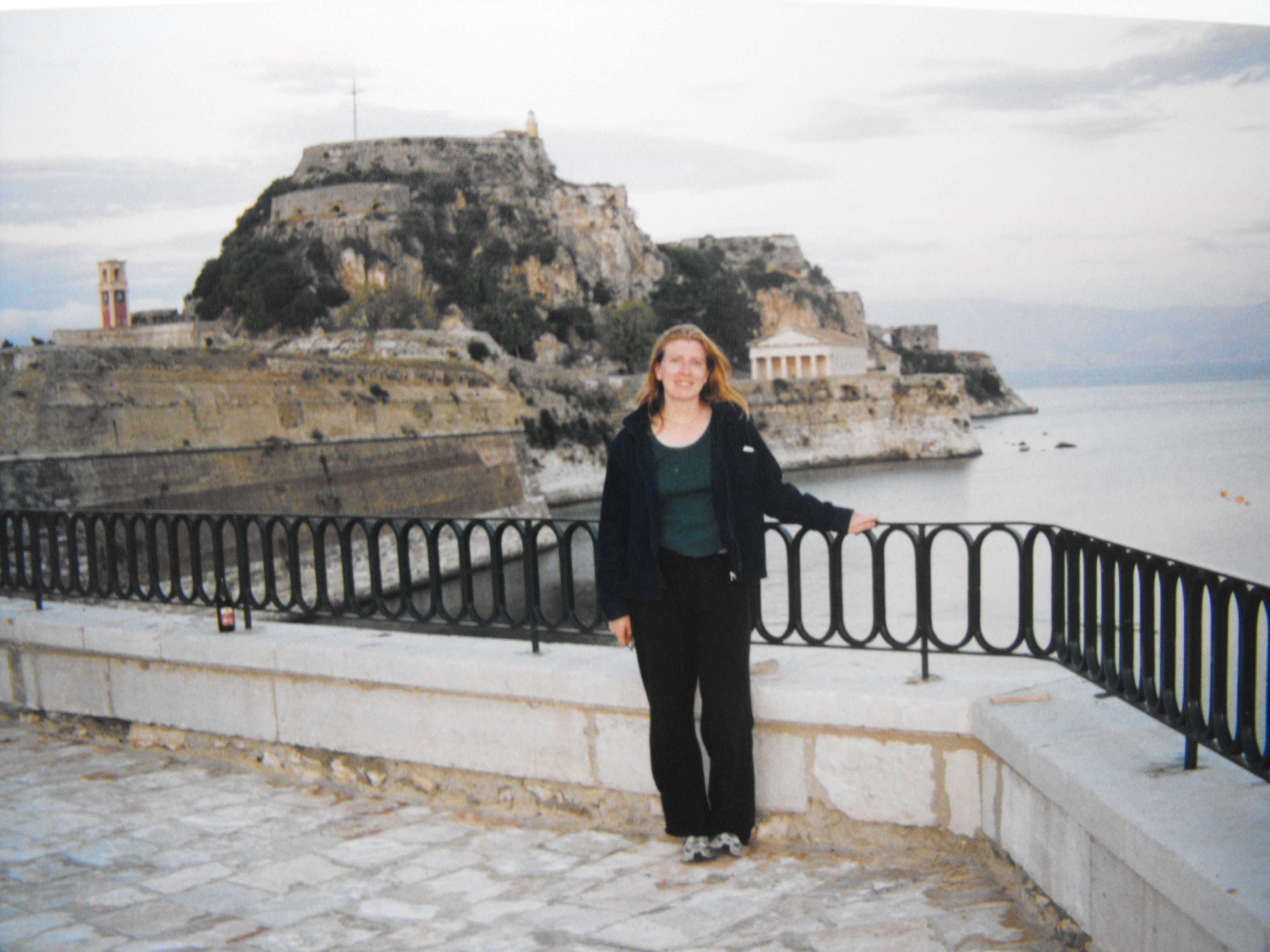
I had a brief overnight stop in Ioannina, where it continued to rain. Then I headed on to the island of Corfu. The island was beautiful but my visit was marred by the arrival of a large US Navy vessel that let loose hundreds of 20-something men on the unsuspecting town. I know they are young, but that does not excuse their behavior. My first night here, I had dinner out and I sat next to a table of these men. They talked loudly about being laid and how big their d*cks are. They harassed the waitress. And when a small group of protestors arrived with a sign saying “Yankees Go Home,” the men went crazy yelling that Greece “would not even be a country without us.” On another day at a restaurant a table of them loudly rated the physical attributes of every single woman that passed by. I know I was not in a good place to hear and see these kinds of things. I had written in my journal just the day before about a Greek man harassing me and three other women at a bus stop. I know that not every single one of those sailors was like that. Actually, while sightseeing at the Old Fortress in town, I fell in with five of them touring the castle, and they were thrilled to hear I was from Virginia. At an Internet café, I saw one of the officers of the ship. I screwed up the courage to talk with him and to tell him of my disappointment in the behavior I had seen and how it made me feel bad as a woman and an American. He very respectfully listened and thanked me for telling him.

DSCF0454

One of the lovely highlights of Corfu – there were nice things besides harassment.

Then came one of the craziest days of my trip.

I decided to take a cruise to Albania as a belated birthday gift to myself, to make up for Florina. On Monday I was at the port customs and immigration office at 8:30 as the boat was scheduled to depart at 9. At 10 minutes to 9 there is no sign of the boat or any other passengers. “Don’t worry,” said an immigration official, “your boat leaves at half past 9.” At 9:15, still no boat and no other passengers. I run around the corner to the ferry office to ask “Where is the boat?” I was told the excursion was cancelled due to bad weather (and I was the only one they could not reach as I was staying in a cheap-o sailor hostel by the waterfront).

I return to the port to tell the officer the trip has been cancelled and to collect my passport. “You want to go to Albania?” he asked. “Yes,” I answered. “Well, that boat over there is going to Albania.” “When,” I ask. “Now,” he replies. I ran back to the ferry office to get my tour refund, return to the port, my passport is stamped, and I leap onto the departing boat as the gangplank is pulled up. It is only once on board that I wonder – where in Albania is this boat going?

I confirm the boat is heading to the same destination as the tour and the other questions of “what am I doing?” and “what will I do when I get there?” fade away.

An hour and a half later we arrive in Sarande, Albania. This is when my problems began. Albania requires no visa but charges Americans a US$45 “border tax.” I was only going to be in Albania for 3 ½ hours, yet the immigration police insisted I pay this fee. I did not have that much money on me. The police were not quite sure what to do with me. A woman waved a paper in English with a bunch of crazy, arbitrary rates, but I caught something at the bottom about daily tourists. I was then taken to the police office and given an interpreter.

DSCF0458

My good-natured police guards – while detained on the boat. I told them to look mean while I would look scared. They just found it all too funny.

I looked at the rate paper again. It said “daily individual tourists can be admitted with a visa-free entrance fee of US$10.” This was translated to the police commander by two tour agents serving as my interpreters but the Comandante refused to believe either of them. The Comandante took me back to the boat and placed me under guard while he held on to my passport – I guess in case I tried to run away. A friendly English speaking taxi driver translated my story of woe for my two police guards and they agreed to take a picture with me.

Then the captain of the boat invited me over to the port café for a drink. The Comandante was a little upset to walk by and find my off the boat and enjoying a drink with several boat workers, but he had my passport and the men called out cheerfully to him, so he seemed to accept my expanded definition of imprisonment. I was told he was working hard to find a solution to my problem.

A few minutes later the Comandante came riding back with the friendly taxi driver and told me to get in the car. I was driven to the local police station where the police captain got out of the car and informed me the driver would take me wherever I wanted to go, while he held on to my passport. So I asked the driver to take me to Butrint, the UNESCO World Heritage Site roman ruins that had been on my original tour. I paid for this privilege for 7000 drachmas, which wile not a bargain was pretty good given I was not technically in the country. I also had to pay the Comandante a “helping fee.” But I did not pay the US$10.

After our trip he returned me to the port where the Comandante returned my passport and I was escorted to the boat back to Greece, my fan club waiving me a cheery goodbye.

So it worked out. I got into Albania. The taxi driver made money. The commander made a little money. I even got two stamps saying I went to Albania, although I guess not quite legally.

DSCF0465

I could never have imagined the adventure to get here – Butrint, the UNESCO World Heritage Site in southern Albania