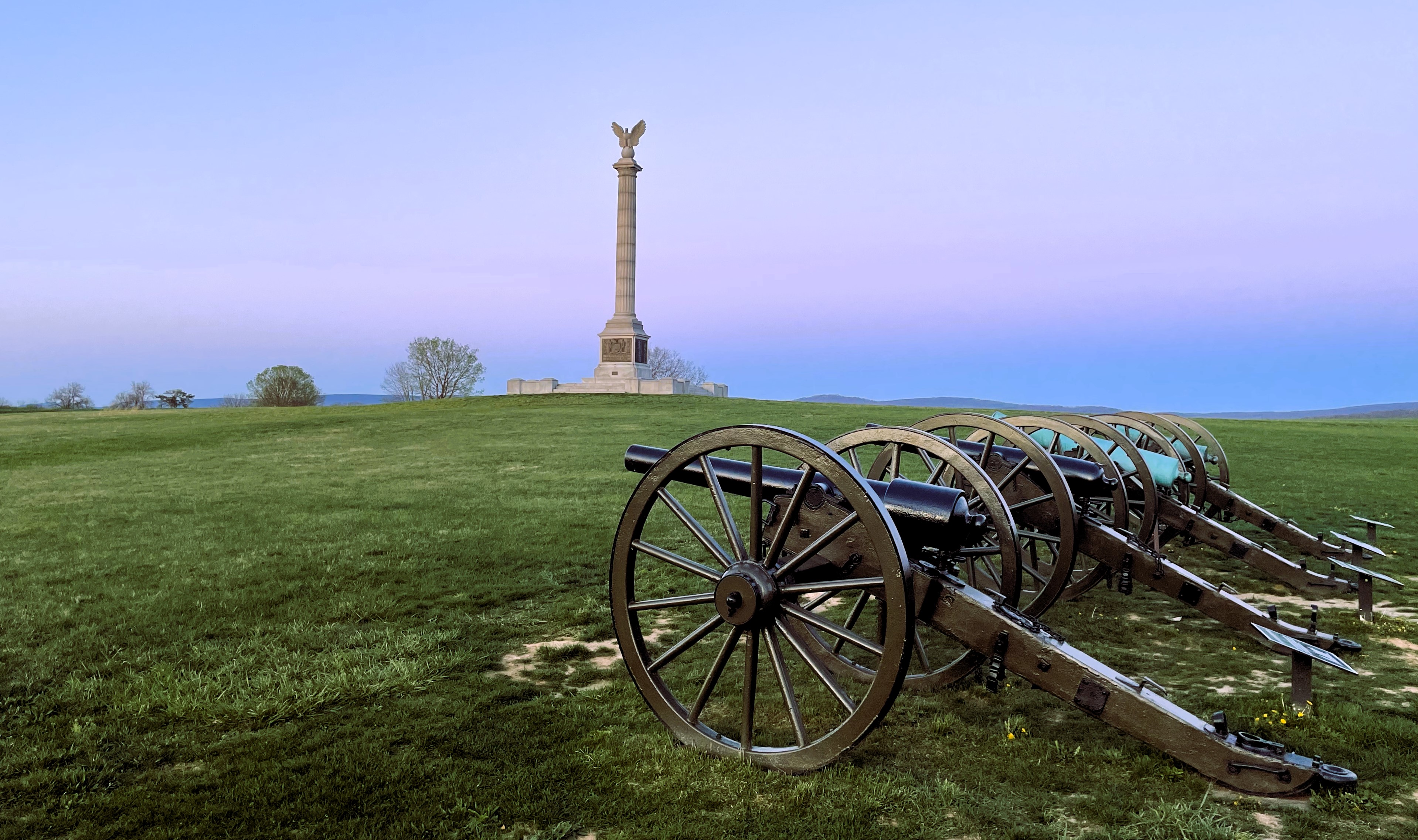
Fall on the Boardwalk: October in Ocean City

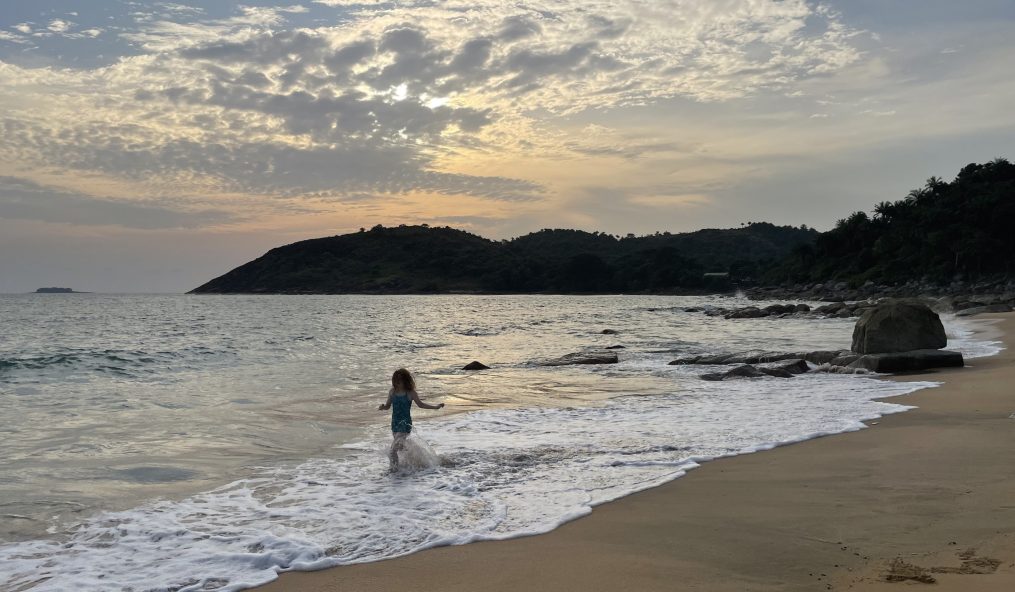
C stands in the surf at Ocean City, Maryland

When C and I lived in the northern Virginia area when I was studying French before heading to Guinea, it was C’s first time going to school in the United States. She was in the fourth grade. I recall that a friend of hers had traveled to Boston with his family and he sent her a text with a photo of a baseball stadium: Guess where I am? C had no idea. He came back, “I am at Fenway Park! Haven’t you ever been?” And C seemed a bit concerned that she hadn’t. I told her to ask him if he had ever been to the Great Wall of China or the Stone Town in Zanzibar or the Maasai Mara? But while that might be a great game amongst foreign service kids, it did not work so well among the other kids. Now that C is in middle school, where it is not so important to stand out but rather to fit in, C had asked me if we could go to Ocean City, Maryland, a place she had heard about many times from these other kids.
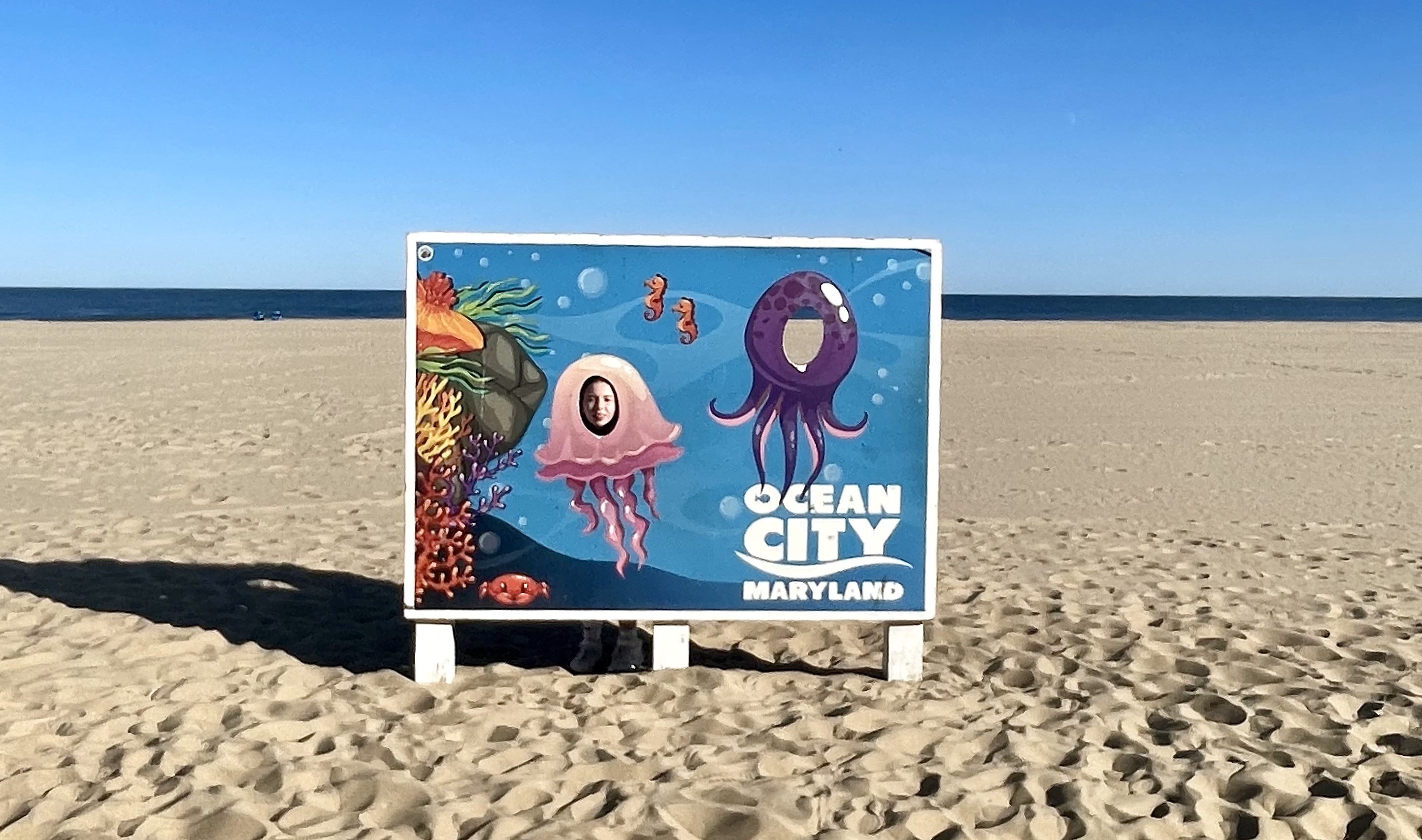
Sun & sand without the crowds

We had already had our major trip to Japan in the summer, and with the prices and temperatures in Ocean City higher than I wanted to deal with, I opted to plan our trip for the long weekend in October. The downside would be that some boardwalk attractions, like the small amusement parks, would be closed, and the crowds and lifeguards would be gone from the beaches. I had only been to Ocean City twice; both were as a child with my friend Jennifer, her mom, and her mom’s boyfriend. I did not like the crowds or spending a long time on the beach then and still don’t. I hoped to find enough for both C and I to get what we wanted out of Ocean City.

The weekend started with the drive. I do so love a drive and the three hours that include the Bay Bridge and the Assawoman Bridge on the final approach to Ocean City is a pretty nice drive. We lucked out with the weather! It was almost summer-like hot, but despite a major car show in town for the long weekend, tourist numbers were far below summer levels. A quick check-in to the hotel, then lunch, and then a drive to the northern end of the Boardwalk at 27th Street. C and I walked the full 2.9 miles of the Boardwalk to its southern terminus at the inlet, stopping to take in the beach, grab some snacks, and do a little shopping. C loves to buy t-shirts and hoodies with locations on them and she was determined to acquire some cute Ocean City attire to show off at school.

Sights along the Boardwalk – C in a funny cut out by the shuttered Ripley’s Believe It Or Not, a sand sculpture, and the Coca-Cola chair on the empty beach

At the Boardwalk’s terminus, where most of the famous sights and activities are located, we found several arcades. For me, an arcade, especially if it has skeeball (actually, it had better have skeeball), is just part of the Boardwalk experience. Though C loves arcades I do not often take her as she will clean me out. But for the Ocean City Boardwalk, I made an exception. Afterwards, C got some ice cream and I bought a single size of the famous Thrasher’s fries. And C and I walked the whole way back up the Boardwalk together.

On our second day, I drove the 15 minutes south to the Assateague Island Visitor’s Center. C and I last visited in 2019 during our mid-tour Home Leave from Malawi. Then, I rented a bicycle with a carriage to ride around Chincoteague; this time C had her own bicycle and we would explore the other of the two famous islands on two wheels.

Assateague ponies in the distance

We were just over the causeway to Assateague Island when we caught sight of a small herd of the famous ponies grazing near the water. It was the only time we saw them that day, though we still enjoyed our two-hour ride and a short walk along a nature trail in the dunes alongside the remains of the abandoned Baltimore Boulevard (a once grand idea to build a development on Assateague that Mother Nature destroyed leading instead to the protection of the barrier island). Once again the weather was warm and bright, perfect for a ride. We saw only a little more wildlife, including some migrating monarch butterflies and a black snake that struck out at C riding by when her bicycle surprised the reptile sunning itself on the asphalt (both she and the snake were unharmed).
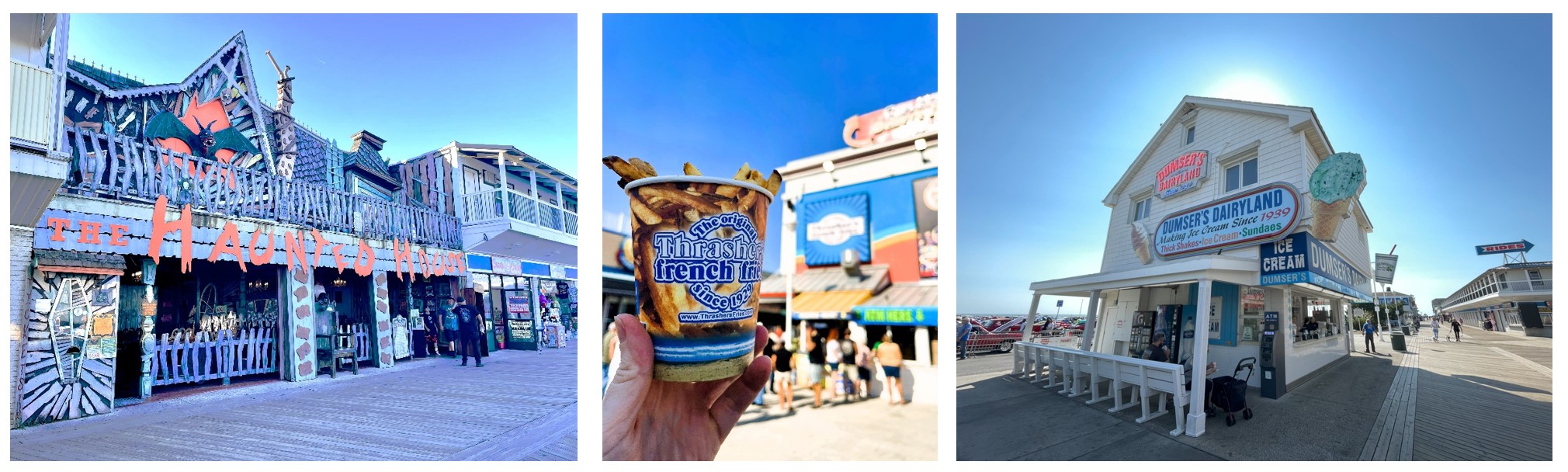
Some of our stops on the southern end of the Boardwalk

After our ride, we were ready for some lunch and the siren song of Boardwalk goodies called us. Having only tried the deliciousness of Thrasher’s french fries the day before, C and I completely understood why the combination of fresh-cut potatoes, fried to perfection, and then doused in salt and vinegar, have been a Boardwalk staple since 1929. It was not the healthiest lunch, so we went whole hog and chased our fries with some ice cream from Dumser’s Dairyland, another Boardwalk institution (since 1939). C had been telling me for a few months that she was ready for ghost tours, so we opted to give Trimper’s Haunted House, on the Boardwalk since 1964, a try. It’s a simple dark ride where two occupants sit in coffin-shaped car that follows a track through a building’s first and second floors. It is just dark enough with enough creepy design to keep us guessing. But it was really the two live actors that jump out and grab you that really made the ride. C and I were screaming at the top of our lungs. Boy, that sure was fun! (though C says maybe she isn’t ready for another Haunted House for some time). To calm down our fast-beating hearts, we once again hit the arcade.

C makes Go Ape look easy

Thus, C tried to chicken out of our evening adventure at Go Ape. We had signed up for the Fright Night activity. I did not know quite what to expect having not been to any of the Go Ape locations ever, but I thought it would be ziplining in the dark and perhaps there would be people dressed up to make it a bit scary. Instead, it was a two-level ropes obstacle course, with the lower level about fifteen feet above the ground and the second level probably 30 feet. The entire time one is attached to a safety line, but it does not feel as if one is (at least not to me). When guests asked “what happens if I fall?” the staff would respond, “you don’t fall, you just dangle.” C caught on very quickly and completed all the obstacles on both levels. She even purposely dangled several times. I could only complete the first level; though I climbed up to the second level, I stood paralyzed at what looked like the easiest of my scary choices for a good five minutes before heading back down.

On our final day, we first took an hour walk along the beach. The good weather continued and I wanted to soak it in, with sand between my toes and my lovely daughter by my side. Before leaving town, we made one last stop on the Boardwalk. We visited the Ocean City Life Saving Museum. Though small, it provides a wonderful history of Ocean City, which has delighted tourists since 1875, and the U.S. Life Saving Service, the predecessor of the Coast Guard. The museum is housed in a former USLSS station from 1878. Even C found it somewhat interesting, so that is saying something.
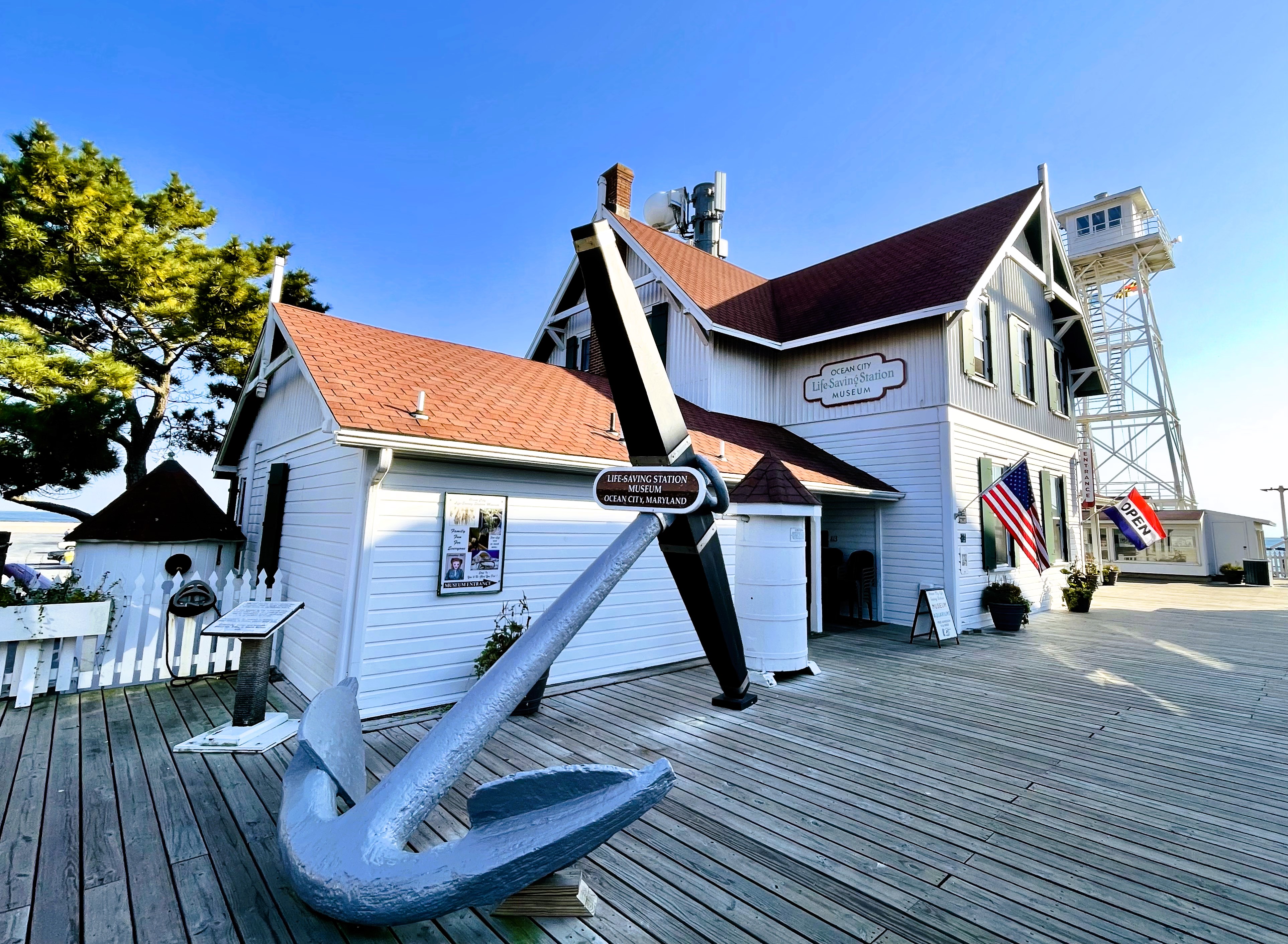
The Ocean City Life Saving Station Museum

Because I love throwing away money on rigged games of chance and enabling my child to do the same, we once again hit the arcade. We had to get enough points on our cards to finally trade them for some items that we could have purchased for far less than we spent (but with much less fun). With her new stuffed pig and stretchy shark, we headed to the car for the drive home. Another successful foray into Americana under our belts.

2024 Camp Pick-Up Weekend: Cumberland, National Memorials, and a Groundhog Town

When I picked up my daughter from her overnight summer camp in Pennsylvania last year, I had driven through or near some sights that called to me to visit. This year I decided to make a weekend trip out of it.

I drove a little over two hours northwest of Washington, DC to the historic town of Cumberland, Maryland. Established in 1787 at the confluence of the Potomac River and Wills Creek and at the base of the Appalachian Mountains, the town has been at the heart of American history. Here, in the late 1750’s young army colonel George Washington led General Braddock’s operations in the French and Indian War and he returned in 1794 to review troops preparing to quell the Whisky Rebellion. Cumberland also gained fame in the 1800s as a transportation hub with the National Road (now US 40) began construction there in 1811 and in 1850 the Chesapeake and Ohio (C&O) Canal between Cumberland and Washington, D.C. opened.

History like that is my jam.

I picked the centrally-located (and historic!) Cumberland Inn and Spa as my base. I wanted to just park the car and then walk all over the historic district. I headed first a few streets up to the Gordon-Roberts House, once home to a prominent lawyer, statesman, and President of the C&O Canal. Unfortunately, the door was locked and I saw no one about. I tried knocking and called their phone number and left a message, but it seemed I had already struck out in the Queen City.

George Washington’s headquarters in Cumberland, MD

No worries, it was lunch time. So, I made my way down the street, passing the tiny building that served as Washington’s headquarters, and headed across the river. Baltimore Street is the main artery here and is flanked by beautiful buildings from Cumberland’s heyday. And the street completely torn up for a major renovation project that will turn it pedestrian only. It will be wonderful when it is completed, but wished my timing had been better. Still, I found a nice place for lunch and made the most of it. I did have wonderful weather!

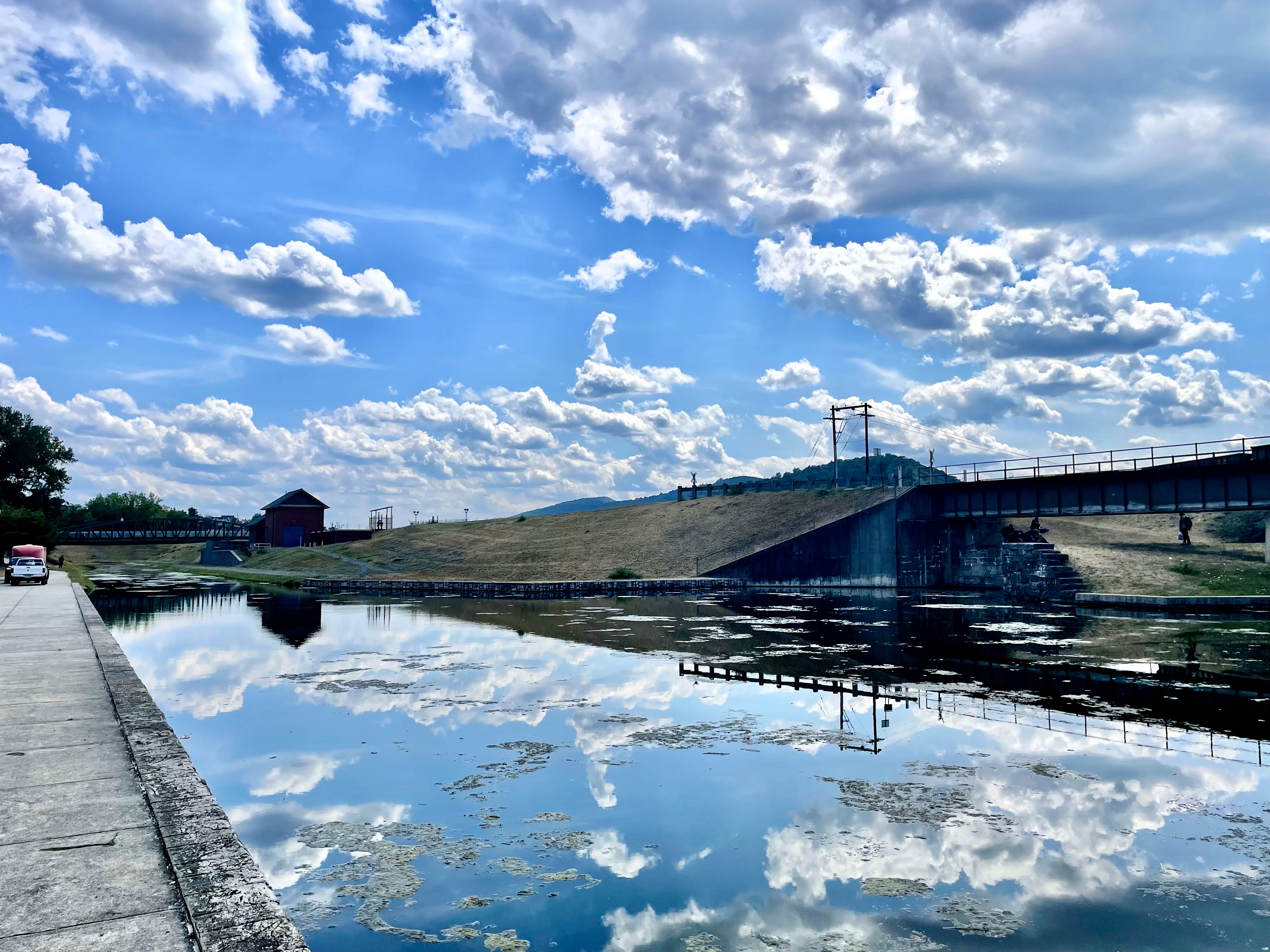
After lunch, I visited Cumberland Station, built in 1913, from where still operates scenic steam and diesel train rides. I walked over to Mile 0, the terminus, of the 184.5 mile C&O canal; its towpath a popular multi-day ride for cycling enthusiasts. I will be honest here: the canal waters were a bit stagnant, some rubbish was floating in it; across the way some unhoused individuals crouched beneath a bridge, likely welcome shade from the strong, hot sun, and a festival featuring a death-metal band was in full swing (though the music was pretty good, it was not quite the soundtrack I expected). Yet, the sky was a blazing blue generously sprinkled with cumulus clouds and with just the right angle, the scene was perfect.

Mile 0 of the C&O Canal begins (or ends) in Cumberland

In the National Park visitor’s center I chatted with a young AmeriCorps volunteer eager to learn about how to parlay his education and experience into a career at the State Department. I was grateful my daughter was not with me; she is not a fan when I get too friendly and chatty with strangers. She would also have disliked my talking with the lovely volunteer docent at the Allegany Museum. Housed in two floors of a former 1930s courthouse and post office, it is packed full with interesting information, mostly on the architecture, industry, and transportation history of the region.

I left just before the 5 PM closing and planned only to walkabout the area looking at the architecture when my phone rang. A young woman asked if I had called earlier that day to visit the Gordon-Roberts House and told me that unfortunately they have few tours and it would be closed for a special event on Saturday. Well, I figured, that’s that. But then she said, “Well, I am here now doing preparations for the event…If you are nearby, I can give you a quick 15 minute spiel and then let you self-tour.”

The impressive Second Empire style Gordon-Roberts House

And that is how I ended up with an after hours tour at the house. I really could hardly believe my luck and the woman’s generosity. She gave me more than 15 minutes of her time and really did let me wander around on my own through the ground floor, second floor, and basement (the third floor is closed to the public – but I still took a peek). I found the house interesting – six bedrooms on the second floor alone! And a dumbwaiter! And a pre-electric single person elevator! – but by far the best part of the experience was that I got to tour it in the manner I did. I spent another hour or so of the long summer evening wandering past the churches, the Masonic Temple, and other architectural gems before calling it a night.

The LaVale Toll Gate house dating from 1835

On Saturday morning I set off for Somerset County, Pennsylvania along US40. At the Allegany Museum, I had learned that Maryland’s first (and last) toll house still stands just a few miles outside of Cumberland. It was on the way—just a slower, more picturesque way—so how could I resist?

The LaVale Toll Gate stands forlorn on the side of US40. Next door there was a Goodyear tire shop and across the street a gas station, both of which seemed rather fitting to me for a place where travelers have had to stop their journey for nearly 200 years. It was not open, there were no other cars in the parking lot and no other visitors while I was there, yet, I am glad it is still there for the odd traveler and history enthusiast.

The Barronvale Covered Bridge, built 1830

An hour later, I had a teary-eyed C and her belongings in the car. She had had a wonderful two weeks at camp and was thrilled to see me (imagine it!) but also sad to leave her new friends. I knew immediately what would cheer her up! A visit to an old covered bridge! Somerset County is full of them (ten in total) and I had pre-programmed directions to one of them as we headed to our next destination. I should have known better though (and really I did) because once at the bridge C opted to stay in the car (“I can see it from here.”). My free-wheeling, teenager-free part of the trip was over.

I drove east about 30 minutes to a field just outside Shanksville, PA, where on September 11, 2001, the brave passengers and crew of United Flight 93, learning their plane was part of a terrorist act, forced the hijackers to crash the plane, killing them all but saving hundreds, if not thousands, more.

Flight 93 National Memorial: view of the flight path from the Visitor’s Center (left), the Tower of Voices (center), and memorial wreaths at the far end of the Memorial Plaza

We started off with a walk down from the visitor’s center that passes the flight path, impact site, and wall of names. The weather was nice, warm, with clouds that threatened rain but held off; the field dotted with wild flowers. It felt both fitting and incongruous as a final resting place of such an act of terror. C was far more focused on a school issue than the site and I tried to refocus her attention on the importance of the location. We moved on to the Visitor’s Center and it was here, with the television footage of the planes flying into the towers, the photographs of the passengers and crew, and recordings of some of their final goodbyes that left us both weeping. We completed our visit at the Tower of Voices, a ninety-three foot tall structure of wind chimes that plays 40 tones representing the voices of the 40 passengers at their final resting place.

Our next stop, after a quick lunch stop: the Johnstown Flood National Memorial. Along the way, I thought, though certainly educational, perhaps two national disaster memorials in one day might not have been my brightest idea?

The valley that once was Lake Conemaugh

The Visitor’s Center sits on a hill overlooking a valley, what what was once the two mile long, one mile wide, and 60-feet deep Lake Conemaugh, before on May 31, 1889, the earthen dam holding it burst releasing 20 million tons of water downriver at 40 miles per hour, wiping out the town of Johnstown and killing over 2200 people within an hour. Reading that sentence is sobering enough. Looking at the photographs and reading or listening to first hand accounts of survivors was more so. But the 35-minute movie “Black Friday” shown at the Visitor’s Center? Wow. It is seriously a downer. It so vividly describes the horror and the fatalities that it comes with a PG rating with a recommendation that small children do not attend. I began to worry a bit about C. When she was six, she sobbed through her school viewing of a movie on the Pacific garbage patch, and when she was seven she cried out loudly “No! Stop!” when colonists attacked Native Americans at the production of “The Lost Colony” at Roanoke Island, NC and then bawling yelled “Mom! Why would you bring me here?” But thankfully at 12 1/2 she could handle this particular film though I found myself cringing several times.

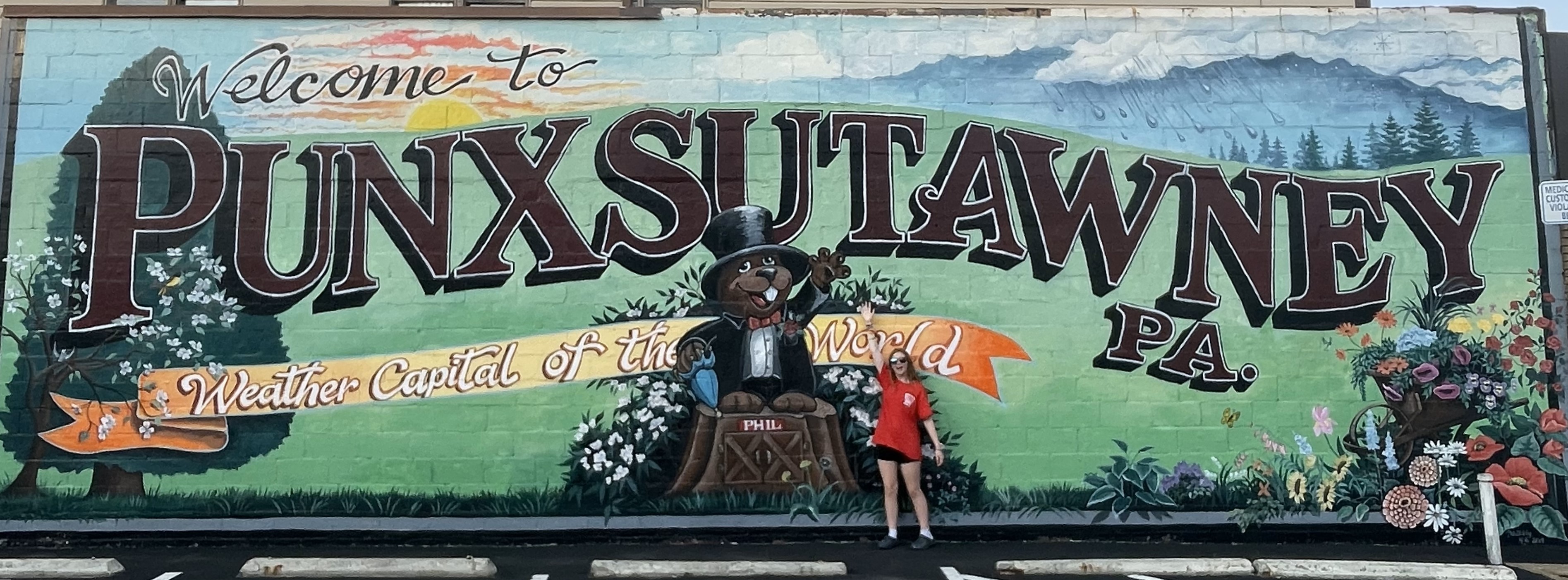
To round out our day and bring the mood up, I turned north to Punxsutawney, Pennsylvania, “the weather capital of the world,” and home to the famous spring forecaster Punxsutawney Phil. Although the movie “Groundhog Day” (one of my personal favorites), was actually filmed in Illinois (yeah, really), I did find us a lovely B&B just on the main town square that was close enough for me. We were just a hop, skip, and a jump from Phil’s Burrow, the home of Punxsutawney Phil, his spouse Phyllis, and their kit. After visiting Phil, whom C declared as adorable before asking if she could have a pet groundhog, we went for a nice evening walk in search of the Phantastic Phils, the six foot tall fiberglass groundhog statues placed around town.

One of the 40-something Phantastic Phils and C hamming it up at Gobbler’s Knob

On Sunday morning, C and I made the pilgrimage to Gobbler’s Knob where each on Groundhog’s Day since 1887, Punxsutawney Phil, “Seer of Seers, Sage of Sages, Prognosticator of Prognosticators and Weather Prophet Extraordinary,” is coaxed from a tree stump and held up before the eager crowds then makes his prediction of the coming Spring. I doubt we will ever make it for an actual Groundhog’s Day (accommodation books out years in advance and one has to wake up in the dead of night in the middle of winter; me I am not a fan of the cold or middle of the night galivanting), so this would have to do. We chased down the locations of a few more Phantastic Phils and then it was time to go. C’s dad picked her up for a week in New York and I headed home.

I don’t know why it continues to amaze me how restorative even a few days away can be, but throw in beautiful weather, lovely drives, and historical, natural, and cultural sites, and it can truly be perfect.

Tulips, Falls, and Hallowed Ground: April 2024 in DC

April is usually the real beginning of spring in Washington, D.C. This April also marked 15 months since our abrupt departure from Guinea and just a little over a year since we moved into our permanent apartment in the northern Virginia area. It was that last marker that feels the most significant. While my daughter C and I have been in and out of the northern Virginia area many times for training, some shorter, some longer, this April signaled a real milestone: the longest we had been in one place in the United States. For my daughter, it would be the longest in her 12 years. For me, the longest since 2008.

There are times when it feels strange indeed. To be a U.S. Foreign Service Officer who is not overseas. Of course, many U.S. FSOs work at headquarters in D.C. It is just the first time I am doing so, and I am still trying to wrap my head around it at times.

I decided I should be taking more advantage of the area with all of the history, culture, and nature close by and within just a few hours drive.

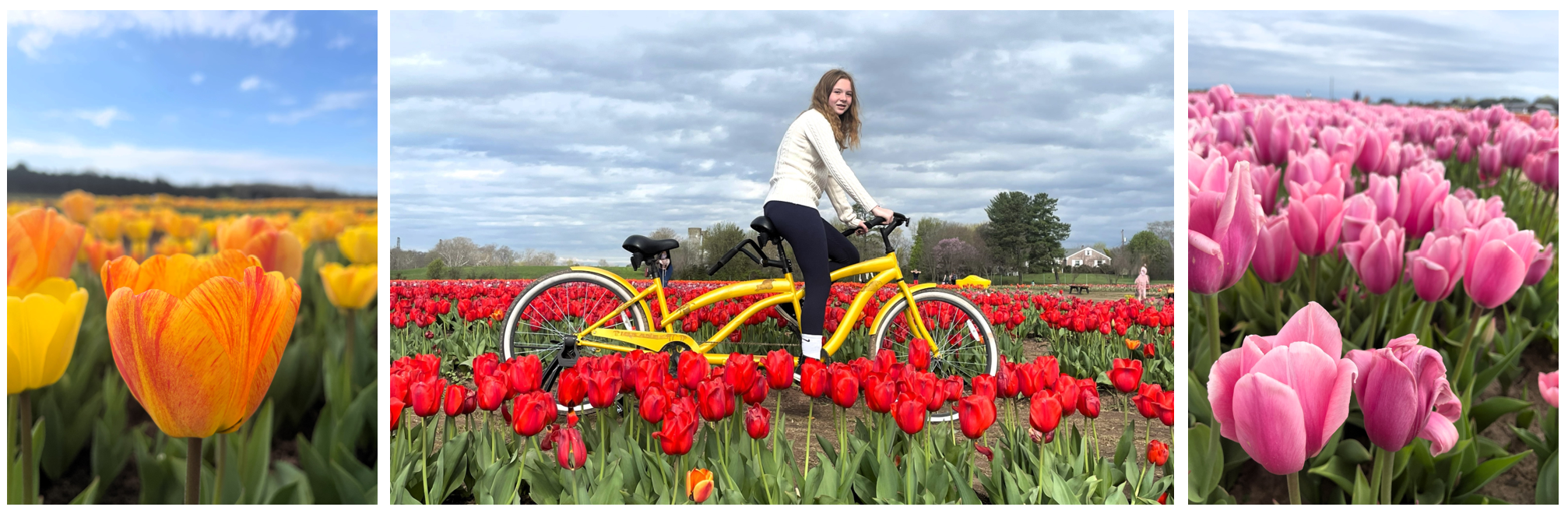
A sea of multi-colored tulips at Burnside Farms

Our first stop this month was the Burnside Farms’ Festival of Spring. I first heard about it last spring, but had not been quick enough to get tickets before it sold out. Yet for the first time in a long time in America, I could tell myself, well, there is always next year! Lucky for us, this year my daughter had a day off school scheduled in the middle of the festival and Wednesday morning tickets were much easier to come by. And when I found out a friend of mine was in town from Nicaragua for training and had brought her son along, we took her son with us to see the flowers. Rain was in the forecast, but again we lucked out; it was partly cloudy at first and then blazing blue skies.

I have long wanted to see the tulip blooms in the Netherlands. I have been to the country twice, but both times were in July, far too late to see the tulip fields. Burnside Farm’s spring festival was a nice substitute.

High and fast waters churn over Great Falls

The following Monday, C again had school off. I took her and her friend visiting from Nicaragua to Great Falls National Park for a short hike. With our annual National Park pass bought for our visits to Joshua Tree and Death Valley last December, we could visit Great Falls for no additional fees. It is extraordinary to me that these falls on the Potomac River and the protected wilds around them lie just 17 miles outside our nation’s capital. So close, and yet a world away. I came here a few times as a kid, with my mom and sisters I am sure, possibly with school groups. I came here again with C’s dad when she was a baby. We visited here when we were back from Malawi to hike with friend’s from there. C and her friend seemed to have a good time — the falls were cool of course, but there also seemed me to be a lot of Pokemon in the area they could catch with Pokemon Go… Well, sigh, they were still in nature.

The War Correspondents Memorial Arch

The next weekend, C and her Scouting troop had a two-day camping and bicycling at the Antietam National Battlefield, just outside of Sharpsburg, Maryland. I had often thought of visiting Antietam. Even once, maybe fifteen years ago (?), I drove to the entrance gates and grabbed a brochure intending to get out there sometime soon. I opted then to volunteer to drive my daughter and other Scouts to and from the campsite, but spend two nights in a nearby hotel doing some sightseeing on my own. I promised my daughter that should I see her at Antietam, I would pretend not to know her.

Getting C into Scouting has been one of the highlights of being in the U.S. The Antietam trip would be her fourth camping trip in the six months since she joined. I have been so impressed with all the skills, camaraderie, and confidence she has gained. And I loved the idea of us both seeing the same place around the same time, but in different ways.

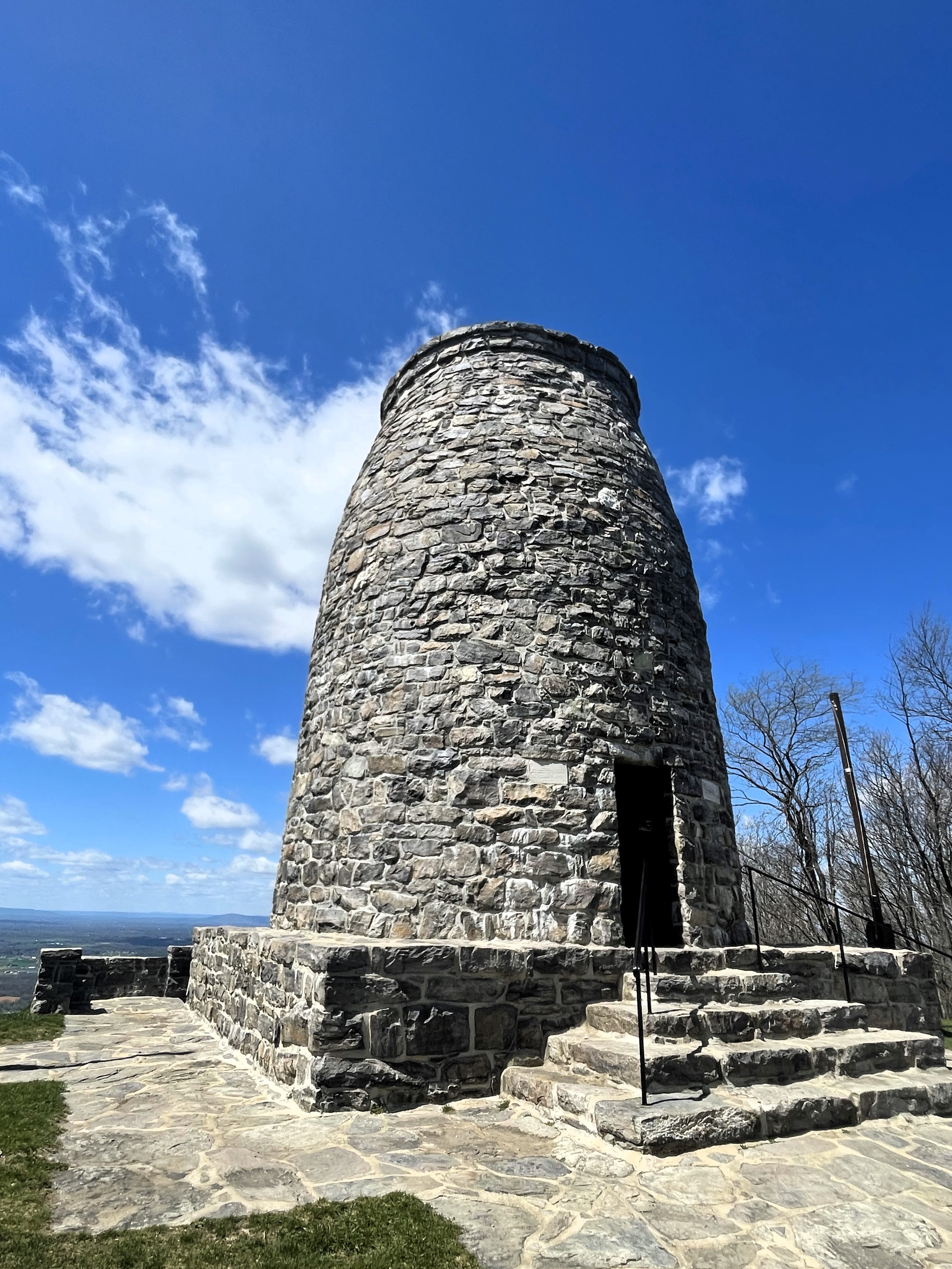
Unlike C, who was camping at Antietam and traveling by bicycle, I had a car and decided to make the most of my day on my own. It turned out to be a day full of American history. I first headed to George Washington Monument State Park, just outside of Boonsboro, Maryland. Along the way, I drove through Gapland and stopped at the site of the War Correspondents Memorial Arch, built by George Townsend in 1896. Townsend worked as a Civil War correspondent in his early 20s and at just age 24 became famous for his articles on the Lincoln assassination. Outside of Boonsboro, I made my way to the site of the nation’s first monument to our first president. The squat 40-foot tall stone tower was reportedly built by the townsfolk of Boonsboro in a matter of days in 1827, twenty-one years before construction began on the more famous monument in Washington, D.C.

Though the temperatures were a comfortable warm and the skies a dazzling blue, the wind was high, especially atop South Mountain, and it whipped around the monument making it difficult to stay long to enjoy the view. And time was of the essence; I just had the one day to make the most of it.

On my way to Antietam, I made a quick stop at the Kennedy Farm, the location where for three months abolitionist John Brown and his fighters planned and practiced their doomed raid on Harper’s Ferry. Though part of the National Park Service, I was the only person there at the time. There are no park rangers or staff on the site; there is just a small lockbox just inside the door where visitors can leave a donation. Given its importance, I had expected more. But I suppose it is enough that it is preserved.

I made sure to return to Antietam as the sun was setting to experience it without the crowds and capture a sunset photo

Then it was on to Antietam, where I spent the rest of the day, some walking, some driving. I never did run into C or her troop, though we talked about their visit on the hour and a half drive home the next day. We talked about the Potomac River, which we had just seen the frothing at Great Falls a few weeks before, to where General Robert E. Lee had crossed into the North, and the river as it passed near the battlefield. We talked of the significance of Antietam, the U.S.’ bloodiest single day in American military history, from the first battlefield photography to the role of Clara Barton, who would go on to found the American Red Cross. It is important to me that while we are in the U.S., that my daughter, who has spent thus far the majority of her life overseas, gets to experience the conveniences of our country but also is exposed to our history.

Fast moving small falls heading to the Great ones

C and I wrapped up our April 2024 local sightseeing with a trip to the portion of the Chesapeake and Ohio (C&O) Canal National Historical Park on the Maryland side of the Potomac, across from Great Falls I remember as a kid wanting to visit this spot (and for some reason I was desperate to ride a canal boat through the old locks), but only recall us ever visiting Great Falls on the Virginia side. With C spending so much more time outdoors with the Scouts and her love of scrambling over boulders after our trip to Joshua Tree, I figured we were up for a hike along the Billy Goat Trail.

We were blessed with yet another incredibly gorgeous day, perfect for a hike by the falls. While there were a good number of other folks on the trail, it was not what I would call crowded, so it had just the right amount of hiking without a lot of waiting or noise from other hikers without the “oh my goodness, I haven’t seen another person in an hour, I hope I am not lost forever” feeling. We saw a good amount of wildlife from a black snake to a great blue heron and frogs to geese, had a wonderful workout, and some great mother-daughter time.

C surveys the Potomac River front an overlook on the Billy Goat Trail

All-in-all it was a great month for activities around our area. And while this might seem to some not to be the most exotic of blog post destinations, especially considering the locations we have traveled to, for us, who have spent so much time outside the country, the ease in planning and executing visits to such places and the variety of places to go and things to do, is not something I want to take for granted. In the majority of places where we lived, we had only a fraction of these sorts of things to do. We are looking forward to seeing more!