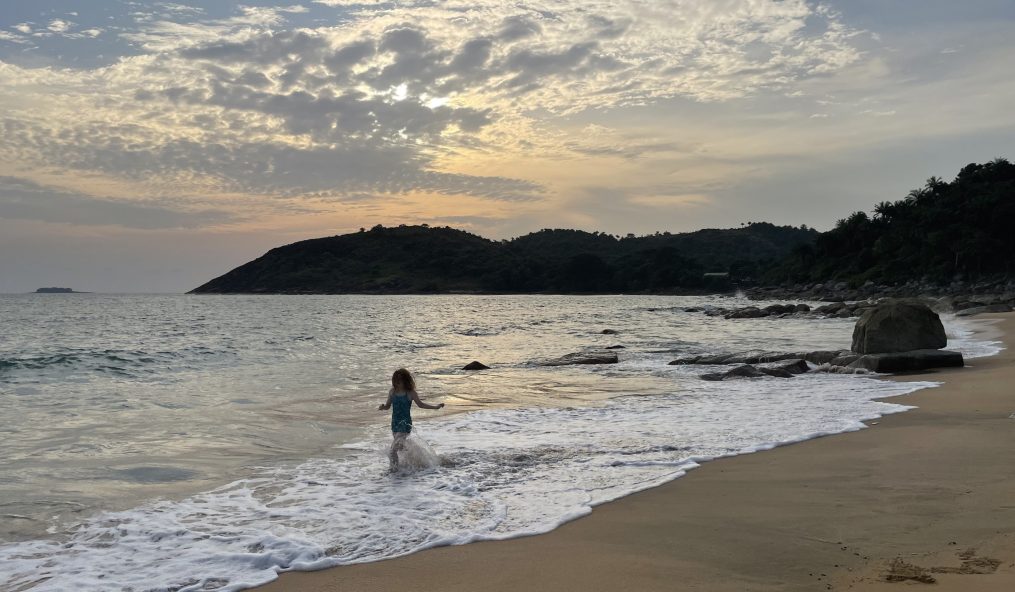
This is the sixth installment of my daughter’s and my trip to Kosovo, Albania, and Montenegro in August 2026.
We left Podgorica on a smooth, straight highway, but about an hour later turned toward Kosovo and began to climb once more into the Accursed Mountains — the southernmost and highest subrange of the Dinaric Alps. The next ninety minutes took us along twisting mountain roads with sweeping vistas at every turn until we reached the Montenegrin border crossing. After the hiccups we’d faced entering Montenegro, I was grateful that this crossing went off without a hitch. Interestingly, the checkpoint wasn’t at the actual border; we still had about four miles to go before entering the narrow Kulla Pass, then another nine miles of serpentine road with breathtaking panoramic views before reaching Kosovar immigration.
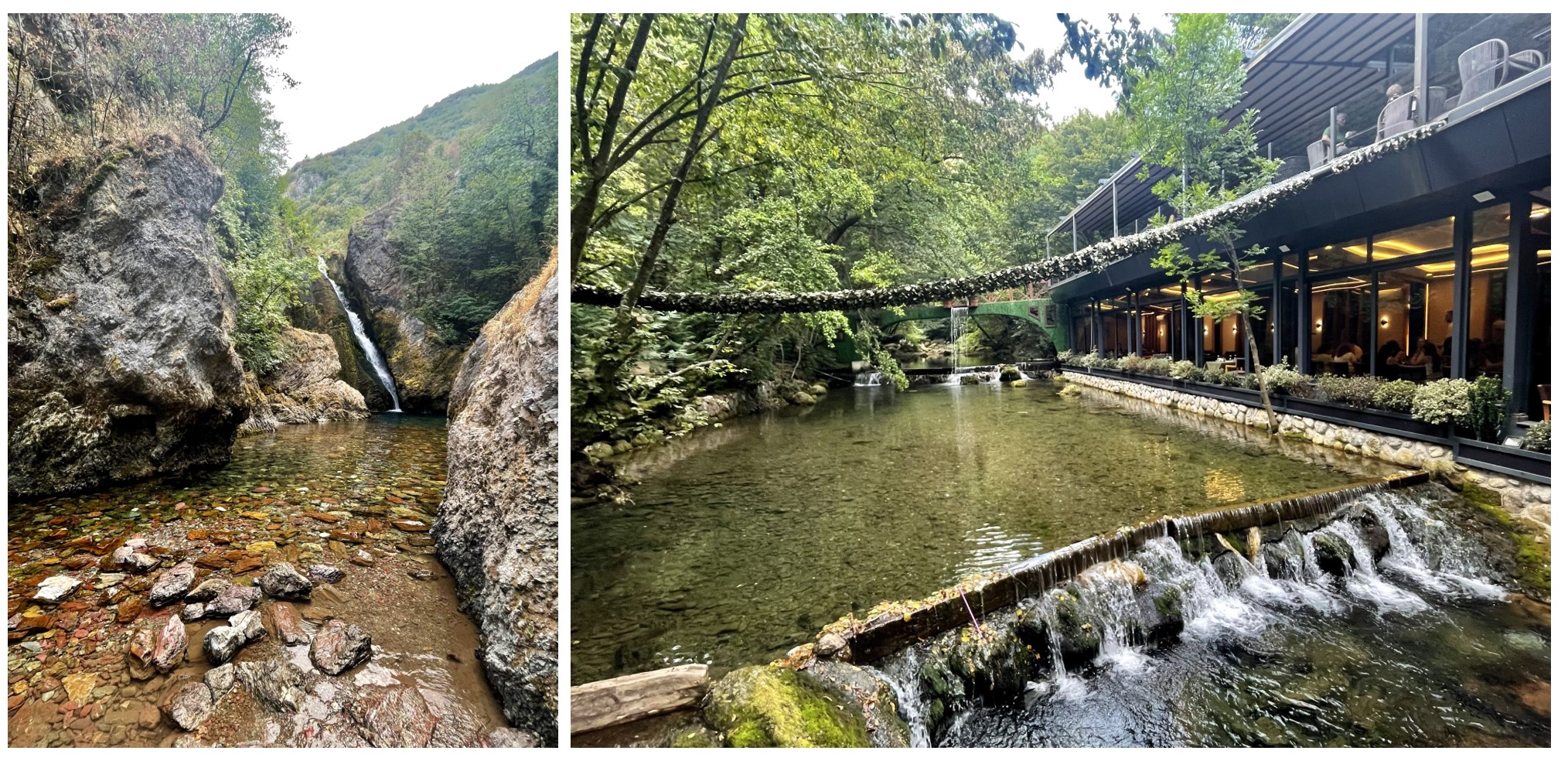
From the border, we descended toward Peja but stopped first at Ujëvara e Drinit Resort (Waterfall of the Drin Resort) for lunch and a view of the White Drin Waterfall. The resort was stunning — all dark wood and stone, blending well into the forest along the White Drin River. Despite it being a Monday, the resort was lively, full of families and friends enjoying a day out. I could not help but think that if I lived in Kosovo, this would be the perfect weekend getaway. After a lovely lunch, we took a short forest walk to the 75-foot waterfall. It may not have been the most spectacular waterfall I’ve seen, but it was undeniably pretty — and the forest setting was peaceful and restorative. From there, we continued on to Peja.
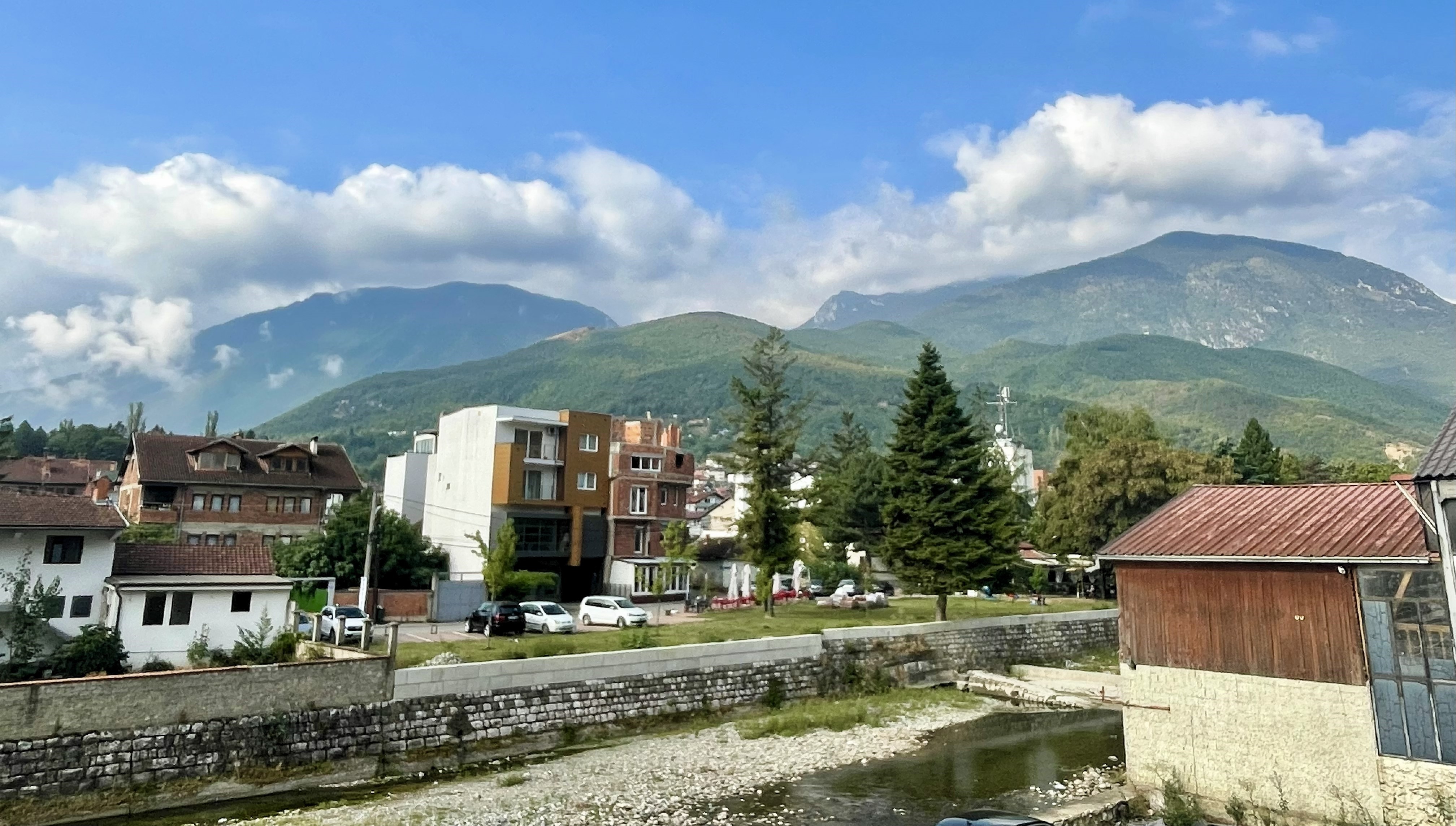
Arriving in Peja took longer than expected. It was still the summer holiday season, and many Kosovars living abroad were visiting their families. The roads were bumper-to-bumper, and Google Maps led me astray more than once. By the time we finally checked into our hotel, it was after 4 p.m. Though we were ready for an early evening after the long drive, we still took an hour to walk through the town.
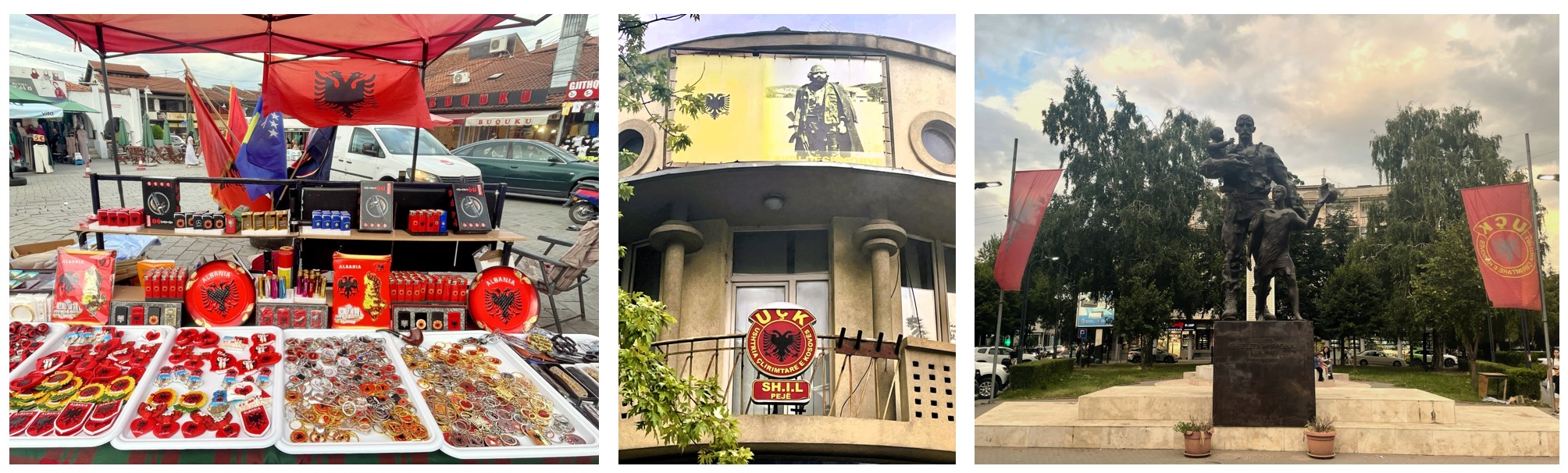
We walked a few blocks to the Peja Bazaar, which dates back to the Ottoman period and was once the center of trade in the city. The market was destroyed in 1999, during the Kosovo War, and rebuilt using the traditional style. Most of the shops weren’t aimed at tourists — they sold gold jewelry, carpets, furniture, clothing, toys, and other everyday goods. But one stall near the 15th-century Bajrakli Mosque at the market’s center stood out: it was filled entirely with Albanian paraphernalia, and I remembered back to when we were in Prizren.
When we were in Prizren, we saw many signs with the letters “UCK.” My daughter pointed one out and guessed it was supposed to be a bad word, missing a letter. After we kept seeing it — along with Albanian flags, placards on buildings, and other symbols — I decided to look it up. UÇK stands for Ushtria Çlirimtare e Kosovës, or the Kosovo Liberation Army. Curious, I asked a souvenir shop clerk if UÇK had become a political party, but he explained that it was disbanded in 1999. When I asked why, then, there were still so many signs and goods today, he said, “Because it is still important to Albanians and Albanian culture.” There were almost no Kosovar flags or souvenirs to be seen.
The following morning, C and I set off on another adventure — a visit to the Dečani Monastery, about ten miles south of Peja. Founded in the first half of the 14th century by Stefan Dečanski, King of Serbia, the monastery also serves as his mausoleum. It is one of four churches in Kosovo designated as UNESCO World Heritage Sites under the collective title Medieval Monuments of Kosovo, recognized for their blend of Byzantine and Romanesque styles and their remarkable wall frescoes. This was the second of those sites we visited, following Our Lady of Ljeviš in Prizren, and it is the largest medieval church in the Balkans.
I had not realized Dečani’s complicated history. Because Stefan Dečanski is such a significant figure in both Serbian history and the Serbian Orthodox Church, the monastery remains deeply important to Serbia today. Serbia placed the site under legal protection in 1947, but it now lies within Kosovo’s borders — though Serbia does not recognize Kosovar independence. To ensure the security of the site, the monastery has been under the protection of NATO’s Kosovo Force (KFOR) since 1999.
I, having not done my customary research, was, however, completely unaware of the above before setting out, and was taken aback when we reached a checkpoint on the road leading to the monastery. We passed through fine, but once at the site, we had to check in with KFOR soldiers, who asked for our passports, which, to my dismay, I had left behind. I could hardly believe how unprepared I was, and for a moment I thought we might have to drive all the way back to Peja to retrieve them. I offered my driver’s license instead and pleaded my case, and after a brief discussion with their command, the soldiers agreed to let us in.

The weather that day was perfect — bright, sunny, with a deep blue sky overhead. The church is enclosed within defensive walls that also contain administrative offices, dormitories, and a small hospital. Visitors are not permitted to enter any of those areas, only the church itself. The building is beautiful, constructed of pink and white marble that appears more white and golden in the sunlight. The doorframes and supraportes are intricately carved, each detail precise and deliberate.
Then we stepped inside — and I was not at all prepared for what awaited us. Every inch of wall and ceiling was covered in frescoes depicting scenes from Serbian history and Christian tradition. They were vibrant, detailed, and utterly stunning. Both C and I were transfixed, slowly wandering through the church with our heads tilted back.
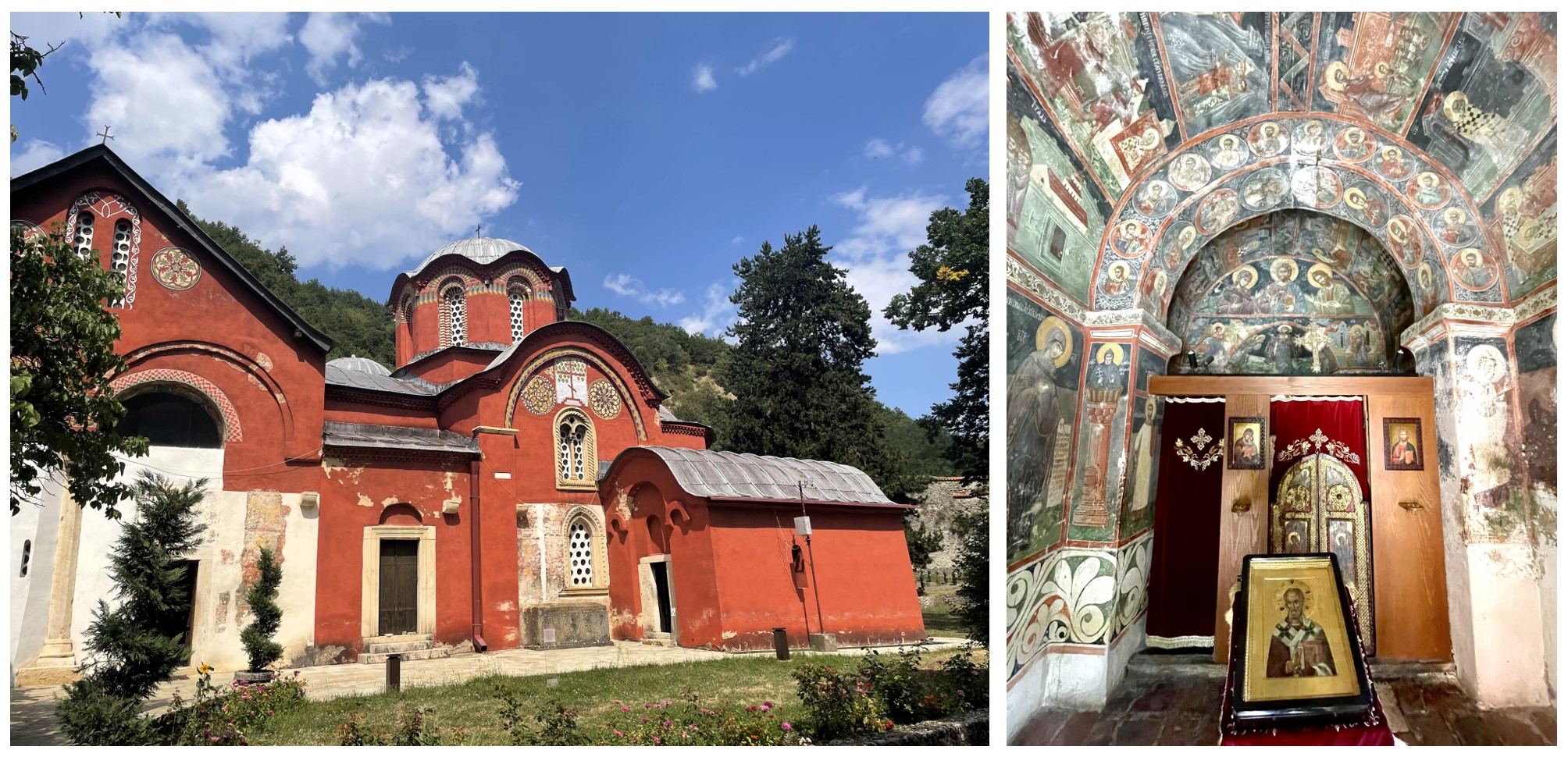
From Dečani, we headed back to Peja for lunch and to pick up our passports before continuing to the Patriarchate of Peć, another of the UNESCO-designated Medieval Monuments of Kosovo. The Peć monastery was guarded by police rather than KFOR, though passports were still required for entry. Unlike Dečani, Peć is set within a walled garden, and instead of marble, its 13th-century church has a bright red plaster exterior — the same color as when it was first built. There were also more visitors here; at Dečani, we had been two of only a handful, but Peć had at least a dozen, along with a few very watchful nuns. The frescoes, though less extensive than at Dečani, were just as beautiful. We enjoyed the visit, though by the end, we had certainly had our fill of ecclesiastical art for the day.
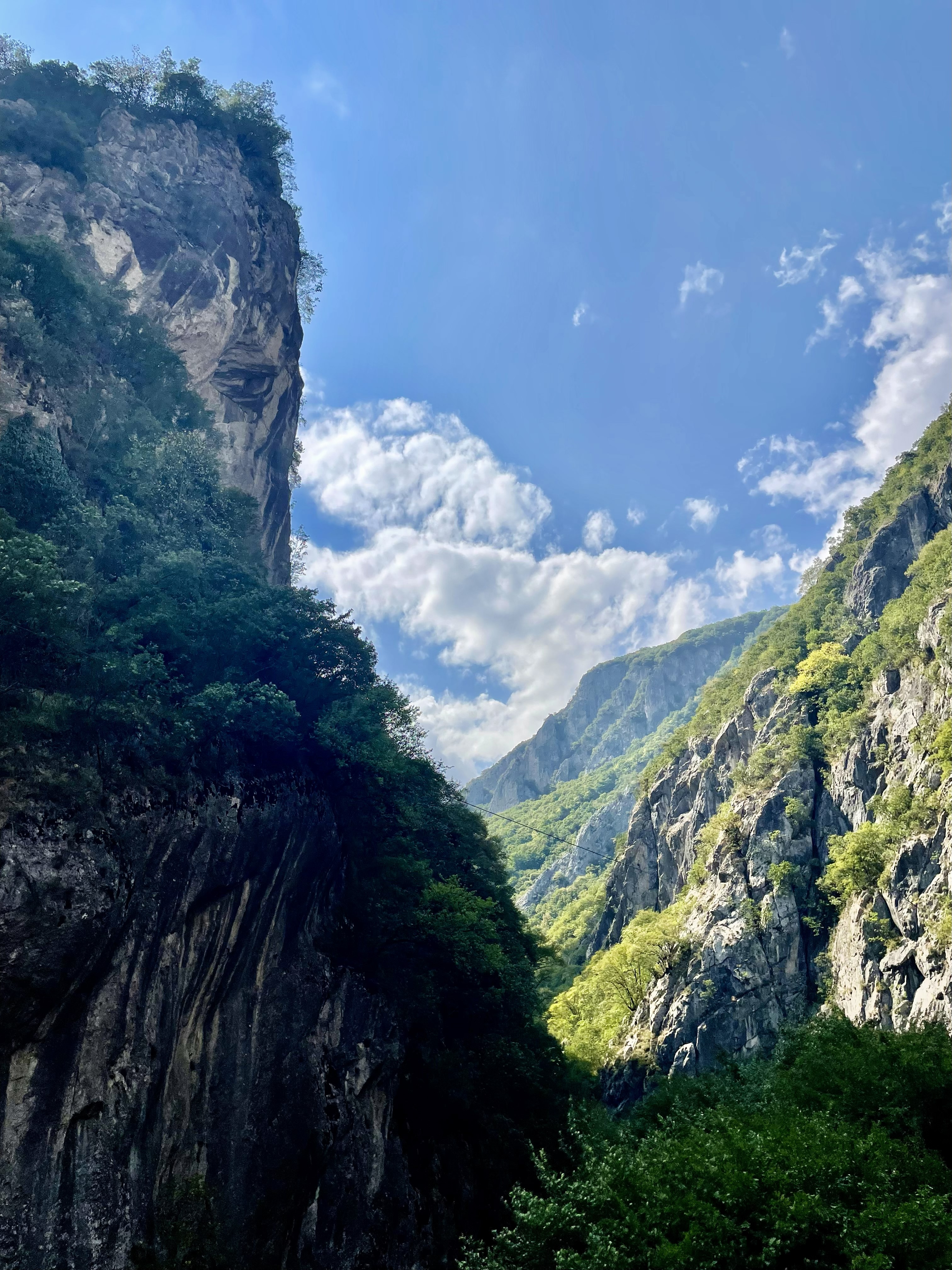
After Peć, we continued up the road into the Rugova Canyon. Though we were both tired, it was an absolutely gorgeous day, and I wanted to see at least a few of the viewpoints. C, however, was ready for a nap in the car, so my stops were brief — just long enough to take in the view before moving on. As we’d encountered so often on this trip, the mountain road was narrow and winding, but this stretch added a few short tunnels carved straight through the rock. I drove only as far as the Hotel Panorama, about eight miles in, before turning back. The scale of the canyon was humbling — sheer cliffs, deep shadows, and a vastness that was beyond words.
We returned to our hotel in Peja completely knackered — we had packed a lot of sightseeing into one day. After resting for a few hours, I headed out alone at the golden hour while C stayed behind. That was fine; she had already shown far more interest in art, architecture, and history on this trip than I had expected, and I welcomed the chance for a quiet walk. I strolled down to the Peja Town Square, a broad pedestrian area with shops, hotels, and restaurants framed by interesting architecture. From there, I crossed the bridge by the old clock and followed the Lumbardhi Peja River until I reached the stone bridge, where I crossed again. I was hoping to find traces of the city’s older past — and did: Haxhi Zeka’s Kulla, Haxhi Bey’s Hammam, and another kulla nearby. The kullat, traditional stone tower houses found throughout the Balkans, are remarkable glimpses into Peja’s history. Still, I couldn’t help but feel the city could do more to showcase these pieces of its cultural heritage.

Our time in Peja had come to an end, and the next day we would return to Pristina to begin the final stretch of our journey through Kosovo. It had been a full few days — rich with history, beauty, and more than a few winding roads.
 The Wanderlust Diaries