
On our fifth day in Japan, we were off for a morning adventure in Asakusa. Tucked away on a nondescript side street in the heart of shitamachi or Tokyo’s “low town,” one of the oldest parts of Tokyo, we found MAIKOYA, where we would be making the Japanese confectionary called wagashi. Inside and up a flight of stairs we were welcomed into a traditional world of Japanese tea. We placed our outdoor shoes in a bin and donned slippers, then shuffled into a tatami mat room. There our instructor greeted the four of us and a couple from Germany, told us about wagashi, and demonstrated how to make them. We all followed our instructor’s lead to first make a pretty little sweet that resembled a cross between a flower and a pumpkin and then we were free to make whatever we wanted for our second. I felt rather pleased with my cute turtle. My daughter made a colorful creature she named “Stevie the Mosquito.”
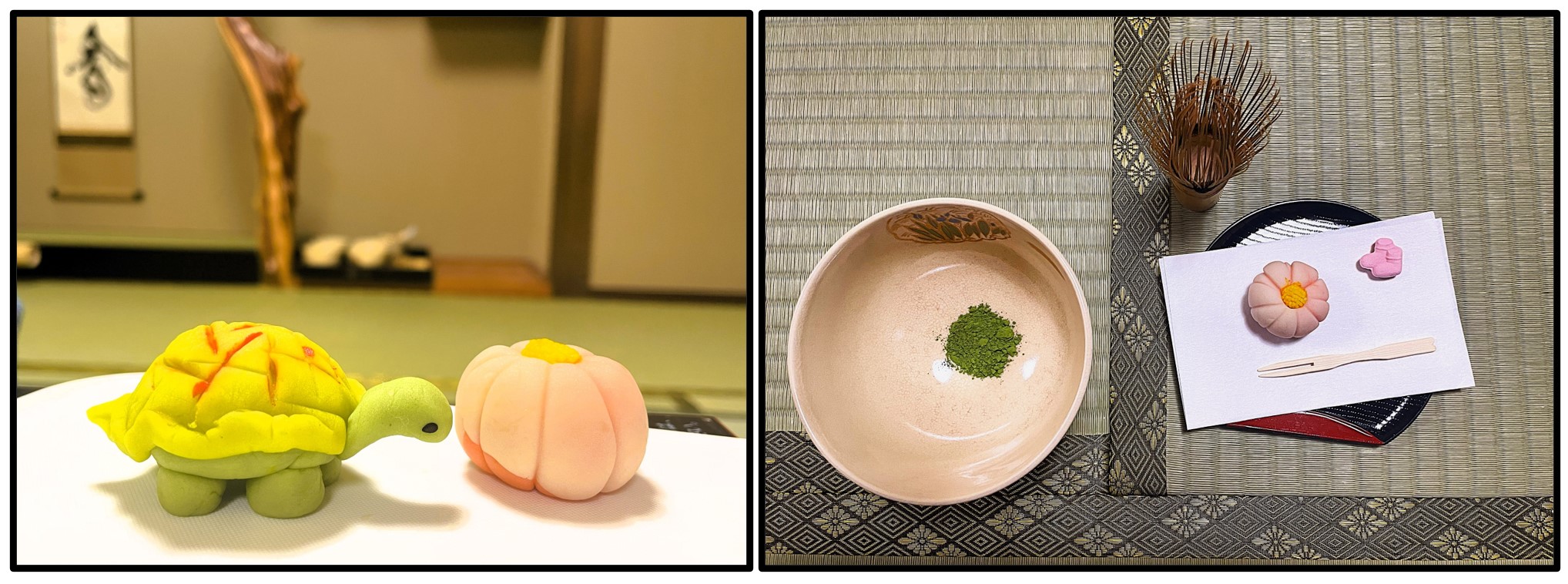
Our instructor had us pack up our wagashi and then ushered us into another room – men to one and women to the other. In our room, we each selected a kimono and then the women got to work dressing us up in them and styling our hair. Putting on a kimono, with several layers of shifts underneath the colorful outermost robe is complicated. But these pros had us dressed and hair elaborately braided and/or pinned up in no time at all. Then we returned to the previous room to learn about the tea ceremony. The instructor again gave us a cultural lesson, beautifully demonstrated the stylized preparation, then let us give our own tea a whirl. Then we enjoyed our flower wagashi with our tea. Afterward, we were free to take photos of ourselves in the kimono in one of the rooms or in their rooftop garden. This activity was one of my favorites from the trip.
We gorged ourselves on sushi and other goodies delivered by conveyor belt at the nearby Kura Sushi and then made our way over to Senso-ji; completed in the year 645, it is Tokyo’s oldest temple. We entered from the western gate, we stopped first to play a few rounds of kingyo-sukui, a traditional Japanese game where one tries to catch goldfish using a paper scoop. It is another vestige of the Edo period, but has become so popular that there is now a National Goldfish Scooping Championship.
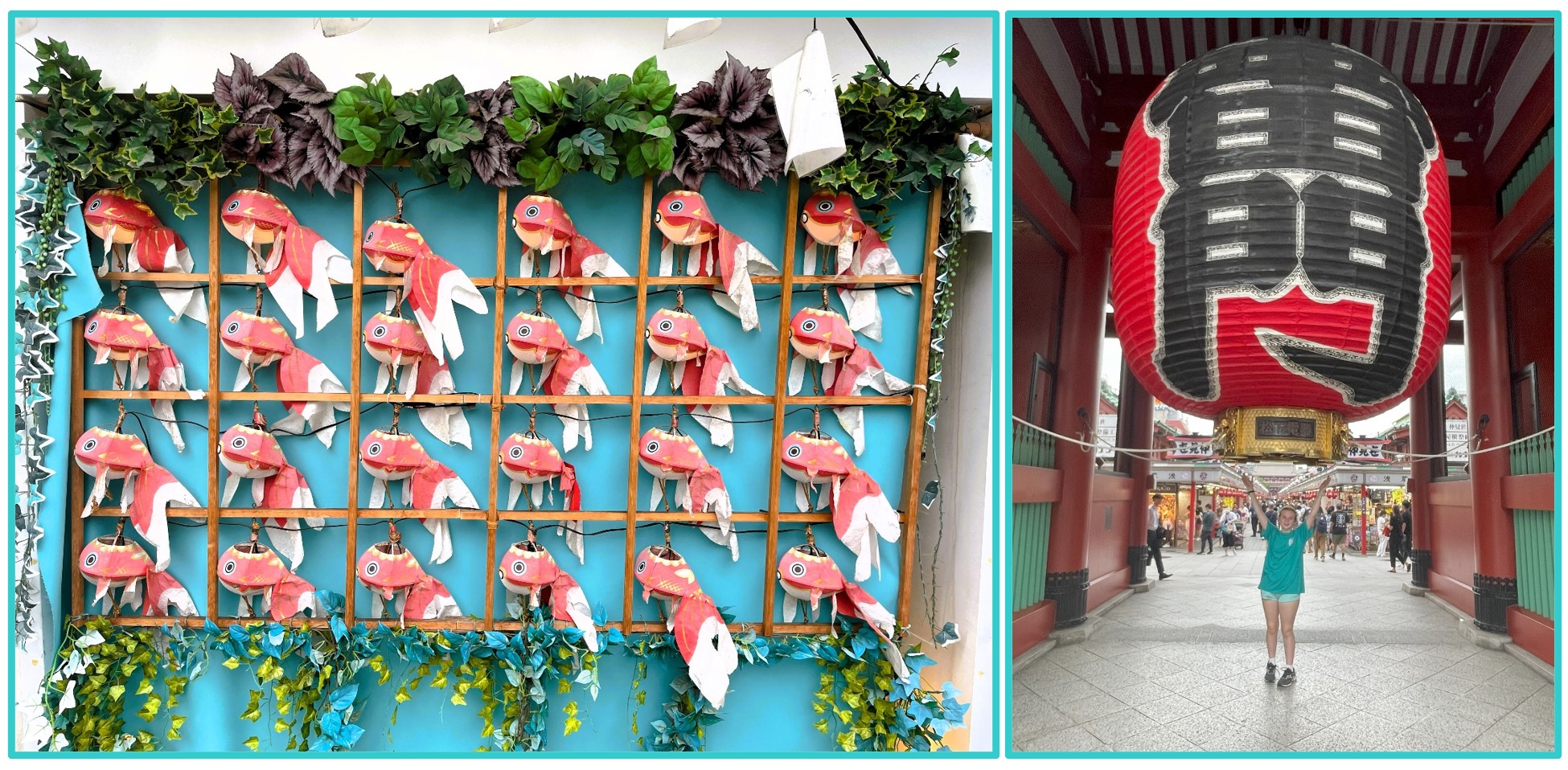
At Senso-ji we took only a short time to marvel at the main hall and five story pagoda. The kids made a beeline for the drawers of fortunes; I pulled a bad fortune which told me “Everything will come out to be bad, so you should be patient.” I think it meant that if one waits long enough even the bad can become good. At least I hope so. We spent the greatest amount at Senso-ji along the Nakimase shopping street between the Hozomon Gate and the Kaminarimon Gate buying ourselves ice cream and good luck figurines.
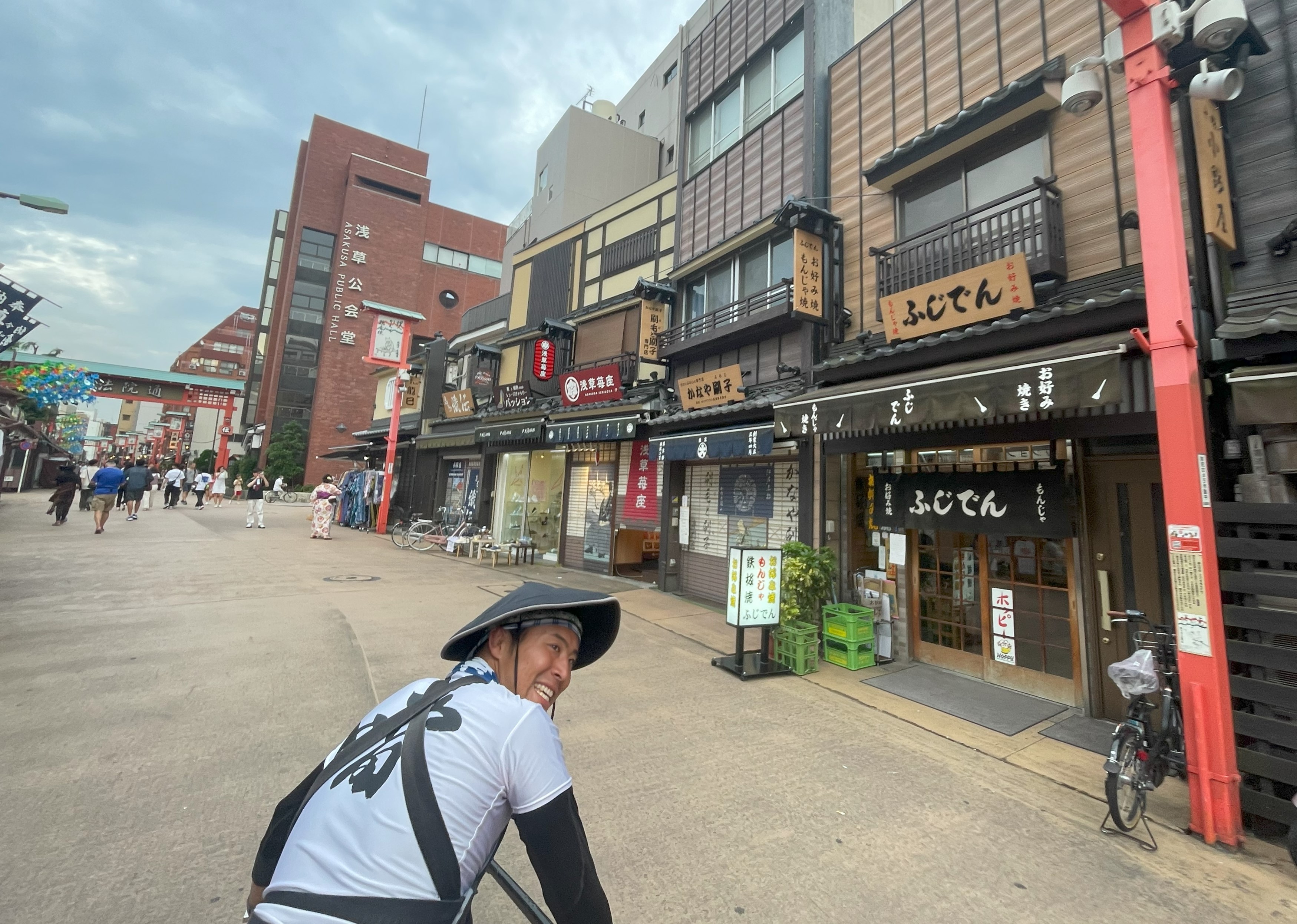
After exciting the complex we caught sight of some rickshaw drivers and opted for a spur of the moment 45-minute tour through the streets of Asakusa. These were traditional rickshaws pulled by Japanese men wearing traditional garb, including conal straw hats and split toed (called tabi) booted socks. It was a fun tour; our drivers (runners?) were funny and full of information. The upside is we covered more ground in a shorter amount of time. The downside is we passed sights too quickly and I realized there was far more to see in Asakusa; I could have used an extra day or three just in that neighborhood.
This was already a full day, but we were not done! Our rickshaws dropped us off at the station so we could take the above ground train across the river to the Skytree. CZ and I knew we wanted to visit one of Tokyo’s towers but had not quite settled on Tokyo Tower or Tokyo Skytree. But finding ourselves just across the river in Asakusa and still with energy to burn, the decision seemed an easy one to make. At 634 meters (2,080 feet), the Tokyo Skytree is the world’s tallest tower.

Though it is possible to go as high as 450 meters, we chose to visit only the lower Tembo Deck at 350 meters (1148 feet). CZ had heard that the view was better at the lower deck. And with an already full day, we might only have so much energy left. Our timing was pretty great as we could observe the day turn into night and the lights of the city turn on.

Our sixth day began with a tour of the Imperial Palace gardens. The Chiyoda Palace has been the seat of the Japanese empire since 1868, but before then the site was used as the palace of the Tokugawa shogunate from 1457, at one point the largest fortress in the world. I wanted to include as many elements of Japanese culture in our Tokyo trip, and I felt a visit to a Japanese castle was a must. Tickets for the 45-minute tour of the inner compound were free, but had to be secured a month in advance. Unfortunately, this tour turned out to be one of the biggest disappointments of the vacation. As we joined the crowds in a main room for a pre-tour briefing, our guide joked that the English tour groups were always the largest. It didn’t mean so much in that room, but once we started to move en masse through the grounds, I realized the joke was not funny at all. We had somewhere between 60 and 80 or more in the group. I had flashbacks to a similarly sized tour group at the Tower of London the summer before. Like then, it was hard to keep one’s interest when constantly jostling for a space closer to the guide; unlike then, our Japanese guide did not have the voice projection of a Beefeater. It was hot and muggy; we couldn’t hear the information, the kids were bored out of their minds, and I was bummed my palace tour plan had turned out so lame. I looked longingly at the small French and Spanish groups. Surely, the Imperial Household Agency could have found another English-speaking guide or two to break up our group?
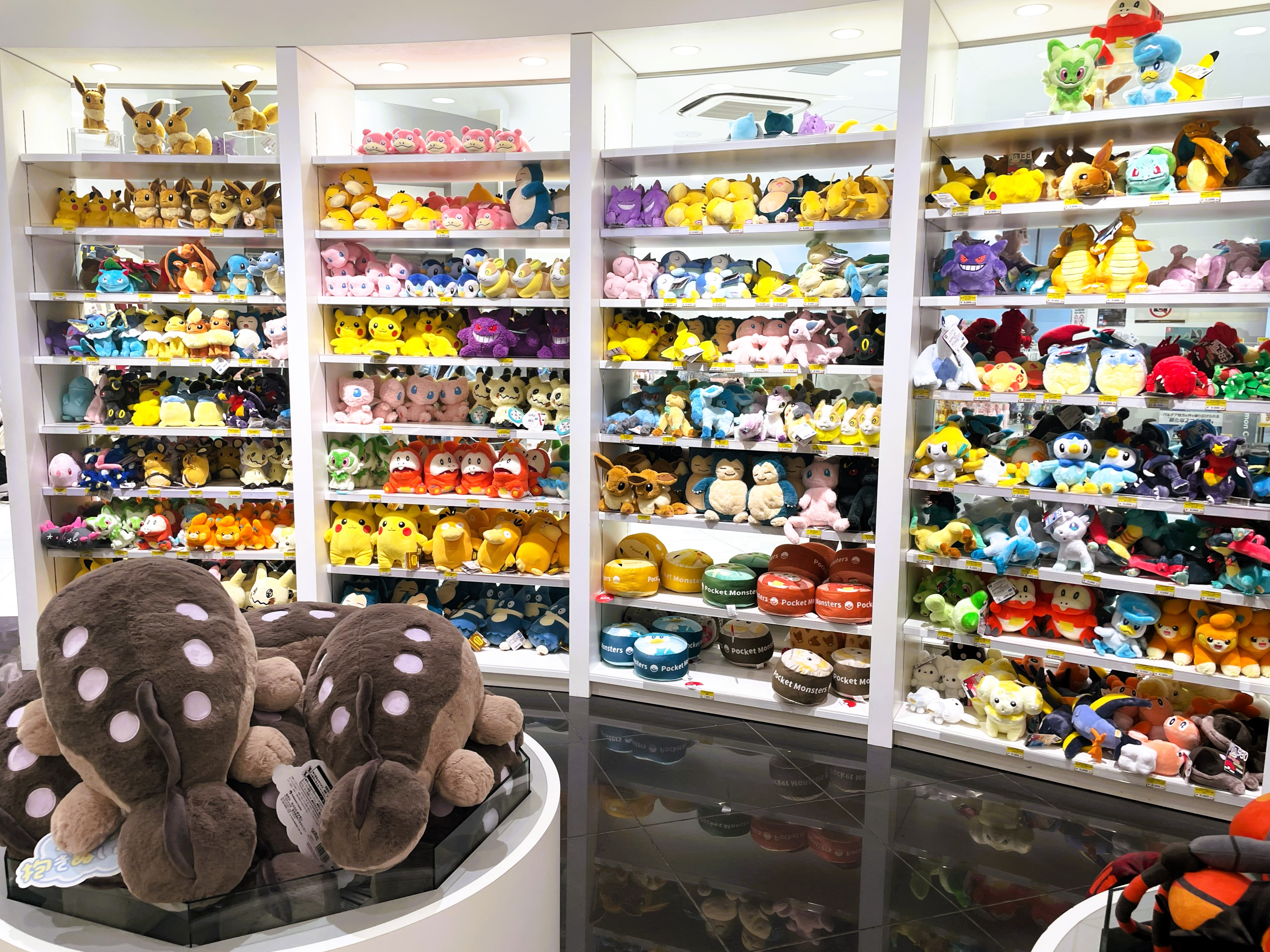
No worries, lunch and a visit to the Pokémon Center cheered us up! My daughter C has been a Pokémon enthusiast since she was six years old. While other kids were memorizing dinosaurs, she poured over her Pokémon encyclopedia, learning the names, types, attacks, and evolutions of every single one. She owns many figurines and plushies, and the Pokémon Center in Tokyo, with its many exclusive items, is like a mecca for those who love Pokémon. She had been saving her allowance and gift money for months for our Japan trip, in a large part for this day. I failed to get us seats in the uber-popular Pokémon Cafe, but I could still get her to plushie heaven.

Afterward, CZ and Little CZ returned to their hotel to do some laundry (they had been traveling for two weeks before meeting up with us) and C and I headed to Ginza to see some Kabuki theater. Kabuki is a classical theater art form that has been recognized by UNESCO as an Intangible Cultural Heritage of Humanity, and a theater has been in Ginza since 1889. Full length performances last about four hours, which can discourage all but the most dedicated theatergoers, but the theater or Kabuki-za, offers tickets for single acts. Unfortunately, despite all the planning that I put into this trip, I had the dates wrong for the performances and the theater was on a week+ hiatus. Another trip fail.

To make up for this, we walked over to the Nippon TV headquarters in the ultramodern Shiodome section of Tokyo to watch the chiming of the massive clock designed by Studio Ghibli co-founder Hayao Miyazaki. The copper and steel Steampunk clock is three stories tall and 60-feet wall; in the front it stands on two giant bird-like talons with two additional talons jutting from the clock face. These are just a few of the many small details: there are characters that move and doors that open and even a little elevator that all play out during a 4-minute long performance reminiscent of an animated Studio Ghibli short film.
C and I then returned to our hotel to rest. We had had a busy few days and needed some downtime to prepare for more adventures in Tokyo.
 The Wanderlust Diaries