Southern Caribbean Cruise, Part 4: Three Days in Puerto Rico

C on a street in Ponce’s historic district

After our Southern Caribbean cruise, we ended up back in San Juan, Puerto Rico. I planned for us to spend three days in Puerto Rico taking in some sights.

On the first morning, we took a taxi from the cruise terminal to our hotel in Condado Beach, left our luggage, and headed out for a walking tour of Santurce, the largest and most populous neighborhood in San Juan, and a place with a long history of diverse immigration and cultural expression. I had read an article online about the murals of Santurce and was determined to see them. (I have a bit of a thing for murals, graffiti, and painted signs such as those we saw in Brussels, Luxembourg, Lisbon, Kenya, Malawi, and even Guinea.)
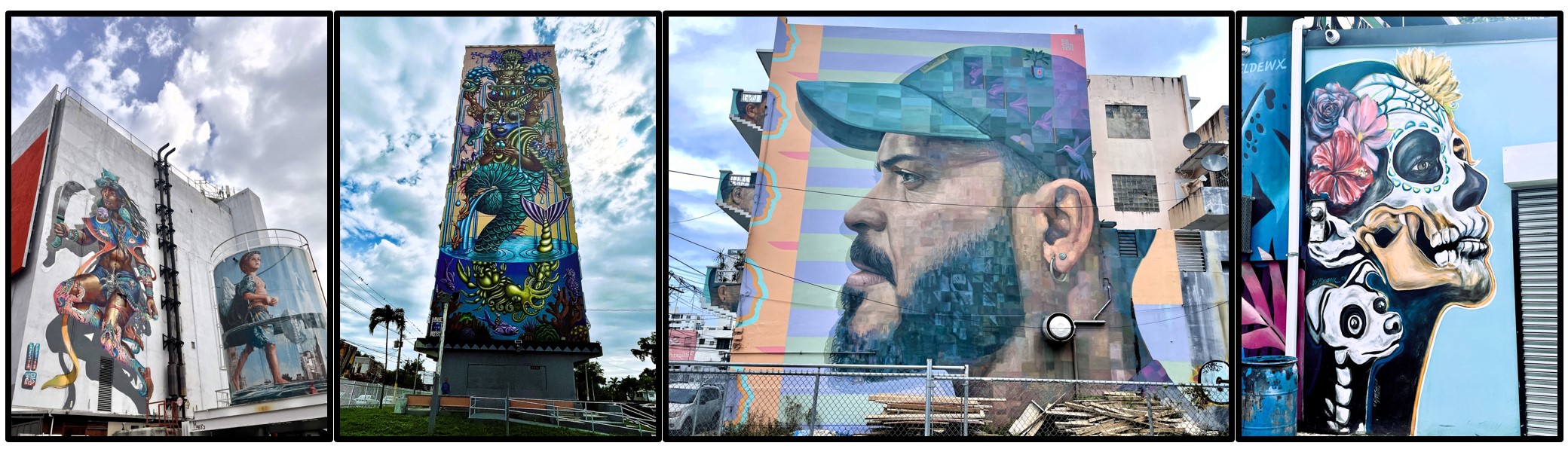
Some of the dozens of wall murals we found in Santurce

From our hotel, we walked about 30 minutes to Calle Loiza, which the article indicated was the center of the street art renaissance in Santurce. We crossed up and down streets and tried asking some locals, but I could not find the ones I was specifically on the hunt for. We did see many fantastic examples of street art, but none of those I saw in the article. It was more than a little frustrating as there seemed to be no information I could find online that would map out where to find these beautiful murals, some of which were painted by well-known international artists. Even those who lived in San Juan or in Santurce could not tell me where certain artworks I found online could be located. One of our hotel clerks told me Santurce was too large a place and the murals spread out. In an area of Santurce, where I had read that not only was there a large concentration of murals, but also a burgeoning restaurant scene, C and I found instead an atmosphere of neglect. It was Saturday late morning, and I had expected to see many people out and about, lounging in outdoor seating at some of these cafes I had read about, where I thought we might have lunch. Instead, we ran into only a few other people. An old man seemed confused when we asked him about murals, as if he did not realize we were even in San Juan. A drunk, stumbling about, who yelled something at us. The cafes listed in the article were closed, at least one permanently. After an hour of walking through Santurce, hot and a little confused, we returned to the hotel.

Scenes along the Paseo del Morro

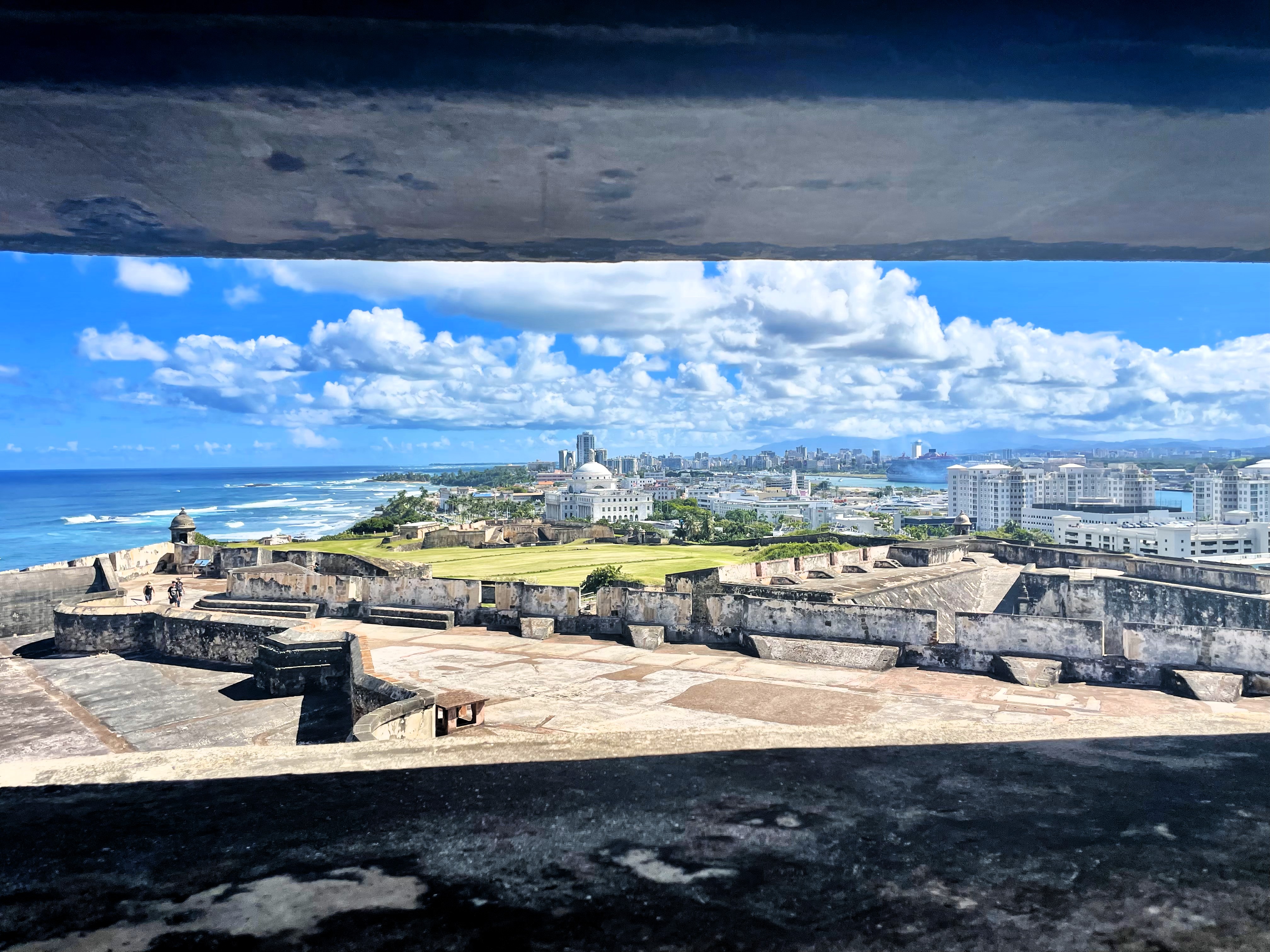
We grabbed another Uber and returned to Old San Juan for lunch in a popular location. The place was packed and it took nearly an hour to get our food; we did not finish until about 2 PM. I was trying hard not to be frustrated by the hiccups. I was determined to show C more of Old San Juan, so we headed to the Puerta de San Juan, the main gate to the walled city built around 1635, during the Spanish colonial period. We took a leisurely stroll along the Paseo del Morro, the pedestrian pathway wedged between the waters of the Bay of San Juan and beneath the walls of the Castillo San Felipe de Morro.
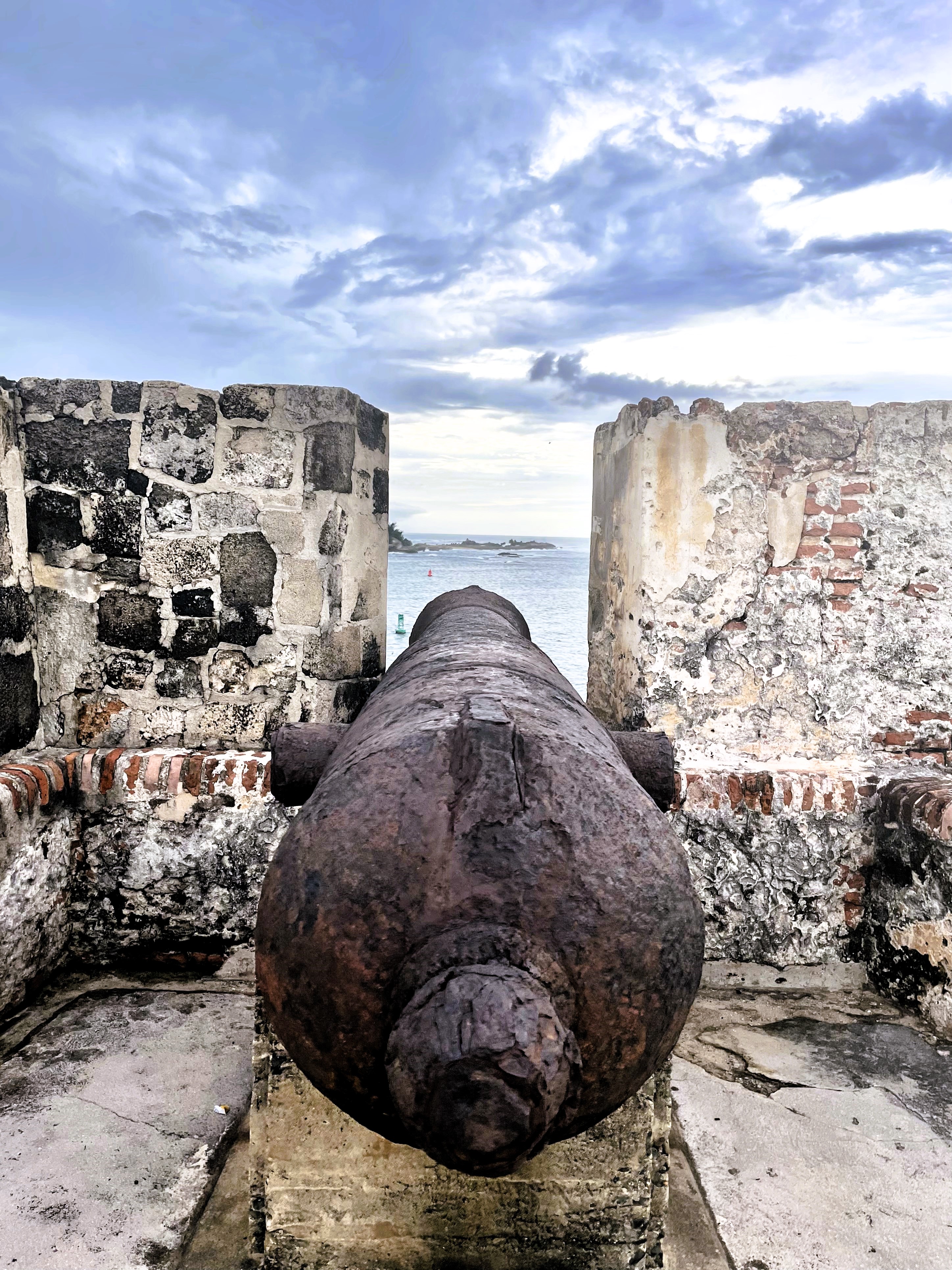
A canon looks out at the Bay of San Juan from the Castillo San Felipe del Morro

We meandered along. A large feral cat colony lived alongside the water, and dozens were asleep beneath the bushes, among the rocks, in the grass, and on the path, much to my daughter’s delight. Iguanas lay on ledges in the rocks beneath the higher Castillo walls; their location likely keeping them out of the way of the cats.

I looked at my watch and discovered it was after 4 PM and the Castillo would close at 5, so we needed to hurry up to see it. It took us another 15 minutes to climb up to a Castillo entrance, leaving us about 40 minutes to race through one of the most iconic fortifications in the Americas. It was not our first high-speed tour on the trip, so by this time, we were getting pretty good at it. We quickly explored all three levels right up until we were being ushered out by park rangers. We walked out the front of the Castillo, across the expanse of lawn where kids were flying kites, families, friends, and dogs were enjoying the last rays of sunlight. We passed the Santa Maria Magdalena de Pazzis Cemetery, where the dead have an amazing fabulous panoramic view of the ocean and the fort. I remembered I had wanted to walk through it, but now time would likely not permit.

On Sunday morning, on our second day in Puerto Rico, C and I picked up a rental car in Condado Beach and headed south into the interior. Our destination: the Toro Verde Adventure Park in Orocovis, about an hour southwest of San Juan. We were here to ride the Monster, the longest zipline in North America and among the top 10 longest ziplines in the world.

The view at Toro Verde Adventure Park in the rolling mountains of central Puerto Rico

C and I like to have a bit of adventure, not only in where we travel but also in what we do when traveling. For instance in London, we slid down the world’s longest tunnel slide, and in Amsterdam took a ride on Europe’s highest swing. We were supposed to take on the highest zipline in Norway when we visited Bergen, but C got sick. (I will admit I was also quite nervous about it!). I thought C and I were up for taking on the Monster that, at 1.57 miles (2.5 kilometers) long and reaching speeds up to 95 miles per hour, is not for the faint-hearted.

We stepped inside the store, paid for our go on the Monster, and then went around the side to get fitted into our gear. Unlike most ziplines where you sit upright, to ride the Monster you lie down so one wears a helmet and a long rubber-like apron, similar to what you might see a butcher wear. Fitted out, we shuffled over to the stairs that took us up a rise and then ascended the stories-high metal tower. With only five or six people in front of us, we did not have long to wait. C and I wanted to zip down side-by-side, but only one zipline was in operation. I decided to go first.

I had to step up to the platform and get into a plank position while the operator pulled the apron down full so it became more like a hammock cocooning my front and I was attached to the zipline in two locations. I had to put my arms behind me so my hands could grasp a handle around the back of my knees; the operator instructed me to keep holding on, with my arms tight to my side. Only at the end, I was told, should I release and put my arms out to the side. She swung me out part way from the platform and let go.

It was exhilarating! I must have been going really fast but as I looked down across the green valley, some 1200 feet below, it sort of felt that I was moving in slow motion. The foliage below was dense; I flew over a river. It was breathtaking. I could not stop smiling. But it was over in a minute. I waited for C to make her flight across the valley, then we had another shorter zipline to do before arriving at the truck that would take us back to the top. My verdict of the Monster? I would do it again!
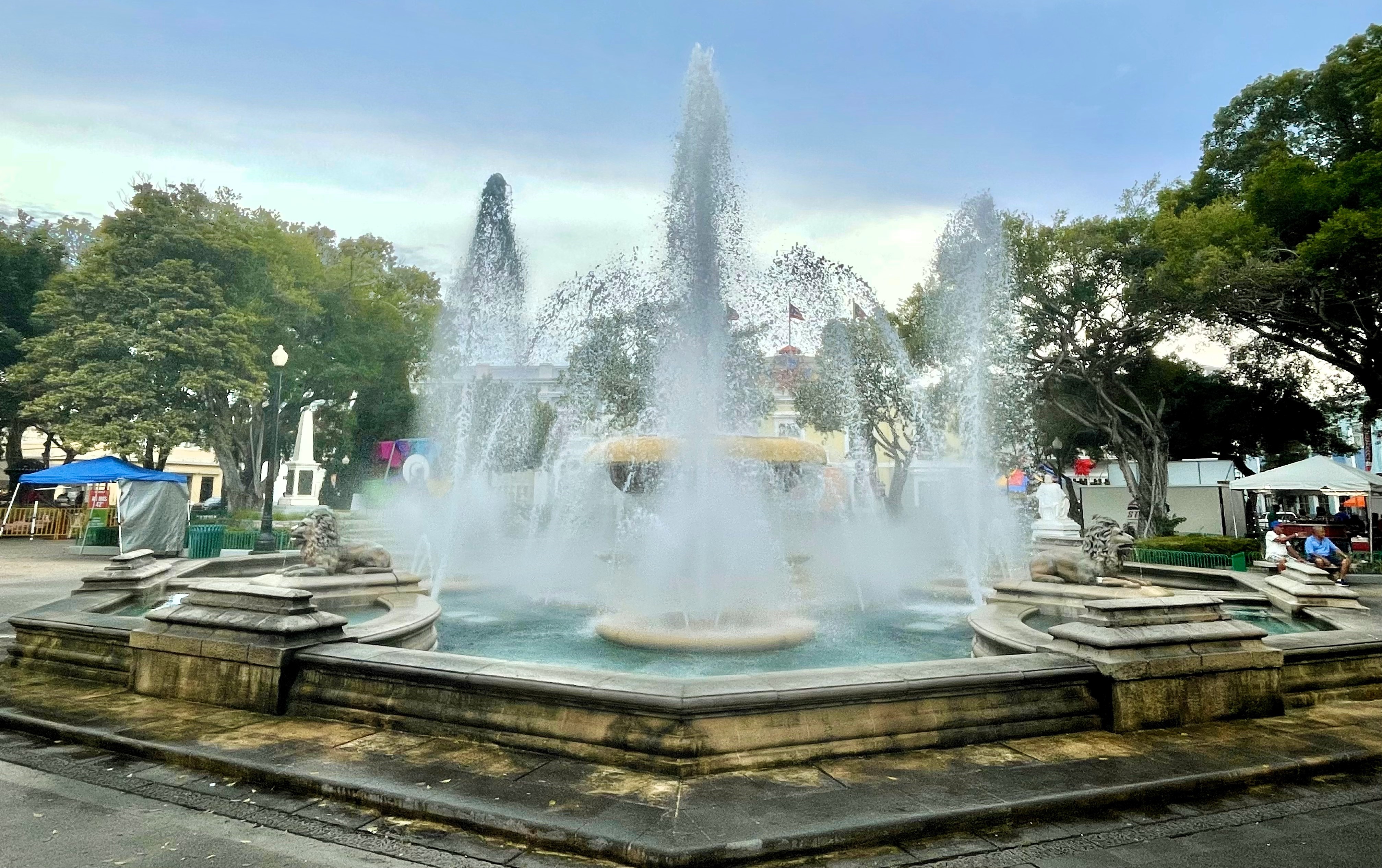
The Fuente de los Leones (Fountain of the Lions) in Ponce’s Plaza las Delicias

After our zipline experience, we headed south through the mountains to Ponce; founded in 1692, it is Puerto Rico’s second-largest city. The road was windy, but the weather was fantastic and I enjoyed the freedom of being behind the wheel. It took about 75 minutes to arrive at the Plaza las Delicias, the main square. Except it turns out I headed to the Plaza las Delicias in Salinas, not Ponce, adding an extra 30-minute drive to our destination. Sigh. We had lunch in the Ponce suburbs and then parked near the Plaza for our sightseeing.

When I visited Puerto Rico in 2003, I wanted to visit Ponce but there were no rental cars available on the island, leaving me confined to San Juan. So, this time around, I aimed to rectify that. But a lot had happened since 2003. Most recently, Hurricane Maria in September 2017, two major earthquakes in January and May 2020, Hurricane Fiona in September 2022, and the COVID-19 pandemic led to physical and economic damage in Puerto Rico, but Ponce was hit particularly hard.

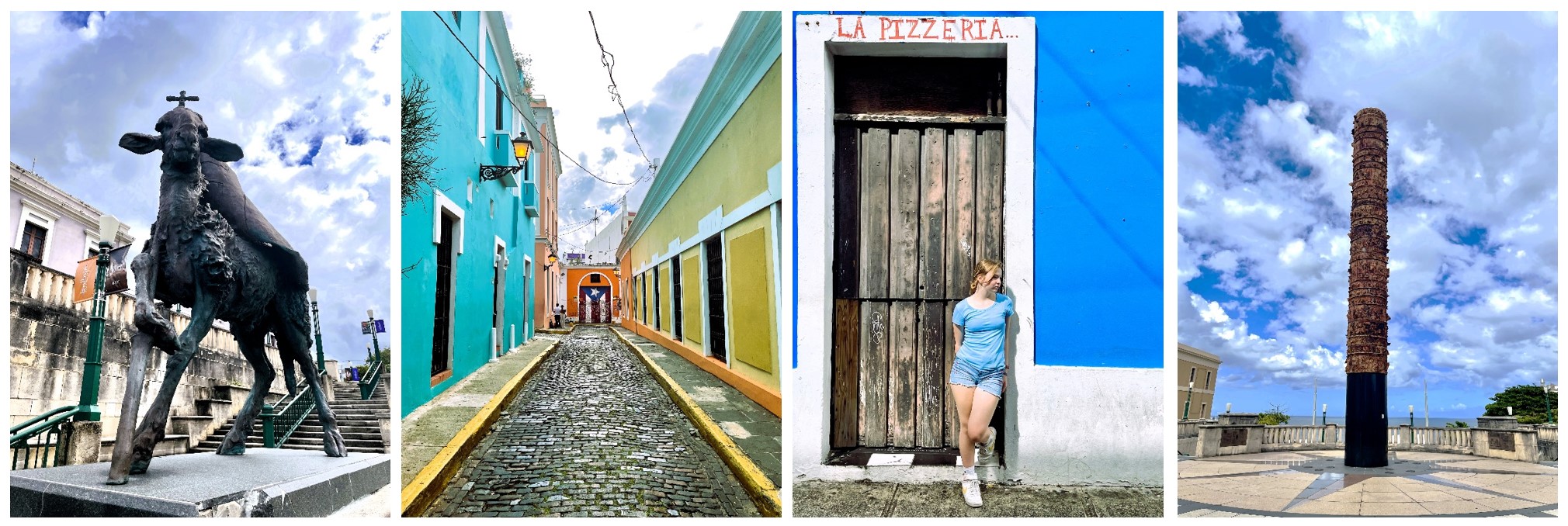
Around the Ponce Historic Zone

I parked a few blocks away from the Plaza las Delicias, at the heart of the city’s Historic Zone, and we began exploring. The plaza is beautiful. It is dominated by the Cathedral of Our Lady of Guadalupe to the west, the Parque de Bombas (the extraordinarily bold black and red striped building that was once a fire station and is now a museum) to the east, the Fuente de los Leones to the south, and a small park with statuary to the north. While not crowded, there were a good many people taking advantage of the good weather and festive spirit of the main plaza. Off from the plaza though, despite the stand-out buildings, largely in colorful Ponce Creole style (a mix of Spanish Creole and Neoclassical architecture), the air shifted perceptively. Buildings were weather-beaten, cracked, partially boarded up, and/or abandoned. While still lovely, they were hauntingly so, with an atmosphere of loss and neglect. My heart felt heavy and a little sad.

Left: the Parque de Bombas — built in 1882 for an Exhibition Trade Fair, it became the fire station; Right: Homes of firefighter descendants on Calle 25 de Enero (and yes, there is a horse in front of one of the homes)

After exploring more of the historic area on foot, I learned that a housing area with an interesting history was nearby, so we returned to the car and drove over. On January 25, 1899, a fire threatened the munitions depot and some local firefighters extinguished the flames. Hailed as heroes, the city gave them free housing, and, for some 50 years, another firefighter and his family were rewarded with a free home on Calle 25 de Enero (January 25th Street). Once we had visited the area, it was time to drive back to San Juan.

For our third and final day in Puerto Rico, C and I headed to El Yunque National Forest, the only tropical rainforest in the U.S. national forest system.
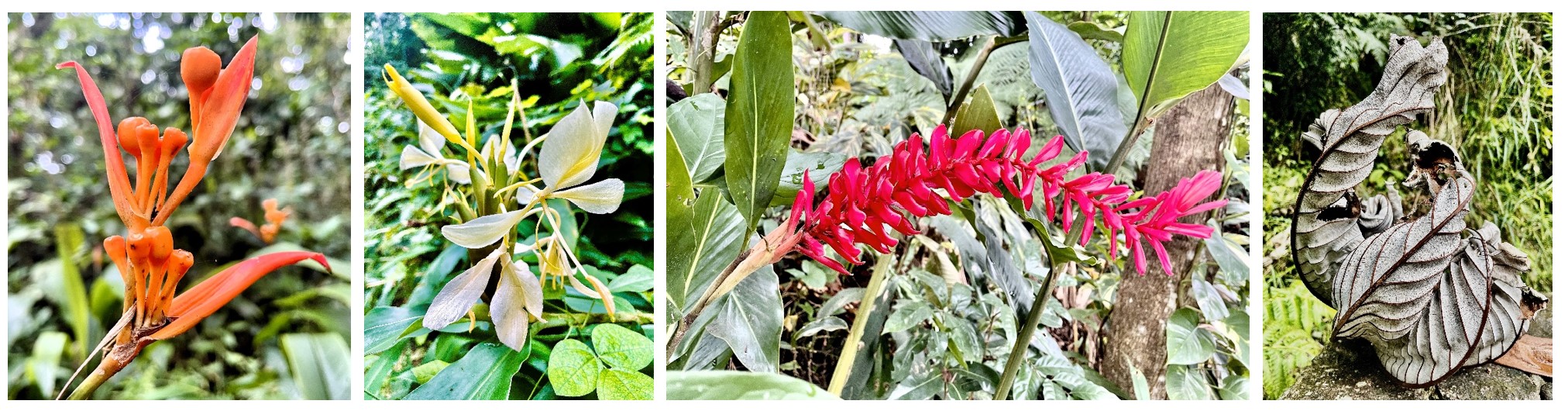
Flora on the El Yunque Visitor’s Center trail

I visited El Yunque during my 2003 trip to Puerto Rico. I took a group tour from San Juan. I remember that it was raining rather hard and that most of the group, including myself, bought cheap plastic parkas in a shop before beginning our guided hike. Also, during our walk we came across a waterfall where a couple had shed their clothes and were, um, making the most of their not-so-private time in the pool by the falls.

This time it was C and I and we had our own wheels, which gave us more freedom. We stopped first at the visitor’s center, where we picked up the guide pamphlet, learned a bit about the park, and took a short trail walk. Though the trail started just steps away from the parking lot, we spent the whole trail pleasantly alone.

We then drove into the park. I hoped to stop at La Coca Waterfall, located just near the road, but the area was congested, with cars parked on the roadside for some distance. So, on we went. Our first stop would be the Baño de Oro. The Civilian Conservation Corps built the bathing area in the 1930s in pits previously excavated by Spanish gold seekers; it is now a National Historic Property. We could only walk up a short set of stone stairs to the pool and on a path halfway around; trails that headed further into the forest were closed for renovations. Many trails in El Yunque remain closed for repair after the 2017 hurricane.
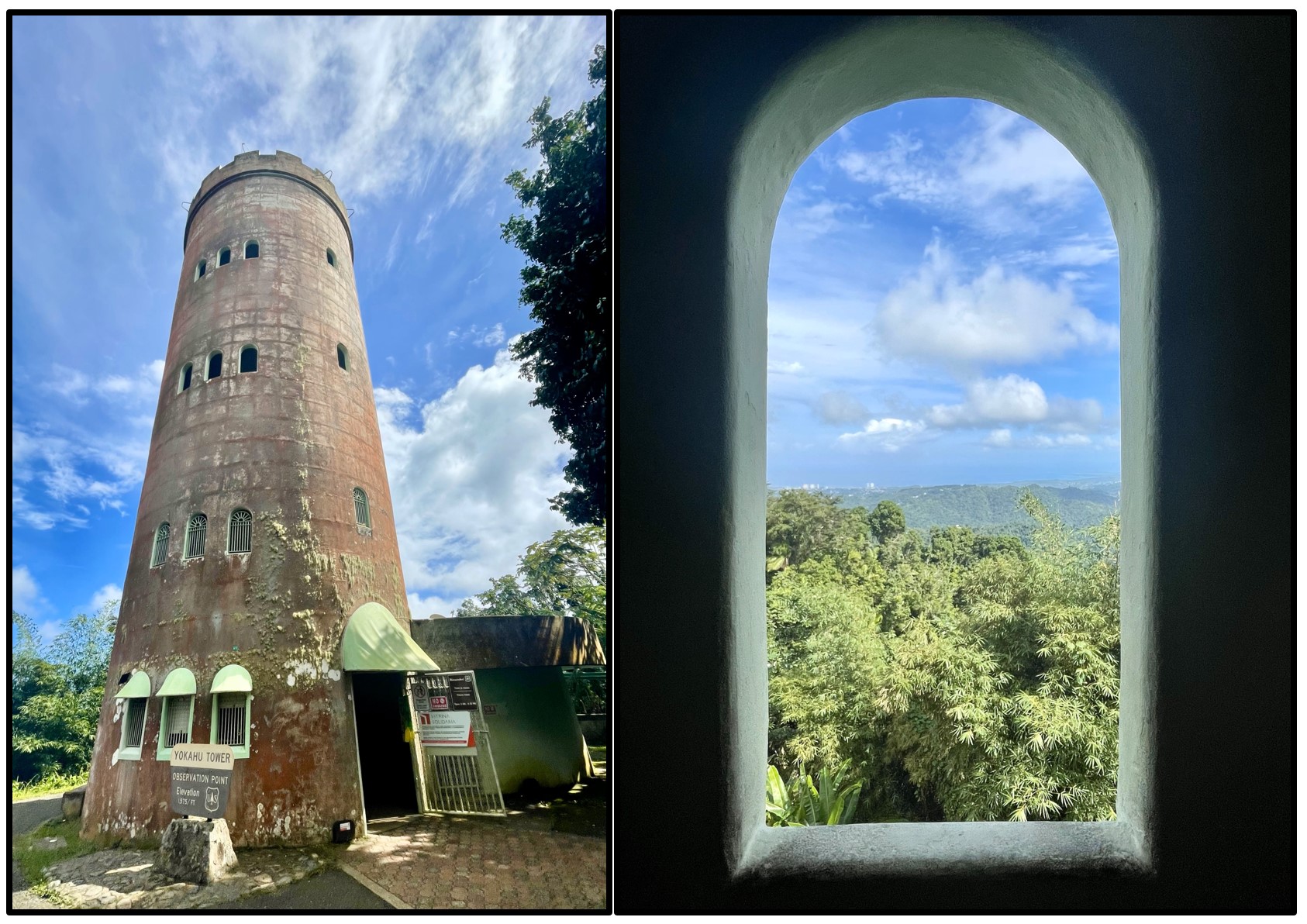
Yokahu Tower and the view from one of the Tower’s windows

We made it back to the car before the rains began. This on-again-off-again rain would stay with us for the rest of our visit, but I was fine with it for the breaks of bright sunshine we still had a chance to enjoy. I drove us to the top of the accessible road, and then we turned around. We stopped at the Rainforest Cafe for lunch, stopped for a panoramic view, and climbed the Yokahu Tower.

I took the scenic route back to San Juan and returned the rental car. C and I spent the rest of the afternoon relaxing and soaking in the last bit of the warmth of the tropics before returning to chilly Washington, D.C. It was a wonderful way to wrap up our visit to Puerto Rico and our winter vacation.

Southern Caribbean Cruise, Part 3: Barbados and Dominica

C at the port in Barbados

The fourth stop on our Southern Caribbean cruise was Barbados. I was interested in this stop and hoped it would not disappoint me like Saint Lucia. Though we had another small group tour, it was one with longer stops and less driving, and I had a little plan to maybe make it more interesting.

We headed first to the Animal Flower Cave. Located on the northernmost point of the island the cave is reportedly the only accessible sea cave on the island and is so named for the sea anemones found in its shallow pools. I was not sure if this stop was going to be all that, but several online sources told me it was worth it. And it sure was! Barbados is the most eastern of the Caribbean nations, and where the cold waters of the Atlantic Ocean meet the warmer waters of the Caribbean Sea. The Animal Flower Cave is below the windswept cliffs of this meeting point but with an opening to the sea’s elements.

C in the Animal Flower Cave

I paid the rather steep price of 40 Barbadian dollars (about US$20) each for us to descend, with a guide, down a narrow opening. At the bottom of the stone steps, we stood in a large cavern. The coral rock undulated – some smooth, some sharp – shaped by years of ocean waves and dotted with small pools of water. At the far end, the cave’s mouth gaped like a floor-to-ceiling window with extraordinary sea views. I found it a little hard to walk and, having recently experienced a surprising fall, I moved gingerly over the slippery and uneven rocks. C leapfrogged to the front of the cave and I caught a few photos of her there. It is possible to take a soak in a deeper pool on one side of the cave, but we had not brought our bathing suits and towels. Though frankly, the tour did not give us enough time even had we wanted to.

Topside, we took in the incredible views of the waves crashing against the sharp, jutting coastline. My goodness, it was stunning! We were so incredibly fortunate with the weather and a blue sky chock full of cottony cumulus clouds. I wished we had had more time to just stand there gazing out to sea.

The incredible view at Animal Flower Bay

We were off to our second stop: the heritage railway at St. Nicholas Abbey. I do enjoy a train ride and I love historic sites, including railways, but I really wanted to see the Abbey itself. I tried to book C and I an excursion just to the Abbey, but it included rum tasting and apparently I could not be trusted to keep my child from imbibing. That is how we ended up with the tour including Animal Flower Cave, which, thankfully, was a great addition to our day.

Last September, C and I journeyed to southern Virginia and visited Bacon’s Castle, the only structure built in high Jacobean architecture left in the United States. The only other two buildings in the same style left in the Western Hemisphere are found in Barbados, and St. Nicholas Abbey is one of them.

Our view from the front of the passenger cars on the Heritage Railway at St. Nicholas Abbey

Thus, I planned for us to ride the heritage railway and then ditch the group so we could tour the house and grounds. Then we would return to the port by taxi.

Our guide dropped our group at the heritage railway station. We all lined up and then stood about until the train pulled into the station. Then there was a big production to get us all on board. It was packed to the gills, so C and I stood at the front, just behind the engine. It was the best spot on the train, in my opinion, as we not only had views of the estate but also could observe the workings of the engine. The train whistled and chugged its way up to Cherry Hill Station; it was only a 10-minute ride.

C and I took in the view from atop Cherry Hill–rich green sloping down to an extensive stretch of coastline. And then we quickly walked back down the hill to the train station and the entrance to the house. It took less time to walk. We bought out tickets and soon enough we were doing a quick tour self-guided tour.

Built in 1658, St. Nicholas Abbey is one of Barbados’ oldest plantations. Like Bacon’s Castle, St. Nicholas Abbey, its owners, and those who worked there, have become part of the fabric of history. Today’s land area is the same as it was when two neighboring plantations, owned by Benjamin Berringer and John Yeamans were combined in 1661, under Yeaman. As a rich landowner, Yeaman was a member of the island’s legislative council. King Charles II rewarded his loyalty with an appointment as governor of Carolina, a single colony in the United States. Later Berringer’s daughter married in Carolina and her husband became governor of the colony.

St. Nicholas Abbey

Unlike Bacon’s Castle, the mansion at St. Nicholas Abbey is furnished, though, without a guided tour C and I viewed only the downstairs, which we zipped through with uncharacteristic speed. We also quickly made our way through the gardens, past the blacksmith and rum bottling buildings, up to the Boiling House and the distillery, and to the site of the former windmills, now just stone bases without the vanes. I would have preferred a leisurely stroll, much photo-taking, and lunch at the Terrace Cafe. But I was beginning to doubt we would get a taxi at a good price or one at all. I knew that our group had 30 minutes at the top of Cherry Hill, a 10-minute train ride back, and a few more minutes to grab drinks or use the facilities, so in less than 45 minutes we raced through St. Nicholas Abbey and were back in the tour bus for the return trip to the port, right on time.

I had hoped once back at the Port we could take a taxi to visit one more site in the capital, but the traffic around the port seemed chaotic and I did not want to risk it. So, we opted instead for a little shopping in the port and a walk back to the ship on a very long pier, then lunch on board. Barbados was not yet done with us, however. As we finished lunch, an announcement came over the ship’s public address system – a monkey had made its way on board and staff were working with local wildlife officials to safely capture it and return it to the island before we set sail. The afternoon was full of whispers about the monkey and those who saw it shared photos and video of their encounters.

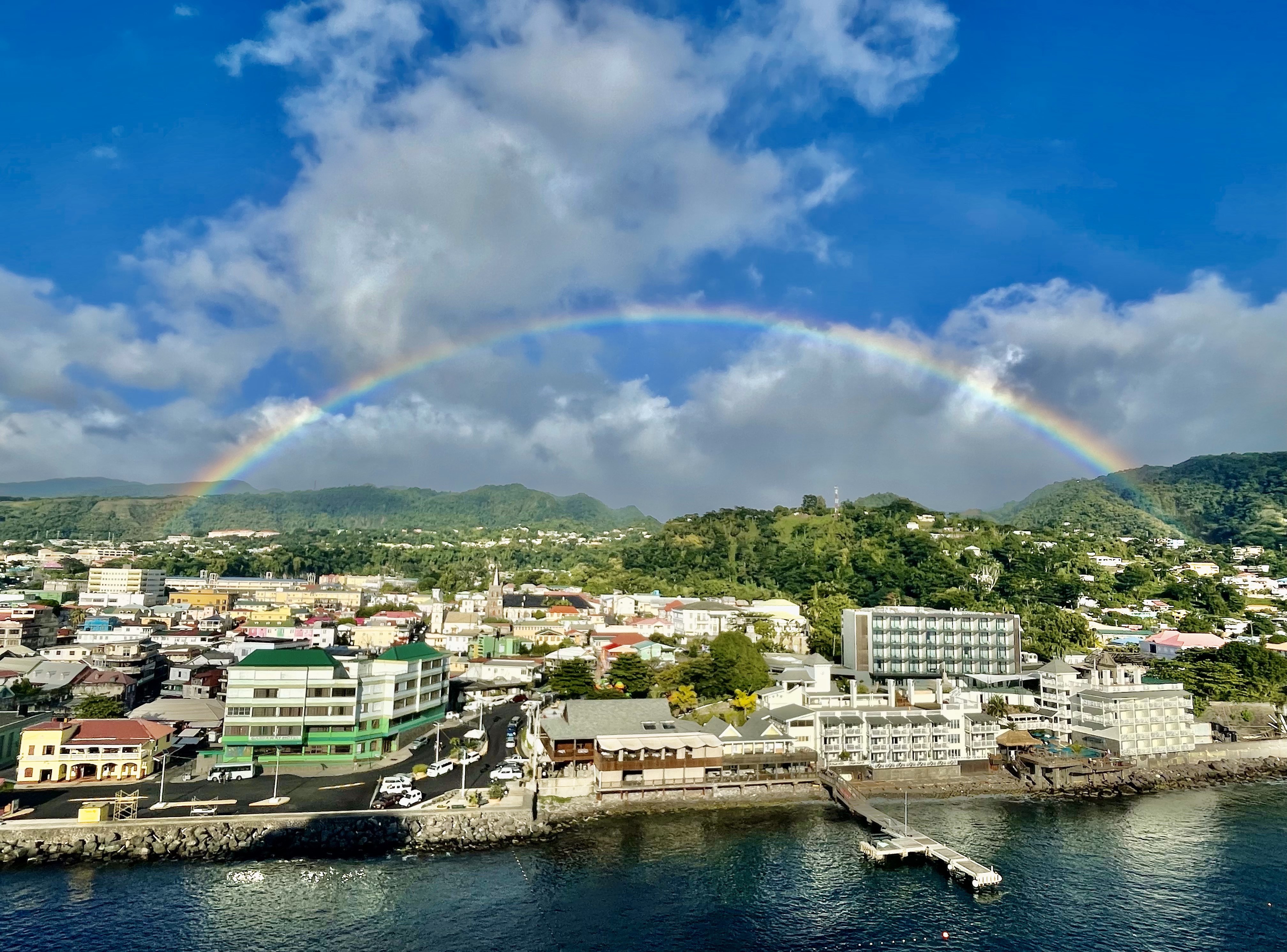
Rainbow over Roseau, Dominica

Our fifth and final port stop was Dominica. It was this stop that largely led me to book this particular cruise, because getting to Dominica is not all that easy.

We had yet another small group shore excursion that was to give us a taste of the island. We were to visit two waterfalls, one part of the Morne Trois Pitons National Park, a UNESCO World Heritage Site, and then take a scenic drive that included the Botanical Gardens.

The first stop on the itinerary was at the Emerald Pool, where a 40-foot waterfall plunges into a pool surrounded by lush greenery, making the waters appear bright green in some light. Well, that is what it was supposed to look like. And it was pretty enough, really. the trail was in excellent shape. But, and maybe it was the light rain, or the crowds, or the tour guide who seemed annoyed by her job, I just was not feeling it. I have seen many waterfalls in my lifetime and I had been expecting more. We did not stay long.

C at the twin Trafalgar Falls at the Mourne Trois Pitons National Park, Dominica

However, the Trafalgar Falls were really a treat, though the viewing area was quite crowded. It was difficult to get a good view from the viewing platform, cheek to jowl with tourists. I am sure it’s great for the island economy, but less for the visitors themselves. But below the platform was a small trail that could get one a bit closer to the water. Though there was a line, once in front, you could take a photo that made it look like you were the only one there.

Back at the parking lot, our disgruntled tour guide shuttled us back on the bus and to a rather pointless stop, yet another Caribbean island bar offering another free rum or fruit punch. This one though we had to make a special stop, maneuvering into a tight parking lot, shuffling into the bar, lining up, and then passing the counter to swipe our “free” drink like we were on an assembly line. Then tossing it back and getting back on the bus for the “scenic” drive back to port.

Our final activity was a drive through the Botanical Garden. I love to visit such places and have been to many in my travels. I asked the tour guide if she could just drop us at the garden and she told us that NO ONE gets off the bus, even though it was all of a 16-minute walk from the cruise terminal. Fine. We had lunch on board the ship and then went for a stroll through Roseau.

Sites in Roseau, Dominica

We walked through town to the Botanical Garden. We had hoped to see parrots that reportedly make the gardens their home, but there were none to be found. The gardens were not extensive, but they made for a nice stroll. Roseau was a nice surprise as well. Of all the capitals we strolled through (Philipsburg, St. Maarten; St. Johns, Antigua; Castries, St. Lucia; we did not sightsee in Barbados’ capital), it was the most pleasant. C pointed out there were no duty-free or luxury goods shops set up at the port, which might have been a major factor in the change in atmosphere. There also seemed to be more historic and well-maintained buildings in general. Of the five island nations we visited, I think Dominica and Barbados are the ones I would make an effort to revisit and stay on for at least a few days.

The final day of our cruise was a day at sea. C and I took part in an indoor soft archery contest and a scavenger hunt and had massages at the spa. It was a nice, quiet, relaxing day with some mother-daughter fun sprinkled in. It was a good day.

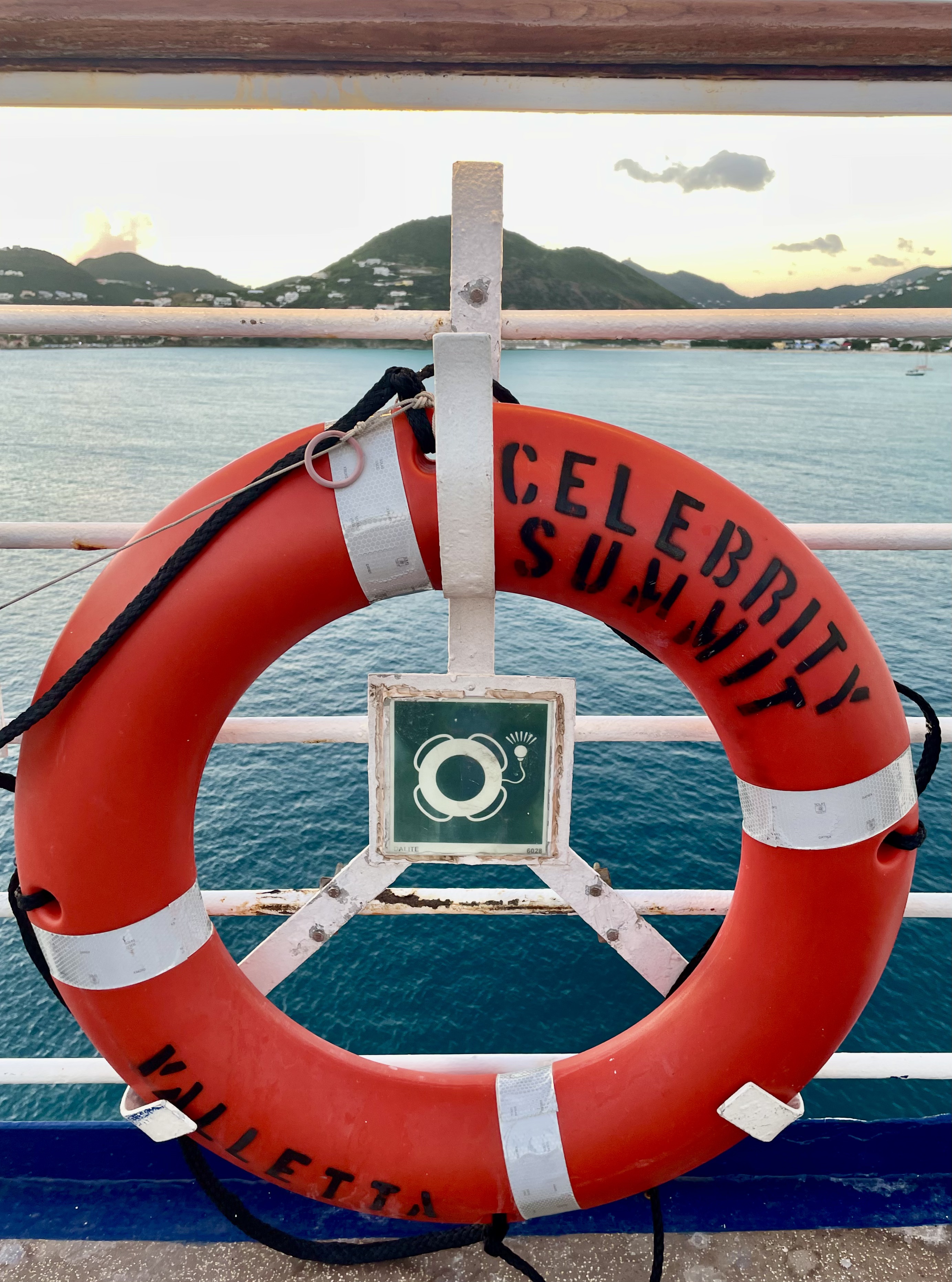
Overall, we had a good cruise. The shore excursions were hit or miss, but they all got us out and about and provided an introduction to the island. Celebrity was overall good–it was a nice ship, we found the food options good, and C enjoyed the free jewelry promotions. Yet due to C’s current age and interests, Celebrity might not be the cruise line for us now. C, being just a month shy of her 13th birthday, felt too old for the 10-12 age group in the kids’ club. I completely understand the hard line of demarcation for kids and teens but had Celebrity allowed her to hang with the teens, I was not a fan of the division with 13-17-year-olds lumped together. (I have seen many other cruise lines divide it by 9-11, 12-14, and 15-17, which I like much better). At this age, a ship with more family-or-teen-friendly activities would work better for us. Perhaps someday, we can return to Celebrity? But maybe we might be cruise people after all?

Southern Caribbean Cruise, Part 2: Antigua and Saint Lucia

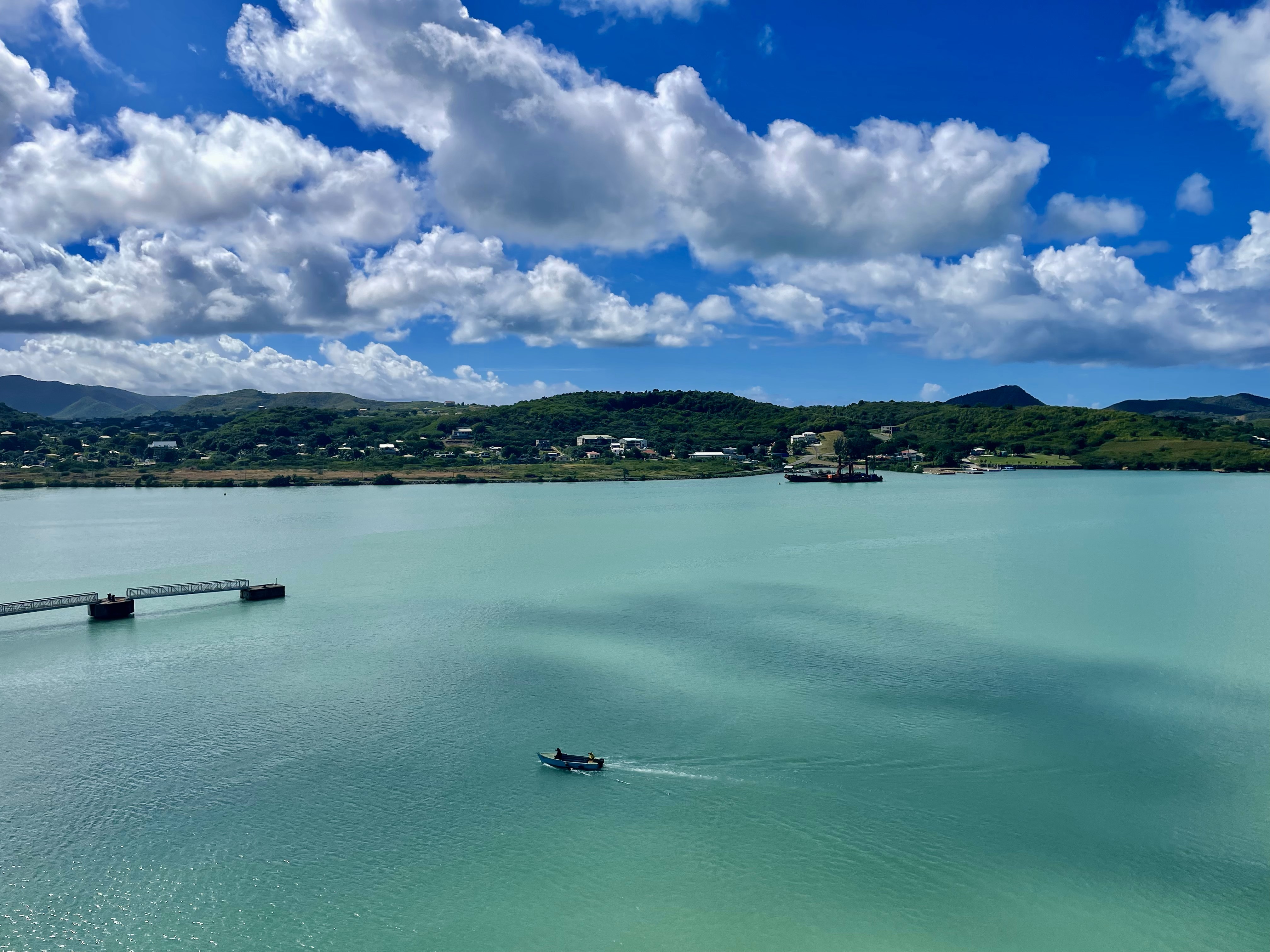
The gorgeous view from the ship docked in St. John’s Harbor, Antigua

On the second day of our cruise, we docked in Antigua. Like Saint Maarten, I first visited Antigua during a winter holiday in late December 2008. Yet, I remember and wrote more in my journal of Antigua. My 40-minute interisland flight from St. Maarten was delayed four hours. My luggage didn’t make it on my flight and I spent three of my five days there without it; I guess I just wore the same clothes day after day. I did a zipline there, the most dangerous I have ever done–we were given heavy-duty gloves and told to stop ourselves, and the wire burned straight through my glove and hurt my hand. I had Christmas dinner with the guesthouse owner and her family. I walked about their village and toured the island using either the island’s mini buses or got rides with Chippy, the husband of the guesthouse owner. I looked forward to visiting again with my daughter, C.

Our shore excursion was not until the afternoon, so I planned for us to walk around the small capital of St. John’s and visit the church in the morning. What I remember from 2008 is that the capital was not much to write home about — for some reason I remember a lot of loud techno music, even at midday — but I enjoyed visiting the Anglican Cathedral of St. John the Divine and spent a long time there.

Found on St. John’s streets – the cat bus!

From the cruise ship, I could easily spy the church’s twin towers set against a backdrop of green hills and blue sky. C and I walked through the crowds of cruise passengers (three ships were in port) and the gauntlet of touts in the noisy and somewhat garish cruise terminal, to the quieter streets of St. John’s. It was Sunday and the capital, outside the port, seemed to be only just waking up.

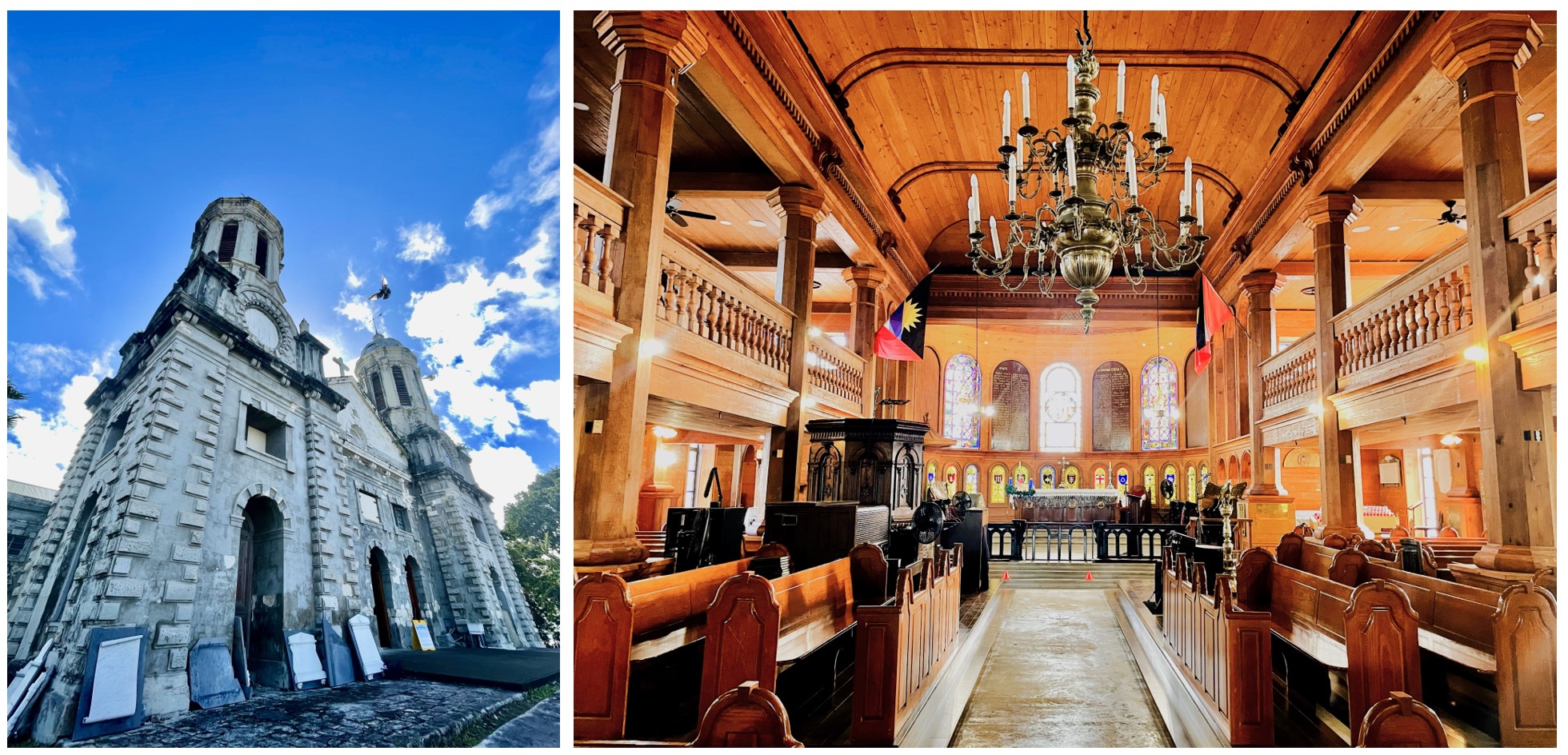
We walked a few blocks to the cathedral and paid the entrance fee. In 2008, I think I spent most of my visit poking about the graveyard. This time, C and I explored in and around the church. It has quite a history. A wooden church was first consecrated in the location in 1683 and was replaced by a brick one in 1789, destroyed by an earthquake in 1843. The present-day stone cathedral dates from 1847. Subsequent natural events and time have worn it down and its in desperate need of reconstruction. Still, I found both the exterior and interior beautiful and I hope it can be saved. C, who loves geography and has memorized the flags of nearly every country and territory, immediately noticed those of several Caribbean islands in stained glass on the wall behind the pulpit. And thus we learned the cathedral serves as the Diocese of the North East Caribbean and Aruba.

Antigua’s Cathedral of St. John

After exploring the church, we returned to the ship for an early lunch, then met our group for the afternoon shore excursion to Nelson’s Dockyard.

In 2008, I also visited Nelson’s Dockyard and what I recall from then is that 1. it was blazing hot the day I was there and 2. I loved it. Probably because I really love historic places like that. Once Britain’s Royal Navy Dockyard in Antigua, where the famous Admiral Horatio Nelson, for which the dockyard is now named, served from 1784 to 1787, it is now a UNESCO World Heritage Site. It’s the only continuously working Georgian-era dockyard in the world, and it is quite phenomenal. On my previous visit, I spent a few hours there, so I hoped I would be satisfied with our shortened cruise visit. After the less than awesome cruise excursion in St. Maarten, I was not feeling all that confident about it.

Like in St. Maarten, we were herded from the ship to the pier and then through the terminal to a minibus. We drove from the port through the heart of Antigua, south to the dockyard with no stops. I was disappointed we did not stop at Betty’s Hope, old stone windmills left over from a former British sugar plantation. It wasn’t exactly on the way, but Antigua isn’t exactly a big place. No worries though, I visited in 2008 and I doubt my pre-teen would have been all that impressed.

What we did get in Antigua though was one of the best tour guides ever; seriously, she should be considered an Antiguan National Treasure. No pre-recorded commentary on this tour and she was both informative and hilarious. And, though our cruise excursion listed only a walking tour, we also got a 30-minute boat tour of the harbor! We had three guides in all — the wonderful woman on the bus, a young man at the dockyard, and a third guy on the boat. My estimation of Antigua and cruise excursions rose.

I was excited about our third destination, a new destination for me: Saint Lucia! Many years ago I was checking in at Dulles Airport, heading off on another adventure, when I met a woman moving to Saint Lucia. All I remember is she had a massive crate-like cardboard box with her address written in bold letters in black marker and the words “Saint Lucia” underlined, and that she was breathlessly excited to tell me about it. Since then I have associated the island nation with that kind of excitement. I wanted to feel that way.

View of the town of Soufriere and the two Pitons of Saint Lucia

To really see Saint Lucia, I had signed us up for the longest of our shore excursions, a six-hour “Island’s Delights” small group bus tour with a tour of an estate, a waterfall, and a creole buffet lunch at a spot advertised with a view of the two pitons, Gros Piton and Petit Piton, two formerly volcanic spires. Having been disappointed in Sint Maarten but pleased in Antigua, I was no longer sure it was the right tour for us but could not find another that interested me and still had space.

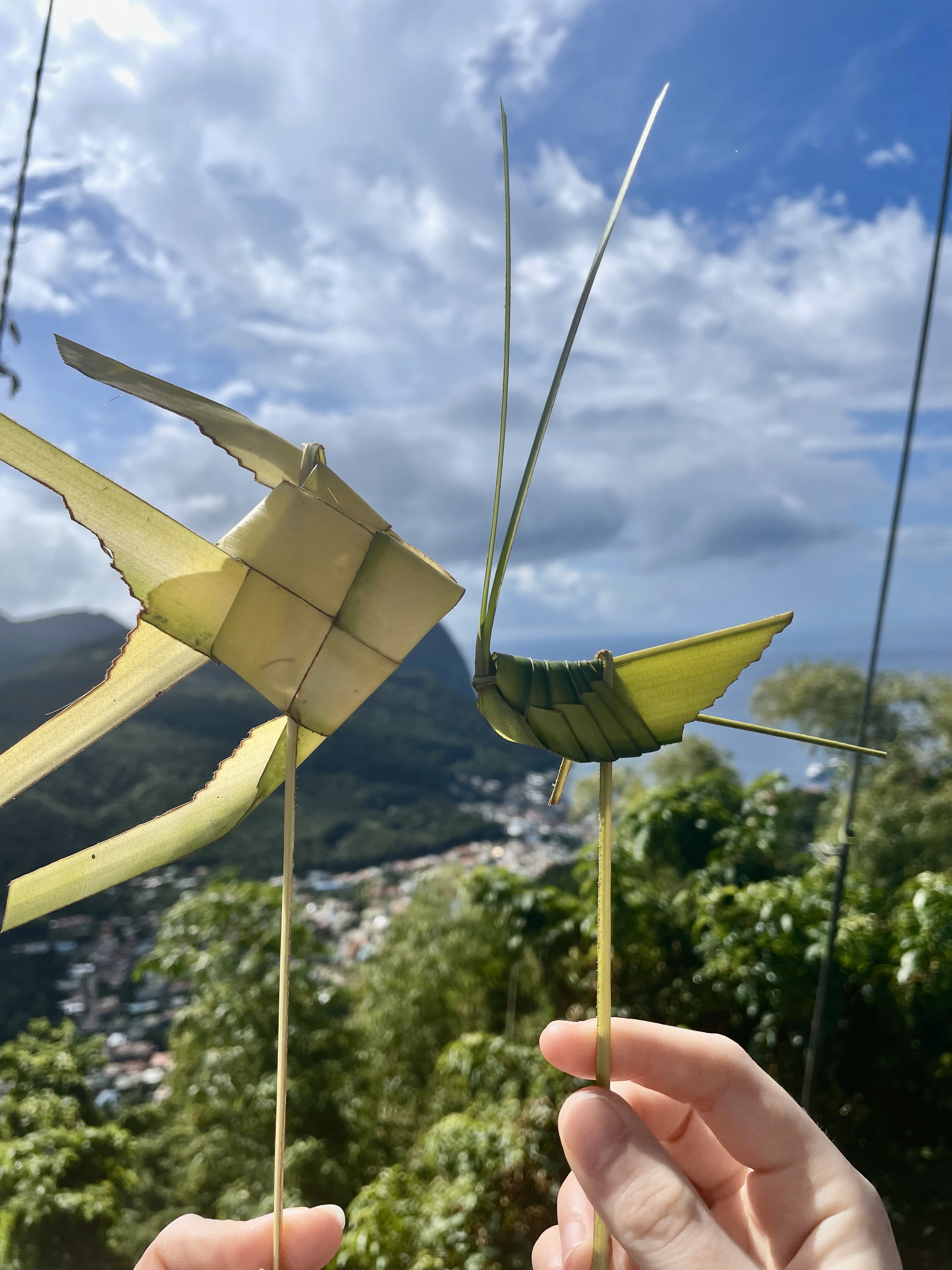
C and I show off the plant animals we got at the Piton overlook

From the cruise terminal, we headed south along the western coast. That sounds far easier said than done. Saint Lucia is a volcanic island and one of the hilliest in the Caribbean. The main area of Castries, the capital, is a small grid of flat streets; but not five minutes from the cruise port, the road begins to steeply climb. I soon realized that despite the island’s small size, much of the six-hour tour might be spent in the bus negotiating the narrow, serpentine roads. I hoped I would be wrong. (I was not) In addition, it began to rain heavily, the first such weather of the trip. Our first stop overlooking the reportedly beautiful bay of Marigot was obscured by the downpour.

We drove through a rainforest and here the rain made total sense, adding to the lushness of the thick green canopy. Unfortunately, the guide for this tour lacked a lot of charm. I likened her commentary to a tour by Captain Obvious. She pointed out plants like hibiscus flowers and bamboo as if this was everyone’s first time seeing such plants. C and I joked about this woman for the remainder of our vacation.
After an hour or so, the rain finally stopped, just in time for us to have a short stop at a roadside viewpoint above the town of Soufriere with a gorgeous view of the two pitons. We were given only five minutes here, barely enough time to shuffle off the bus and onto the decked platform for a photo. I figured this would be okay since we had that lunch with a view on the schedule.

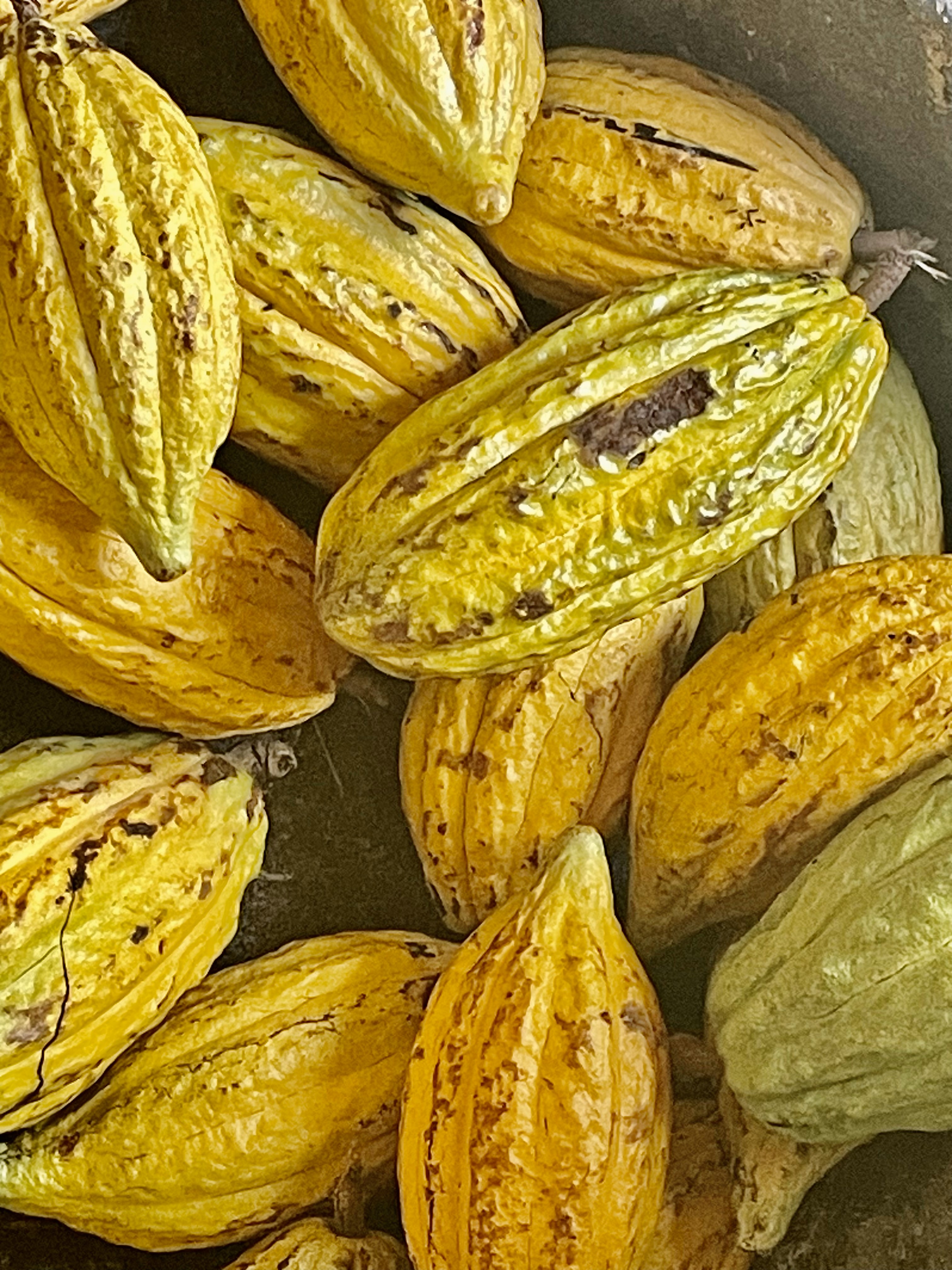
Cacao pods at Mourne Coubaril Estate

We stopped next at the 18th-century Morne Coubaril Estate for a guided tour. I love taking tours of historic places, including houses and estates and was looking forward to this and thought this visit could turn this tour around. It did not. I should have done a bit more research online as I would have known it would be only 30 minutes long. However, that would still not have told me that timeframe would be spent largely at the restrooms and sipping our “free” fruit punch. We did get approximately 2 minutes looking at a replica stick hut village (when I tried to linger and look longer, I was reprimanded by the guide), maybe 5 minutes learning about cacao production, and 10 minutes watching a guy husk and crack open coconuts (though we did get to drink the water). In all, we walked maybe 200 feet from the parking area, and in my book that does not a tour make. I reluctantly dragged myself back on to the bus.

Our next stop at the Toraille waterfall was brief and forgetful. Then it was lunchtime! Though I was unsure what to expect from the food, C and I were hungry, and I looked forward to staring out at the Pitons during the repast. We both found the plantain curry unexpectedly scrumptious and went back for seconds. Unfortunately, there was not a view to be found, and after lunch, we were just loaded back into the bus and driven back to the cruise terminal, which took about two hours!

View from the ship when docked in Castries, Saint Lucia

Back in Castries, I tried to salvage the day with a walk through the capital. I wanted to feel like we had seen a bit more of the country and the culture. We spent maybe 45 minutes exploring, looking for the local market. But I got turned around, and hot and disappointed we decided to throw in the towel and return to the ship. Saint Lucia is one place I think I need a do-over.

Southern Caribbean Cruise, Part 1: San Juan and Sint Maarten

An iguana suns himself on the wall near the Castillo San Cristobal in San Juan, Puerto Rico

I never thought I would be the kind of person to enjoy a cruise. I used to do a lot of backpacking. I would arrive in a place, without lodging reservations, and using a guidebook would find a place. I would do a lot of research beforehand, but if I arrived in a place and managed to see all I wanted in a day, I would move on, even if I had initially planned for more time. I might also arrive and find the planned one day was insufficient and stay longer. I liked getting off the beaten track and exploring. I still do. And though I rarely travel solo these days as I have my daughter with me, I was still unconvinced about cruises. However, two summers ago, C and I joined our friends CZ and Little CZ for a Norwegian fjord cruise and enjoyed it.

For December 2024, I wanted to go somewhere warm on vacation with activities and sights for my older self and my pre-teen daughter and not involve a lot of planning. A cruise seemed the ticket.

We flew out of Washington, D.C. to San Juan, Puerto Rico, on the Friday evening before the Saturday 8 PM sailing. This made me a bit nervous given we would fly in winter when I thought more weather incidents could delay a flight, and I felt even more so when our Puerto Rico-bound flight changed at least five times before the day. In the end though, we made it, and right on time.

What a view! Looking out from a guard house at Castillo San Cristobal

We landed just after midnight, so we stayed the night at the hotel right next to the Luis Munoz Marin Airport; it was a wee bit worse for wear, but it was close, clean, and we slept pretty well.

We checked out of the hotel the next morning and headed to Old San Juan in an Uber. Our boarding time was at 3 PM, so we had a few hours to sightsee. I had found a service online that would allow us to book left luggage service at an Old San Juan hotel even though we were not staying there. We dropped off the bags and then were off.

Our first stop was the Castillo San Cristobal, the sprawling ruined fortress on the northeast corner of Old San Juan. Constructed from 1634 until 1765, it is considered the largest European fortification in the Americas. Despite most of the space being only low-lying stone foundations and grass, its size still means it could take a very interested person a couple of hours to see it. C and I did not have that much time. It was also quite warm and C would not have tolerated spending too much time poking about. Given its historic and cultural importance, I am glad we had some time there. The weather was spectacular and so was the view across the small San Juan Island where the oldest part of the city lies. We could even see our cruise ship docked at the Old San Juan port from the higher ramparts of the Castillo San Cristobal.

Scenes from our first day walking tour of Old San Juan

After the Castillo, C and I took another two hours to meander the narrow streets of the old city. We popped into souvenir shops (for C) and I took photos. Then it was time to pick up our luggage and head to the ship.

In the evening, the cruise ship passengers were treated to an up-front-and-center view of the Club Nautico de San Juan’s Xmas Boat Parade. Started in 2009, the parade of festively decorated boats and yachts happens each year on the second Saturday in December. What luck that our cruise ship sat smack in the middle of the parade route in San Juan Bay! The spectacle has become a major event on the Christmas calendar, drawing visitors from across the island and further afield. Not far from our ship Amazon founder Jeff Bezos’ super yacht and support vessel were moored to also watch the parade. Though I tried, I could not get C to come up on deck to watch the parade, but I enjoyed it.

A view of the San Juan Xmas Boat parade from the lower deck of our cruise ship (and in the upper righthand corner, near the ferris wheel, are the three talls masts of Bezos’ mega-yacht)

We were having a late dinner as the ship slipped out of San Juan port, the movement almost imperceptible. C and I took our anti-motion sickness pills–a lesson from our last cruise–and went to bed early. Exhausted by the late arrival the day before, a half day of sightseeing in the heat of San Juan, and the excitement of boarding the cruise, we both drifted off quickly. I had one of my best nights of sleep in a long while.

We woke up the next morning, the first of the cruise, to the beautiful view of the cruise harbor of Sint Maarten. The island is the world’s smallest landmass shared by two nations, France and the Netherlands, and it has been peacefully divided between them since 1648!

I visited Sint Maarten/Saint Martin for six days in early January 2009. I based myself in the small beachside capital of Marigot, on the French side of the island in an inexpensive guesthouse not far from the marina. Unfortunately, I do not remember much from the trip, nor did I write much down about it. What I recall is a rude waiter (ah, so very Paris-like), taking a very sweaty walk through the Dutch capital of Philipsburg, and taking a mini bus from Marigot to Grand Case.

For our excursion, I chose an open-top double-decker bus tour that would take us to both sides of the island. My daughter, like me, enjoys soaking in a place, and it was important to her to see both the French and Dutch sides. I had high, though still tempered, hopes for this tour. I should have lowered them considerably.

A view of Fort St. Louis on the hill over the bay in Marigot, the capital of French Saint Martin

We met in the ship’s theater to be given wrist bands and then herded into groups that we met again in clumps on the dock. There a tour guide walked us, very, very slowly, to the bus. Once on the bus, one of our fellow passengers decided this was the best time to use the facilities, and we waited once more. Then the bus was off for a leisurely drive through Philipsburg to the border between the two sides. I do think the monument marking the division is pretty cool. Too bad we were not let off the bus. Our guide gave us some information along the way – some of it interesting (some say the point of division was decided by having one Dutchman and one Frenchman start walking from each side; the Dutchman was a bit drunk, which is why he did not get as far and why the French side is larger), some not at all (“if you look to the side you will see houses of different sizes” – I certainly don’t need someone pointing that out to me).

The bus made its first stop at Marigot’s Harbor. We had only 20 minutes there. Annoyingly, the tour guide pointed out the well-preserved ruins of Fort St. Louis on the hill overlooking the bay and said walking up made a great hike and did not take long. Except it took far too long for people who, stupidly, had only 20 minutes there. C wanted a French pastry, so we entered a patisserie. And, in stereotypical French fashion, we were ignored for a full 10 minutes despite my attempts to call out for service. With selection and purchase, we were left with five minutes to explore… Back on the bus, our next stop was… back on the Dutch side. That was it for the French part of the island!! I recalled why I generally loathe organized bus tours, and my expectations plummeted.

Sign facing the airport near Maho Beach warning planespotters from getting too close

Our next stop was Maho Beach, a thin strip of sand directly behind the runway at the Princess Juliana International Airport, that has become famous for the photos of massive jets hovering over the beach just before landing. The thing is: A. we had all of 15 minutes at the site and B. the guide said the jets all arrive in the afternoon, and here we were standing about in the late morning waiting for absolutely nothing. Nearly all of us tour bus passengers stopped at the mini-mart for a treat, lord knew we needed something to pick us up, as we clomped back, sweaty and disappointed to the bus.

We headed back to Philipsburg, looping past the airport for dry, recorded commentary on the arrivals to the island and the pelican statue, then stopping briefly at an overlook (from where the overgrowth obstructed the view) before our last two scheduled stops: rum and cheese shops. I had mostly accepted the reality of this bus tour back in Marigot, but still chafed that the longest stops were commercial. Sigh. Though, as we dutifully filed our way into the Old Amsterdam Cheese Shop, I informed our guides we would not head back to the ship with them. We would be doing a bit of sightseeing and then heading back on our own.

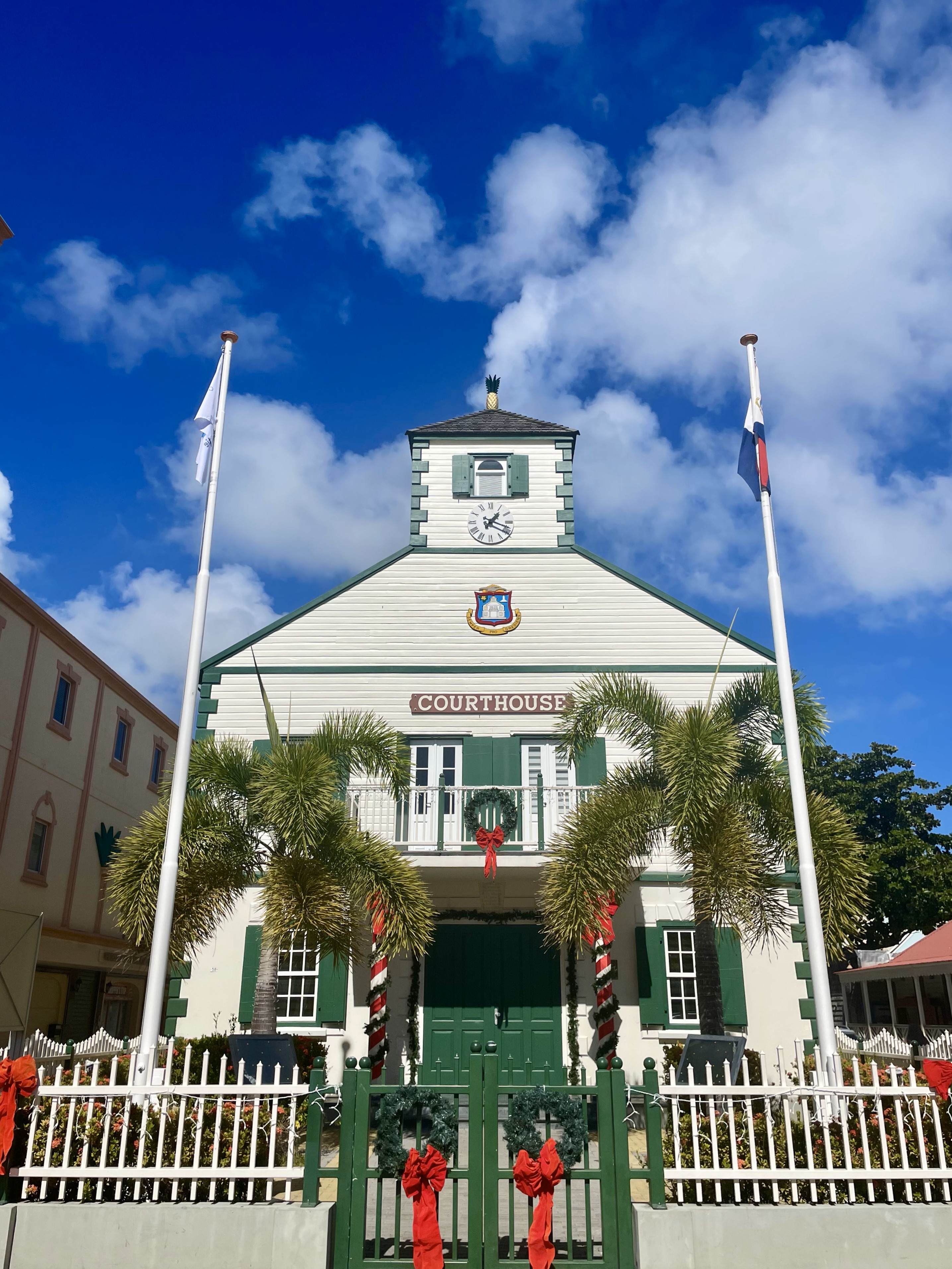
Philipsburg Court House

We ditched the rest of the group, crowded into the shop, their arms full of truckles of gouda and edam cheese and bottles of liquor, and headed into the town. Well, town might be a bit strong, as it is four long streets divided by perhaps a dozen perpendicular and a population of less than 2,000.

I had remembered it differently. My memories were dim, but it had been of a more interesting place. Maybe it had been? There did not seem much local character; the shops were mostly souvenirs – cheap sundresses, t-shirts, magnets, crafts made with shells – mixed with Duty Free brand, liquor, and tobacco stores and micro casinos. The highlight was the cute Sint Maarten Court House decked out for Christmas. We gave up. We had given it a go, walked about on our own, seen a bit on our terms. Hot and sweaty, we walked the 20 minutes back to the cruise ship.

Back on the ship, ensconced in the warm temperatures, beneath an azure sky, and looking out on the turquoise waters touching Saint Martin, I was surprised to find I felt happy. Sure, it had not been what I had hoped for but we were after all on a Caribbean cruise! I looked forward to the next stop.

In & Around DC: Autumn 2024 Activities

C sits in the autumn splendor of Gulf Branch Park

Autumn is when Foreign Service Officers about a year out from the end of an assignment bid for their next position. As I had just started a new job, I was exempt from taking part, but soon I began to see a flurry of excited postings online about where my friends would be going next. I am not a fan of how we go about obtaining our next assignments (I honestly do not know anyone who is), but I do feel a twinge of envy when others are going through it. Next year I will be bidding again, and the realization made me think about how quickly the time here in the U.S. might pass. I have often been posted to places that do not have an autumn, and thus I really want to make the most of the ones we have.

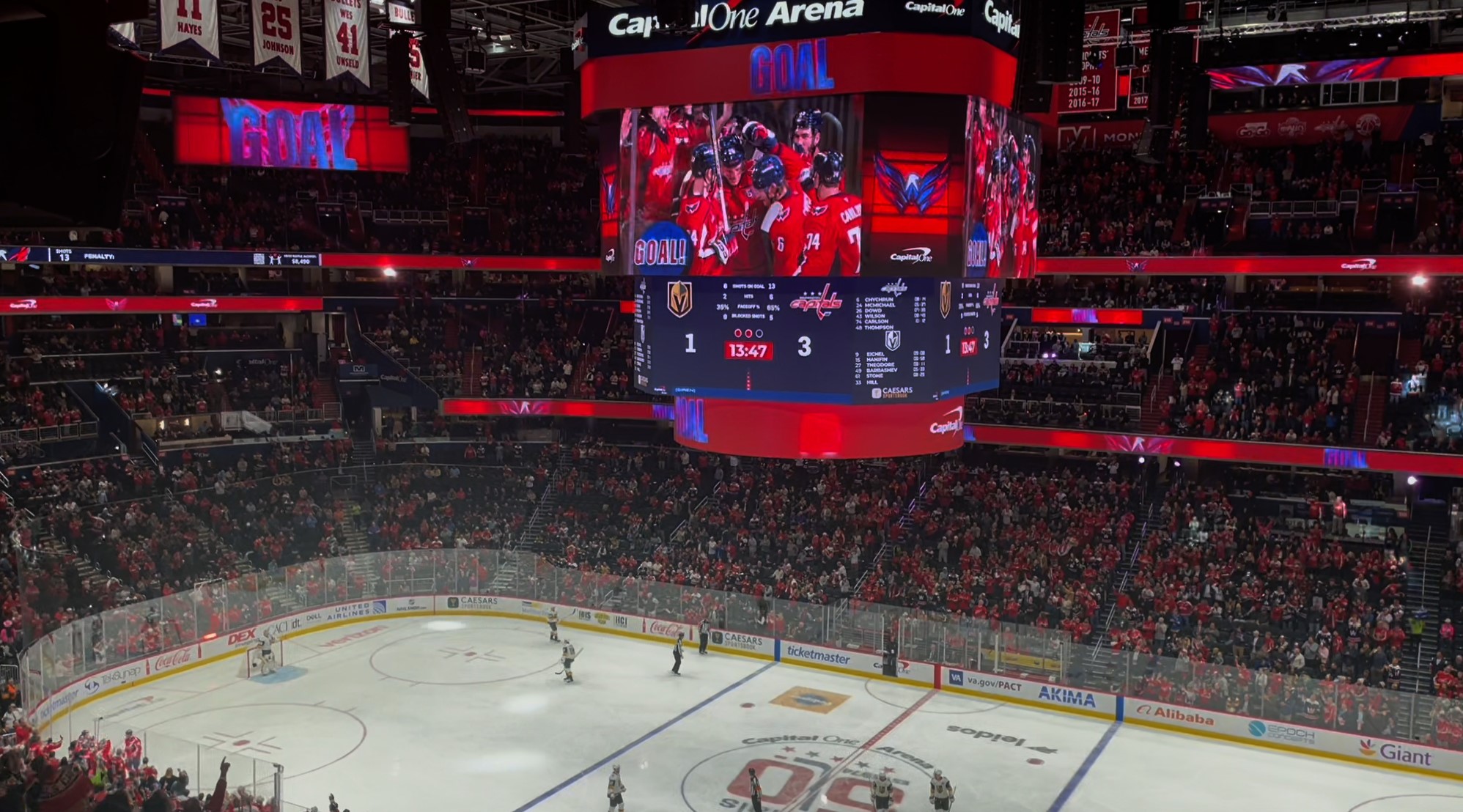
I may not know much about hockey but Caps fans really love the sport and it was exciting to be there in person!

In August, my daughter C started ice skating lessons at the Medstar Iceplex, where the Washington Capitals, the national ice hockey team in the area practice. She told me she would like to attend a hockey game. As luck would have it, an old friend from college reached out to ask if C and I would be interested in joining him at his company’s box for a Washington Capitals game in early October. I have taken C to see a good number of baseball games, but never to a hockey game. I had never been to one in my life. My friend also had two extra tickets for C to invite two friends. Though it was a school night, her friends’ parents let them join us and the girls had an amazing experience that surely gained them some cool points at school.

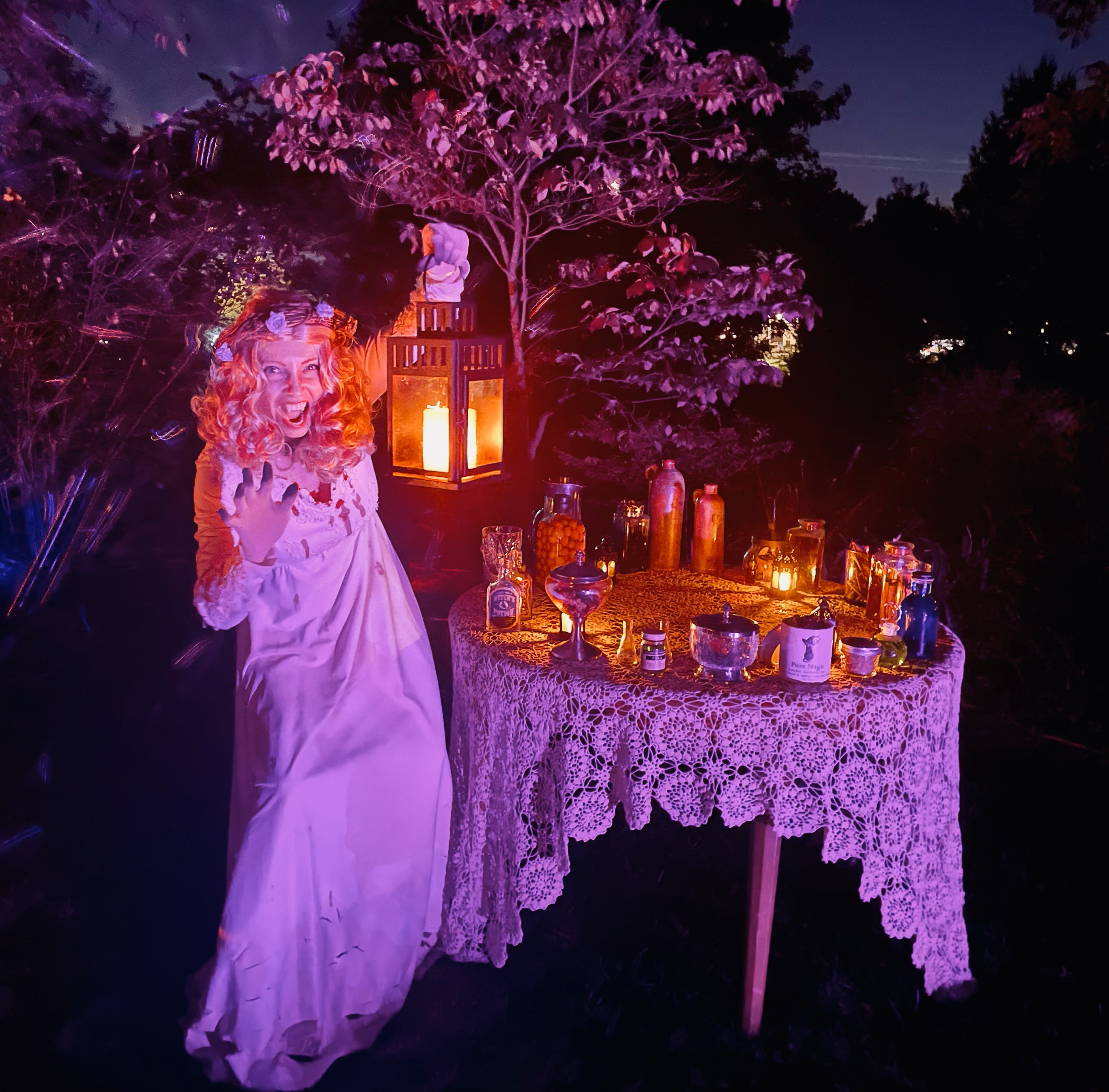
My sister scaring the beejeezus out of attendees at the Dracula Experience

I thought I might like to take C on a haunted walking tour in the area — there are plenty of ghost tours around. She has recently told me she was old enough to do one. As I cast around for which would be the best tour for a pre-teen, my sister posted that she had been cast in a “Dracula experience” in Leesburg. It would be part performance play and part Halloween-y experience in the garden of a historic manor. We met my brother-in-law and nephew at the location to see my sister play one of the three brides of Dracula. It was spooky, corny, and fun and another great opportunity to share something with family while supporting my sister in her acting passion. These are the kinds of things we could not just decide to do while living on another continent.

Two weeks later, I returned alone to that historic manor in Leesburg for a house tour. What was this manor? Dodona Manor, a National Historic Landmark that served as the residence of General George C. Marshall from 1941 until his death in 1959. Marshall served as the Army Chief of Staff, Secretary of State, Secretary of Defense, and U.S. special envoy to China. He was the architect of the Marshall Plan, an economic recovery act to assist with the support and reconstruction of Europe after WWII. He was Time Magazine’s Man of the Year twice and a recipient of the Nobel Peace Prize. It seemed weird that just a few weeks before we had been screaming in the rose gardens as we watched a spooky play and people jumped out of the bushes at us. I had grown up in this area and had not known this site existed until I attended my sister’s performance. Granted, Washington, D.C. and its environs are chock full of historic sites and the former homes of our nation’s leaders. There really is not enough time to see all that this area has to offer; we really are spoiled for choice.

Dodona Manor from the rose garden in early November

On Veteran’s Day, we joined my friend NP and her family for a hike at Gulf Branch Park. NP and her husband BP, also a Foreign Service family, are into spending time in nature and finding fun and interesting low-cost or free things to do. We love hanging out with them. They introduced us to Donaldson Run Park in September and gave us another education on the incredible local parks available in Arlington. Although by this time it was late fall, the autumnal colors of the trees were still very much on display. C needed to learn about some plants for a Scout requirement and BP, who knows a lot about flora and fauna, patiently talked to her about them while I talked with NP and their kids ran and laughed. C and I are a small family unit, just her and I, so it is fun to spend time with NP’s big, joyous family.

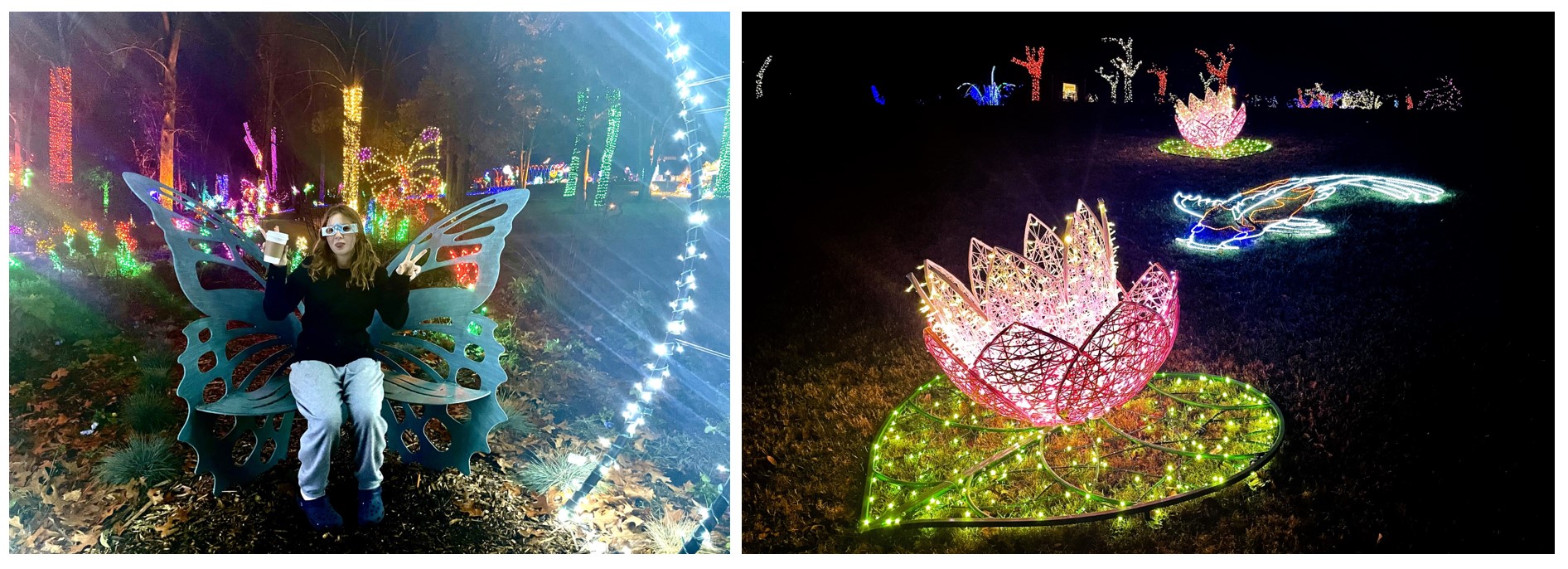
Later that week, C and I joined another of our long-time Foreign Service friends on an outing to Meadowlark Botanical Gardens in Vienna, Virginia. Once again, I grew up in this area and had never heard of nor been to this place. While searching for something fun to do, I came across this place and read they put on a great holiday light show called the Winter Walk and I invited the JKs, who are currently in D.C. for training. The JKs served with me on my first tour in Ciudad Juarez and we later visited them in both Chiang Mai, Thailand and Harare, Zimbabwe. We had dinner with them and then headed to Meadowlark. The organizers had done an amazing job decking out the park with elaborate light displays. We stopped at a beverage stand for some hot cocoa, and towards the end of the walk bought marshmallows for roasting over a large fire. It was just the right kind of cold – chilly, but not too much so. Perfect for warm drinks and good company. I expect the park is also really great to visit in Spring and we may do that.

Meadowlark Botanical Gardens puts on a lovely lights display

On that weekend, I took C and her friend AH to an archery merit badge class at Burke Lake Park, a local park in Fairfax, VA. As the girls did their course, I took a long walk. It was another gorgeous fall day and the park, another in the area that I have no memory of visiting, is a large one at 888 acres. I read that the land was originally set aside for an international airport but then another site was found in neighboring Loudoun County for Dulles International Airport. And Burke Lake, with its golf course, hiking trails (including nearly a 5-mile one around the lake), playgrounds, picnic areas, fishing pier and marina, and mini train, became this incredible public park. With the weather as good as it was, golfers, walkers, joggers, cyclists, archers, ultimate frisbee players, and families were taking advantage. Yet, though there were many people, I still felt I had space to enjoy it on my own, and I enjoyed a good two hours of walking meditation and forest bathing.

Burke Lake Park – fantastic for autumn forest bathing; C and her friend practice archery at the park

C and I wrapped up our fall activities with a magic show at the Kennedy Center. I think we managed to do a little bit of everything from sports to art, history and nature. It was a great fall. I hope others take advantage of and not take for granted the amazing wealth of activities available in the Washington, D.C. area.