Guatemala December 2005: Lost Memories of Antigua, Copan, and Tikal

This is the third and final installment of my trip to Guatemala in December 2005–January 2006. Because I never got around to typing up a travelogue of this last stretch, I have had to rely on my photos, a few brief diary entries, and my own Swiss-cheese memories from more than twenty years ago.
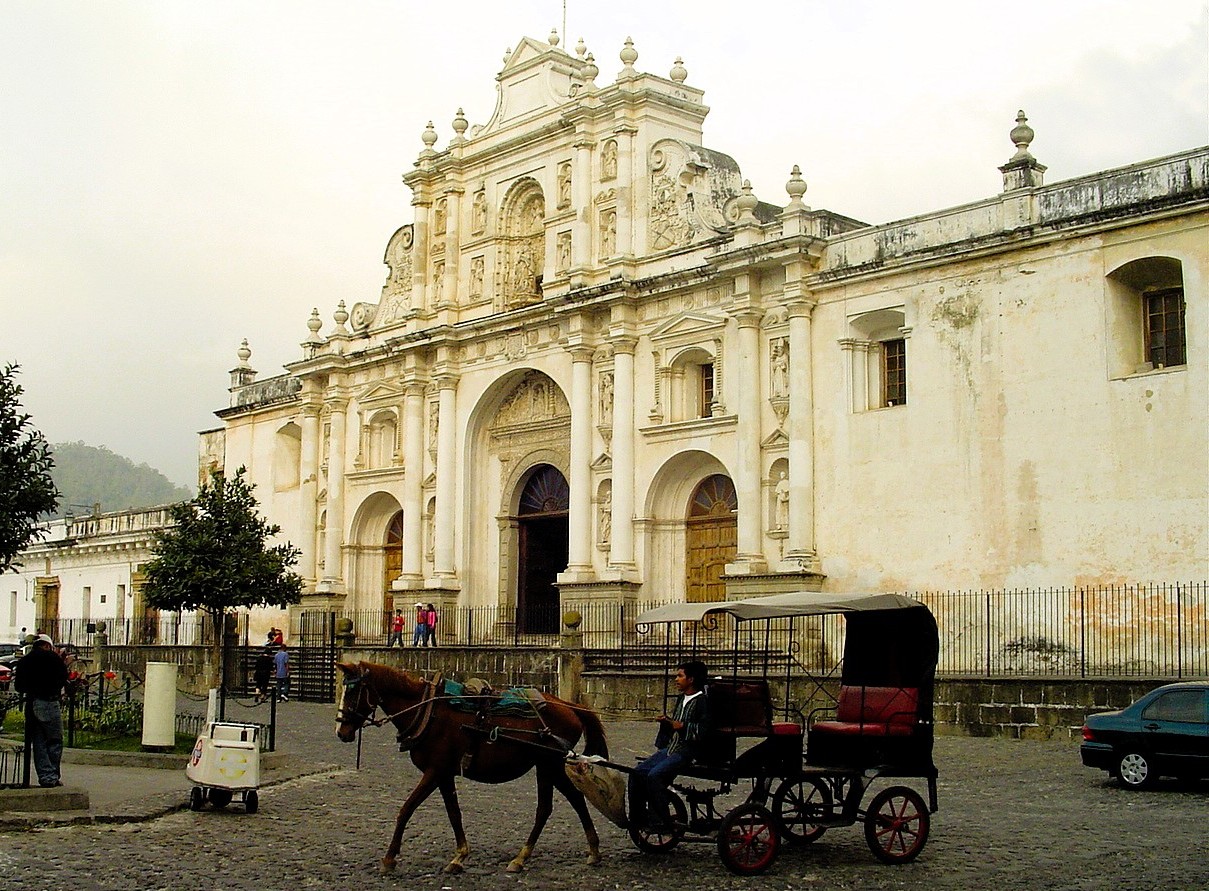
The Iglesia de La Merced in Antigua, Guatemala

After returning from the Tajumulco Volcano trek to Xela around 5 p.m., I took a room at Quetzaltrekkers, the guide company, simply because I had no energy to look elsewhere. I grabbed an early dinner and fell into a deep, heavy sleep.

I let myself sleep in the following day—well, until about 8 a.m. After being up before 5 a.m. the previous two days, this felt positively luxurious. I caught another chicken bus for the three-hour ride to Antigua, the former colonial capital of Guatemala and a UNESCO World Heritage Site, where I would ring in the New Year.

All I really did in Antigua was walk. I wandered the historic streets and soaked in the atmosphere. The city is an architectural wonder, full of 17th- and 18th-century Spanish Baroque buildings, many of them worn but still elegant. When my legs grew tired—which they did, especially so soon after the Tajumulco hike—I sat in the plazas and watched people, or grabbed street tacos and devoured them on park benches.

Given that my arrival coincided with New Year’s Eve, it is something of a miracle that I found a place to stay at all. It seemed that much of Guatemala, along with a large percentage of the tourists in the country, had converged on Antigua. Still, I lucked out with a simple place right in the center of the old city, with all the main sites within a stone’s throw.
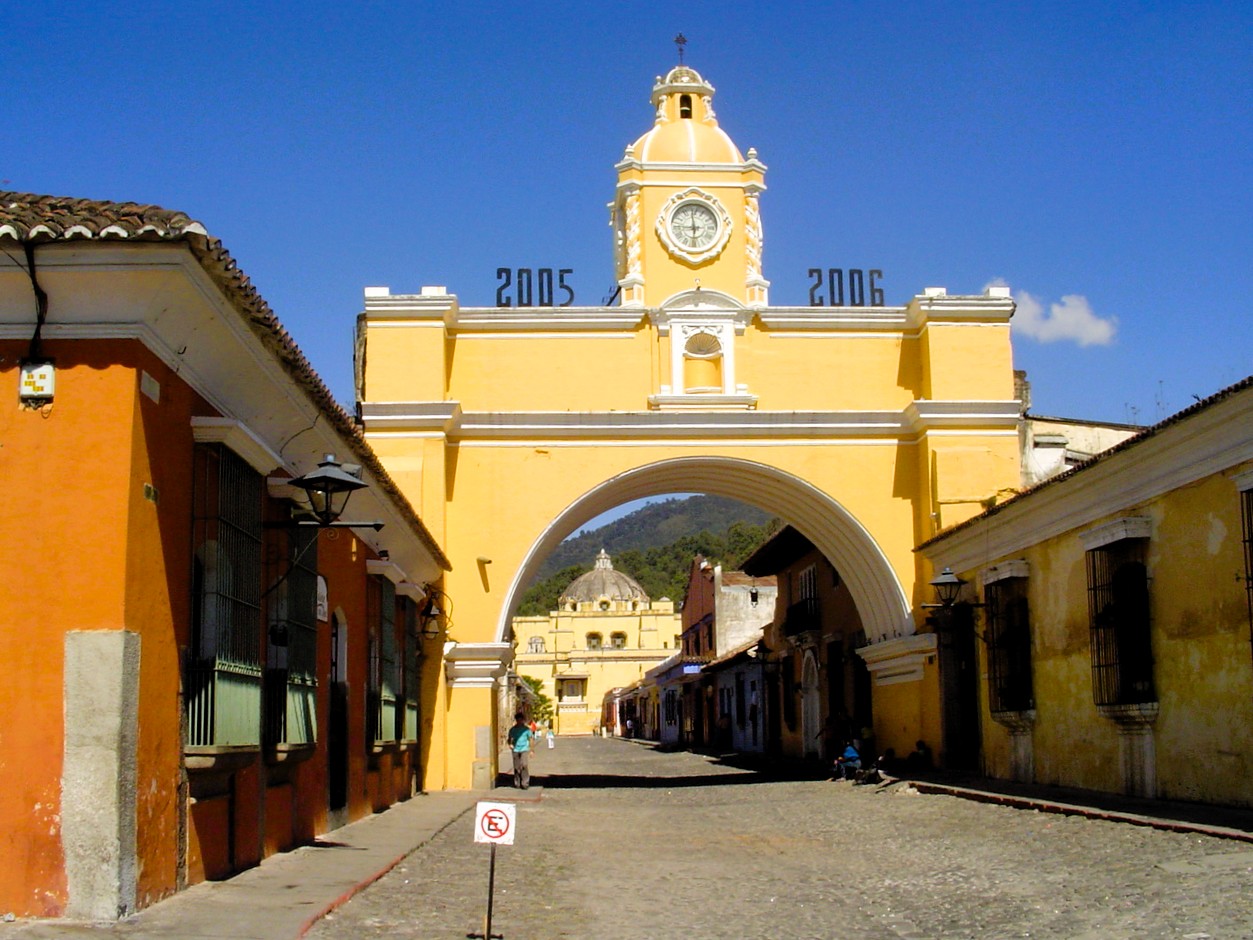
The Arco de Santa Catalina in Antigua, Guatemala, for the 2005-2006 New Year’s festivities

I wish I remembered visiting all the beautiful sights captured in my photos, but unfortunately, I do not. What I do remember are streets crowded with happy visitors, a street performance near the Arco de Santa Catalina that had the crowd in stitches, watching horse-drawn carriages clip-clop by, and eating what may still be the best street taco of my life from a small vendor set up near Central Park in front of the Cathedral.

I didn’t make it to midnight. I rarely do. The long days of active sightseeing had absolutely caught up with me, and around 9 p.m. I dragged my very tired self back to my room and fell asleep. Not even the sound of firecrackers throughout the night managed to wake me.

The first day of 2006 found me once again wandering the streets of Antigua, which were noticeably quieter and less crowded than the day before. I visited the ruins of the Convento de Santa Clara, the Convento de la Recolección, and the Convento de las Capuchinas. As open-air ruins, they were accessible on the holiday, and I had them mostly to myself. With plans to move on the following day, I once again went to bed early.
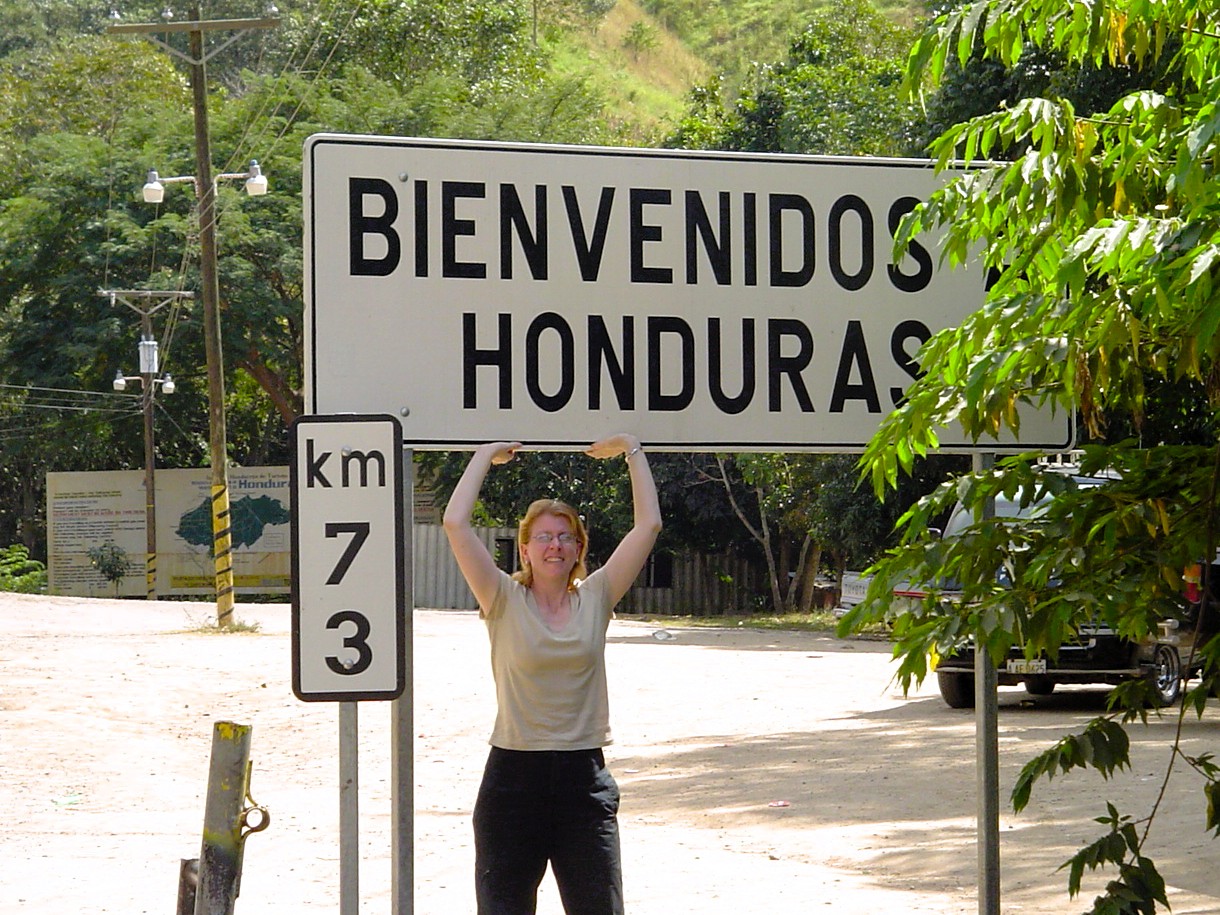
On January 2, I was up very early to catch a 4 a.m. bus that would take me across the Honduran border to the town of Copán. The bus ride itself took about six hours, but this did not include the two and a half hours spent waiting at immigration. I do not remember what took so long, and perhaps I never really knew. More likely it was the usual combination of understaffing and bureaucratic red tape that anyone who traveled regularly back then would recognize.

I had come to Copán to visit Copán Ruinas, a UNESCO World Heritage Site and once-powerful Mayan city-state at the southern edge of the Mayan world. The site is known for its artistic sophistication, with intricately carved reliefs, stelae, and statuary. Once again, I had the place almost entirely to myself, which felt especially delicious after the crowds of Antigua and Xela. There were no pushy guides—no guides at all that I can recall—and while it might have been helpful to understand more of what I was seeing, I happily wandered the ruins alone for hours, accompanied only by peccaries and scarlet macaws.

I had originally planned to stay just one day in Copán, but after such a long journey, I decided to remain another night to rest. I signed up for a horseback-riding tour through the countryside to give myself something fairly gentle to do. I had the guide all to myself, and uncharacteristically, I stayed quiet, lost in my own thoughts as we followed the Copán River and rode into the hills above town.

We stopped briefly at Hacienda San Lucas for a drink and the view, then continued on foot into the forest to see Los Sapos—a group of large Mayan stone carvings of animals, most identified as sapos, or toads, associated with fertility rites. We also passed through a small village where I was a big hit with the local children before riding back into town.
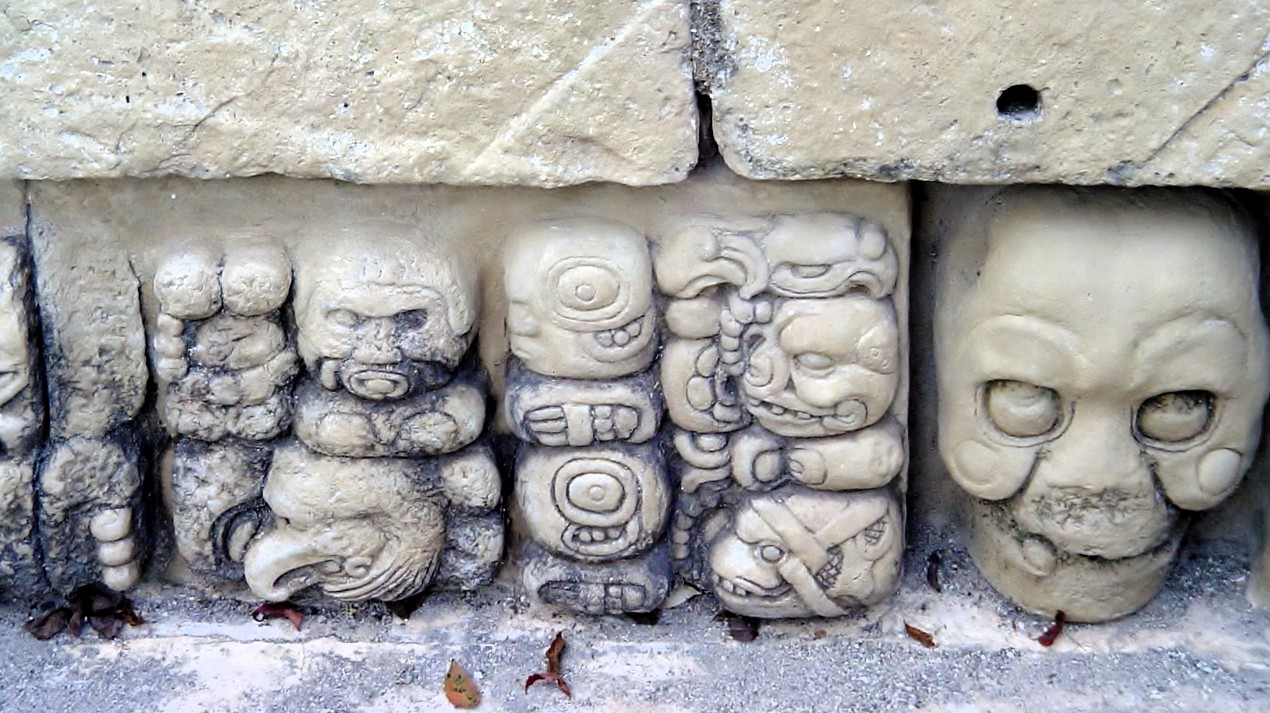
Some of the incredible carvings to be found at Copan Ruinas

I spent the remainder of the day organizing onward transport and wandering up and down Copán’s hilly, cobblestoned streets.

The next morning, I was up early once again. I had another very long travel day ahead of me as I crossed back into Guatemala. The border crossing was mercifully faster this time, which was good, as we still had at least eight hours of driving ahead of us to reach Flores, in the far north of the country.

I don’t remember much of that journey, and perhaps that’s for the best. It was sunny and warm, everyone seemed in good spirits, and for reasons I still don’t understand, the driver never collected my fare. I only realized this after being dropped off in central Flores, with a pocketful of Honduran lempiras that were now completely useless.

Because we departed Copán at a more reasonable hour, I had more sleep, but I didn’t arrive in Flores until late afternoon. There was little to do but find a place to stay, eat, stock up on snacks, and make a plan for the following day.
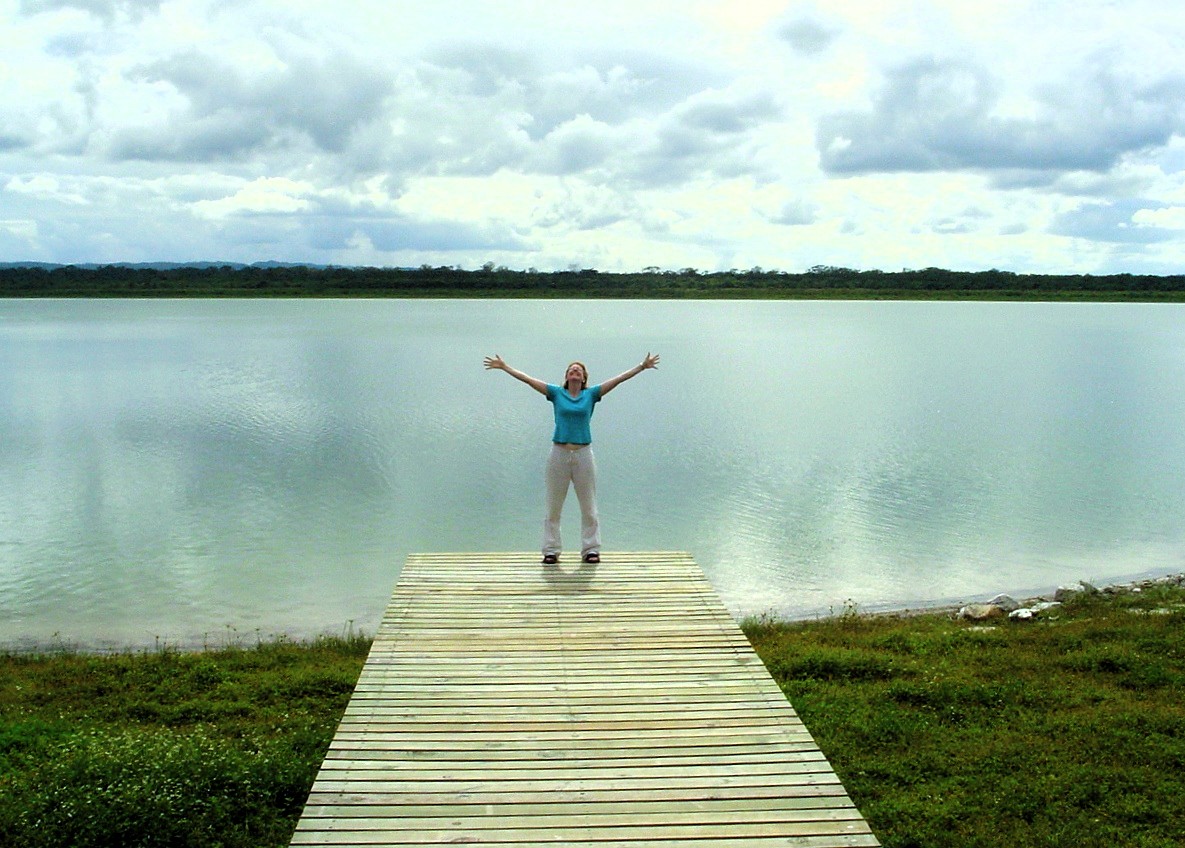
I was convinced a croc would launch itself at me from the depths of Lake Yaxha

I visited the Yaxhá Archaeological Site, the third-largest Mayan site in Guatemala, about two hours from Flores by bus. Yaxhá receives far fewer visitors than nearby Tikal, and once again I found myself among only a handful of tourists. The site is less excavated, with many smaller temples still wrapped in jungle, vines, and tree roots—reminding me a little of Angkor Wat.

Yaxhá sits near a lake, and from the top of its tallest structure, Temple 216, there is a sweeping view across the rainforest canopy and out toward the horizon. I sat there for a long while, listening to howler monkeys below and thinking about history, culture, and nature.

Later, I wandered down to the lake and stepped onto a long pier. Only a few months earlier, the television show Survivor had been filmed there. I knew crocodiles lived in those waters, and although I didn’t see any, I felt distinctly uneasy standing at the edge. I asked another traveler to take my photo, put on my bravest face, and then quickly scampered back to terra firma.

The following morning, I boarded the 5 a.m. shuttle bus for another long ride—this time to Tikal. Once a thriving Mayan capital with a population of perhaps 100,000, Tikal is astonishing in scale. With more than 3,000 structures, it is one of the largest Mayan cities ever built. Temple IV, at roughly 230 feet, is the tallest standing Mayan structure.

Tikal is popular, and unlike Copán and Yaxhá, I had plenty of company. After several days of solitude, I didn’t mind. Tourists are allowed to climb many of the pyramids, and standing in the Great Plaza, surrounded by immense stone structures, one feels dwarfed by history. Sitting atop a pyramid and watching tiny figures move below, I felt strangely grand myself.
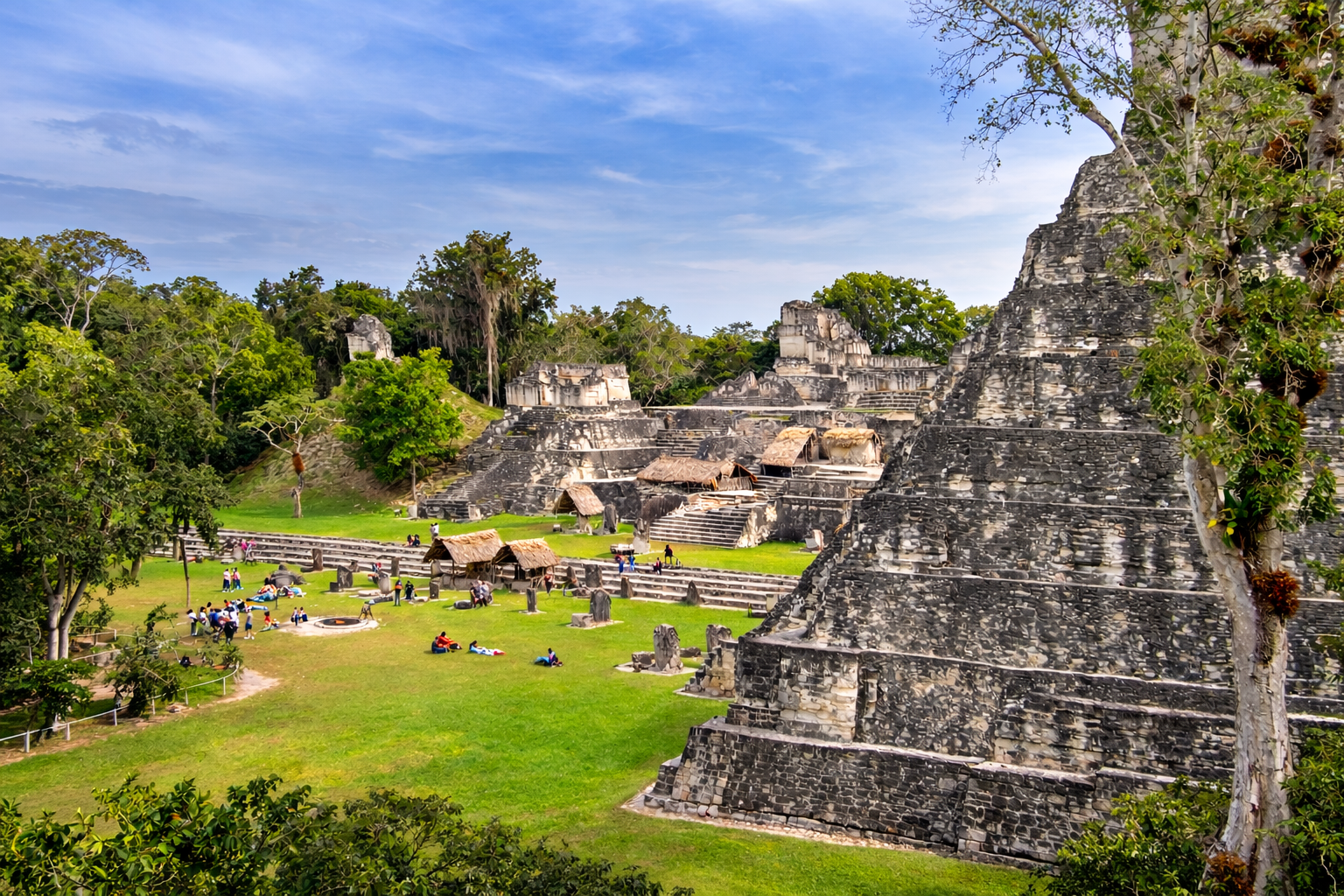
The Grand Plaza at Tikal

When the crowds became too loud, I wandered onto quieter paths toward smaller temples. I saw monkeys, macaws, and even a few coatimundis. At one point I realized I had been alone a little too long and began imagining a jaguar around the next bend. That was my cue to head back.

I spent hours exploring before catching the 4 p.m. shuttle back to Flores, arriving just in time for dinner and another early night of deep, exhausted sleep.

On my last day in Guatemala, I avoided long bus rides and flew from Flores to Guatemala City. With only part of the day left and thoroughly worn down from so many early mornings and long walks, I stayed close to town.

The flight was thankfully unremarkable. I spent one night in a gated guesthouse with bars on the windows. After two weeks of travel with little thought to security, the precautions were jarring. I stayed inside all evening. The next morning, I went to the airport early and flew back to the United States.
Southern Caribbean Cruise, Part 2: Antigua and Saint Lucia

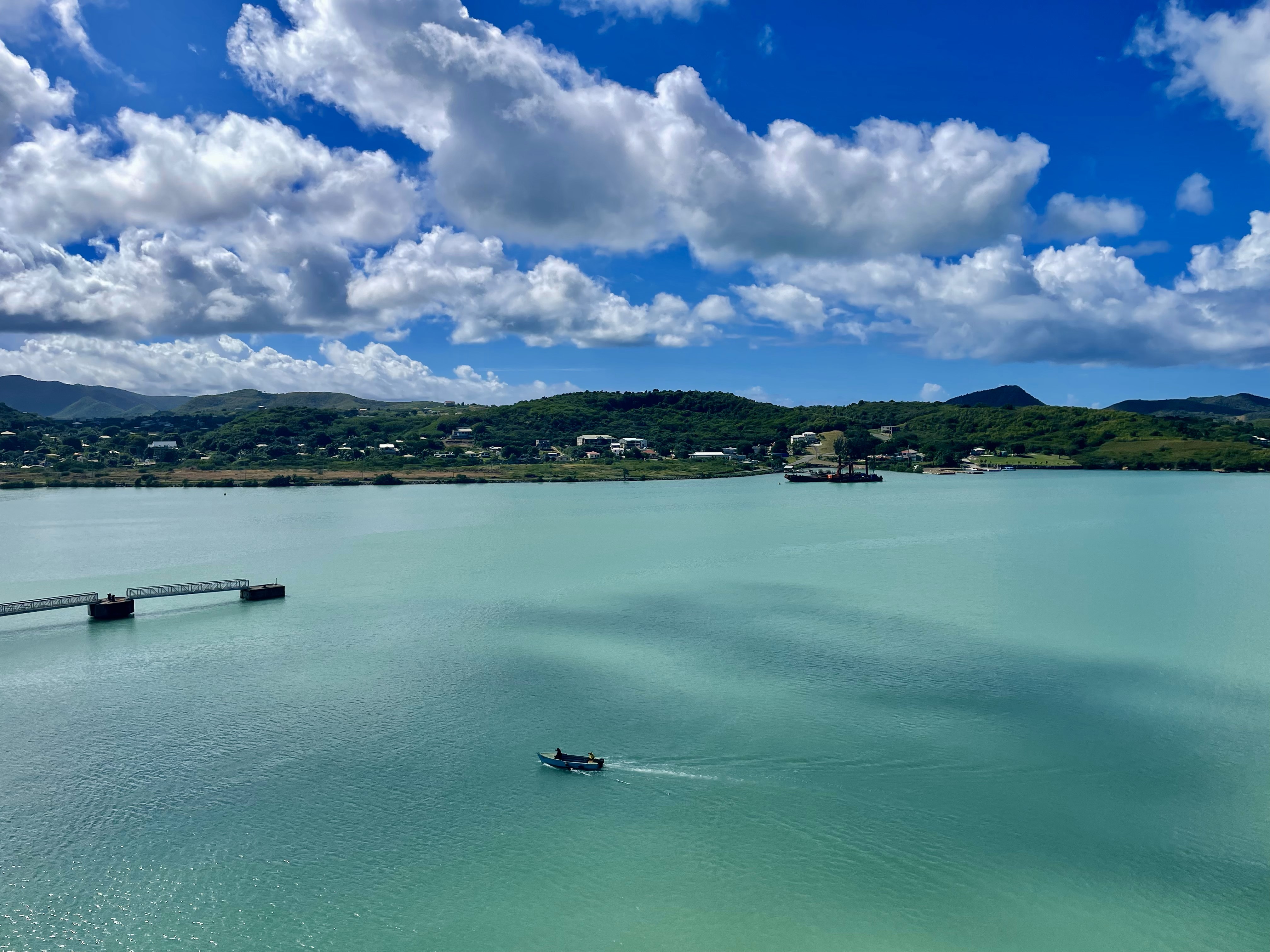
The gorgeous view from the ship docked in St. John’s Harbor, Antigua

On the second day of our cruise, we docked in Antigua. Like Saint Maarten, I first visited Antigua during a winter holiday in late December 2008. Yet, I remember and wrote more in my journal of Antigua. My 40-minute interisland flight from St. Maarten was delayed four hours. My luggage didn’t make it on my flight and I spent three of my five days there without it; I guess I just wore the same clothes day after day. I did a zipline there, the most dangerous I have ever done–we were given heavy-duty gloves and told to stop ourselves, and the wire burned straight through my glove and hurt my hand. I had Christmas dinner with the guesthouse owner and her family. I walked about their village and toured the island using either the island’s mini buses or got rides with Chippy, the husband of the guesthouse owner. I looked forward to visiting again with my daughter, C.

Our shore excursion was not until the afternoon, so I planned for us to walk around the small capital of St. John’s and visit the church in the morning. What I remember from 2008 is that the capital was not much to write home about — for some reason I remember a lot of loud techno music, even at midday — but I enjoyed visiting the Anglican Cathedral of St. John the Divine and spent a long time there.

Found on St. John’s streets – the cat bus!

From the cruise ship, I could easily spy the church’s twin towers set against a backdrop of green hills and blue sky. C and I walked through the crowds of cruise passengers (three ships were in port) and the gauntlet of touts in the noisy and somewhat garish cruise terminal, to the quieter streets of St. John’s. It was Sunday and the capital, outside the port, seemed to be only just waking up.

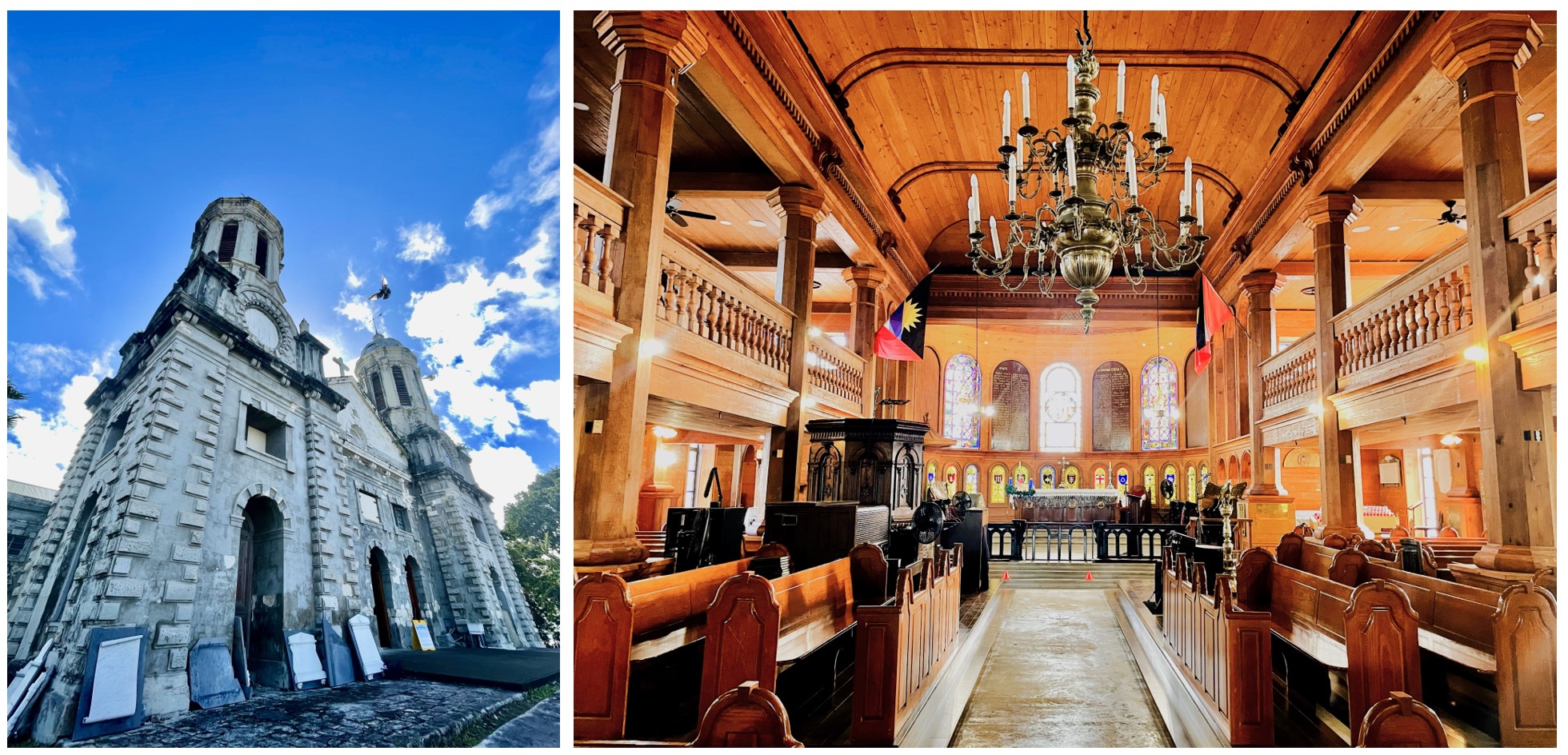
We walked a few blocks to the cathedral and paid the entrance fee. In 2008, I think I spent most of my visit poking about the graveyard. This time, C and I explored in and around the church. It has quite a history. A wooden church was first consecrated in the location in 1683 and was replaced by a brick one in 1789, destroyed by an earthquake in 1843. The present-day stone cathedral dates from 1847. Subsequent natural events and time have worn it down and its in desperate need of reconstruction. Still, I found both the exterior and interior beautiful and I hope it can be saved. C, who loves geography and has memorized the flags of nearly every country and territory, immediately noticed those of several Caribbean islands in stained glass on the wall behind the pulpit. And thus we learned the cathedral serves as the Diocese of the North East Caribbean and Aruba.

Antigua’s Cathedral of St. John

After exploring the church, we returned to the ship for an early lunch, then met our group for the afternoon shore excursion to Nelson’s Dockyard.

In 2008, I also visited Nelson’s Dockyard and what I recall from then is that 1. it was blazing hot the day I was there and 2. I loved it. Probably because I really love historic places like that. Once Britain’s Royal Navy Dockyard in Antigua, where the famous Admiral Horatio Nelson, for which the dockyard is now named, served from 1784 to 1787, it is now a UNESCO World Heritage Site. It’s the only continuously working Georgian-era dockyard in the world, and it is quite phenomenal. On my previous visit, I spent a few hours there, so I hoped I would be satisfied with our shortened cruise visit. After the less than awesome cruise excursion in St. Maarten, I was not feeling all that confident about it.

Like in St. Maarten, we were herded from the ship to the pier and then through the terminal to a minibus. We drove from the port through the heart of Antigua, south to the dockyard with no stops. I was disappointed we did not stop at Betty’s Hope, old stone windmills left over from a former British sugar plantation. It wasn’t exactly on the way, but Antigua isn’t exactly a big place. No worries though, I visited in 2008 and I doubt my pre-teen would have been all that impressed.

What we did get in Antigua though was one of the best tour guides ever; seriously, she should be considered an Antiguan National Treasure. No pre-recorded commentary on this tour and she was both informative and hilarious. And, though our cruise excursion listed only a walking tour, we also got a 30-minute boat tour of the harbor! We had three guides in all — the wonderful woman on the bus, a young man at the dockyard, and a third guy on the boat. My estimation of Antigua and cruise excursions rose.

I was excited about our third destination, a new destination for me: Saint Lucia! Many years ago I was checking in at Dulles Airport, heading off on another adventure, when I met a woman moving to Saint Lucia. All I remember is she had a massive crate-like cardboard box with her address written in bold letters in black marker and the words “Saint Lucia” underlined, and that she was breathlessly excited to tell me about it. Since then I have associated the island nation with that kind of excitement. I wanted to feel that way.

View of the town of Soufriere and the two Pitons of Saint Lucia

To really see Saint Lucia, I had signed us up for the longest of our shore excursions, a six-hour “Island’s Delights” small group bus tour with a tour of an estate, a waterfall, and a creole buffet lunch at a spot advertised with a view of the two pitons, Gros Piton and Petit Piton, two formerly volcanic spires. Having been disappointed in Sint Maarten but pleased in Antigua, I was no longer sure it was the right tour for us but could not find another that interested me and still had space.

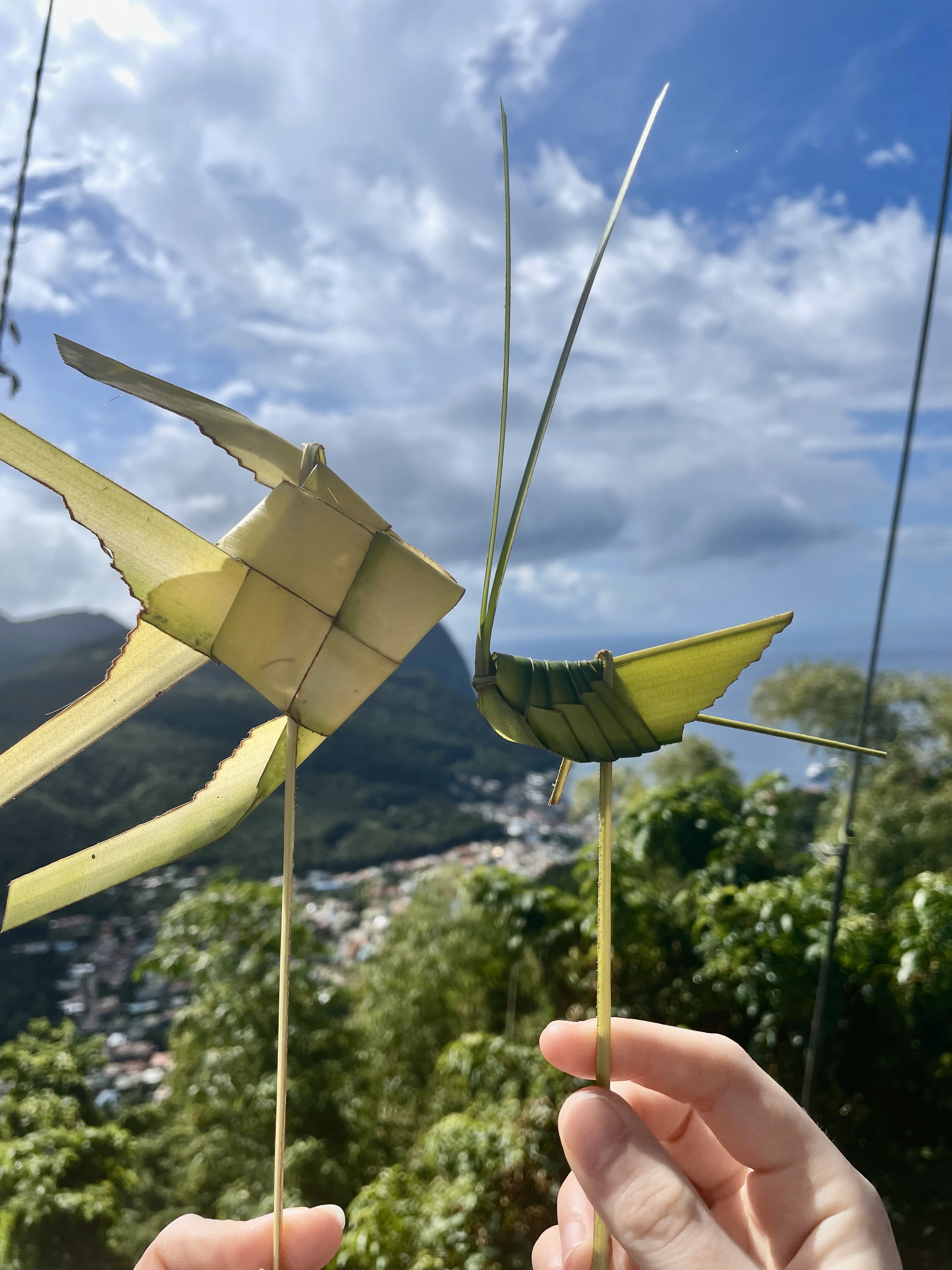
C and I show off the plant animals we got at the Piton overlook

From the cruise terminal, we headed south along the western coast. That sounds far easier said than done. Saint Lucia is a volcanic island and one of the hilliest in the Caribbean. The main area of Castries, the capital, is a small grid of flat streets; but not five minutes from the cruise port, the road begins to steeply climb. I soon realized that despite the island’s small size, much of the six-hour tour might be spent in the bus negotiating the narrow, serpentine roads. I hoped I would be wrong. (I was not) In addition, it began to rain heavily, the first such weather of the trip. Our first stop overlooking the reportedly beautiful bay of Marigot was obscured by the downpour.

We drove through a rainforest and here the rain made total sense, adding to the lushness of the thick green canopy. Unfortunately, the guide for this tour lacked a lot of charm. I likened her commentary to a tour by Captain Obvious. She pointed out plants like hibiscus flowers and bamboo as if this was everyone’s first time seeing such plants. C and I joked about this woman for the remainder of our vacation.

After an hour or so, the rain finally stopped, just in time for us to have a short stop at a roadside viewpoint above the town of Soufriere with a gorgeous view of the two pitons. We were given only five minutes here, barely enough time to shuffle off the bus and onto the decked platform for a photo. I figured this would be okay since we had that lunch with a view on the schedule.

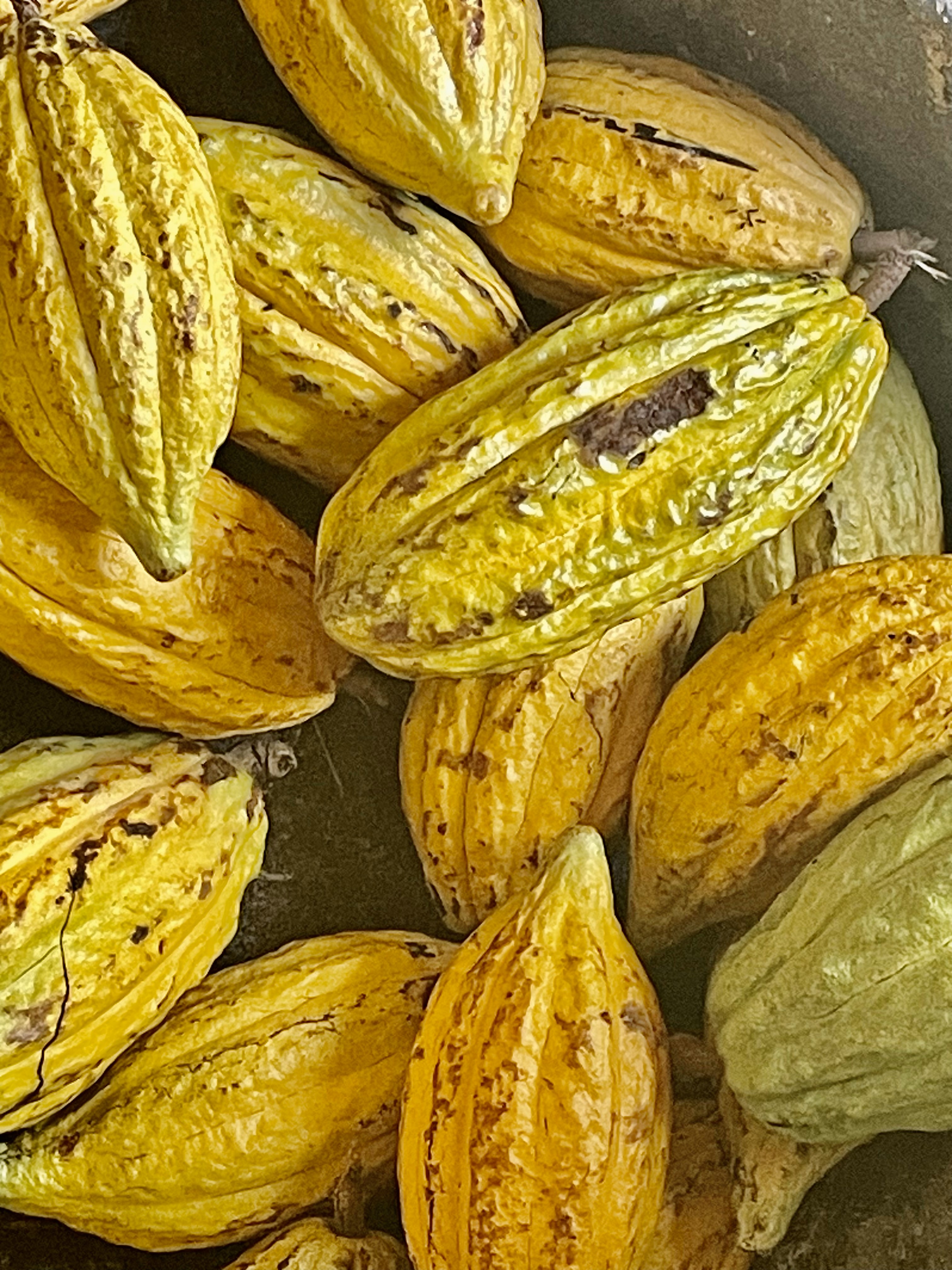
Cacao pods at Mourne Coubaril Estate

We stopped next at the 18th-century Morne Coubaril Estate for a guided tour. I love taking tours of historic places, including houses and estates and was looking forward to this and thought this visit could turn this tour around. It did not. I should have done a bit more research online as I would have known it would be only 30 minutes long. However, that would still not have told me that timeframe would be spent largely at the restrooms and sipping our “free” fruit punch. We did get approximately 2 minutes looking at a replica stick hut village (when I tried to linger and look longer, I was reprimanded by the guide), maybe 5 minutes learning about cacao production, and 10 minutes watching a guy husk and crack open coconuts (though we did get to drink the water). In all, we walked maybe 200 feet from the parking area, and in my book that does not a tour make. I reluctantly dragged myself back on to the bus.

Our next stop at the Toraille waterfall was brief and forgetful. Then it was lunchtime! Though I was unsure what to expect from the food, C and I were hungry, and I looked forward to staring out at the Pitons during the repast. We both found the plantain curry unexpectedly scrumptious and went back for seconds. Unfortunately, there was not a view to be found, and after lunch, we were just loaded back into the bus and driven back to the cruise terminal, which took about two hours!

View from the ship when docked in Castries, Saint Lucia

Back in Castries, I tried to salvage the day with a walk through the capital. I wanted to feel like we had seen a bit more of the country and the culture. We spent maybe 45 minutes exploring, looking for the local market. But I got turned around, and hot and disappointed we decided to throw in the towel and return to the ship. Saint Lucia is one place I think I need a do-over.