Guatemala December 2005: Lost Memories of Antigua, Copan, and Tikal

This is the third and final installment of my trip to Guatemala in December 2005–January 2006. Because I never got around to typing up a travelogue of this last stretch, I have had to rely on my photos, a few brief diary entries, and my own Swiss-cheese memories from more than twenty years ago.
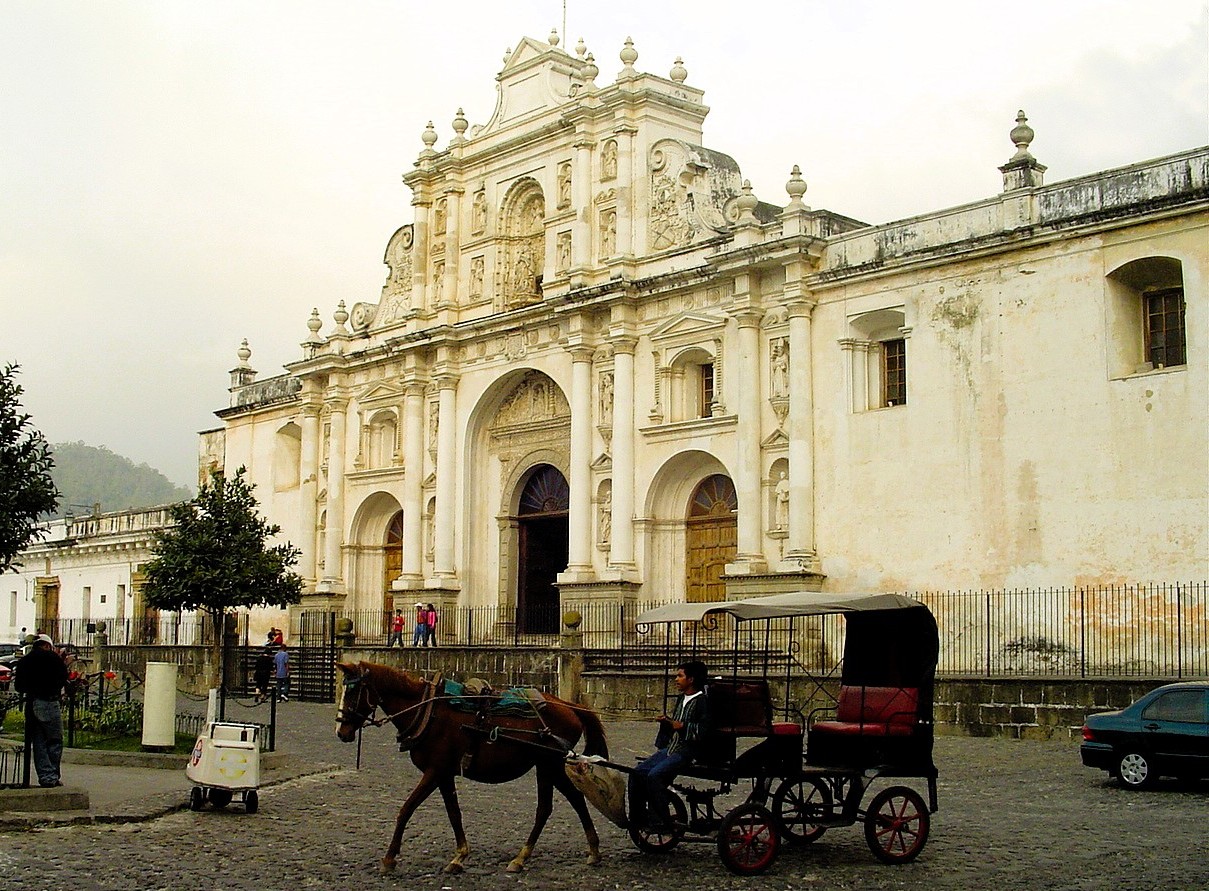
The Iglesia de La Merced in Antigua, Guatemala

After returning from the Tajumulco Volcano trek to Xela around 5 p.m., I took a room at Quetzaltrekkers, the guide company, simply because I had no energy to look elsewhere. I grabbed an early dinner and fell into a deep, heavy sleep.

I let myself sleep in the following day—well, until about 8 a.m. After being up before 5 a.m. the previous two days, this felt positively luxurious. I caught another chicken bus for the three-hour ride to Antigua, the former colonial capital of Guatemala and a UNESCO World Heritage Site, where I would ring in the New Year.

All I really did in Antigua was walk. I wandered the historic streets and soaked in the atmosphere. The city is an architectural wonder, full of 17th- and 18th-century Spanish Baroque buildings, many of them worn but still elegant. When my legs grew tired—which they did, especially so soon after the Tajumulco hike—I sat in the plazas and watched people, or grabbed street tacos and devoured them on park benches.

Given that my arrival coincided with New Year’s Eve, it is something of a miracle that I found a place to stay at all. It seemed that much of Guatemala, along with a large percentage of the tourists in the country, had converged on Antigua. Still, I lucked out with a simple place right in the center of the old city, with all the main sites within a stone’s throw.
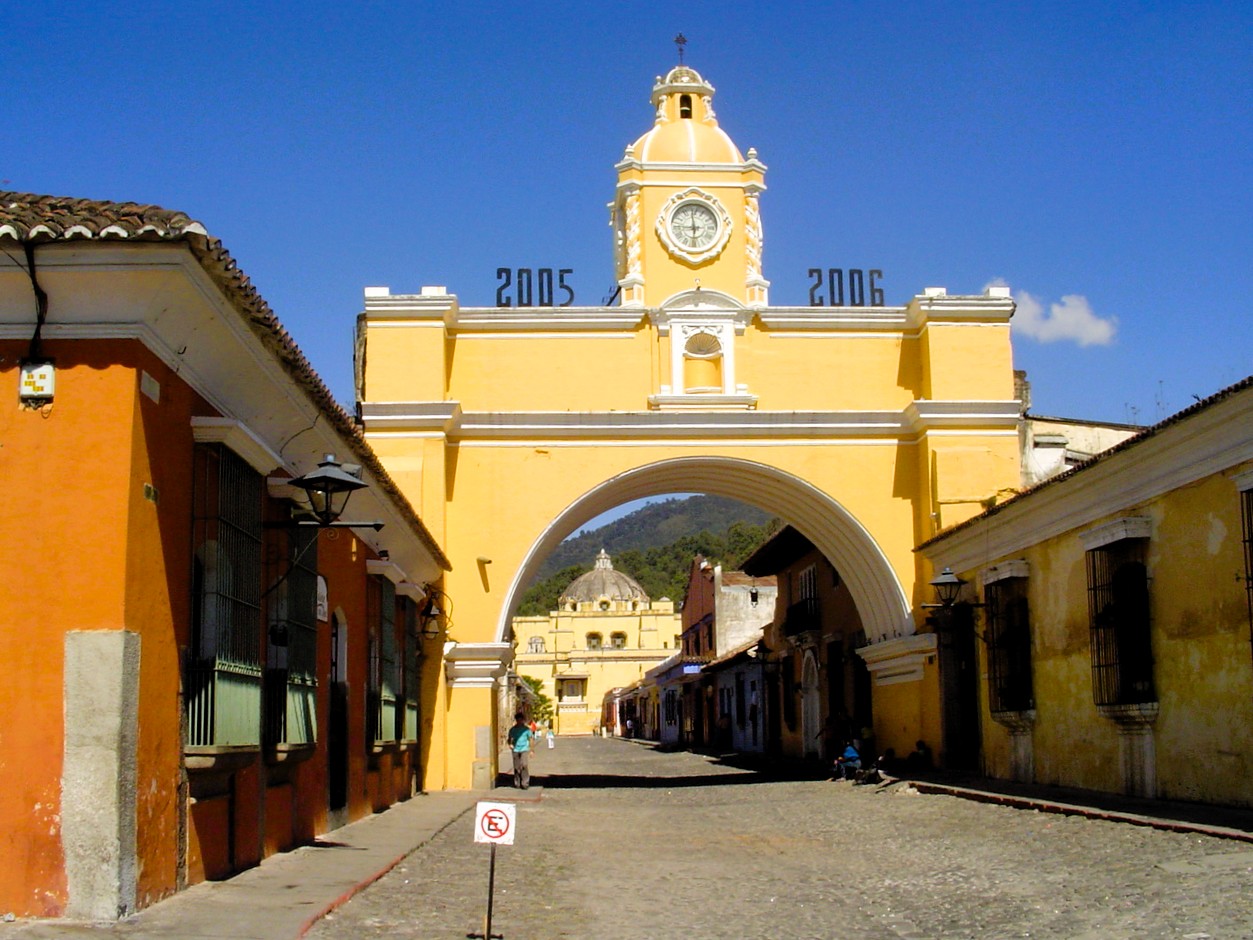
The Arco de Santa Catalina in Antigua, Guatemala, for the 2005-2006 New Year’s festivities

I wish I remembered visiting all the beautiful sights captured in my photos, but unfortunately, I do not. What I do remember are streets crowded with happy visitors, a street performance near the Arco de Santa Catalina that had the crowd in stitches, watching horse-drawn carriages clip-clop by, and eating what may still be the best street taco of my life from a small vendor set up near Central Park in front of the Cathedral.

I didn’t make it to midnight. I rarely do. The long days of active sightseeing had absolutely caught up with me, and around 9 p.m. I dragged my very tired self back to my room and fell asleep. Not even the sound of firecrackers throughout the night managed to wake me.

The first day of 2006 found me once again wandering the streets of Antigua, which were noticeably quieter and less crowded than the day before. I visited the ruins of the Convento de Santa Clara, the Convento de la Recolección, and the Convento de las Capuchinas. As open-air ruins, they were accessible on the holiday, and I had them mostly to myself. With plans to move on the following day, I once again went to bed early.
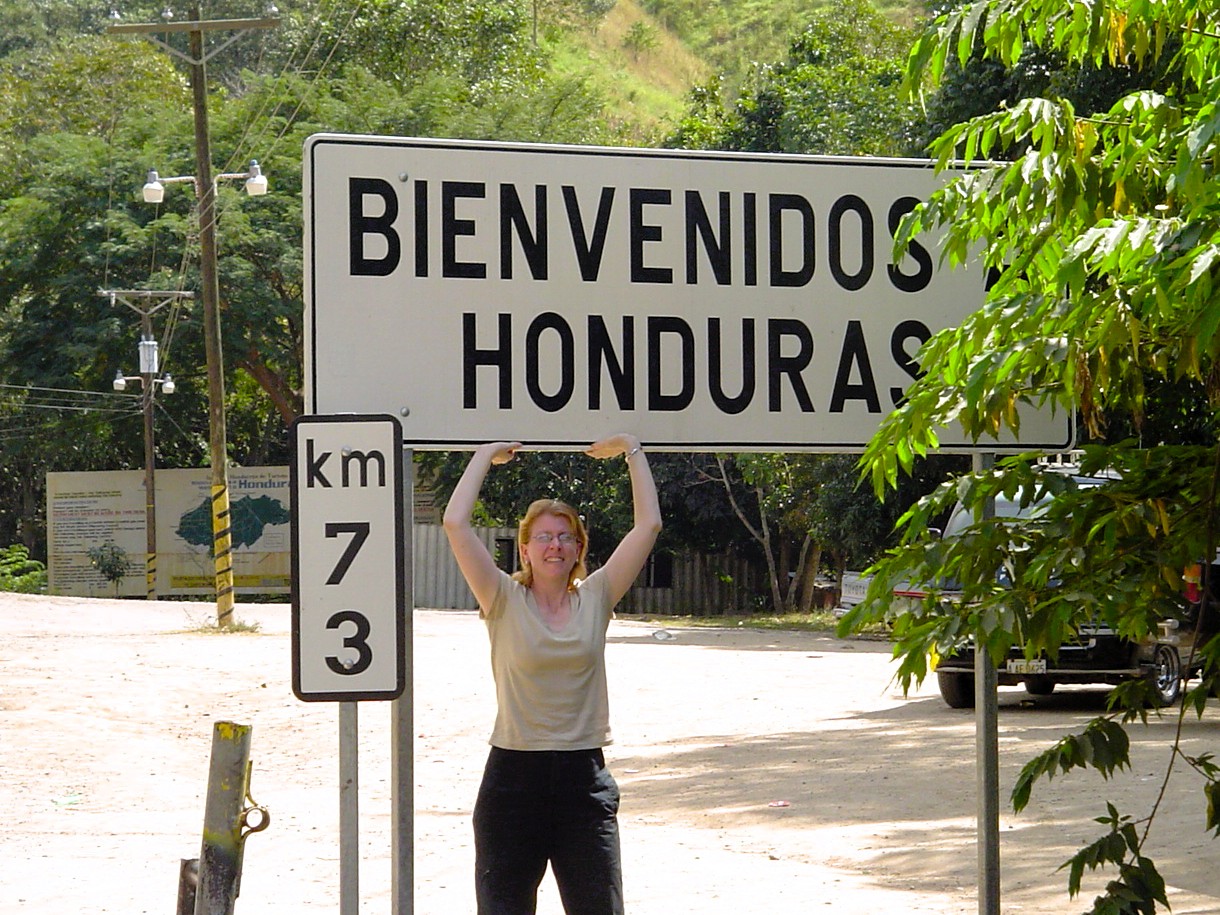
On January 2, I was up very early to catch a 4 a.m. bus that would take me across the Honduran border to the town of Copán. The bus ride itself took about six hours, but this did not include the two and a half hours spent waiting at immigration. I do not remember what took so long, and perhaps I never really knew. More likely it was the usual combination of understaffing and bureaucratic red tape that anyone who traveled regularly back then would recognize.

I had come to Copán to visit Copán Ruinas, a UNESCO World Heritage Site and once-powerful Mayan city-state at the southern edge of the Mayan world. The site is known for its artistic sophistication, with intricately carved reliefs, stelae, and statuary. Once again, I had the place almost entirely to myself, which felt especially delicious after the crowds of Antigua and Xela. There were no pushy guides—no guides at all that I can recall—and while it might have been helpful to understand more of what I was seeing, I happily wandered the ruins alone for hours, accompanied only by peccaries and scarlet macaws.

I had originally planned to stay just one day in Copán, but after such a long journey, I decided to remain another night to rest. I signed up for a horseback-riding tour through the countryside to give myself something fairly gentle to do. I had the guide all to myself, and uncharacteristically, I stayed quiet, lost in my own thoughts as we followed the Copán River and rode into the hills above town.

We stopped briefly at Hacienda San Lucas for a drink and the view, then continued on foot into the forest to see Los Sapos—a group of large Mayan stone carvings of animals, most identified as sapos, or toads, associated with fertility rites. We also passed through a small village where I was a big hit with the local children before riding back into town.
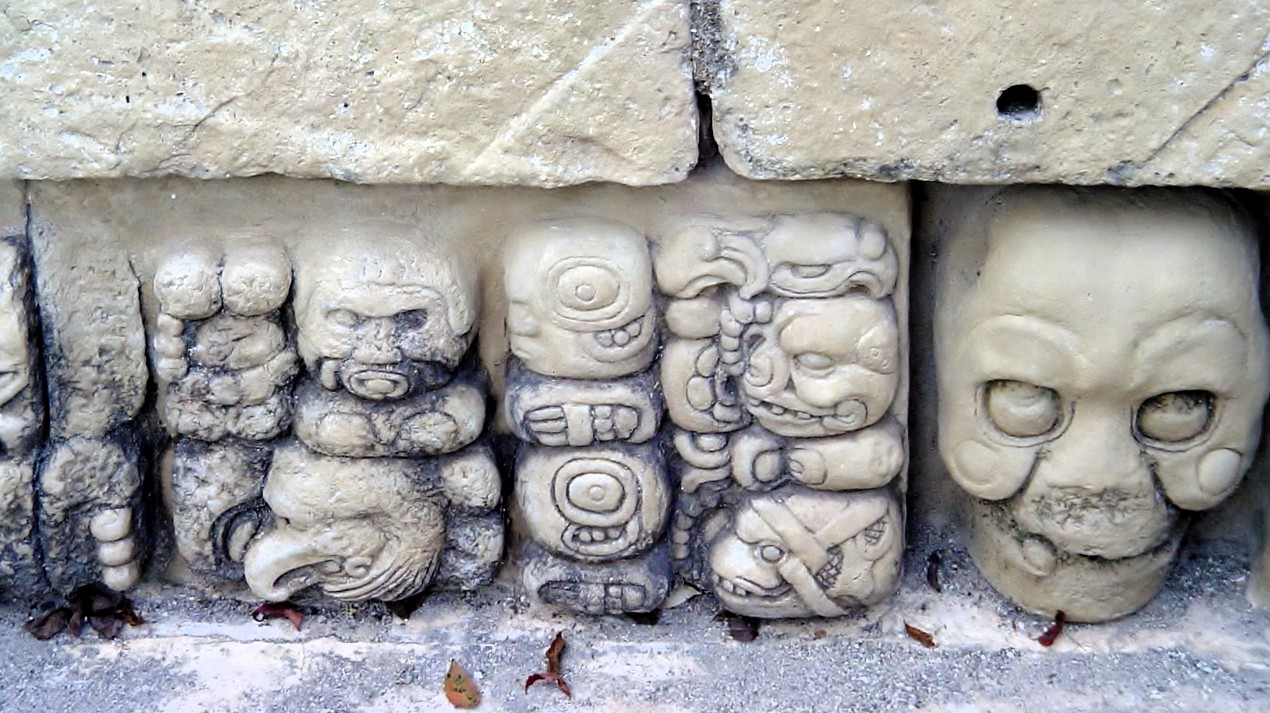
Some of the incredible carvings to be found at Copan Ruinas

I spent the remainder of the day organizing onward transport and wandering up and down Copán’s hilly, cobblestoned streets.

The next morning, I was up early once again. I had another very long travel day ahead of me as I crossed back into Guatemala. The border crossing was mercifully faster this time, which was good, as we still had at least eight hours of driving ahead of us to reach Flores, in the far north of the country.

I don’t remember much of that journey, and perhaps that’s for the best. It was sunny and warm, everyone seemed in good spirits, and for reasons I still don’t understand, the driver never collected my fare. I only realized this after being dropped off in central Flores, with a pocketful of Honduran lempiras that were now completely useless.

Because we departed Copán at a more reasonable hour, I had more sleep, but I didn’t arrive in Flores until late afternoon. There was little to do but find a place to stay, eat, stock up on snacks, and make a plan for the following day.
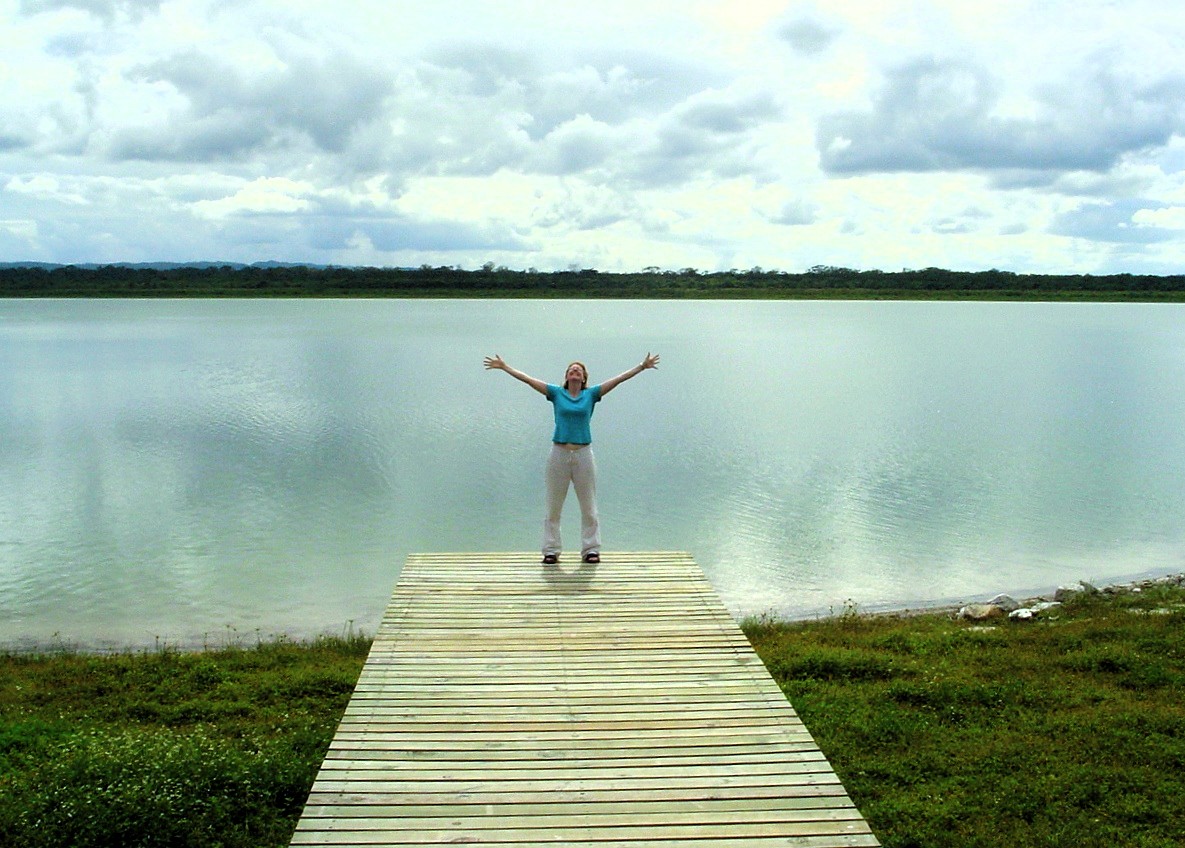
I was convinced a croc would launch itself at me from the depths of Lake Yaxha

I visited the Yaxhá Archaeological Site, the third-largest Mayan site in Guatemala, about two hours from Flores by bus. Yaxhá receives far fewer visitors than nearby Tikal, and once again I found myself among only a handful of tourists. The site is less excavated, with many smaller temples still wrapped in jungle, vines, and tree roots—reminding me a little of Angkor Wat.

Yaxhá sits near a lake, and from the top of its tallest structure, Temple 216, there is a sweeping view across the rainforest canopy and out toward the horizon. I sat there for a long while, listening to howler monkeys below and thinking about history, culture, and nature.

Later, I wandered down to the lake and stepped onto a long pier. Only a few months earlier, the television show Survivor had been filmed there. I knew crocodiles lived in those waters, and although I didn’t see any, I felt distinctly uneasy standing at the edge. I asked another traveler to take my photo, put on my bravest face, and then quickly scampered back to terra firma.

The following morning, I boarded the 5 a.m. shuttle bus for another long ride—this time to Tikal. Once a thriving Mayan capital with a population of perhaps 100,000, Tikal is astonishing in scale. With more than 3,000 structures, it is one of the largest Mayan cities ever built. Temple IV, at roughly 230 feet, is the tallest standing Mayan structure.

Tikal is popular, and unlike Copán and Yaxhá, I had plenty of company. After several days of solitude, I didn’t mind. Tourists are allowed to climb many of the pyramids, and standing in the Great Plaza, surrounded by immense stone structures, one feels dwarfed by history. Sitting atop a pyramid and watching tiny figures move below, I felt strangely grand myself.
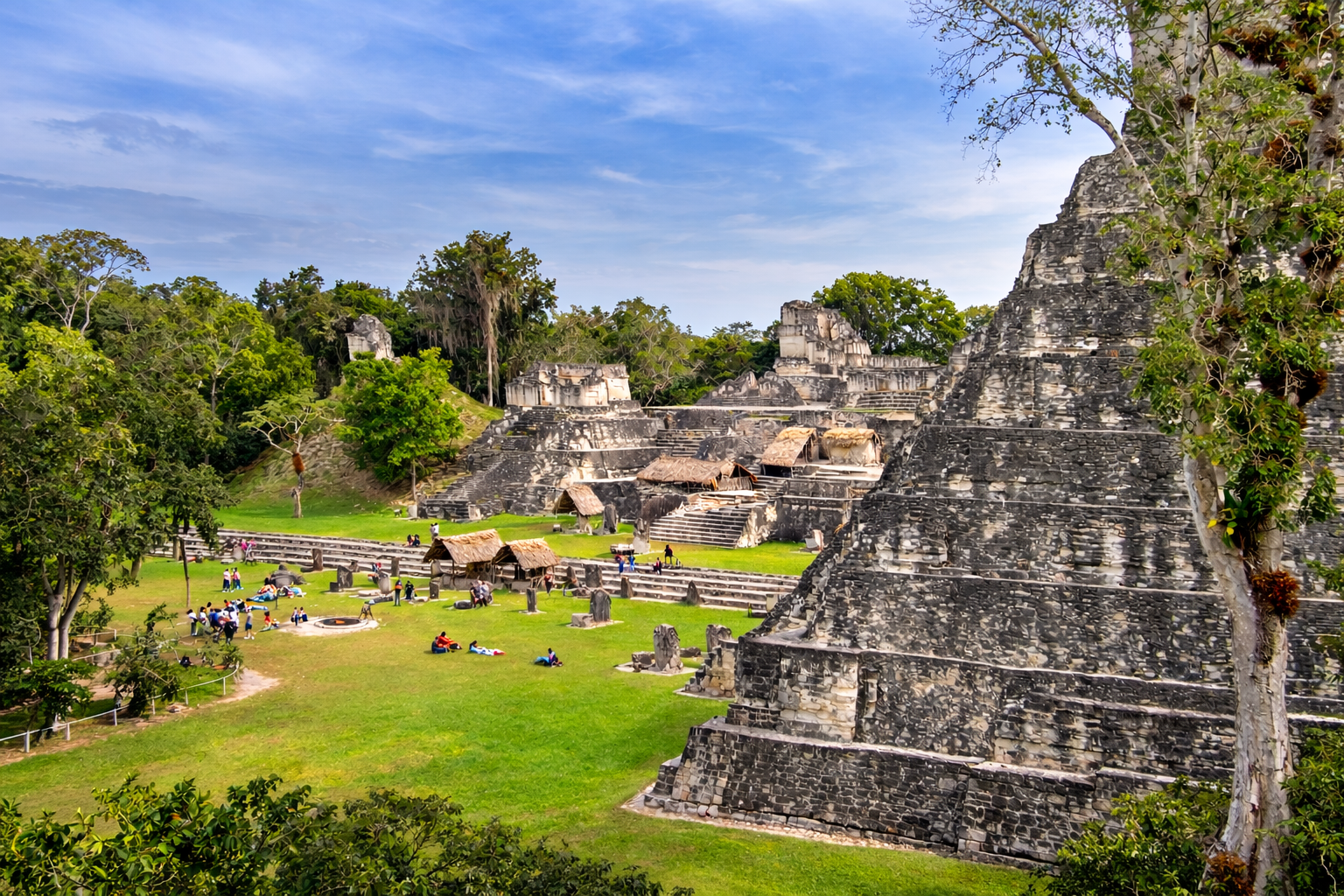
The Grand Plaza at Tikal

When the crowds became too loud, I wandered onto quieter paths toward smaller temples. I saw monkeys, macaws, and even a few coatimundis. At one point I realized I had been alone a little too long and began imagining a jaguar around the next bend. That was my cue to head back.

I spent hours exploring before catching the 4 p.m. shuttle back to Flores, arriving just in time for dinner and another early night of deep, exhausted sleep.

On my last day in Guatemala, I avoided long bus rides and flew from Flores to Guatemala City. With only part of the day left and thoroughly worn down from so many early mornings and long walks, I stayed close to town.

The flight was thankfully unremarkable. I spent one night in a gated guesthouse with bars on the windows. After two weeks of travel with little thought to security, the precautions were jarring. I stayed inside all evening. The next morning, I went to the airport early and flew back to the United States.

Escape and Escapades: Spring Break in Roatan

Late last September, with the summer firmly over and our Christmas train trip arranged, I turned my eyes to planning our spring break getaway.

I knew I wanted to be somewhere warm, but also someplace not too taxing or far from home, so I zeroed in on the Caribbean. We would have only a week for the Spring Break / Easter week and early on the airfares and mile redemptions for the week were a disappointment to say the least. (Perhaps prices will never return to pre-COVID levels? It sure feels like it.) Honduras looked to be a good choice and initially, I had planned on time in both the Bay Islands and on the mainland, but quickly realized that to secure a lower airfare and a less stressful holiday, it would be best to shorten the holiday and just stay in one place.

I am glad I kept it simple. Early in 2024, my mom ended up in the hospital and I became the primary point of contact for calls with various medical staff, case managers, and more. With the daily medical discussions and issues that could take from one to six hours, I began to contemplate canceling our trip altogether. In the end, I got her treatment to a certain point where I felt I could split the difference such that I would still have some much-needed rest and relaxation and mother-daughter time, while also making daily check-ins related to my mom’s care. It was far from ideal, but I believe it was a good compromise.

Roatan from the air–demonstrating some of the reef system surrounding the island

Roatan is a fascinating place. It’s history, which includes a visit by Christopher Columbus, serving as a hangout for infamous pirates like Blackbeard, and once being a British colony, has shaped Roatan differently than the Honduran mainland. Although the British ceded the Bay Islands, including Roatan, to Honduras in 1861, it took nearly a hundred years before Spanish was taught on the islands’ schools. Today, English is still the first language of the islanders.

Roatan is a popular tourist destination for nature and adventure activities. It’s location along the world’s second largest barrier reef, the Mesoamerican, makes it an extremely popular scuba diving site. Roatan also boasts two cruise ship terminals, the first opening in 2008 and the second two years later. For an island only 40 miles long and 5 miles wide and a population somewhere between 50,000-100,000 people, two cruise ship terminals disgorging some 3,000 to 10,000 passengers a day in high season is astonishing. All these North American travelers have made the U.S. dollar the currency of choice on Roatan, vice the Honduran lempira.

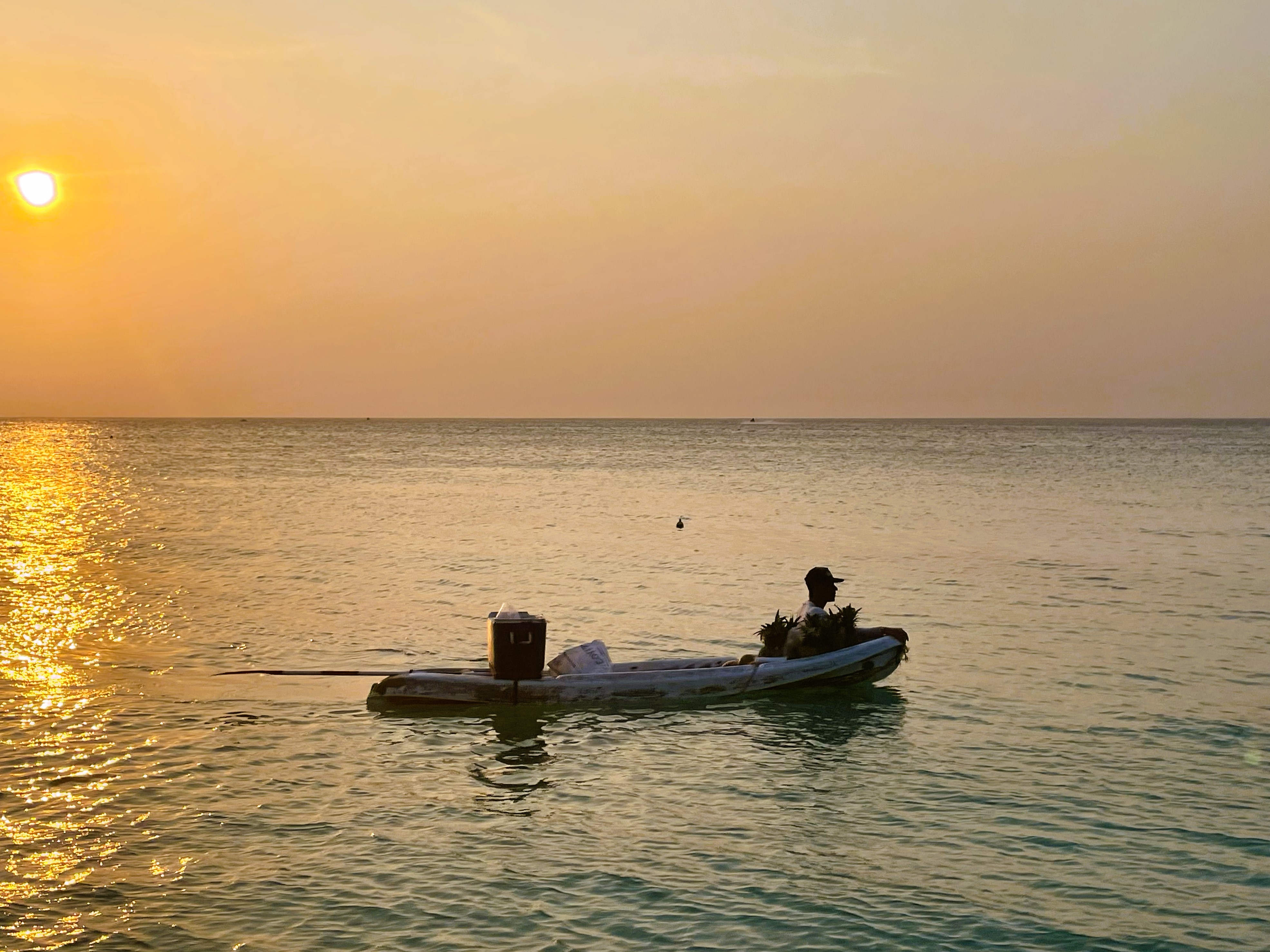
The pineapple seller heads home

I knew none of this. I usually research the heck out of where I am going. I like to know the history and current situation; I like to know the language, currency, and exchange rate. But this time, with all the stuff going on with my mom, I left much up to chance. I booked our flights, reserved our hotel, and looked up, but did not schedule, a thing for us to do.

On Sunday morning, C and I celebrated Easter a week early and then that night flew to Houston. We stayed the night then flew on to Roatan early Monday morning, arriving at our hotel, the Bananarama Dive and Beach Resort in West Bay, in time for a hectic lunch rush during a steamy tropical beach day. Ahhhhh…it felt amazing to be warm.

I struggle with stepping back and doing little. I like to keep engaged. But here it was our first day on the island and I had nothing at all planned. I had not even booked transport from the airport to West Bay. It only occurred to me as we boarded our plane in Houston that it could be a problem. Luckily I quickly checked the interwebs, reserved and paid for a taxi, and hoped for the best. I really thought it was 50-50 anyone would actually come and figured I might have just thrown $25 away. I was pleasantly surprised to find a driver with a cute handwritten sign with my name waiting for us in arrivals!

C holds Charlie the Sloth

Therefore on our first day, all C and I did was make reservations for some activities on following days, walk on the beach, checked out the nearby shopping plazas, and lie about in the hammock or chairs on our bungalow porch.

On our second day, we headed to Jungle Top Adventures for an exciting few hours of ziplining and animal interactions. There seem an abnormally high ratio of zipline locations per population on Roatan, due to all those cruises. When we booked the zipline, we were not told which we were heading to, and I was a tad disappointed to find ours was located in Coxen Hole, the island’s main town, directly across from one of ports where two massive cruise ships were docked.

As I had read it is best to visit the animal park first because the sloths — the main attraction — can only be held by a limited number of persons before they are too tired, that was our first stop. While we did enjoy seeing to coati and the Yucatan white-tailed deer (Honduras’ national mammal) and meeting the monkeys and macaws, the sloths were the star of the show and one of the top reasons we chose to visit Roatan. C and I were both able to hold a sloth for about five minutes. With their arms around our necks and their legs around our waist, it was almost like holding a baby. The experience did not disappoint.

Next we headed to the zipline. We had to wait about 10 minutes before we could join the truck taking participants to the first of 16 zipline platforms. While the guides kitted us up, two more truckloads of adventurers arrived. All in all we had to wait 30 minutes before all our zipline guides arrived and zipped off to man the various platforms. However, once everyone had their gear and the guides were in place, we were zipped across the lines rapidly, like an assembly line. I had hoped to get a photo or video of my daughter, but she was hooked up and then off with such speed I hardly had time to react before it was my turn. When I arrived at the platform, C was already zipping on to the next. At the midway point though we all crowded together again. This time I was able to video C taking a running leap off the platform and then flipping upside down — of all the ziplines I have done in various places this was the first and only place I had heard of that being allowed.

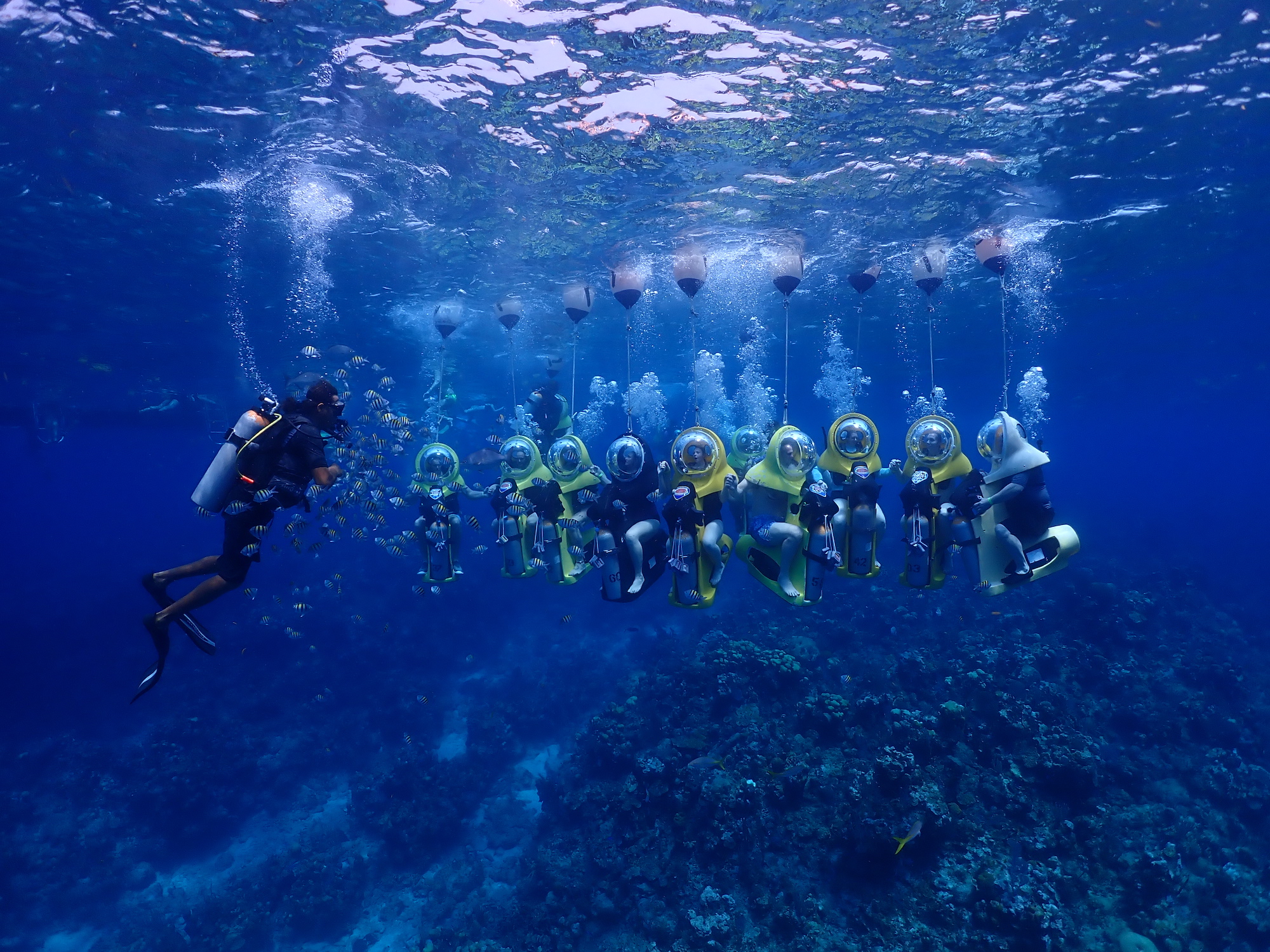
C and I and our group prepare for our submersible scooter experience

On Wednesday, we did the most extraordinary activity! We glided through the water in a Breathing Observation Submersible Scooter (BOSS). I had initially booked for Friday, but the company emailed me on Tuesday afternoon to inform me that Thursday and Friday were predicted to be poor weather, but they could accommodate us earlier.

I have to admit, I was a wee bit scared to do this. I enjoy being warm and near the water; to feel sand between my toes, but I am not comfortable in the ocean. I get sea sick on boats. I am not comfortable in the ocean. I once tried to learn to scuba dive in the Philippines and kept freaking out during the basic water practice. I am just much more a landlubber and I get most of my fish experiences at aquariums (which I LOVE to visit). But C was excited to give it a try and so I thought I should be brave and give it a go.

The scooters work on the principle of an air pocket forming in a glass underwater. To get in, the scooters are held just below the water’s surface with the air pocket already formed in the large diving bell-like helmet. Then compressed air, just like the tanks used for diving, is pumped into the helmet. One has to hold one’s breath for just a few seconds to duck under and bring their head into the helmet. Well, it sounds simple. C did it in one go. I freaked out. It took me five times to get up the courage to get in. Thankfully, C went first and did not see that. Once everyone is in, the scooters are lowered to their maximum depth of ten feet. Then one can controls the scooter just like a scooter on land — with a toggle switch for speed and moving the handle bars to the sides to turn.

We visited the Roatan Chocolate Factory in West End after our underwater scooter experience

I wear glasses and unlike in snorkeling, where I have to accept blurred vision because I am not going to spring for a prescription mask, I could wear my glasses while operating the underwater scooter! I also have a lot of ear and sinus issues and that (along with a fear of sharks and running out of air and drowning) is what keeps keep from scuba diving. At the depth of the scooters, I could feel the pressure on my ears and I struggled to pop them, having to do so repeatedly, but I could manage. I have never been able to see a reef and fish underwater like I could on the scooter and I found myself laughing with delight. Also, because the giant helmets made everyone’s heads look really tiny on top of their bodies.

Thursday and the first part of Friday did turn out to have poor weather. Though it did not rain during the day, the winds picked up substantially, up to 25 mph, making the seas very choppy. Nearly all activity stopped along the beach. Though West Bay is a nice beach, it is not very wide, and on sunny days the beach chairs take up a good third to half of the sandy real estate and the crowds of beachgoers take up most of the rest. So though it was very breezy, it was still nice and warm, and I took strolls along the shore, while C chilled out in our hammock. I welcomed the respite. If the weather had been perfect, I would have felt compelled to be doing something, but as it wasn’t, I was off the hook. I did have to make several phone calls and emails related to my mom and I had time to do them, while also feeling sand between my toes and a deliciously warm wind all around.

The wind kicks up the waves around the water taxi pier in West Bay

The sun returned on Saturday, our last day, so C and I headed out to parasail. This would be C’s first time ever and my second, but my first time parasail in tandem. During my first time, in the Bay of Islands, New Zealand, the boat motor stopped when the woman after me was up, and her parachute slowly sunk back down to the ocean. She had to unfasten herself and swim back to the boat. I had thanked my lucky stars it had not been me, but admit that I had been a little scared to parasail since. I am happy to report that C and I did it without a single incident.

That afternoon C wanted to stand-up paddleboard (SUP). It had been on our list for the trip in a large part because our hotel had advertised it as being readily available. And yet throughout the week we had not seen anyone paddleboarding. When I went to ask at our activity kiosk I was told they didn’t have any paddleboards, and then the guy corrected it to, um, no paddleboards that work well. I really wondered about their secret defective paddleboards. At the next kiosk they told me they could get me paddleboards, but could they have ten minutes to “find” them? Turned out they could only locate one, so I left it to C to show me how it is done.

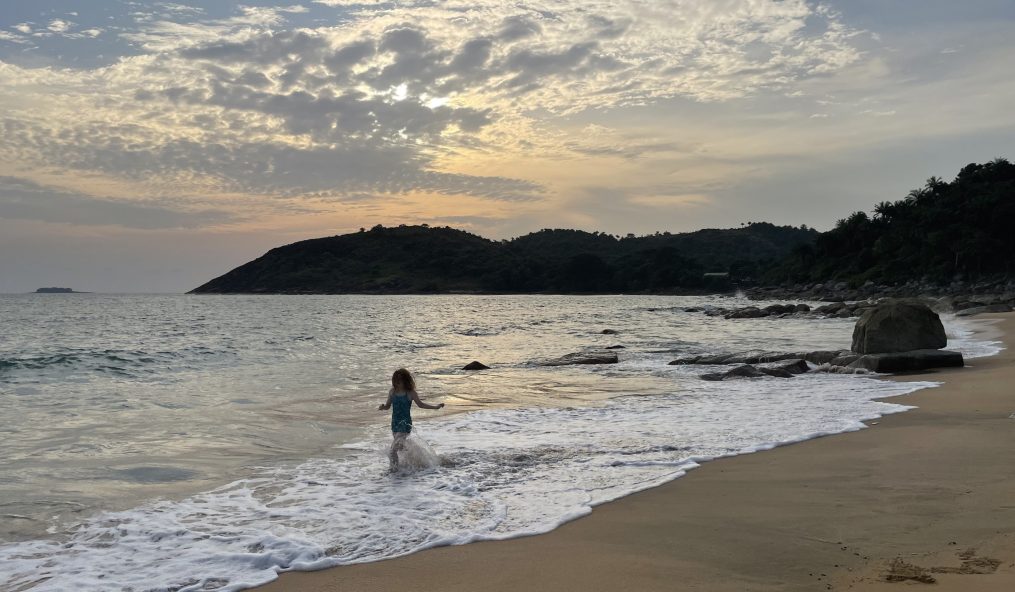
C looks pretty cool doing SUP at sunset

Unfortunately, C had only done SUP once before – at the lake during last summer’s camp. Doing it in the ocean on a busy beach turned out to be a whole new level. Still she managed pretty well. She took a little break after 15 minutes and let me give it a try. I only made it to a crouching position before falling off and struggled to maneuver around the crowds of bobbing heads. It became clear pretty quickly why SUP seems to have fallen by the wayside in Roatan, at least during the busy season.

Then just like that our six days in Roatan was over. Afterwards, once we returned home, it felt short, but during the trip it felt just right. It gave me just the right amount of time to rest, deal with issues at home, and spend mother-daughter time with C while doing amazing activities or just chilling out together.