This is the third and final installment of my trip to Guatemala in December 2005–January 2006. Because I never got around to typing up a travelogue of this last stretch, I have had to rely on my photos, a few brief diary entries, and my own Swiss-cheese memories from more than twenty years ago.
After returning from the Tajumulco Volcano trek to Xela around 5 p.m., I took a room at Quetzaltrekkers, the guide company, simply because I had no energy to look elsewhere. I grabbed an early dinner and fell into a deep, heavy sleep.
I let myself sleep in the following day—well, until about 8 a.m. After being up before 5 a.m. the previous two days, this felt positively luxurious. I caught another chicken bus for the three-hour ride to Antigua, the former colonial capital of Guatemala and a UNESCO World Heritage Site, where I would ring in the New Year.
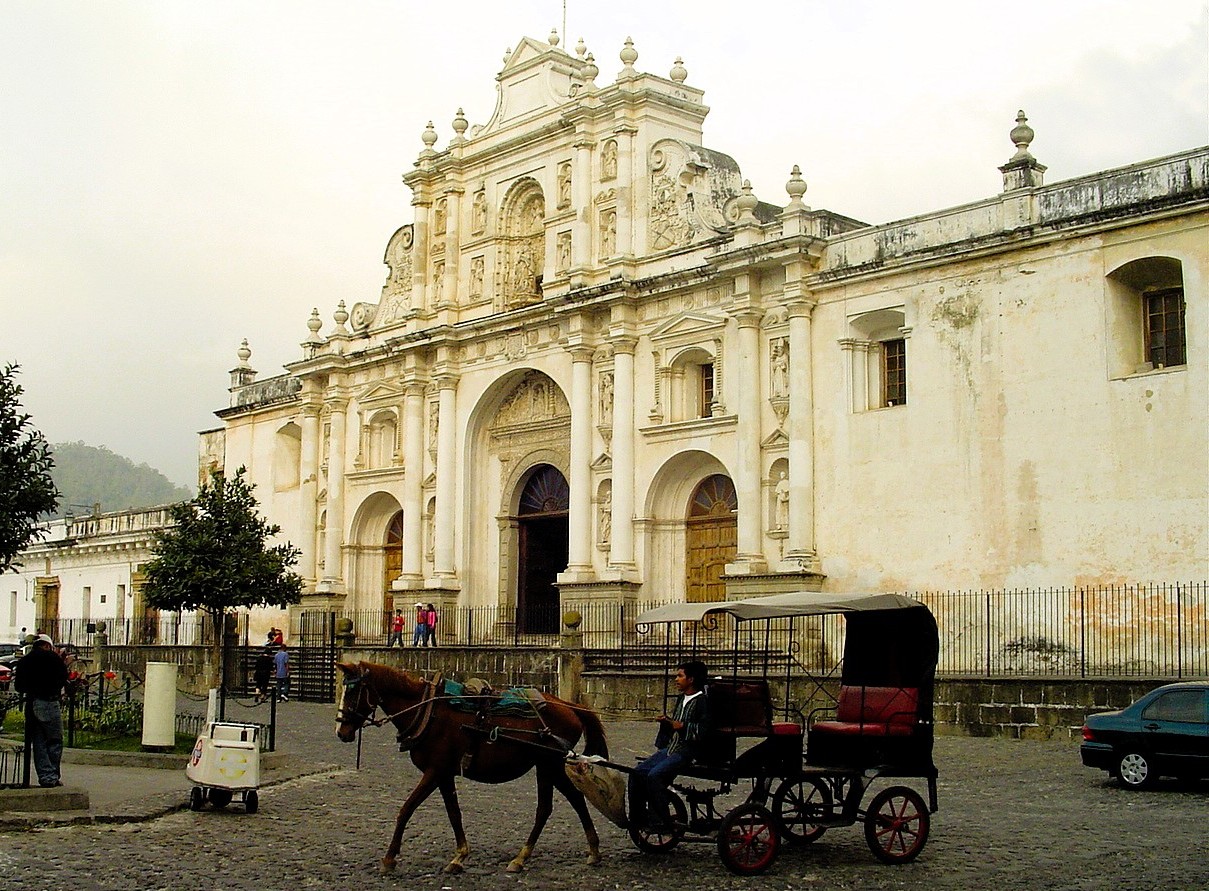
All I really did in Antigua was walk. I wandered the historic streets and soaked in the atmosphere. The city is an architectural wonder, full of 17th- and 18th-century Spanish Baroque buildings, many of them worn but still elegant. When my legs grew tired—which they did, especially so soon after the Tajumulco hike—I sat in the plazas and watched people, or grabbed street tacos and devoured them on park benches.
Given that my arrival coincided with New Year’s Eve, it is something of a miracle that I found a place to stay at all. It seemed that much of Guatemala, along with a large percentage of the tourists in the country, had converged on Antigua. Still, I lucked out with a simple place right in the center of the old city, with all the main sites within a stone’s throw.
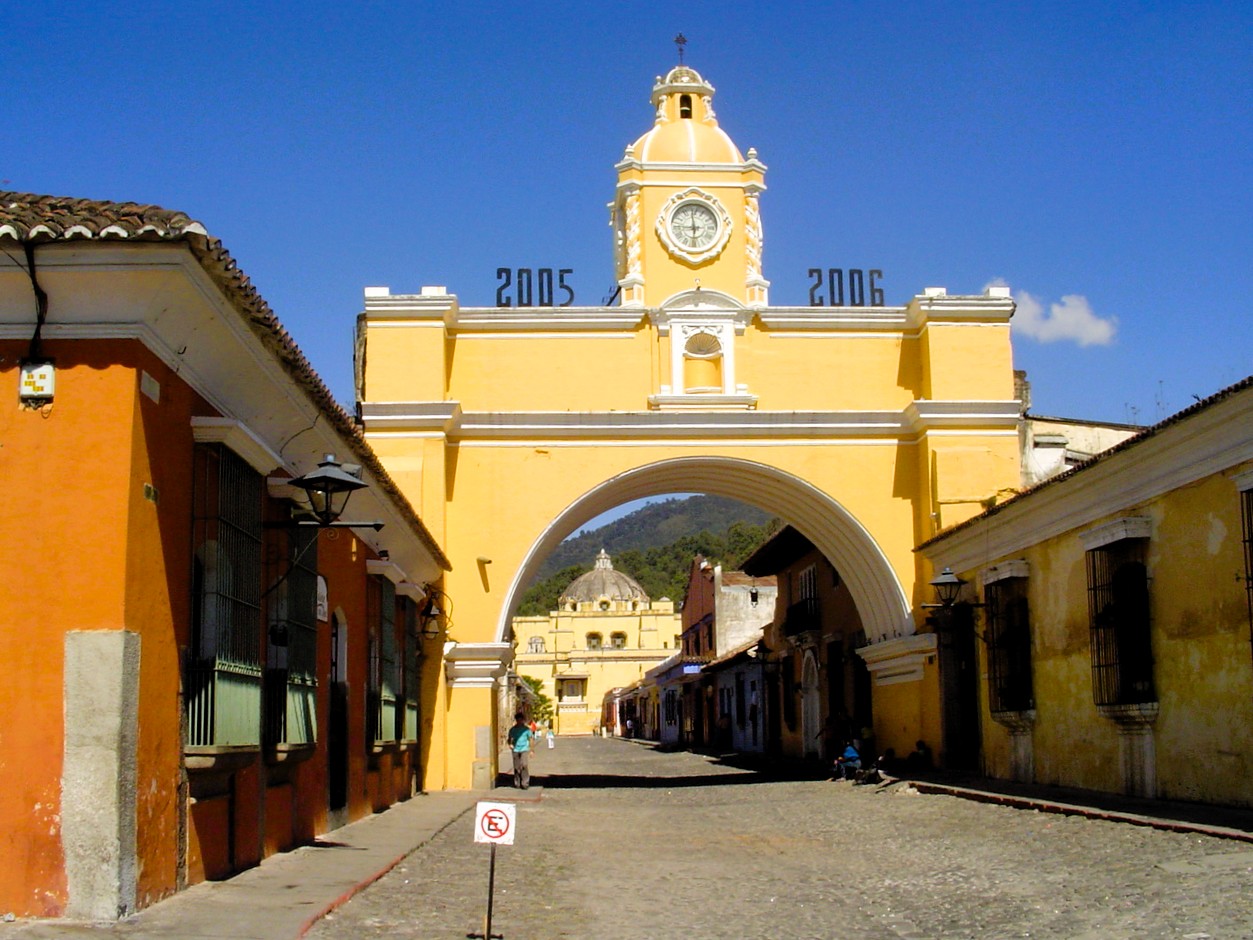
I wish I remembered visiting all the beautiful sights captured in my photos, but unfortunately, I do not. What I do remember are streets crowded with happy visitors, a street performance near the Arco de Santa Catalina that had the crowd in stitches, watching horse-drawn carriages clip-clop by, and eating what may still be the best street taco of my life from a small vendor set up near Central Park in front of the Cathedral.
I didn’t make it to midnight. I rarely do. The long days of active sightseeing had absolutely caught up with me, and around 9 p.m. I dragged my very tired self back to my room and fell asleep. Not even the sound of firecrackers throughout the night managed to wake me.
The first day of 2006 found me once again wandering the streets of Antigua, which were noticeably quieter and less crowded than the day before. I visited the ruins of the Convento de Santa Clara, the Convento de la Recolección, and the Convento de las Capuchinas. As open-air ruins, they were accessible on the holiday, and I had them mostly to myself. With plans to move on the following day, I once again went to bed early.
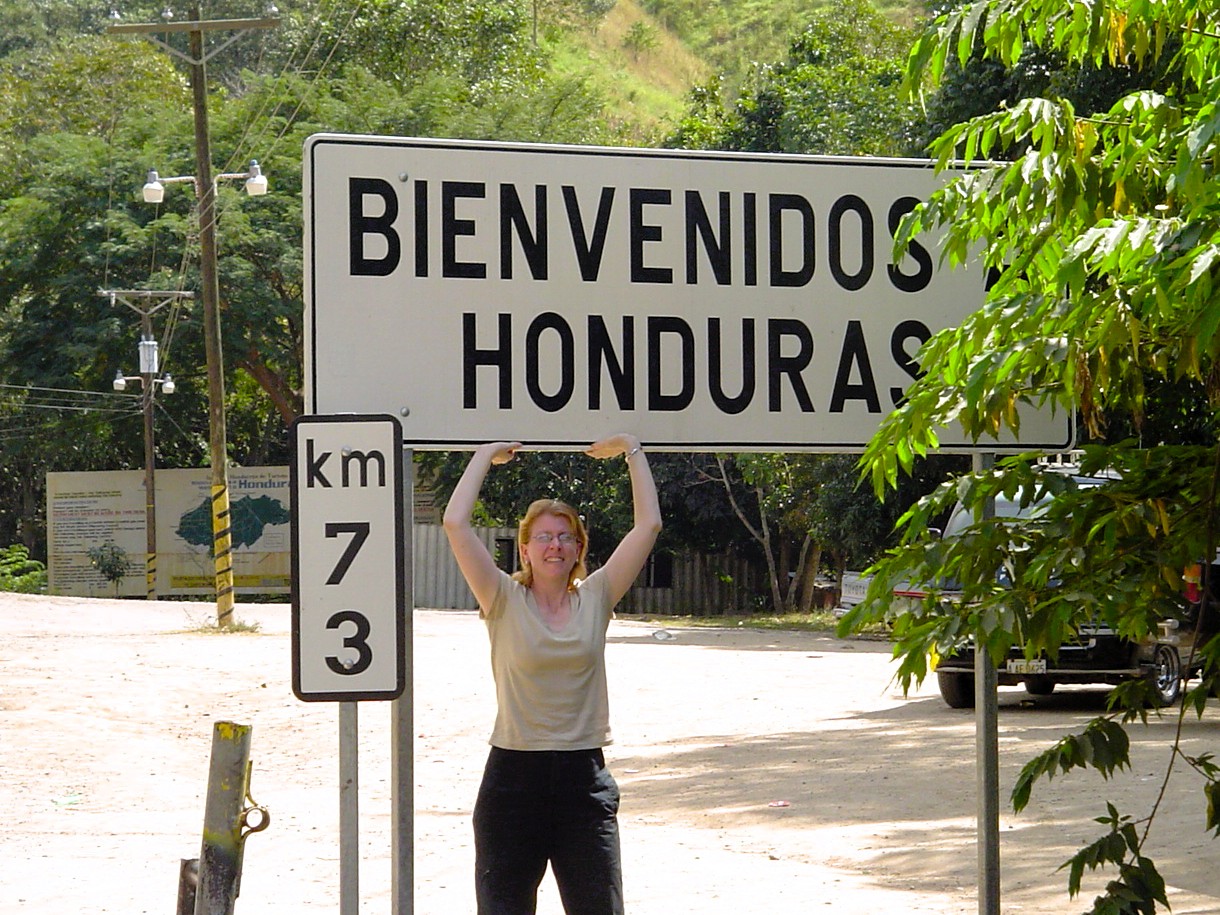
On January 2, I was up very early to catch a 4 a.m. bus that would take me across the Honduran border to the town of Copán. The bus ride itself took about six hours, but this did not include the two and a half hours spent waiting at immigration. I do not remember what took so long, and perhaps I never really knew. More likely it was the usual combination of understaffing and bureaucratic red tape that anyone who traveled regularly back then would recognize.
I had come to Copán to visit Copán Ruinas, a UNESCO World Heritage Site and once-powerful Mayan city-state at the southern edge of the Mayan world. The site is known for its artistic sophistication, with intricately carved reliefs, stelae, and statuary. Once again, I had the place almost entirely to myself, which felt especially delicious after the crowds of Antigua and Xela. There were no pushy guides—no guides at all that I can recall—and while it might have been helpful to understand more of what I was seeing, I happily wandered the ruins alone for hours, accompanied only by peccaries and scarlet macaws.
I had originally planned to stay just one day in Copán, but after such a long journey, I decided to remain another night to rest. I signed up for a horseback-riding tour through the countryside to give myself something fairly gentle to do. I had the guide all to myself, and uncharacteristically, I stayed quiet, lost in my own thoughts as we followed the Copán River and rode into the hills above town.
We stopped briefly at Hacienda San Lucas for a drink and the view, then continued on foot into the forest to see Los Sapos—a group of large Mayan stone carvings of animals, most identified as sapos, or toads, associated with fertility rites. We also passed through a small village where I was a big hit with the local children before riding back into town.
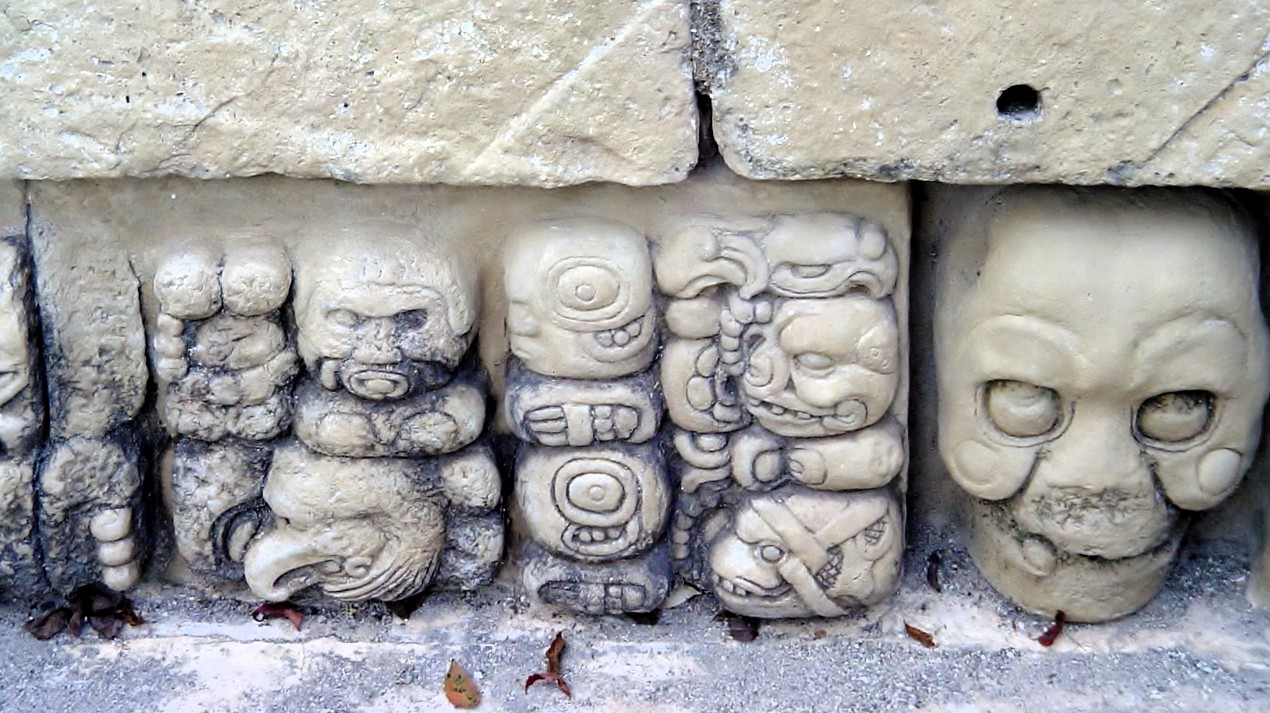
I spent the remainder of the day organizing onward transport and wandering up and down Copán’s hilly, cobblestoned streets.
The next morning, I was up early once again. I had another very long travel day ahead of me as I crossed back into Guatemala. The border crossing was mercifully faster this time, which was good, as we still had at least eight hours of driving ahead of us to reach Flores, in the far north of the country.
I don’t remember much of that journey, and perhaps that’s for the best. It was sunny and warm, everyone seemed in good spirits, and for reasons I still don’t understand, the driver never collected my fare. I only realized this after being dropped off in central Flores, with a pocketful of Honduran lempiras that were now completely useless.
Because we departed Copán at a more reasonable hour, I had more sleep, but I didn’t arrive in Flores until late afternoon. There was little to do but find a place to stay, eat, stock up on snacks, and make a plan for the following day.
I visited the Yaxhá Archaeological Site, the third-largest Mayan site in Guatemala, about two hours from Flores by bus. Yaxhá receives far fewer visitors than nearby Tikal, and once again I found myself among only a handful of tourists. The site is less excavated, with many smaller temples still wrapped in jungle, vines, and tree roots—reminding me a little of Angkor Wat.
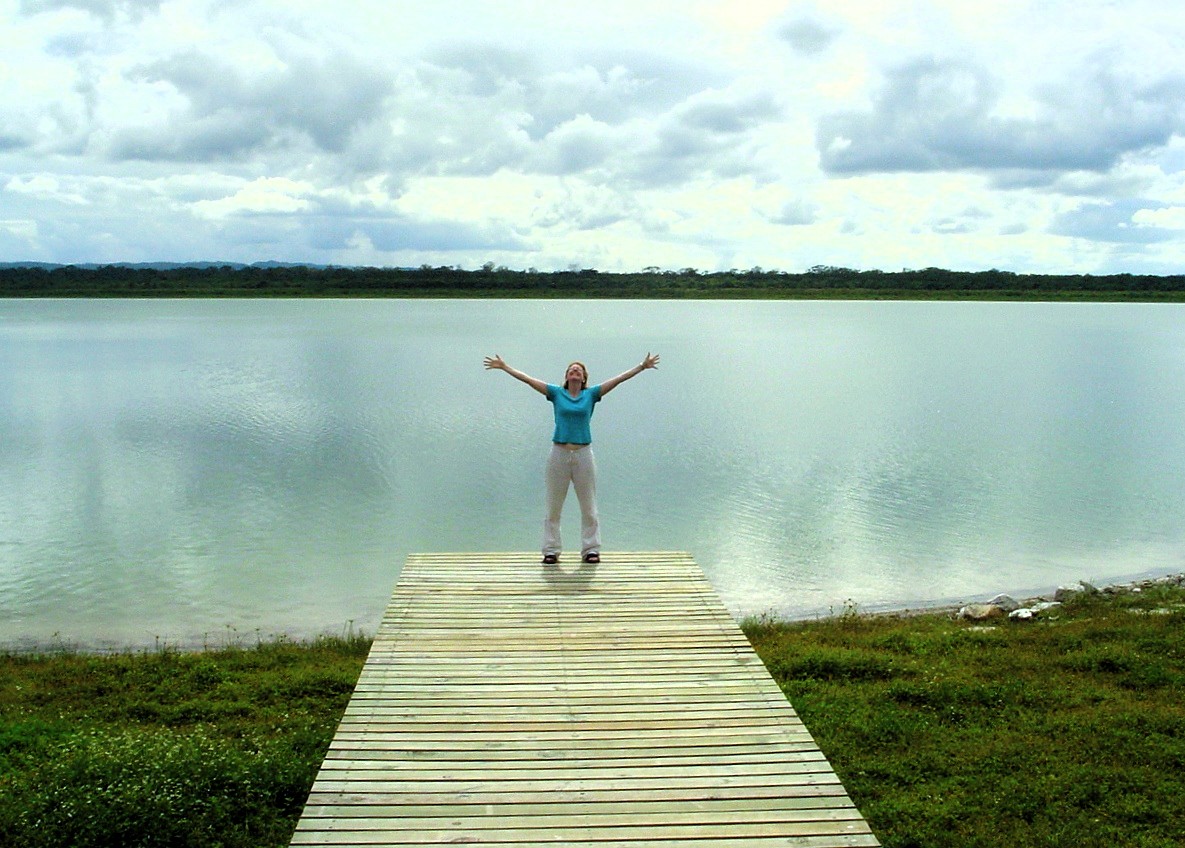
Yaxhá sits near a lake, and from the top of its tallest structure, Temple 216, there is a sweeping view across the rainforest canopy and out toward the horizon. I sat there for a long while, listening to howler monkeys below and thinking about history, culture, and nature.
Later, I wandered down to the lake and stepped onto a long pier. Only a few months earlier, the television show Survivor had been filmed there. I knew crocodiles lived in those waters, and although I didn’t see any, I felt distinctly uneasy standing at the edge. I asked another traveler to take my photo, put on my bravest face, and then quickly scampered back to terra firma.
The following morning, I boarded the 5 a.m. shuttle bus for another long ride—this time to Tikal. Once a thriving Mayan capital with a population of perhaps 100,000, Tikal is astonishing in scale. With more than 3,000 structures, it is one of the largest Mayan cities ever built. Temple IV, at roughly 230 feet, is the tallest standing Mayan structure.
Tikal is popular, and unlike Copán and Yaxhá, I had plenty of company. After several days of solitude, I didn’t mind. Tourists are allowed to climb many of the pyramids, and standing in the Great Plaza, surrounded by immense stone structures, one feels dwarfed by history. Sitting atop a pyramid and watching tiny figures move below, I felt strangely grand myself.
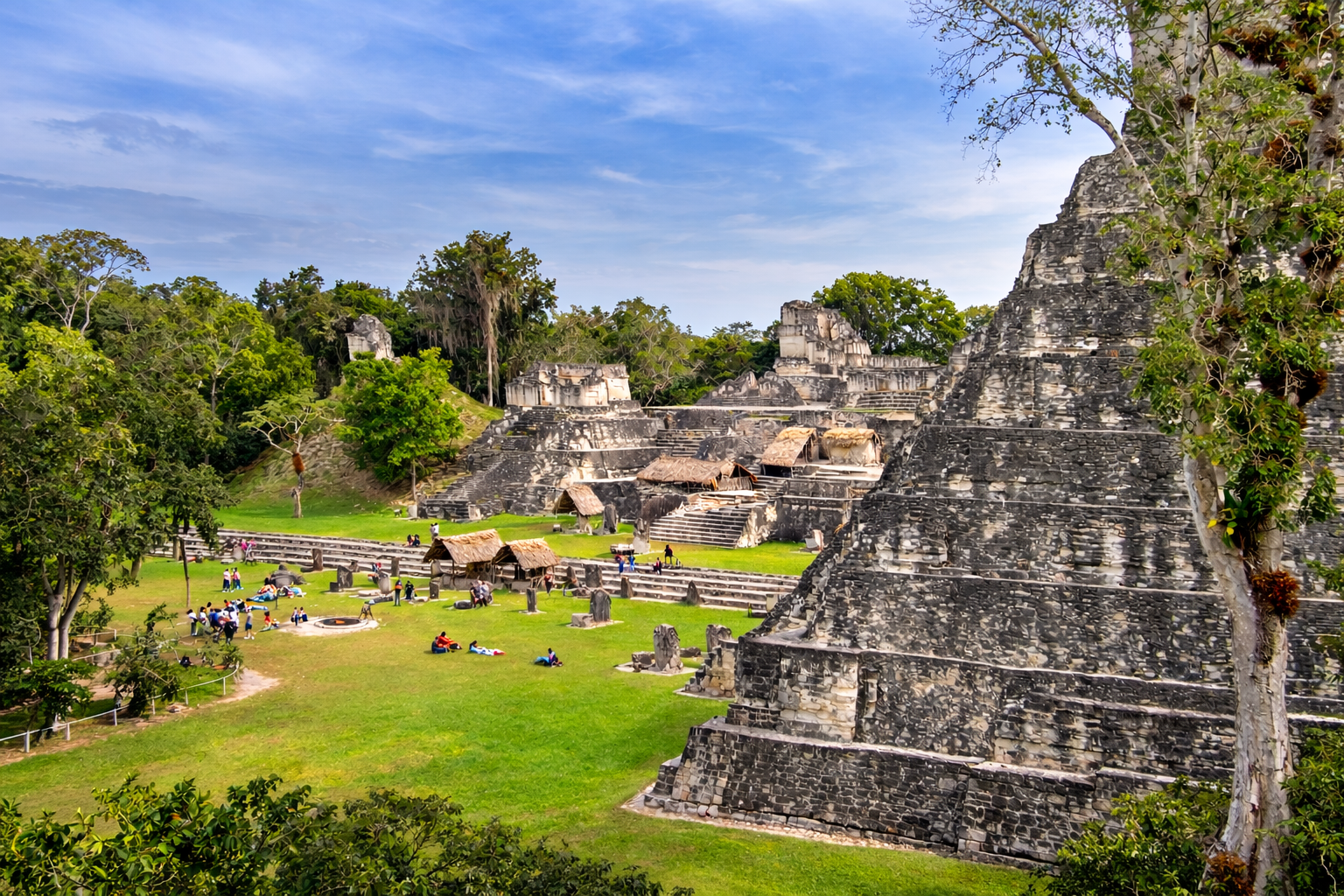
When the crowds became too loud, I wandered onto quieter paths toward smaller temples. I saw monkeys, macaws, and even a few coatimundis. At one point I realized I had been alone a little too long and began imagining a jaguar around the next bend. That was my cue to head back.
I spent hours exploring before catching the 4 p.m. shuttle back to Flores, arriving just in time for dinner and another early night of deep, exhausted sleep.
On my last day in Guatemala, I avoided long bus rides and flew from Flores to Guatemala City. With only part of the day left and thoroughly worn down from so many early mornings and long walks, I stayed close to town.
The flight was thankfully unremarkable. I spent one night in a gated guesthouse with bars on the windows. After two weeks of travel with little thought to security, the precautions were jarring. I stayed inside all evening. The next morning, I went to the airport early and flew back to the United States.

