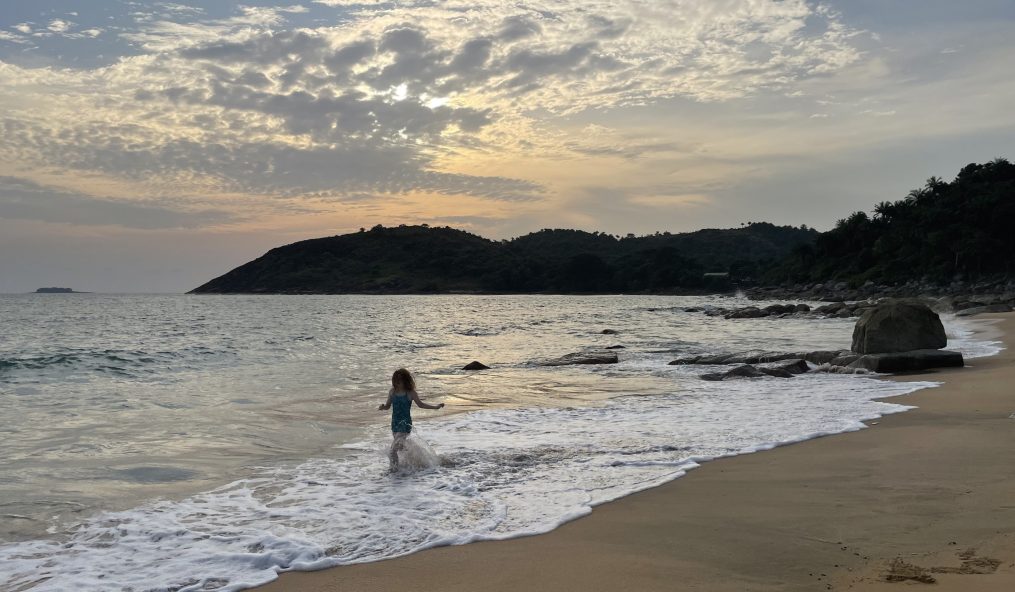
Here in Malawi, I have at times tried to highlight everyday people in this country, one of the world’s poorest and arguably least known, to demonstrate both the diversity and the commonalities. This year I have had the opportunity to meet a group of LGBTI refugees who, when faced with harassment and/or assault at the Dzaleka refugee camp, were placed in a safehouse, and sought the chance to speak to an American regarding their experiences. Over the past half year, I have been able to meet with all of them, to get to know them a little and listen to the stories that brought them here.
I thought meeting them again, interviewing them and taking their photos, would result in a fairly straightforward blogpost, but it has turned out much harder than I expected. Their stories, told in the dispassionate manner of people who have been through a lot — the fear of being caught, of something happening to them or their partner; of being turned in by family members, run out of town or followed by police or arrested, and having to flee their country, of having to use sexual favors as payment for rides to get from one place to another–were a lot to take in. I have struggled with the line between my compassion and desire to shed a light on people and issues versus my self-interest and privilege.
All I could think about as I began this post was one of those web-based privilege tests: I was born in America. I am white. I am heterosexual. I have never had to lie about my sexuality. I never doubted my parents’ acceptance of my sexuality. I feel comfortable in the gender I was born in. I graduated high school. I graduated college. I work in a salaried job. I have never been homeless. I have never been a refugee…. I cannot begin to know what it is to be a LGBTI sub-Saharan African, ostracized by family, and living as a refugee far from home, in a country where I cannot work, where my movements are limited.
They fled poor circumstances for an even poorer country, a country where the status of LGBTI persons is no better. In 2016, Afrobarometer, a non-partisan, pan-African research institution that conducts public attitude surveys, released a report that found Malawians are among the most tolerant people in Africa. Malawians are very tolerant of different religions, different ethnic backgrounds, immigrants and foreign workers, and even have little issue with those living with HIV and AIDS. Malawi is also a host country for refugees, and is making gradual shifts to switch from an encampment policy to one of settlement and integration. However, when it comes to LGBTI persons, Malawians, in general, are not at all accepting, rating lower that most other African countries. And it is in this context these LGBTI refugees arrived — not only outsiders as refugees, but outsiders among the outsiders.
(Note: each refugee provided me with an alias; the youngest of the refugees, “Bandina” and “Happy” had the most fun choosing their aliases and were overall the most optimistic of the group; also note: my first meeting with two of these individuals was as a function of my work, but my continued association has been for personal reasons)
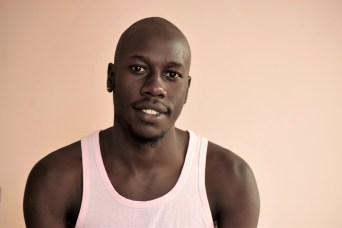
“Dan”
Dan, 30, is from Kampala, Uganda. Several years ago he was in his fourth year studying science and information technology at university, with plans to work on designing protection networks for businesses, when his sister’s boyfriend told his mother about his relationship with his partner; his mother turned him into police. Forced to flee he left Uganda, he headed to Kakuma Refugee Camp in the northwest corner of Kenya, where he spent two years before he was again forced to leave. He remembers having a happy childhood, a time when his mother loved him. Should he be able to settle in Malawi or resettle elsewhere, he would like to finish school. He would like to write a biography, help other LGBTI refugees, and start or be part of a campaign to change the narrative on LGBTI persons in Africa.
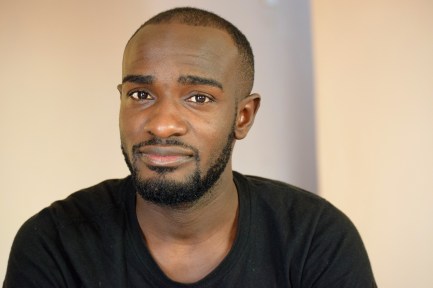
“Marvin”
Marvin, 31, is also from Kampala. He finished high school and started at a technical institute studying computer science, but had to drop out due to financial issues paying the tuition. In 2016, he went to Dubai to work as a computer technician, where he spent two years. Upon his return to Uganda, he felt targeted. He is not sure who might have put the police on to him, but his work abroad seemed to be part of it. He was taken in for interrogation, accused of bringing LGBTI ideas into the country. He spent three days in a police “safehouse” with only water. During his time in custody, his car was burned and his home vandalized; his family disowned him. He was assigned a human rights laywer to defend him in court, but that lawyer gave him the stark reality of LGBTI cases in court. Marvin decided it was time to leave, as he said “being LGBTI in Uganda is like having a curse.” He traveled freely to Tanzania, and then through to Malawi. Should he have the opportunity he wants to be an entrepreneur; nothing in particular, he just wants to get a job and be happy.

“Sasha”
Sasha, 28, is from Kenya. She does not know her parents; she grew up in a home for girls in Mombasa. There were about 100 girls there. She finished her BA in education and started her MA in gender development, but although she sat for her exams, she was unable to receive diploma. She moved to Nairobi and taught geography and Kiswahili in a high school, before her LGBTI status was discovered, and she was chased out. She tried to return to Mombasa where she also found she was no longer welcome. Although Sasha shared some of her journey to Malawi with me, I suspect more happened to her in Kenya than she would let on; she told me she can never return there. She used to enjoy swimming, both in pools and in the sea, and was captain of her softball team at University, and wishes she had equipment here to play. She is passionate about working to help other LGBTI in Africa, but she also would just like to open her own shop, selling clothing, perfume, and take away beer.

“Patrick”
Patrick, 29, is also from Kampala. He finished high school and used to work as a carpenter, specializing in furniture renovation. About two years ago he attended his boyfriend’s birthday party, on New Year’s Eve. His boyfriend’s “auntie” caught them kissing and turned him into police. Two days later, after his family disowned him, he left Uganda. He first went to Kenya, where he met Dan, and the two of them worked in the Kakuma Refugee Camp, until again being forced to move on. Should he be resettled in another country, he would like to join his new nation’s military. He would like to prove to his parents and his community that he could be someone and help others.

“James”
James, 35, is also from Kampala. He finished high school and worked first as a bookkeeper at a supermarket and then opened his own unisex boutique clothing store. He comes from a large family; he has 12 siblings. He had an American partner, but when they were arrested his partner could flee back to the States, but James could not. After suffering persecution (he did not elaborate), and most of his family had turned their backs on him (one brother stays in touch off and on) he fled Uganda, coming straight to Malawi. When in high school he thought he might like to continue his studies to become a lawyer, but he could not afford the tuition. If given the chance, he would like to go to law school to become a human rights lawyer.

“Bandina”
Bandina, 21, is from the Kivu province of the Democratic Republic of the Congo, where there has been an ongoing conflict since 2004. Her English is not strong, so the other refugees translated her Kiswahili to me. One told me although many refer to Bandina as transgender, she told me she is intersex, but still seeking to find out just who she is. Bandina is effervescent; she is lively, full of energy. Even the time I took her to the clinic when she had malaria, she exuded positive energy. She finished only primary school as money issues always held her back. She left the DRC in 2017, traveling by truck for twelve days through Burundi and Tanzania, to reach Malawi. She wants to help other LGBTI, but really her dream is the same as it was when she was a child–she wants to run a restaurant or a fashion salon as she says her two favorite things are fashion and eating.

“Happy”
Happy, 23, is from a small town in west-central Uganda. His mother left the family when he was two years old, so he grew up with just his father and elder brother. He attended a boarding high school, but it was here, at 17, he was caught by the headmaster with his boyfriend. They were taken to the office, beaten, and expelled. His boyfriend’s father had senior police connections; the police went to his father’s home, destroyed the house, and forced his father to sell the land. Happy did not go home and to this day he does not know what happened to his family. He fled Uganda, traveling first to Nairobi, but after four months there and suffering additional harassment and physical attacks, he headed to Malawi. Happy just would like to continue his studies and become a plumber.


 The following morning after breakfast we took part in a one hour farm tour, just our guide, C, and I in a dilapitated, push start, bare bones truck used just for tooling around the farm. There is a picture of Madonna with four of her children posing in this vehicle, published in People magazine. We didn’t tap our inner Madonnas though, C and I are plenty adventurous ourselves. Still, it was kinda cool to be in the same vehicle.
 The lodge is a refurbished historic colonial building, once cool, higher altitude leisure residence of a British district commissioner, then a resthouse of the Forestry Department. Dating from 1914, its actually one of the oldest buildings in Malawi. It is located within the Ntchisi Forest Reserve, one of the few remaining indigenous rainforests. Its been on my Malawi bucket list and sounded like a great one night getaway.
 It is set on a lovely open piece of land surrounded by the forest, on an escarpment with views across the East African rift valley. The scenery is immediately relaxing. We got ourselves settled into our respective rooms, C and I in the lodge, and AS and her family in the forest cabin. Then C and I had fresh sandwiches for lunch. As C quickly finished and ran off her friends (well her friend, she tolerates her friend’s sister), AS and I sat talking, looking out the window, breathing in the beauty. There are plenty of hikes the lodge can arrange, but I wanted to do little but be away from Lilongwe. The gardens of the lodge, full of flowers as well as herbs and vegetables used in their meals, were also full of butterflies. I am a huge fan of nature photography and enjoyed just wandering the grounds in search of lovely things.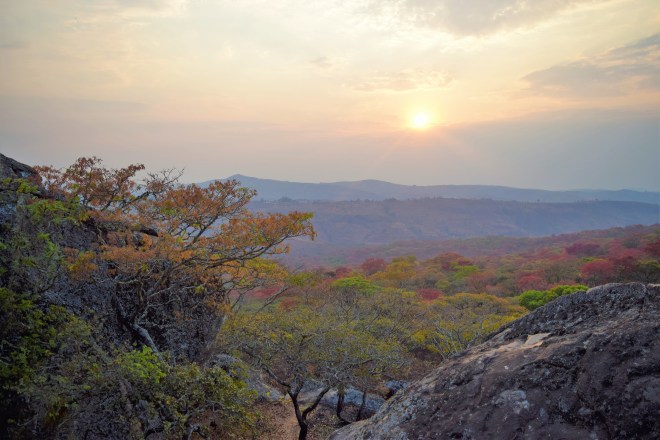



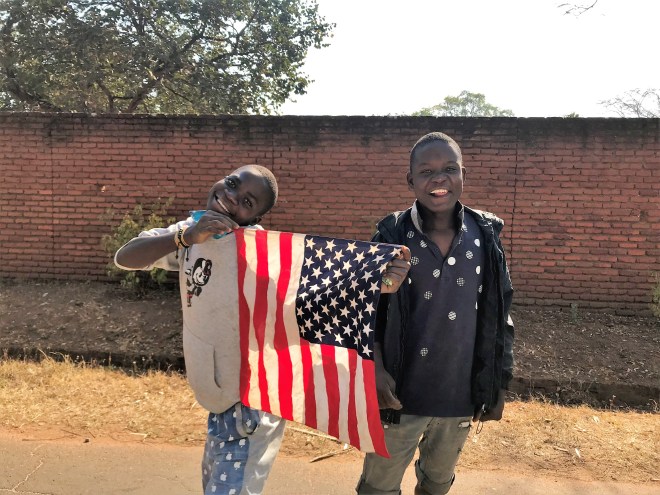 Take these two boys. I have seen them, part of a group of some 5 to 7 boys aged around 8 to 14, begging at a traffic light near the Parliament building the whole two years I have lived here. They hail from Kauma, a predominantely poor community in Lilongwe, basically a slum, not far from my own home. I do not give the boys money, but I have from time to time given them boiled eggs, bananas, apples, crackers, bottled water, and the like. From a few months ago, the gang seems to have split up — perhaps finding the corner of an oft-busted traffic light, on a road sometimes closed due to protests, not the plum place it once was. These two boys seem to have migrated to my very own neighborhood where they pound up rocks and bricks to fill potholes the local and city government fail to ever fix. They do the work and then sit back waiting for residents to pass by and reward them for the favor. I have started giving them a little money — they are after all providing a real service now. Imagine recently as I pass them, they stand, and one unfurls, of all things an American flag, that he had held tightly in his fist. They jump up and down happily chanting “America.”
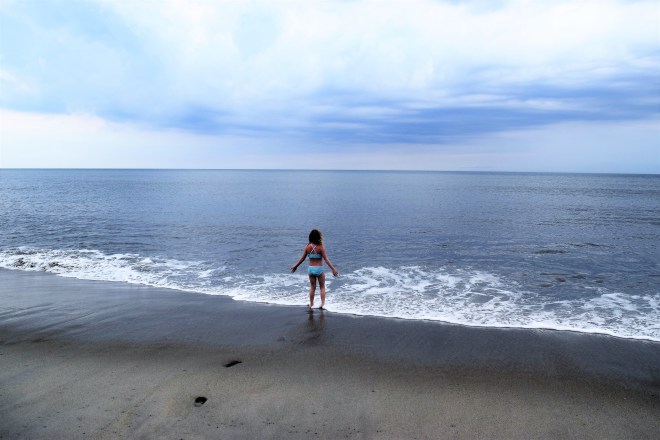
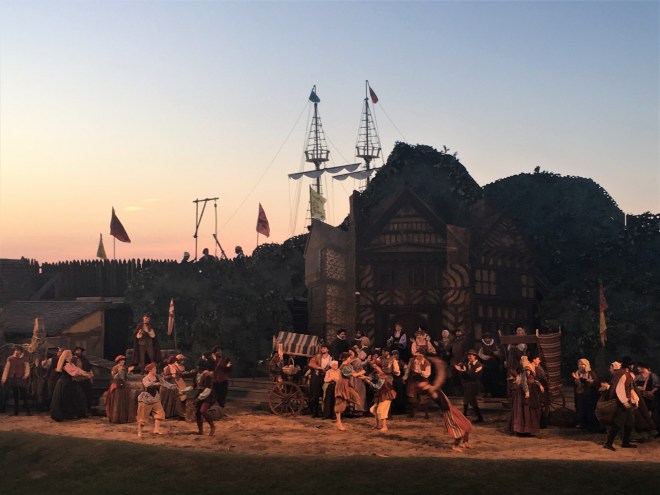
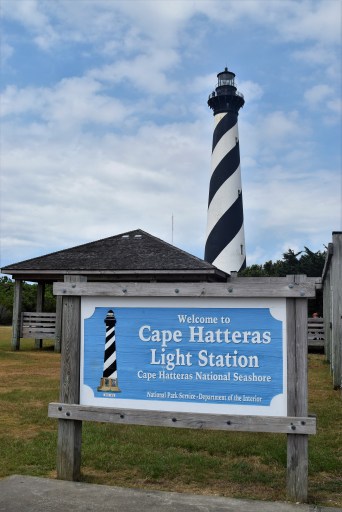 When we returned the following day to visit the rest of Fort Raleigh, she had even more questions about the missing settlers. Then we headed over to the North Carolina Aquarium because we are simply incapable of passing up on an aquarium. We followed up with a visit to Dare Devil’s Pizza so I could introduce C to the massive stromboli I remembered from my visit 30 years before and then we had some time to stroll and play on the beach.
 Once back in Nags Head we stopped at Kitty Hawk Kites because its an Outer Banks institution and I remembered visiting when I was 16. It is also the place to go to book adventure tours and activities. By the time we left about an hour later, C had convinced me to buy her a fox kite (word to the wise: know the dimensions of your extra suitcase so you do not buy a kite that is 4 inches too long to fit) and for me to sign us up for mother-daughter hanggliding classes on the dunes for the following day.



 We then drove on to Winchester, Virginia to spend a few days at my Aunt C’s, including a night at her cabin in West Virginia, and then a few days in Sterling, Virginia, my original home town. We caught up with friends and family. And then it was time to say goodbye to the U.S. How did four weeks pass by so quickly? But we squeezed a lot in. C had time in NY with her father, her paternal grandparents, aunts, uncles, and cousins. I had time in Jacksonville with my Aunt C and doing more in my home-away-from-the-Foreign-Service. We caught up with CZ and Little C in New Bern. We visited my college town and soaked in some early American history, and had another walk down my memory lane and more American history in the Outer Banks. And we both made new memories enjoying time in the beautiful barrier islands of Virginia. We visited a total of five places in the U.S. National Park system. Not bad at all for four fabulous weeks.


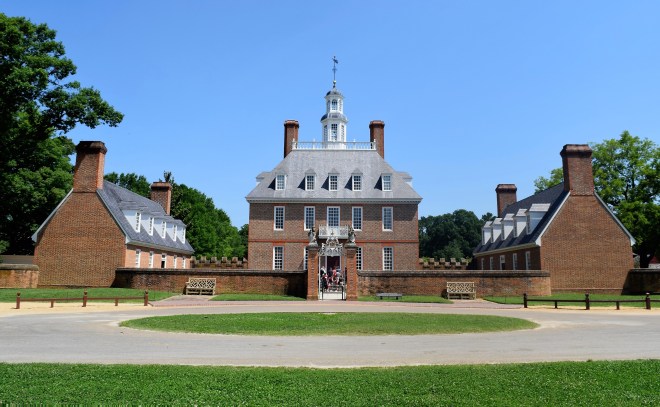


 After educating (and sort of torturing) C with the American history lessons and walks down my memory lane, it was time to reward her with two fabulous days at Great Wolf Lodge. GWL is a chain of indoor water park and amusement hotels. My sister and her family had been a few times and I could hardly wait to bring C. I must have splurged for a Cub Club room, where we could have fit 6 people, but had forgotten I did so. What a fun surprise! I thought C would be all about the water park, but she was actually all about the indoor MagiQuest game, where she ran around with a fake wand activating sensors and solving quests. She made lots of friends doing this. We also won the rubber ducky race — kids decorate a rubber duck in the morning and then enter it into the water park race. All the ducks are dumped into one section of the lazy river and make their way to the finish line. The winner gets to sit in a special section of the water park for 24 hours. (Experienced Winner Hint: Show up on a day when only 4 people enter the contest and then be the only person to show up poolside during the activity. Yay, you win!) It also turns out C has a wicked sense of timing for the arcade claw games. Good thing I brought an extra empty suitcase….
 That night I joined the other hostellers in a trip to a local dance spot/bar. I was a wee bit reluctant to go (I am neither a drinker nor abar fly). They were all playing drinking games to prepare for going out. I read a book. But I decided I might as well go. While there, I started to feel a bit old. Though there were certainly all ages in the crowd, I would say most were in their early twenties, and most were very keen on drinking as much as they could. Still, the place was going to hold a dance contest, and I like dancing. I start dancing with Jay, another guy from the hostel. After the initial dancing was over, I was just standing by the side when the judge came up and asked me who my partner was. I pointed at Jay. The judge says, okay, you two are the final couple in the contest. Our mouths hung open. It turned out to be a contest of foreigners dancing to Cook Island music. Basically, we had to dance like Cook Islanders. We danced our little hearts out – I tried to remember anything from when I studied Polynesian dance as a child. We came away as runners up, winning a case of vodka drinks. Ha! Just what a teetotaler who rarely goes to bars wants – Jay was pretty happy though. I felt pretty impressed with myself. I trekked for four hours AND danced away in a manic Cook Islands dance contest in the evening (along with two hours more of dancing) – maybe I was not that old after all?


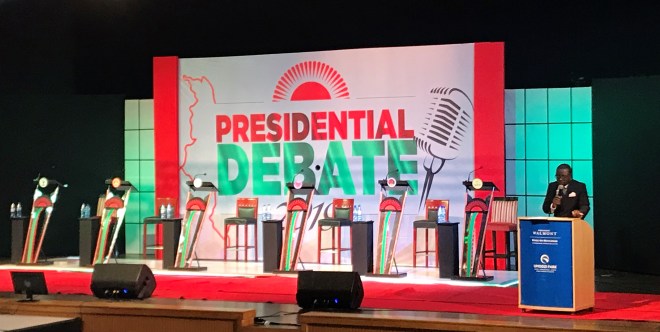

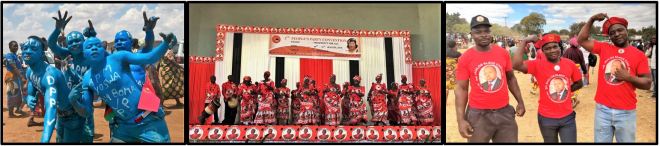


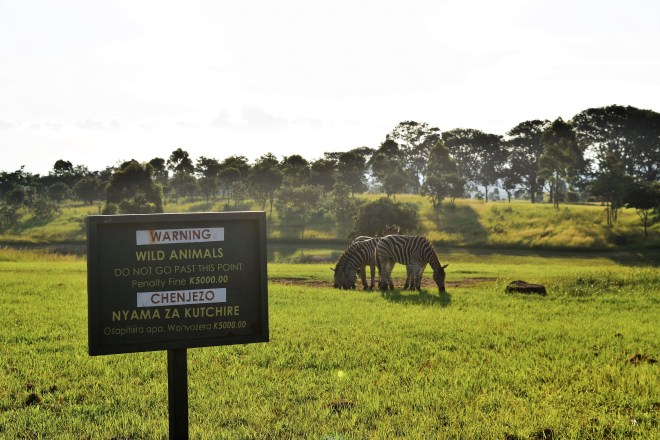 Our Lilongwe weekend included a visit to another grocery store (wow), a stop at the Woodlands Farmers Market, held on the last Saturday of the month, and a lunch at the lovely Kumbali Country Lodge, where Madonna stays whenever she is in Malawi.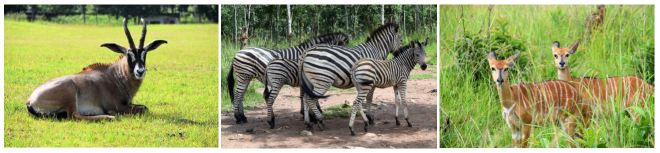


 Following breakfast on our second day we took an hour guided walk. We strolled from the Huntingdon gardens on to the red-orange dirt road fenced in on both sides by the bright green hedges of tea. Then we turned and waded through it uphill heading to the taller shrubs of coffee. The blindingly azure sky against the emerald green tea took my breath away.



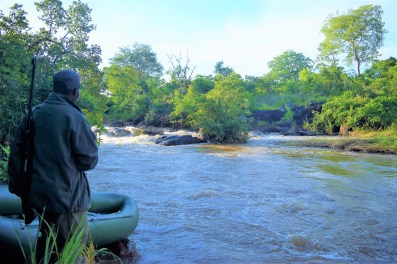
 For our second getaway over the three-day President’s Day weekend, we headed east and north to the Nkhotakota Wildlife Reserve, a new destination for C and I. Google maps told me the drive would take approximately four hours — three to Nkhotakota town, then an additional hour to the park entrance and through the park to our lodge. But Google maps does not account for Malawian roads. Turning north from Salima the road initially was better, but soon grew worse. There were many potholes, pedestrians, single lane bridges, and construction work to Nkhotakota town. Eight kilometers later we turned on to an “earthen” road for another eight kilometers to the entrance were we were met by a safari jeep from the lodge. Although I drive a SUV, the lodge suggested I arrange transport to and from the park gate to the lodge due to the rainy season effects on the park’s dirt roads. To drive the 18 kilometers (11 miles) over the rutted, undulating earth took 45 minutes. So all told from door to door took 5 1/2 hours.





 The Wanderlust Diaries