Back in the day, I used to do a fair amount of backpacking. I’d take off for a week or a month, head to another country, and make my way around by whatever inexpensive means I could manage. Along the way, I wrote travelogues of my adventures and sent them to friends and family.
I miss those days.
Every so often, I dig up one of those old travelogues, dust it off, and share it here on my blog. In December 2005, I spent two weeks traveling through Guatemala. Unfortunately, I only ever wrote up the first part of the trip—but here it is. Part one of two.
I arrived in Guatemala City blurry-eyed and stiff just before 6 a.m. Guate time. But by the time I stepped through immigration, I was ready to face the day. Then the most amazing thing happened: I walked through the sliding doors past Customs (though there was no Customs to speak of) and out onto the street, and not a single person accosted me.
I had prepared to stand firm through the throngs of taxi drivers and tour-mongers who would attack me the second I emerged into the Guatemalan air. But there was no one. For a second this took me aback and I didn’t know what to do next. I bought a water with my newly exchanged quetzals so that I would have small change. Again, this was done without a hitch. I was getting suspicious.
Across the street I found a small taxi counter with a signboard. One guy asked me if I wanted a taxi and I said no and he went away. Another approached and tortured me with Spanish for a while; when he was satisfied I had very little clue what he was talking about, he used a few words of perfect English to ask me where I wanted to go. He quoted me the same amount on the signboard—eleven U.S. dollars to the bus station. It seemed a bit much, but I shrugged and said okay, sí.
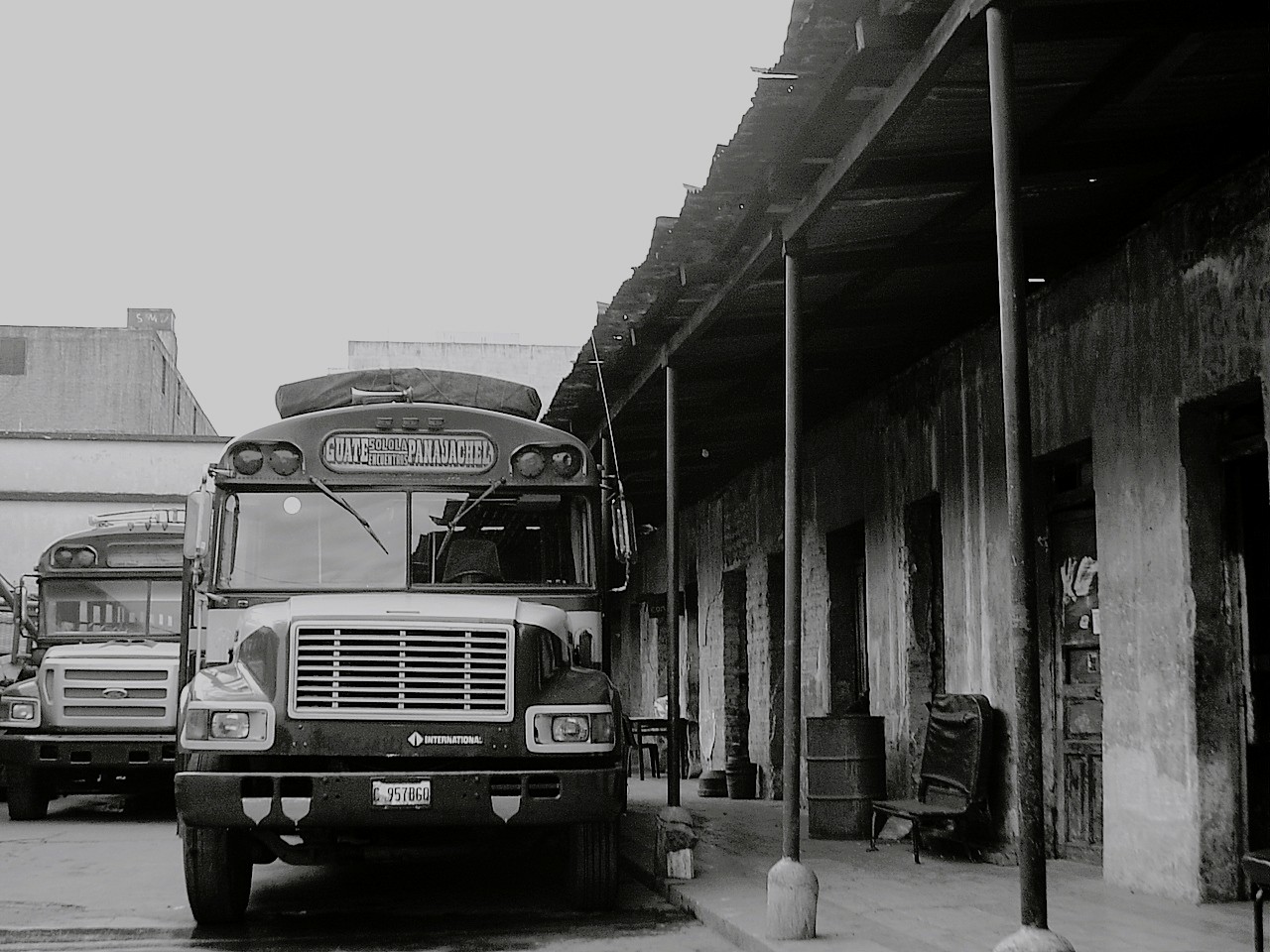
Perhaps ten minutes later he stopped in front of a closed building with a garage. There wasn’t a sign of life except for an old man sitting on a step. Here, the driver told me, is where the buses to Panajachel depart. I felt a little concerned about getting out on a near-deserted street in Guatemala City at 6:20 in the morning. The old man conveyed the news that I had just missed the 6 a.m. bus but another would depart at 7, in forty minutes. Luckily, just as the taxi began to drive away, the bus station attendants arrived and opened up the garage, revealing a small and dirty courtyard where three buses were parked. I sat down on a bench—which was really just a bus seat—and prepared to wait.
At 7 a.m. nothing happened. By 7:15, by some magic, everyone suddenly got onto the bus. There were eleven other people on board, and I was easily the tallest person by at least half a foot. This made me quite happy for some reason and I mentally clapped myself on the back.
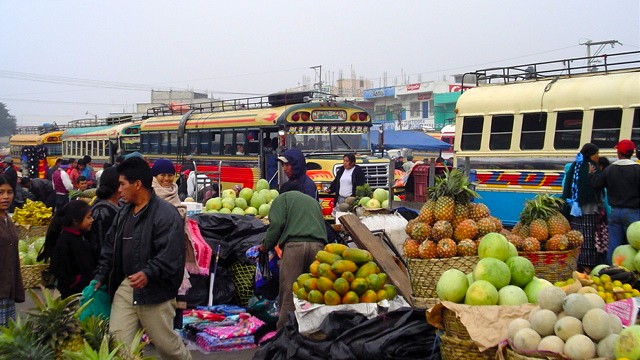
And then we drove about ten minutes to the same road where the bus signposts and lines of waiting people stood. And there we sat until 8 a.m. Grrr. Probably if the driver had just left me here in the first place I would have made that 6 a.m. bus that probably really left at 6:15 and sat here while I sat on a green bus chair in a courtyard for forty minutes.
At 8 the bus took off, drove maybe two minutes down the road, and stopped to pick up more people. Three people squeezed into the space where really only two could fit comfortably. I was now mashed up against the side of the bus, my shoulders crunched together, my legs piled on top of one another atop my smaller backpack. They would not move for the entire trip to Panajachel—a good two and a half hours away. I downgraded the measure of my success thus far.
To add to my depression, the “one-armed” man boarded the bus to plead for donations. We were captive, all mashed into the bus like sardines. At first I noticed he did indeed have an arm he was hiding under his shirt and wondered if he really thought we would buy the one-arm story. Then he pulled his sweatshirt up to reveal his thin limp arm, with what appeared to be a bullet hole, severe bruising, and blood near his shoulder. I heard the word accidente but didn’t know what to make of it. It was grotesque but fascinating. The other passengers pulled out change to give him. I toyed with the thought of giving him five quetzals, my smallest bill, but I did not yet know what it could buy—and before I could make up my mind, the bus slowed and he got off.
Thankfully, out the window I spied the near-perfect cone of a volcano in the distance and was cheered. The sun was out, it was going to be a beautiful day, and I fell asleep.
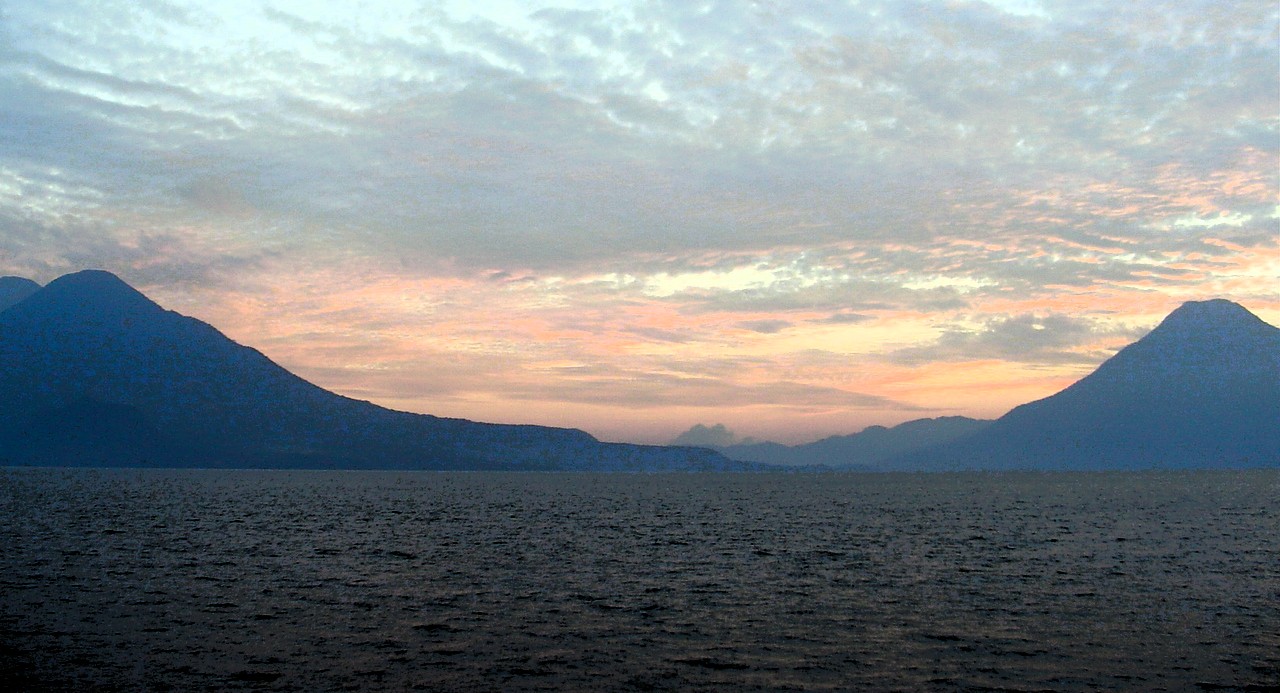
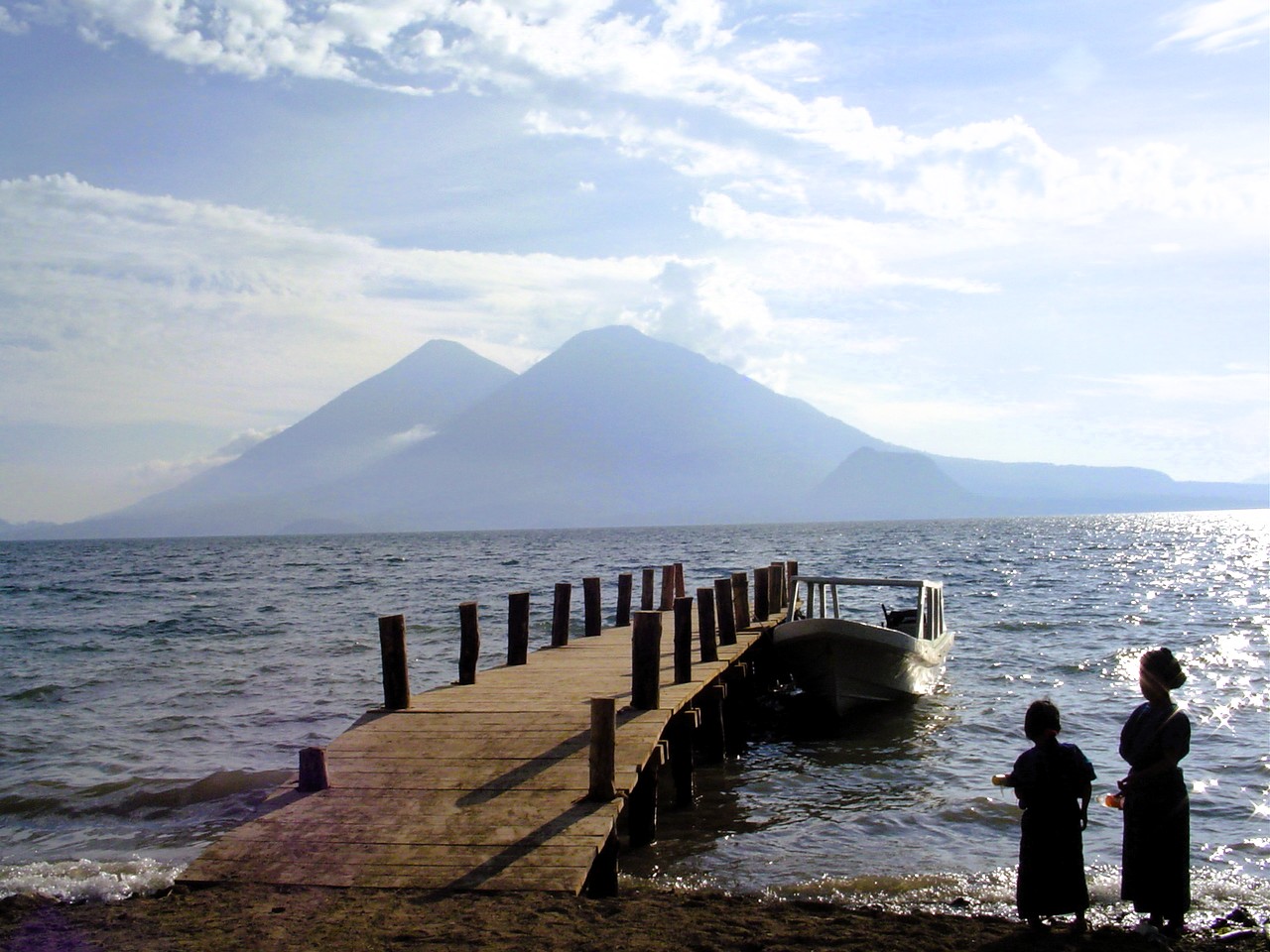
About two and a half hours on windy mountain roads we approached Panajachel—Pana for short—on the banks of Lake Atitlán. From high on the road into town, the lake shimmered for miles and blue volcanoes rose in a ring around it. I tried to take a few photos from the bus, which involved unpinning my arms from their crushed position and then trying to steady my hand as much as possible. How much I missed my lame first-class seat on the second flight—the cushions, the pillow, the ability to move. The attempt resulted in blurry photos of shrubbery overlaid with the reflection of my hands and the camera in the window. I gave up with trying to record the moments for posterity.
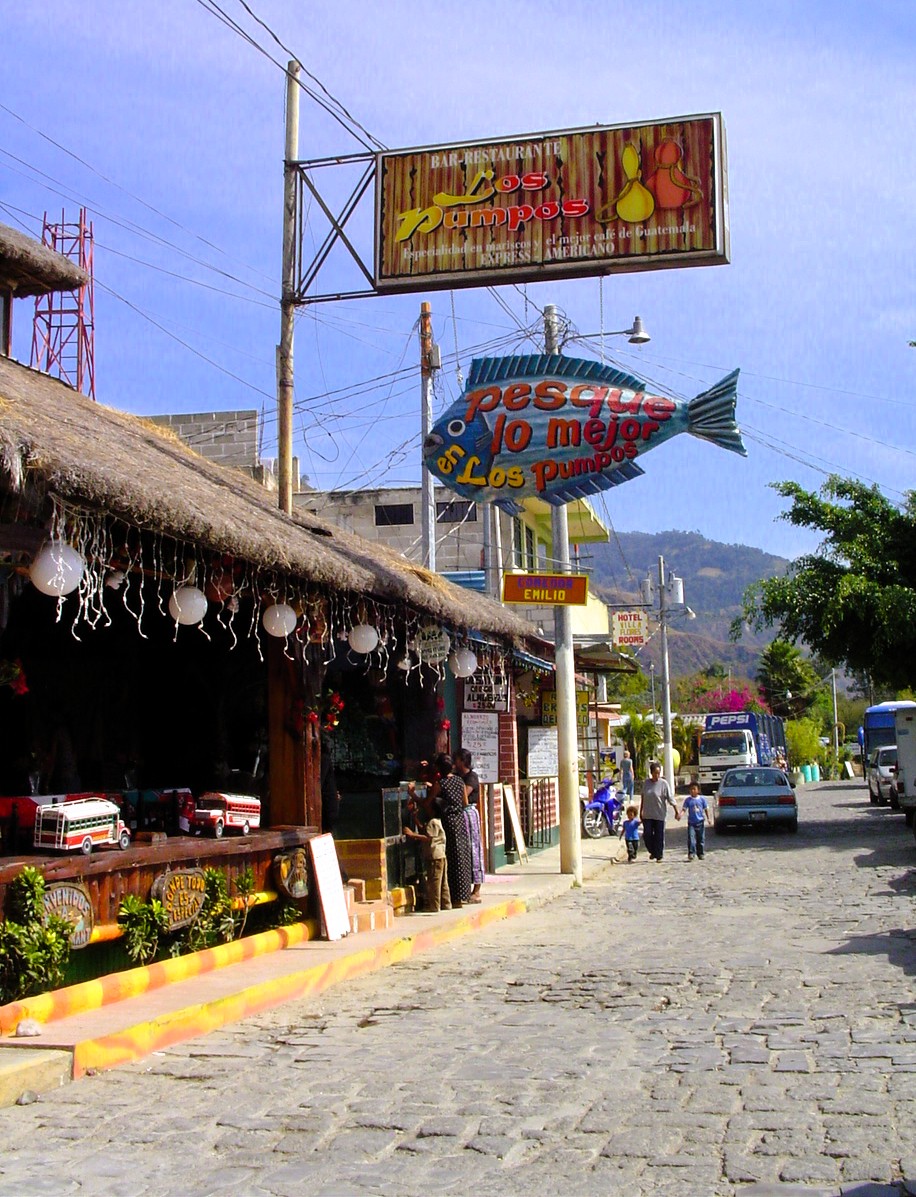
It took another thirty minutes to make it down the mountain road to lakeside Pana. I hobbled down the road on near-useless legs, apparently having already grown unaccustomed to actually providing locomotion. I had a few missions to attend to before I could explore: (1) find out my location; (2) find accommodation and put down my bag; (3) pee; (4) eat. Within fifteen minutes I had found my way along one of the dusty main roads and found myself a little room. Then I headed to lunch.
Almost as soon as I sat myself at a little table, I became the target of aggressive sales tactics by cute little Maya girls dressed in traditional finery. The first was about eight or nine, with her wares—pretty dyed scarves—perched on her head. She crouched beside my table and began her pitch in Spanish. Isn’t it lovely, she said. Very good price. I don’t want any, I said. Very good present for your mother. My mother wouldn’t like that, I said. Then perfect for your sister? Nope, she wouldn’t like it either. Then good for your friend. Sadly, I said, I do not have any friends.
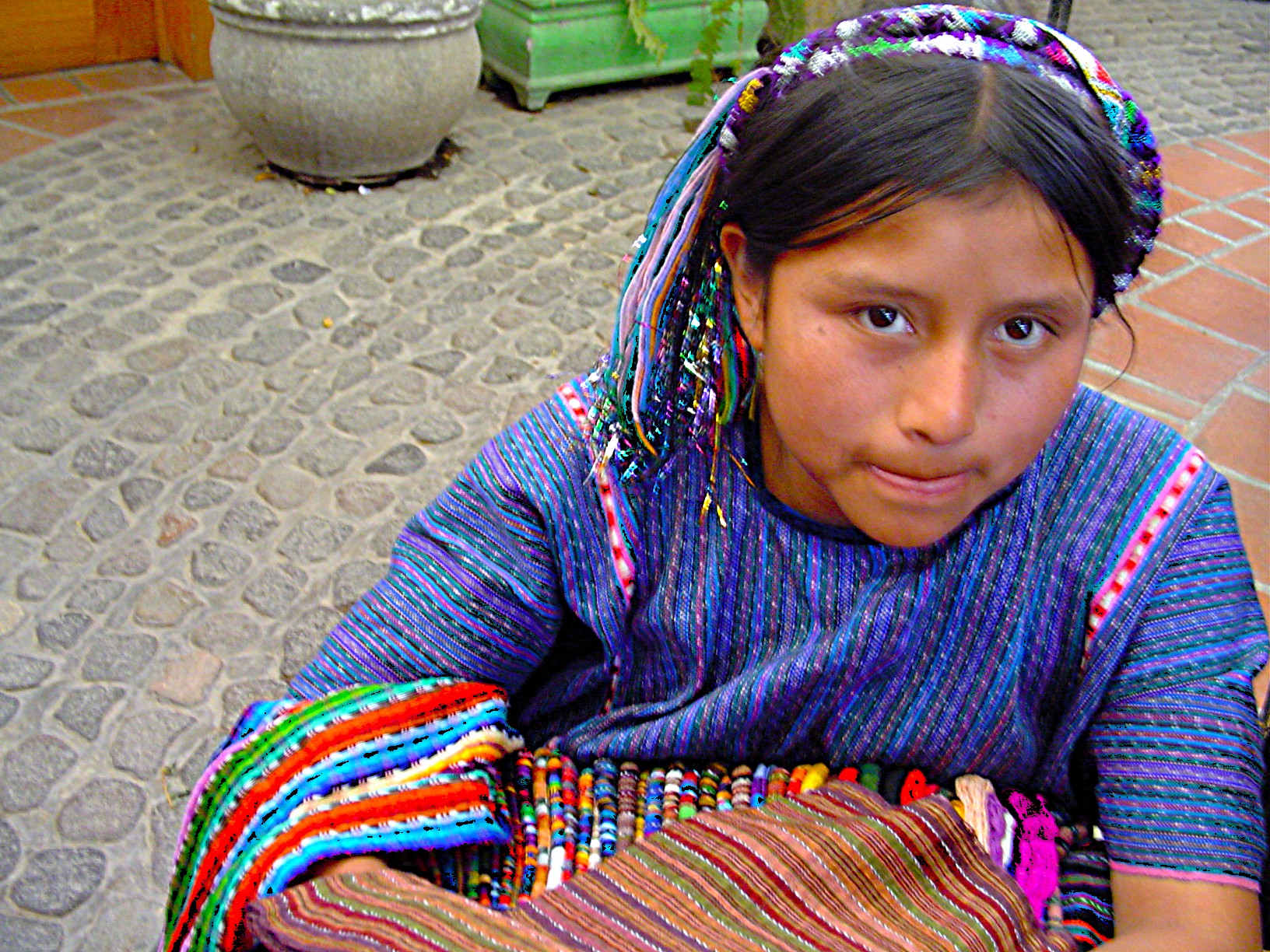
She was not deterred. She tried other color combinations and asked me my name, where I was from, how long I had been in Guatemala. The first scarf she showed me was rather nice. She was so cute. My resolve began to disappear. I asked if I might take her photo. She told me the scarf and one photo would cost me fifteen quetzals. I gave in.
Unfortunately for me, her friends saw the transaction and immediately descended. One sold scarves, another bracelets; then came a man with carved wooden knives, a boy with embroidered “Guatemala” pens, and more of the same. Waiting for my food, I was a sitting duck. It was, after all, my first day in Guatemala; I had not perfected my mean grouchy replies or stony-silence tactic to such merchants. I focused very deeply on my nachos and guacamole while repeating, “No lo necesito. No lo necesito,” until they drifted away.
I finished lunch feeling overwhelmed.
Now that my immediate needs had been met—and I was the owner of a new scarf—I headed down to the lakeside. People lounged along a stone wall overlooking the water. A lanchara (who knows if they are called this or I just made it up—basically a boatman) tried to get fares to other towns around the lake. Having just eaten, I didn’t really feel up to bouncing across the lake on a motorized vessel, so I sat for a bit. According to the guidebook I could walk to Santa Catarina in about one hour. After so much sitting, a walk sounded perfect. It being one in the afternoon, I figured I could walk a few hours and then come back by boat in time for sunset, an early dinner, and bed.
Five minutes in, I hit a huge problem: a dry riverbed about fifty feet across and no bridge in sight. What was more perplexing was that no river was in sight either—just rock and sand, men digging, dust flying. I returned to the stone wall and went down to the lakeside to cross along the water. Two small streams were jumpable; the third was a good five feet across. I had my good Nikes on and was not in a wading mood, so I followed the stream up and found a log laid across the surprisingly rapid water. Small detour, but now I was across.
On the other side families picnicked under trees and enterprising people sold grilled chicken, ice cream, and fruit. I bought fresh coconut and felt instantly better—except then the wonderful sunscreen/bug spray I had on my face began to drip into my eyes stinging them terribly. I stumbled about half blind with tears streaming from my eyes. I probably looked drunk. I mopped my forehead dry and onward I walked.
Soon the path grew narrow and I ignored a Private Property sign, prepared to play the idiot gringa. Then the path narrowed to barely wide enough to fight through the foliage and ended at a private beach. Heavy sigh. I retraced my steps and asked a couple for directions. They told me this was the old path, and now I had to walk along the main road—turning right just after the house with all the boats.
Approaching it from the other side, I wondered how I could possibly have missed it. The yard was literally littered with boats in varying stages of repair. I made my way up to the main highway, looked at my watch, and realized it was already 1:30 and I was basically where I started. So much for making it in an hour. I almost turned back, but now I felt committed, so I turned right toward Santa Catarina.
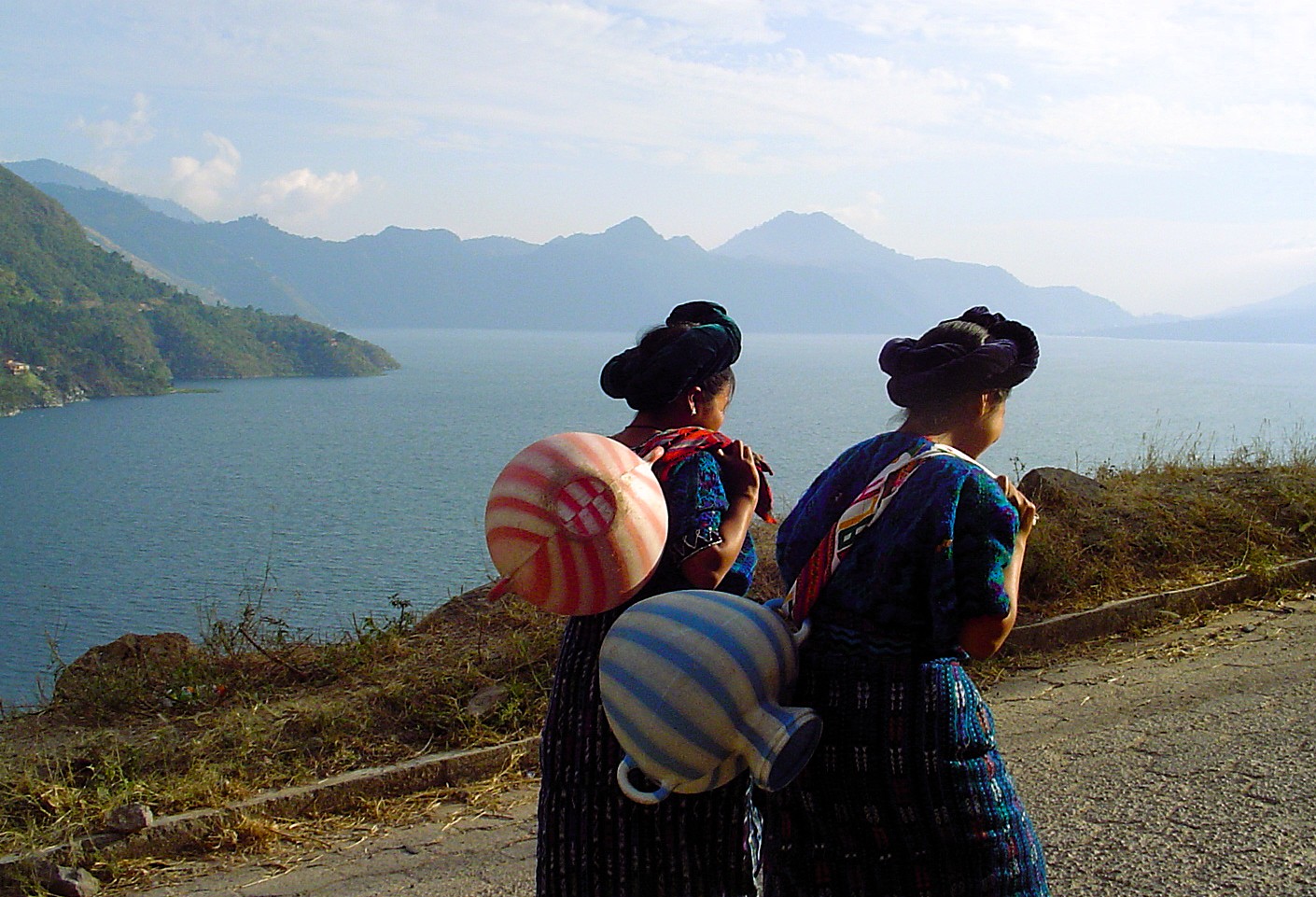
Not much to say of the walk. The road was dusty but paved and snaked around the hills. Occasionally it opened to incredible views—the sun shining high on the lake, volcanoes wrapped in cloud. The last ten minutes into Santa Catarina were all downhill. The town seemed simple: small houses and a large white (but unimpressive) church the guidebook kindly called gleaming. I took the path down to the lakeside and sat in a small restaurant along the shore with a Coke and some more chips and guacamole, enjoying that no one pressed me to buy. Apparently the boats there were only for private hire—a price I didn’t even inquire about, figuring it to be more than I wanted to spend.
It was nearing 3:30 and I figured even if I walked on to the next town and it really took only an hour, the boats were likely also only for private hire. Feeling restored, I decided to walk back to Panajachel. The walk did take an hour this time and I felt very pleased with myself. I arrived in time to take a quick shower (I looked dreadful) and then headed down to see the sunset. It was pretty but not spectacular. I had dinner, and then, exhausted, dragged myself off to sleep at 8 p.m.

