Japan 1997-2000 Part One: Three Years in Little Stick

Having recently wrapped up a four-year tour in Malawi, I find myself thinking more on the only other place I have lived for three consecutive years as an adult: Kogushi, Japan. This is especially so as my Japanese-speaking SUV not so long ago reminded me of my memories of the wonderful holiday of Setsubun. These are some of my reminiscences from that time.

In July 1997, I boarded a plane in northern Virginia, with a one day stopover in Los Angeles, to head to my English teaching assignment in rural Japan with the Japanese Exchange Teaching (JET) program through the Japanese Ministry of Education, Culture, and Sports. I very much enjoyed the long flight as I had been bumped – for reasons I cannot recall – to the upper deck business class where I was given chocolate bon-bons and watched movies on a mini VCR player, but I was less keen on the three day Tokyo Orientation. In my journal I wrote that it was a combination of death by presentation, much of which was in the manual I had already poured over cover to cover, and feeling uncomfortable around the other participants, who seemed to have come to Japan for the sole purpose to drink and talk about drinking. I just wanted to get to my new home.

From Tokyo those of us new JET program participants bound for Yamaguchi Prefecture flew to the Yamaguchi-Ube airport. At the small prefectural airport there was a lot of excitement on our arrival. A large group of persons with balloons and a sign cheered loudly over the arrival of one guy in our group. Another woman’s welcome committee gifted her a kimono, which is an incredibly thoughtful (and expensive!) present. One by one the 20 or 30 so other JETs were happily bundled off with their townsfolk until just I stood there. Two men stood across the way. One young, in his 20s, sporting a helmet-like stiff haircut around his round boyish face and wearing a red tracksuit with white shirt, giving him the appearance of an awkward teenager. The other, a handsome lean man in his 50s, stood languidly with an air of just repressed annoyance. He looked at me, said my name, and when I nodded, he said, “you’re with us.”

Not the most auspicious of beginnings.

They took me to eat at a noodle shop in Ube, drove me the one hour to Kogushi, to my new home, and then deposited me unceremoniously in my new apartment. There only message was that they would be back for me the next day to take me to a meeting with the local police. Then they left me.
At the police station, I was confronted with two quintessential small-town cops. Two middle aged men with paunches that sat with languid ease in their chairs as they described to me their duties in Japanese, a language I had had only two weeks of night classes on from the Miami Dade Community Center. I waited patiently for translation. I was told that should an emergency happen at my apartment, they could be there in 10-15 minutes. They said this with great pride, and a touch of ego, clearly intending to instill a sense of confidence in me of their abilities. I was dubious given I could run from my apartment to their little station in five minutes.

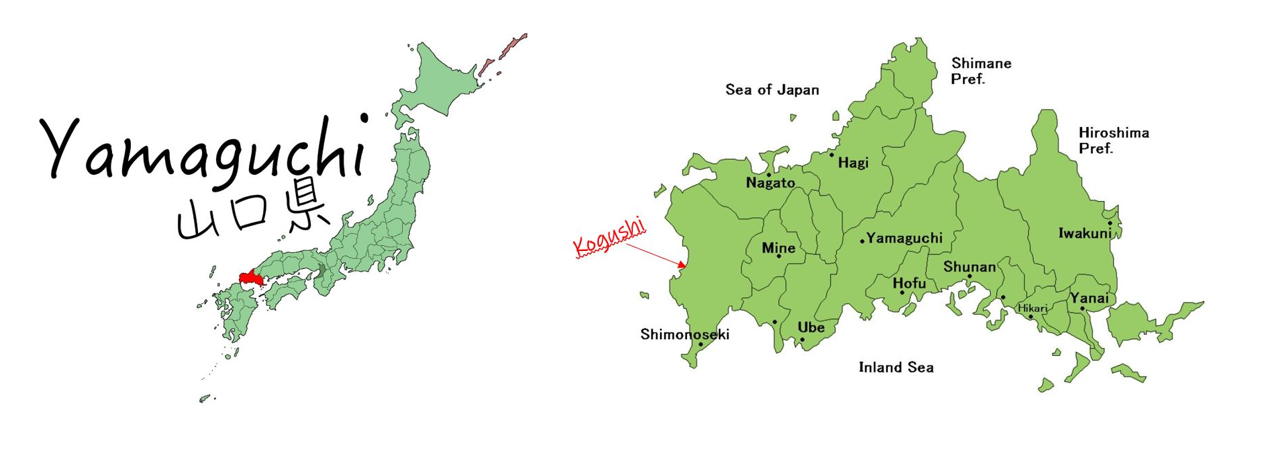
Kogushi, is a farming and fishing town of approximately 5,000, that along with four other similar sized towns, hugs an indented portion of coastline located in Yamaguchi prefecture, the western most part of Japan’s main island of Honshu. Kogushi in Japanese is written 小串 or “ko” meaning “little” and “gushi” meaning “skewer” or “spit” like a kabob skewer – you can see the character itself is a stick with two pieces of meat represented by squares. Frankly, I loved this and came to refer to it as “Little Stick.”

My place was a small flat located on the second floor of a compact two story apartment block consisting of only two apartments upstairs, two downstairs. It was located on the corner of the coastal road that led from Shimonoseki, the prefecture’s largest city up to historic Hagi and beyond, and the short road that dead-ended at Hibiki High School, the base school where I taught English. My balcony faced a gas station that was right out of 1950s USA. When cars pulled in a bell would ring and a team of uniformed Japanese staff members would swarm the car cheerfully calling いらっしゃいませ (Irasshaimase) or “Welcome!” Unlike in the US, Japanese gas stations were, at least in 1997-2000, full service. It was charming, except for when I wanted to sleep in on the weekend and that darn chime and swell of excessively happy greetings would grate on my nerves. Just across the coastal road was the Kogushi train station. Trains only stopped at Kogushi about twice an hour from around six in the morning to eight at night. I mostly enjoyed living so close to the station, except in the early morning hours, around five AM, when the train sat idling, awaiting its first passengers.

My apartment was what was called a “1LDK” as it had one bedroom and a living, dining, and kitchen area.  Though honestly the dining and kitchen area were one, in Japan, the spaces are much smaller than in the U.S. and had it just been a “K” the kitchen would have been the size of a closet.  The kitchen floor was an unfortunate burnt orange and golden pattern linoleum and was outfitted with just two hot plates (no oven) a half-size mint green refrigerator; it was a color combination right out of the 1970s.  My toilet and bath were separate – with the bathroom basically being a room encased in plastic.  Upon entrance, the shower was an area around three feet square with a bright blue hard plastic bottom and sides.  The other half was a three-foot-deep square bright blue bath tub with a cover.  A very Japanese design with the intention for family members clean up first with the sitting shower and then soak in the tub – and had I had other family members, we would have all soaked in the same tub water.
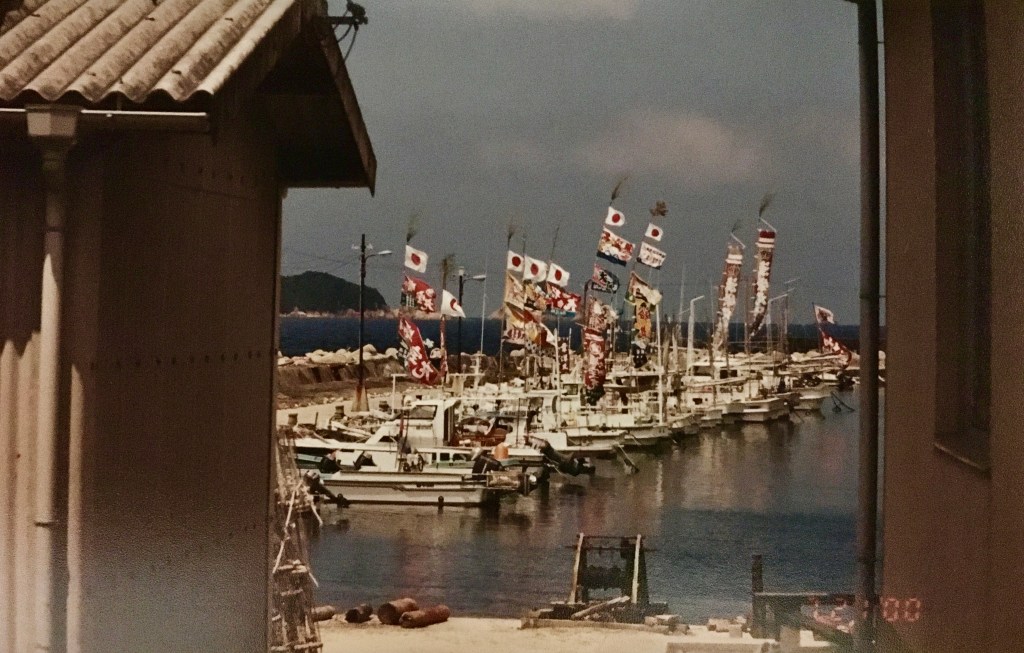
The floors of the bedroom (about 8 x 6 feet) and the living room (maybe 10 x 10 feet?) were of tatami, a Japanese flooring of tightly woven straw). I was thrilled to have tatami mats, as it made my home genuinely Japanese. In the bedroom, I had a small plastic single bed frame topped with a futon alongside the balcony side. It was here in this bed one morning in August that I woke to the gentle rocking that signaled a minor earthquake. This also lent authenticity to my arrival in Japan. The whole other side of the room was dedicated to a large closet built into the wall with sliding doors covered in decorated washi paper. There were no rod to hang clothes, just a shelf to fold and stack items. There was also no A/C. When I moved in in August it was quite hot and I could not sleep. Though my place was small, it was still three rooms, and there was only one wall-mounted heating and cooling unit located in the living room. I also discovered in winter that same unit did little to combat the cold that seeped in through the un-insulated walls. When I arrived home in winter I would sit in the living room with my coat still on for a good 30 to 60 minutes before the wall heater provided enough warmth for me to shed my outer layers. Given this situation, I opted to only sleep in my living room – splayed out on top of my futon with the A/C on in summers and in winter, I placed the futon on a heated carpet (cleverly called a ホットカーペット hot-to-kā-pet-to) and slept under an electric blanket lying next to my kotatsu (a low table with a heating element). I thought the reputation of Japan as this super developed country was rather undeserved as I sweat profusely or shivered for warmth in my home or at school. I don’t think I shall ever forget the words for hot (atsui) or cold (samui) in Japanese because it is what the students (and I and the teachers) uttered the most during particular seasons.

Right: I can only recall it snowing once or twice the whole time I was in Kogushi and I immediately grabbed my camera to take a picture of the Shinto shrine in the fall snow. Left: The ridiculous giant heater that showed up in the teacher’s room at Hibiki High School on November 1 and was dismantled on March 31, regardless of the weather. You had to be right next to it to get any warmth. The classrooms had no heat.

The beach was just two blocks from my apartment. There really wasn’t much beach and it was littered with large cement tetrapods. Although designed to stop coastal erosion, which is a good thing (and are a runaway hit in Japan with an estimated 50% of the country’s coast decorated with these things), they are really unsightly. I can remember being annoyed at them from day one. And over time I came to find that Japan just seemed a bit obsessed with using concrete to cover up nature – to hold back the sea, to hold up hills, to cover over all manner of things. And I never once got in the water. But I did enjoy walking through my town and alongside the sea.

A few months into my first year I bought myself a fun little 50 cc motorbike. I wanted to be able to get around a bit quicker and go a bit further than the two times an hour up and down the coast train was going to get me. Mr. Yamamoto, my school supervisor, specifically said I should not get a motorbike, implying that it was really his decision how I lived my life, which made me want to get one all the more (and frankly sealed the deal). I loved tooling around on that thing.

Being an obvious foreigner in small town Japan could be difficult. At the supermarket, I might be just picking out some fruit or standing in line at the cash register as eager parents pushed their children toward me forcing them to sing their ABCs or some other English song. On the train or at the post office or on the street, people wanted to practice their English with me. It was often endearing, but it could also be exhausting. I might be followed on the beach by curious children or shop assistants ran away terrified when I asked them a question. But when I was on my motorbike, my dark-reddish-blond hair peeking out from my under my helmet looked like the dyed hair I saw on the 20-somethings who were seeking to stand out and rebel just a bit. On my motorbike, for just a wee bit, I blended. I was once stopped by a Japanese police officer on a straightaway some kilometers north of the city of Shimonoseki and his shocked gasp of “oh, its a foreigner!” (wah, gaijin desu ne!) is probably one of my absolute favorite memories from Japan. He was so flustered explaining to me that 50 cc motorbikes have a different speed limit from cars that he just waved me off without a ticket.

There were always little things to discover in and around my town. I especially enjoyed visiting onsen or hot springs. One town over from Kogushi is Kawatana Onsen – a somewhat famous hot springs resort town. It was here that kawara soba (green tea flavored buckwheat noodles served on a hot roof tile) was invented. The two attractions did bring tourists to this little part of the San-in coast. Once I tried the Kawatana Onsen (with a group of teachers from my school – which was a little bit awkward — Hi, nice to meet you, I’m new to town, want to go together to the bathhouse and be naked?), I was really taken with onsens. I road around Toyoura-cho (my district) and sometimes further afield on my motorbike bathing in different onsens. And when I traveled around Japan, I often went out of my way to visit an onsen.

As my time grew short in Kogushi, a nice Japanese teacher of English at my school loaned me her really good camera and while walking, riding my bike, or out on my motorbike, I would stop to take pictures of things that stuck out to me as something quintessential Japan or something I would really miss — such as the roof tiles or the vending machines or the shrines. Not all of those photos have survived, but I am glad for those I have.

It’s been harder to write this than I expected; the walk down memory lane a bit more difficult to see through the fog of 21 years. Halfway through writing this, I revisited Kogushi via Google Maps. Imagine my surprise to find my apartment still standing and nearly identical to how it was when I lived there — just a fresh spot of paint on the roof has spiffed it up a bit. The hedges are still there — it was back there, near the staircase to my apartment, when I fell in a manhole. In all the places in Asia I had been with open manholes and darkened streets, it was in the most developed that I fell in. There were two sewer holes there, one slightly smaller than the other, and some service person must have switched the covers by accident and when I stepped on the larger one, then covered by the smaller manhole, it flipped and one of my legs fell painfully in. I was dirty and scratched up, and I limped to my downstairs neighbors’ house to seek help. The couple opened their door but were not welcoming, seemingly terrified that the foreigner from upstairs had sought them out. As they did nothing but stare at me with wide, frightened eyes, I just limped back upstairs to my place and tended to myself.
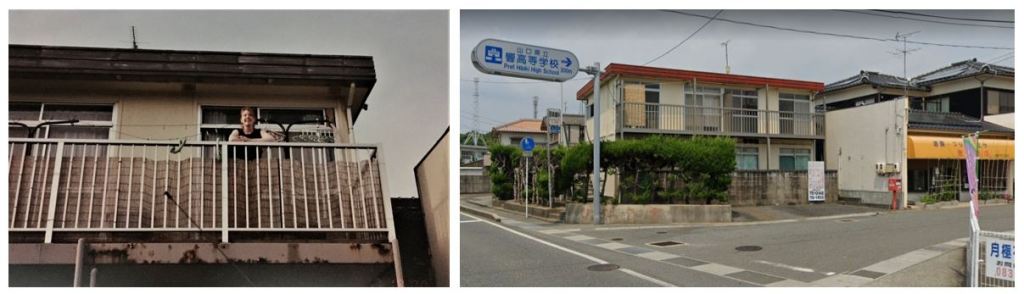
The bookstore is still next door, the police station still down the street, the exterior of Hibiki High School still looks the same. The gas station that once stood across the street though is gone, replaced by a small parking lot. The mini-mart building still stands but appears boarded up. The supermarket is now a cafe. But otherwise, Kogushi seems to look much the same. The train station looks the same. There is still a hair salon near the station — where once some Japanese women, thrilled to have a gaijin in their salon, tried their best to style my hair but unfamiliar with non-Japanese hair did a rather poor job. The pharmacy is still there across the station square.

Though I do not remember all of my time in Japan as much has faded with the passage of time, my experiences during three years in Kogushi are very much part of who I am today.

Farewell, Malawi

Tomorrow it is wheels up from Malawi after four years. It is very bittersweet. This is the longest I have lived in the same place since I lived with my parents before college; the longest in one place for C as well. But it is time for us to go. I am sure I feel this way in part because this is what any person moving must do — they must steel their heart against the inevitable, accept the change in location, otherwise it would be all the harder. But the pandemic has most certainly played its role as well. Malawi is an amazing place and we have loved the opportunity to put down roots, albeit temporarily, in this country, but it can be a challenging place. The pandemic exposed more of those limitations because we had no outlet. There were few chances to get out and push the reset button.

A long time ago I studied cross cultural psychology. One technique I learned was that when departing from a location to make a list of those things you will and will not miss and those you look and do not look forward to in the new place. So, here we go:

Will Miss

Wildlife

Malawi has been such a great place to really get up close and personal with wildlife. First off, we have been able to go on safari in several national parks. In other countries, safaris might not be open to young children as they are not particularly well known for keeping their cool and being quiet when faced with African animals like lions or giraffes. But in Malawi, there were no age restrictions and we enjoyed game drives in Majete, Nkhotakota, and Liwonde National Parks. Secondly, just being in the neighborhood, we have come across pygmy hedgehogs, a bushbuck, and a genet. And lastly, our yard has been full of wildlife surprises. We have had a few snake encounters – a blind snake, brown house snakes, and a few white-lipped herald snakes (and I convinced my staff not to bludgeon them but to alert me so I could see the snake and tell them to leave it alone) – and lots of geckos and skinks both inside and outside the house.

We have seen hedgehogs and mongooses in the yard too. The first hedgehog I met ran right up to me in the yard and then across my shoe. The one in the photo — I saw in the road as I drove home one afternoon. The poor thing was rolled up in a ball hoping not to be hit and I pulled over, stopped traffic, whipped off my cardigan, and scooped it up to safety. I took it home, made sure it wasn’t injured, and then released it in my car-free yard. The baboon spider (what we in America call tarantulas) first showed up hanging out on my front door (made it a wee bit scary to go in and out of the house) and then one day just ran across my living room floor while I was watching television. Very exciting! But the very best of our wildlife encounters had to be the visit of a rare bat. One day she was just roosting in my carport in broad daylight. I was able to approach and take a few pictures and sent them to the African Bat Conservation team in Malawi. I was told she was likely either a Great Roundleaf Bat – only the second ever recorded in Lilongwe and the first to have been known to roost here – or a Striped Leaf-Nosed Bat – which would be the first-ever recorded in the city. What an extraordinary find! The African Bat Conservation sent out someone right away to photograph and take some measurements — but unfortunately, their most experienced tagger was out of the country due to COVID. C and I named the bat Nutmeg and were so thrilled she made our yard her home – and stayed visible to us – for the better part of three weeks. Through these wildlife encounters, I made up the hashtag #safariinthehood as we did not need to go anywhere at all to experience incredible African fauna.

Our Incredible Yard

I have previously waxed lyrically about our yard, but I must pay homage to it once again because of all it has afforded us. Not only did we get mongoose and tarantulas, but we were also able to grow fruits and vegetables, experience incredible birdlife, and enjoy new pets. Sitting on my konde or screened porch and I can hear the calls of many kinds of birds. I can hear tweets and caws, chirps and cheeps, whistles and trills. On any given day probably 20 types of birds. My favorite birds are the pied crows — a large crow or a small raven with a snowy white breast and collar. A mated couple calls our roof home and when they hop across the corrugated metal it sounds like loud stomps; I call them the pterdactyls then. But the most beautiful is the lilac-breasted roller — we have one who loves to regularly visit. When times have been tough over this pandemic period, a brief walk around the yard, sometimes in meditation, could help restore my spirit. I’ll miss this yard very much.

Travel Around the Country

Malawi is an incredibly beautiful country and I am so grateful that C and I were able to see as much of it as we have. In all, I made it to 22 of the 28 districts. Had it not been for COVID, I would have made it to them all, I know this. If I had to choose, my favorite places were visited were the Tongole Wilderness Lodge in Nkhotakota National Park, the Robin Pope Safari lakeside property of Pumulani, the lush tea plantation of Satemwa in the south, and the island resorts of Blue Zebra and Mumbo Island.

Extraordinary Events

As a first-time political officer, Malawi absolutely delivered an unforgettable tour. As the sole political officer, I have had the privilege to cover a whole host of issues from human rights, trafficking in persons, refugees, politics, and more. In the four years I have been in Malawi, I have observed two by-elections and two national elections as an election monitor, was part of the team to manage the first visit of a U.S. First Lady to Malawi, I nominated Malawi’s first-ever State Department-recognized Trafficking in Persons Hero, and helped to bring about the first Mr and Miss Albinism pageant, at which I served as the head judge. The 2019 national elections were challenged leading to a historic — only one other time on the continent — court decision to nullify the results and call for a new election. The new election, which was held peacefully, ushered in the opposition party for the first time in 26 years. I might have received an evening call at home from the White House Communications Agency after the election results were announced. I might have been very excited — though maintained my cool during the call. At the end of 2020, the Economist magazine named Malawi the Country of the Year. And I was here for it.

Extraordinary People

On this tour I have worked with some of the best the State Department has to offer — truly extraordinary officers who serve their country with distinction. And I have had the honor to meet the best and the brightest of Malawi in the course of my duties. I had in my phone contacts a high court judge, high-level Ministry personnel, members of Parliament, important persons at the Malawi Electoral Commission, prominent human rights activists, and more, and when I called, they answered! I met a former President – the second female president on the continent – twice, the wife of the Vice President twice, the previous sitting president once, and the current president, before he became president, on several occasions. But it has been the everyday Malawians (or those living in Malawi), those like I featured in my Faces of Malawi blog posts (here, here, and here), I have met that have really been a big part of this tour.

Will NOT Miss

Massive Stacks of Bills. I do not carry a wallet here in Malawi. Instead, I carry is a fabric coupon organizer so that I have the space to hold more bills flat, not folded. The largest Malawian bill is the 2000 kwacha note, which is the equivalent of $2.47. There have been rumors of a possible 5000 kwacha bill since my arrival, but it never materialized. Malawi is largely still a cash-based society, though I have been able to use my credit card at the supermarkets and mobile cash has recently been introduced, so things are changing. I will be glad to retire my coupon carrier for a while, at least until I arrive in Guinea. In related complaints, the cost of some things is surprisingly the equivalent or even more than in the U.S. One is petrol. Currently, in Malawi, the gas prices are around 900 Malawi Kwacha per liter. That is the equivalent of $4.20 a gallon versus the current average price in the US of $3.17. And the Internet – I have posted before that Malawi has the most expensive Internet data in the world and you most certainly do not get what you pay for.

Driving and Parking. I have heard that traffic in Malawi is mild compared to many other developing cities. It is not so much that there are major traffic jams — I mean there are, but they are due to a limited number of roads. But it is the quality of the driving that really drives me nuts. I have heard, anecdotally, that there are a good number of drivers on the road without valid licenses. Given some of the driving I have seen, I believe it. But the parking too… A former colleague told me that a speciality of Malawi is to always construct buildings with a fraction of the parking needed. For example, the Bingu National Stadium can seat over 40,000 people, but there are maybe 500 parking spaces only. But it’s not just about there not being enough parking, sometimes there is plenty of space, but it’s made worse by some extraordinarily bad parking. There are a few places like the Game complex and the Gateway Mall that appear to be a magnet for those with the worst parking skills. People park a third of the way into another spot or diagonally into spots or in spots that do not exist. Sure, there are people all over the world who are terrible at parking, including the U.S., and its likely that parking will be challenging in Guinea, but I do hope for a respite from the special brand of driving and parking I have encountered here.

Mosquitos, Nets, and Malarone. We have spent four years sleeping under mosquito nets and taking malaria meds. In the rainy season, from approximately November through March, the mosquitos are relentless. Each morning I find myself conducting a bizarre clapping session as I kill one after another. When we head to Guinea we will back to this but I look forward to nearly a year away from it.

Grocery Disappointments. Sigh. It is such a disappointment to order items from the US and have them take four weeks to get to us and then they are crushed or melted. But this is what has happened with probably 50% of my Tostitos (half the bag pulverized) and my gummy vitamins (half of it melted into one solid mass). But even purchases here are subject to a lot of uncertainty. About two weeks ago I bought a container of hummus for $5 and I get home, open it, and find it covered in mold! And cheese, it’s a regular game of what will I get — could it be smooth and delicious or will it taste like stale dirty socks? I would say 8 of the past 10 watermelons I have purchased from the fruit seller have been bad despite the constant assurances that they are selling me the most delicious, red, and juicy fruit possible.

Overall, Malawi has had far more positives than negatives. I do not regret staying for two consecutive tours or staying here through the pandemic. Though COVID and the related travel and life restrictions have definitely made things more difficult but Malawi was our home. Now, we both look forward to some things in America we have missed for some time. My daughter puts string cheese, slurpees, and Taco Bell at the top of her list; I especially look forward to salads, sidewalks, and more of a sense of normalcy — though I do admit I am a bit concerned about the culture shock we will encounter going from a place very much in a third wave of the pandemic to a place where many appear to believe we are past it all.

Farewell, Malawi.

Hello, USA.

Malawi: Winding Down

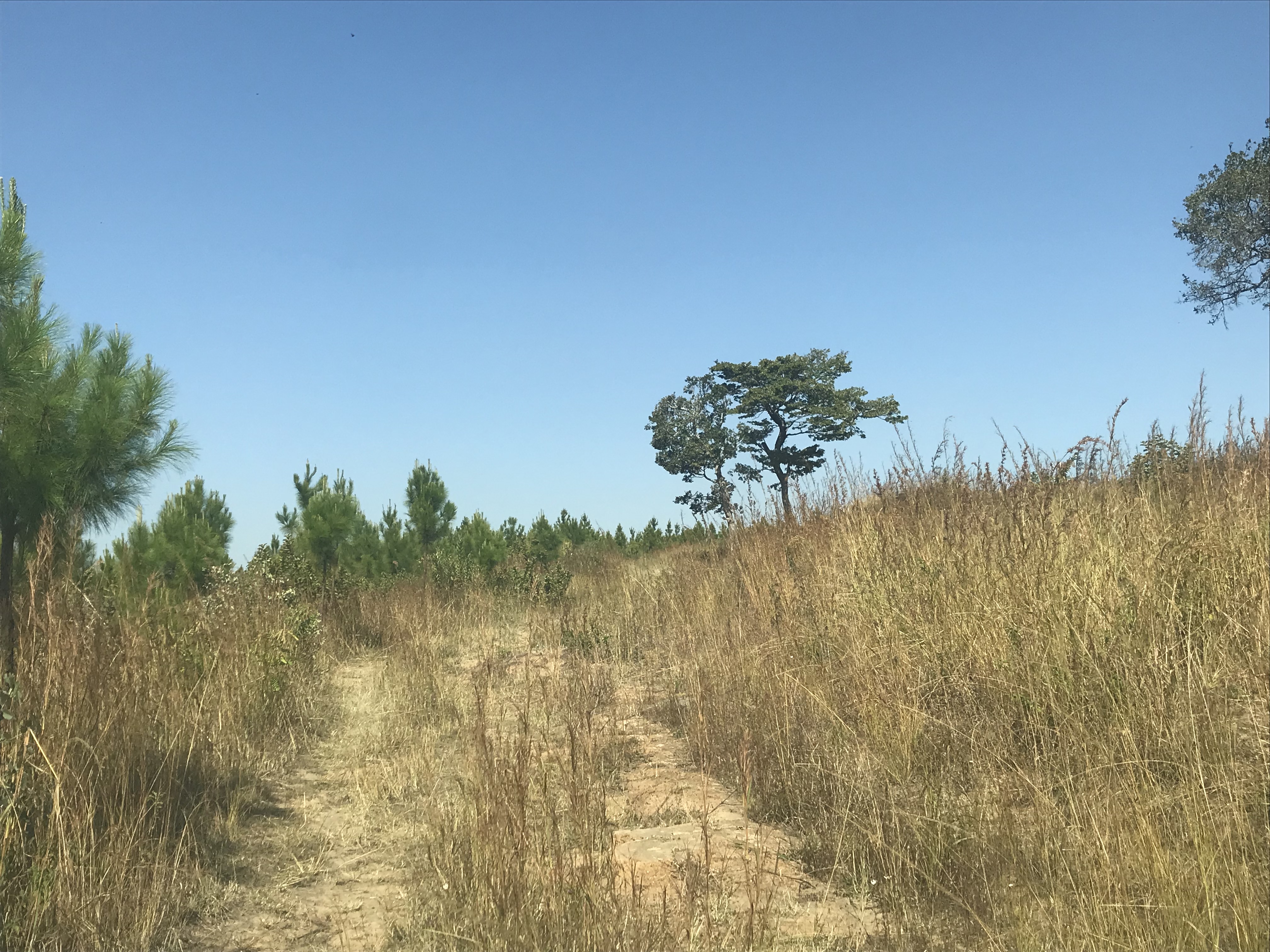
The countryside around Dedza, central Malawi

We are slipping ever closer to our departure from Malawi; we have less than a month to go though I do not today know exactly how many days are left. I had a date in early August, but realized that due to COVID I could request to depart in July. I then had a very late July date, but then the airline flying that route cancelled the flight. We have new tickets but the already paid for reservation for my cat on that flight has yet to be confirmed for the new itinerary. Therefore things are not quite settled until the cat’s ticket is settled.

The past month has been a bit of a roller coaster. Lots of preparations to wrap things up in the office and at a home. A series of actions to check items off lists. Slowly sorting items into piles of things to sell, to donate, to give away, to put in luggage, into unaccompanied baggage (UAB), and into household effects (HHE). It might seem on the surface to be a rather straightforward process, but it is not. The two of us qualify for 450 pounds of UAB, which will be sent to the U.S. by air. It seems like both a lot but also not very much. We will be in the U.S. for about a year, so we want to be able to take a fair amount with us. Our HHE will be placed into storage in Europe until we arrive in Guinea in the summer of 2022; the shipment will only be authorized after our arrival and can take a few months. Therefore its likely we will not see these items for 15-16 months. If my daughter tells me that I can put something into HHE then I might as well just get rid of it now as she will be a different child 16 months from now.

We have whittled down quite a bit of the pantry and toiletry items. It feels a little odd as Malawi is a consumables Post – a place where we are able to get a extra shipment of foodstuffs and items for personal or household maintenance – and thus we arrived with large stocks of those items. Now we are out of vitamins and down to the last tubes of toothpaste, the last bottles of shampoo, the last bits of so many things.

In the midst of these preparations, Malawi has experienced the lead up to a COVID third wave. The third wave in Africa started in early May. South Africa had been seeing increases particularly with its own variant (the Beta) and the Indian variant (Delta), and as was to be expected it did not take long for it to spill across borders. By early June, the cases in Malawi started to climb just as the county began to administer the second shot of the AstraZeneca vaccine. Unfortunately, before the end of the month vaccines in Malawi were finished.

I had really hoped that before we departed Malawi we might get in another vacation. We had managed to get out for our holiday in Kenya just before the second wave and we have had a few trips within Malawi after the six-month prohibition against traveling out of Lilongwe at the beginning of the pandemic was lifted. I thought we might get to South Africa and Lesotho to finally complete the trip we had had planned for April 2020, but Ethiopian Airlines refused to honor the flight credits we had and with the COVID numbers going up yet again, it seemed best to remain in Malawi. I started to look into whether we could get in another domestic vacation but we had already done a good job in getting out and about; there were few places left on my bucket list. Many we had already been to twice. Those we wanted to get to were rather far, with still limited facilities due to the pandemic, or cost prohibitive.

Thus I found myself with 11 consecutive days of off just hanging about the house. As if we have not already been hanging around the house for much of the past 18 months. Yet this time, I have the upcoming departure from Malawi, our Permanent Change of Station (PCS), fast approaching so though my inability to scratch my travel itch yet again has done a few things to my psyche, I am also grateful to have had this time to both relax (lots of sleeping in, reading, watching DVDs), manage some final play dates for my daughter, and to do some of that whittling down of things.

Rock Art Paintings at Namzeze

But I could not be content with just that. There was one more place I had hoped to visit. There are two UNESCO World Heritage Sites in Malawi. One is the Lake Malawi National Park and we have visited there on multiple occasions (such as here, here, and here). The other is the Chongoni Rock Art Area. Scattered across 127 sites in the Chentcherere hills of central Malawi, around Dedza, these are a mix of paintings on rock by BaTwa pygmy hunters of the Stone Age and Chewa agriculturalists of the Iron Age and “feature the richest concentration of rock art in Central Africa.”

The last bit of, um, road?

On a beautiful, clear Sunday morning (after days of overcast days), C and I, with our friends CR and her daughter AR, headed about 100 kilometers south on the M1 to the Dedza Pottery Lodge. We stopped there so CR could pick up an order, we could all use the facilities, and we met our guide Samuel. CR jumped into the backseat with the girls and Samuel took the passenger seat, and we headed back north along a dirt road. We drove around 45 minutes to the turn off to the Namzeze site, which Samuel said was the best as it featured paintings of both the BaTwa and Chewa people. The road then got pretty bad. It was just a track through tall grassland. At times it was okay, but at other times there were some parts where bits of the road was missing, making ridges with fissures deep enough to maybe, if not swallow at least stall my car.

At last we came to an area just above a wooden log bridge. We stopped here as there were significant gaps between the log and it was too much of a challenge with my car (especially one I have already sold!). I was really pleased that although the road was challenging, the signposting was good.

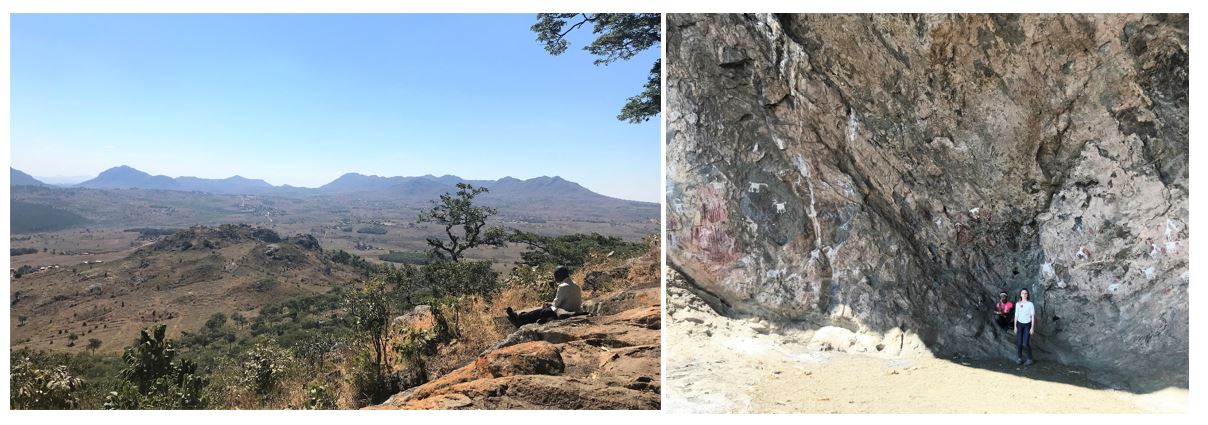
We then walked up the rocky hillside for about 40 minutes or so (I suppose some can certainly hike it faster than two middle aged women of middling activeness with two nine year old girls) until we reached an area with a large covered opening in the rock, a shallow cavern, the Namzeze paintings. There we sat as Samuel gave us a bit of information on the drawings and the people who made them. He said the paintings done in red ochre were made by the BaTwe people, and could be as much as 10,000 years old, and the ones in white clay were made by the Chewa people and are approximately 2,000 years old (though it is not all that clear, even on the UNESCO site, that the paintings are that old). The red paintings, as they are older, are fainter, and of mostly graphic designs (lines, dots, shapes) while the white clay designs are of four-footed animals and birds, which are likely related to ritualistic initiations.

Left: Our guide Samuel surveys the valley from the mouth of the hillside opening; Right: C and AR in front of the rock art

After about 30 minutes at the site we had a more rapid descent to the car. We drove part way back to the Dedza Pottery Factory to drop off Samuel and then headed back to the M1 and Lilongwe. I am glad that we went, that we had one more adventure to see another special aspect of Malawi.

It is such an odd time now. PCS’ing — moving internationally — is hard enough, stressful enough in normal times. During a pandemic puts it at a whole new level. Flight schedules are more limited. Ethiopian once flew daily to and from Lilongwe and now its four times a week. And schedules seem subject to more changes and cancellations than usual. And the testing regimes on top of it. It’s a lot to think about. And it is all mixed up in the complicated feelings of departure from a place where we have spent a significant amount of time and after already a year and a half of a pandemic. Most Embassy families we know are currently on their R&Rs and we are the last family to PCS this summer. C’s best friends leave two weeks before us. Our last few weeks are going to be hard, especially on C. There is unlikely to be another PCS like this. At least I certainly hope not.

We head next to the U.S. where it seems from where we sit that most have returned to a level of normalcy. My sister, a TSA agent at a major U.S. airport, has reported “post-pandemic summer travel,” except that implies an end to a pandemic that is very much still in progress and accelerating again in many parts of the world. I am focused almost entirely on managing our departure; the arrival in the U.S. is a whole other step. I do not know what to expect.

Intro to Malawi: Power and Water, Life and Death

A few months after arriving in this country, an idea popped into my head about writing a blog on Malawi with this very title. In early briefings I participated in, there were clear lines drawn between the lack of electricity and the inability of the country to attract foreign direct investment that would drive growth and development. Without that investment, Malawi would remain one of the least developed countries in the world.

Over the years I have continued to think of writing that – this – blog post, but it never seemed to be the right time. Yet, here I am with only months left, and it’s time. However, this is but an idea that I had on how to write about my first and then developing impressions of Malawi. No place can really be distilled down in such a simplistic way. Though I have had a great opportunity to learn more about this country over these four years, what I have learned still represents only a few aspects seen through my lens. That of a political officer who has spent the majority of my time in Lilongwe.

This post is therefore not based on extensive research. These words are based only on my experience and anecdotes from my time here.

Power & Water

When I arrived in Malawi in August 2017, the country had the capacity to produce about 360 megawatts of power.  For those that know electricity, this pronouncement generally produced gasps or serious, rather grim nods.  For the uninitiated, such as myself, I had to do a bit of digging to understand.  Online I found a statistic that on an average day New York City uses 12,000 megawatts. If Malawi produces its maximum capacity daily, then the total annual production is about130,000 megawatts. According to the U.S. Department of Energy, the state of Florida, with a population of 19.5 million (compared to Malawi’s 18 million) produces 221 Terawatts or 221 million megawatts annually.  Although I still do not quite grasp the concept of power generation or megawatts, these numbers nonetheless tell a stark story.  Now, nearly at the end of my tour 4 years later, Malawian energy production capacity is nearly 100 megawatts more though still a far cry from what other countries can produce.

And this poor power generation capacity has consequences.  In Malawi, only 15% of the population has access to the power grid, but uneven distribution means 62% of urban households but only 5% of rural areas are connected.  Living without electricity is the reality of approximately 85 percent of Malawian households. Power generation is also inconsistent.  Several times a week I lose power, but I am lucky because the Embassy provides a large generator that – if the connection is working right – switches over almost immediately.  Most are not that fortunate as generators – and the diesel fuel that operates them – is much more costly than electricity. 

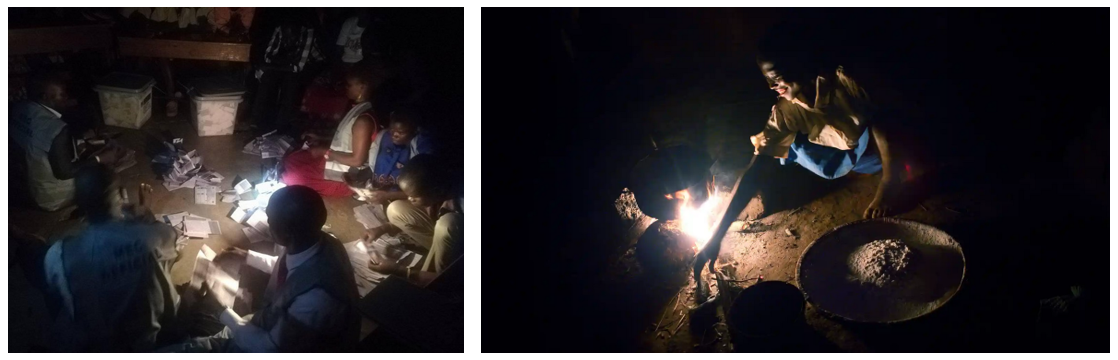
Left: Malawian poll volunteers tally ballots in the 2019 elections (Nyasa Times); Right: a 13 year old prepares dinner in a village only 30 miles outside of Malawi’s capital of Lilongwe (The Guardian)

So just think about this for a minute.  Think of all the things that you do every single day that require electricity.  In the U.S. we really take this for granted and groan when we lose access for a few hours, in rare instances a few days, after a storm.  It is not a matter of your local power company, maybe Pacific Gas & Electric or Dominion Energy, working around the clock to restore power.  There just isn’t any power to restore.  The lack of power affects all aspects of everyday life from kids studying to mothers cooking (and yes, it is almost always the mothers or girls).  Consider these two headlines from my time here: “The judgment was delivered in the judge’s chambers as the court had no electricity to print it out for reading in open court” and “we have cases of babies dying in hospitals due to the absence of power for the incubators.”

In Malawi, power and water are intrinsically linked. Water dominates life in Malawi – its abundance or its scarcity. Lake Malawi makes up a full one-fifth of the country’s area (and is Africa’s third-largest and the world’s ninth-largest lake). Malawi’s longest river, the Shire (pronounced Sheer-eh) is not long by world or continental standards, but is the Lake’s primary outlet and flows into the mightier Zambezi. Ninety-eight percent (yes, 98%!) of the country’s power is hydroelectric. And three of Malawi’s four hydroelectric power stations are built on the Shire. (The Kapachira Station sits above the falls that back in 1859 stopped explorer David Livingstone’s Zambezi Expedition from continuing upriver). That level of hydro-power sounds amazing from an environmental perspective, doesn’t it?  However erratic rains and declining water levels can mean reduced capacity, increased power outages, and the process of “load shedding.” Though it is not unique to Malawi, until I arrived here, I had never heard of load shedding or planned supply interruptions. During load shedding a particular area may not have access to power say from the hours of 10 AM to 4 PM and then again from 9 PM to 6 AM.

Malawi is an agriculture based economy. Eighty percent of the country is involved in agriculture with the vast majority of those being smallholder, subsistence farmers. The staple crops of Malawi are maize, maize, rice, cassava, potatoes, beans and bananas, with maize being the runaway favorite (60% of total cropped land is devoted to it). The main cash crops are tobacco, tea, sugar and coffee, but tobacco is king, making up approximately 60% of Malawi’s export earnings. Agriculture needs water. And water in Malawi, as already noted, is inconsistently available. Irrigation can help, but most of Malawi’s crops are rain-dependent. One of the big ironies I have found here is the soil and climate appear (to my, admittedly, very inexperienced eyes) quite suitable to growing all manner of crops. In my yard, I have banana, lemon, avocado, mango, fig, and papaya trees and we have successfully grown sweet potatoes, chili, carrots, tomatoes, tomatillos, lettuce, cabbage, maize, broccoli, and cauliflower. I have lemongrass, cilantro, aloe, and peppermint also growing. We have palm trees and succulents. And yet it takes just a few shocks — too much rain or not enough — to devastate Malawi’s crops, leading to food insecurity.

Life & Death

In 2002, when crossing into Malawi from Tanzania, travel writer and novelist Paul Theroux noted “you know you are in Malawi when the first seven shops you pass are coffin makers’ shops.” Death is of course a natural part of life and it is all around us. Yet, in Malawi, death feels much closer, a much more present part of the everyday.

Life expectancy in Malawi is just under 65 years of age – a full 20 years less than in Japan.  In Japan (and also the U.S), the top causes of death are generally those that affect a person who has lived a longer life:  coronary heart disease, cancers, dementia, but in Malawi the leading causes of death are those that can affect younger persons such as HIV/AIDS, tuberculosis, malaria, and diarrheal diseases like cholera and dysentery.  Many of these are rarely heard of as causes of death in the developed world.  Many are preventable and treatable.

This is merely anecdotal, but I would be willing to bet one of the top reasons, if not the primary reason, for absenteeism from work in Malawi is attendance at funerals. For my own staff this is certainly the case. My nanny, gardener, and guards missed at least week or two each year. My gardener lost a grandmother, his sister, a nephew, and many neighbors. My nanny’s 15-year old niece died suddenly of malaria while a student in Nkhata Bay. She lost a friend to a snake bite. A cousin’s three year old son was run over by a garbage truck. My masseuse’s uncle was hit by a car. Another of her relatives died due to pregnancy complications at Kamuzu Central Hospital.

Its with this ever more present possibility of death (and a high level of religiosity – reportedly among the top five most religious countries in the world) that likely makes Malawians more fatalistic. In the early days of COVID, the government attempted to impose a lockdown and people revolted. For many, the inability to trade in the market would mean a significant loss of income and a high certainty of starvation. COVID, however, is just another of the long list of diseases that haunt the country, its fatality rate less certain than others. One might as well take one’s chances.

Though the government did eventually pose a variety of mitigation measures, such as closing restaurants or limiting them to takeaway only, requiring masks, restricting social gatherings of greater than ten people, funerals were always an exception. Weddings might have been discouraged, but funerals would continue — with up to 50 people.

Yet it is perhaps that same sense of mortality that leads to the incredible zest for life I have found among Malawians. While the Japanese may have the longest life expectancy in the world, I found the culture to be reserved, formal, and more difficult to penetrate by outsiders. Malawians however strike me as more relaxed, open, welcoming – the country is not known as the “Warm Heart of Africa” for nothing.

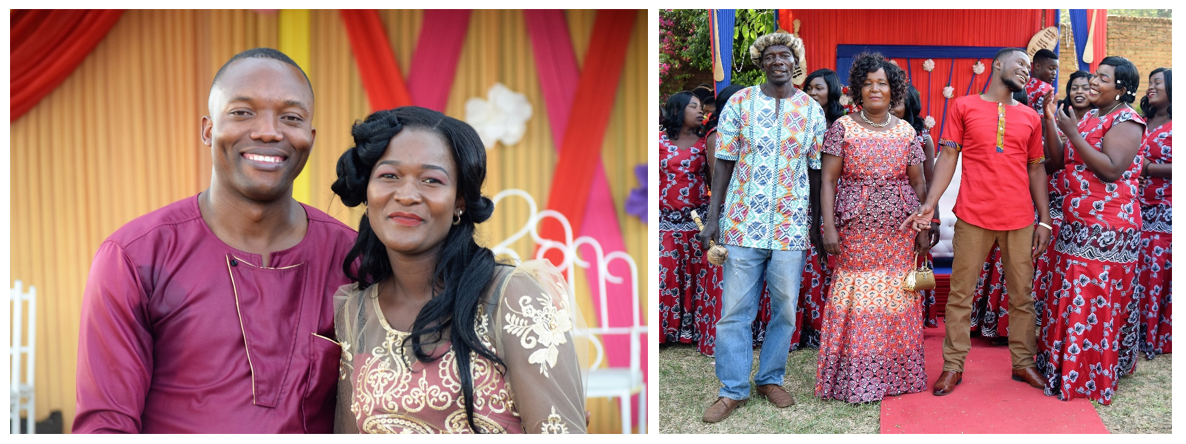
Malawian weddings are jovial, colorful events (my photos)

I have had the wonderful opportunity to attend two weddings in Malawi: that of my former nanny and also her sister’s. Both were colorful, noisy, joyful experiences. The groom did not solemnly stand in front of the guests, hands clasped waiting for the bride, but instead, alongside his groomsmen, boogied and slid his way down the aisle and then got down with the emcee (yes, there was an emcee) and the bride’s parents. Then the bride and her entourage danced two-by-two in a fast-paced coordinated routine down the red carpet. Later the emcee invited up groups of attendees to dance around the bride and groom and toss money into a donation basket. So much lively dancing.

As things open up again (and to be honest even when they were not some ignored the guidelines), the weddings are back on. There are a few wedding venues in my residential neighborhood. It’s rather unfortunate from a noise point of view, to have the sounds of a massive dance party go on for hours on end just around the corner on what would otherwise be a quiet Saturday, but in my generous moods, I can appreciate the high spirits, imagine the smiles and laughter and enthusiastic strutting down the aisle.

There are such challenges here and yet such resilience and joy in the face of them.

Again, this is an oversimplified boiling down of Malawi as a country. After four years here, I know this is patently unfair, and that Malawi, like any country, is made up of millions of stories that though there may be a common thread, still stand apart. Yet, I could not shake the idea of writing this about how the access to and lack of power and water does weave into the lives and livelihoods of Malawians and others, like myself, who are fortunate to call Malawi home.

Blue Zebra Redux: The Last Road Trip

With three months left in Malawi, I have to come to terms that this was probably our last Malawi road trip. After four years of driving all over the country, our second trip out to Salima to take the speedboat to Nankhoma Island is quite likely the last of our Malawi vacations.

It is bittersweet. In years we are not moving (and not in a pandemic), I would look at a month like May and its three, count them three, long weekends, and would be busy planning the getaways. There are places still on my Malawi travel bucket list I had hoped to visit such as Nyika National Park and Likoma Island that we will not get to. Like so many things, the pandemic also took away these trips, and with Department restrictions still in place that would require my daughter, who is, of course, unvaccinated, to isolate for two weeks, some domestic trips just are not going to happen. With only three months left in-country, I am turning my attention toward departure and next steps.

But we have several new families here at the Embassy and I knew they were struggling with not being able to get out and about and start experiencing their new home. Moving is hard enough as it is, but moving internationally to a developing country with few entertainment options during a pandemic…that tops the difficulty level. And I love to plan vacations! So, I organized a weekend away at the beautiful Blue Zebra Island Lodge, located on Nankhoma Island within the Lake Malawi National Park for us and three other families – six adults and six kids in total.

We headed out together from Lilongwe in a caravan to make the two hour drive to Senga Bay to meet the speedboat out to the island. The Lake water was like glass. It was deep blue, but sparkling clear. It matched the sky and together the blue horizon seemed to go on forever.

C and I had visited Blue Zebra before, a night back in September, but I had wanted a bit more time on the island. This time we opted for a different type of room – an Executive Chalet as opposed to the Superior Family Cottage. We were all greeted on arrival with welcome drinks and then a selection of items to choose for lunch and then we were led to our respective rooms. We followed the staff along a wooded pathway around the southern side of the island to a boarded staircase that led down to our chalet on the edge of the lake. We had a large rondavel-like bedroom, a bathroom built into the rockface of the island, and a small sitting room facing the deck and the lake. It was perfect.

We all gathered together for lunch and afterwards the kids all gravitated to the pool while the adults chose a few options such as reading, having a massage, taking a walk, or simply enjoying some down time (i.e. hiding from the kids). The afternoon light over the gorgeous water called to me and around 4 PM I headed out for about an hour kayaking.

It was such a lovely paddle with the water so incredibly calm. It was so very quiet. I had a mad idea that I would go around the island like last time, but dismissed that pretty quickly, and opted instead to head nearly to one side, turn around, and then paddle over to see our chalet from the water. And to take it all slowly, and leisurely, enjoying a bit of kid-free time. I stopped paddling for a bit, closed my eyes, and felt the almost imperceptible rocking of the lake.

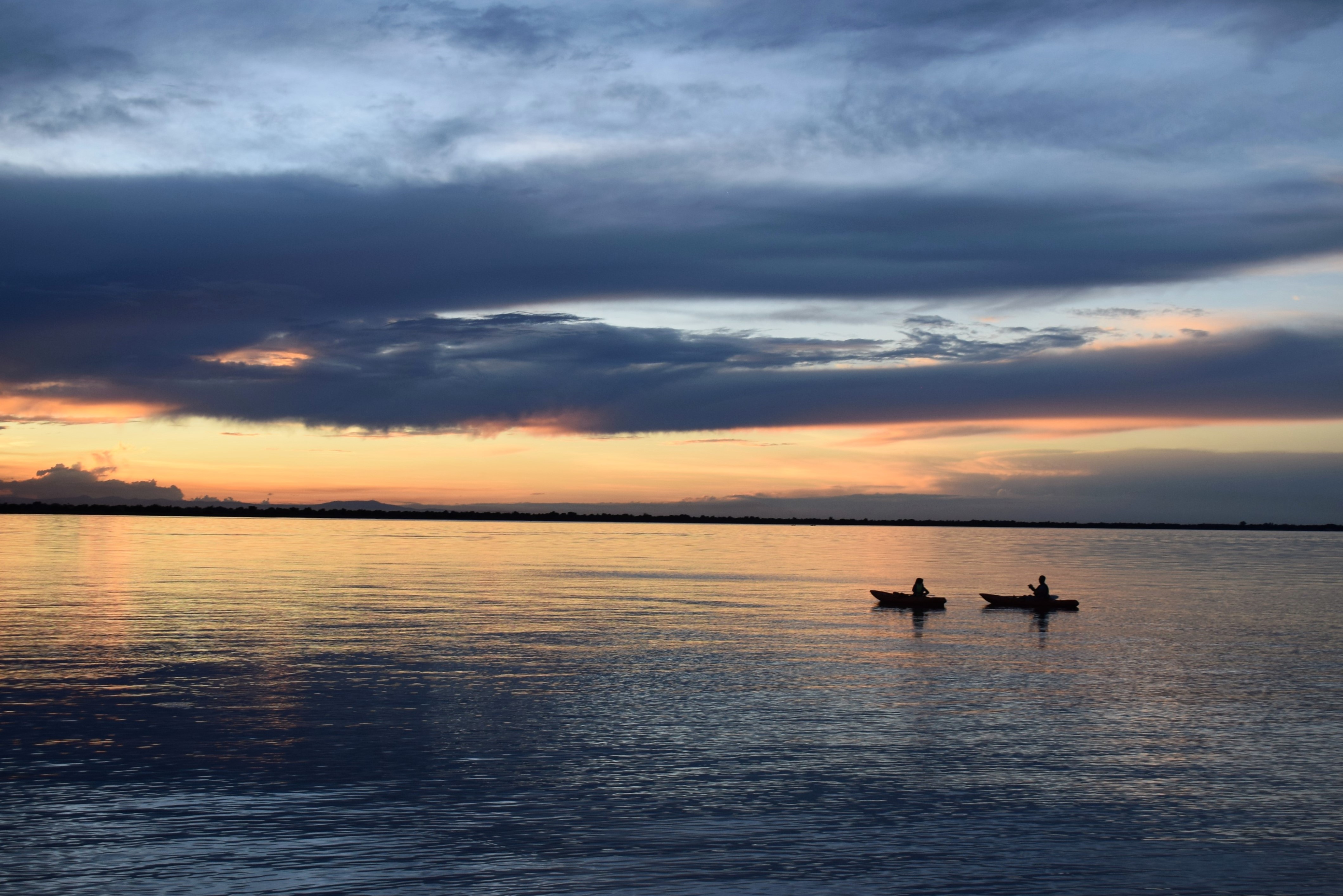
Back on the island, the kids were still in the pool as we watched an extraordinary sunset. In my experience, sunsets in Malawi are usually fiery but short lived, but this one was a languid slip of colors until night. Stunning.

We all had dinner together and then C and I headed off to our chalet. I was looking forward to a restful slumber lulled to sleep by the lake lapping against our deck. But in the darkness, winds had whipped up somewhere along the lake and white-capped waves were rolling hard across the lake’s surface, crashing into our deck, even splashing water into the chalet. Lake Malawi was doing its best to mimic an unsettled ocean. Instead of sleeping peacefully, I lay wide awake for several hours listening.

Despite this (or because of it?), I woke early to watch the sunrise. The lake’s mood had changed completely. Gone was the sunny disposition of the day before, replaced instead with a steely temperament. Still, the dramatic water and skies had their own beauty. I watched as the sun slowly lit up the hills across the lake and a rainbow formed. Like the drawn-out sunset of the night before, this rainbow also defied the norm, staying firmly in place fifteen minutes or more.

Though the waters were rough and uninviting for kayaking or swimming, the temperature was perfect for a walk. After breakfast, C, her friend AR, and another family of four, and I headed out on a 45-minute walk around and over the top of the island. The trail was better marked and easier than the one we had taken on Mumbo Island last month but Nankhoma Island is larger than Mumbo. And we had a proper hiking party.

After the trail walk, the kids headed right to the pool for another epic day of swimming. I had a massage — in an open-air spa facing the lake — and then did some reading and photography. The lake waters never calmed down for any further water activity.

But it did not really matter; it was a great weekend regardless. I was able to set aside thoughts of work and the upcoming move and relax. Just two hours by car and a 15-minute boat ride, Blue Zebra is a perfect antidote to the capital. C had a chance to play with other kids, to let loose in a way we have not really been able to in a year. I could chat and laugh with a group of adults – with others who work at the Embassy but are not State Department (USAID, PEPFAR, Peace Corps). It has been a really long time since the Embassy has had social events. And this is an extraordinary group of people. I did feel a sense of regret that I was getting to know this group of people just as C and I are preparing to leave. For three years we have watched others leave and now it us who are the ones leaving.

Over the course of our time in Malawi, I have driven with C all over. We went as far north as Nkhata Bay and as far south as Thyolo and more than a few times east and southeast to points on the lake. I have worked out that I put approximately 5500 miles on my sweet silver Japanese RAV4 on driving holidays around this country. I wish we had more time to get in a few more, but I have to accept that this was our last road trip.

The Countdown Begins: 100 Days Left in Malawi

100 days. Oh my goodness. It does not seem like anywhere near enough time, but it is all the time we have left in Malawi. After nearly four years, it is time for us to wind down this tour and prepare for the next part in this grand adventure.

There is SO much to do to prepare! I have been able to already obtain my travel orders, which is the document that lays out all of the employee’s and family member’s costs in moving from Point A to Point B. For me, my travel orders begin with our departure from Lilongwe, time and location of our Home Leave (congressionally mandated time spent in the U.S. reorienting ourselves to our homeland between overseas assignments), training, per diem, the movement and storage of our household goods and personal effects, and finish with our arrival date in Conakry, Guinea. Having my travel orders lets me move forward in obtaining our plane tickets and reserving housing in an apartment that allows for direct billing with the State Department. I have made my requests for both.

This might seem pretty straightforward, but its anything but, especially given so much of the work falls on the employee themselves and much is still mucked up by the COVID-19 pandemic. For example, it is about 100 days from departure. I had a particular date in mind and in the before times, when Ethiopian Airlines flew daily it would not be an issue. But at present Ethiopian Airlines flies in and out of Lilongwe only four times a week. This could change in the next 100 days…or not. Hard to say. Therefore I have requested flights to depart on the closest day available to my preferred date. If schedules change, I can change our flights, but if it goes on too long I would just leave it as is because there are other things riding on our flight, such as reserving a spot on the plane for my cat. Organizing international pet travel is expensive, complicated, and involves some tight timelines. I would rather not make it any harder than it already is. (See here for some examples of past pet travel torture, I mean, experiences)

Additionally, right now I have some gaps in my training schedule as our Foreign Service Institute, where U.S. diplomats take the bulk of their training, is taking a conservative approach to scheduling courses. I am eager to fill in those gaps so I do not end up paying out of pocket at DC-level hotel rates, but thus far have not found suitable classes. In one of those weeks there are only three classes available: a State Department familiarization course for locally-employed staff, Iraq familiarization, and an Overseas Building Organization Project Management course. Not of these are remotely related to my current or future work as a political officer in Africa. I still have 100 days for hopefully an appropriate course to present itself, but the time feels short.

That fifth question already has me stumped. #foreignserviceproblems

I need to register my daughter for school for the first time in the U.S. Seems like that ought to be rather straightforward, right? Except I do not have an address in the U.S. I first need one to figure out which school she will attend, and then they are also considered necessary for the registration process. The school district requires an additional two forms of ID with the address on it as secondary residential proofs. As I am not a Virginia resident, I am unlikely to obtain those at all in the course of the 10-11 months I am in the U.S. I am most surely not the first U.S. Foreign Service Officer to move to northern Virginia with a school-aged child, but that does not mean that I won’t be made to feel like I am.

And then there is the preparations for packing up all our things. With a year largely teleworking, I have had a lot more time to look around the house at all the things we have acquired. We have over the past year said goodbye to a few things here and there, but there are many more still in our possession. With what we have remaining, I must determine what to get rid of (to throw away, to donate to the refugee camp or give to staff or others, or to sell) and what to take (either in our suitcase so we have on Home Leave, or place in our Unaccompanied Baggage (UAB), which we will then have shipped via mail to our training address, or pack up and send to storage where it will remain for about a year before we receive it in Guinea.

Every day in my house, everywhere I look, there are so many material things. When I open my closet to dress for the day, I see what I need to parse through — what stays, what goes, what was I thinking? In the cabinets, I see sunscreen and vitamins and toothpaste that all need to be used up, trying to work out the delicate dance of having not too much or too little, but just enough to stretch the next 100 days. Every time I step into my pantry I am greeted with foodstuffs that must be consumed in the next three-and-a-half months. Every room of my house is fraught with decisions staring me down. My Amazon purchases are declining, taking away one of the great pandemic joys of both “revenge bedtime procrastination” shopping and the giddy feeling of receiving our once a week mail delivery.

I am trying to get a head start on this process. I recently thought back to my pack-out from Shanghai and shudder to think of repeating that mess. As the movers packed up C’s room, the living room, and the kitchen, I was madly trying to finish up in my bedroom, including going through a big pile of papers. After many hours the movers declared they were done — except I opened up drawers in both my room and the living room and cabinets in the kitchen only to find items yet to be packed and one of my cats was missing… I feared she had either been packed (it has been known to happen) or had fallen out of one of our 19th floor windows (as I found the window in the guest bedroom where she liked to sit open). Luckily, after lots of searching, I found her wedged between the master bed headboard and the wall; she was not fond of strangers.

We no longer have that cat; we lost her to cancer a year ago, in the midst of the early pandemic. Now, I just have to move one cat, which may or may not be easier. Also, an upside is that we have longer in the U.S. that right now I really only need to work on getting us from Lilongwe, to Home Leave, and then training. Amazing to think that the approximately 11 month we spend in the U.S. will be the longest C has spent continuously in her home country. Our previous stints were mid-April to mid-August 2017 between Shanghai and Malawi and July 2014 to January 2015 between Juarez and Shanghai. This coming fall will be the first we spend in the U.S. since 2014, seven years ago, and spring 2022 will be the first full spring since C was born in 2012. Guinea is on the more distant back end, leaving me a little breathing room before taking up the U.S. to Guinea move.

And I feel I need all the breathing room I can get. Already I can feel the emotional roller coaster of leaving the only place I have lived for four consecutive years since I lived with my parents before college. My almost 9 1/2-year-old daughter has spent nearly half her life in Malawi — she does not remember our time in Mexico, she still talks about our time in Shanghai though it has faded, and the time she has spent in the U.S. is associated with all-fun all-the-time Home Leaves and vacations involving Disney, best friends, and her cousins. Malawi is very much our home.

In recent weeks and months, I have felt a sense of nostalgia wash over me as I drive in Lilongwe or around the country or walk in my neighborhood or around my yard, already feeling a sense of loss for those things I will miss. We have been able to travel a lot around the country, even with the pandemic, and there are many beautiful locations to visit, but even within Lilongwe, one can come across pretty views in all kinds of places.

Left: The entrance to my road, Tobacco Loop, when the flame trees are in full bloom; Right: Light of late afternoon across a maize field in my residential neighborhood while on a recent walk

I will find myself thinking how much I might miss my commute, a particular road or landmark, even if it’s not particularly lovely, but because it has become familiar. The empty fountain at the roundabout on Presidential Way (I think I once saw it with water) that the protestors following the 2019 election spray-painted with graffiti. The guy who sells bananas from a makeshift stone table at the corner of Chayamba and Dunduzu roads. The view of a rock formation jutting out to the east of the city when I hit a certain rise on the road as I head toward the cotton candy pink Golden Peacock shopping complex on my home from the Embassy. I will feel a tug, as I try to commit it to memory for when I am no longer here to experience it first hand. And then some driver will do something ridiculous — like drive 20 kilometers under the speed limit or abandon his/her car in the middle of the road — or I fail to swerve for one of the now-you-see-them-now-you-don’t potholes and I will let loose a choice word or two that one should not use in polite company and then I’ll mutter “100 days to go…” and think about what next I need to do to make that happen.

The Somewhat Reluctant Spring Break

Spring Break. Sigh. This used to be a time I really looked forward to planning a getaway, you know, in the before times, before the pandemic. Although the 2020 Spring Break trip had been upended, at the end of last year it started to look like things we turning around. I had begun to have visions of a 2020 Spring Break Redux. But by the time we returned from our Kenya R&R at the end of 2020, travel again seemed to be in jeopardy.

COVID-19, naturally, continues to throw a major monkey wrench into any sort of international travel. Malawi’s second wave, though subsiding now, had been much more disruptive and deadly than its first. But the indirect effects, the fewer flights, testing regimes, and other restrictions are still in place. Malawi has never been a major hub; before the pandemic there were daily flights to Addis Ababa, Johannesburg, and Nairobi, and less frequent flights to Dar es Salaam, Lusaka, and Harare. Now there are just the Addis, Jo’Burg, and Nairobi flights, and they are less consistent. Friends of ours were to fly to South Africa the previous week and the airline cancelled a few days before without reason.

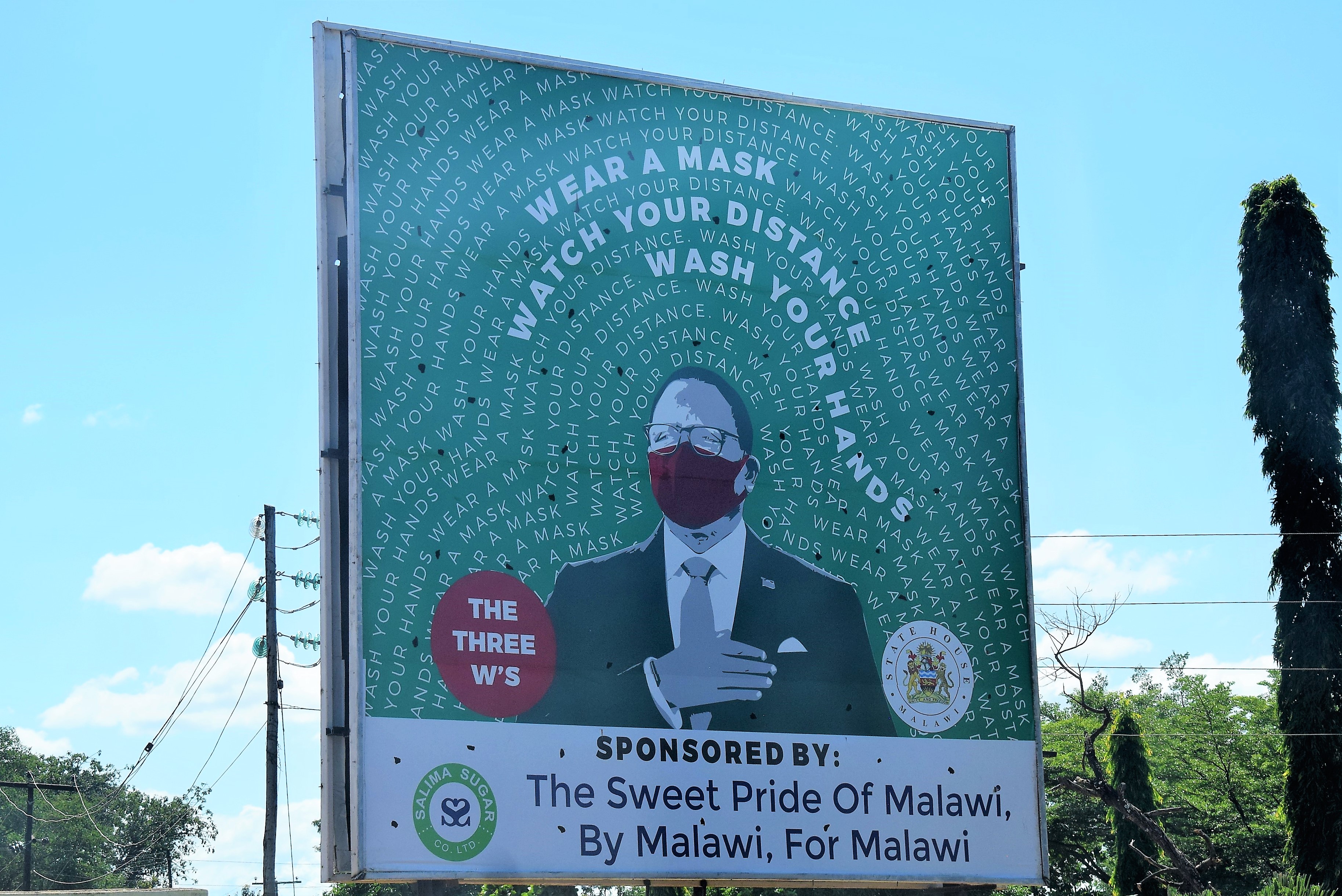
Malawi’s newest COVID-related billboard featuring the President touting the “Three W’s,” i.e. Wear a mask, Watch your distance, Wash your hands

Though honestly, I love travel so much, that I was willing to go through the flight, COVID testing, and mitigation measure gauntlet, but we had another problem: passports. Last fall I noted our diplomatic passports (we hold both diplomatic and tourist passports) were expiring in the summer of 2021 and thus we would need to renew before the new year as many places frown on or even outright disallow travel during the final six months. As the Acting Consular Chief (a post I held for six months during 2020), I diligently applied for our new passports at the end of October. Our paperwork was FedExed to the State Department on November 4. And then, it seems, we got tangled up in the whole U.S. election mail issue / COVID-related mail issue and was lost. (Luckily for most American citizens this is NOT how we do tourist passports overseas and its much faster and more reliable!) I did not know this until by the end of January I wondered what had become of them. We had to apply again. Though we received our new passports by the end of March, it was not in time to plan a vacation outside of Malawi’s borders.

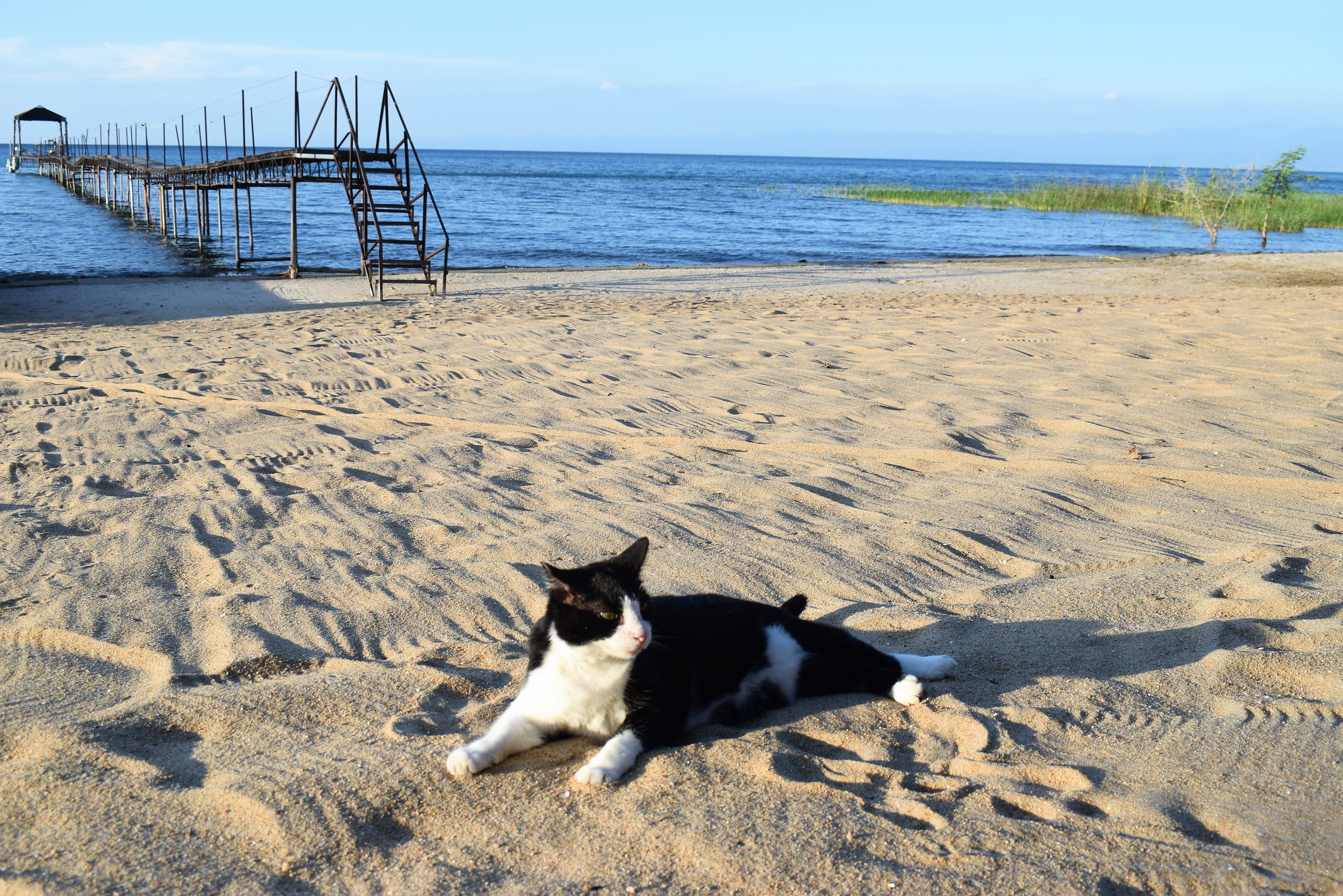
One of the cats of Norman Carr Cottage living her best life

That left a trip within Malawi. And I was torn. With nearly four years in country, even with a pandemic mucking up domestic travel for a good five months of 2020, C and I had already covered most of the major sights and lodging on my Malawi bucket list. Yet, the thought of spending another staycation hanging out in my living room, lounging on the tired dung-colored State Department-issued Drexel Heritage sofa was too much to bear. We needed to go somewhere. Well, truth be told, *I* needed to go somewhere. I am afraid my formerly world traveling companion kid had grown a bit too comfortable with couch surfing. But if I did not get out of my house, I thought I might go mad.

The two major places left on my bucket list seemed out of reach because they were either quite far (two days driving or one really long day for those with a penchant for torture) and still on a self-catering basis (and my desire to drive really far to just cook the same stuff in a different kitchen is at an all time low) or required a charter flight which would trigger an Embassy-imposed stay at home order upon return. And while I was uber-productive with my telework the first six to eight months, my at-home productivity has most certainly waned after a year. And that my friends is actually the understatement of the year. “Working from home” has become an oxymoron as I tend to just stare into the abyss when confronted with this option; I make every effort to go into the office.

With this in mind, I booked two nights on Kayak Africa’s Mumbo Island and one night at Norman Carr Cottage.

With the Mumbo Island transport departing Cape Maclear at 10:30 AM, I was not keen to depart Lilongwe just after sunrise, and thus Norman Carr Cottage, located just south of Monkey Bay, would give us a nice overnight stop and ensure more relaxation. (Note: Embassy employees we are not permitted to drive after dark outside the three major cities of Lilongwe, Blantyre, and Mzuzu for safety reasons)

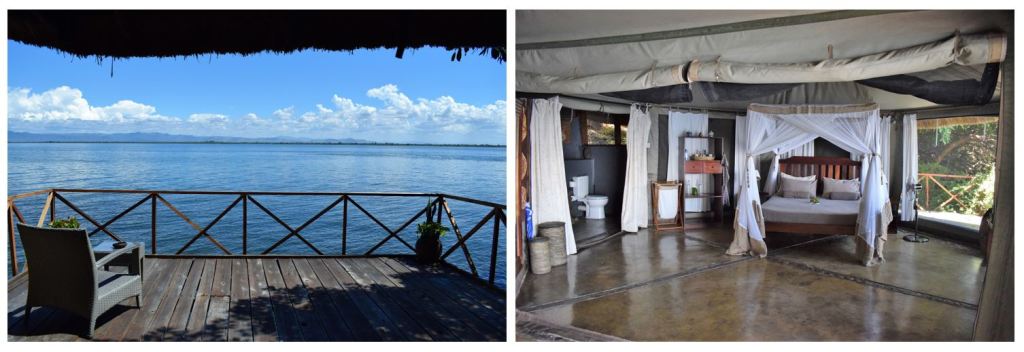
Norman Carr’s original lakeside cottage (left); The beautiful carved bed in our room (right)

Norman Carr was a British conservationist who in the 1950s and 1960s helped launch the first national parks in Malawi, Zambia, and Zimbabwe (then the British protectorate known as the Federation of Rhodesia and Nyasaland) and started the first walking safaris in these countries. In the 1970s he built himself this idyllic lakeside cottage where, reportedly, he wrote several of his books. I love me a little history with my vacations and this bit of Malawi history suited me fine.

We did not do much here, but that was rather the point. We arrived and had lunch. And then my daughter promptly broke one of her flip flops — because she had carefully selected the oldest, on its last legs, pair despite my having presented her with brand new ones a month ago. Sigh. Thus, we found ourselves driving into the thriving metropolitan (just kidding) village of Monkey Bay in search of replacements. We parked at a small grocery store, but they did not have any shoes. They did have soft serve ice cream (will wonders never cease?) and as the young man whose job was to serve this up was preparing to do so, I asked if he knew where we could get shoes. He pointed at a makeshift wood kiosk across the street and we walked over (well, I walked, C hopped on one foot). The small shop sold a random assortment of goods such as clothes detergent and a limited selection of fancy ladies slip ons. I shook my head — these looked like adult sizes — but C said she would try them and in some odd African village version of Cinderella, they fit perfectly.

A view of our eco-chalet from the cove entrance

On our second day, we drove 30 minutes north to Cape Maclear on the Nankumba Peninsula where we boarded a boat for the 10 kilometer (6 miles), 45-minute ride to Mumbo Island, located within the Lake Malawi National Park (and a UNESCO World Heritage Site).

Mumbo Island is a small, only one kilometer in diameter, uninhabited island and the eco-“resort” covers only a small part of that space. Five of the six thatched chalets are perched high on rocks located on an even smaller island connected to Mumbo by a wooden walkway. There is no WiFi, no cellphone signal, and no electricity. And it is beautiful.

After an extremely rainy March, we had perfect weather – temps in the uppers 70s and sparkling azure skies. The lake waters lapped against the sandy shore. I never tire of how the lake seems like the sea.

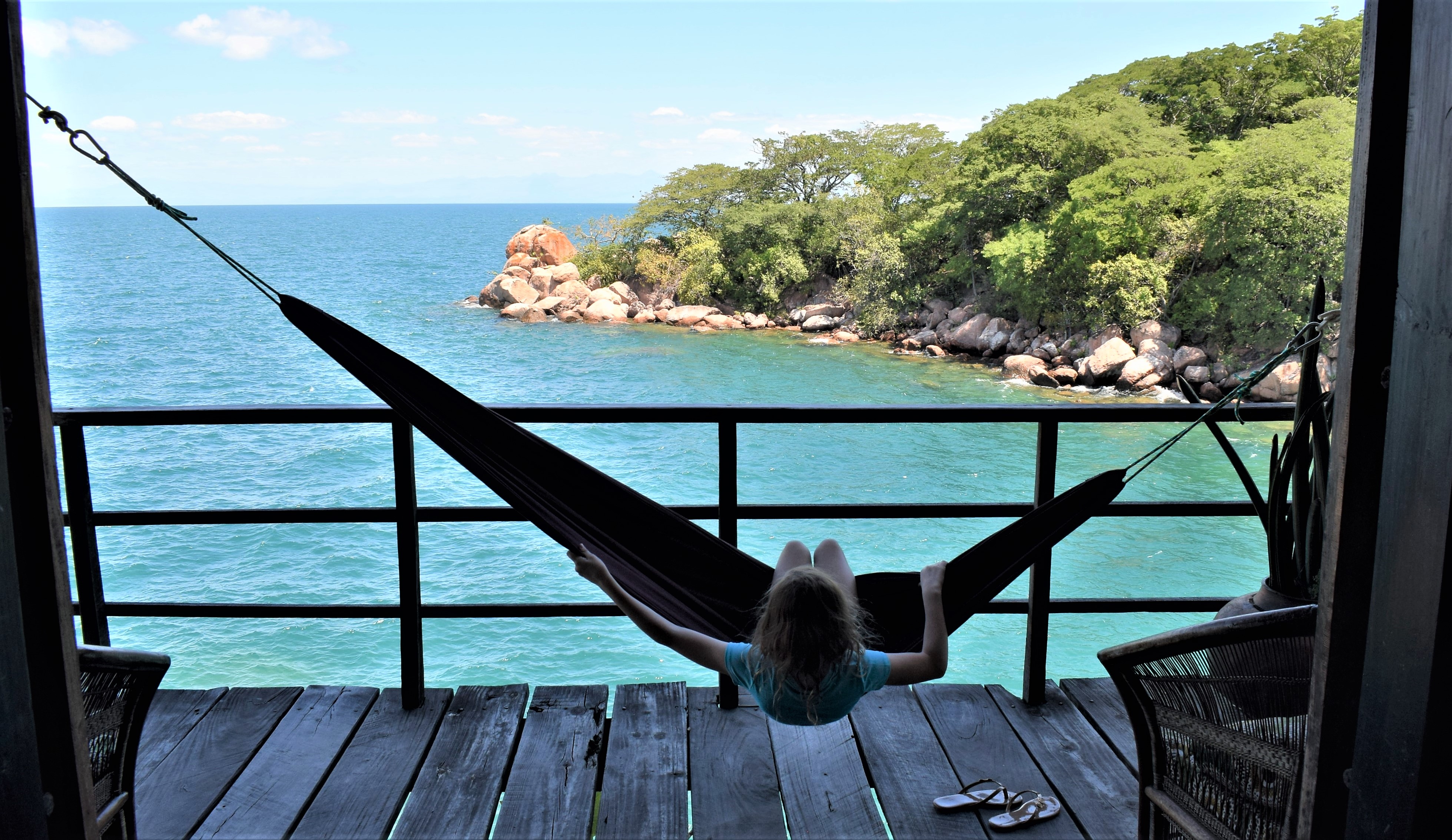
We disembarked from the boat and were shown our chalet, where C immediately claimed the hammock strung across our porch overlooking the Lake. And there we just took a little time to soak in the atmosphere. For the first time in weeks I really could feel myself relax.

We enjoyed a delicious lunch prepared by Douglas, the Mumbo Island chef, in the dining area on the main island. We watched a pair of hornbills alight on a nearby tree and a chatty bulbul waited impatiently on a ceiling rafter hoping for any of our leftovers. Monitor lizards crawled through the underbrush beneath the floorboards and sunned themselves on the rocks by the water. Afterwards, we relaxed in the room, on the small beach, and swam in the lake. Around 5 PM we headed out with Marriott (one of the other Mumbo Island staff) for a circumvention of the island by boat and a sunset viewing. Writing now I was sure we had done more that day, but thinking back, that was all and yet it was full. After dinner, we snuggled together in the hammock watching the stars. With the vast expanse of Lake Malawi lit with only a few fishing canoes, the sky overhead is at its darkest and the stars at their most brilliant. Though the 19th century Scottish explorer David Livingstone reportedly named it the Lake of Stars for the way the fishing lanterns reflected on the evening water, its the incredible view of the night sky that is more arresting. I am quite sure we could clearly see the swath of the Milky Way though I am far less sure of the constellations. Regardless, we talked until we grew sleepy and then we crawled into our beds, letting down the mosquito net but leaving the doors and windows open so we could hear the waves all night.

Early the next morning C again commandeered the hammock, lazily rocking back and forth, flipping her shoe casually from her toes. Exactly as I had asked her not to. And wouldn’t you know it, as I got up to tell her to stop, one of those shoes we had only just bought at Monkey Bay was launched from her foot, sailing over the edge of our porch to the waters below. Sigh. Luckily, we could see it floating below. I told C to put on her suit and I would put on mine and we would swim out to get it. But then realized we could take a kayak to retrieve it. And as luck would have it, one of the Mumbo Island staff was willing to make the rescue. I may have had some choice words regarding her lack of footwear care, but told C one day (in fact later the same day) we would laugh about it. She said I should call this blog post “The Shoe Incidents.”

An extraordinary tree along our Mumbo Island hike and the view from Pod Rock

It is a good thing we located that shoe as after breakfast we headed out on a hike around the island. Not that those fancy lady sandals were the best shoes for a hike, but they were far better than nothing. Our sweaty hike around Mumbo must have taken about an hour though I am not entirely sure as my watch stopped working early in the pandemic and I have not yet bothered to replace it. The hike afforded us incredible opportunities to experience nature from three to four foot monitor lizards scurrying from our paths, symbiotic trees, the high pitched cries of the African fish eagle, and a gorgeous view across the Lake from atop Pod Rock.

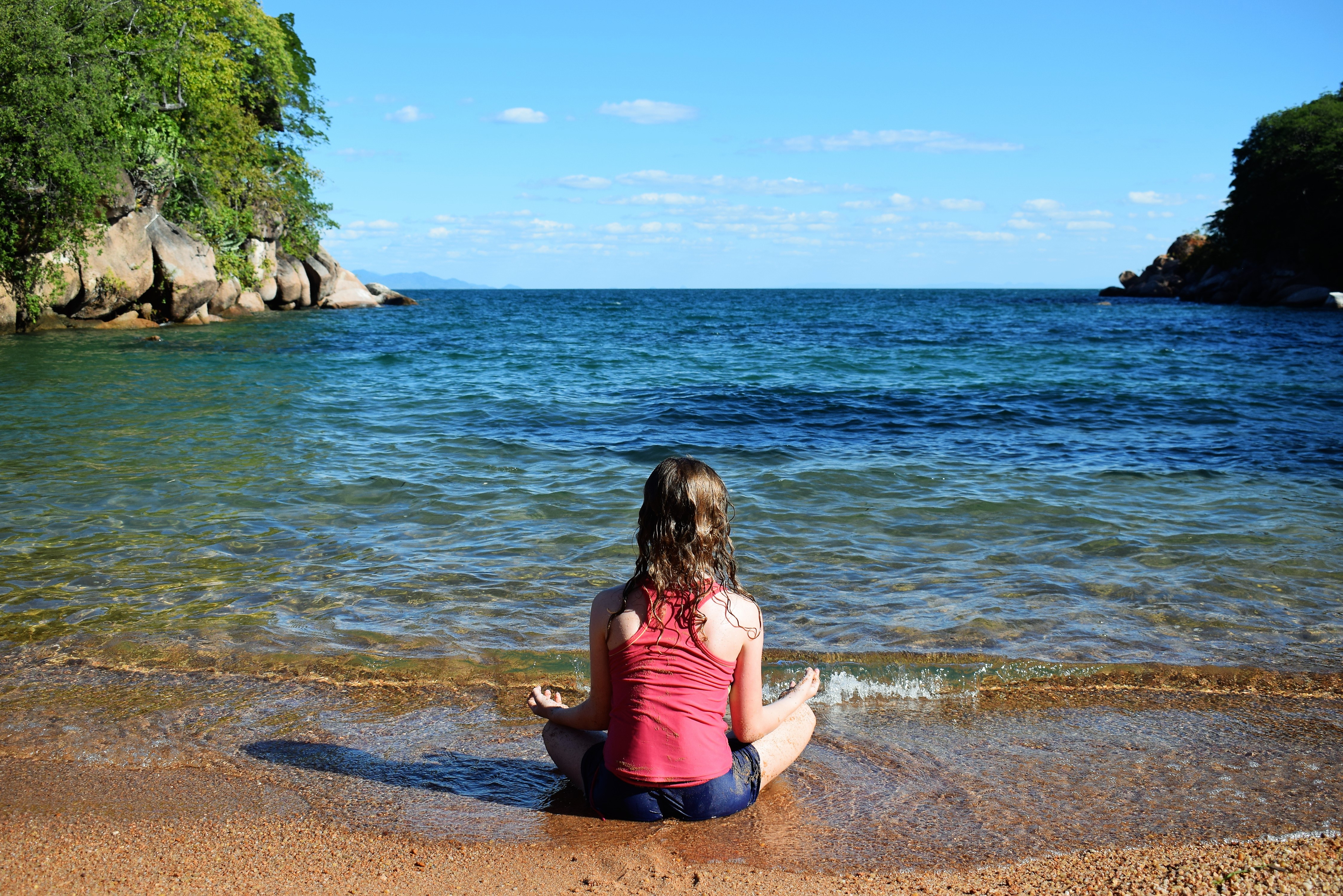
C gets her zen on

We spent the rest of the day alternating between reading flopped on a bed or swinging in the hammock (you can guess who got the hammock again) and lake activity. We kayaked around the small island, swam, and together steadily worked up our courage to leap off the wooden walkway into the water. Eventually, C made friends with the 9-year old daughter of a visiting French family and the two of them spent the rest of the afternoon in one another’s company swimming and giggling, heads together in deep conversation. I sat on the beach in the warm sunlight reading.

We had another nice dinner but headed to bed a bit earlier than the evening before; the hike, kayaking, and swimming surely had tired us out. I had another great sleep lulled by those lightly crashing waves on the rocks below our chalet, and dreamed of rain.

It was hard to leave the following day. I could have stayed another night, maybe two. I meditated on the boat ride back, the warm sun on my face. And before driving back to Lilongwe, we stopped at another small historic site in Cape Maclear, the grave site of 19th century Scottish missionaries.

This may not have been the Spring Break I had initially hoped for but it turned out to be exactly what C and I needed.

Malawi: The COVID Second Wave

When we headed out to Kenya for our Rest and Relaxation (R&R) trip on December 11, things on the COVID-19 front seemed to be looking up. There was of course a second wave already beginning in Europe, the U.S., and South Africa, but the numbers in Malawi had dwindled to almost new cases. In Kenya, there were rising numbers, too, but I had done some personal calculus and decided that if we needed a vacation outside of Malawi (and when I tell you *I* needed a vacation somewhere other than Malawi after a year, I mean it) then Kenya was the place to go.

Yet in the course of our three-week trip, the numbers started again to rise in Malawi and on December 23, with a week left in Kenya, the Malawian government announced a two-week border closure. The idea was to reduce the number of imported cases, though to be honest, these incidents were not of foreigners entering the country, as Malawi is at the end of line and even in a non-pandemic year captures only 1% of Africa’s 67 million tourists, but rather Malawian deportees from South Africa. No border closure that is not closed to citizens (which naturally it would not be) was not going to stop the cases coming in. But it was already too late.

When we returned on December 30, the country registered 83 new cases. For those in countries like the United States, Brazil, India, Turkey, Mexico, or much of Europe, this may seem an incredibly low number and not something to be concerned about. However, Malawi had not registered that number of single day positive cases since August 7. And keep in mind that Malawi is one of the poorest countries in the world. It has one of the lowest doctors per person ratios in the world. In a 2020 Malawi College of Medicine survey of 255 hospitals, only a quarter reported reliable electricity, about a half had hand soap, and only one-third had oxygen supplies. In June 2020, the entire country had only seventeen ventilators and twenty-five intensive care beds for a population of 18 million (in El Paso, Texas, with a population of less than 700,000, there are 400 intensive care beds). Eighty-three positive cases, had they all been serious, would have overwhelmed Malawi’s intensive care facilities.

Soon after our return, C and I headed out to a supermarket and to get takeaway from a restaurant in downtown Lilongwe. In the supermarket, although there were signs at the entrance regarding masks, the vast majority of customers were not wearing any. The two cashiers I saw had theirs hugging their chins. At the cash register, a man got in line behind us and in doing so, brought his mask down to his chin (rather than put it up). At the food court, where several fast food joints serving chicken, ice cream, and pizza, and which was doing a roaring business, only one person other than us had on their mask. The servers, cashiers, patrons and management had no protective equipment at all. When I asked the manager why not, he told me that there were no reasons to do so, no regulations. I knew that to be false as the Lilongwe city government had put a mask policy in place back in July or August, and which included a potential 10,000 Malawi Kwacha ($13) fine for non-compliance. I suspected it was more a matter of little to no enforcement. After having spent the previous three weeks in Kenya where the government was very serious about COVID-19 mitigation measures, this came as a bit of a shock.

Despite the closed borders, there were reports of big gatherings for the holidays. The January 1 newspapers covered the New Year’s Eve events including parties and concerts, one including a South African musician.

Official COVID-19 data from the Public Health Institute of Malawi

Over the next several weeks, we watched as the numbers of positive cases climbed rapidly. Between December 11, which reflected over eight months of the pandemic in Malawi, and January 17, the total confirmed cases doubled. During this time frame, two Cabinet ministers and two other senior government officials died from COVID. The President announced on January 17 the government would impose a curfew (between 9 PM and 5 AM), enforce mask wearing, enforce early closure of markets (5 PM) and drinking establishments (8 PM), and close schools. By January 22, which would turn out to be the reported height of the second wave, the numbers were nearly threefold the eight month total. Between then and February 1, the number would be fourfold. Two more Members of Parliament, two local councilors (district level elected officials), a music icon, and 252 other Malawians died. The numbers then began to decrease. Field hospitals were set up, resources were put into the government response, the international community donated equipment. Parliament postponed the opening of its Mid-Year Budget Review Session as rumors of some 10-40+ of its 193 members were reportedly COVID positive. It took until February 19 to see the five fold increase. Another member of parliament and 291 others in Malawi died. As of February 28, Malawi had surpassed a sixfold increase of its first eight months of COVID, in a three month timeframe.

Though we all breath a bit of a sigh of relief to see those higher numbers of January gone, the current daily numbers still hover around the high marks of the first wave. Although the government reopened schools on February 22, teachers, demanding protective equipment and hazard pay, refused to work. Three days after beginning the postponed parliamentary session, the Speaker of Parliament tested positive for COVID. Yet still, with the first order of vaccines for Malawi expected to arrive soon and the vaccination roll-out to begin some time this month, there is a sense of hope that this is the beginning of the end of the pandemic.

Though we have been living this pandemic for a year now, and we have certainly (largely begrudgingly) adjusted, C and I too are hoping for an end to the pandemic, to a resumption of some sense of normalcy, sooner rather than later (like everyone else on the planet). We have through this year been incredibly lucky compared to so many, and I am grateful we have been able to ride out this challenging time in Malawi, a beautiful country we call home. But we are so ready to have our last months in Malawi be ones without the cloud of the pandemic hanging over us.

R&R in COVID Part 6: The Kenyan Approach to COVID

The sixth and final post in my series on our R&R in the time of COVID.

COVID related graffiti in Mombasa

I did not decide to take my Rest and Relaxation travel in the time of COVID lightly. And my selection of Kenya as a destination had as much to do with its close proximity to Malawi as what I perceived as a fairly robust response to COVID in order to keep the country open for tourism. I liked that only a negative PCR COVID test was required to enter, i.e. no quarantine. But once there I found myself incredibly impressed with the government was handling COVID.

I will say off the bat — this is my opinion on the Kenyan government response based on my perceptions as a tourist there for three weeks in December 2020. Others who have lived through the pandemic in Kenya may have very different thoughts on the government response. However, I looked at it through the lens not only of a traveler but also as someone who has experienced the pandemic firsthand in another sub-Saharan African country, including following the politics closely for my work.

From our first day in Kenya, we felt the effects of government measures to contain the pandemic. The hotel where we stayed first had been closed for several months but then re-opened with temperature checks, hand sanitizing stations, a plastic barrier between the guests and check-in staff, and limited items left in the room (no complimentary pads of paper and pen, no hotel directory, no room service menu). It felt alien, somewhat surreal, and yet I understood that this was part of the contract to which we agreed to travel in the time of COVID.

However, it was really once we got on the road – both out and about in Nairobi and further afield – that I really saw how Kenya was tackling the pandemic.

COVID-19 related signage in Nairobi

Signage was ubiquitous. All around us, in airports, hotels, shopping centers, restaurants, stores, museums, and parks, there were signs reminding the public of the necessity to adhere to COVID-19 mitigation measures (wearing a mask, washing your hands, maintaining social distance) and sometimes the penalties for failure to do so — usually denial of entry into whatever location but also fines. And there was serious follow-through. At every hotel we stayed we were greeted with an antiseptic wash and a thermometer and mask use in public areas was mandatory.

Our hotels in the Masai Mara, Lake Naivasha, and Mombasa were all owned by the same company and each served buffets in large dining areas. I had some concerns with how the hotels would manage this is in a pandemic but they had pretty good systems in place. In one we had a set table for the duration of our stay, at another they provided an envelope for your mask at each sitting. The key part was mask usage while in lines to get food was mandatory as was social distancing and you could not serve your own food. One breakfast at the buffet in Mombasa, some guests did not sufficiently distance themselves from one another while in line for the omelet station and a chef — who could have been a bouncer in another life — informed them they had better spread out or risk being asked to leave. I was impressed.

Billboard in Mombasa

It was maddening getting the food though. In what would normally be self-service, no guest could pick up their own plate from the plate stack or pick up any foodstuffs themselves. You had to point at each item you wanted for a masked and gloved server to provide. This made absolute sense and was no doubt required by the government, but made for some awkward (at least in my own mind) situations. Me to server: I would like some of the mozzarella, please. The server places one slice of cheese on my plate. Me: May I have some more, please. The server places another slice on the plate. Me: I would really like a few more slices, thank you. And then me feeling as if I needed to slink off and guiltily eat my bounty of cheese excess (or hummus — I asked for a lot of hummus too) away from judging eyes.

While our mask usage has been somewhat limited in Malawi (mostly because we spend so much time at home with the limited places to go; school-when it is in session, work-when I got to the office, the once a week supermarket run, and when picking up food) it became much more regular in Kenya. Except for when we were in our respective rooms, we needed our masks on. To enter any shopping center we had to pass through a combined security (metal detector, bag search) and COVID mitigation measure (handwashing, temperature check, face mask) check. Even once inside the mall, most individual stores also placed workers at the entrance to confirm face mask usage and to squirt anti-septic into the hands of every customer.

Graffiti in support of Kenyan health workers in COVID in Mombasa

In was in Mombasa that the Kenyan government and societal efforts to fight the pandemic really came to the fore. Here we stayed at our busiest and most crowded hotel, yet they had the most rigorous COVID-19 mitigation measures. And out on the town there were prominent signs – eye-catching billboards and stunning graffiti – promoting mitigation measures and celebrating health care staff. And perhaps the most extraordinary was that everyone was wearing masks. I mean everyone. As we took a taxi from the airport to the hotel, I noted the many mini buses in traffic. I asked our driver about them and he complained about their poor driving and that they didn’t really follow the rules, but as I looked over at them and saw that middle seats were empty and every passenger had on a mask. That had lasted about all of a week in Malawi. As we drove through traffic — on that trip and on our city tour — we saw lots of pedestrians on the road and they were all wearing masks. In Malawi, earlier in the pandemic there was an uptick in mask usage even with the pedestrians who walk to work along the roadside, but again, that practice only lasted a short period. And perhaps the most extraordinary sight were the beggars in traffic, also all masked up.

A tuk tuk driver in Mombasa shows off his masked stuffed companion

Transportation also seemed to take COVID seriously. In Nairobi we used Uber, and every ride we booked reminded us that we needed to wear masks in the vehicle and guaranteed that our driver would do the same. Some drivers took extra steps, providing antiseptic wipes or liquid in the back pockets of the front seats or even installed a plastic barrier between the driver and passenger. Maybe this is happening all over the world, but I have only experienced the pandemic in Malawi and Kenya. And I do not take public transportation in Lilongwe. But I was nonetheless impressed with the Kenyan approach to transport during COVID.

The final bit that impressed me was when we went to the Nairobi Hospital to get our testing for our return. Searching online for testing sites I was overwhelmed with the options and asked the very helpful hotel manager for assistance. He had a doctor on speed dial at the Nairobi Hospital and rang her for advice. She suggested that we arrive early in the morning on a Monday and sent us all the forms to complete prior to showing up. We arrived around 8 in the morning to the COVID testing center set up in the front parking lot of the hospital. We were immediately greeted by a medical assistant in full Personal Protective Equipment (PPE) who took our forms and asked us to sit in the outdoor waiting area where plastic chairs were set out for social distancing. Compare this to our experience in Malawi where the single person on duty for testing failed to wear even a mask as he greeted us (though changed later) and ran out of forms. And as we sat in the waiting area new patients, people we did not know, sat down *right* next to us despite many other seats available.

We waited maybe 15 minutes before being called into another tent to pay for the procedure. The cashier accepted only cashless payment — either by credit card or electronic payment. We were promptly issued a printed out receipt. While back in Malawi they were unprepared to accept payment on the day of our testing and on the day we picked up our test results we had to meander through the hospital to find the payment location, where we paid in cash and they hand wrote us receipts that were not easy to read (and no wonder that later at least one person was later arrested for providing fake certificates). After payment in Nairobi, we returned to the outdoor waiting area before being called up to the testing tent where they administered both a nose and a throat swab. And then we were done. Before 6 PM that evening I received an email from the hospital with our test results! Again compare that to Malawi where we returned to the hospital (and again entered the building) several days later and had to assist the staff to sift through the papers to find those with our names on them. The organization in Nairobi was excellent.

My absolute favorite COVID related signage found at the Karura Forest in Nairobi

There are so many misconceptions about COVID in Africa and about Africa itself. We have heard in Malawi, like in other countries, there are some that do not believe the virus is real, that it is some kind of ploy. There are also those who think that COVID is a western disease and that Africans are less susceptible (and given the African continent makes up less than 4% of total worldwide reported infections it is not so hard to see where this perception is not far from the truth). But there are also those outside the continent who I suspect think that an African country cannot manage an organized response — and they would be wrong. I thought Malawi had done OK given its limited resources, but Kenya demonstrated how a country could really respond. I know its not universal; I did not visit small towns or villages and I heard anecdotally that those places were not fairing as well. Yet the majority of cases generally happen in cities with their denser populations. I also know its not perfect — Kenya still has had relatively high numbers – with about the 9th highest numbers among 57 African countries and territories – but it is also the 7th most populous country on the continent. If it were not for the actions of the government and the population it is likely that it could have been much worse.

For us this R&R will be forever and inextricably linked to the COVID pandemic. As will my impressions of how the country made our trip generally safe in the time of COVID.

R&R in COVID Part 5: Nairobi Time

The fifth in my series on our R&R in the time of COVID.

Following our adventures in the Mara, at Lake Naivasha, and Mombasa, it was time to wrap up our trip with a final week in Nairobi. In normal times, I would not be keen to spend this many days in one place; we could have visited two, maybe three, places. But COVID has rendered travel to nothing but normal. In order to return to Malawi we needed to get another negative COVID test certificate and thus we had to spend the last part of our vacation in Nairobi and given the pandemic and the holidays it made sense to spend more time there just in case anything might delay our ability to get testing.

This factored into my calculus for planning my trip. Not only did I want to visit a country with plenty for us to see and do, but to stay in a capital city that would also offer us the same during an overly long stopover. Nairobi offered that over our other choices.

We returned from Mombasa in the early afternoon, headed back to the same business hotel we had stayed on our first night, left our luggage, and immediately headed out to Westgate Shopping Mall. There we strolled the walkways, rode the escalators, and shopped. We also had a late lunch. This might not seem like much, but Malawi does not have shopping malls. Well, there is one, Gateway, that tries to pass itself off as the one and only mall in Lilongwe, but while it is an enclosed shopping complex, its two meh supermarkets, a bank, a Poundstretcher (like a Dollar Store), a salon, a shoe store, a children’s clothing store, and a few restaurants, do not, in my opinion, a mall make. Nairobi though has malls. It is rich in them. And while there is security (armed guards, metal detectors, pat downs) and COVID requirements (masks, hand washing, social distancing as much as possible), we were keen to live it up just as much as watching a cheetah on the plains of the Mara.

That is all we did — our late lunch and some groceries sustained us for the rest of the day. Our following day we had a late start — not something we had done much of on our trip thus far — and then head out again to the Junction Mall. It was nice enough with a different layout though many of the same stores as Westgate. Two malls in two days and I could already feel a sense of malaise fall over me. Though I doubt it had much to do with the mall. We had been away from home already for nearly two weeks after having not been on a vacation longer than four days in a year. We had been home, literally isolated in and around our house, for half a year. I know I had desperately wanted not just time away from home, but time traveling in another country. But the fatigue of traveling had set in. Good thing I had a little something up my sleeve to combat at least some of it while in Nairobi.

The Karen Blixen home, estate, and museum in Karen District, Nairobi

On the morning of December 24, C and I checked out of our hotel and head to The Hub Karen. Yes, another mall, but that’s okay. It had a few things that the others had not, including a Dominos Pizza. And it was open at 9 AM. And we ate breakfast there. Go ahead and judge if you want. Though Dominos is not my thing while in the U.S. its pizza was the best pizza ever on that drizzly Christmas Eve morning. We then hailed an Uber (yes, they have Uber in Nairobi! Yet, in Malawi there isn’t even a regular taxi service) and headed to the Karen Blixen museum.

I could not visit Nairobi without a pilgrimage to the Out of Africa author’s home. It had been probably two decades since I had watched the film, but I had never forgotten the story. A love story, not only of a strong woman in the early decades of the 20th century but of the affection she developed for a country and a people not her own. Of course its not so straight forward and my thoughts on it have changed as I have grown older and with my own experience in Africa, but C and I enjoyed a one hour tour of the home and grounds (perhaps I enjoyed it quite a bit more than C). We then headed to the parking lot where our transport to our next destination awaited.

Scenes from day one at Giraffe Manor. Left: Christmas Combined with Giraffes – part of the beautiful spread at our Christmas Eve high tea with giraffes. Center: I have her eating out of my hand. Right: A view of our stunning room, the Betty

Giraffe Manor, the beautiful 1930s colonial manor house set in the Karen suburbs of Nairobi that houses a dozen-strong herd of Rothschild’s giraffe on its expansive grounds, is one of the most well known hotel properties in the world. I have long wanted to stay here but years ago a search that revealed its nightly rate and a rumored 18-month wait list made it seem a bucket list item that would always remain unchecked. Yet with Kenya looking like a best choice for an R&R, I revisited this particular dream.

I’ll be honest off the bat: this place is not inexpensive. I spent many years traveling on a shoestring budget and though today I travel differently I still cannot help but try to stretch my vacation dollar. Yet after a year of no travel, of canceling multiple domestic and international trips in 2020, I had money to burn and a desire to “go big or go home.” I wanted to make Christmas special for both C and I after a very challenging nine months. And amazingly enough, this much sought after property had space available two months out from Christmas. I might have planned almost the entirety of our trip to Kenya on being able to stay at Giraffe Manor.

There is a large animal outside!

On arrival we were greeted as VIP guests. We started off with a welcome drink and then shown to our room — the Betty room in the main Manor House. I cannot imagine there is a single room that isn’t gorgeous at this property, but we scored big with the Betty. As a corner room on the upper front of the manor we were afforded views south across the 12 acres of land that house the resident giraffes and to the west, from our patio, we could see out to the Ngong hills of Out of Africa fame.

Unlike other places we had stayed, Giraffe Manor was nearly at capacity — though there are only 12 rooms in total. Besides us there was a couple from Colorado, a newlywed couple from Mexico City, a family of 12 from New York, a family of four (I think from India), two couples and a child from Eastern Europe, and one more couple who stayed very much to themselves (which is totally natural, especially in the time of COVID). We were served a lovely two course lunch and then C and I requested a trip to the adjacent Giraffe Center.

The Giraffe Center was established in 1979, directly adjacent to Giraffe Manor. I knew we could walk there from the manor but had not realized exactly how close the two were and that walking would require an escort given that we were off the manor’s immediate lawn and into the giraffe’s grazing area. At the center we could learn all about giraffes, the conservation programs to protect, rehabilitate, and breed the endangered Rothschild’s giraffes, a subspecies found only in East Africa. We also got our first up and personal experience with the giraffes of the manor, in particular which ones were more tame than others.

C feeds a giraffe — the patio of our room is visible just behind

We returned to the manor for an hour wait before high tea and our first manor experience with the resident giraffes. Out our window we could see the giraffes, especially the more eager, slowly move their grazing closer and closer to the manor lawn. The food set up was beautiful (though the gorgeous cake turned out to be fruit cake! Not a big favorite of mine — or anyone I know!). Once we dug into our tea the giraffe pellets were brought out by the bucketful. And the giraffes who had not already arrived made their way to the feeding area. The resident warthogs joined as well, as they know what the giraffes miss, they get.

Nothing is quite like feeding a wild animal from your hand, especially a 14 foot tall, 1500 pound animal who will hoover the pellets from your hand in seconds with a lick of their 20 inch long tongues. And if you want one of those cool pictures of you facing the camera with giraffes on both sides literally eating out of your hands, then you better hope the photographer is quick, because if you run out of pellets too quickly some of these hungry giraffes with little patience might just butt you with their massive heads to urge you to get some more. It might be a love pat, a little reminder to hold up your end of the deal, but it feels like anything but. After an amazing hour of snacking and giraffe feeding the guests retired to their rooms to prepare for dinner, which was served by candlelight on the moonlit patio under the stars.

We waited up to hear Santa given the Giraffe Manor managers had told her that in Africa Santa lands at Giraffe Manor to hitch up the giraffe for the continent’s deliveries, giving the reindeer a much needed break. As we watched NORAD’s Santa tracker near Nairobi we quickly switched off the lights and lay still and C is one hundred percent sure she heard the sleigh land. We were up at 6 AM on Christmas day with the sounds of shuffling and snorting of giraffes on the hunt for more pellets.

Feed us now! Left: Giraffes get a breakfast snack; Center: Giraffe looking up to our patio; Right: Giraffe bursts into the breakfast nook

It was extraordinary to look off the patio balcony to find giraffes on the lower patio, making their way a little clumsily across the brickwork to snarf up snacks from robed guests. But we had a bucket of pellets too and it did not take long for at least one giraffe to notice us and shuffle over. I never thought we would have the opportunity to look down on a giraffe. We headed down to breakfast where first the humans eat and then after the human plates are cleared, plates are placed on the tables with more giraffe pellets and the large windows are opened for the giraffes to poke their heads in, butting the humans out of the way as they gobble up those pellets!

Check out was at 10 AM. Lots of people have asked me — was it worth it for the price? And I will say that yes, one hundred percent, for my daughter and I it was worth it. It is a one of a kind, unique experience that at any time would be amazing. At this time, with us really craving something wonderful, it was perfect. The only issue is how to top it for future Christmases?

Well, actually, within hours, once back into the same business hotel we had been in before, another issue popped up. Most times with Christmas with kids there is so much build up to the event. Months of planning, of carefully reviewing Christmas lists and other signs, and shopping — especially when overseas and one needs to order by early November to guarantee a by-Christmas delivery, then Christmas Eve traditions, and the frenzy of gift opening on Christmas morning. By Christmas afternoon there is this sudden lull, a sense of emptiness. After our visit to Giraffe Manor, this felt even more pronounced.

C rides the Eye of Kenya

Over the next few days we continued to keep busy. We visited the Nairobi National Museum, which though huge, was one of the best I have visited in a developing country and the building itself and the sculpture out front were worth seeing. Even more exciting though was the co-located Snake Park. It was not much extra and seemed a good enough thing to do to while away some time, but as we turned a corner in the area we came face to face with an Egyptian cobra out of its enclosure! No worries, there was a snake handler complete with one of those snake catching things you can on National Geographic’s Snakes in the City. After that unexpected excitement we met up with a friend of mine working with USAID in Kenya whom I had met in book club in Jakarta. She took us to eat good Mexican food (shut the front door!) and then to the Two Rivers Mall. The mall was not all we had hoped as several entertainment venues were closed due to COVID and yet the place was really crowded, which made me uncomfortable. We rode the ‘Eye of Kenya’ the observation wheel outside the mall — not as fabulous as wheels I have ridden in London, Singapore, or Paris, but still a fun little ride that gives a glimpse of the mall and how urbanization of Nairobi has — or will soon — reach these suburbs.

On our next to last full day we headed to the Nairobi hospital to get our return to Malawi COVID tests and then joined a very small tour (us and one other guy — and Economist from Sudan who lives in France) to the Nairobi National Park. The park itself is quite extraordinary – established in 1946 as Kenya’s first game reserve and the only such park in the world that sits so close to a capital city. Just five miles from Nairobi’s Central Business District, the park is fenced on three sides, but open to the south for migratory animals. Its variety of bird and animal species, including big cats and rhino, is extraordinary for a park its size. However, we had just been to the Maasai Mara just two weeks before and while a great place that should be supported, it could not compared. On our final day, we spent the morning on the walking trails of Karura Forest, another excellent urban park. Its well marked trails and sporting facilities another reminder of how something simple like this can transform a location. How I wished Lilongwe had a place like this; it would have made getting through the pandemic that much better.

Left: Zebra in Nairobi National Park with a plane coming in for a landing at Wilson Airport in the background; Right: C on the trail at Karura Forest

After nearly three wonderful weeks in Kenya, it was time to return to Malawi. While we were glad to be going home – because Malawi after three and a half years is very much our home and we missed it, pandemic and all. There still remained uncertainty of when we might be able to travel again, but I am glad we jumped at the chance to spend our R&R in Kenya.