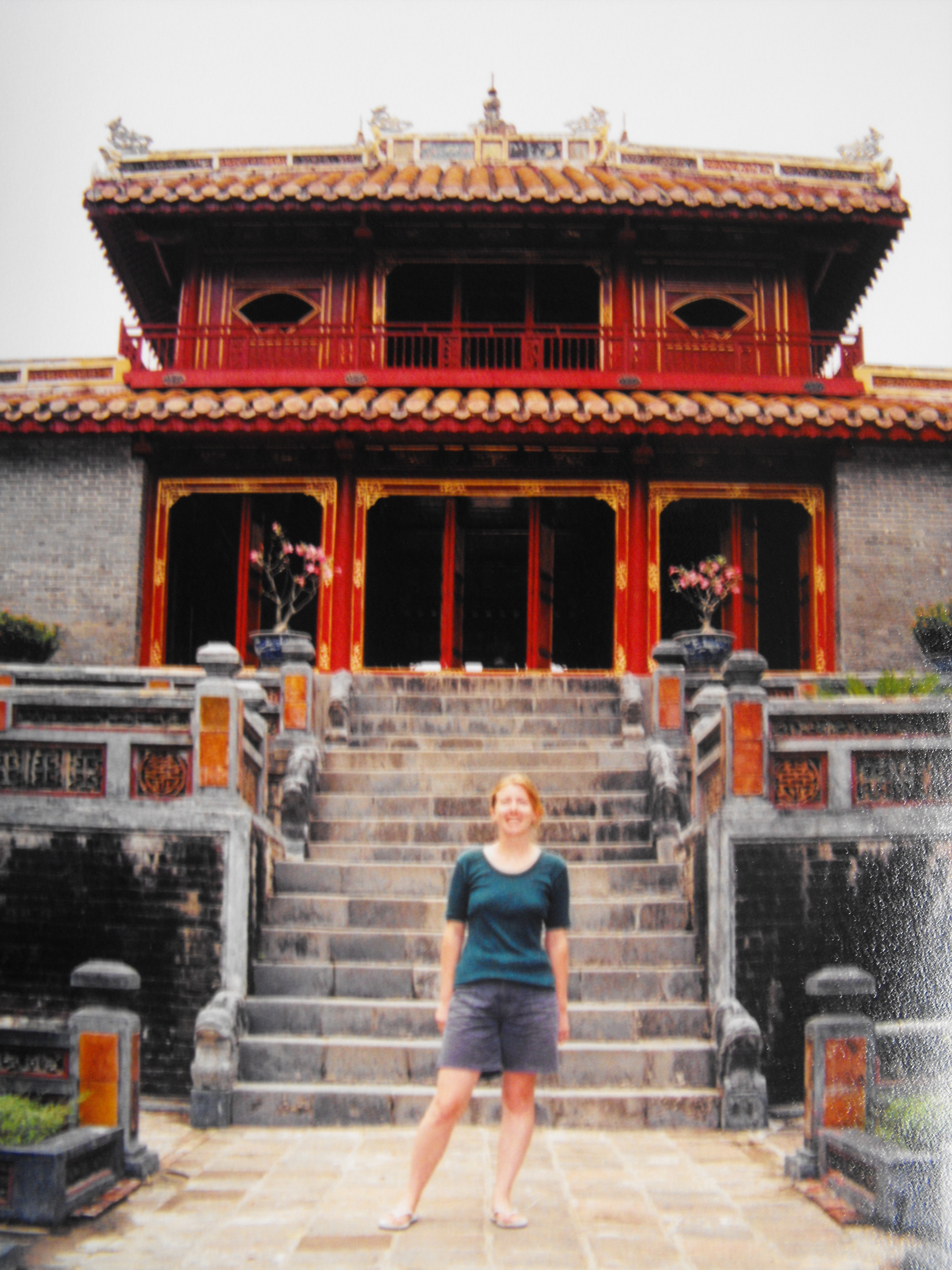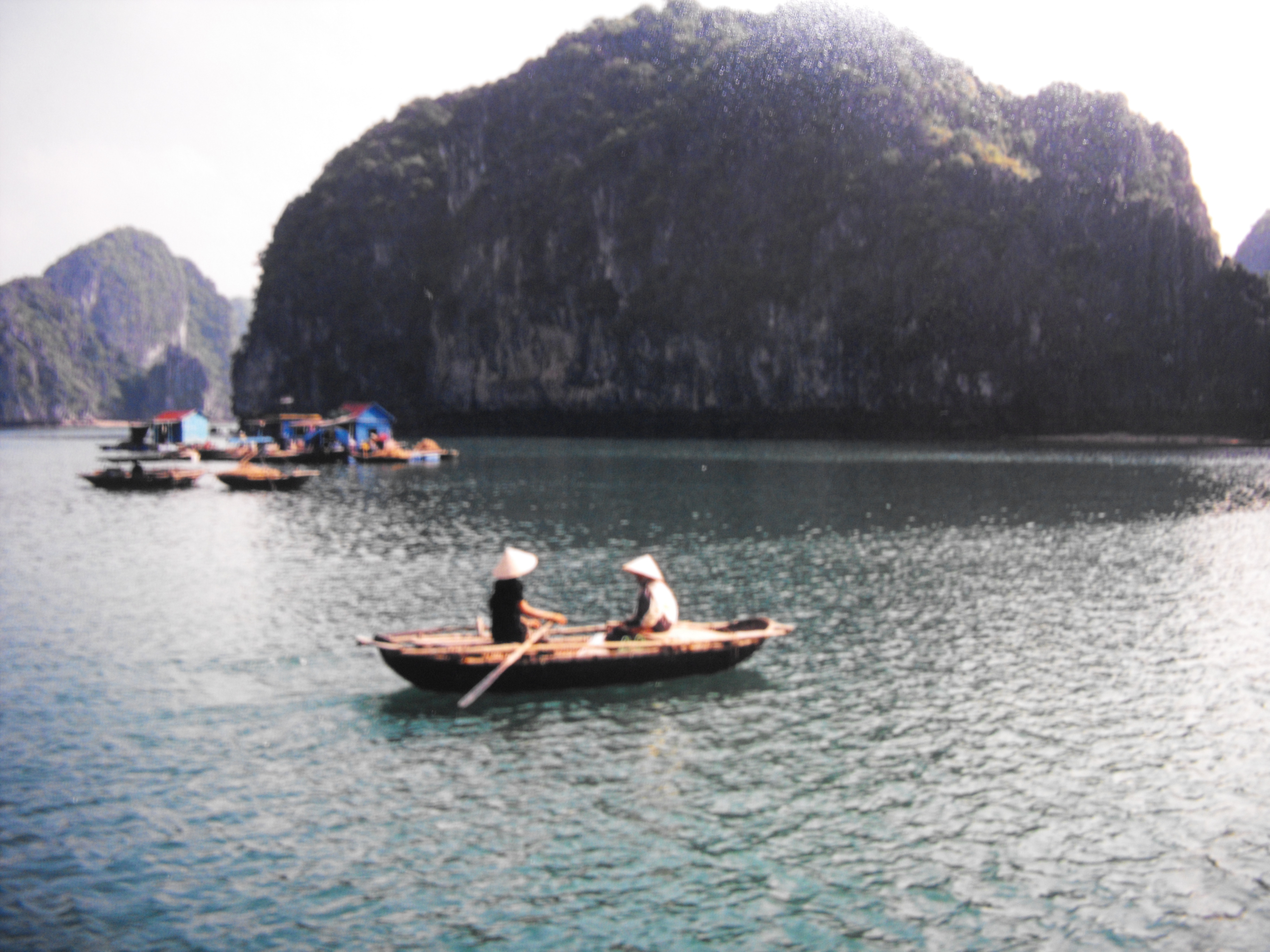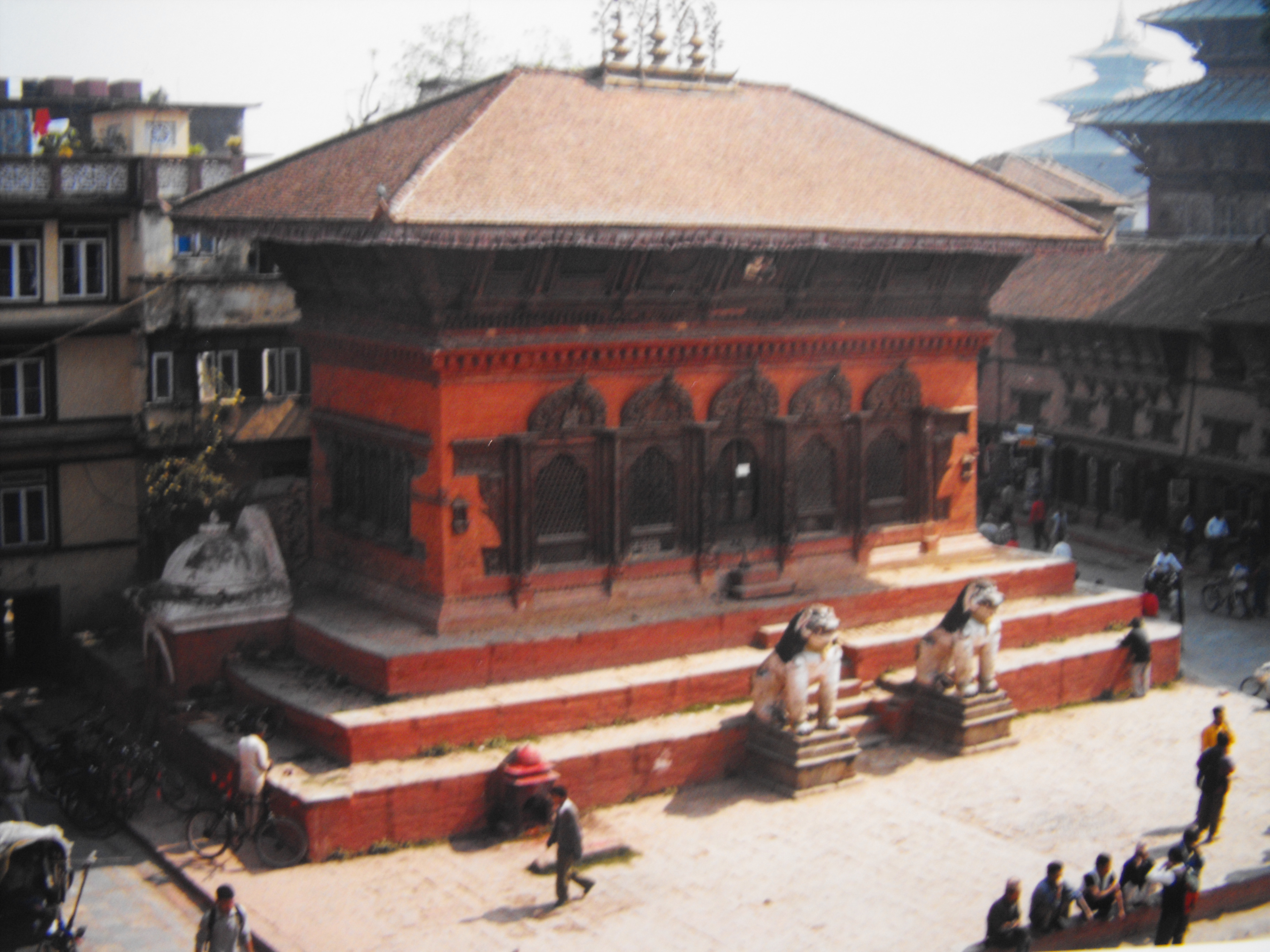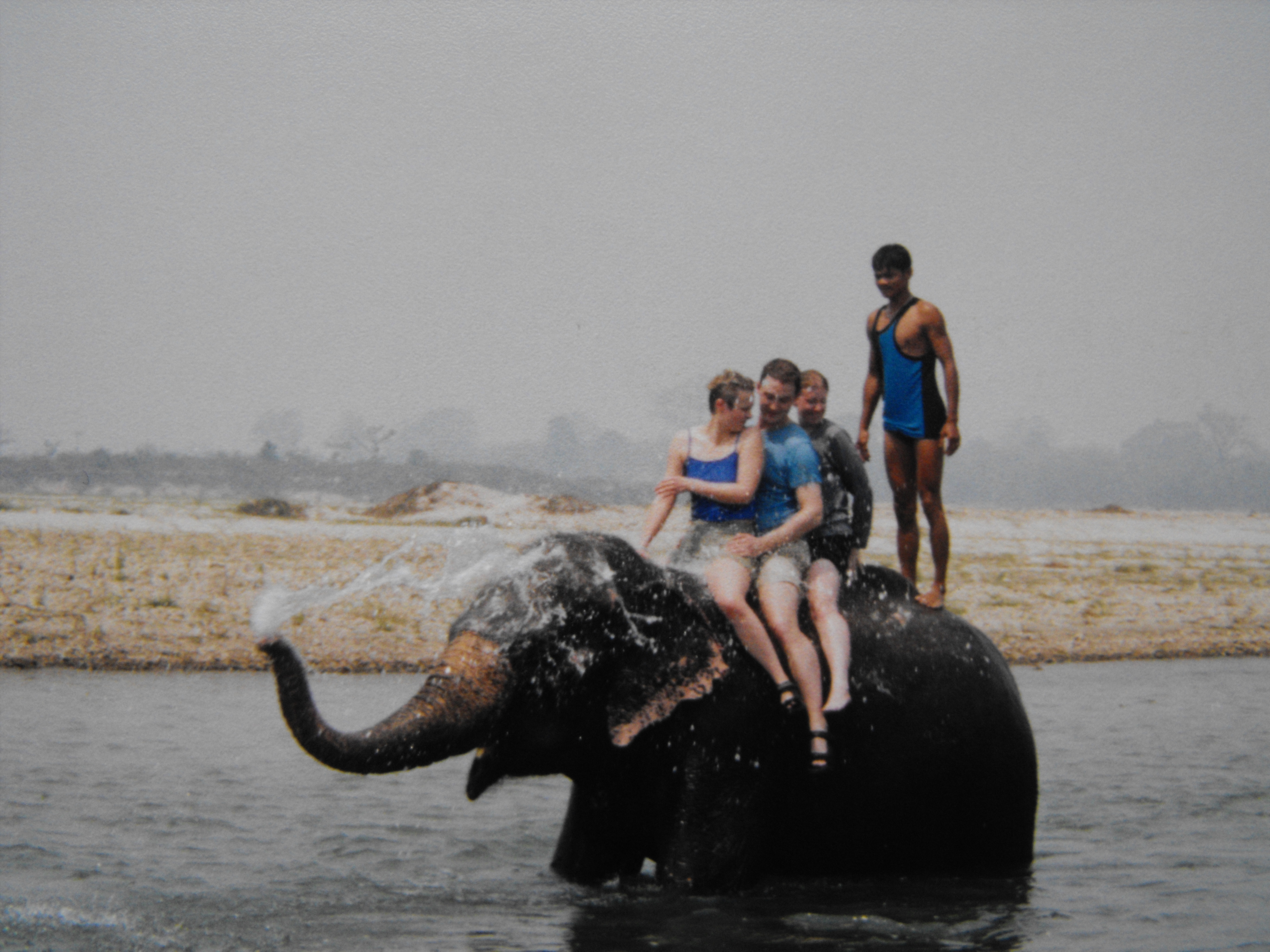
I Love You Backpacking Long Time – Part Four Hungary to Bulgaria

Hungary got off to a rough start. I dislike arriving in a new country after dark. If I had stayed the night at the unfriendly hostel in Zagreb I would have arrived in Pecs early afternoon the next day. Instead I arrived at Pecs after 9 pm. The train station was a ghost town. No money changers or restaurants or anything at all was open. I had no idea the exchange rate or the direction to go for the hostel. I went to an ATM to withdrawal money. I went with 2000 forint and hoped that I was not withdrawing my life savings. Then I found a taxi.

I arrived after dark with no map of the city and no bearings. I had only the name of a hotel from my youth hostel guide. I probably could have walked – it would only have been about 30 minutes – but I did not know in what direction to go. So I took a taxi and was ripped off royally. The taxi ride, according to the hotel desk clerk, should have cost me only 600 forints, but the driver’s meter moved at a furious pace and it cost me 2000! I was so tired I just wanted to cry because it was all the money I had just taken out of the ATM and I was hungry but I had no money to buy food. The hotel was more expensive than I thought as there were no single rooms. However they were nice enough to let me pay the following day when I could get some money. The hotel was pretty nice and the staff was extremely kind.

The next day though I learned the exchange rate was quite in my favor making the 2000 forints only about US$7 and Pecs turned out to be a very pretty town. After two days I headed to Budapest.

DSCF0312

A little Buda and a little Pest

I did not write much on Budapest. My time there was a lovely respite after the realities of the Balkans and the coming craziness of Romania. I took day trips to Szentendre and Eger, the latter where I had a glass of the famous local red wine with my Hungarian pizza lunch and then walked delightfully buzzed through the castle. (I rarely drink so one strong Hungarian red was quite the treat) I walked both hilly Buda and flat Pest, crossing the Danube multiple times. I soaked in the Turkish baths and sat languidly in parks overlooking the city. I even eschewed my usual alone time and hung out with several other backpackers from the hostel, most of whom were also taking breaks from the rigors of the road while in Budapest. I played billiards at the hostel and even made out with a fellow backpacker (ha! I bet you were beginning to think I was too prudish for such a thing.) Budapest seemed to be the place to let my hair down.

It was a good thing because Romania was about to test my traveler mettle.

Romania. So far it has been quite a test for me. I took an overnight train from Budapest. When I bought my ticket I picked up a handy flyer on how to stay safe on the train. One tip was not to sit in a train compartment alone. Unfortunately I was the only person in my compartment and there seemed only ten other people in the whole car. I thought other people might come in, but no one ever did. As a result I felt a bit uncomfortable sleeping. The pamphlet mentioned that many compartment doors, when closed, could not be opened from the outside. Not my compartment door. I had a bicycle chain with me to sometimes secure my backpack if I need to use the facilities. I could have chained it closed had there been anything to chain it to. So I made sandwiches I had made and packed and read a book.

I had fallen asleep when after 11 pm a conductor came to check my ticket. He informed me I was in the wrong car. I pointed to my ticket, which clearly showed car 454, the car I was in. He pulled out a book showing the train carriages—there were two cars with the same number! I was told to move to the next car because very soon the train would separate. At the station my passport was checked by border officials and I waited a while. I could feel the train being disconnected, but I was still alone in my compartment and unsure if I was in the right place. I went in search of someone to ask but there was no one else in my car or any of the other cars I checked! I looked outside of the train, in the pitch black of the Hungarian-Romanian border station, and saw no one. I began to panic. I was very tired. Finally, I saw a man with a flashlight and I asked him if I was on the train to Sighosoara. He said no and began to laugh. “Where?” I asked. He pointed off into the distance and with a sinking feeling I came to the conclusion I had been left behind. I lost my cool, kicked the train door, and could feel tears starting to form.

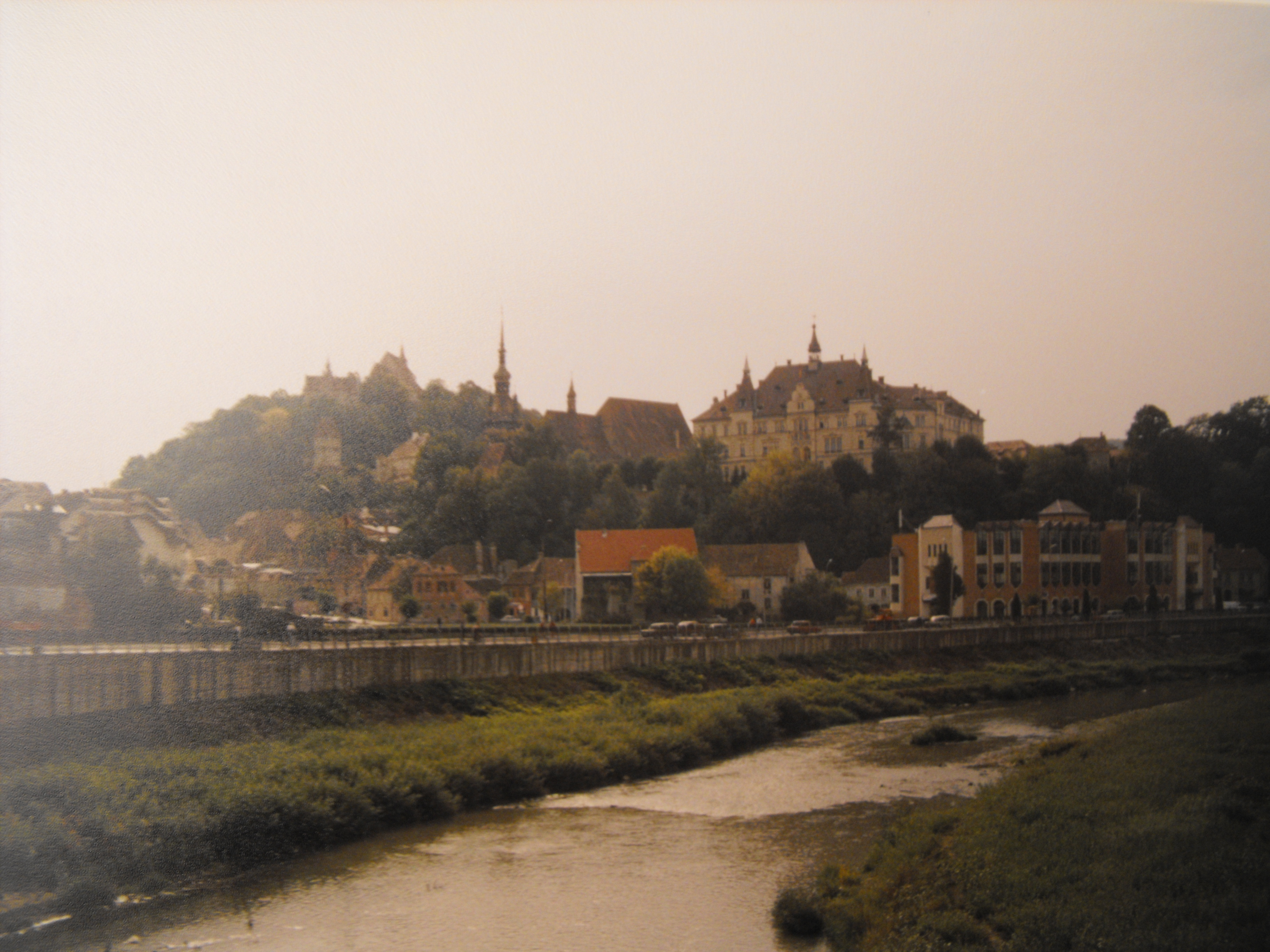
DSCF0330

Sighisoara. It does not come off as the hometown of a blood-thirsty prince.

I gathered up my things and got off the train to look for someone. Picking my way along the train tracks in the dark I found some border officials who showed me my train – still there but on another track. Again, I was the only person in my compartment, but I spoke with the other six people in the car. Three were Romanians, one of which spoke English, the other three were Czech or Croatian, two of which spoke English. I tried to settle down to sleep, but this train was in much poorer condition than the Hungarian train. My previous compartment had been warm, the new was one was very cold. We stopped again at the Romanian side for some time for the border formalities.

I woke up around 6:10 am and began to prepare to disembark. The train was scheduled to arrive in Sighisoara at 6:35. The time came and went with no sign of my stop. I asked a woman in my car who told me we had passed the stop some time before. After a minute or two of despair, I decided to continue on to Brasov and just find a place to stay there. Luckily no train conductors came to check my ticket on the train or upon exiting the station in Brasov. I later learned that there had been a time change; Romania was one hour ahead. So when I woke at 6:10 it really had been 7:10.

The excitement of Romania did not end there. From Brasov I took a day trip to Sighisoara, the birth place of Vlad Tepes or Dracula. When I took a bus to the Brasov train station, I had a narrow escape from two overzealous ticket checkers.

I was pulled off the bus by two bus ticket collectors who demanded I show them my passport. I refused and they pulled out some licenses that appeared as if they had been made on a Fisher Price laminating machine and demanded my passport again. My offense was not validating the 20 cent bus ticket with a hole punch machine that looked more like a bottle opener. I refused again. I had after all bought a bus ticket and had given it to one of them. I refused again and tried to walk away. They grabbed my arms and I shook them off and yelled at them. They followed me five or ten minutes down the street threatening me with the police and fines of $1000, occasionally coming close and shoving me. I was nervous but grateful it was broad daylight and I tried my best to ignore them. Finally I turned around and poked my finger into the chest of one of the men, yelled for him to leave me alone, and then turned and bolted down the street, running as fast as I could toward the train station. They pursued for a block or two and then gave up. Whew. I figure they were probably not even legit bus people but had hoped I would be afraid enough to give them money or my passport, which they would then use to extort money for its return.

Despite the great bus ticket chase, I enjoyed my days in Brasov. I remember the amazing beauty of the old town; particularly people watching as I slowly dined in a sidewalk café on the town square. Day trips to the medieval town of Sighisoara and to Bran Castle, getting my Vlad Tepes fix, were in order. Sighisoara, with the exception of some modern conveniences, felt little changed since the days The Impaler took his baby steps in the town. I had lunch at Casa Dracul but kept to a light meal despite blood being on the menu. In keeping with apparent Romanian tradition to try to rip off foreigners the restaurant tried to pull a fast one by sneakily adding the “bread I didn’t order or eat” charge, but I was on to that one. At some ruins before Bran Castle, myself and two other backpackers were stalked by a ticket seller demanding a camera charge – for taking pictures of some low stone ruins on a hillside. I did not relent on that one either.

From Brasov I headed to Bucharest with a stop off to tour the more modern neo-Renaissance Peles Castle in Sinaia. I enjoyed the tour of the palace and the wooded walk back to the train station. A fellow US traveler joined me. He was heading north, while I south, but on the way to the train station he regaled me with a tale of his recent attack by dogs. I was fascinated, but would soon realize that his words were more than apocryphal.

I previously wrote about my own unfortunate incident with a dog attack in Bucharest and departure from Romania in my post A Blast from My Travel Past. It is unfortunate that my eight days in Romania are colored by so many attempts at minor extortion and bribery culminating in the dog attack. Even on departure day, an additional swindling attempt and a fake border official wrapped up my visit. I cannot say I was not glad to put Romania behind me.

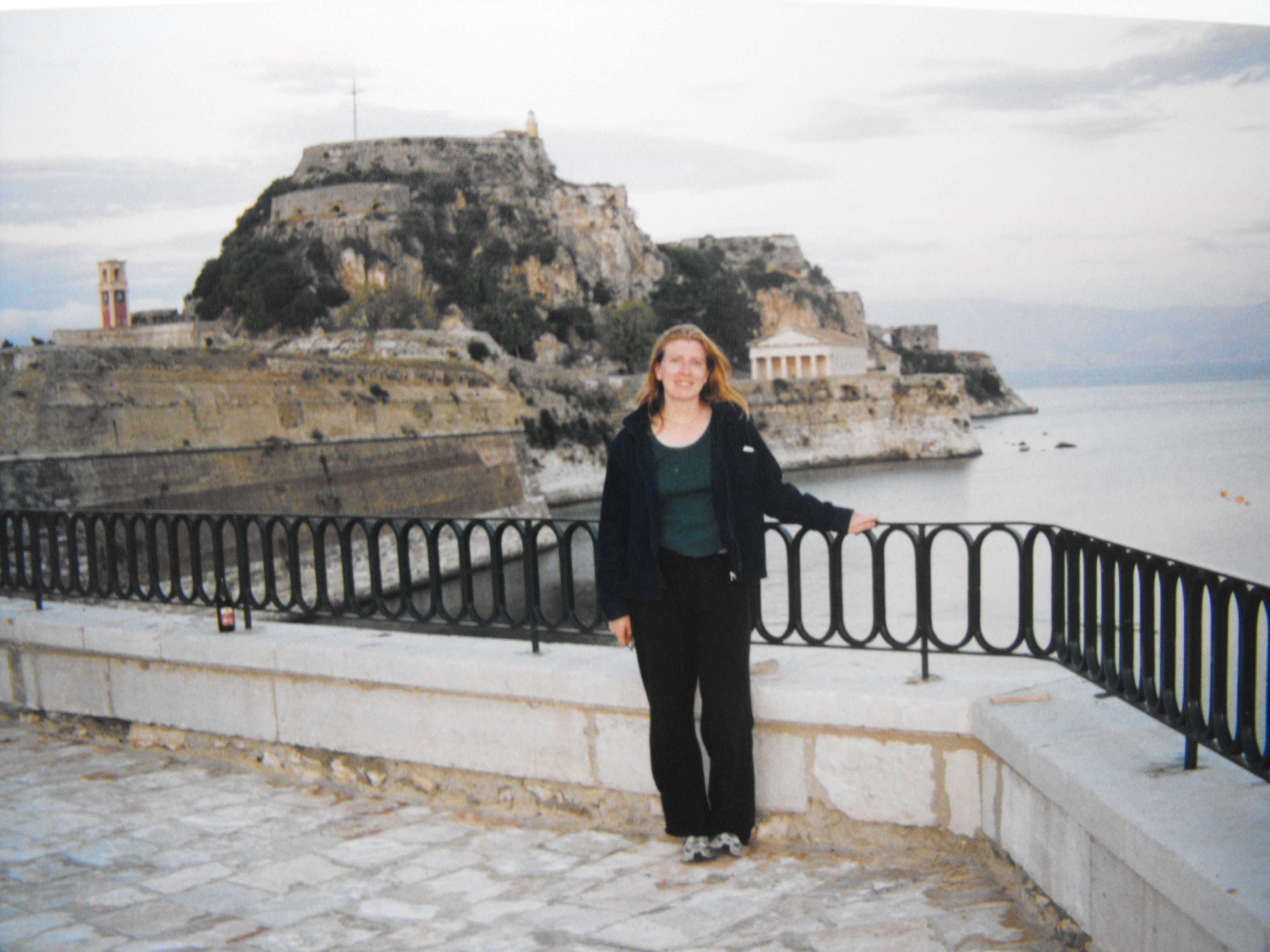
DSCF0347

The photo is a bit blurry but I liken it to “instagraming” instead because it gives Tsarevets Fortress in Veliko Tarnovo a soft dreamlike feel which it was after Romania.

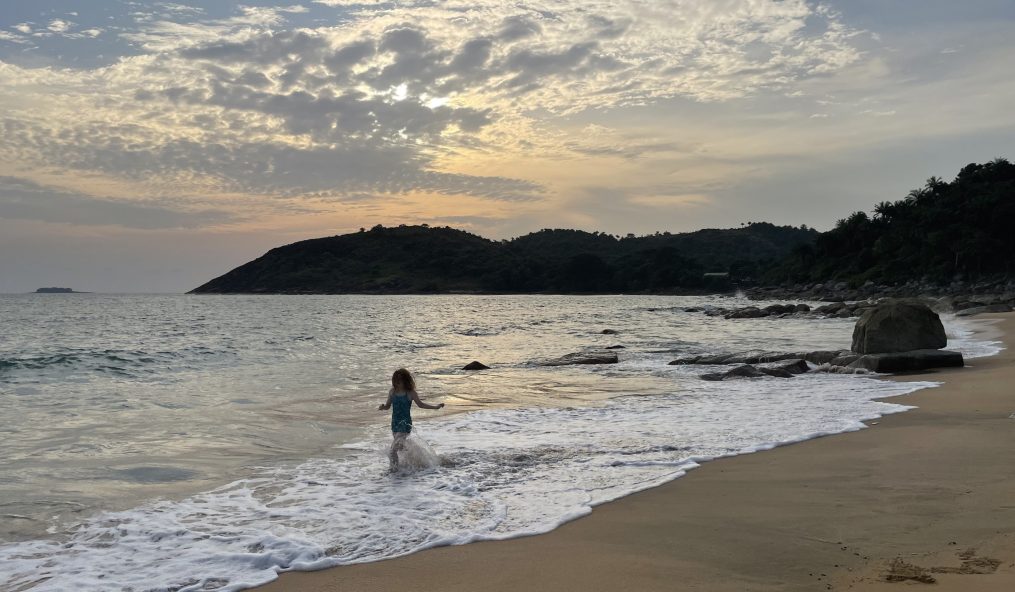
I traveled five days in Bulgaria with an Aussie backpacker I met my last day in Bucharest, after returning from my dog confrontation. We stopped first at Veliko Tarnovo to visit the historic town and castle that served as Bulgaria’s medieval capital. Then we headed on to Sofia, the modern day capital. What I remember most about Sofia is unfortunately not any of the sites other than the gold-brick streets. I remember an old woman swathed in traditional garb and baggy stockings squatting right in the middle of the road to, uh, loosen her bowels. I remember contacting the US Embassy doctor to see about getting my rabies shots. He arranged to come to the hostel to give me the first shot (he called back later to suggest I wait until arrival in Macedonia as they had the international grade serum for the US troops stationed there, rather than the Bulgarian-made serum). I also remember meeting the US single mom traveling with her seven year old son; they were also staying in the hostel and interestingly enough I would meet them again, six months later, on the north shore of Bali. It’s funny what you remember.

On our last day the Aussie and I visited Rila Monastery. Then the following day we parted ways as I headed to Macedonia.

I Love You Backpacking Long Time – Part Three Austria to Croatia

After Liechtenstein I returned again to Austria. I stopped first for a few hours in Innsbruck to break up the train journey and then continued on to Salzburg. I remember the scenery from the train was beautiful and I sat next to an American woman who worked as an opera singer in Europe. I loved Salzburg. I took a day tour out to the Hallein Salt Mine and another day to the whimsical Hellbrunn Palace. I remember both trips quite well although my diary is mum on them both. I also spent a day exploring the hilly city itself. It seems hard to believe it was just a day given I walked up to the castle and to Mozart’s birthplace and many places in-between. Generally I could only write when on long trips between cities/countries because I filled each day at a destination: My God, the time flies. I put my pen down to rest and days pass. There is just so much to do and see – I am constantly moving. I think my only times to rest are when I am asleep or when I am eating. Occasionally, I have a long train or bus ride, but I don’t always take advantage of the time to write in my diary.

DSCF0302

Happy to be in Salzburg

I also felt that I had to keep moving. I am waiting for a train to take me to Slovenia. I had wanted to stay another day in Salzburg, but the weather was not very good yesterday so I thought I should move on today. Besides, I am six days behind schedule due to so many other places I wanted to stay just an extra day in… On the way to Slovenia, I recall the train ride was rather eventful. First at the border the Slovenian immigration officer spent a very long time examining my passport, almost causing me to miss the train. For one year, between April 1993 and March 1994 the US issued passports with a green cover to commemorate the bicentennial of the U.S. Consular Service. Though I had had that passport for several years and had not previously had an issue, the Slovenian border patrol doubted its authenticity! The other bit of drama happened when part of the train uncoupled from the rest and did not continue into Slovenia. Two travelers I had been talking with in one train car realized they had left their backpacks in another car and went back to discover that car was no longer part of the train! Unusual in my travels, I did not much care for Slovenia. I am now in Ljubljana, Slovenia and I have four hours to kill before the overnight bus to Split, Croatia. This is my second day in Ljubljana and I feel it is too long. While in Bled, I met a girl who had just come from here and she told me she had loved it and wanted to love here, but I am not so impressed. There is something here I do not quite like, but I cannot quite put my finger on it. Bled however was beautiful and I can imagine going back there. Then in Split, Croatia I had one of my most disorienting experiences while backpacking. I had arrived on the overnight bus from Ljubljana , still groggy as I disembarked into a crowd of pension owners. At the time the economy was not in very good shape and many families were making ends meet by renting rooms in their homes, often without a license. A man with such a pension met my bus and I agreed to check it out. I followed him from the bus stop, up the hill, some twenty minutes on foot. In uncharacteristic fashion, I paid no attention to where we were going. I am lost. Or rather I know where I am, but I cannot find the pension where I am staying. When my bus arrived this morning at 6 am, I went with the first guy that offered a room. I was very tired and we walked the whole way to his house, but it was very confusing. A few hours later I went back into town, but with another person staying in the same home, and we went another way. About 10:30 I began to head back. I passed a few landmarks and figured I would find it any moment, but I didn’t. I looked for a whole hour. Then I was so dehydrated and hungry I turned around and went back to town and then it took me nearly an hour to find a place to eat. I tried again to retrace my steps this morning and find the apartment. Nope. I do not know the street it is on or the name of the man I am “renting” from. I have only the key with no name on it. I am tired and want to lie down. Now it is 1:40 and I still do not know where it is. Despite that hiccup (I stayed another day in town as a result) and the poor weather, I enjoyed Split very much. Diocletian’s palace and the Roman ruins at Solin were fascinating. Actually, Diocletian’s palace is more than great, it is flat out amazing. Though I only remained in Split two days, my strongest memory, besides feeling like a fool for losing my guesthouse, was the sense of awe at walking in a lightly falling rain in the historic center of Split, past shops and apartments, the marble of the street slick and slippery, and to think it had once been the floor of a Roman residential complex. I next headed to the stunningly beautiful coastal town of Dubrovnik. I loved being in Dubrovnik. I know this because I stayed there for three whole days! I noted this in my diary: I stayed three days (!) in a lovely pension for less than $10 a night. I say I stayed three days especially because I have stayed for three days in only two other places-Cesky Krumlov and Krakow; they have all been trip highlights. The weather was absolutely perfect – warm, sunny, bright and clear. The blue sky glinting off the turquoise waters of Adriatic Sea. The walled city of the 16th century Old Town jutting magnificently into the sea. And I spent most of my days in deep conversation contemplating the meaning of life and love and travel with a male UK backpacker staying at the same pension; I am somewhat sorry we never stayed in touch. Despite the idyllic setting, there was still a pall over the city. The tours of the Old Town somberly detailed the 1991 Siege of Dubrovnik, in which the UNESCO World Heritage Site was heavily bombarded, damaging more than 60% of the buildings and killing approximately 88 civilians. Nine years later and restoration had really only just begun. Mortar damage was still visible. It was in Dubrovnik that the reality of the recent war and its aftermath crept into my travel reverie. My original plan had been to travel from Dubrovnik to Zagreb, but looking at a map it did not make a lot of sense. Rather than backtrack up the Croatian coast and cut northeast to the Croatian capital, I decided to cut through Bosnia, visiting a place or two along the way. I was thinking geographically rather than geo-politically. The kind pension owner in Dubrovnik had supplied me with the name and contact information of a woman in Sarajevo who also rented out rooms. With that in my hand I boarded a bus headed into Bosnia. At the border a South American backpacker, I think Venezuelan, was ejected from the bus and left at the small border patrol post because he did not have a visa. I watched him standing forlornly by the side of the road, looking very alone.

DSCF0304

Peacekeepers walk through the market in Sarajevo.

From the border it took about two hours to reach Mostar, the cultural capital of the Herzegovina region. I had wanted to stop there, perhaps for a night, and see the site where Stari Most, the 16th century Ottoman bridge which had been destroyed in 1993 during the war, had stood. When the bus stopped in the center of town, I changed my mind. From the bus windows I could see buildings riddled with bullets holes and several tanks manned by international peacekeeping forces. I thought I heard gun fire. I reasoned the highlight of the historic town, the bridge, lay in ruins, so there was no need to get off. I stayed put. The pension owner’s friend met me at the bus station in Sarajevo, which was a nice welcome after two and a half more hours on the bus through countryside that still showed signs of the war. Sarajevo too has buildings more full of bullet holes than people, and the scars of war are also plain on the sidewalks as you walk by “Sarajevo Roses,” imprints of where mortar shells hit that were later filled with red resin. The apartment I am staying in is in what had been the Serbian controlled area, and I walked along the road once dubbed “Sniper’s Alley” to the damaged iconic yellow Holiday Inn and into the Old Town. The woman I am staying with lost her husband in the war, though not in any battle. She pantomimed someone knocking on the door and bursting in, demanding something. A gun was held to her face and I guessed it was at this time her husband was killed. She receives 100 convertible marks a month in pension. With all the international forces with expense accounts in town, Sarajevo is not a very cheap place to live, so she tries to take people like myself in. My strongest memories of Sarajevo are these: the guesthouse owner pantomiming her sad tale, standing on the corner where Archduke Franz Ferdinand was assassinated, walking past armed peacekeepers in the market, and passing burnt out buildings where families appeared to be residing while walking to the bus station for my departure. The overnight bus from Sarajevo to Zagreb was to take eight hours. Around midnight we entered the Republika Srpska, where though not an official international border, they had their own border check. It was almost pitch black outside with only the dim fluorescent light from the border control building. Two tall male immigration officials entered the bus and began checking passports. I was sitting in the back of the bus with three male backpackers from Canada. To our knowledge we were the only non-Bosnians on the bus; we were at least the only English speakers. The officials reached us and motioned for our passports. We all complied. Then we were all asked to get off the bus. I will not lie and say I did not feel a touch of panic. As my Canadian counterparts and I waited near the bus, we all talked in soft tones about what this might mean. It seemed to be taking the officials a long time. This had not been expected, and though I did not anticipate any problem, I did think back to the poor Venezuelan left behind not a week before. They had taken our passports and gone into the building. I do not remember if they told us much or anything at all, but we knew we had to wait. We did not know if the bus driver and the other passengers would wait for us. After what seemed like an eternity but may have been only ten minutes our passports were returned to us and we silently, gratefully, returned to the bus. I arrived in Zagreb around 7 am, but the hostel would not let me in until 2 pm and they would not hold my bags either. So I took my pack over to the left luggage at the railway station and then set out to see the city. I picked up a guide and did a walking tour, and then went to a cemetery, supposedly one of the most beautiful in Europe. The cemetery was lovely, though I do not spend a lot of time in them to really compare. But given my recent trip to Bosnia and my preoccupation with thoughts of war and death, I think I should not have gone. As I was preparing to leave, a funeral procession entered. I decided to leave for Hungary that day if I could. I liked Zagreb, I liked it much more than Ljubljana, but I wanted to move on.
I Love You Backpacking Long Time – Part Two Slovakia to Liechtenstein

I arrived in the beautiful east-central (now UNESCO World Heritage Site) Slovakian town of Levoča. I was feeling pretty darn good about myself and my backpacking prowess. I was getting used to the weight of the pack, packing and unpacking, finding accommodation and transport. So of course something shitty happened.

Not the “no one will change my Lithuanian Litas” shitty or “I have no money for a public toilet” shitty, but more “the world is full of creeps” shitty.

I headed for the bus stop to go to Spissky Hrad, the largest castle in Slovakia. I was passing through a town gate when I saw a tiny black kitten. I am a sucker for cats, especially black kittens, and I was appalled that someone had abandoned it there.

DSCF0187

Spissky Hrad is a castle worth seeing

I tried to keep walking, I did, but I just had to pick it up. I imagine on its own it will die, so I wanted to make it feel loved, if even for a short time. I noticed a guy ride through the gate on a bicycle, and then stop just outside and turn around. Out of the corner of my eye I saw him fiddling with the front of his pants, but thought, well men just have to adjust themselves in public sometimes. Then it occurred to me that he might flash me, so I wasn’t going to look.

I was wearing a tank top and had the kitten near my face. The bike guy, still on his bike, leaned over and made some sympathetic noises and started to pet the cat. Suddenly he put his hand down my shirt and grabbed my left breast. I pushed his hand away and shouted “nyet” (or some version of that), slapped him really hard and then kicked him really hard, repeatedly. He rode away pretty quickly after getting himself squared away on his bike.

I was pretty worked up after that situation and had a bit of a hard time putting it behind me. I did continue on to the castle and I remember how very much I enjoyed it. The setting was amazing. I had a lovely meal in a restaurant on the town square. I felt good that I had punched and kicked him, but it was so maddening and troubling it had happened in the first place. I thought if I see him again I am going to chase him down and kick the crap out of him some more. So I spent the rest of the time there looking around for that guy.

Next was the castle town of Trencin and Bratislava, from where I took a boat tour on the Danube. I had great weather every day in Slovakia and it is a beautiful country, but I wanted to move on.

DSCF0201

At the ruins of Devin Castle on my Danube river tour from Bratislava

I headed next to Vienna.

Based on a recommendation from a girl at the hostel in Krakow, I stayed in a university dormitory as the students were away for summer break. For about $13.50 I had my own room, very convenient to tourist sites by tram and subway. Fresh from my first operatic experience in Latvia, and feeling like a splurge, I bought a ticket to a Mozart and Strauss concert which included opera singing and ballet. At $28 it was not hugely expensive, but it cost more than any single day in Slovakia and Poland. (I mean in total, everything included from hostel and food, sightseeing and toilets) I also visited the St. Stephen’s Church and the Hofsburg Palace. That was all in one day! On my second and final day I visited Schonbrunn Palace. Once in the morning for the grand tour of 40 of the 1,440 rooms and later to stroll in the gardens. I loved Vienna and despite melting in my un-air-conditioned student room I remember the two days vividly. (I started my first ever Harry Potter book here) Yet given my budget I could not stay longer and go as far as I wanted.

From Vienna I headed next to the Czech Republic. As I had visited with my aunt only the year before while visiting her in Germany, and it being the high tourist season, I decided to skip Prague and see other cities. I went first to Brno, the only city with a bus from Vienna besides Prague. Though I only walked around the old town for three hours while waiting for my onward bus to Telč, I have a memory of the cobblestones and the alleyways.

Brno was nice, but I wanted to live in Telč. I stayed in a pension on the main historic plaza and remember eating a fabulous dinner at a place on the square, sitting in outdoor seating watching people and the sun set. Another stunning UNESCO World Heritage City, Telč was the first city on my trip where I started imagining myself returning to live for awhile. Until I arrived next at Český Krumlov. Český Krumlov really stole my heart.

In Telč I met two German-Serbian sisters with whom I traveled with the next several days. We stayed at the same guesthouse in Český Krumlov and toured around together. The sisters, Zenet and Sami, introduced me to some Czech cuisine they said was much like the food they grew up with. On our final day in CE we took on what turned out to be an epic bike tour through the countryside.

The woman at the tourist agency swore the route we were about to undertake would take only three hours to complete. We set off around 11:40 and the bikes were due back at 6 pm. We also had a bus out that evening from Krumlov to Budejovice in order to catch the bus to Munich. We arrived back at 5:59 pm, our hands, legs, and bottoms very sore. At least 50% of the route was up steep rock strewn hiking trails or down steep paved inclines, which made us go way too fast. We didn’t have good brakes on the bikes so our hands were sore from clutching them. When we returned the bikes the woman told us that usually her two sons, 5 and 8 years old, can make the trip in less than 4 hours…

DSCF0232

Sami pushing her bike through the gorgeous Czech countryside

I had had no plans to visit Germany on this trip, but I enjoyed the company of Zenet and Sami so much that when they invited me to come and stay with them in Munich for a few days I readily agreed. I stayed in Sami’s apartment while sightseeing around the city. She also gave me a behind the scenes look at Oktoberfest as the company she worked for was involved in the preparations. I was a bit sorry to bid the sisters farewell as I then headed off to Bavaria.

As I had made this detour into Germany I might as well make the most of it, right? I headed on to Füssen to visit the castles of Mad King Ludwig. I visited Neuschwanstein, Hohenschwangau, and Linderhof. The weather was perfect every day in Germany.

At the train station I inquired how I might get to Austria and the information clerk pointed down the street and told me to walk for a kilometer! However, I headed next to Liechtenstein. Just because.

Unfortunately when I arrived there it was overcast and later began to rain. Yet despite being told to give the little country a miss, I am glad I made the trip. It was just interesting to visit such a small country and get a sense of its size and history. It was so green! I climbed up to Vaduz castle and was rewarded with overcast, thought still pretty, views. I was very excited to get the stamp in my passport even though I had to go to a post office in town and pay for it. I might like to come again, though to arrive from the Swiss side and stay another day or two (in good weather) and venture to the other towns, or even walk across the country! It is a mere 6 kilometers wide!

DSCF0287

My proof I made it to Liechtenstein

I Love You Backpacking Long Time – Part One Finland to Poland

I started my journey in Finland and early on I observed a few things about the country, such as the pastimes…

I have noticed perhaps two Finnish obsessions – saunas and electronic gambling machines – which seem to be in just about every building…and drinking in public is accepted. There is apparently even a pub tram, perfect for the drunk on the go, I guess

…the cold, and that Finland was really, really expensive. Nothing in particular stands out to me except the cold and high prices. It’s July and I am wearing a coat!

DSCF0172

I began my travels in Finland. This is somewhere in Helsinki. I think. It is July. I am wearing pants and a turtle neck sweater. It looks cold. It was cold. And yet I am smiling.

Despite staying in a hostel – a very nice hostel with a fabulous breakfast and sauna! – eating cheap takeaway, and walking or riding the bus, I was spending over $100 a day. I cut short my expected week there and after four days hopped the ferry to Estonia.

In the Baltics I visited Tallinn and Tartu in Estonia, Sigulda and Riga in Latvia, and Vilnius and Trakai in Lithuania. The weather was beautiful in Estonia and I have a strong memory of walking down a dirt lane from the historic center of Tartu, in dappled sunlight, to the guesthouse where I stayed. I found the place through the tourist information center. It was a regular home where a couple with young kids let out two rooms for travelers.

Transportation though seemed to be another matter.

I had inquired in Tallinn about a train from Tartu to Sigulda, Latvia and had been told there was no train. I looked at the map and saw train tracks, and went back the next day to ask again but was again told, by a different person, there was no train. Once in Tartu I went straight to the tourist info to ask about buses. “Why don’t you take the train?” she asked. “There’s a train?” I asked. Yep. There was a train and on August 1 I took the train to Valga/Valka, the border town between Estonia and Latvia, went through border control, and then boarded my train to Sigulda. No problem.

Sigulda, a beautiful town along a central Latvian river valley, turned out to be where I saw my first opera. I know I walked to the edge of town to the Gauja National Park. I know I visited a cave. But it was the opera, in the ruins of Sigulda Castle, that I remember the most. It was the Marriage of Figaro and it cost only US$4 for a ticket right next to the stage. It was an evening open-air performance and I recall it rained lightly and I did not care.

I know I unexpectedly liked Vilnius despite my disappointment in missing the Genocide of the Lithuanian People Museum located in former KGB headquarters. Yeah, it sounds like an interesting, though not uplifting museum, but it figures prominently as a frustration in my journal. I still have some pictures from Trakai Castle. It was pretty, set on a lake, in sunshine. Yet what I remember most about this trip is the really bad romance novel I found in the hostel. English language materials were somewhat scarce during my trip and I was already desperate to hang on to the books I had brought and read just about any other English book I could get my hands on.

What figures most prominently in my journal though were the cool weather and the differences between my dress and that of the Lithuanians.

DSCF0181

At the Daugava River in Riga, Latvia. Still kind of cold but at least it is not raining.

It is getting cool today although I do not think it is ever really hot. I usually feel a bit chilly. I am surprised by the clothing here – shorts, miniskirts, tank tops. I haven’t felt a single day in the Baltics has justified such clothing, and yet it is what I see many locals wearing. Yesterday as I walked from dinner I felt too cool in my short sleeves and long pants and yet as I shivered I saw people in the park sitting with much less covering doing a good job pretending they were warm. Perhaps they are more warm-blooded than I? I can see several people from my current seat in sleeveless tops – but they are crazy! I am going back to the hostel to get my jacket.

After the Baltics I headed to Poland where I visited the northern port of Gdansk, the castle at Malbork, Nicholas Copernicus’ hometown of Torun, the capital Warsaw, the historic Krakow, and the southern border town of Zakopane. It is in Poland (and later Romania) that I have my most vivid memories and most interesting experiences. They may not be what you are expecting.

One of the oddest predicaments I came to be in involved an overnight bus from Lithuania, the need for toilet facilities, a lack of Polish zloty and too many Lithuanian litas.

I took the overnight bus from Vilnius to Gdansk, Poland. I was wedged beside a rather large man and was thinking the other hostellers’ predictions of no sleep would come true. But at the border I saw that the last four or five rows were empty so I moved to the back where I could stretch out and lie down. I got a fair amount of sleep. The problem was using the bathroom. There wasn’t one on the bus. Oh, there was a little room, but it was apparently just for show and remained locked the entire trip.

We were all able to use the restrooms at the border, but after that it became complicated. At 5 am we stopped at a station and could use the restrooms, but almost all public restrooms in the Baltics and Poland cost money and I had not a zloty on me! Another girl from the bus offered to pay for me, but her coin (probably too large to change?) was not accepted by the surly couple guarding the restrooms.

At the next stop it was the same and again at the Gdansk bus station. So I walked with my pack to the tourist office, but it was not where it was on the map and I never found it. I could not go to the bathroom until I changed money or checked into a hostel/hotel. Many banks and exchange places did not open until 10 am and I arrived in Gdansk at 8:30 am. The ones that were open would not exchange Lithuanian litas. They would exchange Spanish money, Swedish money, Latvian and Estonian money, Hungarian money, Slovakian money – just about everything except litas. Anyway the bathroom wouldn’t wait so I pleaded my case at a nearby hotel and they (thankfully!) agreed.

I never did change those Lithuania litas. An exchange place worker in Gdansk told me in English, as he shrugged, They are paper, they are a memory, they are nothing.

I loved the immense Castle of the Teutonic Order at Malbork, the world’s largest castle in surface area and a UNESCO World Heritage Site. The whole reason I visited Gdansk was to put myself in a good position to visit Malbork. Unfortunately I might have got more out of my visit had there been a tour in English. Unfortunately admission includes a tour – in Polish. One is not supposed to be able to see the castle without a tour. I ditched mine for the German one in front of me as I thought I might have a slightly better chance of understanding – nope and kept moving forward, tour by tour, until I happened upon a small English tour. It was privately arranged but they let me join nonetheless. So I at least was able to hear a little of the castle’s history…

This lack of English tours issue continued to be a problem at the UNESCO World Heritage salt mines near Krakow. Yet another site where one could only go through with a tour and the English tours were few and far between.

I did visit both the Auschwitz and Birkenau concentration camps.They were very interesting but extremely emotionally draining. What happened to the people who arrived at the camps was just horrible. I cannot understand how anyone could do this to other human beings. The atrocities are beyond belief and yet they happened. This really hit me hard. It was a beautiful sunny day, but it was not a joyful tour. I was surprised to see people there with small children and others having their pictures taken. It is not a holiday destination where one brings the whole family. I finally took a few pictures at Birkenau and then went back to take a picture at the gate at Auschwitz. I did not feel completely comfortable about this, but at the same time felt compelled to record my visit.

Finally, my trip to the border town of Zakopone. My most striking memory is unfortunately the long line at the cable car! It was a two and a half hour wait. If you are a solo backpacker who left behind journal and book in the hostel and no one else in line around you speaks English, two and a half hours can feel an eternity! Yet the view at the top was worth every minute.

By the time I left Poland I had only been on the road three weeks but was beginning to settle into a groove. Much more was still to come!

I Love You Backpacking Long Time – The Intro

I have got the travel bug.

I mean, I have had the travel bug for a long, long time, but it is starting to itch. Just a tad. Ok, more than a little. A LOT! I want a real, honest-to-goodness, vacation.

It is most likely a combination of waiting nine weeks after our arrival in China to take our first mini vacation and then the six-week waiting game for management to approve summer leave ahead of what was expected to be a historically busy visa season. Then after our wonderful but action-packed two week trip back to the US in May, it has been a waiting game again through the long, hot, busy Shanghai summer. At the same time it is because of this blog – going back to re-read my travel stories and journals – that I am also reflecting on past and future travels.

In July 2000 I finished my three years teaching English in Japan and set off on a solo 11 month backpacking trip. I purchased an around the world ticket from Washington, DC to Finland, from where I would make my way overland to Tunisia, where I picked up the ticket again to travel to Egypt, then India, then Southeast Asia, and finally back to the US.

It is not difficult to look back at that epic trip with something akin to a Pavlovian dog response – I am literally salivating as I think back to when I had some major time to really hit the road.

At the time I was planning the trip, I had thought long and hard how to spend the $10,000 I had saved from teaching in Japan. I had come to the conclusion that banks would loan me money for graduate school but no one was going to loan me money to backpack around the world. I could spend my hard earned savings seeing the world and still be able to go to graduate school. So I deferred my graduate school for a year, bought the round the world ticket for half the savings, and set about buying travel guides and preparing for the rigors of travel by roaming my little Japanese town with weights in my backpack.

I had no Kindle loaded up with reading material. I had no portable music. I certainly had no cell phone. Internet on the road was still fairly new with Internet cafes popping up in more and more places but in some costing quite the pretty penny (in Venice I recall it costing $25 an hour, which was more than I averaged in total spending per day for everything. I mean lodging, food, sightseeing, and toilet charges. One could not forget to budget for the public toilet).

That is not to say that my trip sans e-books and iPods and smart phones was any better than anyone else’s backpacking trip. Lord knows that those who hit the road 10 or 20 or more years before me had done with less than I had. Fewer guidebooks, fewer made-just-for-the-backpacker-bags, fewer hostels, fewer goodies from home in unexpected places. I read a post online the other day where someone outright dismissed the write-up of a young man just returned from his seven month backpacking journey. Geez, people, everyone deserves to travel the way they want and their journey is no less valid than yours. If they want to do it on an eight day, five country bus tour, then so be it. Just be glad that someone is out there seeing the world, stepping out of their comfort zone (and yes, a crazy guided bus tour with 20 other couples CAN be out of one’s comfort zone) and experiencing another country and culture.

[Stepping off soap box now]

Instead of an e-reader I lugged around five actual books in my pack and when possible I traded it for another book after I finished. It was in this way that I got a hold of my first Harry Potter book, from a British girl in a hostel in the Czech Republic. I also took the one and only English book from the hostel in Vilnius (a ridiculous romance novel that made a Harlequin seem like Shakespeare. However, the loss of a book, such as when I left behind a half finished book in my Tunis hotel, was felt keenly. (I still wonder how that book ended). I also carried around four blank journals, which I slowly filled over the course of my trip.

So I read and I wrote in my journal. I wrote a lot of postcards (do people still do that anymore?). I rode a lot of trains and buses and I looked out of a lot of train and bus windows at the scenery. I took a lot of lovely naps on long trips. I met a lot of people and saw some incredible places. I got sick. I got angry. I got tired. But mostly I was amazed. When I started I had no idea how long I would go. I thought perhaps five, maybe six months. I planned only in general. Itineraries changed. Destinations changed. I never made a hotel reservation. Sure, I still had limitations, but I was also quite incredibly free.
From my few emails along the way (saved by my aunt) and my journals, I have attempted to re-trace and share some of my journey. It has been fun and enlightening, and sometimes even cringe-worthy, to go through my journal entries. I find it odd what topics found their way into the journals and other things I still remember but neglected to write about.

My family and friends do not really know the story of this journey, only bits and pieces. It was an incredible journey that I would never ever give back. It shaped me. I learned my weaknesses and my strengths. It taught me what I could do on my own and further fueled my zest for travel.

I am not sure I will ever have another trip like this. First of all, it is a pain in the rear to explain to every security clearance investigator about this “gap” in my work and education timeline. The first investigator just could not grasp the concept at all. When I tried to explain that I did not recall the places where I stayed as I just turned up and found a place and moved on a day or two or three later. He told me he was going to write I was “in the woods” for five months in Europe, which I explained did not think would be helpful in my bid for a government job.

Second, I will also not again be my twenty-something self, with graduate school and an unknown career ahead of me. I will not be the person I was before I had my daughter. I do not want to be. Yet I am grateful now to be revisiting this part of me. I have absolutely never regretted spending my savings on this trip and borrowing for graduate school. I am fairly sure I would have been told it was a bad idea. Good thing I never asked anyone.

The Foreign Service and the Single Parent – Further Thoughts

After I had put up my previous post, an essay written for the Associates of the American Foreign Service Worldwide (AAFSW) upcoming book on “Raising Children in the Foreign Service,” I thought more about what it means to be a single parent in the US Foreign Service. I realized I had more I wanted to share and reflect on regarding this topic.

I recently celebrated my four year Foreign Service anniversary. When I joined the State Department I was eleven weeks pregnant, so my daughter has been part of my Foreign Service experience from the beginning. She and this job are forever intertwined, like fraternal twins. It was because I was pregnant that I bid on Ciudad Juarez, Mexico—where I could easily bring a car and drive over the border for baby formula and diapers at Target—rather than bidding on the places like Kathmandu, Nepal or Rangoon, Burma, that quickly caught my fancy until I remembered that I was no longer bidding for one.

In the past I had not really thought of myself as a Single Parent in the Foreign Service. I was a single parent AND I was in the Foreign Service. When people, usually colleagues, asked how I managed I often shrugged and gave some answer like “I have always been a single parent, so I do not know how to be otherwise.” That is true, but now I feel the response is too flippant – it plays down the challenges that myself and other single parents face in this career.

Writing the AAFSW article made me realize I have had far more “Single Parent in the FS related episodes” than I had previous thought and more are to come.

It was me who sat in the Basic Consular Course and heard the instructor use the word that starts with “b” and rhymes with “mastered.” Though it was meant to be a light hearted comment on a law that appeared to favor single American mothers over single American fathers, it could have been quite hurtful. I did not know then how much it might still resonate with me now and I am glad I made the effort to speak with the instructor.

Yet before I even made it to the Consular course, early in my Spanish studies, I had an experience that still makes me go “hmmm.” Given the Ciudad Juarez is a danger-pay post and one in which a lot of new officers bid low but are assigned anyway, Mission Mexico made an effort to reach out those newly assigned officers early. As I knew I would be a single parent once arriving at post my number one concern was child care. Unless they were going to let me papoose my infant to my back and conduct visa interviews that way, I was going to need a full time nanny, and quickly. I reached out to the Community Liaison Officer (CLO), a person a post that fulfills a lot of roles but one is helping officers with issues such as this. My email was short, but detailed, indicating I was a soon-to-be single mother and I could use some assistance with sorting out child care at post. The CLO responded with a spreadsheet of housekeepers that could do part time babysitting.

Several months before arriving at my second post I again reached out to the CLO to ask for information on the child care situation in Shanghai. I emailed multiple times with no response. Finally, about two weeks before my arrival I heard back – and the response was not to worry, that I would have plenty of time to find someone after I arrived. Granted at the time my mother had planned to come for the first five weeks to provide me a buffer time to search for full time help, but still I found it off-putting. Also, in the end my mother was unable to come with me and I made a mad scramble for child care immediately after arrival. (see Not the Beginning I Expected)

In both cases things worked out, as they generally do. And in neither case did the CLO intend to do anything other than help, even if it was not actually helpful.

Here in Shanghai recently our American Employee Association sent out the following email: “AEA is looking for a few good men and women to support our fellow married Americans! We will be throwing a “Parents Night Out” movie night and am looking for volunteers willing to help chaperone a few cute children with us during a Pixar/Disney movie night.”

I do not recall noticing the “s” attached to “parent” right away, but it was not long before this incredibly awesome response was sent out (not by me): “I’m willing to help out on any of those dates. Let me know when I’m needed. Also, it should be noted that not all parents are married (I was raised by a single mother in need of a night off) and may feel as though they are not included in this.”

Again, the originator of the message meant no ill-will and in fact several people pointed out that the initial message implored people to help out their married colleagues and yet not all married couples have children. The writer owned up right away, apologized for any offense and sent out an updated and all-inclusive email. In speaking with the person later, s/he told me that actually the email had been cleared by four other AEA members before being sent out and none had caught the mistake.

It was these experiences that prompted me to include in my essay’s practical thoughts/advice list a gentle reminder that in many cases people are well-meaning but just unfamiliar with what it is like to be a single parent. I certainly need to remind myself of that and give people the benefit of the doubt.

Then there was this recent experience: A few weeks ago I was serving as a representative of the US Consulate at the American Chamber of Commerce (AmCham) 4th of July event. I brought my daughter with me so after my two hour shift we could check out some of the activities. At the AmCham booth a smiling Chinese woman greeted me and told me in English I could scan their “We Chat” code and chose a free gift. Though I had been in country already five months, I had yet to buy myself a local smart phone. I kept thinking about doing so, but the Consulate had given us all a “dumb” phone and it basically served my needs. So I had to admit to this woman that I did not have a phone to scan their code. She thought for a moment, then with an ah-ha moment happily suggested “go get your husband.” Without thinking much about it, standing there with my daughter at my side, I replied, “I don’t have one of those either.”

This happens fairly regularly – most still make the assumption that if you have a child, you have a spouse. But I was unprepared for the woman’s response. Her face immediately crumpled. She quickly said “Oh my god, I am so sorry,” hugged me, grabbed a small box from the table, slipping her business card into the side, handed it to me continuing, “please take this gift and here is my card if you ever need anything.”

I blinked. I was speechless. I have had people upset and apologize for making the assumption, but no one before had appeared quite so horrified at the prospect of my having a child without a husband. I have no idea what her assumption may have been – that I was divorced, widowed, or otherwise. I will never know (unless of course I contacted her from her card, which I have no intention of doing).

This did lead me to do some thinking. When I wrote my essay I was thinking about US stereotypes of single parents, not those we might face in other countries. Yet as Foreign Service Officers we have to face them in both realms. It was not that long ago that women after marriage were strongly encouraged to leave the US diplomatic service. (read here) Of course single moms are by nature generally not married, yet I doubt such women were any more welcome, and most likely less so.

Just a simple Google search to see if there were any articles on that topic led me to Careers at State Q&A forums with women asking if single moms are even hired into the Foreign Service. These questions were asked not twenty or thirty years ago, but rather in 2011, 2012 and 2014. I found myself surprised and saddened. When I started in 2011, pregnant and single, it never even occurred to me that I would be unwelcome or unable to serve as a single parent, yet clearly some US women are concerned that is the case. I suppose when you hear from some US politicians that you are destroying the fabric of American society and breeding criminals, (like here), it can make you feel you are undesirable as a representative of your country abroad. I wish that too were something from the distant past, except only recently a bill that would allow some companies the right to fire an unmarried pregnant woman surfaced.  (see here)

Yet it was the response of the AmCham woman that prompted me to look into how single mothers are treated in China, and what I found was unpleasant. Though it would seem that attitudes may be changing, the Chinese marriage and birth registration system and traditional values still create an environment where single mothers are shunned and subjected to social stigma and their children are treated as second class citizens. (see here) Given these government and societal attitudes it is highly unlikely that the Chinese government or Diplomatic Corps includes any single mothers.

Yet China is not alone in its approach toward single mothers. Google “single mothers in _______” and finish it with Korea, Japan, UAE, India, Jamaica, etc, and you find articles that indicate that there remain social constraints and stereotypes amidst a rise in numbers. Another member of my Single Parent in the FS group shared with me that when she lived in Israel a woman once snarled “no wonder your husband left you” when she asked for five more minutes for her daughters to play in the shared garden. This forced me to realize that there may be times when my statement that I am a single mother may be met not with embarrassment or pity but even with hostility.

I am not sure what I will do then, but I am trying to be prepared now. I want to do more in this area in the future; my current job as visa interviewer extraordinaire however does not give me much time or opportunity to work on other things. Until then I just want to continue to be a good Foreign Service Officer and mother and hope that by doing so, and sharing my status with others, it makes a difference somehow.

The Foreign Service and the Single Parent

In May while I was on leave an organizer of the new Associates of the American Foreign Service Worldwide (AAFSW) book on “Raising Kids in the Foreign Service” contacted me to ask if I would be open to writing a chapter / essay from the single parent perspective. I was thrilled to be selected though in truth, the organizer admitted, I was the only single parent in the FS she knew. No matter, I was excited about the prospect of writing such an article; in January I had, with another FS single mom, just launched a Facebook page for single parents in the FS and this was another opportunity to get the word out that there are single parent diplomats. With the organizer’s blessing I am sharing most of my article here. It was written in conjunction with feedback from members of our new Facebook group.

She stared at the email. It was in response to a housing issue at her upcoming post. Did it really say what she thought it said? “We are sorry about this but there is no way we could have anticipated this. We have never had this kind of situation.”

Situation? The Single Parent situation? You would have thought she had asked how to import a unicorn. That’s us, the single parents, the unicorns of the Foreign Service.

I am not going to lie: being a single parent in the Foreign Service is no cake walk. But that is not news, right? Because just being in the Foreign Service is a challenge and so is being a single parent. Put them together and you have yourself a recipe for some demanding but exciting times.

The Challenges

The PCS. We hear the laments of our single Foreign Service Officer brethren; it sure is hard to manage a pack out all by yourself. Then throw in a wee one or two and, if you have truly lost your mind, a pet. Nothing says fun like managing your suitcases, carry-ons, a stroller, a child, and a pet on a two leg 24-hour international journey all by yourself. It is extra fun when, as one single parent recently shared with me, your elementary-school aged child breaks his arm ten days before. Because as they grow older you kinda expect them to pitch in, right?

Setting up child care/school. We hear you tandem parents. Needing to take off work immediately after arriving at post in order to interview and hire a nanny or register your child for school might call for some of those diplomatic skills. After all, post wanted you yesterday. This is especially the case of the single parent, because, well, the person taking off work is you or you. Most places seem to frown upon children registering themselves.

And it doesn’t just stop with enrolling them in school. There are teacher-parent meetings, special events, times when you need to head in to the school and again it is you, the single parent, that needs to take the time to take care of it. And you hope that your supervisor and colleagues understand. We face many of the same challenges that single/working parents in the US face, with the additional challenge of being far from familial and other support systems.

The “helpful” colleague/supervisor. It is super awesome when co-workers or supervisors decide that you really can have it all and that of course you would love some more time away from the kids. After all you joined the Foreign Service! For instance your post has some opportunities for some 2-4 week TDYs. You are interested but cannot realistically work out the child care (you would after all have to buy the plane ticket for your child and the nanny). That is ok, says your colleague, just leave your child behind with the nanny. Problem solved! Except your child is under five.

Or when facing the very real possibility of a post evacuation (that did not in the end materialize) your supervisor suggests you ship your children to someone so that you can concentrate on your job. Or the opposite is the overly accommodating supervisor who, as one single parent mentioned, bend so far over backwards to be understanding that you miss opportunities, like TDY assignments.

Stereotypes. Single parents are divorced. Single parents have contentious relationships with the other parent. Single parents are female. Single parents are unlikely to be in the Foreign Service. And these categorizations extend to our children – our kids have discipline problems and trouble adjusting. It is all over the Internet, so it must be true!

I do not often think on these stereotypes, after all, I have never been married, have a good relationship with my daughter’s father, and we are, in general, rocking the FS life. We come to be single parents in so many ways, sometimes through divorce or separation, sometimes due to the death of a spouse, sometimes by choice, by natural birth or adoption. So when these stereotypes come to the fore it can be surprising and upsetting. We may face uncomfortable questions. We sometimes feel excluded – we are not the singles without kids, we are not the married without kids, we are not the married with kids. And worst of all, our children might be teased or bullied.

The Benefits

Affordable help. This is HUGE. Granted it is not as inexpensive as one may think (as one particularly unenlightened defense colleague said to me before heading to Indonesia – “you can hire a maid for like one cent a day!” No buddy, you cannot). I paid US$800/month in Mexico and US$900/month in China, not including overtime or bonuses, for a live-out nanny. Even when the children no longer need a nanny, our ability to afford household help in many (but not all) posts overseas gives us more time to spend with our children. As one single parent told me, “When you are home, you aren’t just washing and cooking and cleaning – you can pay attention to the kids!”

Community Support. Most of us have found support in our Embassy/Consulate communities around the world, both amongst our colleagues and local staff, as well as other expats and host nation friends. “[My] biggest surprise was how supportive my little communities are (other friends – male and female, and parents – moms and dads – single and otherwise) to help me fill in the gaps.”

At this very moment, as I am trying to piecemeal the final draft of this essay, I am serving as duty officer and the duty phone has been ringing off the hook. A colleague contacted me and asked if she could take my daughter for a few hours to give me some time to handle the duty calls. She even brought me food! We all are grateful to such colleagues who understand the demands of the FS and are willing to lend a hand when we need it.

Teachable Moments. Although approximately thirty percent of US children grow up in single parent households, single parent families are underrepresented in the FS. Like any member of the Foreign Service, we are the face of the US while serving overseas. We may not always want to be the representative of a group, and this may seem an odd thing to consider a benefit, but this is an opportunity to show people in our host country, and sometimes even our colleagues, that single parents are more than stereotypes.

When in the Basic Consular Course at FSI we study about citizenship. In general an unmarried citizen mother with a non-citizen father has fewer requirements to transmit citizenship. During my course, the instructor made a joke about unmarried mothers and their offspring using a word that starts with “b” and rhymes with “mastered.” At the time my daughter was five months old and it had not yet occurred to me this word would ever be used to describe her. I did not know how I felt about it. So afterwards I approached the instructor and let him know I was a single mother and he may want to consider his audience. The instructor immediately apologized, said the context had not occurred to him, and that from thereon forward he would not use that joke.

Other Benefits. Many single parents reported to me that the material and cultural benefits are a major advantage, and a reason why they stay in for the long haul. The free housing and generous educational allowances that allow our children to attend some pretty amazing international and/or boarding schools are significant. Add in the month-long R&Rs and home leave, and children of separated parent travel, and the very un-American four weeks of vacation, and the perks of the FS shine through.

The Bottom Line

In a survey of FS single parents to sum up their experience in the FS lifestyle, I initially received nothing. Zero. Nada. Seriously, single parents in the Foreign Service have no time to answer informal surveys!

On round two of my informal survey the overwhelming response was that despite the difficulties, being a single parent in the Foreign Service is not only rewarding for both the parent and the children, but is also by and large considered easier than being a single parent in the US. Here are just some of the comments I received:

“The amazing cultural and educational opportunities for the kids.”

“The Foreign Service has given me the opportunity to bring my girls all over the world, introducing them to all sorts of cultures where women have large roles.”

“We are a family that is extraordinarily lucky, blessed beyond words, because I have her, she has me, and we live a very diverse, culturally rich, and extremely privileged life.”

“Even if I leave before mandatory retirement age I will not regret the career choice and tours I’ve had because they’ve all shaped me personally and helped all of us grow as citizens of a fascinating world.”

We may require a little bit of lead time to make child care arrangements, but once done, we dedicate ourselves to our jobs like any other officer. We are Foreign Service Officers. Not that we don’t sometimes second guess ourselves or some days find ourselves exhausted by the challenges. Not that we do not sometimes wonder why in the world we are doing this, dragging our kid(s) around the world away from our home country and family. But overall the benefits outweigh the challenges. You can not only survive in the Foreign Service but thrive and so will your kids. Single parents are represented in every level of the Foreign Service from the entry level officer to Ambassadors. We are specialists and generalists and in all of the Foreign Affairs Agencies: State Department, USAID, Foreign Commercial Services, and the Foreign Agricultural Services.

Oh, and our kids? Our kids are awesome.

Practical Thoughts/Advice

• Accept help (even if you have to pay for it). When traveling, instead of torturing yourself by lugging all your suitcases and kids on your own, pay the money for the luggage cart or porter service. There are even door-to-door delivery services! Believe you me, staged movement of the luggage and child at 50 foot visible intervals across the airport is no decent way to travel. Not that I have ever done that. You will be amazed at the kindness of others. Children are cherished in almost every country around the world and in my experience people will step in and help. In China not only do people hold my daughter’s hand on the escalator, lift her on or off transportation, or open doors for me with the stroller, but they are giddy with excitement for having helped. And those at post who offer to watch your child/children? Take advantage! I found myself reluctant to accept, after all, surely they were offering in jest to spend hours with a child completely unrelated to them. But look, if they did not want to help they would not have offered to help, right? Also, be sure to reciprocate – host their kids for a play date, take care of their pets while they are on vacation, buy them lunch, etc.

• Be realistic with yourself and upfront with post/ supervisor. You are not Super Single Parent, even if it sometimes feels that way. No need to volunteer for every extra job under the sun to prove yourself-your colleagues are generally not doing this, why should you? Have a straightforward conversation with your supervisor about your situation and what you can and cannot do. Manage expectations. And if circumstances change – you can take on more or you need to step back a little – have that conversation again.

• Remember that most people really do not understand the demands of being a single parent. The vast majority of suggestions and comments you encounter that seem unthinking are coming from a well-meaning place. You are likely just as unfamiliar with their personal experiences, right? If the time is appropriate gently bring them into the circle of trust, otherwise do as Queen Elsa and my toddler often sing and “Let it Go.”

• Although many of us single parents likely remember our Consular training on passports, it does not hurt to remind you that children under 16 require both parents to sign for their passport. In many instances you will need a notarized Form DS-3053: Statement of Consent. Also when traveling many countries may require a notarized letter consenting travel without the other parent. If you are the only parent noted on the birth certificate, then the birth certificate is good for passport and travel. http://travel.state.gov/content/passports/english/passports/under-16.html

• Have a plan. An emergency could be an authorized or ordered departure, or a medical emergency that leaves you indisposed, or should something happen to your child while you are on TDY, etc. Designate a family member in the US, create a power of attorney for one or two Americans at post, and when your child is old enough, talk to them about the plan and what to do in an emergency.

Visaland

[scene opens with the camera panning through a lush green bamboo forest]

[Voice over begins]

“In a land far, far away…” [camera rushes across a lake with a Chinese pagoda on its shore]

“There teems hundreds of thousands of souls…” [camera zooms across the Great Wall of China]

“eager for the opportunity to travel across the seas…” [camera zooms over the city of Shanghai]

“in search of opportunity, package tours, and luxury handbags.”

“This is China. This is VISALAND!” [camera pans over the crowd of visa applicants outside Westgate Mall]

“And facing this onslaught are the incredible visa officers of the Shanghai Consulate” [camera zooms toward an awesome group of smartly dressed Foreign Service Officers standing hands on hips, heads held high, in 1, 3, 5 formation]

“I am one of these officers.” [zooms in on me grinning]

Yes, Mission China is a study in visa superlatives. And working here, at least in my mind, is sometimes like a movie, perhaps a cross between Mission Impossible and Office Space.

China by the numbers.

The visa numbers for China are astounding.

H1-B visas, for temporary workers in specialty occupations, are limited each year to 65,000 worldwide (with a few categories that have exceptions to the quota). According to a United States Citizenship and Immigration Services (USCIS) 2013 study, Chinese represented 8 percent of H1-B visa beneficiaries, the second largest group after India.

F-1 visas are for full-time students. Institute of International Education (IIE) data indicates Chinese students now make up nearly a third of all international students at US universities. The Chinese also appear to very much like US private secondary schools; they make up 46% of international students pursuing high school diplomas.

And Chinese tourists? Approximately a quarter of all US B1/B2 (tourist) visas issued worldwide go to Chinese! This year alone Mission China (all our Consular units in Beijing, Shenyang, Shanghai, Chengdu, and Guangzhou) is expected to issue some 2.3 million visas.

The average Chinese tourist spends US$6000 while visiting the States. That translates to tens of billions of dollars a year. And right now these Chinese tourists to the US represent only about two percent of Chinese travelers. Mind. Blown. Right?

Shanghai is the second largest non-immigrant visa (NIV) post in the world (blowing my previous post of Ciudad Juarez, ranked about number 15 for NIVs, out of the water) . We are in the top 10 of H1-B posts and a major post for student visas.

Since last November when the US and China announced an agreement to extend tourist visa validity from one to ten years, Chinese applications for US visas has been on the rise. Basically since my arrival in Shanghai, we have seen record breaking numbers every month.

In March we hit an all-time high, adjudicating more than 5,600 visas in a single day.

In April we printed a record-breaking one day total of 7,000+ visas. Yet in June, after the worldwide consular systems issue resulted in our being unable to print tens of thousands of visas, our incredible print team remained late one night immediately after systems were restored to print over 13,000 visas in a single day.

June is our busiest month. It is when our normal 50 student applicants a day (the average in March 2015) reach over 800 a day. In total, Consulate Shanghai adjudicated almost 87,000 visas in June 2015.

Visa applicants begin to line up outside Westgate Mall.

Early morning Shanghai, visa applicants begin to line up outside Westgate Mall.

What in the world is it like to work here?

Most days we aim for approximately 4300 interview appointments. That is more applicants than some posts see in an entire year! Each visa officer is expected to interview a minimum of 120 applicants a day, though most of us, once “on the line” for more than a few months exceed this amount.

I arrived in Shanghai in late January 2015 and due to my training schedule and the Chinese lunar New Year, which occurred just three weeks after my arrival, my first interview day was not until February 26. Yet from that time through June 30, I adjudicated over 9,000 visas. In June my month tally was 2,667. And to think I am one of the slower adjudicators.

I will be honest here, it isn’t easy. Interviewing that number of people every day is mentally and physically draining. It is not tiring in the same way as I found the Immigrant Visas in Ciudad Juarez. The complexity of the cases, the amount of paperwork, and the stakes for the applicant (to become a new US citizen or not) are generally higher in IV work. There were cases that kept me up at night and many that made me weep from joy or sorrow. There are cases from Juarez I doubt I shall ever forget.

It is the repetitiveness of NIV and the sheer number of cases per day in a post like Shanghai that wear on the visa officer. Still, I will not say I do not like the job. There are days that are fun and interesting; there are applicants that bring a smile to my face and even a few that cause me to choke back tears (generally happy ones).

I am astounded by the number of Chinese students who want to pursue their educational dreams half way around the world. At 18, I was pleased as punch to be going to an out-of-state school in Georgia, some 650 miles away from my Virginia home. And although I did do a study abroad in Beijing my fourth year, I am not sure I would have ever been ready at that age to spend four years studying so very far from home. I have had the pleasure (and sometimes pain) of interviewing easily over 1,000 Chinese preparing to go to the US for their BA, MA or PhDs. It can be mind-numbing to hear yet again that the reason for his/her interest in studying in the US is “because the US educational system is the best in the world” or “this school is ranked X in the US in my degree program” or “the teaching level of this school is optimal for my career goals,” which, as genuinely as the applicant may believe these statements, simply sound like well-practiced platitudes. It is far more interesting to hear an authentic declaration such as the student’s hope that they will find either llamas (California) or alligators (Florida) on their university grounds or their fervent fascination with the number of hectares the campus of their college occupies. Although these do not sound like particularly relevant reasons to choose to study at one school over another, they are a welcome change. Of course the best answers are the sincere and honest ones, in which the student’s eyes shine in anticipation and hope that you will grant them the visa and make the first part of their dream come true.

I am even more astonished at the number of students prepared to attend our private secondary schools. There is of course many a US family (many Foreign Service Officers among them) who choose to send their children to private boarding schools far from home. Yet, I am not of that world and my daughter is so young, I have a hard time imagining sending my 14 year old child 10,000 miles away for high school.

These children often arrive at their visa interview alone, on their own to present their case for study in America. Many are shy and stumble over their words. Others appear incredibly mature and confident. Faced with one such young female student I was impressed when she answered my question about being concerned to study in the US alone with “No, I welcome the adventure and the challenge.” Her tone told me she no doubt did.

I see relationships on display every day in the interview line. In a culture where public displays of affection are still infrequent, it is nice to see a father familiarly hang his arms across the shoulder of his wife and teenage son and grin or long-time friends give other a joyful slap on the back when they know they get to take their 18 day USA group tour together. While I may not be too sure of the idea of a two week group tour with my parents, here I have interviewed many adult children traveling with their parents, grandparents with their grandchildren, married siblings with their spouses, married couples with both sets of in-laws, even the occasional ex-husband and ex-wife traveling with their child. I am amused and intrigued by the number of newlyweds who wish to honeymoon with a group of friends-maybe it is actually a nicer way to celebrate?

Sure, as a visa officer at a busy post I only get a few minutes at most with each applicant and I cannot lie that there are days when I see this as monotony stretching for the next 22 months. But other days, I see, and feel, the amazing opportunity to both serve my country and interact with a heck of a lot of Chinese, who just want a chance to visit the US.

Some days it is pretty incredible in Visaland.

The Long, Not-so-long, Expat

On an extension, bidding prep, and the challenge of being at a post with too much to do

So the big news is that I have extended here in Shanghai. Or rather, my request to extend has been approved, because nothing like that happens without getting approval from DC.

Why in the world would I want to do even MORE visas? Especially when colleagues around me are applying for onward assignments that allow them to curtail. Many of the younger and/or single folks heading on to third tours opted to bid on and accept handshakes for positions in one-year unaccompanied posts, or the Priority Staffing Posts (PSP) like Afghanistan, Iraq, Libya, Pakistan, South Sudan, and Yemen. Of course married folks too opt for these posts. But me, the single mom of a toddler? No. No, I extend.

I requested the extension so that I might move from the winter bidding cycle on to the summer cycle, because A. there are more bidding options on the summer cycle and B. because soon enough school will become an issue for us and it would be nice not to have to pull my daughter out in the middle of a school year (though summer cycle does not guarantee that – nothing in the Foreign Service is ever really 100% a sure thing).

It helped my case that Chinese is a super hard language that generally takes 36 to 44 weeks at the Foreign Service Institute to reach the required level and China is experiencing a huge boost in visa applications and we are short staffed to meet demand (though making a super valiant effort anyway). Here I was, already in China, with the requisite Chinese level, asking to stay longer. So it was granted.

A three month extension brings my tour to April 2017, which makes me eligible for the summer cycle.

Bidding. It is bidding season now, though not mine, but there is that whiff of excitement and anxiety in the air. Colleagues who are in the midst of the cycle huddle together, whispering about “handshakes” and jobs “slipping off the list” and follow-up phone calls and emails, about interviews and “lobbying packets.” There is a whole vernacular devoted to mid-level bidding.

I will not start until next summer, yet it has not stopped me from already daydreaming about the possibilities. Alright, truth be told, I am doing far more than dreaming. I am researching potential posts. I am thinking through the ramifications of another stint at language learning at the Foreign Service Institute (something I swore up and down that I would NOT do before my third tour). I am imagining us in Post X in Central America or Post Y in Africa or Post Z in Asia. Do I want myself and my daughter to take anti-malarials the whole tour? Would friends and family visit? How difficult is it to import pets? Is the tour straight up Political or is it a Pol-Econ or jack of all trades? Is it an Embassy or Consulate, large post or small? How are the schools? Each and every one with positives and negatives to ponder.

However, although it is fun to research and ruminate over the options of where we might find ourselves living next, it is also a bit odd to already be thinking about the follow-on post. I liken it to running for the House of Representatives. No sooner have you been voted in when you begin to prepare and campaign for the next election.

Every month a farmer’s market of sorts is held in the atrium of the apartment complex where I live. There one can find fruits and vegetables from organic farms but also homemade chocolates and baked goods and other products. Many of the sellers are foreigners who have lived in Shanghai for awhile, they have set up businesses. Last month I stopped at a table where a woman, about my age, was selling specialty soaps and home tonics. I ended up talking with her for about 30 minutes and found out that it is a company she founded and operates with her husband – an Australian/New Zealand couple with seven and fourteen years living in Shanghai respectively.

I have spent the past few weeks thinking on that. My three month extension means that we still have approximately 22 months left here in Shanghai. [“Approximately” because an ETD is still always rather fluid as one could leave April 1 or April 30 or even March 1 or May 31 and still be within the general departure guidelines.] But Foreign Service Officers are generally less permanent and more nomadic than many other expatriates. We arrive in country knowing we are here for only a certain period of time. Sometimes you will hear us say such things as “I can live anywhere for two years.” So even if we have to put up with a less than ideal assignment, with less than ideal housing, with less than ideal local conditions, we know it is temporary.

And as a result I feel quite eager to see and do as much as I can in and around Shanghai before we move on to the next tour, wherever that may be. Yet there is just WAY too much to do in Shanghai. As I noted in my post the 5 Pros and Cons on Being Posted to Shanghai there are some 70 museums alone in the city and they keep opening them faster than you can visit. In the last few years alone several world class museums have opened. Add in the restaurants and special events (Cavalia, a sort of Cirque du Soleil with horses, is coming this month as is Linkin Park in concert) and the cultural and historical sights like the Bund, Yu Gardens, the temples, the French Concession… Next year brings the opening of both Shanghai Disneyland and Shanghai Legoland Discovery Center. What’s a history/museum/travel-loving mom to do?

Reading a “Real Post Report” for one small southern African post I am considering bidding for my next tour the author wrote that the biggest quandary on a Sunday would be whether to go to one hotel for brunch or another hotel to swim. I wonder how I would deal with that. Part of me thinks it sound wonderfully simple and another part of me worries I would be bored. Would I feel more like an expat and less like a long-term tourist?

For the time being it is a moot point. We still have time here. My biggest dilemmas are often should I rest after that exhausting week of visa interviews or should I pound the pavement and ride the metro to yet another incredible sight?

The 2015 USA Tour

Six cities, seven separate hotels/homes in four separate states, 11 flight legs covering over 20,000 miles equals just one vacation back to the U.S., Foreign Service style.

In my pre-FS, pre-mommy life my vacations generally entailed flying a long distance for 1-2 weeks, visiting multiple places, spending 1-2 days in each place. Case in point: my ten day May 2011 trip to France, just a month before I found out I was pregnant and six weeks before I joined the FS. I flew from Jakarta to Nice and visited Avignon, Nimes, Arles, St. Remy, Orange, Le Baux en Province, Uzes, Nice, Monaco, and Antibes. Now however, I spend more vacations back in the US visiting friends and family. The hardest part is deciding who and what to see in the US. On this trip, I embraced my former traveling self and tried to fit in as much as possible.

The first destination was Walt Disney World in Florida for our very first Disney experience together. On Saturday, May 16 we touched down in Orlando at 9 am after some 24 hours of travel time. I had nothing else planned for the day other than dinner with Cinderella. At 4:15 pm. That may seem a rather ridiculous time to have dinner, but faced with the choice of then or a 7:30 pm seating, I reasoned we would more likely be awake for the earlier. Still it was a struggle. At 3:45 pm in the lobby of the Grand Floridian resort outside the 1900 Park Fare dining room I had my doubts we would make it to dinner and I asked if we could get in on the first seating at 4 pm. The kindly let us do so which was a good thing as C valiantly stayed awake to greet Prince Charming, Cinderella, her stepmother and two stepsisters but then curled up in a ball and fell asleep in her chair.

We went immediately back to the hotel where I too fell asleep. We both woke up at 12:40 am. Wide awake and hungry but with everything closed at our hotel, I put C in the stroller and walked thirty minutes to a shopping center with a 24/7 McDonald’s. On Saturday Disney World closes at 2 am, so despite the hour we were not the only people up. There was regular traffic on the roads; we were passed by a jogger, other walkers, and a woman on roller blades.

We were at the park soon after the 9 am opening. I do not quite understand why the park opens so late. If it is open until midnight or 2 am for the night owls, then why not open for early risers or severely jet lagged at 6 am? I felt unexpectedly nervous about our first foray into Disney. All the park options, Fast Pass decisions, and such made my head spin. I expect Disney is overwhelming on any day, but through in some fresh-off-the-plane-from-Asia jet lag and it takes on a whole different dimension. The prospect of backpacking solo through the Amazon seemed less daunting than a day at Disney.

We made it to only three rides (the carousel, Winnie the Pooh, and Under the Sea) and two meet and greets with Ariel and Belle (where C was furious to be chosen as only a picture frame in the re-enactment story) before heading back to the hotel for lunch and a nap. I thought if we slept until 5 we could be on a 5:30 shuttle and be back in the park by 6 pm. Except the nap last 7 hours and we woke up at 9 pm instead. Oops.

Next we spent two and a half days relaxing at a Cocoa Beach condo with my long time friend CZ, her son, and another friend. We played napped, chatted, played in the pool or on the beach. CZ’s son turned one year old and we celebrated with cupcakes and NASA launched a rocket, which we could watch live from the condo balcony.

Next we flew on to Buffalo, NY. There I rented a car and drove to Rochester to stay with long time friend RH and attend the graduation ceremony of my Indonesian friend MF. After two days we headed back to Buffalo where C stayed overnight with her aunt and uncle and cousin so I could get a good night’s rest and spend early Sunday morning running through the streets in the Buffalo Half Marathon. The weather was perfect for a run, in the 60s with a light, cool breeze and I took the course slowly and enjoyed my toddler-free, no-visa-adjudication time immensely. We spent the rest of the day with C’s grandparents, who had driven up from Salamanca, and aunt, uncle, and cousin. On Monday, we had more family time at the Memorial Day fair on the Buffalo waterfront.

Our final destination was Lexington, KY. We spent a day exploring the city on our own with C and I making a pact – C enjoyed 2 ½ hours at the Children’s Museum and then fell asleep on cue as mommy started her one hour tour of the Mary Todd Lincoln house. I only had to carry her sleeping 32 ½ pound self through the whole house. We then spent the next two days with C’s dad.

All in all it was a wonderful trip back filled with friends and family. Icing on the cake was throwing in Disney World, a birthday celebration, a NASA rocket launch, a grad school graduation, a half marathon, history, and lots of Americana. Despite the jet lag, only days into the trip I knew it was completely worth it.

Some additional thoughts:

On traveling with my 3 year old toddler:

I think the biggest pain in the rear traveling solo with a toddler, a car seat, a stroller, two suitcases, a duffel bag and a toddler backpack is getting from curbside to check in or from the luggage carousel to curbside (or the rental car to the terminal or vice versa). I appreciate the airports having luggage carts available but not all that thrilled that they tend to have a $5.00 rental charge. In most cases one could receive 25 cents upon return of the cart (oooooh, how generous!), though how one is supposed to leave luggage and toddler to return said cart is a bit of a mystery. I spent approximately $50 total in luggage cart fees, often just so I could push my bundle of stuff between 50 and 200 feet.

The second hardest part was the number of times C asked to go home. To China. Every time we got on another flight she asked me if this one was the one to take us back to Shanghai. This means that 1. She is comfortable in our home and life in Shanghai, which is fantastic, but also 2. I made the right decision to decide to cut back on travel during our tour here (though I had hoped I might be wrong).

On my brief taste of US freedom:

The first thing I did upon landing in the US was turn on my iPhone (not used in China) and update my Facebook status. I could do it RIGHT THEN. Oh, the freedom! No waiting for the lengthy lag to get my computer started (which slowed after our arrival in China) and then log on to the VPN. Just doing that made me realize the accommodations I have made to enjoy our life in Shanghai. We DO have a nice quality of life in Shanghai. But it was great to use my iPhone and Facebook. It was great to not think about checking the air quality monitor. It was also really great not having everyone around us taking photos of us (ok, my toddler, no one cares to take pictures of me anymore) discreetly or otherwise.

We are glad to be home. Now only the four months during the busy, sultry, Shanghai summer stand between us and our next big vacation.