Southern Caribbean Cruise, Part 3: Barbados and Dominica

C at the port in Barbados

The fourth stop on our Southern Caribbean cruise was Barbados. I was interested in this stop and hoped it would not disappoint me like Saint Lucia. Though we had another small group tour, it was one with longer stops and less driving, and I had a little plan to maybe make it more interesting.

We headed first to the Animal Flower Cave. Located on the northernmost point of the island the cave is reportedly the only accessible sea cave on the island and is so named for the sea anemones found in its shallow pools. I was not sure if this stop was going to be all that, but several online sources told me it was worth it. And it sure was! Barbados is the most eastern of the Caribbean nations, and where the cold waters of the Atlantic Ocean meet the warmer waters of the Caribbean Sea. The Animal Flower Cave is below the windswept cliffs of this meeting point but with an opening to the sea’s elements.

C in the Animal Flower Cave

I paid the rather steep price of 40 Barbadian dollars (about US$20) each for us to descend, with a guide, down a narrow opening. At the bottom of the stone steps, we stood in a large cavern. The coral rock undulated – some smooth, some sharp – shaped by years of ocean waves and dotted with small pools of water. At the far end, the cave’s mouth gaped like a floor-to-ceiling window with extraordinary sea views. I found it a little hard to walk and, having recently experienced a surprising fall, I moved gingerly over the slippery and uneven rocks. C leapfrogged to the front of the cave and I caught a few photos of her there. It is possible to take a soak in a deeper pool on one side of the cave, but we had not brought our bathing suits and towels. Though frankly, the tour did not give us enough time even had we wanted to.

Topside, we took in the incredible views of the waves crashing against the sharp, jutting coastline. My goodness, it was stunning! We were so incredibly fortunate with the weather and a blue sky chock full of cottony cumulus clouds. I wished we had had more time to just stand there gazing out to sea.

The incredible view at Animal Flower Bay

We were off to our second stop: the heritage railway at St. Nicholas Abbey. I do enjoy a train ride and I love historic sites, including railways, but I really wanted to see the Abbey itself. I tried to book C and I an excursion just to the Abbey, but it included rum tasting and apparently I could not be trusted to keep my child from imbibing. That is how we ended up with the tour including Animal Flower Cave, which, thankfully, was a great addition to our day.

Last September, C and I journeyed to southern Virginia and visited Bacon’s Castle, the only structure built in high Jacobean architecture left in the United States. The only other two buildings in the same style left in the Western Hemisphere are found in Barbados, and St. Nicholas Abbey is one of them.

Our view from the front of the passenger cars on the Heritage Railway at St. Nicholas Abbey

Thus, I planned for us to ride the heritage railway and then ditch the group so we could tour the house and grounds. Then we would return to the port by taxi.

Our guide dropped our group at the heritage railway station. We all lined up and then stood about until the train pulled into the station. Then there was a big production to get us all on board. It was packed to the gills, so C and I stood at the front, just behind the engine. It was the best spot on the train, in my opinion, as we not only had views of the estate but also could observe the workings of the engine. The train whistled and chugged its way up to Cherry Hill Station; it was only a 10-minute ride.

C and I took in the view from atop Cherry Hill–rich green sloping down to an extensive stretch of coastline. And then we quickly walked back down the hill to the train station and the entrance to the house. It took less time to walk. We bought out tickets and soon enough we were doing a quick tour self-guided tour.

Built in 1658, St. Nicholas Abbey is one of Barbados’ oldest plantations. Like Bacon’s Castle, St. Nicholas Abbey, its owners, and those who worked there, have become part of the fabric of history. Today’s land area is the same as it was when two neighboring plantations, owned by Benjamin Berringer and John Yeamans were combined in 1661, under Yeaman. As a rich landowner, Yeaman was a member of the island’s legislative council. King Charles II rewarded his loyalty with an appointment as governor of Carolina, a single colony in the United States. Later Berringer’s daughter married in Carolina and her husband became governor of the colony.

St. Nicholas Abbey

Unlike Bacon’s Castle, the mansion at St. Nicholas Abbey is furnished, though, without a guided tour C and I viewed only the downstairs, which we zipped through with uncharacteristic speed. We also quickly made our way through the gardens, past the blacksmith and rum bottling buildings, up to the Boiling House and the distillery, and to the site of the former windmills, now just stone bases without the vanes. I would have preferred a leisurely stroll, much photo-taking, and lunch at the Terrace Cafe. But I was beginning to doubt we would get a taxi at a good price or one at all. I knew that our group had 30 minutes at the top of Cherry Hill, a 10-minute train ride back, and a few more minutes to grab drinks or use the facilities, so in less than 45 minutes we raced through St. Nicholas Abbey and were back in the tour bus for the return trip to the port, right on time.

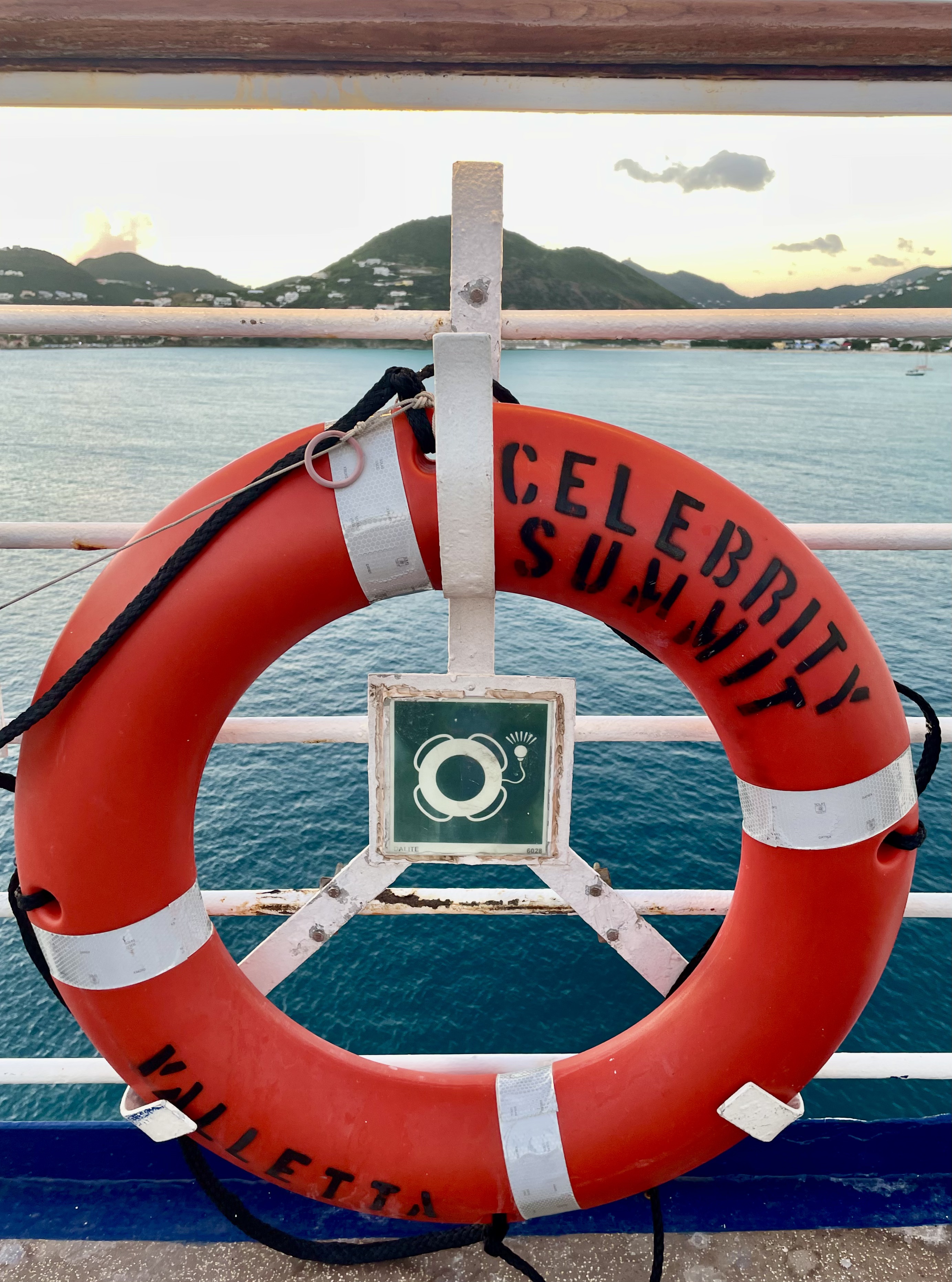
I had hoped once back at the Port we could take a taxi to visit one more site in the capital, but the traffic around the port seemed chaotic and I did not want to risk it. So, we opted instead for a little shopping in the port and a walk back to the ship on a very long pier, then lunch on board. Barbados was not yet done with us, however. As we finished lunch, an announcement came over the ship’s public address system – a monkey had made its way on board and staff were working with local wildlife officials to safely capture it and return it to the island before we set sail. The afternoon was full of whispers about the monkey and those who saw it shared photos and video of their encounters.

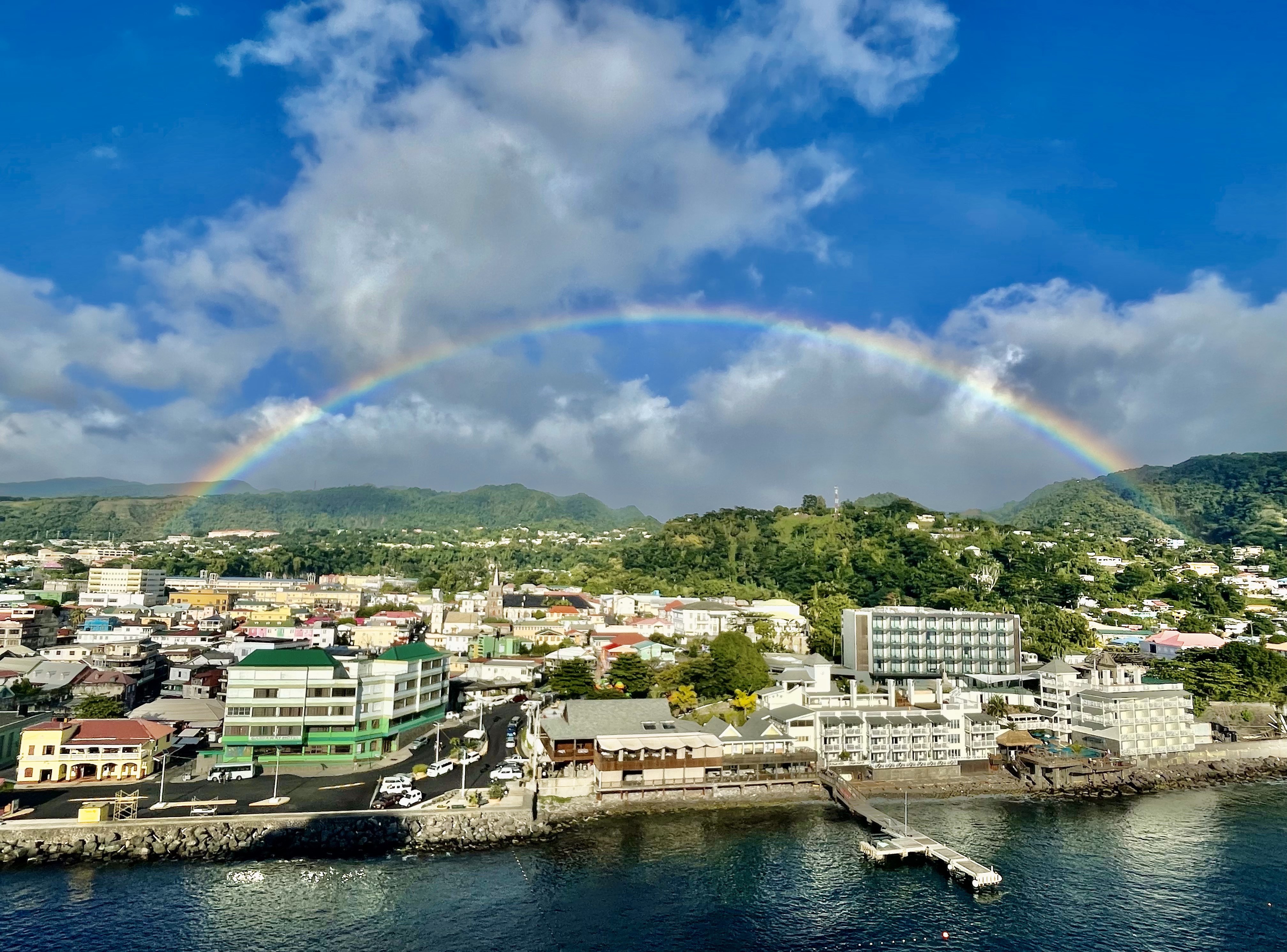
Rainbow over Roseau, Dominica

Our fifth and final port stop was Dominica. It was this stop that largely led me to book this particular cruise, because getting to Dominica is not all that easy.

We had yet another small group shore excursion that was to give us a taste of the island. We were to visit two waterfalls, one part of the Morne Trois Pitons National Park, a UNESCO World Heritage Site, and then take a scenic drive that included the Botanical Gardens.

The first stop on the itinerary was at the Emerald Pool, where a 40-foot waterfall plunges into a pool surrounded by lush greenery, making the waters appear bright green in some light. Well, that is what it was supposed to look like. And it was pretty enough, really. the trail was in excellent shape. But, and maybe it was the light rain, or the crowds, or the tour guide who seemed annoyed by her job, I just was not feeling it. I have seen many waterfalls in my lifetime and I had been expecting more. We did not stay long.

C at the twin Trafalgar Falls at the Mourne Trois Pitons National Park, Dominica

However, the Trafalgar Falls were really a treat, though the viewing area was quite crowded. It was difficult to get a good view from the viewing platform, cheek to jowl with tourists. I am sure it’s great for the island economy, but less for the visitors themselves. But below the platform was a small trail that could get one a bit closer to the water. Though there was a line, once in front, you could take a photo that made it look like you were the only one there.

Back at the parking lot, our disgruntled tour guide shuttled us back on the bus and to a rather pointless stop, yet another Caribbean island bar offering another free rum or fruit punch. This one though we had to make a special stop, maneuvering into a tight parking lot, shuffling into the bar, lining up, and then passing the counter to swipe our “free” drink like we were on an assembly line. Then tossing it back and getting back on the bus for the “scenic” drive back to port.

Our final activity was a drive through the Botanical Garden. I love to visit such places and have been to many in my travels. I asked the tour guide if she could just drop us at the garden and she told us that NO ONE gets off the bus, even though it was all of a 16-minute walk from the cruise terminal. Fine. We had lunch on board the ship and then went for a stroll through Roseau.

Sites in Roseau, Dominica

We walked through town to the Botanical Garden. We had hoped to see parrots that reportedly make the gardens their home, but there were none to be found. The gardens were not extensive, but they made for a nice stroll. Roseau was a nice surprise as well. Of all the capitals we strolled through (Philipsburg, St. Maarten; St. Johns, Antigua; Castries, St. Lucia; we did not sightsee in Barbados’ capital), it was the most pleasant. C pointed out there were no duty-free or luxury goods shops set up at the port, which might have been a major factor in the change in atmosphere. There also seemed to be more historic and well-maintained buildings in general. Of the five island nations we visited, I think Dominica and Barbados are the ones I would make an effort to revisit and stay on for at least a few days.

The final day of our cruise was a day at sea. C and I took part in an indoor soft archery contest and a scavenger hunt and had massages at the spa. It was a nice, quiet, relaxing day with some mother-daughter fun sprinkled in. It was a good day.

Overall, we had a good cruise. The shore excursions were hit or miss, but they all got us out and about and provided an introduction to the island. Celebrity was overall good–it was a nice ship, we found the food options good, and C enjoyed the free jewelry promotions. Yet due to C’s current age and interests, Celebrity might not be the cruise line for us now. C, being just a month shy of her 13th birthday, felt too old for the 10-12 age group in the kids’ club. I completely understand the hard line of demarcation for kids and teens but had Celebrity allowed her to hang with the teens, I was not a fan of the division with 13-17-year-olds lumped together. (I have seen many other cruise lines divide it by 9-11, 12-14, and 15-17, which I like much better). At this age, a ship with more family-or-teen-friendly activities would work better for us. Perhaps someday, we can return to Celebrity? But maybe we might be cruise people after all?

Southern Caribbean Cruise, Part 2: Antigua and Saint Lucia

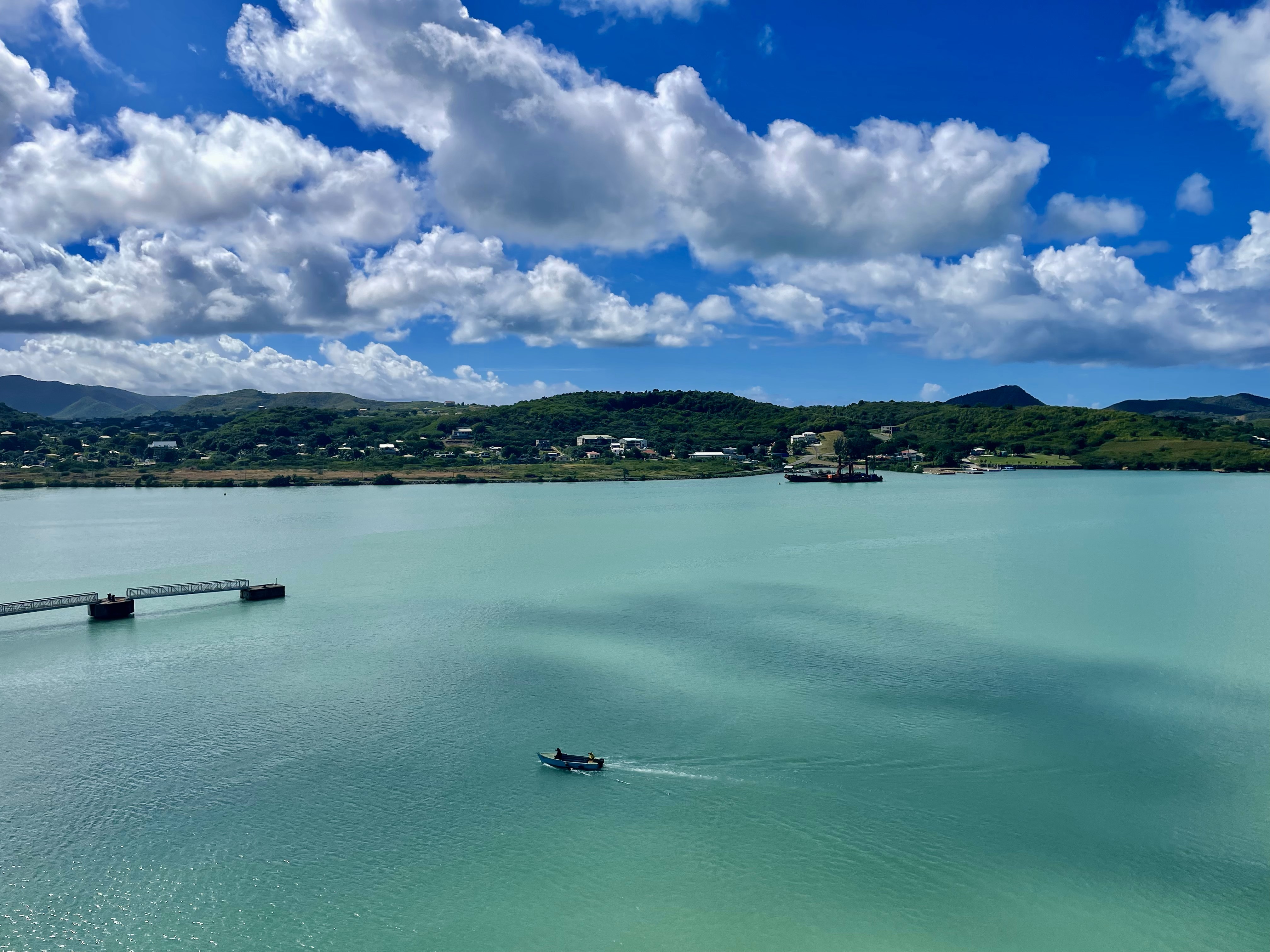
The gorgeous view from the ship docked in St. John’s Harbor, Antigua

On the second day of our cruise, we docked in Antigua. Like Saint Maarten, I first visited Antigua during a winter holiday in late December 2008. Yet, I remember and wrote more in my journal of Antigua. My 40-minute interisland flight from St. Maarten was delayed four hours. My luggage didn’t make it on my flight and I spent three of my five days there without it; I guess I just wore the same clothes day after day. I did a zipline there, the most dangerous I have ever done–we were given heavy-duty gloves and told to stop ourselves, and the wire burned straight through my glove and hurt my hand. I had Christmas dinner with the guesthouse owner and her family. I walked about their village and toured the island using either the island’s mini buses or got rides with Chippy, the husband of the guesthouse owner. I looked forward to visiting again with my daughter, C.

Our shore excursion was not until the afternoon, so I planned for us to walk around the small capital of St. John’s and visit the church in the morning. What I remember from 2008 is that the capital was not much to write home about — for some reason I remember a lot of loud techno music, even at midday — but I enjoyed visiting the Anglican Cathedral of St. John the Divine and spent a long time there.

Found on St. John’s streets – the cat bus!

From the cruise ship, I could easily spy the church’s twin towers set against a backdrop of green hills and blue sky. C and I walked through the crowds of cruise passengers (three ships were in port) and the gauntlet of touts in the noisy and somewhat garish cruise terminal, to the quieter streets of St. John’s. It was Sunday and the capital, outside the port, seemed to be only just waking up.

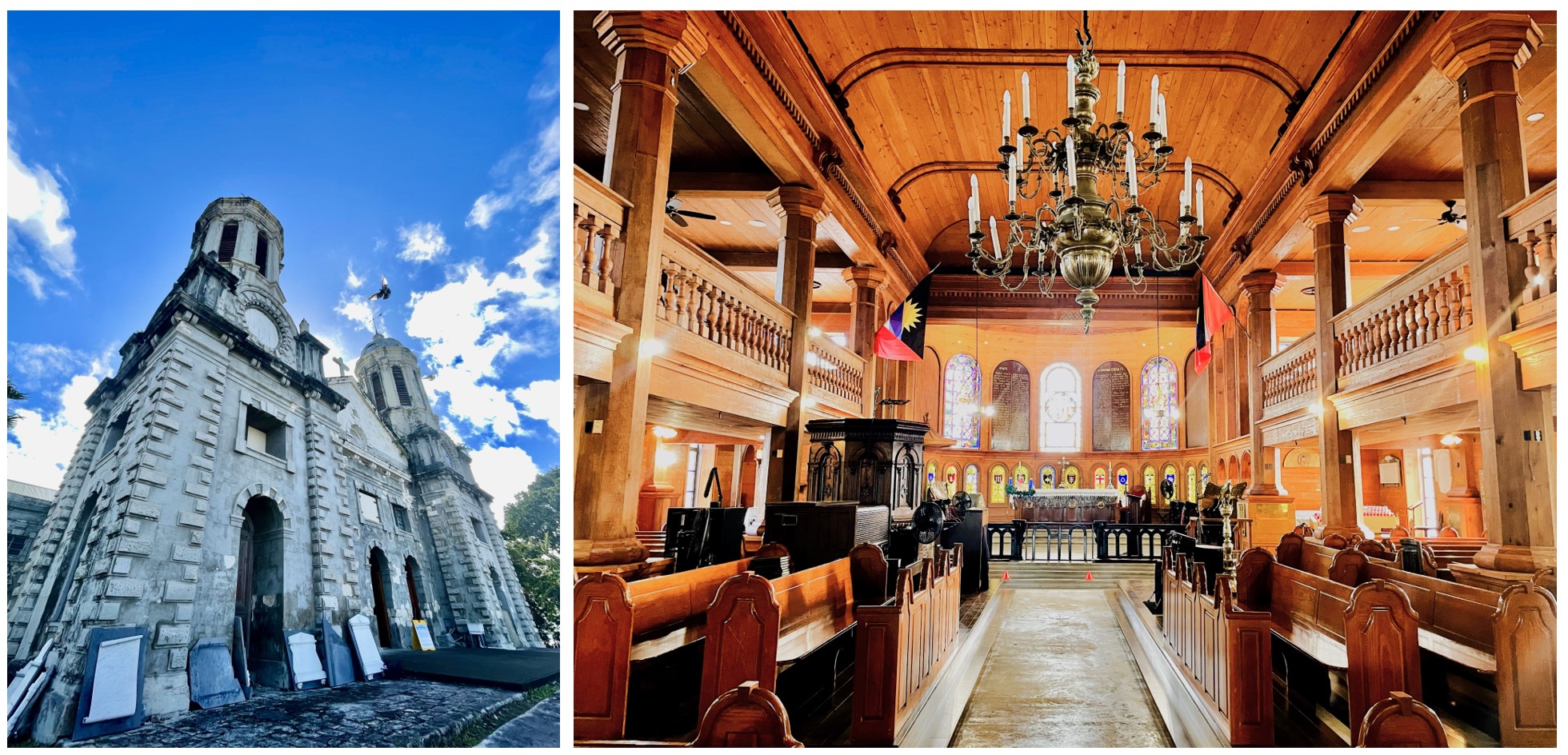
We walked a few blocks to the cathedral and paid the entrance fee. In 2008, I think I spent most of my visit poking about the graveyard. This time, C and I explored in and around the church. It has quite a history. A wooden church was first consecrated in the location in 1683 and was replaced by a brick one in 1789, destroyed by an earthquake in 1843. The present-day stone cathedral dates from 1847. Subsequent natural events and time have worn it down and its in desperate need of reconstruction. Still, I found both the exterior and interior beautiful and I hope it can be saved. C, who loves geography and has memorized the flags of nearly every country and territory, immediately noticed those of several Caribbean islands in stained glass on the wall behind the pulpit. And thus we learned the cathedral serves as the Diocese of the North East Caribbean and Aruba.

Antigua’s Cathedral of St. John

After exploring the church, we returned to the ship for an early lunch, then met our group for the afternoon shore excursion to Nelson’s Dockyard.

In 2008, I also visited Nelson’s Dockyard and what I recall from then is that 1. it was blazing hot the day I was there and 2. I loved it. Probably because I really love historic places like that. Once Britain’s Royal Navy Dockyard in Antigua, where the famous Admiral Horatio Nelson, for which the dockyard is now named, served from 1784 to 1787, it is now a UNESCO World Heritage Site. It’s the only continuously working Georgian-era dockyard in the world, and it is quite phenomenal. On my previous visit, I spent a few hours there, so I hoped I would be satisfied with our shortened cruise visit. After the less than awesome cruise excursion in St. Maarten, I was not feeling all that confident about it.

Like in St. Maarten, we were herded from the ship to the pier and then through the terminal to a minibus. We drove from the port through the heart of Antigua, south to the dockyard with no stops. I was disappointed we did not stop at Betty’s Hope, old stone windmills left over from a former British sugar plantation. It wasn’t exactly on the way, but Antigua isn’t exactly a big place. No worries though, I visited in 2008 and I doubt my pre-teen would have been all that impressed.

What we did get in Antigua though was one of the best tour guides ever; seriously, she should be considered an Antiguan National Treasure. No pre-recorded commentary on this tour and she was both informative and hilarious. And, though our cruise excursion listed only a walking tour, we also got a 30-minute boat tour of the harbor! We had three guides in all — the wonderful woman on the bus, a young man at the dockyard, and a third guy on the boat. My estimation of Antigua and cruise excursions rose.

I was excited about our third destination, a new destination for me: Saint Lucia! Many years ago I was checking in at Dulles Airport, heading off on another adventure, when I met a woman moving to Saint Lucia. All I remember is she had a massive crate-like cardboard box with her address written in bold letters in black marker and the words “Saint Lucia” underlined, and that she was breathlessly excited to tell me about it. Since then I have associated the island nation with that kind of excitement. I wanted to feel that way.

View of the town of Soufriere and the two Pitons of Saint Lucia

To really see Saint Lucia, I had signed us up for the longest of our shore excursions, a six-hour “Island’s Delights” small group bus tour with a tour of an estate, a waterfall, and a creole buffet lunch at a spot advertised with a view of the two pitons, Gros Piton and Petit Piton, two formerly volcanic spires. Having been disappointed in Sint Maarten but pleased in Antigua, I was no longer sure it was the right tour for us but could not find another that interested me and still had space.

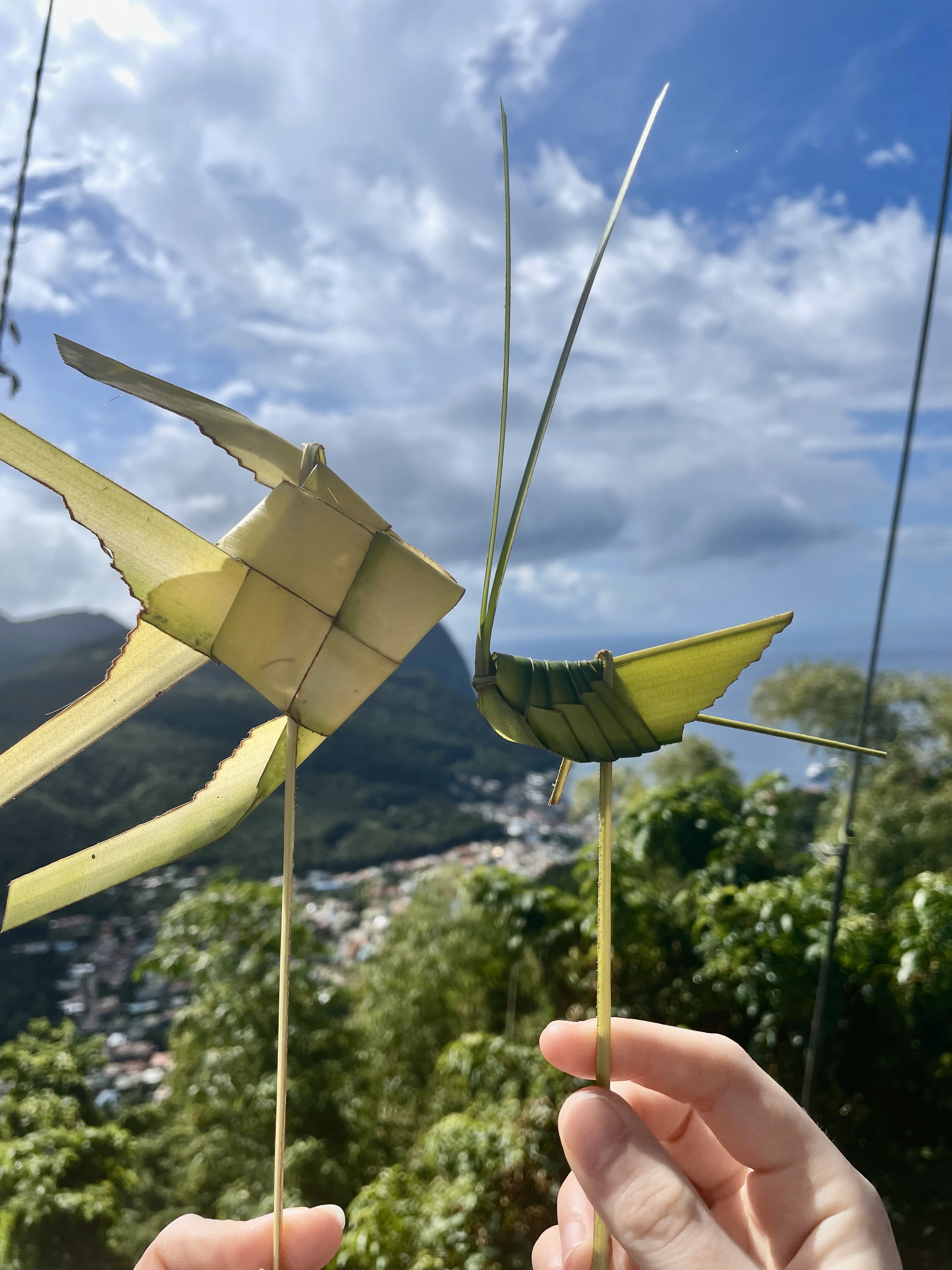
C and I show off the plant animals we got at the Piton overlook

From the cruise terminal, we headed south along the western coast. That sounds far easier said than done. Saint Lucia is a volcanic island and one of the hilliest in the Caribbean. The main area of Castries, the capital, is a small grid of flat streets; but not five minutes from the cruise port, the road begins to steeply climb. I soon realized that despite the island’s small size, much of the six-hour tour might be spent in the bus negotiating the narrow, serpentine roads. I hoped I would be wrong. (I was not) In addition, it began to rain heavily, the first such weather of the trip. Our first stop overlooking the reportedly beautiful bay of Marigot was obscured by the downpour.

We drove through a rainforest and here the rain made total sense, adding to the lushness of the thick green canopy. Unfortunately, the guide for this tour lacked a lot of charm. I likened her commentary to a tour by Captain Obvious. She pointed out plants like hibiscus flowers and bamboo as if this was everyone’s first time seeing such plants. C and I joked about this woman for the remainder of our vacation.

After an hour or so, the rain finally stopped, just in time for us to have a short stop at a roadside viewpoint above the town of Soufriere with a gorgeous view of the two pitons. We were given only five minutes here, barely enough time to shuffle off the bus and onto the decked platform for a photo. I figured this would be okay since we had that lunch with a view on the schedule.

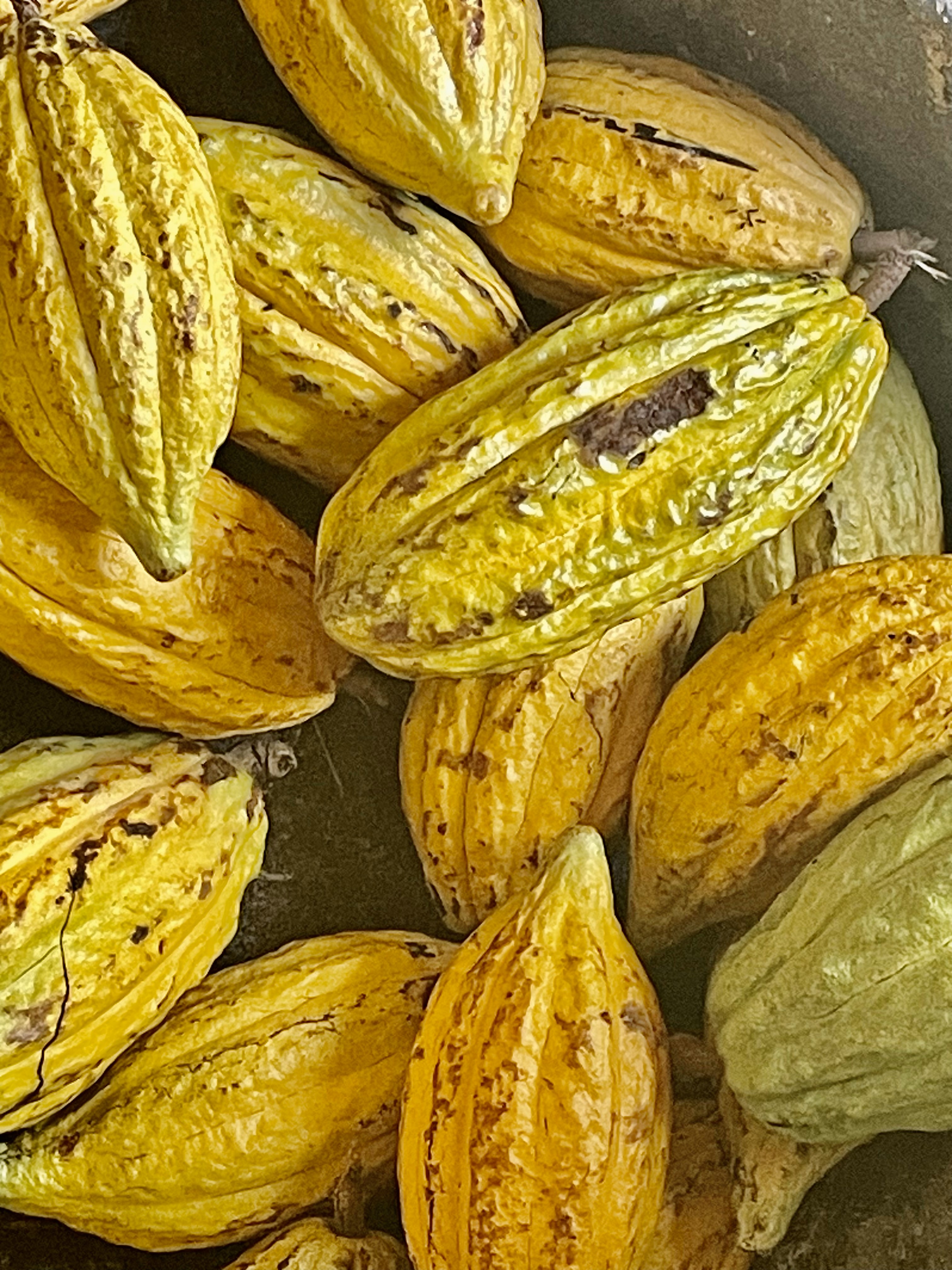
Cacao pods at Mourne Coubaril Estate

We stopped next at the 18th-century Morne Coubaril Estate for a guided tour. I love taking tours of historic places, including houses and estates and was looking forward to this and thought this visit could turn this tour around. It did not. I should have done a bit more research online as I would have known it would be only 30 minutes long. However, that would still not have told me that timeframe would be spent largely at the restrooms and sipping our “free” fruit punch. We did get approximately 2 minutes looking at a replica stick hut village (when I tried to linger and look longer, I was reprimanded by the guide), maybe 5 minutes learning about cacao production, and 10 minutes watching a guy husk and crack open coconuts (though we did get to drink the water). In all, we walked maybe 200 feet from the parking area, and in my book that does not a tour make. I reluctantly dragged myself back on to the bus.

Our next stop at the Toraille waterfall was brief and forgetful. Then it was lunchtime! Though I was unsure what to expect from the food, C and I were hungry, and I looked forward to staring out at the Pitons during the repast. We both found the plantain curry unexpectedly scrumptious and went back for seconds. Unfortunately, there was not a view to be found, and after lunch, we were just loaded back into the bus and driven back to the cruise terminal, which took about two hours!

View from the ship when docked in Castries, Saint Lucia

Back in Castries, I tried to salvage the day with a walk through the capital. I wanted to feel like we had seen a bit more of the country and the culture. We spent maybe 45 minutes exploring, looking for the local market. But I got turned around, and hot and disappointed we decided to throw in the towel and return to the ship. Saint Lucia is one place I think I need a do-over.

Southern Caribbean Cruise, Part 1: San Juan and Sint Maarten

An iguana suns himself on the wall near the Castillo San Cristobal in San Juan, Puerto Rico

I never thought I would be the kind of person to enjoy a cruise. I used to do a lot of backpacking. I would arrive in a place, without lodging reservations, and using a guidebook would find a place. I would do a lot of research beforehand, but if I arrived in a place and managed to see all I wanted in a day, I would move on, even if I had initially planned for more time. I might also arrive and find the planned one day was insufficient and stay longer. I liked getting off the beaten track and exploring. I still do. And though I rarely travel solo these days as I have my daughter with me, I was still unconvinced about cruises. However, two summers ago, C and I joined our friends CZ and Little CZ for a Norwegian fjord cruise and enjoyed it.

For December 2024, I wanted to go somewhere warm on vacation with activities and sights for my older self and my pre-teen daughter and not involve a lot of planning. A cruise seemed the ticket.

We flew out of Washington, D.C. to San Juan, Puerto Rico, on the Friday evening before the Saturday 8 PM sailing. This made me a bit nervous given we would fly in winter when I thought more weather incidents could delay a flight, and I felt even more so when our Puerto Rico-bound flight changed at least five times before the day. In the end though, we made it, and right on time.

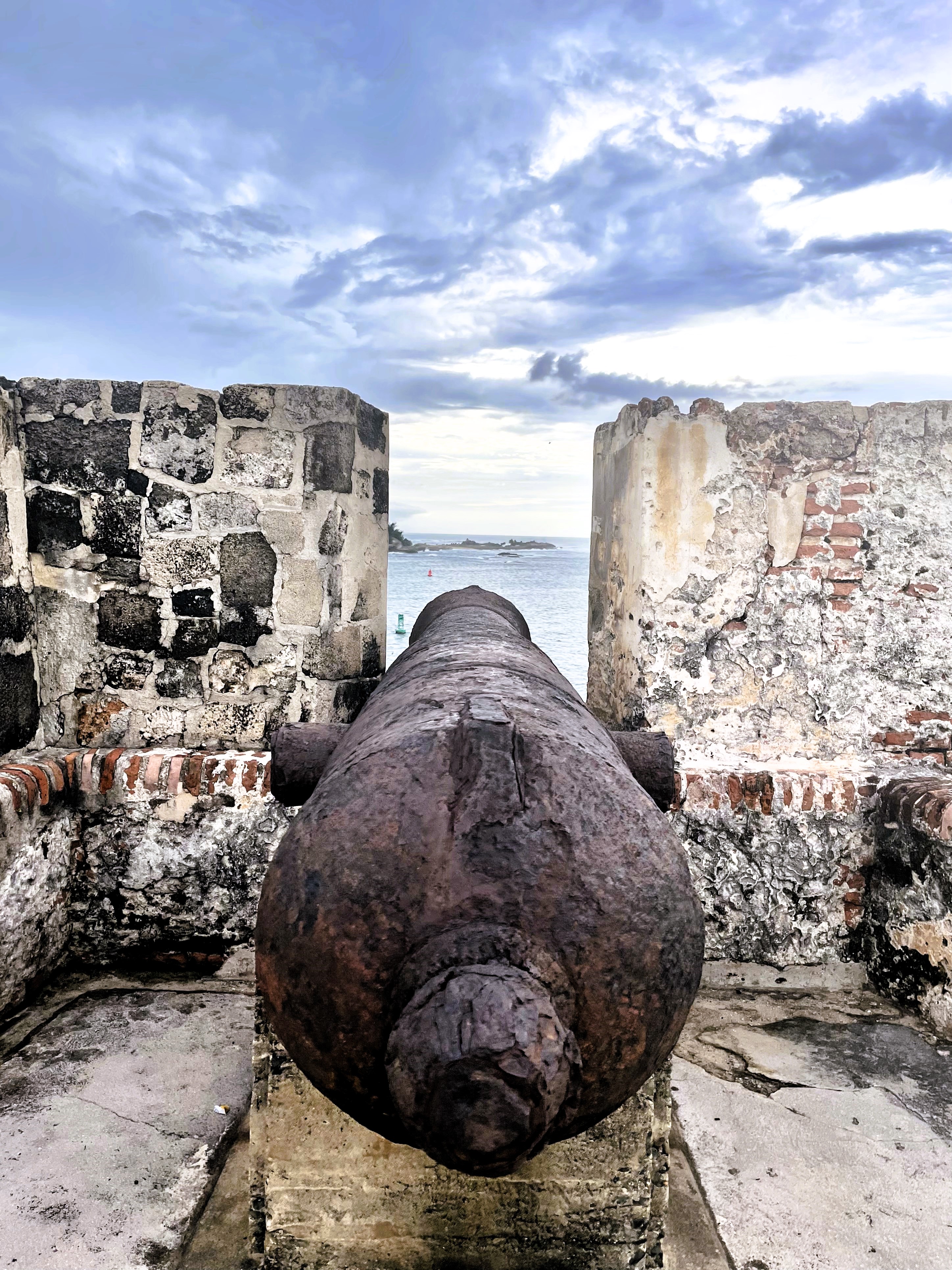
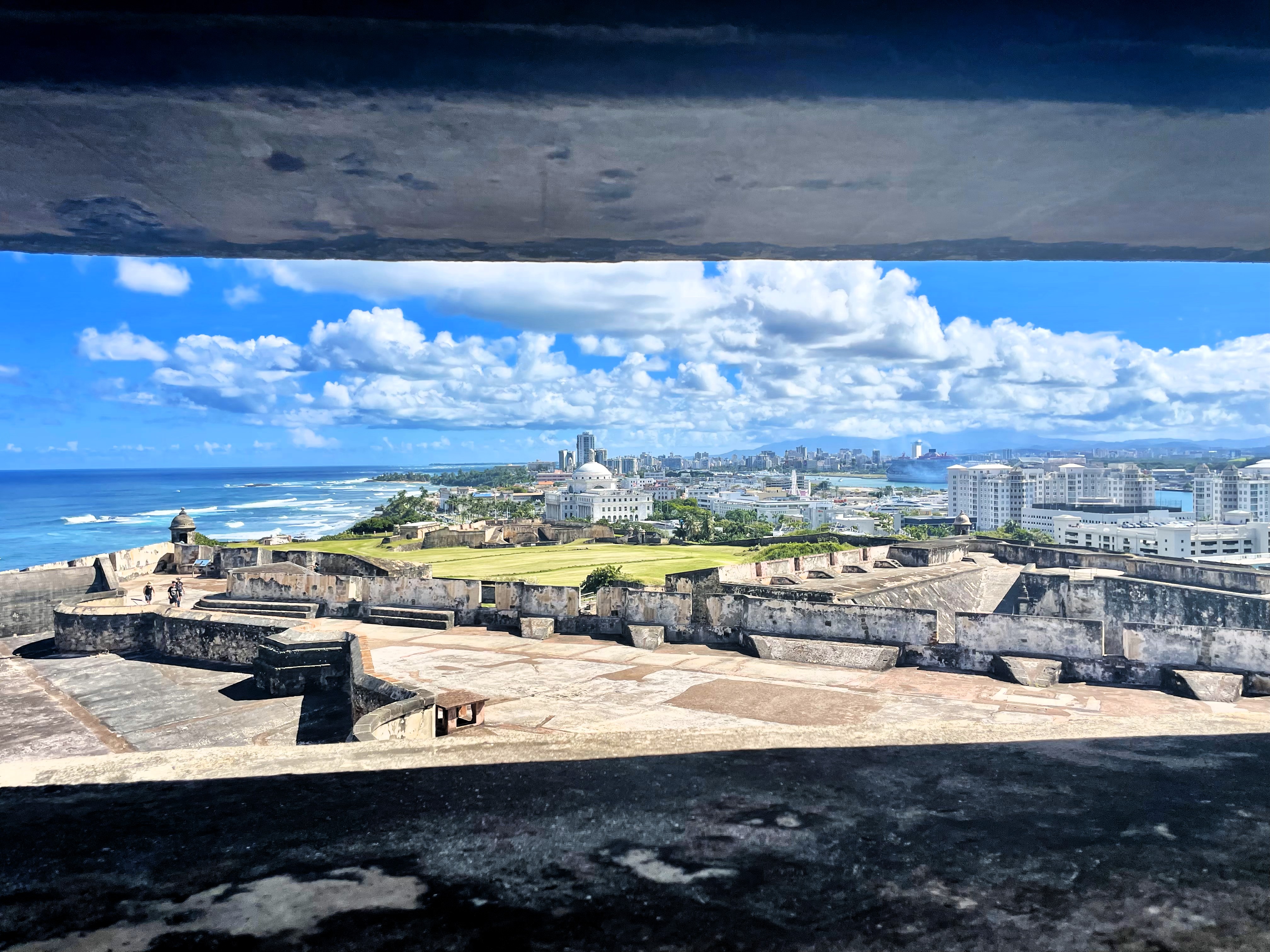
What a view! Looking out from a guard house at Castillo San Cristobal

We landed just after midnight, so we stayed the night at the hotel right next to the Luis Munoz Marin Airport; it was a wee bit worse for wear, but it was close, clean, and we slept pretty well.

We checked out of the hotel the next morning and headed to Old San Juan in an Uber. Our boarding time was at 3 PM, so we had a few hours to sightsee. I had found a service online that would allow us to book left luggage service at an Old San Juan hotel even though we were not staying there. We dropped off the bags and then were off.

Our first stop was the Castillo San Cristobal, the sprawling ruined fortress on the northeast corner of Old San Juan. Constructed from 1634 until 1765, it is considered the largest European fortification in the Americas. Despite most of the space being only low-lying stone foundations and grass, its size still means it could take a very interested person a couple of hours to see it. C and I did not have that much time. It was also quite warm and C would not have tolerated spending too much time poking about. Given its historic and cultural importance, I am glad we had some time there. The weather was spectacular and so was the view across the small San Juan Island where the oldest part of the city lies. We could even see our cruise ship docked at the Old San Juan port from the higher ramparts of the Castillo San Cristobal.

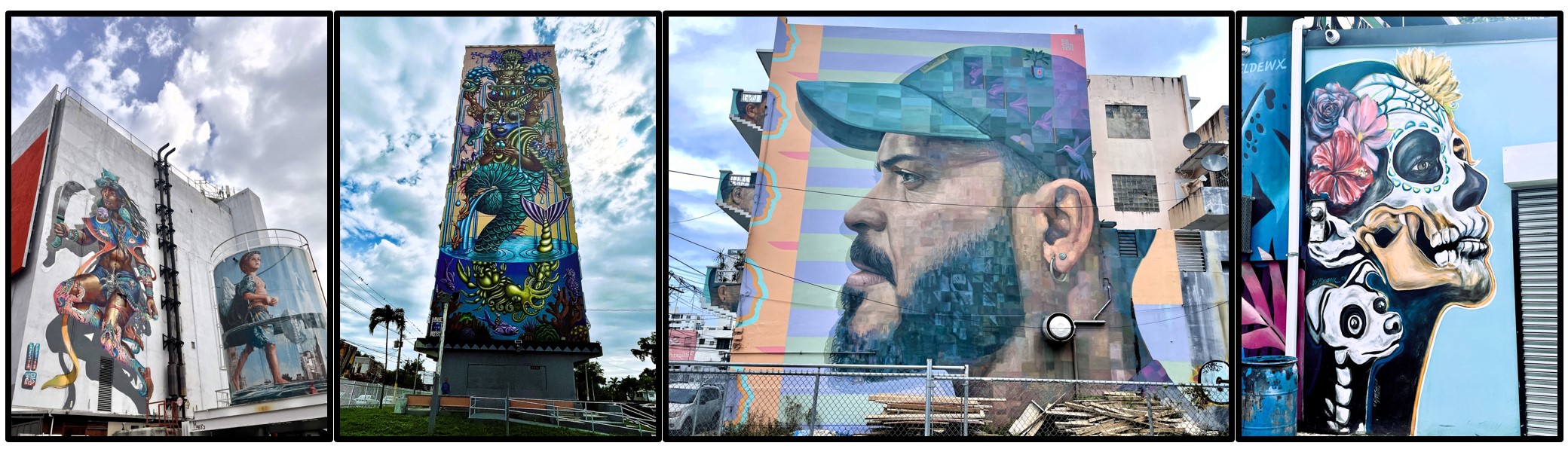
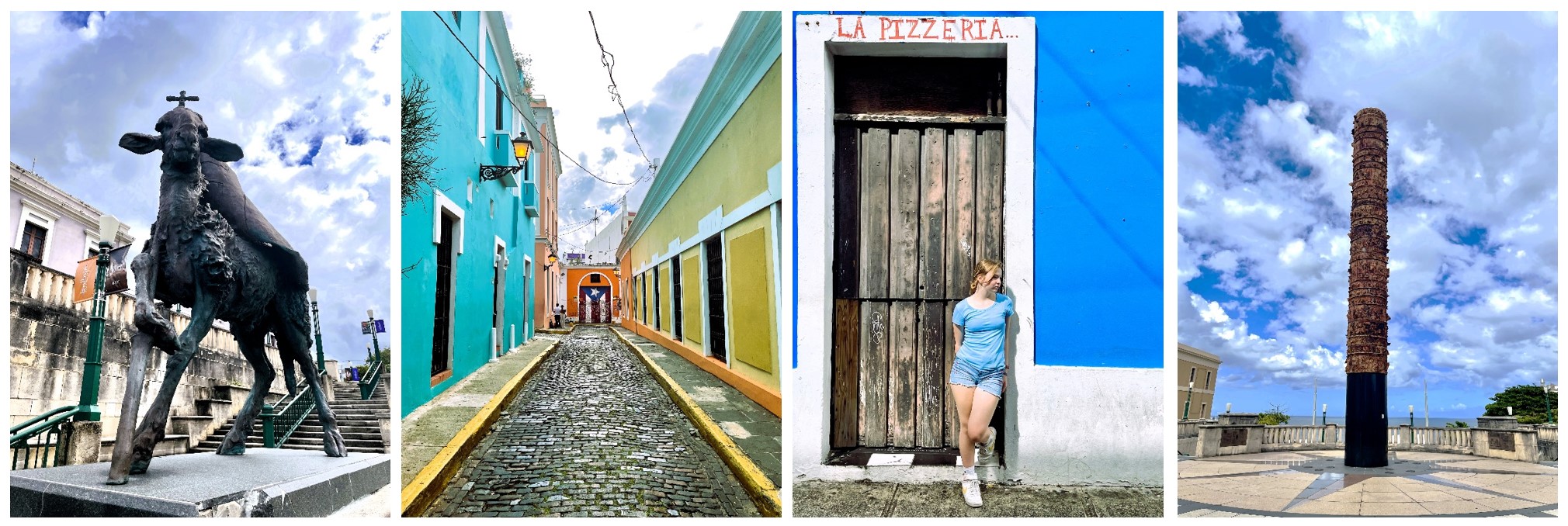
Scenes from our first day walking tour of Old San Juan

After the Castillo, C and I took another two hours to meander the narrow streets of the old city. We popped into souvenir shops (for C) and I took photos. Then it was time to pick up our luggage and head to the ship.

In the evening, the cruise ship passengers were treated to an up-front-and-center view of the Club Nautico de San Juan’s Xmas Boat Parade. Started in 2009, the parade of festively decorated boats and yachts happens each year on the second Saturday in December. What luck that our cruise ship sat smack in the middle of the parade route in San Juan Bay! The spectacle has become a major event on the Christmas calendar, drawing visitors from across the island and further afield. Not far from our ship Amazon founder Jeff Bezos’ super yacht and support vessel were moored to also watch the parade. Though I tried, I could not get C to come up on deck to watch the parade, but I enjoyed it.

A view of the San Juan Xmas Boat parade from the lower deck of our cruise ship (and in the upper righthand corner, near the ferris wheel, are the three talls masts of Bezos’ mega-yacht)

We were having a late dinner as the ship slipped out of San Juan port, the movement almost imperceptible. C and I took our anti-motion sickness pills–a lesson from our last cruise–and went to bed early. Exhausted by the late arrival the day before, a half day of sightseeing in the heat of San Juan, and the excitement of boarding the cruise, we both drifted off quickly. I had one of my best nights of sleep in a long while.

We woke up the next morning, the first of the cruise, to the beautiful view of the cruise harbor of Sint Maarten. The island is the world’s smallest landmass shared by two nations, France and the Netherlands, and it has been peacefully divided between them since 1648!

I visited Sint Maarten/Saint Martin for six days in early January 2009. I based myself in the small beachside capital of Marigot, on the French side of the island in an inexpensive guesthouse not far from the marina. Unfortunately, I do not remember much from the trip, nor did I write much down about it. What I recall is a rude waiter (ah, so very Paris-like), taking a very sweaty walk through the Dutch capital of Philipsburg, and taking a mini bus from Marigot to Grand Case.

For our excursion, I chose an open-top double-decker bus tour that would take us to both sides of the island. My daughter, like me, enjoys soaking in a place, and it was important to her to see both the French and Dutch sides. I had high, though still tempered, hopes for this tour. I should have lowered them considerably.

A view of Fort St. Louis on the hill over the bay in Marigot, the capital of French Saint Martin

We met in the ship’s theater to be given wrist bands and then herded into groups that we met again in clumps on the dock. There a tour guide walked us, very, very slowly, to the bus. Once on the bus, one of our fellow passengers decided this was the best time to use the facilities, and we waited once more. Then the bus was off for a leisurely drive through Philipsburg to the border between the two sides. I do think the monument marking the division is pretty cool. Too bad we were not let off the bus. Our guide gave us some information along the way – some of it interesting (some say the point of division was decided by having one Dutchman and one Frenchman start walking from each side; the Dutchman was a bit drunk, which is why he did not get as far and why the French side is larger), some not at all (“if you look to the side you will see houses of different sizes” – I certainly don’t need someone pointing that out to me).

The bus made its first stop at Marigot’s Harbor. We had only 20 minutes there. Annoyingly, the tour guide pointed out the well-preserved ruins of Fort St. Louis on the hill overlooking the bay and said walking up made a great hike and did not take long. Except it took far too long for people who, stupidly, had only 20 minutes there. C wanted a French pastry, so we entered a patisserie. And, in stereotypical French fashion, we were ignored for a full 10 minutes despite my attempts to call out for service. With selection and purchase, we were left with five minutes to explore… Back on the bus, our next stop was… back on the Dutch side. That was it for the French part of the island!! I recalled why I generally loathe organized bus tours, and my expectations plummeted.

Sign facing the airport near Maho Beach warning planespotters from getting too close

Our next stop was Maho Beach, a thin strip of sand directly behind the runway at the Princess Juliana International Airport, that has become famous for the photos of massive jets hovering over the beach just before landing. The thing is: A. we had all of 15 minutes at the site and B. the guide said the jets all arrive in the afternoon, and here we were standing about in the late morning waiting for absolutely nothing. Nearly all of us tour bus passengers stopped at the mini-mart for a treat, lord knew we needed something to pick us up, as we clomped back, sweaty and disappointed to the bus.

We headed back to Philipsburg, looping past the airport for dry, recorded commentary on the arrivals to the island and the pelican statue, then stopping briefly at an overlook (from where the overgrowth obstructed the view) before our last two scheduled stops: rum and cheese shops. I had mostly accepted the reality of this bus tour back in Marigot, but still chafed that the longest stops were commercial. Sigh. Though, as we dutifully filed our way into the Old Amsterdam Cheese Shop, I informed our guides we would not head back to the ship with them. We would be doing a bit of sightseeing and then heading back on our own.

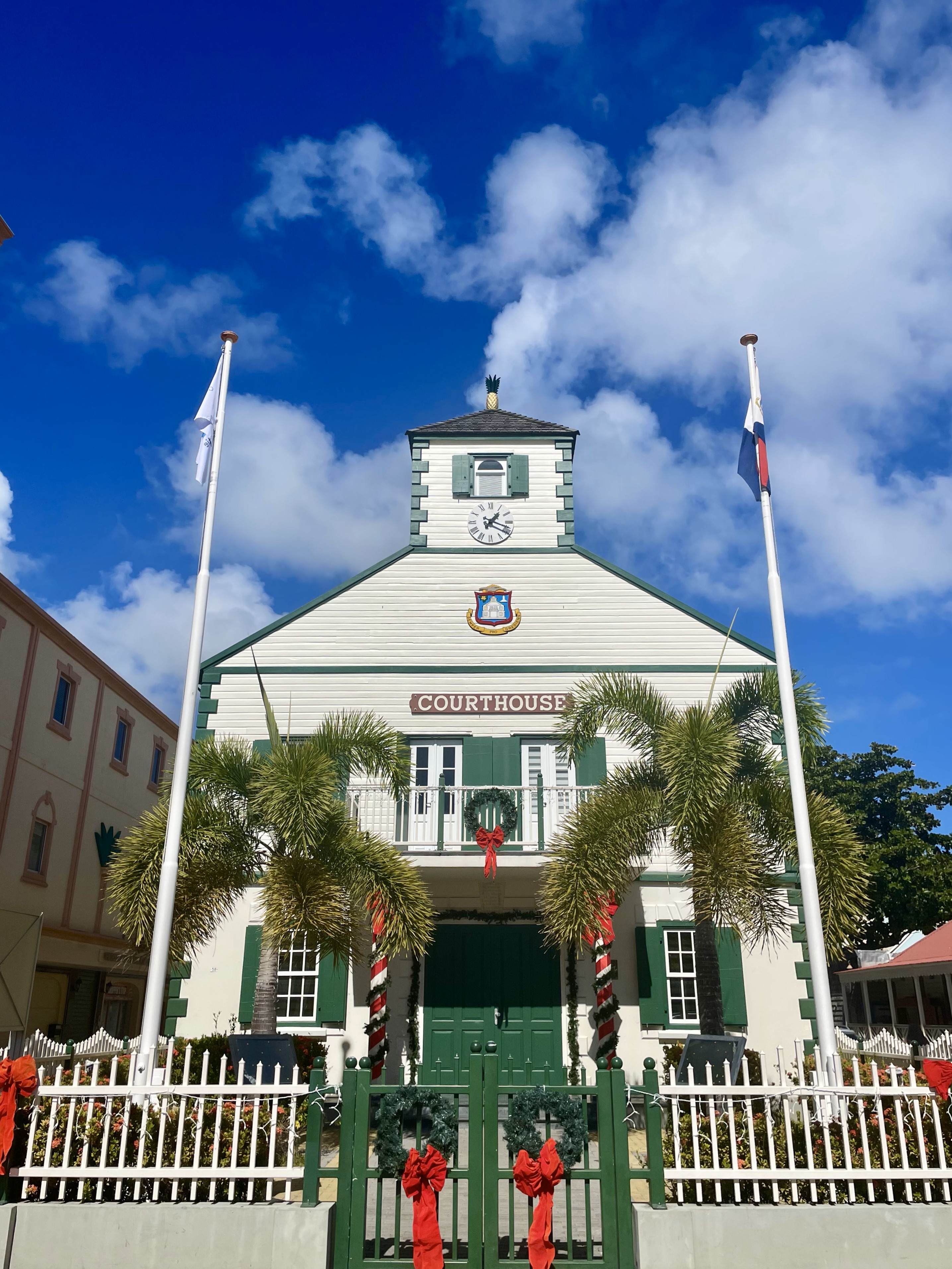
Philipsburg Court House

We ditched the rest of the group, crowded into the shop, their arms full of truckles of gouda and edam cheese and bottles of liquor, and headed into the town. Well, town might be a bit strong, as it is four long streets divided by perhaps a dozen perpendicular and a population of less than 2,000.

I had remembered it differently. My memories were dim, but it had been of a more interesting place. Maybe it had been? There did not seem much local character; the shops were mostly souvenirs – cheap sundresses, t-shirts, magnets, crafts made with shells – mixed with Duty Free brand, liquor, and tobacco stores and micro casinos. The highlight was the cute Sint Maarten Court House decked out for Christmas. We gave up. We had given it a go, walked about on our own, seen a bit on our terms. Hot and sweaty, we walked the 20 minutes back to the cruise ship.

Back on the ship, ensconced in the warm temperatures, beneath an azure sky, and looking out on the turquoise waters touching Saint Martin, I was surprised to find I felt happy. Sure, it had not been what I had hoped for but we were after all on a Caribbean cruise! I looked forward to the next stop.

In & Around DC: Autumn 2024 Activities

C sits in the autumn splendor of Gulf Branch Park

Autumn is when Foreign Service Officers about a year out from the end of an assignment bid for their next position. As I had just started a new job, I was exempt from taking part, but soon I began to see a flurry of excited postings online about where my friends would be going next. I am not a fan of how we go about obtaining our next assignments (I honestly do not know anyone who is), but I do feel a twinge of envy when others are going through it. Next year I will be bidding again, and the realization made me think about how quickly the time here in the U.S. might pass. I have often been posted to places that do not have an autumn, and thus I really want to make the most of the ones we have.

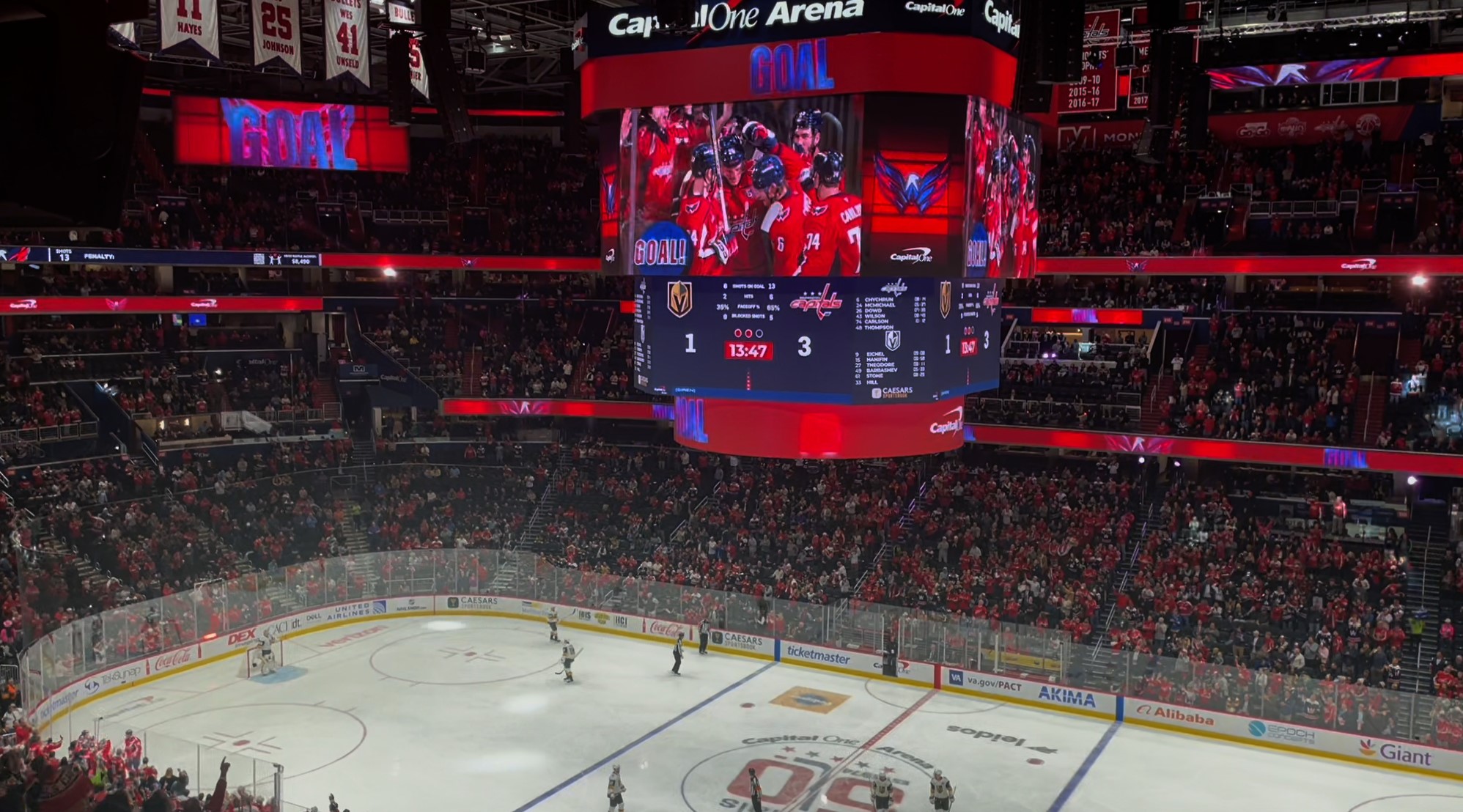
I may not know much about hockey but Caps fans really love the sport and it was exciting to be there in person!

In August, my daughter C started ice skating lessons at the Medstar Iceplex, where the Washington Capitals, the national ice hockey team in the area practice. She told me she would like to attend a hockey game. As luck would have it, an old friend from college reached out to ask if C and I would be interested in joining him at his company’s box for a Washington Capitals game in early October. I have taken C to see a good number of baseball games, but never to a hockey game. I had never been to one in my life. My friend also had two extra tickets for C to invite two friends. Though it was a school night, her friends’ parents let them join us and the girls had an amazing experience that surely gained them some cool points at school.

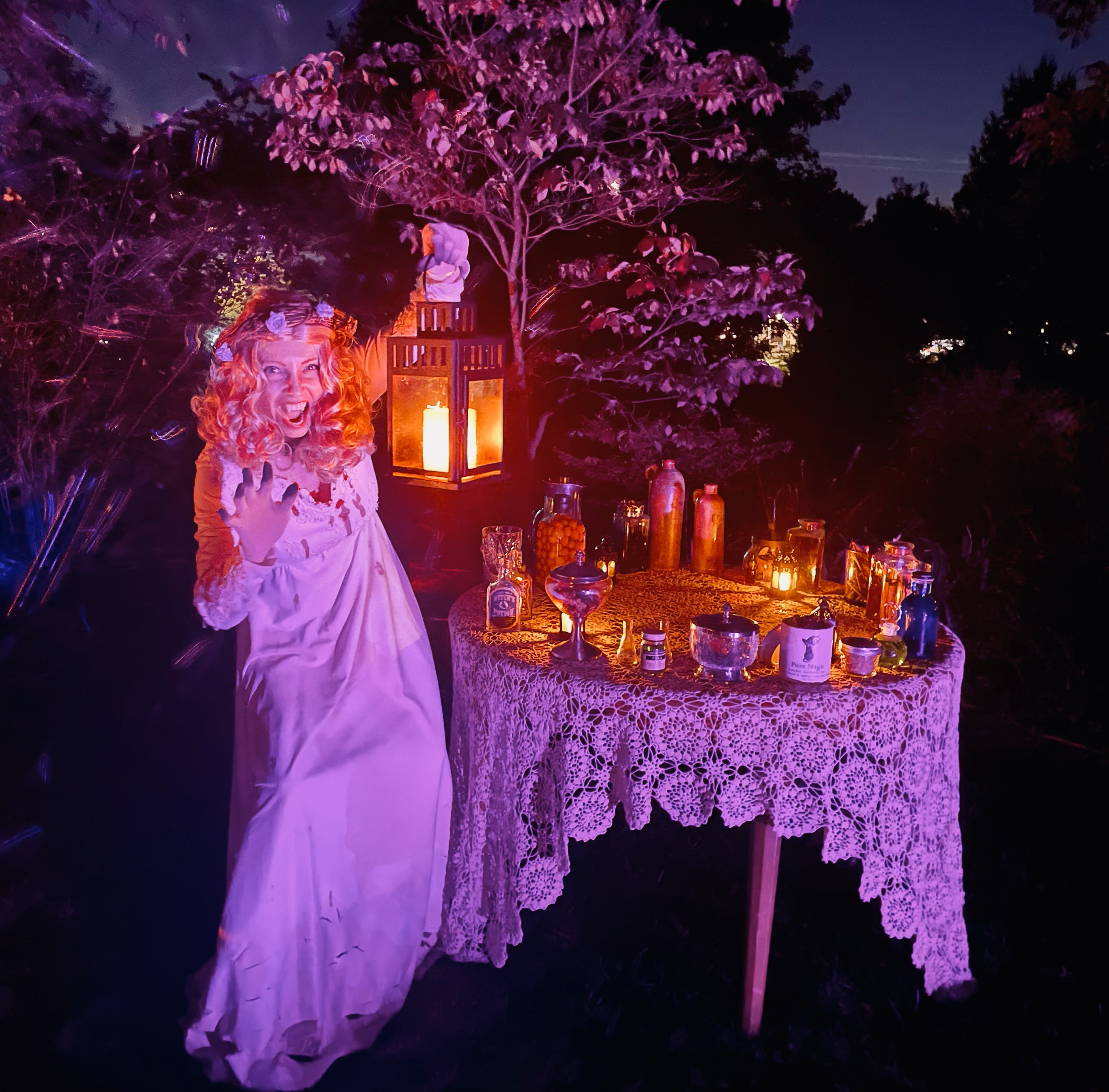
My sister scaring the beejeezus out of attendees at the Dracula Experience

I thought I might like to take C on a haunted walking tour in the area — there are plenty of ghost tours around. She has recently told me she was old enough to do one. As I cast around for which would be the best tour for a pre-teen, my sister posted that she had been cast in a “Dracula experience” in Leesburg. It would be part performance play and part Halloween-y experience in the garden of a historic manor. We met my brother-in-law and nephew at the location to see my sister play one of the three brides of Dracula. It was spooky, corny, and fun and another great opportunity to share something with family while supporting my sister in her acting passion. These are the kinds of things we could not just decide to do while living on another continent.

Two weeks later, I returned alone to that historic manor in Leesburg for a house tour. What was this manor? Dodona Manor, a National Historic Landmark that served as the residence of General George C. Marshall from 1941 until his death in 1959. Marshall served as the Army Chief of Staff, Secretary of State, Secretary of Defense, and U.S. special envoy to China. He was the architect of the Marshall Plan, an economic recovery act to assist with the support and reconstruction of Europe after WWII. He was Time Magazine’s Man of the Year twice and a recipient of the Nobel Peace Prize. It seemed weird that just a few weeks before we had been screaming in the rose gardens as we watched a spooky play and people jumped out of the bushes at us. I had grown up in this area and had not known this site existed until I attended my sister’s performance. Granted, Washington, D.C. and its environs are chock full of historic sites and the former homes of our nation’s leaders. There really is not enough time to see all that this area has to offer; we really are spoiled for choice.

Dodona Manor from the rose garden in early November

On Veteran’s Day, we joined my friend NP and her family for a hike at Gulf Branch Park. NP and her husband BP, also a Foreign Service family, are into spending time in nature and finding fun and interesting low-cost or free things to do. We love hanging out with them. They introduced us to Donaldson Run Park in September and gave us another education on the incredible local parks available in Arlington. Although by this time it was late fall, the autumnal colors of the trees were still very much on display. C needed to learn about some plants for a Scout requirement and BP, who knows a lot about flora and fauna, patiently talked to her about them while I talked with NP and their kids ran and laughed. C and I are a small family unit, just her and I, so it is fun to spend time with NP’s big, joyous family.

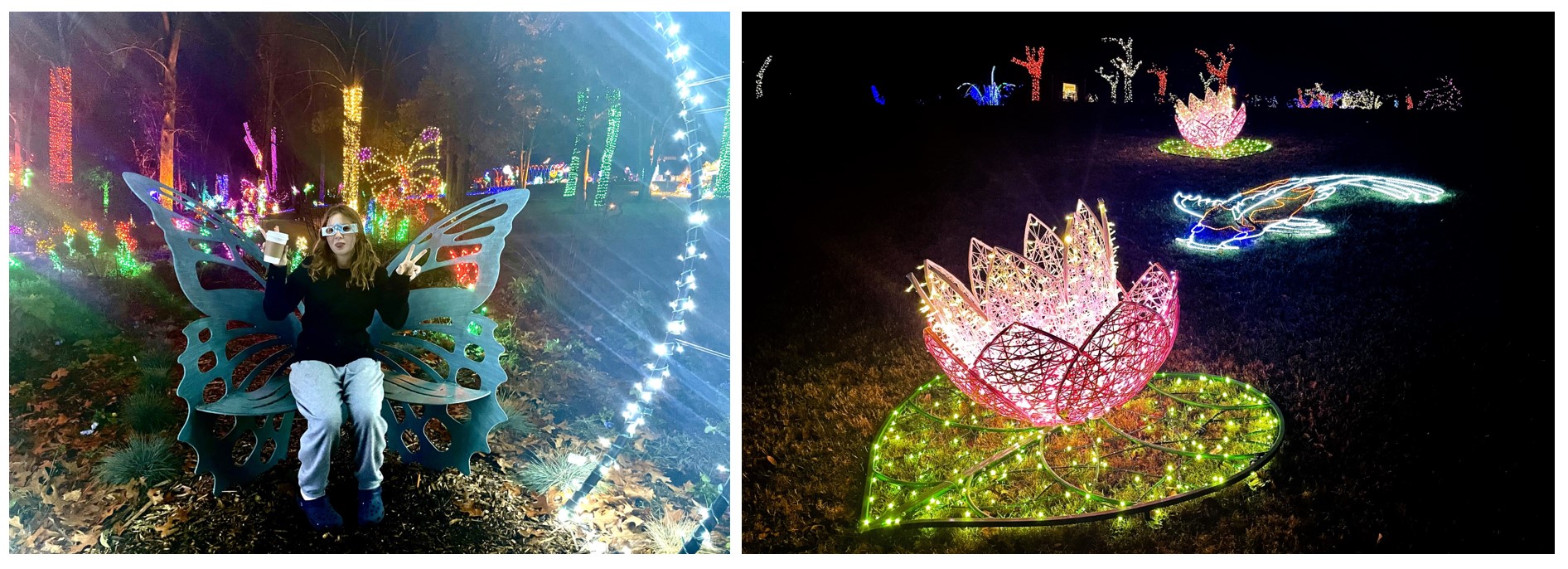
Later that week, C and I joined another of our long-time Foreign Service friends on an outing to Meadowlark Botanical Gardens in Vienna, Virginia. Once again, I grew up in this area and had never heard of nor been to this place. While searching for something fun to do, I came across this place and read they put on a great holiday light show called the Winter Walk and I invited the JKs, who are currently in D.C. for training. The JKs served with me on my first tour in Ciudad Juarez and we later visited them in both Chiang Mai, Thailand and Harare, Zimbabwe. We had dinner with them and then headed to Meadowlark. The organizers had done an amazing job decking out the park with elaborate light displays. We stopped at a beverage stand for some hot cocoa, and towards the end of the walk bought marshmallows for roasting over a large fire. It was just the right kind of cold – chilly, but not too much so. Perfect for warm drinks and good company. I expect the park is also really great to visit in Spring and we may do that.

Meadowlark Botanical Gardens puts on a lovely lights display

On that weekend, I took C and her friend AH to an archery merit badge class at Burke Lake Park, a local park in Fairfax, VA. As the girls did their course, I took a long walk. It was another gorgeous fall day and the park, another in the area that I have no memory of visiting, is a large one at 888 acres. I read that the land was originally set aside for an international airport but then another site was found in neighboring Loudoun County for Dulles International Airport. And Burke Lake, with its golf course, hiking trails (including nearly a 5-mile one around the lake), playgrounds, picnic areas, fishing pier and marina, and mini train, became this incredible public park. With the weather as good as it was, golfers, walkers, joggers, cyclists, archers, ultimate frisbee players, and families were taking advantage. Yet, though there were many people, I still felt I had space to enjoy it on my own, and I enjoyed a good two hours of walking meditation and forest bathing.

Burke Lake Park – fantastic for autumn forest bathing; C and her friend practice archery at the park

C and I wrapped up our fall activities with a magic show at the Kennedy Center. I think we managed to do a little bit of everything from sports to art, history and nature. It was a great fall. I hope others take advantage of and not take for granted the amazing wealth of activities available in the Washington, D.C. area.

Fall on the Boardwalk: October in Ocean City

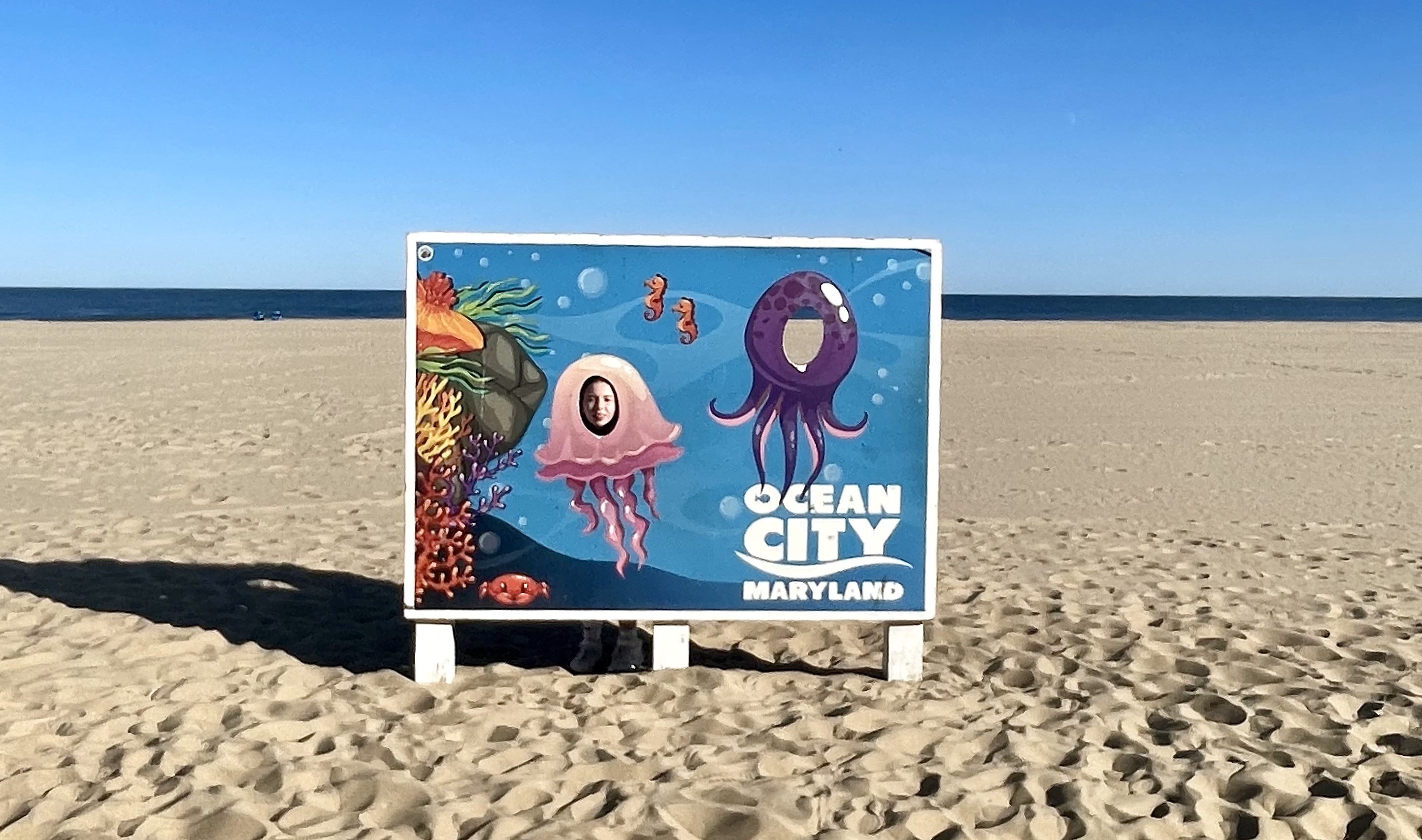
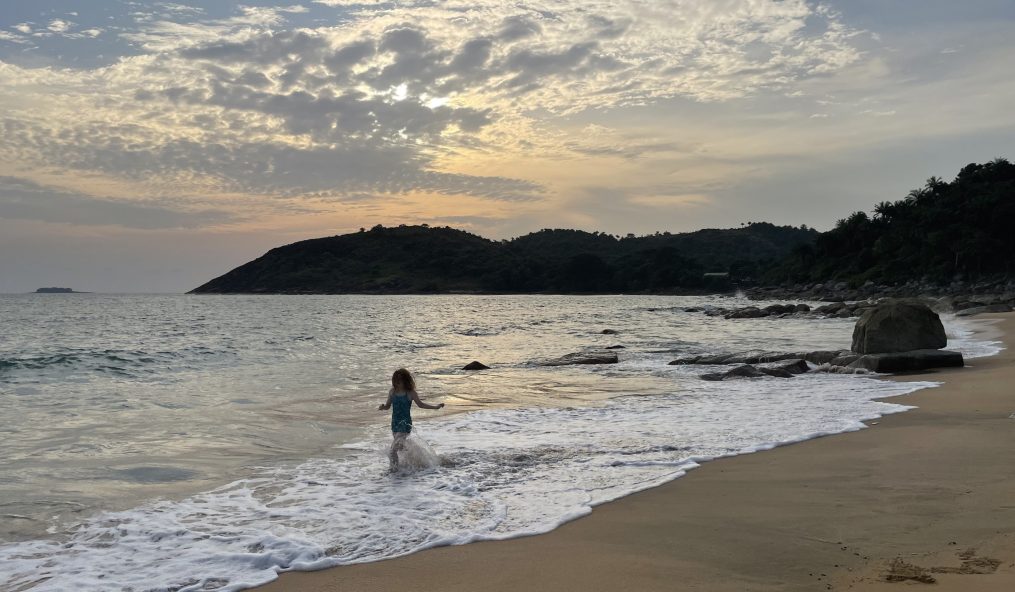
C stands in the surf at Ocean City, Maryland

When C and I lived in the northern Virginia area when I was studying French before heading to Guinea, it was C’s first time going to school in the United States. She was in the fourth grade. I recall that a friend of hers had traveled to Boston with his family and he sent her a text with a photo of a baseball stadium: Guess where I am? C had no idea. He came back, “I am at Fenway Park! Haven’t you ever been?” And C seemed a bit concerned that she hadn’t. I told her to ask him if he had ever been to the Great Wall of China or the Stone Town in Zanzibar or the Maasai Mara? But while that might be a great game amongst foreign service kids, it did not work so well among the other kids. Now that C is in middle school, where it is not so important to stand out but rather to fit in, C had asked me if we could go to Ocean City, Maryland, a place she had heard about many times from these other kids.

Sun & sand without the crowds

We had already had our major trip to Japan in the summer, and with the prices and temperatures in Ocean City higher than I wanted to deal with, I opted to plan our trip for the long weekend in October. The downside would be that some boardwalk attractions, like the small amusement parks, would be closed, and the crowds and lifeguards would be gone from the beaches. I had only been to Ocean City twice; both were as a child with my friend Jennifer, her mom, and her mom’s boyfriend. I did not like the crowds or spending a long time on the beach then and still don’t. I hoped to find enough for both C and I to get what we wanted out of Ocean City.

The weekend started with the drive. I do so love a drive and the three hours that include the Bay Bridge and the Assawoman Bridge on the final approach to Ocean City is a pretty nice drive. We lucked out with the weather! It was almost summer-like hot, but despite a major car show in town for the long weekend, tourist numbers were far below summer levels. A quick check-in to the hotel, then lunch, and then a drive to the northern end of the Boardwalk at 27th Street. C and I walked the full 2.9 miles of the Boardwalk to its southern terminus at the inlet, stopping to take in the beach, grab some snacks, and do a little shopping. C loves to buy t-shirts and hoodies with locations on them and she was determined to acquire some cute Ocean City attire to show off at school.

Sights along the Boardwalk – C in a funny cut out by the shuttered Ripley’s Believe It Or Not, a sand sculpture, and the Coca-Cola chair on the empty beach

At the Boardwalk’s terminus, where most of the famous sights and activities are located, we found several arcades. For me, an arcade, especially if it has skeeball (actually, it had better have skeeball), is just part of the Boardwalk experience. Though C loves arcades I do not often take her as she will clean me out. But for the Ocean City Boardwalk, I made an exception. Afterwards, C got some ice cream and I bought a single size of the famous Thrasher’s fries. And C and I walked the whole way back up the Boardwalk together.

On our second day, I drove the 15 minutes south to the Assateague Island Visitor’s Center. C and I last visited in 2019 during our mid-tour Home Leave from Malawi. Then, I rented a bicycle with a carriage to ride around Chincoteague; this time C had her own bicycle and we would explore the other of the two famous islands on two wheels.

Assateague ponies in the distance

We were just over the causeway to Assateague Island when we caught sight of a small herd of the famous ponies grazing near the water. It was the only time we saw them that day, though we still enjoyed our two-hour ride and a short walk along a nature trail in the dunes alongside the remains of the abandoned Baltimore Boulevard (a once grand idea to build a development on Assateague that Mother Nature destroyed leading instead to the protection of the barrier island). Once again the weather was warm and bright, perfect for a ride. We saw only a little more wildlife, including some migrating monarch butterflies and a black snake that struck out at C riding by when her bicycle surprised the reptile sunning itself on the asphalt (both she and the snake were unharmed).

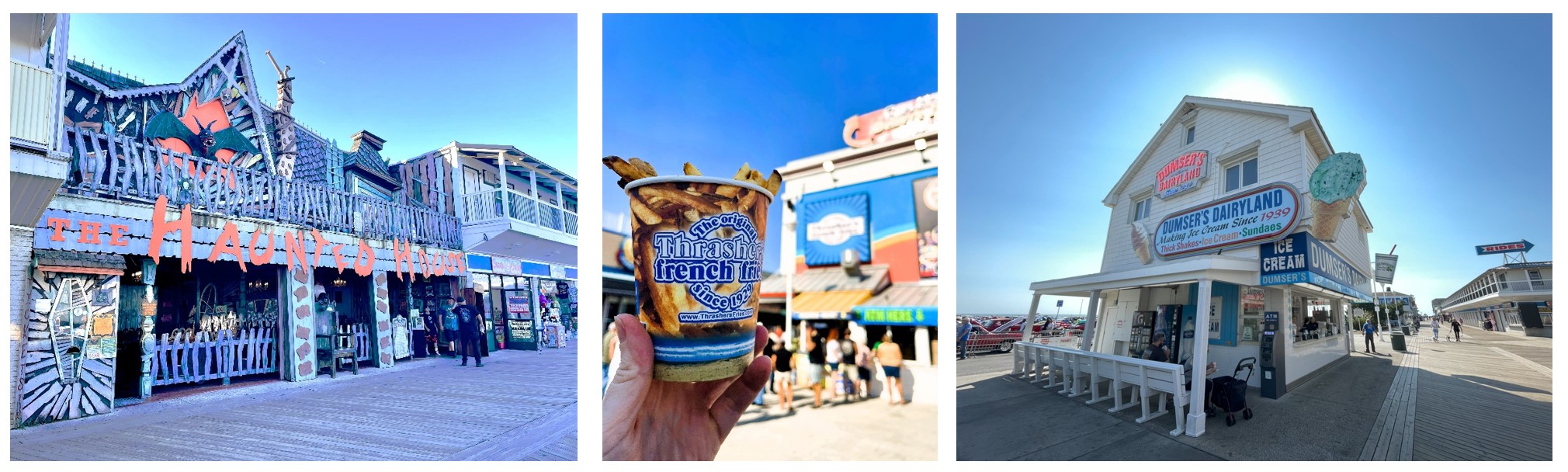
Some of our stops on the southern end of the Boardwalk

After our ride, we were ready for some lunch and the siren song of Boardwalk goodies called us. Having only tried the deliciousness of Thrasher’s french fries the day before, C and I completely understood why the combination of fresh-cut potatoes, fried to perfection, and then doused in salt and vinegar, have been a Boardwalk staple since 1929. It was not the healthiest lunch, so we went whole hog and chased our fries with some ice cream from Dumser’s Dairyland, another Boardwalk institution (since 1939). C had been telling me for a few months that she was ready for ghost tours, so we opted to give Trimper’s Haunted House, on the Boardwalk since 1964, a try. It’s a simple dark ride where two occupants sit in coffin-shaped car that follows a track through a building’s first and second floors. It is just dark enough with enough creepy design to keep us guessing. But it was really the two live actors that jump out and grab you that really made the ride. C and I were screaming at the top of our lungs. Boy, that sure was fun! (though C says maybe she isn’t ready for another Haunted House for some time). To calm down our fast-beating hearts, we once again hit the arcade.

C makes Go Ape look easy

Thus, C tried to chicken out of our evening adventure at Go Ape. We had signed up for the Fright Night activity. I did not know quite what to expect having not been to any of the Go Ape locations ever, but I thought it would be ziplining in the dark and perhaps there would be people dressed up to make it a bit scary. Instead, it was a two-level ropes obstacle course, with the lower level about fifteen feet above the ground and the second level probably 30 feet. The entire time one is attached to a safety line, but it does not feel as if one is (at least not to me). When guests asked “what happens if I fall?” the staff would respond, “you don’t fall, you just dangle.” C caught on very quickly and completed all the obstacles on both levels. She even purposely dangled several times. I could only complete the first level; though I climbed up to the second level, I stood paralyzed at what looked like the easiest of my scary choices for a good five minutes before heading back down.

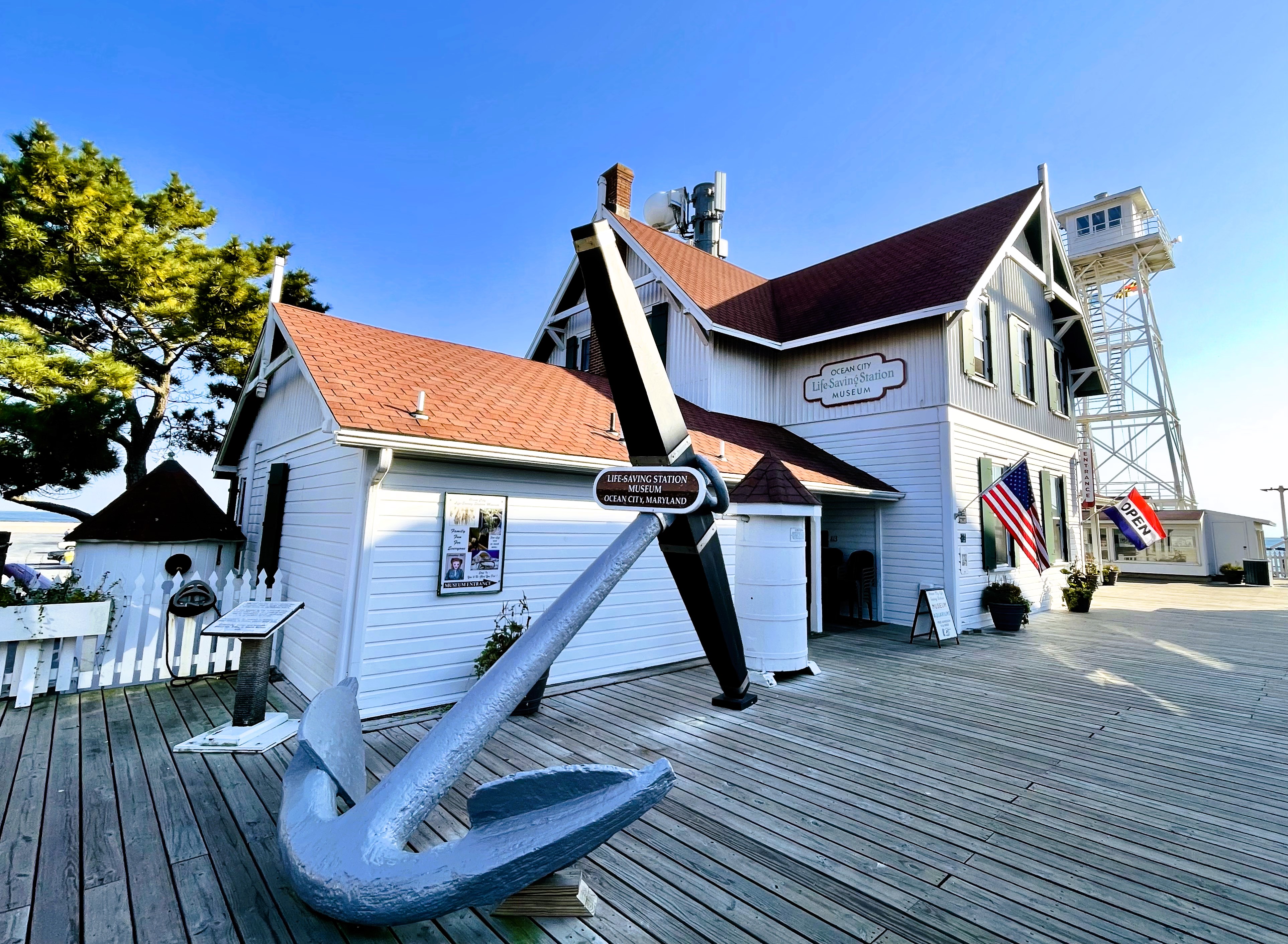
On our final day, we first took an hour walk along the beach. The good weather continued and I wanted to soak it in, with sand between my toes and my lovely daughter by my side. Before leaving town, we made one last stop on the Boardwalk. We visited the Ocean City Life Saving Museum. Though small, it provides a wonderful history of Ocean City, which has delighted tourists since 1875, and the U.S. Life Saving Service, the predecessor of the Coast Guard. The museum is housed in a former USLSS station from 1878. Even C found it somewhat interesting, so that is saying something.

The Ocean City Life Saving Station Museum

Because I love throwing away money on rigged games of chance and enabling my child to do the same, we once again hit the arcade. We had to get enough points on our cards to finally trade them for some items that we could have purchased for far less than we spent (but with much less fun). With her new stuffed pig and stretchy shark, we headed to the car for the drive home. Another successful foray into Americana under our belts.

In & Around DC: Sights & Activities of August 2024

August was a busy month for C and I what with my starting my new job as an entry-level Career Development Officer at the State Department while managing C’s final three weeks of summer camps then the start of seventh grade, and C pursuing several merit badges for Scouting. It still sometimes feels a little strange to me to be posted to Washington, D.C. and to have so many activities at our disposal. Had we remained in Guinea we would have had one more year left. There would have been no summer camps and we would have had only a fraction of things to see and do.

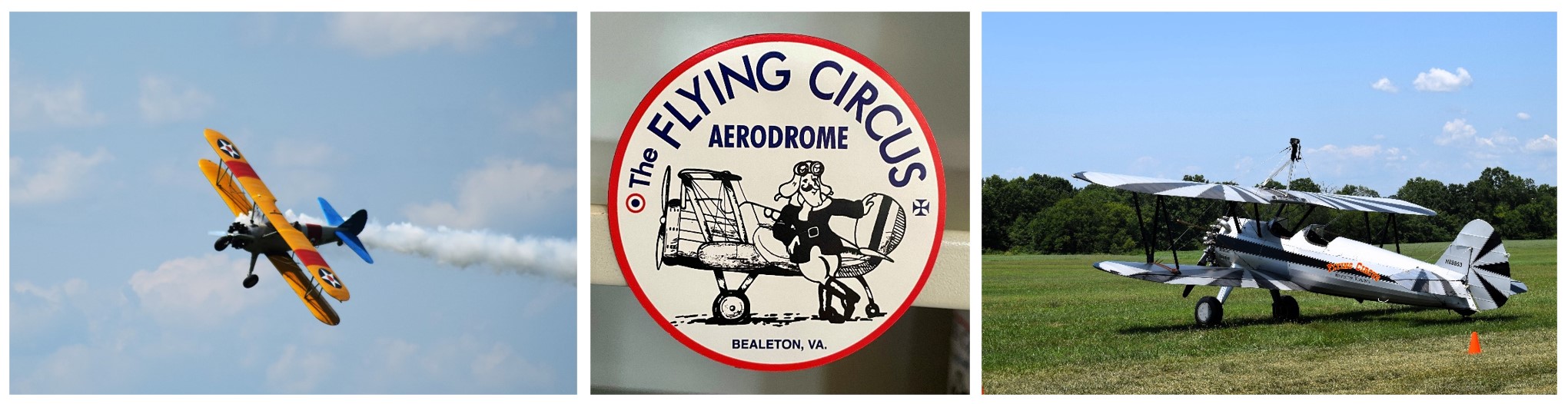
Our first activity of the month (actually the tail end of July), was a visit to the Flying Circus Air Show in Bealton, Virginia, about an hour southwest of DC. One of C’s merit badges, in Aviation, had a requirement to either tour an airport, visit an aviation museum, or attend an airshow. In Malawi, C had a tour of the airport and control tower for a school field trip and we had been to the National Air & Space Museum a few times, so an air show sounded like something different to do. A quick Google search brought me to the Flying Circus. How lucky that there was an air show every weekend throughout the summer within an easy drive. Of course there was. I wonder sometimes if there is anything this area doesn’t have?

Photos from our afternoon at the Flying Circus

C and l located our lawn seats, last used when C was a toddler, and headed out to the air field. It was a real hot and muggy mid-summer day, perfect for grabbing some food truck goodies and hiding in the shade of one of the free trees to watch the aeronautic acrobatics. These daredevil pilots go up in their WWI replica open air planes every weekend to demonstrate the barnstorming tactics of the early airmen and women. Pretty fantastic stuff.

Gunston Hall from the garden

Three weeks later C had her merit badge event in Lorton, Virginia, on the expansive grounds at Gunston Hall, the residence of U.S. founding father George Mason. As C would be there a good eight hours, I decided to make excellence use of the time and do a little sightseeing. I had not visited Gunston Hall before, so I booked myself a house tour with access to the gardens and grounds. As luck would have it, I was the only person on the tour that morning; I very much enjoy historic home tours, especially when I get the guide to myself.

Gunston Hall sits on a plain overlooking a slightly over a half-mile tree-covered slope down to the Potomac River. It’s a grand location about eight miles south along the Potomac from George Washington’s home at Mount Vernon. Though river travel was the way to go, Mason didn’t like to do it much as his father had died when his boat capsized on the same river and I learned he was a bit of a homebody. I suppose with an estate like Gunston Hall (and the wealth and privilege it conveyed) it was not so bad hanging out at home. I enjoyed the tour and a little meandering outside before heading over to the small historic town of Occoquan for lunch.

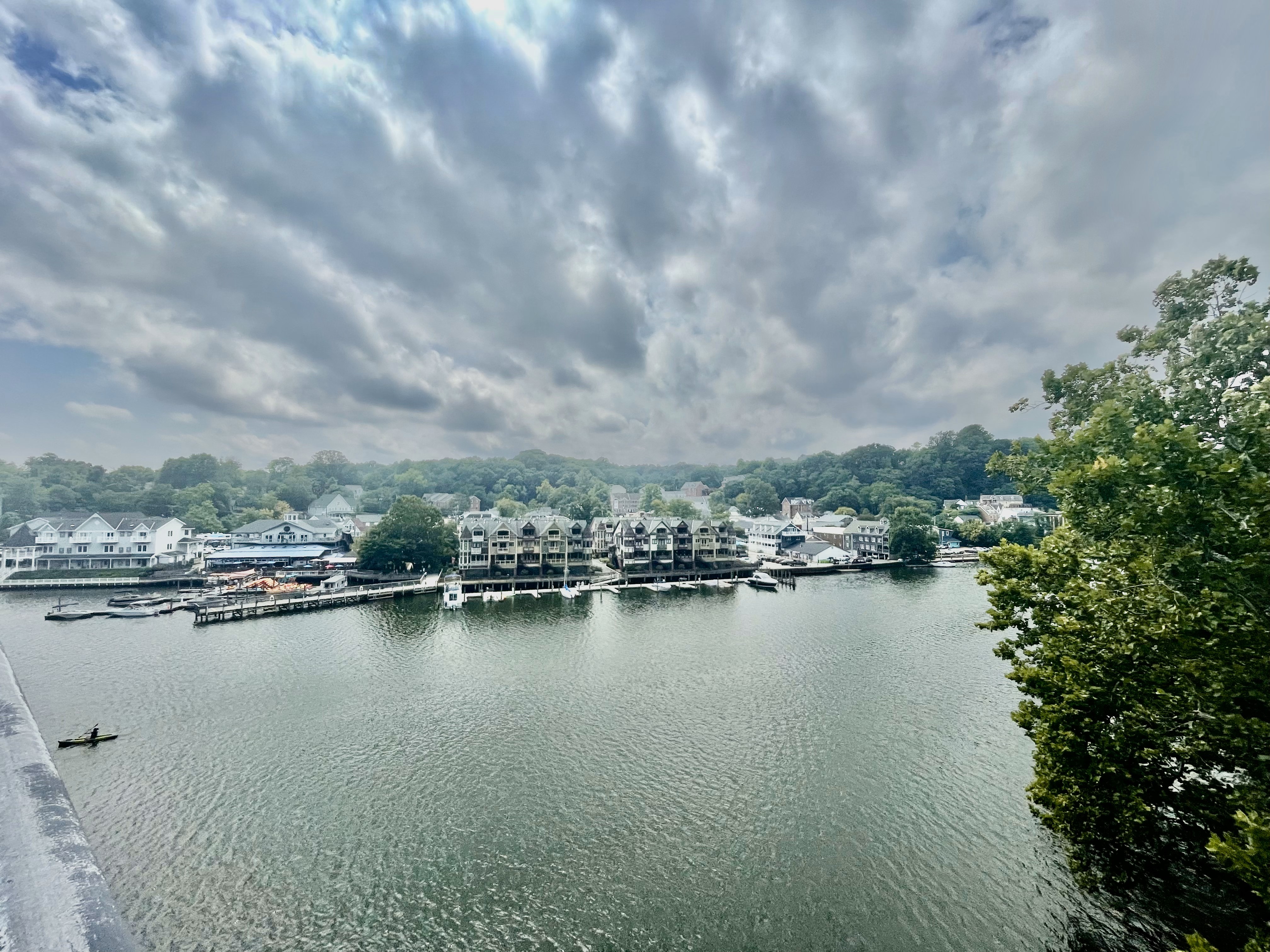
A colleague recently told me how much she enjoys walking in and around Occoquan, with its lovely location alongside the Potomac tributary of the same name. I found a nice table at a restaurant on the water, to enjoy a delicious meal and take in the view. Boats of families were coming and going in the small marina, and visitors were kayaking or stand-up paddle-boarding. After lunch, I took a long stroll through town, including a loop using the footbridge across the river, up back to the highway, and then back over the pedestrian sidewalk on vehicle bridge, ending with a big cup of frozen custard. I spent the last bit in the small local museum and a riverside park. The history of the town, established in 1804 but with colonial tobacco warehouses and mills set-up as early as 1734, is well worth a stop. I would have liked more time to visit both Occoquan, maybe getting out on the water, and Gunston Hall, where the numerous trails on the property beckoned for a long walk.

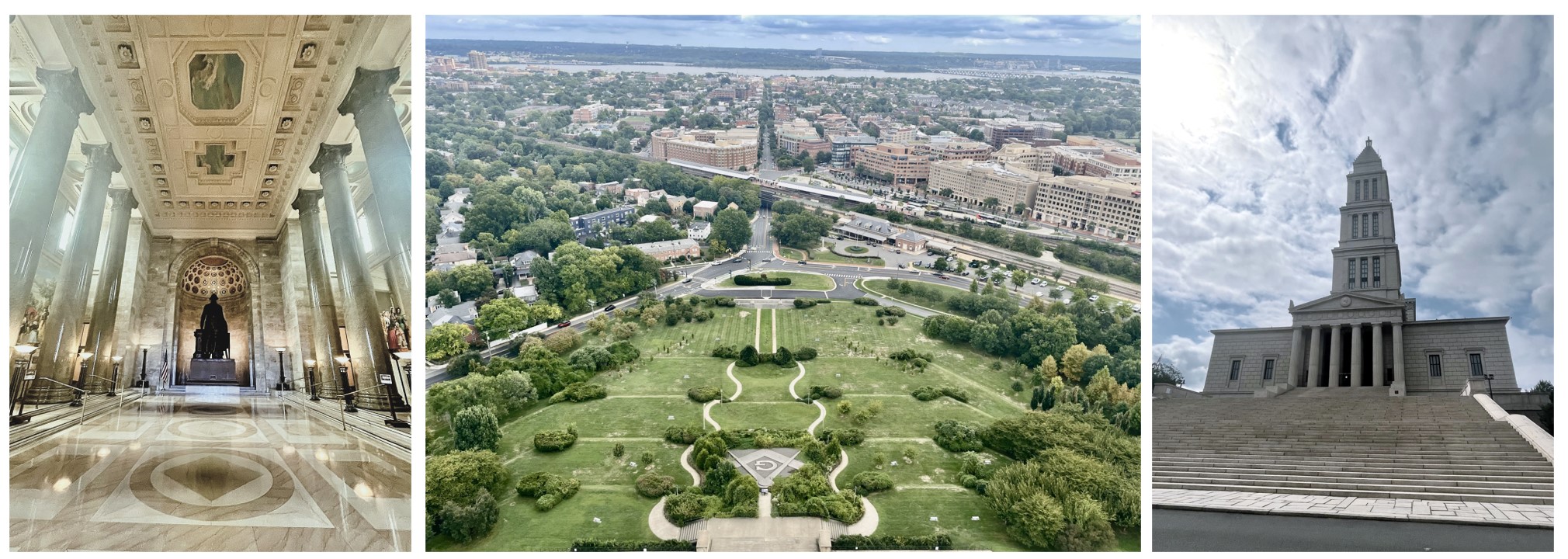
We wrapped up the month of sightseeing with a visit to the George Washington Masonic National Memorial located in Alexandria, Virginia. I remember in the early 90s dropping off a boyfriend at the Amtrak Train Station across from the memorial and thinking, I really ought to visit there someday. I grew up in northern Virginia and spent several parts of my life here, but it took until now to finally visit this extraordinary memorial to both masonic traditions and the first president of the U.S.

The fantastic George Washington National Masonic Memorial– left: the grand hall; center: the view; right: the memorial itself

In the early 1900s, American freemasons decided to build a monument to George Washington, not only the country’s first president but also a prominent freemason. They hired a famous New York skyscraper architect, who went on to also work on 30 Rockefeller Center, and its rumored the building is at least partially inspired by the ancient lighthouse in Alexandria, Egypt. Work began in 1922 but was not completely finished until 1970; in 2015 it was designated a National Historic Monument. Sitting on Shuter’s (or Shooter’s) Hill, the 333-foot tall building is at once both imposing but also seems smaller than its true size. Standing in the grand hallway, with its 40-foot high columns flanking either side and a much-larger-than-life statue of Washington at one end, the place feels so much bigger than expected. The tour took us to the replica of the Lodge room where the freemasons of the area would have met (Washington was often too busy being president to attend), including a chair of Washington’s. On other floors we could visit a chapel, a small museum to freemasonry and other related fraternal organizations, and to a platform on the top floor allowing 360 views of Alexandria, the Potomac River, and off into Maryland, and Washington, D.C.

C sporting her new nationals football-style jersey at Nationals Park

But that is not all! Oh no, we really had a very full month. We also caught another Washington Nationals game. C and I love to catch a game at Nationals Park and we try to go to 2-3 a season. C especially likes to go on promotion nights. We also attended a performance of MJ the Musical at the National Theater, where each season they bring Broadway blockbusters from New York. MJ is a biopic about Michael Jackson told through his songs and music. There are several of these types of Broadway plays out there such as about Tina Turner, Britney Spears, Neil Diamond, and the show We Will Rock You, which uses the music of Queen and we saw on our cruise ship to Norway last year. I don’t now how many of those C would like, but she lists “Smooth Criminal” among her favorite songs of all time, so I figured this would be a hit, and I wasn’t wrong. At the end of the month we also took in the Cat Video Fest at the Alamo Drafthouse Cinema in Crystal City, Virginia. The film was just 90 minutes of video clips of cats. Like watching one really long YouTube Video. BUT, the money goes to support shelters and other cat support organizations. We went with Foreign Service friends we met the year I was here for French training and who have just returned to the States for another year. It was an hour and a half of wholesome fun in comfy theater seats and yummy, not-all-that-healthy food.

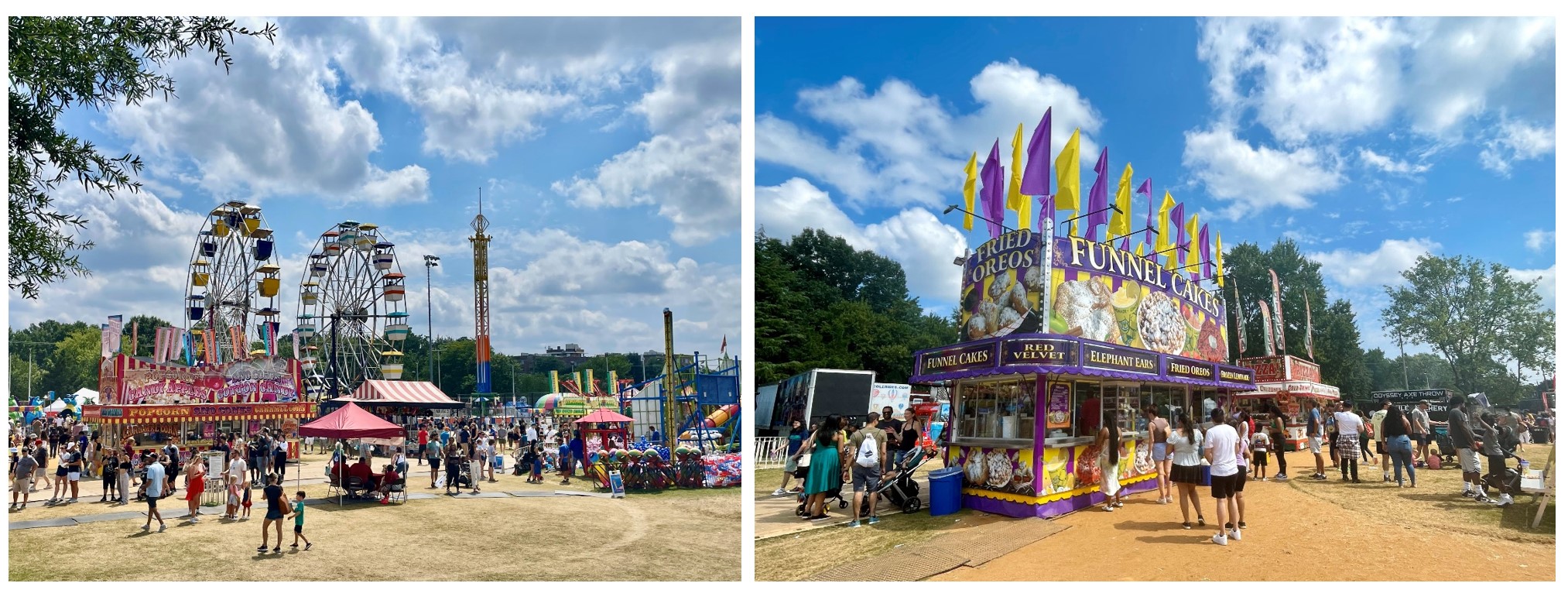
C and I rounded out our month with a visit to the Arlington County Fair. I could not remember when I last went to a county fair! As I try to recall, the last I remember was in Frankfurt, Germany, in the 90s. Foreign Service friends of ours on a domestic tour who were volunteering at the fair invited us to spend the afternoon with them. They had been given some ride tickets for volunteering and their eldest daughter received a bunch of ride tickets as a prize for her winning photograph. The forecast had been for a bit of rain, but the weather turned out spectacular! Carnival rides, games of chance, and fair food like corn dogs, pizza, nachos, funnel cakes, deep fried oreos, and cotton candy were in abundance. Ah, so, very, Americana!

All in all, we had a great final month of summer; we really made the most of it. As of now, the spring and the summer have felt like they have been around a long while, and I love it. The weather will remain warm for another month or so, but soon enough things will cool down. It is, I think, harder for me to appreciate being in the D.C. area when the cold of late fall and winter roll around. Still, I will continue my attempts to make the most of our domestic tour in Washington.

The Mechanics of Settling into DC

The Washington Monument from the fountain at the WWII Memorial

This post is long overdue. One could even say it has become OBE or Overcome By Events in State Department parlance. And yet I cannot quite shake the thought of putting pen to paper in an attempt to explain at least some of the processes we went through to unexpectedly curtail from an overseas tour to Washington, D.C. To explain what is largely a bureaucratic logistical exercise based on policies and procedures laid out in the State Department’s Foreign Affairs Manual but can become exasperating and stressful.

Moving the Cats from Guinea In a Hurry. Traveling internationally with pets has never been without its challenges. {see here and here and here for example] On airplanes, my cats have traveled cargo, excess baggage, and in-cabin, but also in the car when we drove across the U.S.-Mexican border to Ciudad Juarez. Transportation though is just one piece of the puzzle. The greater challenge is the @%$&! paperwork. It has to be done quickly and correctly in a short timeframe within the 3-7 days of travel. Before going to Guinea, Europe had instituted new rules that required all pets transiting the EU to meet the same requirements as if they were entering those countries. Though we needed an extra document endorsed by the United States Department of Agriculture / Animal and Plant Health Inspection Service (USDA-APHIS) for the plane change in Brussels, that was all given that our travel originated in the U.S. However, coming from Guinea, designated as a high-risk rabies country, one needs to have a titer test completed at least three months before travel. This would not be possible with my shortened departure timeline. Therefore, we could not fly to the U.S. through Europe. Instead, we took Ethiopian Airlines via Addis Ababa, which required us to fly nine hours in the opposite direction first, subjecting ourselves to 34 hours of travel time door to door. And the cats to 34 hours in their carriers. This included Ramen, our new diplo-kitty. It was stressful, as usual, but we managed, again.

Temporary Lodging. When transferring from an overseas posting to the U.S., a Foreign Service employee can utilize the Home Service Transfer Allowance or HSTA. It helps employees and their families to defray costs upon their return. It can cover lodging and some per diem for up to 60 days, with some possibilities to extend should household goods not yet arrive. This gave C and I a place to stay while I worked out my next steps.

Before our arrival, I had reached out to the same company that provides temporary lodging for government workers that had housed us the year before. I wanted us to be in the same apartment building we had lived in during my French training as I figured it would provide the easiest post-curtailment landing for my daughter. I did not know where we might be after the temporary lodging, but at least I could initially ensure she would be somewhere familiar and would start at the same elementary school she had been at before we went to Guinea. We move so frequently in the Foreign Service that living in a place more than once is a rarity. Not only were we able to get the same building, but when we checked in we found we had been assigned the exact same apartment we had vacated only 7 months before! Alas, the HSTA covers for only so long and I needed to find something more permanent.

Enrolling the Kiddo in School. Once we moved to Guinea, I thought I was done doing the school enrollment for a few years. Yet here we were suddenly back in northern Virginia. Luckily, I had been through the process once before when preparing for my Guinea assignment at the Foreign Service Institute in Arlington, and the schools in the area are very familiar with military and foreign service families moving in and out of the area. Thus the paperwork was pretty straightforward. One thing I could not do in advance though was the tuberculosis test, which is mandatory for enrollment. Though our Health Unit at the Embassy in Guinea could perform the test before departure, a test conducted while still in a country with a high incidence rate of TB will not be accepted.

It had taken longer to arrange the curtailment than expected – with bureaucracy it is always a waiting game – and thus our flight got us back to the U.S. after school had been in session for a week after winter break. To get my daughter C enrolled as quickly as possible, the TB test was a top priority. After landing, we went through immigration, gathered our belongings, got a taxi to the hotel, and then with my father’s car waiting at the hotel, we headed straight to a clinic to get that blood draw. C was then able to start school a few days into the following school week.

[Not so fun fact: Later screenings found that my daughter has latent TB, most likely as a result of our serving in Guinea. The majority of persons with latent TB in the U.S. acquired it overseas. She had to undergo long-term monitored treatment for it. Just one more gift from Guinea and an unexpected side-effect to our lifestyle.]

The Search for Permanent Housing. As a Foreign Service Officer, there is not really any housing that is permanent until one leaves the service, thus permanent housing refers to the lodging one lives in for the majority of the tour. Overseas that is one’s assigned housing. In the U.S., it is the housing the employee finds to live in.

With my 4 years of college living in dormitories, my 7 years living overseas with various study, work, and travel, and the combined 14 years overseas with the government, I have not had a whole lot of experience looking for housing. Though I had found a remote assignment and could have lived anywhere, like my condo in Florida, I felt that 1. professionally it would be better for me to be in DC, and 2. personally it would be better for my daughter to be where she had been before. When I took her to school the first day back, a friend of hers from the year before spotted her, ran toward her, and they hugged while spinning around as if they were in a movie. I knew then that staying in the DC area would be 1000% the right decision.

However, knowing you want to be in a certain area and finding housing there are two very different things. House hunting is exhausting. There is research into what one is looking for and then checking out what is actually available on the market. Then setting up viewings. Each place has positives and negatives and I imagine C and I living in each one. In many ways, it feels similar to the bidding process we go through to get our next assignments. Then one finds a place and has to apply and hope the other side likes you too.

Thankfully, I absolutely lucked out and the fourth place we look at is a gem and the owner likes us and picks us over the other potential renters. Then, because I have lived in furnished places for decades, I had to buy furniture. I had odds and ends such as a rocking chair, a decorative bench, two wood storage cabinets, a piano, and many wall hangings, but I did not own a sofa or a bed, end tables or a TV stand, dressers or desks, bookcases or lamps. I expect that seems odd for someone my age, but it must be fairly common among those with this kind of nomadic life, right? Even though I tried to buy economical pieces, all the expenses did add up. Still, there was a bit of fun to the shopping spree.

After all that, it is little wonder that I was not very keen to pull up stakes again only six to 12 months later and decided instead to remain in DC. Every move just comes with so many challenges; it never seems to get easier. It might indeed be getting harder the older I and my daughter become. Yet there are many positives to being here and C and I look forward to spending some more time here before we head back overseas. Now that the mechanics of settling in have given way to feelings of being settled.

2023 Winter Vacay: A Trip Down Memory Lane, Part 6, Death Valley to Disney

On the road in Death Valley heading toward Panamint Springs

On our second morning in Death Valley, we woke early in preparation for our departure from the park. I knew I would want more time in the park, so I reserved a hotel halfway back to Los Angeles instead of making the full drive that day. We would backtrack first, heading toward Death Valley Junction to visit Dante’s View.

Dante’s View, considered one of the best views in Death Valley, sits atop Coffin Peak and 5,575 feet above Badwater Basin, and provides an amazing panoramic view of the southwest part of the park. It allows one to see both the lowest area of the park (Badwater) and the highest; the 11,049-foot Telescope Peak sits on the opposite mountain ridge. Apparently, the early visitors to the area from the borax companies found the view evoked visions of Dante’s nine circles of hell. I cannot imagine what they were thinking given the spectacular beauty of the scene laid before us. From the height we could really see the size of the temporary lake in the basin below. The view is somewhat famous as it appears briefly in the first Star Wars movie as Luke, Obi-Wan Kenobi, C3P0, and R2-D2 get their first view of Mos Eisley. There was certainly no water visible at that time.

Our view from Dante’s Peak

From Dante’s View we would drive about two hours over the majority of Route 190, past Panamint Springs, to the Father Crowley Overlook. It felt further and longer. Though the park was busy, there were times when we saw few other cars. The height of the mountains towering over the valley, the sheer expanse of the seemingly barren wilderness emphasized how very small we are. Maybe it was in part due to these feelings that when we at last arrived at the Overlook, we found it rather disappointing. The steep and narrow Rainbow Canyon, where fighter jets from the China Lake Naval Air Weapons Station or Edwards Airforce Base once practiced tricky maneuvers, is impressive, but I found the windy road, with its hairpin turns, far more interesting. If you find white-knuckle driving interesting. (I sort of do and don’t)

We turned around, and retook the twisty-turvy road, passing Panamint Springs again, before taking Panamint Valley Road out of the park. Suddenly, there was a valley full of golden flowers. It had been days since we had seen many natural colors other than the piercing blue sky and the varied tans and browns and muted reds of Death Valley. Although there is wildlife in the park, we had not seen any. Not a bighorn sheep or a lizard or a hare. We could not recall seeing living insects, just some dead in the salt flats of Badwater Basin. I do not remember any other flowers.

Wildflowers gone very wild near the Panamint Springs entrance to Death Valley

Before driving on to the big city lights in the direction of Los Angeles, I wanted to visit a ghost town. We had driven through several, but I had read about one in the area I thought we could stop at Baharat (or Ballarat)

Founded in 1897, Baharat was a thriving borax mining supply town. At one point there were reportedly as many as 500 people in the town and a swinging lifestyle with a saloon and several hotels. By 1920, the town was abandoned. Stories abound online that Charles Manson and his gang visited in the 1960s, leaving behind some graffiti and an old truck.

I turned off the highway down a dirt track toward the mountains and Baharat. Ahead I noticed a lot of dust rising, and it took me about half a minute to realize what it was – because I could not quite believe it. A single-engine plane was taxiing straight for us! It was still maybe 200 feet ahead when it was up and away and flew over the car. What kind of ghost town has private planes stopping by? That turned out to be the most interesting bit of our short visit to the ghost town of Baharat. I had hoped for more atmospheric photos of old buildings, but instead, there was a group of young men on noisy ATVs returning from an outing, a dude in an old truck yakking on with a visitor while his old dog lay just by the tires of his idling truck, and in front of the old fashioned trading post advertising “Shooting Range, Guns N Bombs! 200 yards” the proprietress was regaling a couple with some stories. Baharat or Ballarat did not seem like our kind of place. I got back in the car and we left.

The Baharat (not Ballarat!) sign post and supposedly Manson’s old truck

From Baharat, we had only an hour’s drive to our stop for the day in Ridgecrest, California. The road rose first into the Argus mountain range and then slipped into the Searles Valley. I thought the drive from Baharat into the mountains was nice, but once into the valley, the scenery was less so. We drove through a few dusty towns like Trona, that are functioning, populated towns with a gas station, schools, and a library, but still had the air of a ghost town. The area was dominated by a large mineral lake operation. As we approached Ridgecrest, much of the area to the right of the road was fenced off as it was part of the China Lake Naval Air Weapons Station, the navy’s largest installation that covers an area larger than the state of Rhode Island. We stayed just the one night in Ridgecrest. We ate Little Caesar’s pizza and chilled out in the room.

The next day we drove to Disneyland in Anaheim. Although the return to increasingly larger towns and cities was gradual over several hours, the arrival back in the U.S.’ second largest city after spending days in desolate wilderness areas was a little shock to the system. C and I checked into the same hotel within walking distance of Disneyland that we stayed at in 2016. Then I left 4-year-old C in the room for just 5 minutes while I went to the first floor to get something. I told her to stay in the room and to only leave if it were an emergency. Unfortunately for us, while I was downstairs the Disneyland fireworks show occurred and C thought they were the signal of an emergency; I returned to find her running up and down the hall screaming… I made her recreate her hallway escapade for a video.

The Disney California Adventure Park opened in 2001

Disneyland was a big part of our 1984 family trip to California. What I remember is waiting in really long lines while sweating in the heat, being really scared on Space Mountain, and loving every minute of the Haunted Mansion. For my 9th birthday, I had a slumber party and as we settled down in sleeping bags in the living room we listened to my 45 RPM record of the Disney Haunted Mansion story.

The Disneyland of today is far more like the Disneyland of 1984 than Universal Studios. Many of the rides you can enjoy today are not only the same ones we waited in long lines for in 1984, but they were also part of the original 1955 park like Autopia, the Jungle Cruise, the Mad Tea Party, and Dumbo.

Creepy Christmas decor at the Haunted Mansion – one of my favorite Disney rides

C and I spent the first day at Disneyland and the second at California Adventure. It was our first time at the latter park. We loved California Adventure! The Incredicoaster was our absolute favorite ride – we got on it three times! – and it might have knocked the Loch Ness Monster in Busch Gardens Williamsburg off the top of my favorite coasters list. It was a great way to top off our amazing winter vacation.

Our trip was not all a recreation of the 1984 family trip. I remember parts of the trip, but so much is forgotten. My siblings, who are younger than I, remember even less. My sister C remembered playing cards on the train, barren landscape through which the train journeyed, and feeling like royalty eating in the train dining car. My sister A most remembered the Chicago Museum of Science and Industry, visiting Sea World in California (which I completely forgot about!), and the jolting of the automatic transmission rental car when our mom slammed on what she kept thinking was the clutch. My Aunt L passed away over ten years ago. My mom is currently in the hospital and unable to tell me what she remembers.

Of course, one cannot ever truly recreate the past and that was not my intention. Yet here I am, all these years later, and that 1984 travel adventure had made such an impression on me. This trip sure did shake loose some old memories and gave my daughter and me some new ones.
2023 Winter Vacay: A Trip Down Memory Lane, Part 5, Mojave and Death Valley

When I planned out our trip, I had a strong desire to drive through the Mojave National Preserve. It would be quicker to drive using larger roads such as CA-247 to Barstow and then Interstate-15, but I was not necessarily looking for the fastest route. That way would not take me through the Preserve. Then again, I did not wish to be long delayed and there was a risk that driving through the Preserve we could be held up for as long as an hour by railway siding operations at the Kelso Depot. I opted to take the chance.

Road through the wilderness on Amboy Road

We left Yucca Valley early as there was a long drive ahead to Death Valley National Park. Soon after leaving Twentynine Palms, it was as if civilization disappeared (well, except we were on a nicely paved road). There was desert, scrubs, hills, and sky. There was little else until we hit the junction of Amboy Road and I-40, and the teeny, tiny town of Amboy.

Amboy historic sign with a view of the post office building and Roy’s

A historic 1850 railway station settlement and later popular stopover on the historic Route 66 highway, Amboy is now just a shadow of its former self. It still boasts the old post office building, though services appear permanently closed, and Roy’s Motel and Cafe (and service station) dating back to 1936. Online information says these businesses are run by the four people who still call Amboy home, though when I asked the guy behind the counter if he lived in town, he gave me a good long suspicious look, asked me if I were a journalist or something, then told me, no, he does not live there but he drives in from about an hour away. I liked the nostalgic symbols of the 1950s travel heyday–the diner, the roadside motel signage, and the Route 66 sign–but I did not wish to linger; the place felt trapped in time. Most of the other towns that once existed in the area have been long deserted.

We drove on taking Kelbaker Road through another wilderness area and into the Mojave National Preserve. For a long while the preserve looked little different from the other stark landscapes thus far that day. I know there was much more diversity in the terrain off the main road, but as our time was limited, I had to make do with the drive-through. Once we crossed over the railroad tracks at Kelso, then safe from the potential cargo train delays, I took the opportunity to make a quick stop.

The southern entrance to the Mojave National Preserve and a stop at the historic Kelso Depot

The Los Angeles & Salt Lake Railroad built the Mission/Spanish Colonial Revival Kelso Depot in 1924, replacing the earlier building from 1905. The once thriving railroad worker town had long ago fallen into disrepair although there are still some workers living on the other side of the tracks and the National Park Service is preparing the building to house a visitor center. That day I met a National Park ranger and an intern with brochures, pins, and stickers on a table in front of the building; they were happy to answer questions. Again, I could not linger because I still had a long way to drive and also C refused to get out of the car to even read one information plaque. So, I got back in the car and continued north.

C stands in the desert alongside CA-127 as we await the green light to move past the road construction

It was another 40 minutes through the desolate Mojave desert to the town of Baker and then north again on CA Road 127. About 30 minutes north of Baker we were stopped by road construction. There was already a line of several cars and motorhomes. I wandered up to the lone construction worker holding the stop sign and asked how long the wait would be. He said we needed to wait for the “escort car” and it could be about an hour. Big sigh. There was nothing to be done about it though. There was no telling how long it would be for that “escort car” to arrive as looking ahead I could see no road construction at all. I used the port-a-potty (thank goodness they had one as I had been swigging down the water) and moseyed back to the car. Other travelers were wandering off into the desert alongside the road. Some were already quite far from the road. No one expected this to be a short stop. I alternated small talk with the guy on the motorcycle behind us and hanging with C in the car or on the roadside. It was about 45 minutes in total before the escort vehicle leading the group of cars from the far side of the construction came through.

The Ranch at Death Valley seemed an almost impossible oasis surrounded by an unforgiving otherworld.

We were now quite far behind schedule. C fell asleep in the car. My eyes glazed over the scenery as we drove on, and I took little in. Despite the occasional breathtaking view, the pretty oasis town of Shoshone, and the rather bizarre Death Valley Junction, reported to have a population of “less than four people” and a boarded-up building with an “opera house” sign, the view was mostly the same bland tan sand stretching for miles. From Death Valley Junction we turned west toward Death Valley and within 30 minutes we were pulling into the oasis that surrounds the resort complex of the Ranch at Death Valley, our accommodation for the next two nights. With a park the size of Death Valley, the largest in the contiguous United States, I knew we would want to stay inside rather than outside.

The stunning sunset at Zabriskie Point

As the drive had taken longer than expected, we had only so much daylight left. We checked into the hotel quickly and then drove back to Zabriskie Point. We arrived just around 3:45 PM, luckily scored a parking spot immediately, and sped-walked up the paved walkway to the viewing area. Spread out ahead of us lay the undulating convolutions of sentiment carved after millions of years. Breathtaking.

We had an hour to wait for sunset so we walked down to a dusty plain below. Perhaps the flattened area and dust left after years of borax mining in the area? We goofed off a bit and then climbed back up to watch an absolutely stupendous sunset.

In the morning, we made our way to Badwater Basin – the driest place in the U.S. and at 282 feet below sea level, also the lowest point in North America. At the time though, Badwater Basin was actually not dry as a small lake had formed after heavy rains the previous summer and some of that water yet remained. I had looked forward to photographs of the geometric salt polygons, but instead, we found piles of salt sticking up out of a glassy, shallow lake, like lumps of sugar in a giant cup of tea.

As we drove back from Badwater towards the Ranch, we stopped at the Devil’s Golf Course, an expansive plain of jagged salt crystals, and the Artist’s Palette. At the latter, we parked far from the site and walked over a few hills to get to the view of the swath of colored volcanic deposits on a hillside. Honestly? The palette was smaller than expected and lacking in variety; it was mostly a chalky mint color with a small spray of pale pink against the predominantly golden dirt. Still, it was fun to get there – especially after climbing up and over a few hills to then see a parking lot just below the palette…

The ruins of the Harmony Borax Works at Furnace Creek, Death Valley

Following lunch back at the Ranch, we drove only a short way to the site of the Harmony Borax Works, listed on the National Register of Historic Places. The 1880s to the early 1900s marked the heyday of borax mining in Death Valley. Harmony was the mining operation that opened the valley to large-scale borax mining and was famous for its use of 20-mule teams that hauled the borax across the valley to the railroad 170 miles away in Mojave, California, though it operated only five years from 1883-1888.

I then drove us 30 minutes to the Mesquite Flat Sand Dunes. As we had for the whole trip, we were racing the early winter sunset. Arriving at 3:30 PM, we would have an hour to crawl around the dunes before we would lose the light. Though large areas of sand dunes are not plentiful in Death Valley and the Mesquite Flat Sand Dunes are not the only ones, they are both lovely and very accessible, sitting just off the park’s main road.

The sun sets on the Mesquite Flat Sand Dunes

C and I climbed up and down the dunes, our feet sinking deep into the soft sand. We were having fun running hand and hand down the dunes until C smacked me in the face with the shoes she held in her hand and swung wildly as she ran. I opted to lope down the dunes beyond arm’s reach from her after that and to video her cinematic rolls and crawls on hands and feet. We watched an foolish driver in the distance with their car hopelessly stuck in the sand (an alerted ranger had to call in a team to get them out) and another foolish guy flying his drone above the dunes, expressly against park rules. But mostly there seemed a lot of happy people sitting or strolling on the dunes. Here we all were, experiencing the stark beauty of one of the most inhospitable places on Earth.

After the sun slipped below the horizon we headed back to the car and drove back to the Ranch. Though we had reservations in the fancy dining room there, we canceled them. After a day of exploring and hiking, we were up for a quiet night before we would depart the park the next day.

2023 Winter Vacay: A Trip Down Memory Lane, Part 4, Joshua Tree

On Christmas morning, C and I woke not to stuffed stockings or piles of presents beneath a tree (we had done that the Sunday before we started our trip), but to a travel day. Today, we would completely depart from the itinerary of my 1984 family trip to Los Angeles. We were driving to Joshua Tree National Park.

C prepares to dance atop the rocks

Among C and my favorite things to do (besides seeing Broadway musicals, visiting aquariums, enjoying amusement parks, and eating at Hard Rock Cafes) is visiting National Parks. A big part of deciding on southern California for our winter holiday was the chance to visit some of the parks I have long wanted to. I wondered why my mother and Aunt L had not made Joshua Tree, just a 2.5-hour drive from Los Angeles, part of our 1984 vacation. Though they were not particularly outdoorsy, the bigger issue was that Joshua Tree did not exist as a national park in the 80s. President Franklin D. Roosevelt established Joshua Tree as a National Monument in 1936, but it did not become a National Park until 1994.

Sign at the West Entrance station to the park

C and I packed up, had breakfast, and called an Uber to take us to Los Angeles International Airport, where I had a rental car waiting. As it was Christmas, I fully expected another Chinese-American Uber driver, but instead we had an Algerian American transplant from the mid-west with a love for Italian pop music. As we cruised easily through the largely empty streets, I recognized the songs but could not place them. When I asked the driver, he told me it was Eros Ramazzotti, and I was transported back to the summer of 2000 when I backpacked through Europe and first heard these songs. This trip was giving me more travel flashbacks than I had anticipated.

Getting to the airport went quickly enough, but there was a long line at the car rental office. It took an hour to get through it, so we were on the road later than I had hoped. Still, the traffic, even on Los Angeles’ notorious freeways, remained light and soon enough we were beyond the city limits and heading into the desert.

We arrived in Yucca Valley, California, population 22,000, one of the small cities that lie along the northern borders of the National Park. We checked into our motel and grabbed a bite to eat at the nearby Denny’s so that we might get at least a little time in the park. I was reminded again that travel in the winter restricted our sightseeing with the sun setting so early, around 4:45 PM. Yet, summertime visits to the desert mean scorching temperatures.

Some of the vibrant flora of Joshua Tree

The drive to the West Station entrance of Joshua Tree National Park is 25 miles from our hotel in Yucca Valley. The winding road took longer than expected and the line to enter the park was also unexpected. But the park is popular for night sky viewing and camping, and it would seem the Christmas holiday is an excellent time to do it. So, once I purchased our annual America the Beautiful park pass from the ranger, we only time for a 30-minute drive in and a few photos of the eponymous trees set against rock formations and a pinkening sky before it was time to turn around. It was a great introduction to the stark beauty of Joshua Tree. C very much wanted to get out and run around and made me promise to let her scamper over the rocks on our return.

Bright sunshine over the grasses and palms of the Oasis of Mara

On our full day in Joshua Tree, we drove down the highway to Twentynine Palms to begin with the Oasis of Mara, north of the park’s north entrance. Unlike much of Joshua Tree, where the flora are primarily succulents, like the Joshua tree, the oasis has palms and grasses that survive with the underground springs. The indigenous Serrano people named the area “Mara” meaning “the place of little springs and much grass.” C and I enjoyed a little stroll around the oasis area.

Then we entered the park at the North Entrance. We turned off from the Park Boulevard and onto Pinto Basin Road. Soon after the turn off we came to our first grouping of large rocks at the Belle campground; C insisted we stop. She needed to climb! After a good long stop for rock scampering and photography, we drove on to the next stop at White Tank. The rock formations are impressive. These are actually not mere rocks, but massive granite boulders piled atop one another. Some more scampering on rocks occurred – with me joining in! – before driving on to the next site.

A cholla cactus stands out from the crowd

The Cholla Cactus Garden is an area just off the main road blanketed with some 10 acres of the cactus known as Teddybear cholla. These cacti certainly look cute and fuzzy but are anything but with extremely sharp barbs with a reputation to painfully latch on to passersby. There is a pedestrian trail, partially boarded, through these plants but one can get as close as one dares. That surprised me. Given the silly things that some people get up to in our national parks, visitors are still given quite a bit of leeway. After about a half hour there, C and I departed unscathed. We had already been in the park several hours and it was time for lunch. I had opted to drive out of the park into Twentynine Palms for lunch rather than to pack one. We grabbed lunch at a Tex-Mex place in town and then returned to the park.

Our first stop was Jumbo Rocks. It is an apt description as the size of the rock formations and boulders were easily the biggest we had seen that day and spread out over a larger area. This campground also seemed more popular and the crowds of visitors were larger than we had run into in the boulder areas off Pinto Basin Road. We parked where we could and followed the parking lot to a trailhead into the boulders. I think we got off the Jumbo Rocks trail on to the Heart Rock and Arch Rock trails. Then C just wanted to climb over whatever she could in whatever direction took her fancy. There were points – like around Heart Rock – where we saw many other people, and others where we might see no one else for a five minutes or so. We completely lost track of time. The weather was beautiful, the temperatures warm but very comfortable, and the sky sapphire blue. It was just us climbing up and down and between rocks.

Heart Rock and Skull Rock in the Jumbo Rock boulder area

But I knew we had only such much time given the early winter sunset. We made our way back to the car and drove on a little ways to the Skull Rock area. There we did more climbing amongst the rocks, but we did not have time for the same carefree wanderings. I wanted us to get to Keys View for the sunset with a stop at Hidden Valley along the way.

Unfortunately, at Hidden Valley the parking lot was completely full. I drove through four times very slowly – and we were not alone in doing this – but a spot never opened. I gave up and drove towards Keys View but there too we ran into an issue, the road was closed off with a sign “Road opens just before sunset” and a ranger standing sentinel to make sure visitors obeyed. But it was not long til sunset. As I turned around and left the turn off, rangers were closing off more of the road, not opening it. We would not get to visit one of the park’s primary sunset locations. I turned back toward Hidden Valley hoping we might still have a chance to visit and lucked out with a parking space on my third time through the lot.

Sunset at Hidden Valley

I planned to find the Hall of Horrors, a slim chasm between two high rock walls. I had read about it before the trip and wanted photos of C standing with legs and arms spread touching both sides of the Hall. I failed though to note the coordinates of the Hall and we wandered about aimlessly for 20 minutes without finding it or even a clue as to where it might be. C was chomping at the bit to get some more boulder climbing in and begged me to give up our search. Disappointed, I did.

Yet as the sun set across the boulders, desert, scrubs, and Joshua trees at Hidden Valley, we were treated to a magnificent burst of orange as the blue deepened in twilight. Perhaps sundown at Keys View was great that day, I do not know, but it was definitely perfect at Hidden Valley.

We ate a simple dinner from the supermarket in the motel room that night as we relaxed from our day of climbing adventures. I would have liked another day at least in Joshua Tree, but the following day would be a travel day on to our next destination.