Late last year, only a few months after our wonderful summer road trip through Kosovo, Albania, and Montenegro, I began thinking about where C and I might go the following summer. The Balkans had been C’s idea and, delighted by how well that trip had turned out, she was keen to see another part of Europe. Italy initially rose to the top of the list, but the thought of traveling there during the heat of August gave me pause. A few years earlier, after a DNA test estimated that C was around 10 percent Scandinavian, she had expressed an interest in learning more about Sweden and visiting someday. August also seemed one of the best times to go. And with that, we had our destination.
Once I settled on Sweden, I began imagining how we would travel through it. I love traveling by train and have fond memories of rail journeys in China, Australia, New Zealand, and across Europe, as well as our more recent cross-country trip from Chicago to Los Angeles. Sweden seemed like an ideal place to build an itinerary largely around train travel. We would ultimately take a little bit of everything, but this would not be another self-drive trip. To make it easier to board trains and walk between stations and hotels, C and I would also leave our suitcases at home and travel with backpacks.
Sweden has a reputation for being expensive, and when I backpacked through Europe in my twenties, I largely avoided Scandinavia and other places where my limited budget would not go very far. More than two decades later, I could finally make Sweden happen, but I still wanted to keep the costs under control. I booked our plane tickets using miles, chose relatively inexpensive accommodations, and used hotel points for about a third of our stays.
Using miles meant accepting a less-than-ideal itinerary: Dulles to Rome, Rome to Munich, and finally Munich to Stockholm. Two connections were not ideal, but since I was paying little more than the taxes, I went with it. Then the war with Iran began, oil prices rose, and I started hearing about shorter flights within Europe being cancelled. I worried that one of our European flights might disappear. I figured that once we were in Europe, we could always take a train—but Rome is a very long way from Stockholm, and getting there by rail would have taken days and unraveled much of our carefully planned itinerary.
Then, in May, the trip faced a far more personal threat when I developed a debilitating case of sciatica. For three days I could barely get out of bed, and for a time I struggled to walk even with a cane. This was not going to be a relaxing beach holiday; our plans depended upon my being able to carry a backpack, walk between train stations and hotels, and spend full days sightseeing. I became genuinely worried that I would not be physically capable of taking the trip at all.
By August, however, none of our flights had been cancelled and, although I had not fully recovered, I had recovered enough to go. I would ultimately do remarkably well in Sweden, but I did not know that when we arrived at Dulles. I was simply thrilled that after months of worrying about whether the trip would happen, C and I were finally on our way.
Or so I thought.
Nine minutes before boarding, United apparently discovered that our flight did not have pilots. Storms had snarled air traffic that day, leaving our assigned crew stranded elsewhere. United announced a two-hour delay, but two and a half hours passed before we finally took off. We had only a three-hour layover in Rome. It did not look good.
Before takeoff, one of the pilots walked through each section of the plane to apologize. He told us that he thought he could make up nearly an hour during the flight. Everyone cheered—and he did it. We landed in Rome shortly after 3 PM, leaving us about an hour and a half before our next flight departed.
We followed the signs for transit, passed through immigration to enter the European Union, and then somehow found ourselves all the way outside the secure area. We had to go upstairs, pass through security again, and find our gate. By then, we were running. A good portion of the plane had already boarded when we arrived, but we made it.
Our flight from Munich to Stockholm also departed about 40 minutes late. Instead of arriving just before midnight, we landed closer to o-dark-thirty and did not reach our airport hotel until 1 AM. It had been a very long journey, but we were finally in Sweden.
Knowing that we would arrive late, I had planned for us to spend our first night at a hotel near the airport. We arrived even later than expected, but after a good night’s sleep, we were up early and ready to begin our first full day in Sweden. We returned to the airport and took a bus into central Stockholm. The train would have been faster, but shortly before the trip I learned that the bus cost roughly a third as much. Given that we were not in any particular hurry that morning, the bus won.
From Stockholm Central Station, we walked toward Gamla Stan, Stockholm’s historic old town. Stockholm began to take shape there in the 13th century, and the district still retains its medieval lanes and street pattern. Many of the buildings seen today, however, date from the 16th through the 18th centuries, with much of the architecture reflecting the Swedish Empire period.
I very much wanted us to stay in Gamla Stan. I loved the idea of being able to step outside and wander its old cobblestone streets early in the morning or later in the evening, after many of the tourist hordes had departed. I have stayed in the historic centers of several cities and find something extraordinary about briefly feeling as though those streets are also part of my neighborhood.
Our accommodations were simple: a small room with two twin beds and a shared bathroom, the only one we would have during the trip. It was C’s introduction to one of the “joys” of backpacking—accepting fewer amenities in exchange for a central location at a price that did not break the bank. We would be just steps from history, although, honestly, it is difficult not to be steps from history in Stockholm.
Even better, although we arrived well before the usual check-in time, our room was already ready. We dropped off our backpacks, turned around, and headed straight back out. Our first stop was the Royal Palace.
The Royal Palace was just a hop, skip, and a jump from our modest accommodations. The area outside the palace and neighboring cathedral was already full of people, and as we approached, C spotted three Scouts sitting at the base of a nearby statue. “Let’s go talk to them,” I said, at which point C promptly disappeared around the corner of a building while I went over to introduce myself. I learned that they were British Scouts on a Scouting holiday in Sweden and had spent the previous week on an island with some Swedish Scouts. It seemed like a pleasant but incidental encounter at the time. Later in our trip, however, it would make a significant difference.
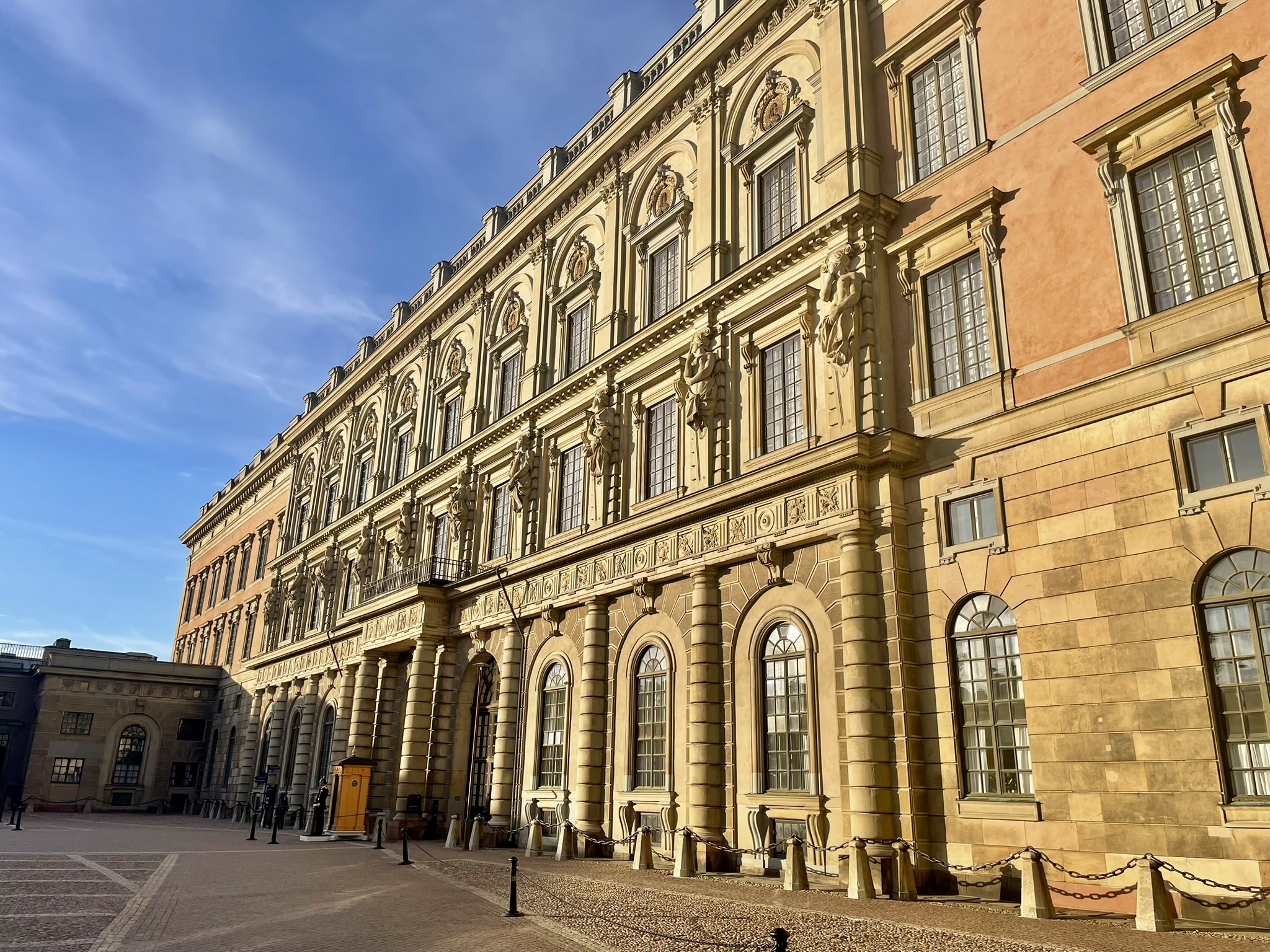
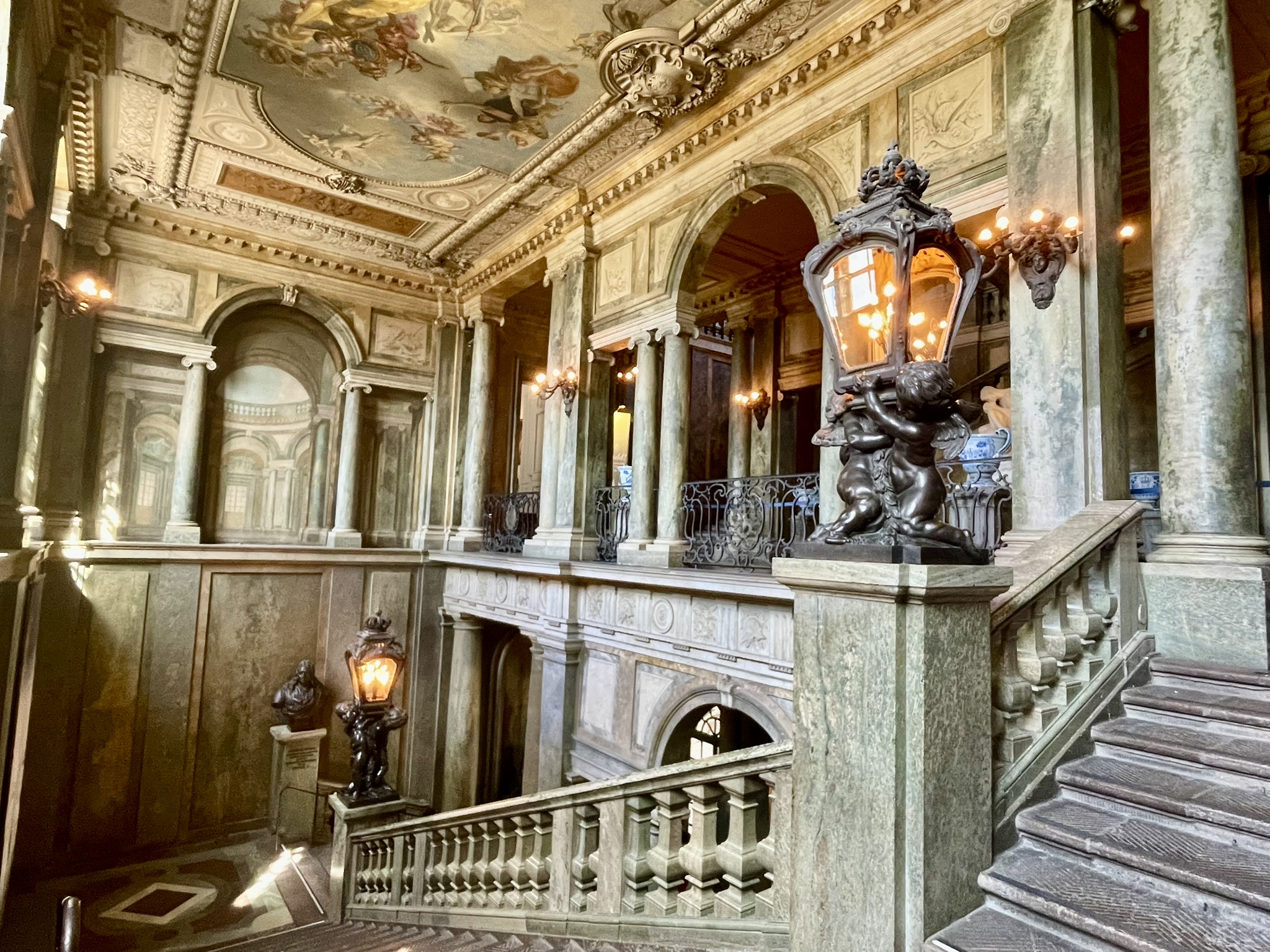
Like much of Gamla Stan, the Royal Palace has medieval bones beneath its Baroque exterior. We opted for a self-guided tour through the 23 lavishly decorated state rooms open to visitors—a small portion of a palace with more than 600 rooms. I am always struck by the layout of old palaces, where one room opens directly into the next, whether a bedroom or dining room, rather than onto a hallway. The palace felt to me like an urban Versailles, while its location in the old city reminded me of Luxembourg Palace. C and I spent about an hour wandering through the rooms but opted not to visit the Treasury.
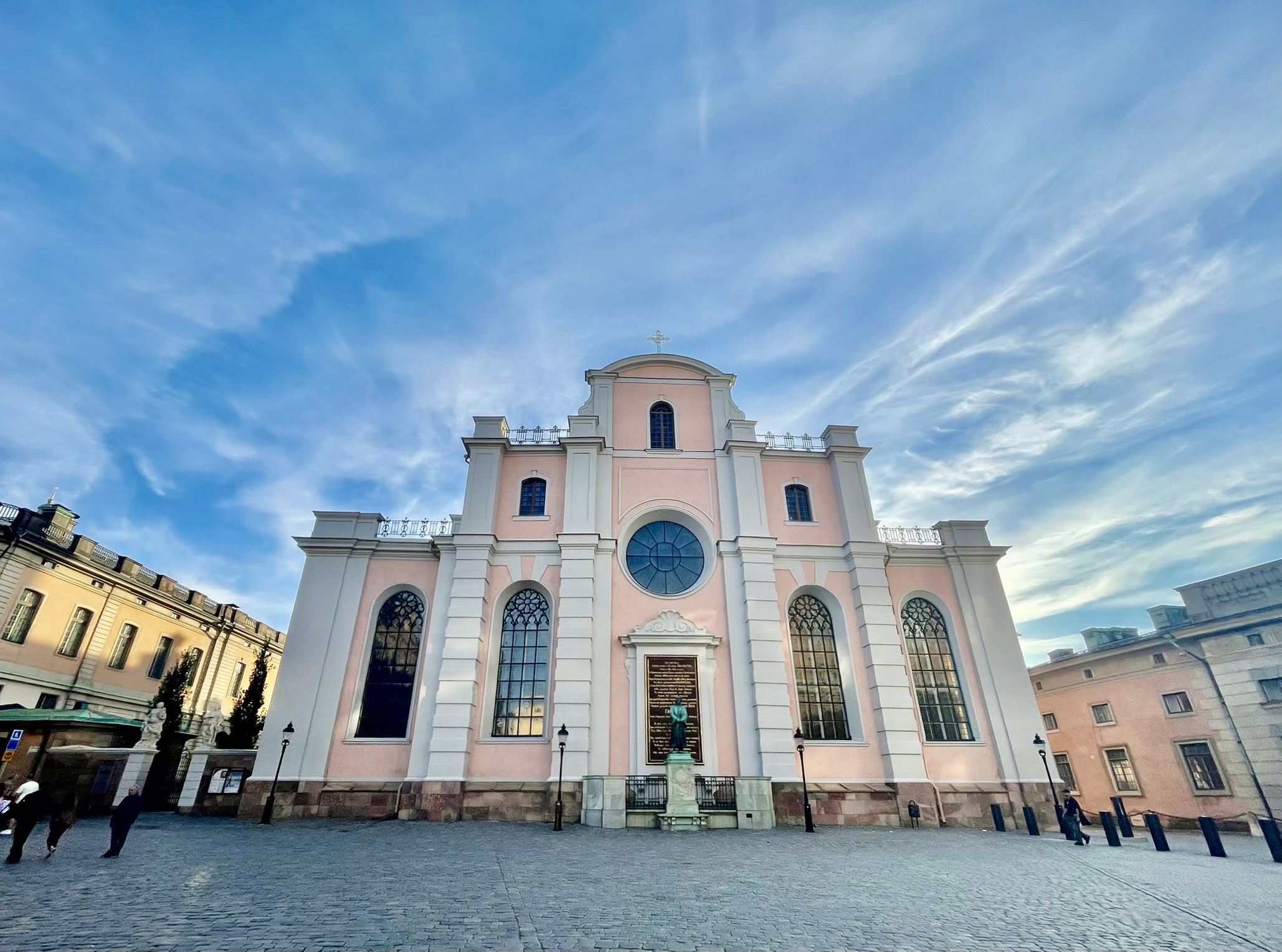
Just across from the palace stands Stockholm Cathedral, its warm, peach-colored Baroque exterior concealing a church whose history stretches back to the 13th century. It is the oldest church in Stockholm and served for centuries as the coronation church for Swedish monarchs. Among its treasures is the striking wooden sculpture of Saint George and the Dragon, dating from 1489. Of all the cathedrals I have dragged C to over the years, I had never seen her take such an interest in one. She really took her time looking around and seemed to enjoy it even more than the palace.
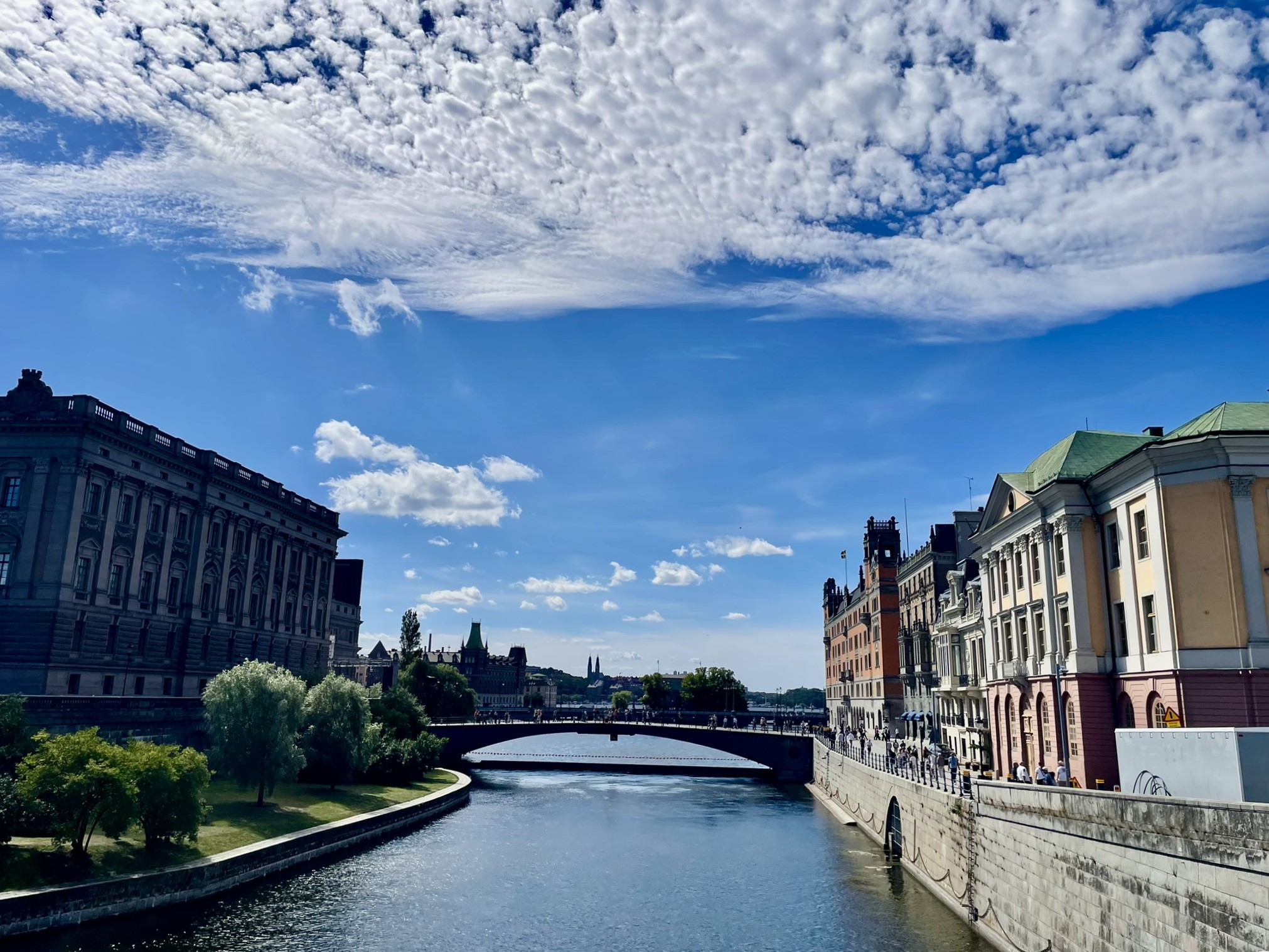
After leaving the cathedral, we crossed one of the bridges linking Gamla Stan to the rest of central Stockholm. I had promised C that we would visit the shopping area, although this was not exactly how I had envisioned spending our first day in Sweden. She particularly wanted to visit Brandy Melville. Never mind that there is a Brandy Melville in Georgetown that she visits regularly; this was the first and only Brandy Melville in Sweden, and she hoped to find some Sweden-specific merchandise. Unfortunately, the last of it had sold that very morning, only hours before we arrived. Still, she was happy to have gone. We continued along the shopping streets, stopped for a few nibbles, and then returned to our room for a short rest.
Later, we headed to the Nobel Prize Museum on Stortorget, Stockholm’s oldest square. The museum is housed in the former Stockholm Stock Exchange Building, constructed in the 1770s and now also home to the Swedish Academy, which selects the recipient of the Nobel Prize in Literature.
For visitors, the entire museum is on one floor, and that floor also includes the entrance, the information and ticket desk, a café, and the museum shop. That does not leave all that much space for exhibits. One of the museum’s more unusual features is that Nobel Prize recipients are asked to donate a personal item that reflects their journey. Some of their choices are certainly interesting. Among the objects we saw were a jar of peanut butter and a pair of nail clippers, both of which we found especially odd. Overall, C and I were amused, but not particularly engaged, and we stayed for less time than I had expected.
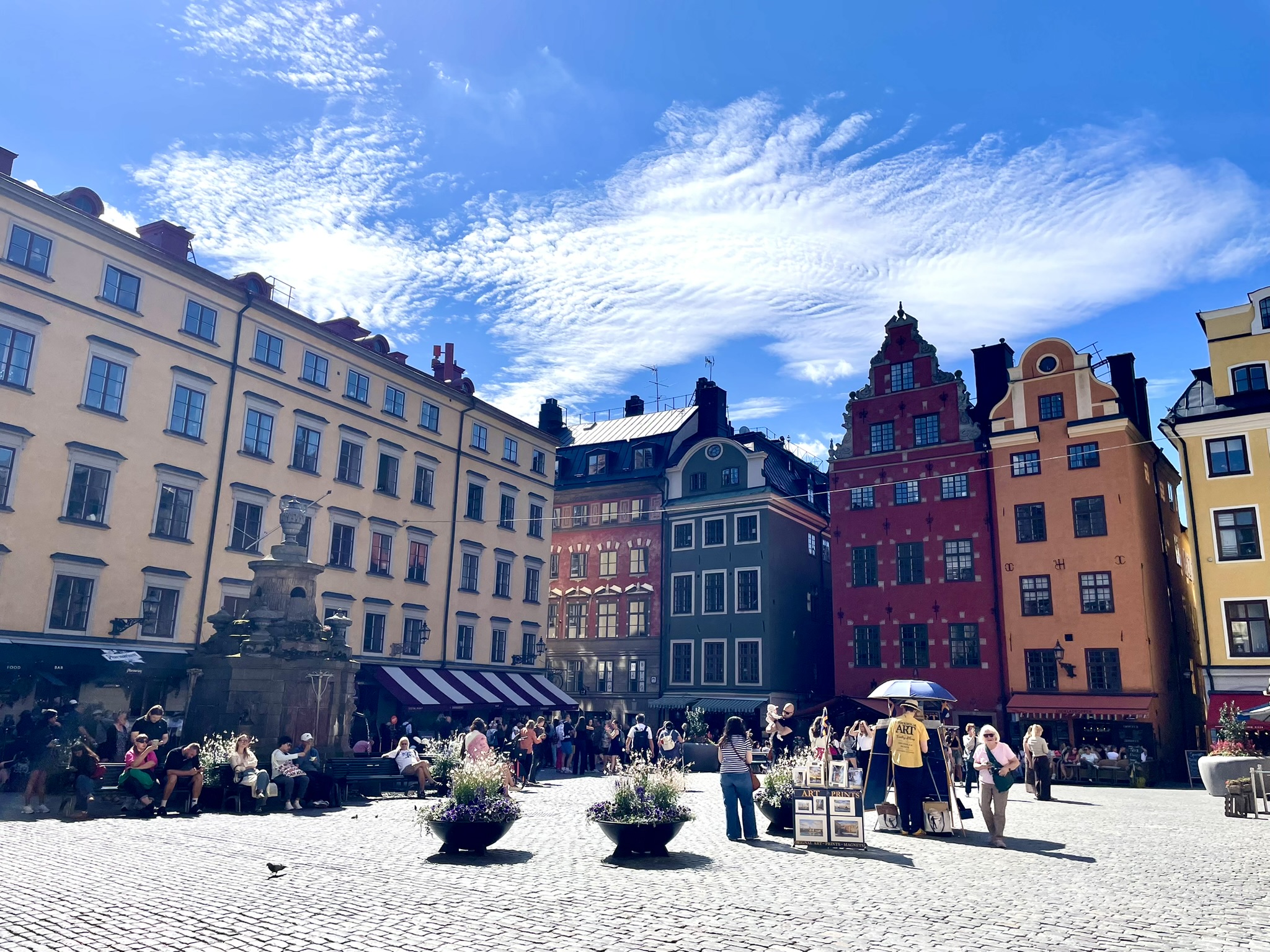
Afterward, we had dinner at a restaurant on Stortorget. C was ready to return to our room, while I took advantage of the golden hour to walk the streets of Gamla Stan by myself and take photos after the crowds had thinned. My solo walk also gave me time to take stock of our day. After all my worries that the trip might not happen—or that I might not be physically able to manage it—we had made it. I had walked nearly 25,000 steps, and we had seen so much on our first day. Our summer trip to Sweden was off to a great start.

