Sweden Summer, Part Six: Sailing, Cycling, and Making Connections

The sixth installment of my daughter and my August 2026 visit to Sweden.
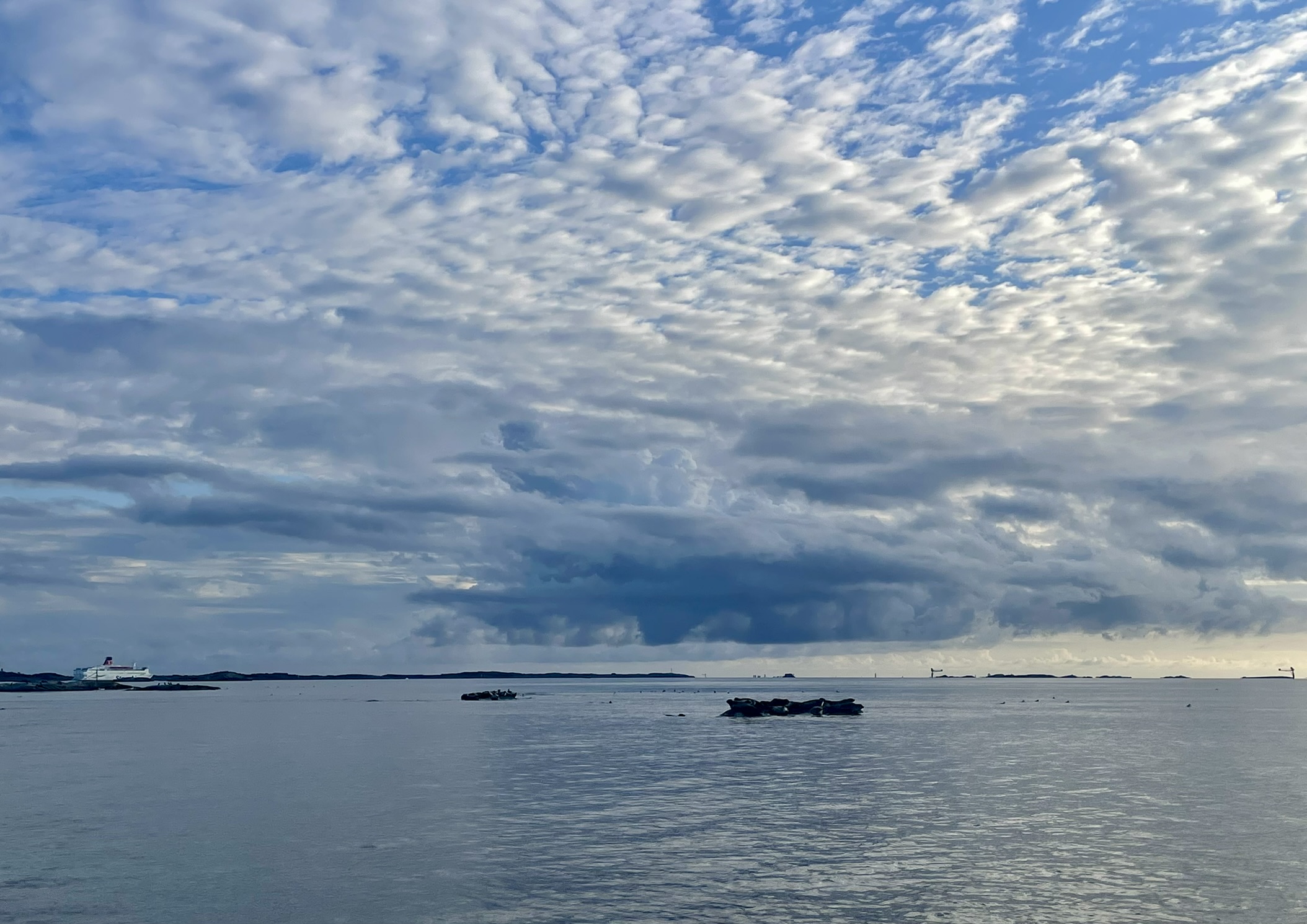
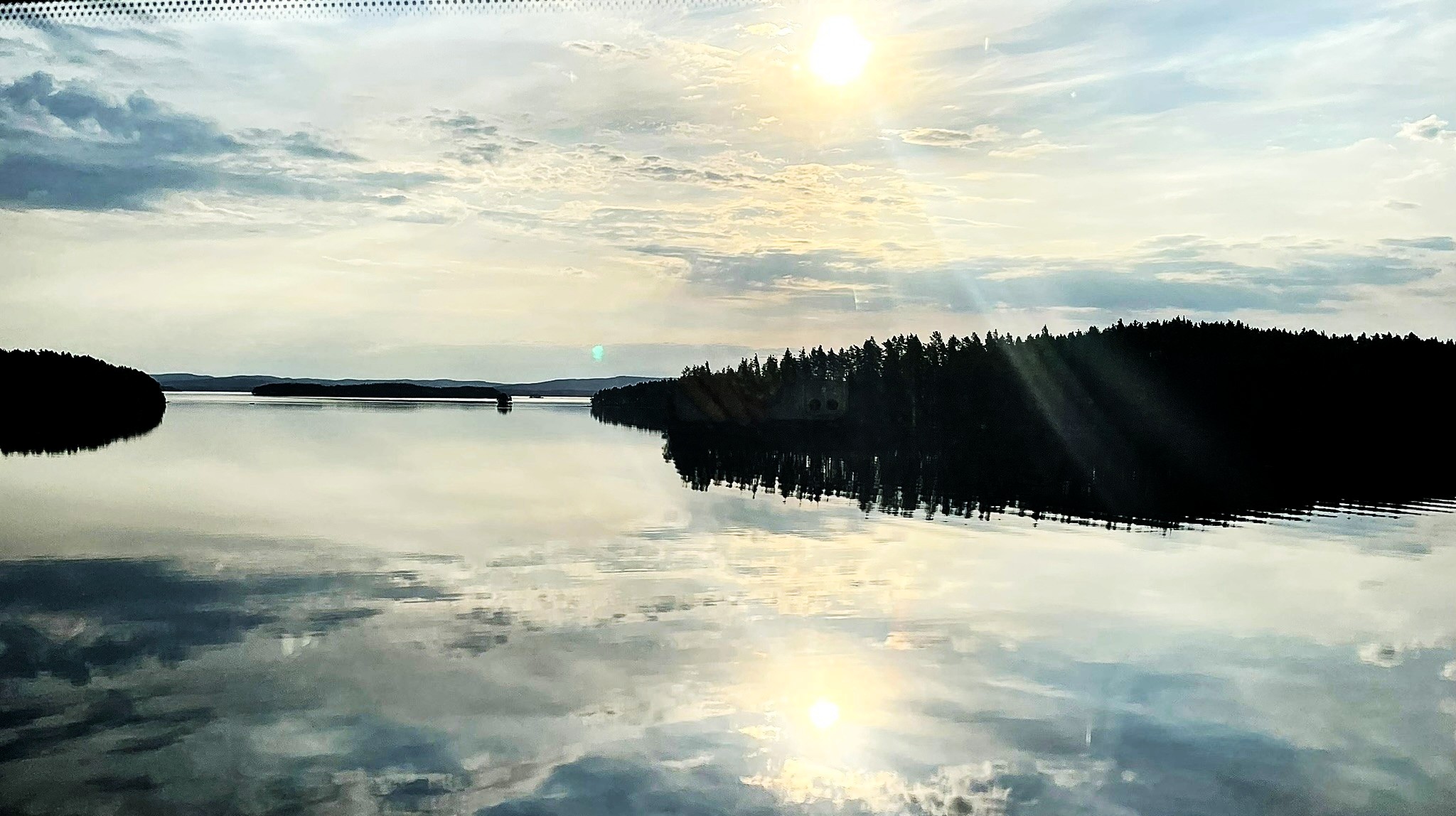
The Kattegat Sea near Sandvik in Torslanda with a view of the Stena Line ferry to Denmark and a rock with seals

On our third day in Göteborg, we took the tram again toward Liseberg. Near the amusement park is the World of Volvo, a museum about the company and its history. Neither C nor I are particularly interested in cars, though C has now joined the Car Club at school, so maybe this visit had an impact? I may have dreamed of owning a Corvette or a Porsche when I was a teenager, but I never dreamed of owning a Volvo. Still, we were trying to experience quintessential Sweden, and it seemed worth a visit.

The lobby alone screamed Scandinavia. With its light wood, clean lines, and open space, it naturally reminded me of an IKEA showroom. They are both Swedish companies, after all.

We spent about an hour going through the exhibits, learning about Volvo’s history, its involvement in car racing, the evolution of its designs, and the different types of vehicles it makes. There were also interactive activities. One was a driving game that several adults were trying. The game kept giving me low scores, and I had a sinking suspicion Volvo thought I wasn’t the best driver. A wind tunnel demonstrated how a car’s shape affects its aerodynamics, and another exhibit explored how a driver’s mood can affect driving.

It was an interesting visit, and I’m glad we went. It was an unusual choice for us, but it gave us a different kind of cultural experience. I’ll include a photo or two, but I won’t spend a lot of time on it.
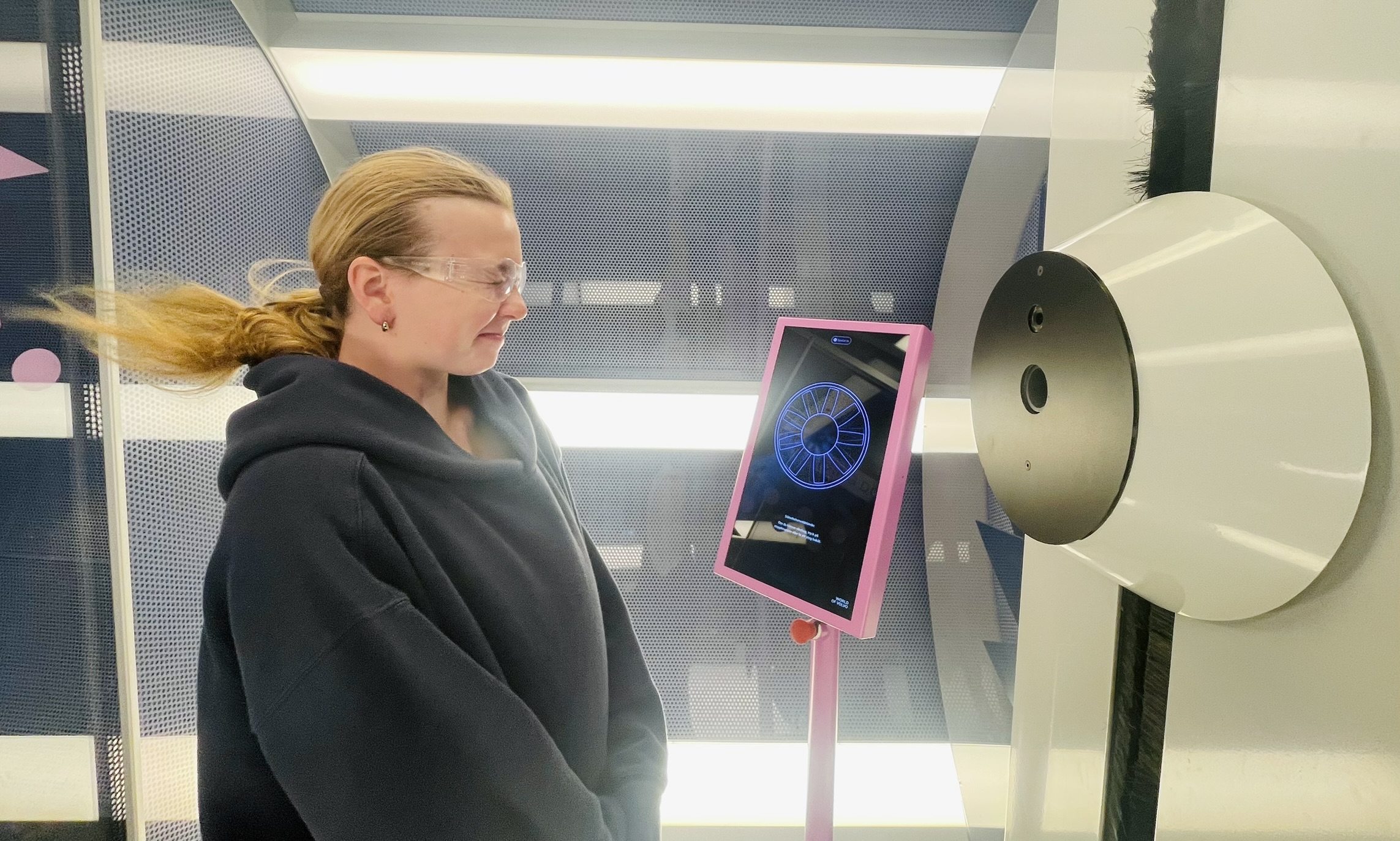
C tries out the wind tunnel at the World of Volvo

Afterward, we walked up the street to the Grand Curiosa Hotel, the whimsical hotel associated with Liseberg. We have stayed at some Disney properties, so I wanted to take a look. We had chosen to stay closer to the train station, which worked well for us, but Grand Curiosa looked like a lot of fun. It had playful, fantastical decor and even a slide inside. It seemed like a fun place to stay, and with the tram connecting it to the center of town, it wasn’t far away. I found myself wishing we had stayed there for at least one night.

Then we got lunch and headed to the Universeum. It is a science and nature museum that also houses an aquarium, which was a big draw for us. We love aquariums and have visited many all around the world. The tropical rainforest was another highlight. It took up several floors in the center of the building and reminded me of the rainforest room at the Baltimore Aquarium.

There were sloths in the rainforest area though they were inside an enclosure. It would have been a bit cooler if they had been free to roam, but there were also two toucans that seemed to have the run of the place. You could climb into a treehouse and cross suspension bridges above the exhibits. It was really well done and a lot of fun.

We also spent time in the space area, since C is interested in space and space exploration. She has even attended Euro Space Camp twice. She was interested in the math section, too, but by then we were getting tired, so gave the health section only a very cursory look. After several hours at two museums, we had had enough for the day.

We walked back to the hotel by different streets, giving us another chance to explore the city, and then rested before our big evening experience.
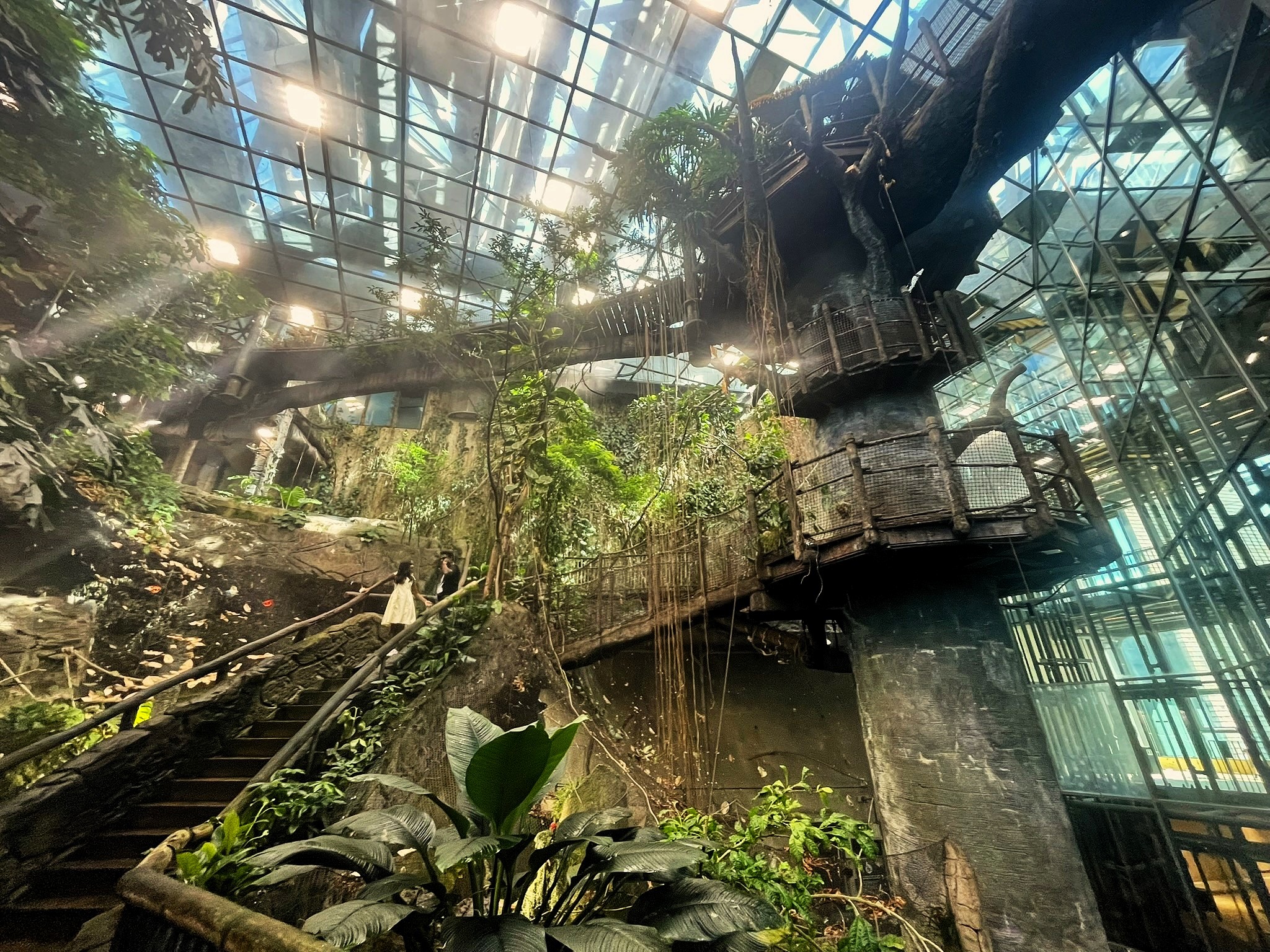
Then central rainforest at the Universeum

Early in the trip I happened to be looking at the requirements for Scouting America’s International Spirit Award. One option involved traveling overseas and meeting up with scouts. As were were traveling abroad at that very moment, I thought maybe we should look into visiting with some Swedish Scouts. You might recall that while in Stockholm we had encountered some scouts from the UK in Gamla Stan. When I spoke with them, and they told me they had spent a week on an island with Swedish scouts and showed me the neckerchiefs they had swapped. That conversation stayed with me.

I had found a Facebook group for Swedish scouting and posted that we were traveling through the country and would be in Göteborg, Stockholm, and Visby in the coming days and wondered if any troops would be open to meeting with an American Scout. There was a significant response, and a Sea Scout ship just outside Göteborg invited us to join them for a meeting.

That evening, we took a bus to Torslanda (which means “Thor’s Land”). The skipper and his fifteen-year-old daughter, who was also a scout, picked us up at the bus stop and took us to the marina where their Sea Scout ship was meeting. The meeting turned out to only be a gathering before sailing.

C went out with two fourteen-year-old girls from the ship, while the skipper and another adult leader took me out in their boat. I had imagined I would be hanging out in some marina meeting room while C sailed, but instead, I found myself sailing on the Kattegat Sea as the sun was setting. What had started as an effort to arrange a scout meeting had become an unexpected evening on the water.

We were out for about two hours. The skipper was a former Swedish Navy officer who had searched for mines in the Baltic Sea during his naval career. He told me he had grown up in Stockholm where sailing was a tad easier than Göteborg, given that in the former it takes time to travel through the archipelago to the sea, while in Göteborg it took no time to reach open water. In the distance we watched the ferry to Frederikshavn, Denmark, head out from Göteborg, saw family fishing boats searching for their catch, and caught some seals resting on some rocks.

It was beautiful out there in the bay, with the evening light over the water and C sailing nearby with her new companions. We had come to Sweden to explore its history and culture, but this was something I could not have arranged simply by buying a ticket. People we had never met had welcomed us into their evening and taken us sailing. It was an unforgettable experience.
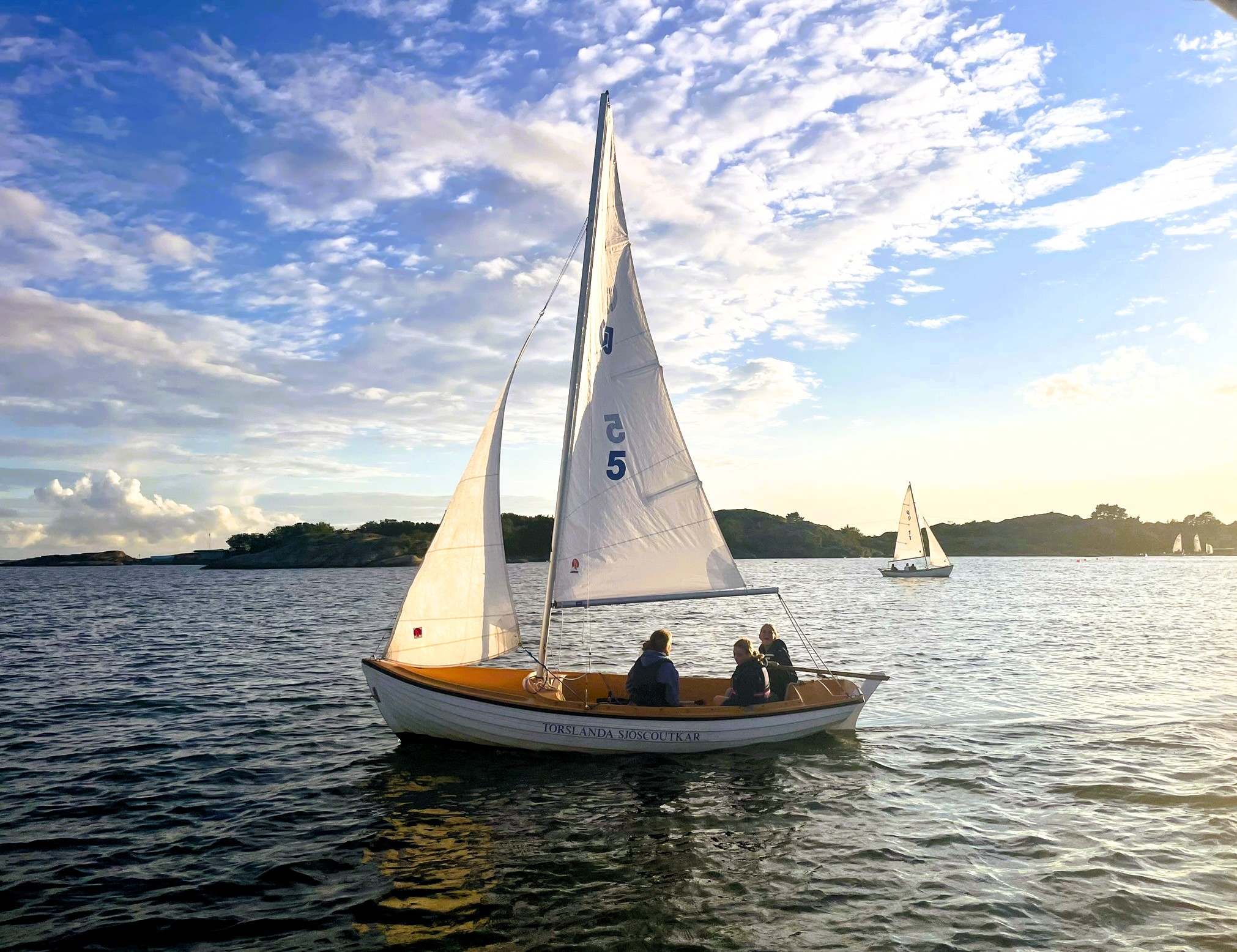
C and her companion Swedish Sea Scouts sail nearby

C especially connected with the two girls she sailed with. They were curious about America and her scouting experiences, and she was curious about theirs. They shared an interest in scouting, and Sea Scouts in particular, but they were also just teenage girls. Along with talking about sailing and scouts, they were swapping stories and connecting over Instagram or Snapchat. It was really special to see how much they had in common despite living in different countries.

When the boats returned, everyone gathered in a circle to talk about the evening. They thanked C and me for coming and presented us with patches from their ship. The skipper also gave C one of their neckerchiefs, which she was especially proud to receive. She left with something to remember the evening by and new friends she could keep in touch with.

The skipper drove us back to the bus station, and we rode back into Göteborg. What a tremendous evening. I had hoped C might meet some Swedish scouts; I had not expected that both of us would come away with one of our most memorable experiences of the trip.

For our final day in Göteborg, we headed out to explore its archipelago. Sweden has more islands than any other country, and a few thousand lie off Göteborg. I had read that visiting the islands was a great way to experience another side of the city: a quieter place to stroll or ride a bicycle through small villages, with the sea never far away.
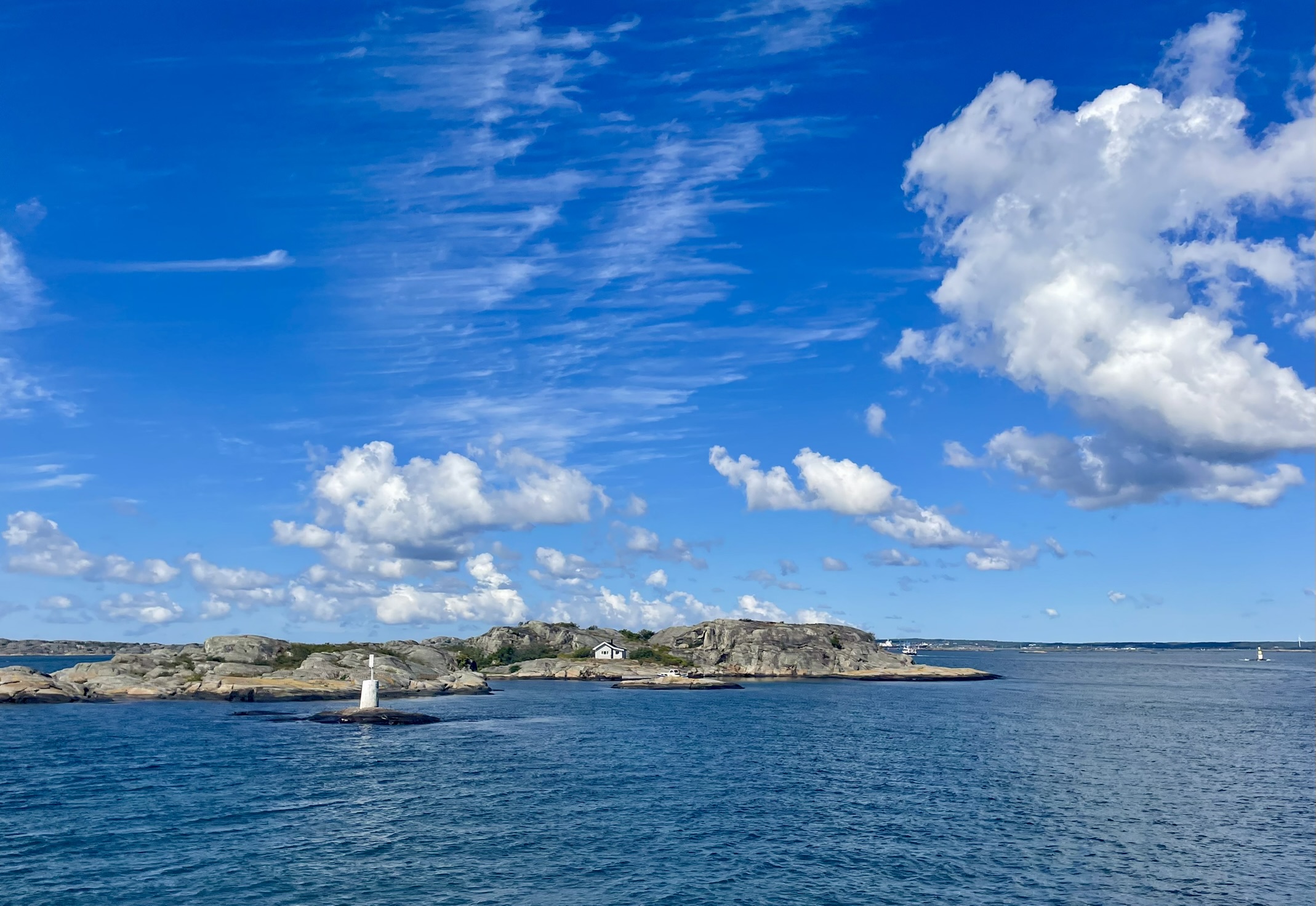
View from the public ferry to Donso

The southern archipelago is car-free. These islands have year-round communities as well as summer homes, and regular ferries connect them to the mainland as part of Göteborg’s public transportation system. For visitors like us, the ferry ride was an outing; for island residents, it was an everyday connection to the city.

We took the tram from the railway station to the end of the line at Saltholmen, a ride of about forty to forty-five minutes. After waiting another twenty minutes, we boarded the ferry to Donsö. I had chosen that island because we could rent bicycles there, and a bridge connected it to neighboring Styrsö. We could explore two islands without arranging another ferry ride.

It was another absolutely gorgeous day in Sweden: warm, with an incredible blue sky and blue water. We sat on the upper deck so we could watch the islands as we passed. We had bought some crisps at the ferry terminal and snacked as we rode. The trip took about forty to forty-five minutes, with stops at several islands along the way, but it did not feel long.

We arrived at Donsö around 12:30 and went straight to Popsicle Café. It was time for lunch, or rather fika. I had a fantastic green tea latte and a delectable piece of carrot cake, while C chose a beverage and a snack.
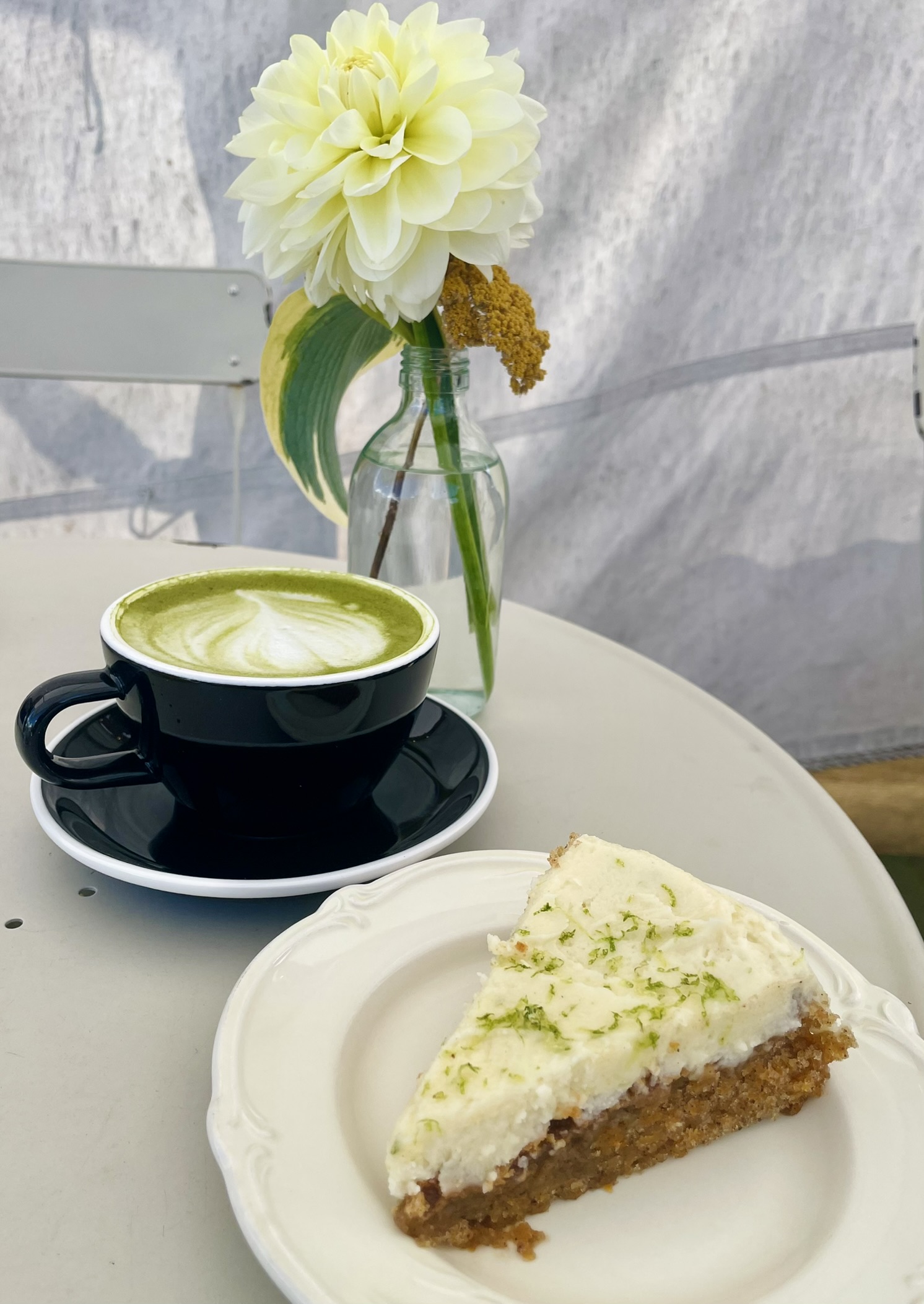
I do not think I could ever tire of fika – my green tea latte and carrot cake

Afterward, we collected our rental bicycles and set out to explore. The islands have a long maritime history, and fishing and shipping still play an important role on Donsö. They felt understated to me. We saw some large homes, but nothing that struck me as a grand mansion. There was a simplicity to the villages that I liked.

We rode through villages and around Donsö, stopping at a small, picturesque lighthouse. The ride was surprisingly hilly. Even after our 22-mile ride in Falun, we were struggling a bit with these hills. We crossed the bridge to Styrsö and explored part of that island, though we did not ride all the way around it.

After returning the bicycles, we caught the 4 p.m. ferry back to the mainland and boarded the tram into town. As we rode, I realized that I still wanted to spend more time in Haga, the historic district we had visited briefly on our first afternoon. C was not so keen. She wanted to go back to the hotel and rest, and I suspected she wanted to catch up with friends in the States.

We had traveled between the hotel and this part of town several times, so I asked whether she felt comfortable continuing on the tram without me. I quizzed her on which stop to get off and pointed it out on the route map above our heads. She had her phone and was already accustomed to riding the Metro and buses at home, alone or with friends. It was daytime, and she could stay on the same tram. I was a little nervous, but I felt comfortable letting her go, with instructions to message me as soon as she reached the hotel. At the Haga stop, we went our separate ways. She got back perfectly fine.

My first destination was Skansen Kronan, a late-seventeenth-century fortress on a hill above Haga. The climb was fairly steep, but the views over Göteborg rewarded the effort. I could not go inside the fortress, so I spent some time enjoying the view before making my way down the other side of the hill.

Then I meandered through Haga, one of Göteborg’s oldest districts, wandering its cobblestone pedestrian streets. I passed up the enormous cinnamon roll. Had C been with me, we would have given that a go—the ultimate fika. On my own, I kept walking.
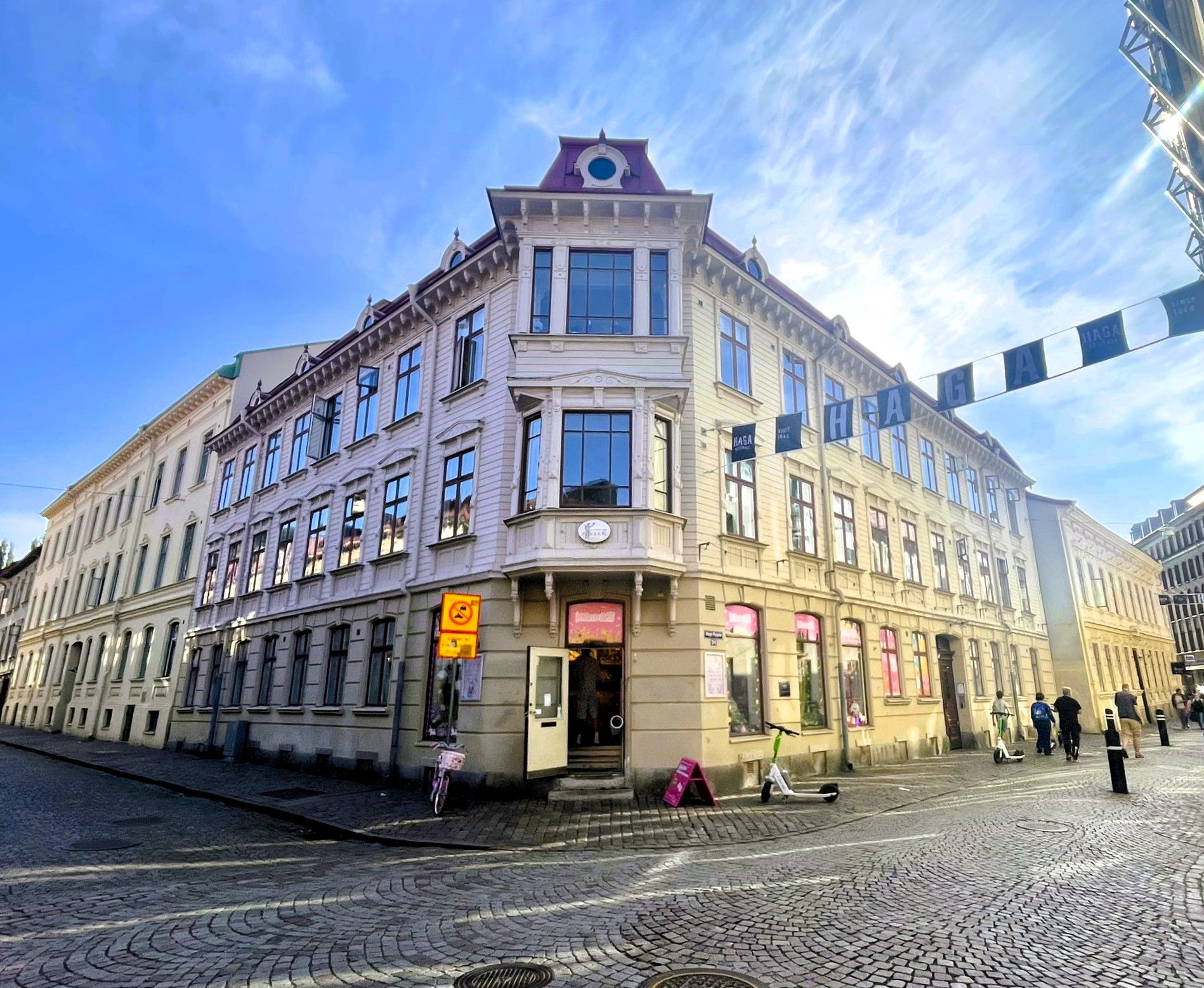
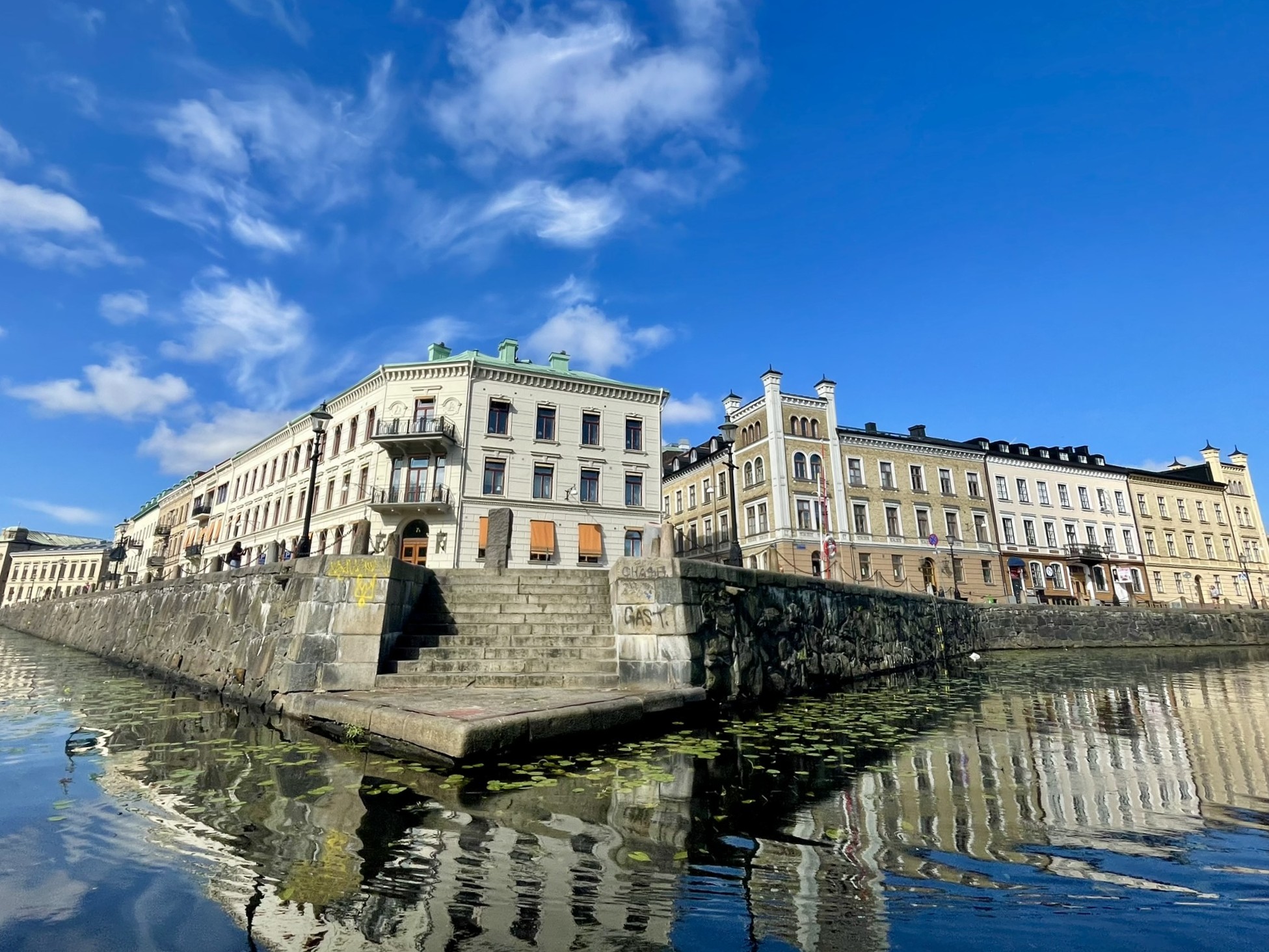
A beautiful view in the Haga district of Göteborg

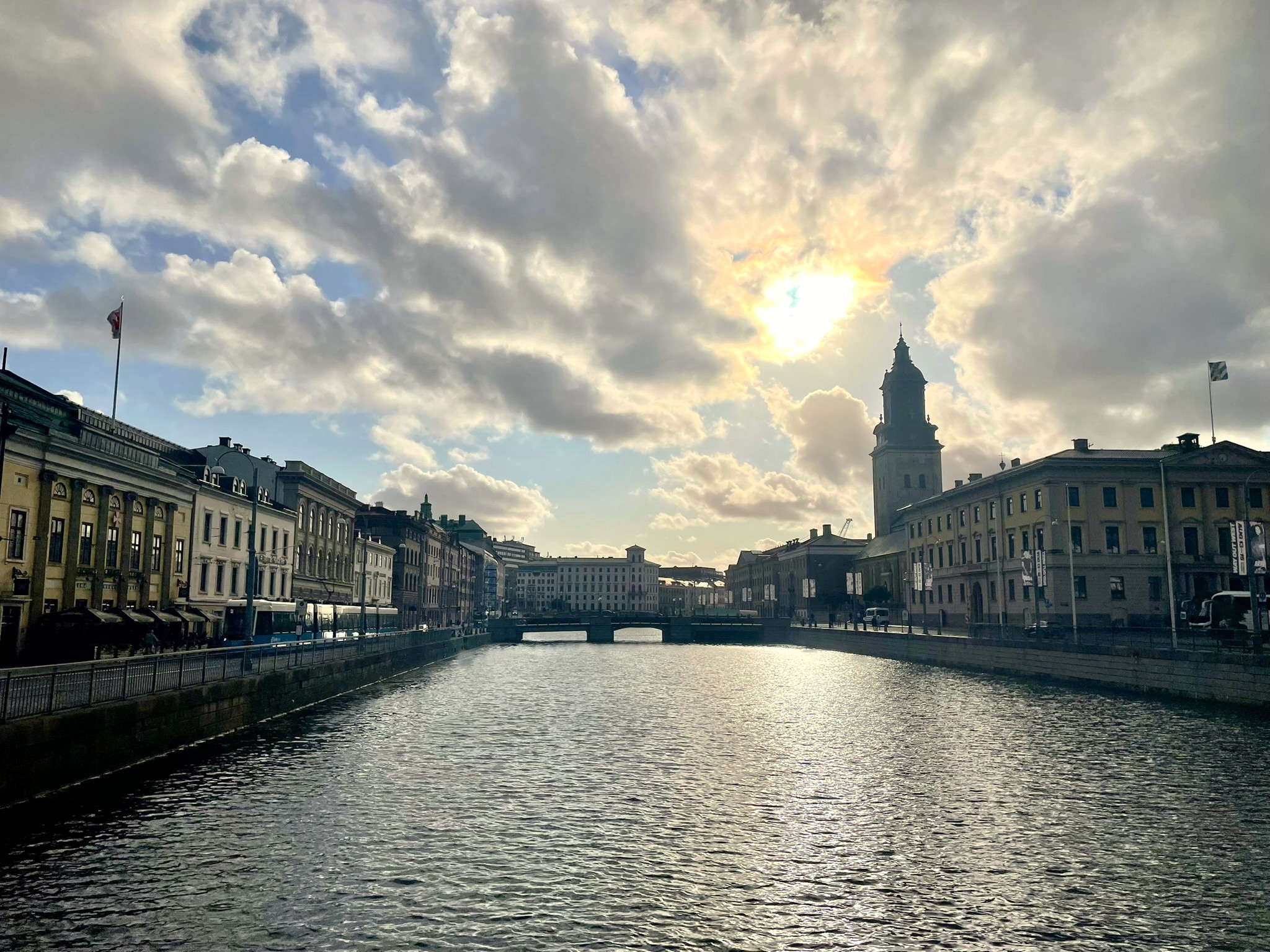
I followed the canal back toward the hotel, completing a stroll of about two hours. I love walking through a city, getting out and about and developing a feel for it on foot. C had already done plenty of wandering with me, and this gave me time to keep exploring while she rested.

I am glad we kept Göteborg in our itinerary, even with the seven-and-a-half-hour journey to get there. We had experienced a little of everything: Swedish engineering at the World of Volvo, a science museum and aquarium, a wonderful afternoon at Liseberg, cycling through island villages, and plenty of walking around the city. Sailing with the Swedish Sea Scouts was especially meaningful for C, but it gave me something extraordinary, too. We could not see everything, but we made the most of our time there.

It was also lovely to realize that traveling with an increasingly independent teen gives us room to do so much together and occasionally go our separate ways. C could rest and catch up with friends while I wandered through a historic district. After years of traveling as just the two of us, we were reaching a point where we could make space for both.
Sweden Summer, Part Five: Getting to Goteborg and Riding Roller Coasters

The fifth installment of my daughter and my August 2026 visit to Sweden.

We left Falun early Saturday morning for Göteborg (roughly pronounced “YUHT-uh-bawry”), beginning what would be our longest travel day of the trip.

Early morning lake views from the train

My original plan had been simple: six hours by train, with only one quick transfer early in the journey. I had imagined it as the quintessential long train journey—time to settle in, visit the snack car, gaze out the window, walk through the train to stretch our legs, journal, and maybe nap. Yet when on our first night in Falun I went online to buy our tickets, I discovered that summer track work had changed our routing, turning our six hour journey into seven and half to as long as twelve.

I considered cutting Göteborg from the itinerary. One of the places I had hoped to visit there, Nya Älvsborg Fortress, was already off the table because the reduced late-summer ferry schedule did not fit our visit, so I spent a few hours looking at alternatives. But the track work affected other routes too, hotels were filling up, and nothing I found seemed worth changing the trip for. In the end, Göteborg stayed. We took the shortest option, leaving Falun just before 7:30 in the morning, and instead of one easy train change, we made three: train to bus to train to bus.

It was not the leisurely journey I had envisioned, as it meant watching the time and our connections more carefully, but it still gave Chloe another useful travel lesson—the ability to adapt when plans change. We still had time to relax along the way, and in the end the extra hour and a half cost us surprisingly little. We arrived at the same time as originally planned.

Once off the bus at Göteborg’s Central Station, it was only a hop, skip, and a jump to our hotel. The Hyatt Place Gothenburg Central is integrated into the station complex itself, which made for a very easy arrival after such a long travel day. We checked in, shed our bags, and rested for about an hour before heading back out to get to know the city where we would stay the next few days.

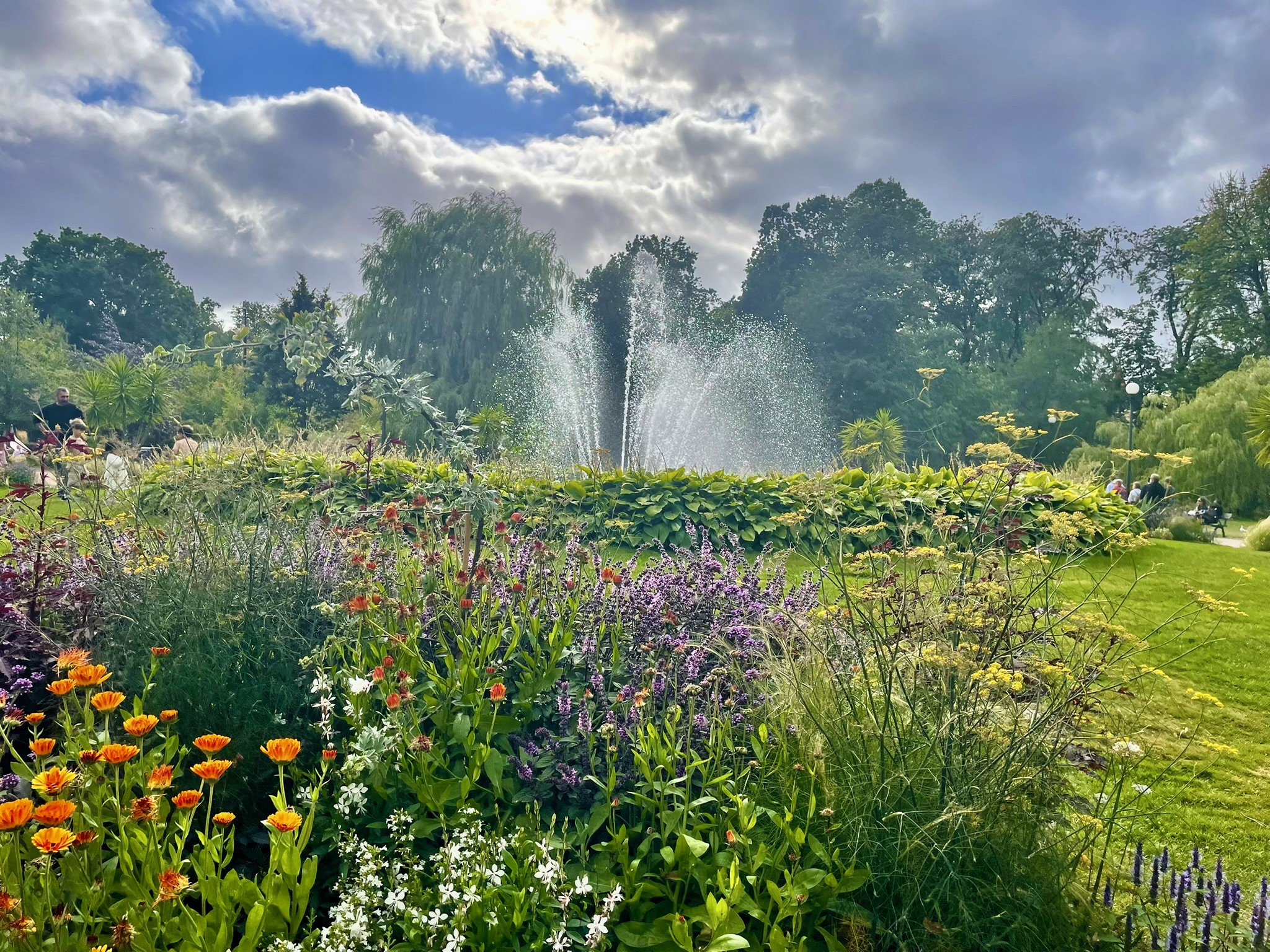
Fountain and flowers at Trädgårdsföreningen

We headed first to Trädgårdsföreningen, the Garden Society of Göteborg, one of Europe’s best-preserved 19th-century parks. At its center is the Palm House, a glass-and-cast-iron greenhouse built in 1878 and modeled on London’s Crystal Palace. The original Crystal Palace was later destroyed by fire in 1936, making Göteborg’s smaller interpretation an interesting survivor of that Victorian style.

We entered the Palm House and wandered inside a bit. Unfortunately, several of the rooms were closed due to renovation, and honestly, after Uppsala’s tropical greenhouse, complete with its poison dart frogs, the pretty Palm House could not compete.

What was unexpected was the nightclub immediately beside the park. At 5 PM it was already in full swing, with people dancing outside and loud, thumping music carrying straight into the gardens. I did not exactly hate the music (though C did), but it did strike me as odd. I had not expected a late afternoon stroll through a European park to come with a ear splitting soundtrack.

From the Garden Society, we continued through Kungsparken, passing a few pretty churches along the way before reaching Haga, one of Göteborg’s oldest neighborhoods. I had wanted to see the area for its cobblestone streets and historic character, but by the time we arrived, C was very much ready to head back to the hotel, and making this known, repeatedly.

We stayed only about ten minutes before turning around. The journey to Göteborg had gone smoothly after all, but it had still been a long day, and we had another walk ahead of us to get back. We took a different route along the canals, having gotten a nice taste of the historic and cultural heart of the city, and returned to the hotel for dinner and some much-needed downtime.

Late afternoon on the Stora Hamnkanalen or the Great Harbor Canal

The next morning, we headed out for one of Göteborg’s classic sightseeing experiences: a Paddan boat tour. The low, open boats travel through the city’s canals and old moat before heading out into the harbor, a little like the canal boats in Amsterdam. The tour lasted about 50 minutes, and we had good weather for it, even if I had managed to end up with a terrible seat.

The guide was informative and funny, and what I enjoyed most were the little bits of history I probably never would have learned otherwise. Göteborg was founded much later than Stockholm, after repeated Swedish attempts to establish a western port ran up against a much more powerful Denmark. An earlier city here was even burned by the Danes before Göteborg was formally founded in 1621. It was another reminder that the Scandinavian countries, which today can seem so closely connected, spent centuries as rivals.

And then there were the bananas. Göteborg was Sweden’s banana port for more than a century, and Swedes apparently developed quite an enthusiasm for a fruit that could not possibly grow anywhere nearby. The guide told us about the country’s prodigious banana consumption, songs about bananas, and how much people missed them when imports largely disappeared during World War II. Of all the history we heard during the tour, somehow the Swedish devotion to bananas was one of the things that stuck with me.

After the Paddan tour, we made our way back toward the train station and caught a tram to Liseberg, Göteborg’s historic amusement park. First opened in 1923, it is regularly ranked among the best in the world.

C and I love amusement parks! We have visited all six Disney parks around the world, along with a handful of other parks in the U.S. I have also visited amusement parks on my own travels in places including South Korea, Indonesia, and Brunei. But this would be C’s first non-Disney amusement park outside the U.S., and I was excited for us to both to try it out. After all the castles and cathedrals, museums and historic neighborhoods, Liseberg stood out as both historic and fun.

A stunning view of Goteborg’s old town from the Vallgraven, the old defensive moat, during our Padden boat tour

One of the things I liked most about Liseberg was how the park used the hillside. It is not a huge park, so it is easy to get around, but the rides are built into and along the slope, with stairs, escalators, and even an elevator helping visitors move between levels. That gave the park a more interesting layout than I expected and made some of the rides feel even more dramatic because of their position on the hill.

We started with Helix, one of the park’s signature roller coasters and often ranked among the best in Europe. The posted wait was only about 30 minutes, which felt like a gift for a major coaster. And it was worth it. Helix has multiple inversions and plenty of speed, and it was thrilling from start to finish. C and I both loved it, and it easily landed among my favorite roller coasters.

Another ride that surprised me was AeroSpin. Each rider sits in an individual plane styled like an old biplane, and a lever lets you control the wings enough to make the plane roll. C was working hard to get hers all the way upside down and came close. I took a different approach. The ride was already plenty exciting without my help.

AeroSpin climbs high above the park and spins around a central tower, but because it sits on the hillside, it feels even higher than it actually is. From the top, you get a sweeping 360-degree view over Liseberg and the surrounding city. Between the height, the spinning, and the possibility of flipping yourself upside down, it turned out to be far more thrilling than I had expected.

We ended up riding every single coaster in the park. Balder, the big wooden coaster, was fun, though it was not one of my favorites. Valkyria, Europe’s tallest and longest dive coaster, surprised me. I have avoided dive coasters thinking they were far too scary. I rode the TMNT Shellraiser coaster at Nickelodeon Universe, a dive coaster currently listed as the world’s steepest, and I hated it because it was so shaky. Valkyria though had the same sort of terrifying pause before the plunge, but the ride felt very smooth in comparison. Still, Helix won my heart as the best coaster at Liseberg and easily one of my favorites anywhere.

Lunch was another pleasant surprise. There was the usual amusement park food, but also Mexican and, rather unexpectedly, Hungarian lángos—a fried flatbread often topped with sour cream and cheese. C decided to try one and really liked it.

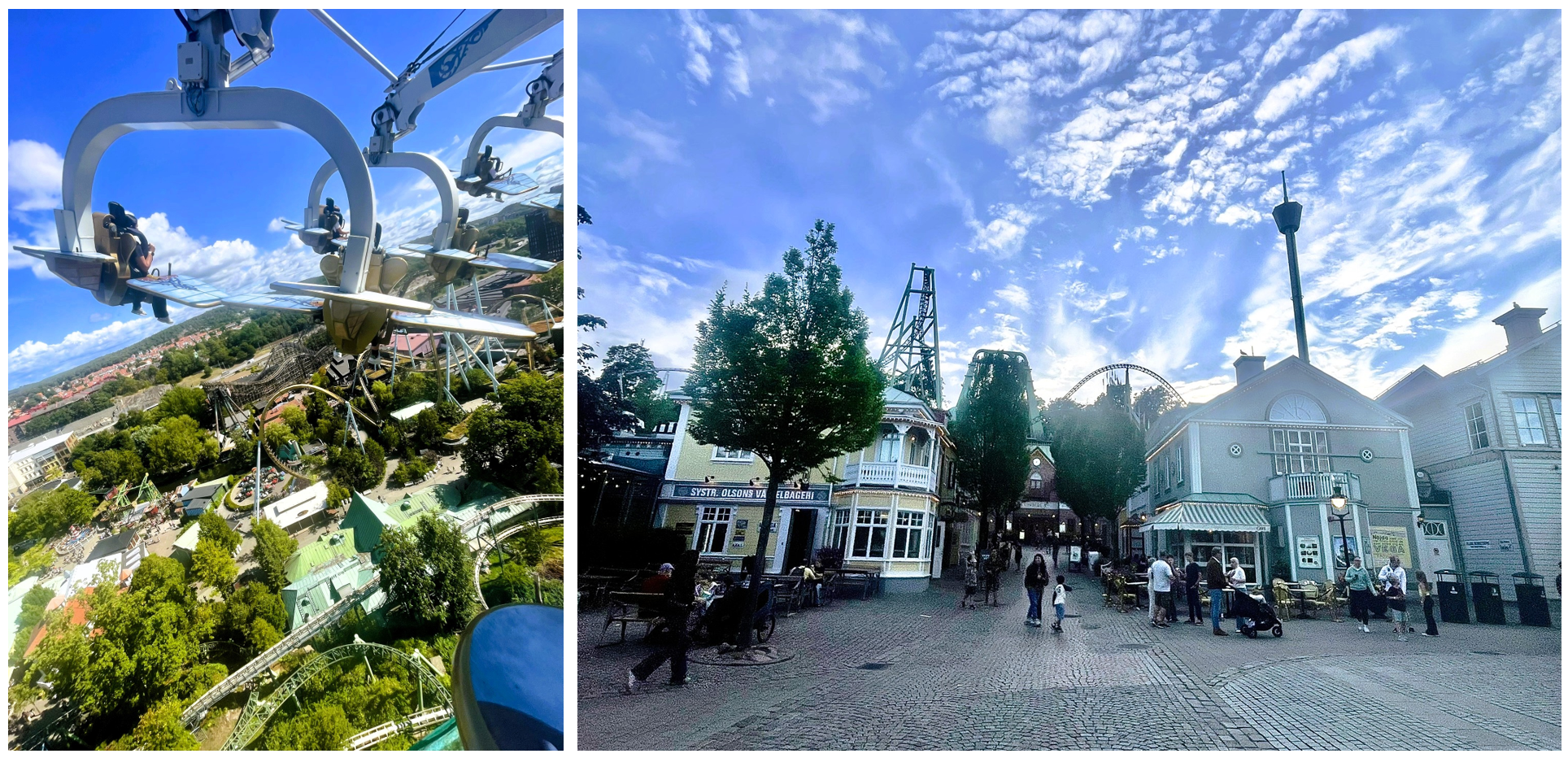
Liseberg– Left: an amazing view of the park from the AeroSpin; Right: some of the park’s cute storefronts

And of course, we had to try our luck at a few games. The prizes included enormous bars of chocolate, including Toblerone and Marabou. They were easily two feet long, and we wanted to win. But we were traveling light, and I had no idea how we would carry something that size for the rest of the trip. Unfortunately (fortunately?), luck was not with us, and we did not leave the park with an absurdly large candy bar.

All in all, Liseberg was a fantastic choice. For about $100 for the two of us, we spent the day riding every coaster in the park, ate well, rarely waited very long, and had a really fun day. I would easily put Liseberg near the top of the amusement parks I have visited, and I am so glad I worked it into our itinerary.

When we finally left, we skipped the tram and walked the roughly 30 minutes back to our hotel at the train station. It had been another beautiful day in Göteborg and another great day in Sweden. We had spent most of it outside in fantastic weather, doing something completely different from another museum or historic site and simply having fun together. Those are some of the travel days I treasure most—the ones when C and I get to share something we both love and just enjoy being together. Back at the hotel, we settled in for the evening and got ready for whatever the next day would bring.

Sweden Summer, Part Four: Copper, Countryside, and Cycling in Dalarna

The fourth installment of my daughter and my August 2026 visit to Sweden.

A view of Falun town

We left Uppsala in the morning and took the train north to Gävle, where we changed trains for Falun. The journey took about two and a half hours altogether and was easy and comfortable. C napped for part of the trip while I enjoyed the scenery outside the window.

We arrived in Falun before lunchtime and walked the short distance from the train station to our hotel. Our room was already available, so we dropped off our bags, headed into town for a light lunch, and then set off for the place I was most excited to see in Falun: Falu Gruva, the Falun Mine.

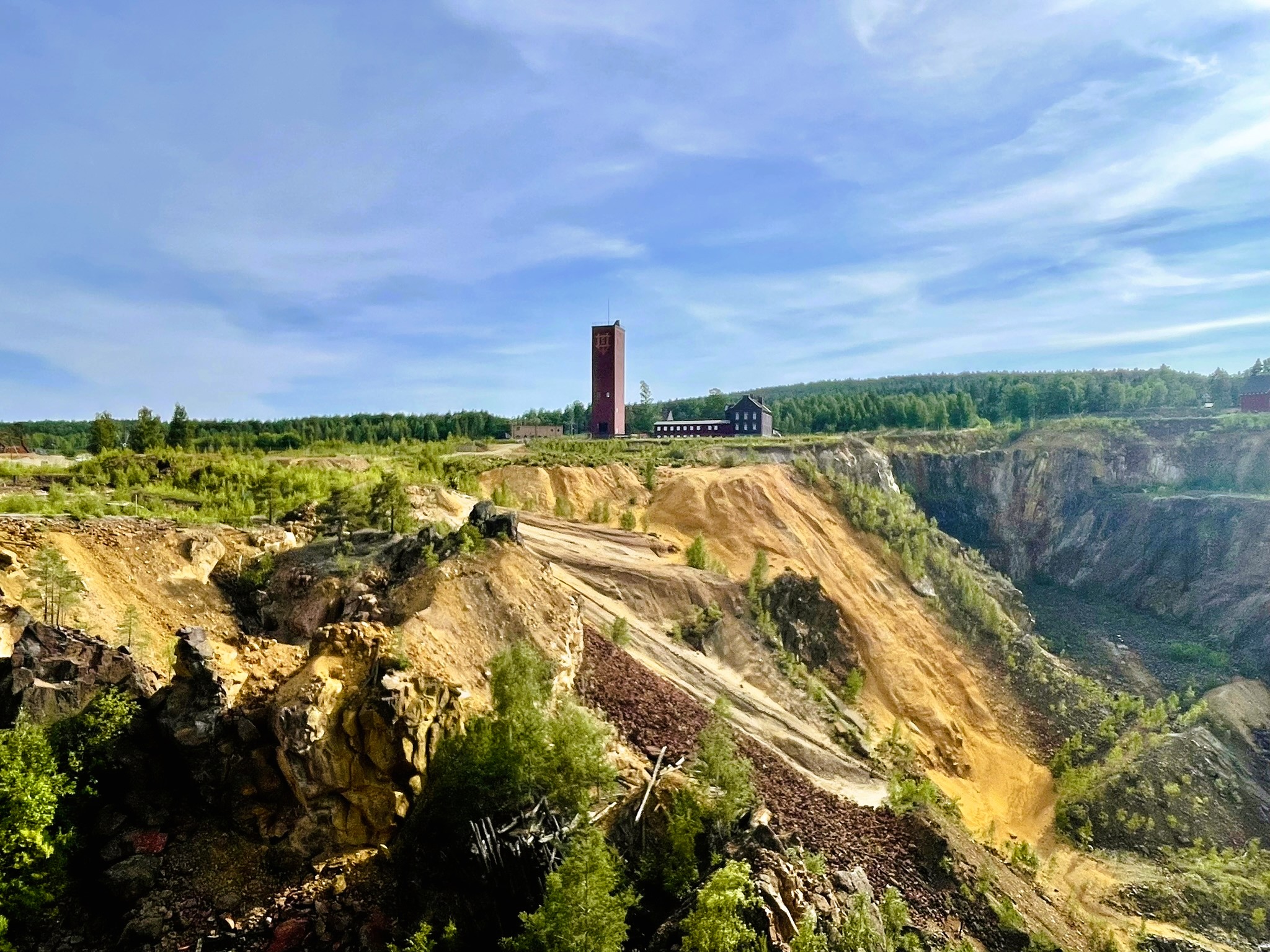
It was a beautiful day, and the mine was about a 20-minute walk from the center of town. The Falun Mine, or Falu Gruva in Swedish, is a copper mine with a history stretching for nearly a thousand years. At its peak in the 17th century, Falun produced about 70 percent of the world’s copper. The wealth generated by the mine put Falun on the map and it helped establish Sweden as a major European power. Copper filled the coffers of the Swedish crown and helped finance its wars. Falun itself grew along with the mine, at one point becoming Sweden’s second-largest city.

This was exactly the kind of World Heritage Site I love to visit. I enjoy natural sites too, but I am particularly drawn to places where you can see history and culture come together. C had completed the Mining in Society merit badge at Scout camp earlier that summer, and I thought Falun was a perfect place to bring what she had learned to life. She had learned about the role mining can play in society; now she could see a real-world example for herself.

We arrived at Falu Gruva around half past one. It was another absolutely gorgeous day — warm, with a sky that seemed even bluer set against the rich red earth. We bought tickets for the underground tour, which would begin about an hour and a half later, giving us some time to explore beforehand.

A view across the Great Pit

We started with fika. C got a drink and a pastry, and I chose a chocolate and pistachio tart that looked particularly good. I accidentally dropped it before my first bite, and it landed with huge thud on my plate. Based on that, I expected it to be quite dense, but it was actually incredibly light and buttery — and may have been one of the best tarts I have ever had. I later learned that it was a mandelmussla, a traditional Swedish almond tart. And it was magical.

After our fika, we started through the Mine Museum, housed in the former administrative building. From the second floor, we had a tremendous view of the Great Pit, or Stora Stöten. Looking down into it, I was reminded of the huge ravine that ran between my residence and the U.S. Embassy when I lived in Guinea.

The Great Pit though is not natural. It was created when a huge section of the mine collapsed in 1687 after centuries of overmining and inadequate structural support within the mine. What was once a large hill known as the Great Copper Mountain folded in on itself creating a large crater. Remarkably, no one was killed in the collapse because the miners had been given the day off to celebrate Midsummer. But despite the scale of the collapse, mining at Falun continued for another three centuries, until the mine finally closed in 1992.

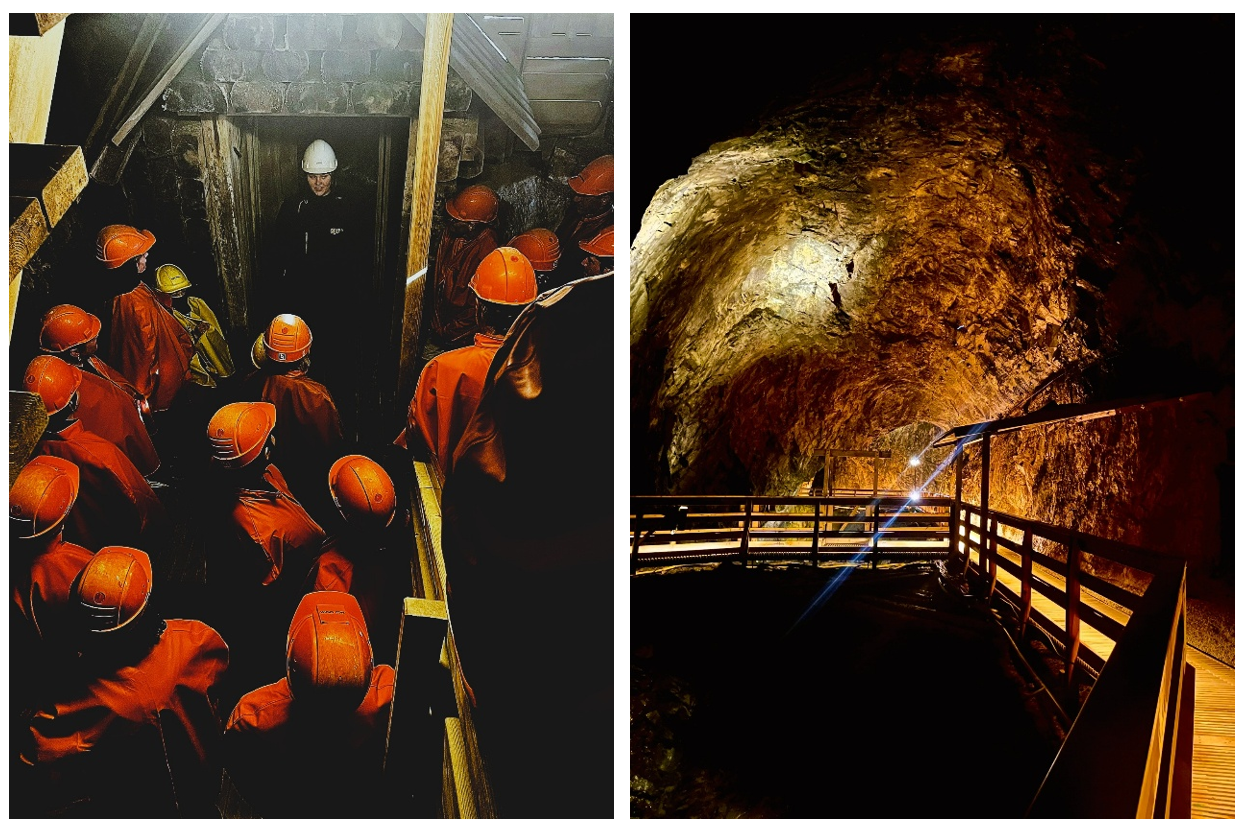
Then it was time for our underground tour. We put on the sweaters we had brought with us, along with bright orange rain capes and hard hats, and followed our guide into the mine. The temperature underground stays at about 43 degrees Fahrenheit year-round, a pretty dramatic change from the warm August sunshine we had just left behind.

Over the course of the tour, we descended about 400 steps, eventually reaching 220 feet below the surface. Along the way, our guide told us about the history of the mine, the changing mining practices over the centuries, and some of the stories and legends that had grown up around it.

Below ground at Falun Mine; on the left our group in our orange underground gear; on the right, a walkway in the dim light of the mine

At one point, our guide turned off the lights and her flashlight. The darkness was absolute. I could not see my hand in front of my face. It gave a very different meaning to the stories of miners whose lamps went out underground, or who wandered away and became lost in the mine. After we reached the deepest part of the tour, we came to a wooden staircase with a pool of strikingly bright red water at its base, the color coming from the copper.

The tour was fascinating, but by the end I was ready to leave the cold, damp, and darkness behind. I was also very happy to learn that we would not be retracing all those steps back to the surface. Instead, an elevator carried us back up, and we stepped outside into the warm afternoon sunshine.

We had about an hour left to explore the site, so we walked around some of the historic buildings near the mine. I wish we had had enough time to walk all the way around the Great Pit, but at nearly a mile around, we would have needed more time to really explore it. Instead, we returned to the Mine Museum to finish the part we had not seen before our tour and wrapped up just as the site was closing.

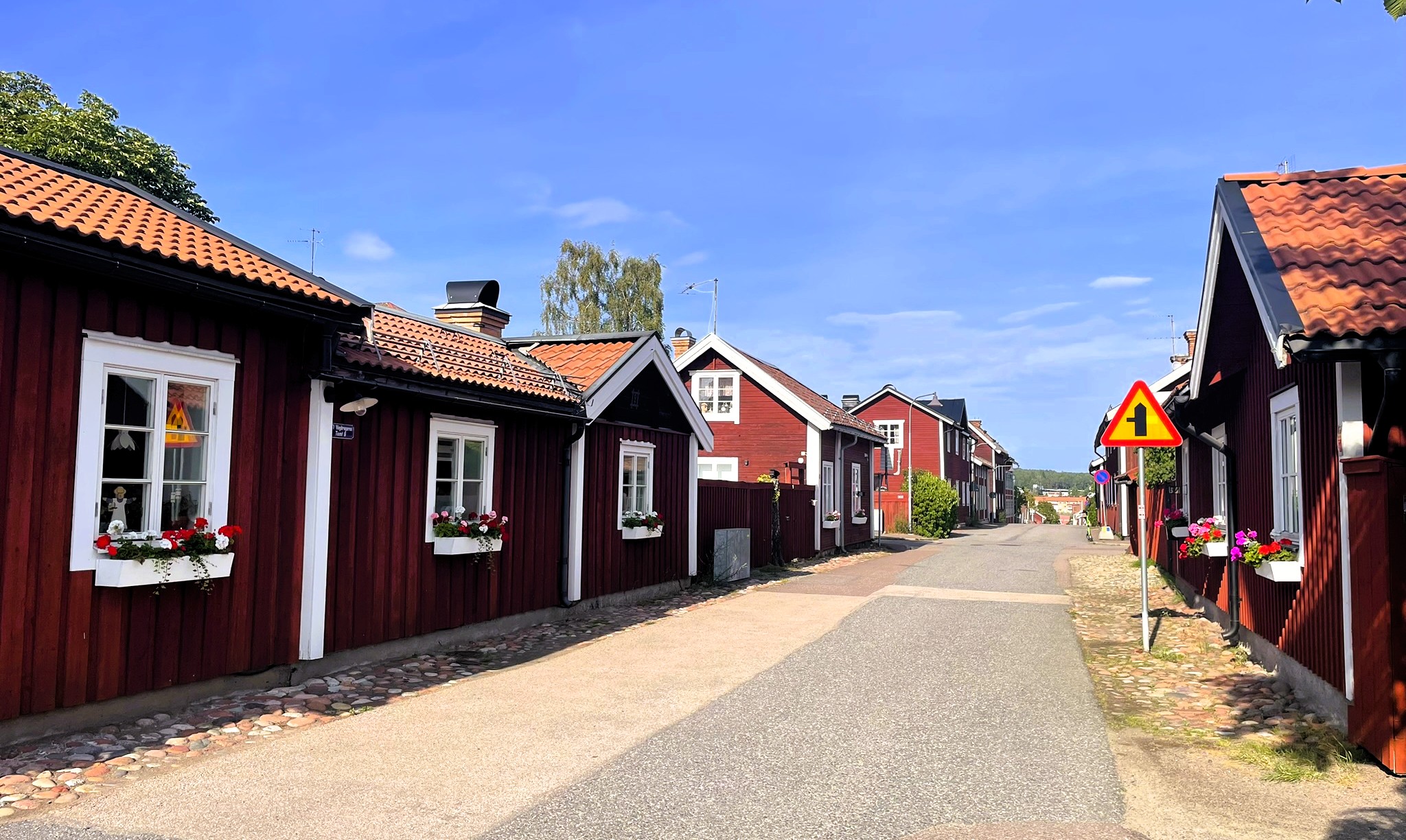
On our walk back into town, we passed through Elsborg, the old miners’ neighborhood that is also part of the Falun World Heritage Site. The neighborhood was established beginning in 1646 to provide housing for the mine workers, and many of the old wooden cottages remain. It was a lovely walk through narrow streets lined with small timber houses.

And, of course, the deep red of many of those houses has a connection to the mine too. Falu Rödfärg, the traditional red paint used on wooden houses and barns throughout Sweden, gets its distinctive color from the Falun Mine. It has been used for centuries and has become one of those colors that seems almost synonymous with Sweden. It was another example of what I had wanted C to see: the mine’s influence went well beyond the copper that came out of the ground. (I cannot say that she was paying attention though)

The traditional red wooden homes of Elsborg

After a very full day, we picked up some food from the supermarket and had a quiet dinner in our room before calling it a night.

The next morning, we woke to rain. After so many days of glorious sunshine, it was disappointing, particularly because our big plan for the day was to rent bicycles and ride to a nearby village. I had researched bicycle rentals before the trip and knew of two places in Falun, one in town and another back at the mine, so I thought we were all set.

We walked into the center of town to the bike shop, only to learn that they had no rental bikes available that day. I knew we had one more option back at the mine, but I was not particularly eager to make that walk right then, especially in the rain. So we changed plans for the moment and walked a few blocks to Dalarnas Museum.

Dalarna has a particularly strong connection to Swedish folk culture. Many of the traditions and handicrafts associated with the region have become symbols of Sweden itself. The museum was a chance to learn more about those traditions and about the history of the region we were visiting.

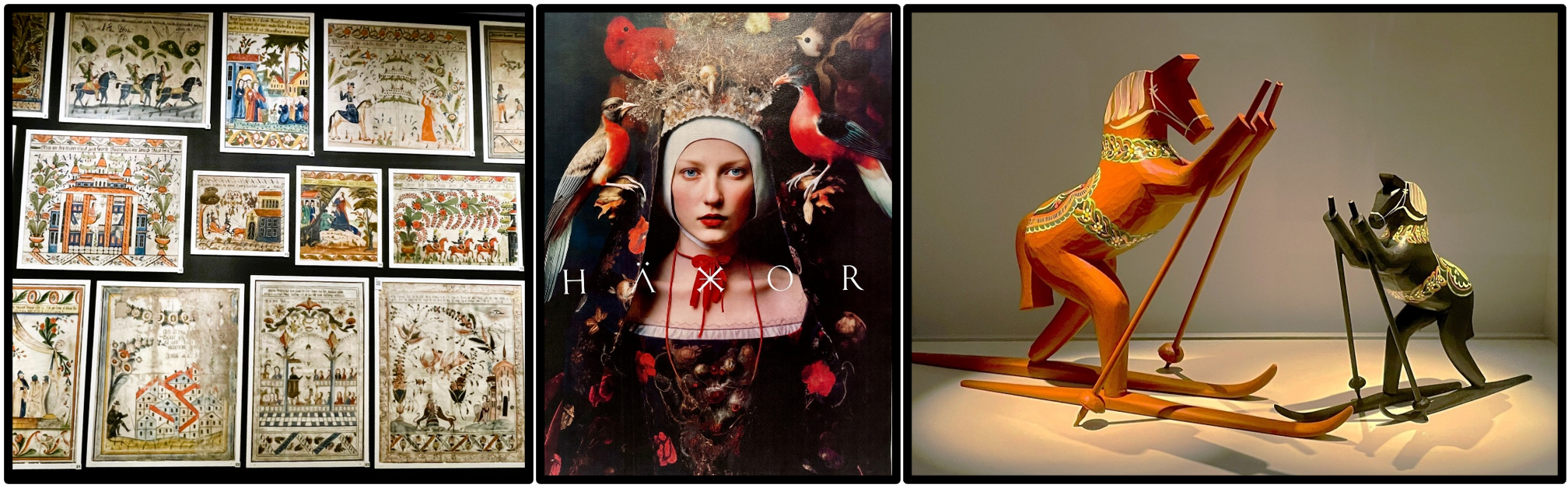
The museum has a wonderful collection of art, clothing, handicrafts, and other pieces of Dalarna culture. C was especially excited by the Dala horses. She has had one that she bought at IKEA years ago, so there was something fun about seeing them here in Dalarna, where they originated. We were also both really taken with the colorful kurbits folk art, with its elaborate flowers and scenes of everyday life depicted in a colorful, exaggerated but charming way. I was surprised by how much C enjoyed it too, taking photos as we went through. It was my favorite part of the museum.

Gems from the Dalarnas Museum: Left–Beautiful Kurbits folk art; Center–My favorite piece from the exhibit on the witch trials; Right–Some silly Dala horses

I was also taken with Mörksuggan or “The Dark Pig,” a creature from Dalarna folklore that was traditionally used to frighten children into behaving but is now considered something of a guardian. The museum also had a special exhibition called haxor, or witches, about the wave of witch trials that began in Dalarna in the 17th century and spread through Sweden. The exhibition was fascinating and included several pieces of art that really stayed with me.

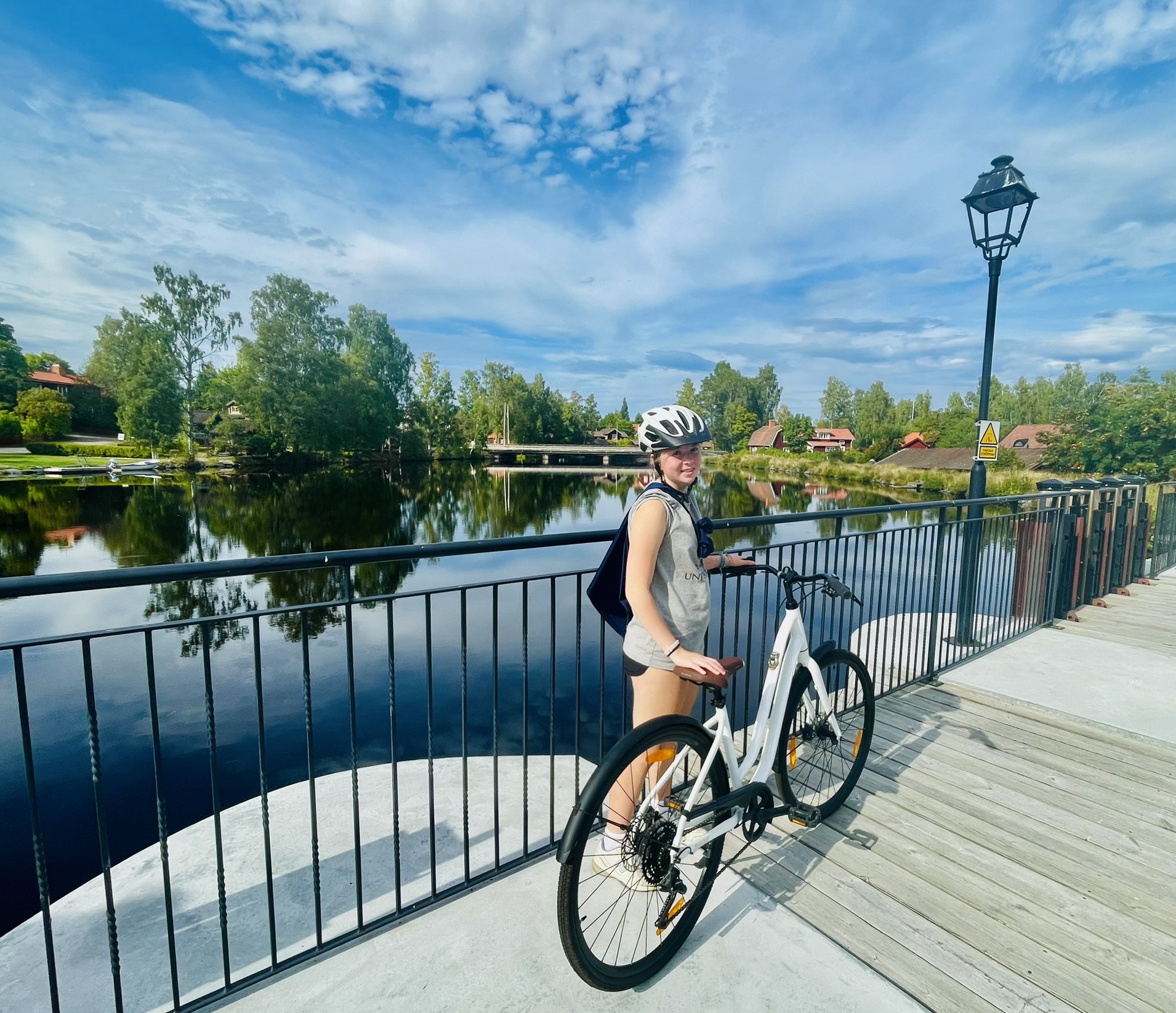
After the museum, we made our way back out to the mine and the other bike rental location. This was our second — and last — option, so when we learned they had very few rental bikes available, I began to worry that our cycling plans might be over before they started. Fortunately, they had two bikes that could work for us. Mine was a little too big, but after riding it around for a bit, I decided I could manage it. (I did manage it, although I later fell over while trying to get off the bike at a stop.) By then, the rain had stopped and the day was looking much more promising. We adjusted the bikes, put on our helmets, and finally set off for Sundborn.

I had wanted to work some cycling into our trip from the beginning. C was working on her Cycling merit badge for Scouts, and a ride to Sundborn would meet one of her required 15-mile rides, something she had cleared with her counselor before the trip. The small village outside Falun, best known as the home of Swedish artist Carl Larsson, gave us a destination and a chance to see more of the Dalarna region while doing something together.

From the mine, we rode back through Elsborg and then alongside a lake before picking up bike paths that wound through residential neighborhoods. For a while, the path ran alongside a highway — easily the least scenic part of the ride — but eventually we left that behind for smaller country roads. From there, the scenery opened up into rolling green hills, farms, and traditional houses as we made our way toward Sundborn. We had chosen the longer route because it was flatter, and after a little over an hour of riding, we arrived in the village.

We locked up our bikes and headed first to the local pizzeria for lunch before exploring a little. Sundborn is a small village nestled between Lake Toftan and the Sundbornsån river. By this point, the morning rain was long gone and the sky had returned to that stunning azure blue we had enjoyed for so much of the trip. The blue sky, green countryside, red wooden houses, and reflections on the water made the village absolutely beautiful.

C and her rental bike in Sundborn

Sundborn is best known as the home of Carl Larsson, a famous Swedish watercolor painter who depicted his life at his cottage in Sundborn. We opted not to take the house tour, but walked around his pretty riverside garden and stopped for ice cream at the café next door.

While we were there, I watched what seemed like a quintessentially Swedish summer scene play out along the river. A man emerged from a neighboring house in his bathrobe, walked down to his dock, and slipped into the water for a swim. A little farther down, a woman did the same. Then three boys arrived on bicycles on the opposite bank, dropped their bikes, and got into the river. The water may have been chilly, but that certainly did not seem to deter anyone from an afternoon swim.

Across the water from Carl Larsson’s cottage, we visited a master miner’s estate dating from the 1500s that is also part of the Falun UNESCO World Heritage Site. We spent a little more time exploring Sundborn before retrieving our bikes and starting the ride back to Falun.

In total, we rode 22 miles over about two and a half hours. We made it back to the bike shop in time to return our bikes before closing and then walked back into town. It had been another very full day, so we picked up something simple for dinner and had a quiet evening at the hotel before getting ready to move on to the next stop on our trip.

Sweden Summer, Part Three: A Splendid Day in Uppsala

The third installment of my daughter and my August 2026 visit to Sweden.

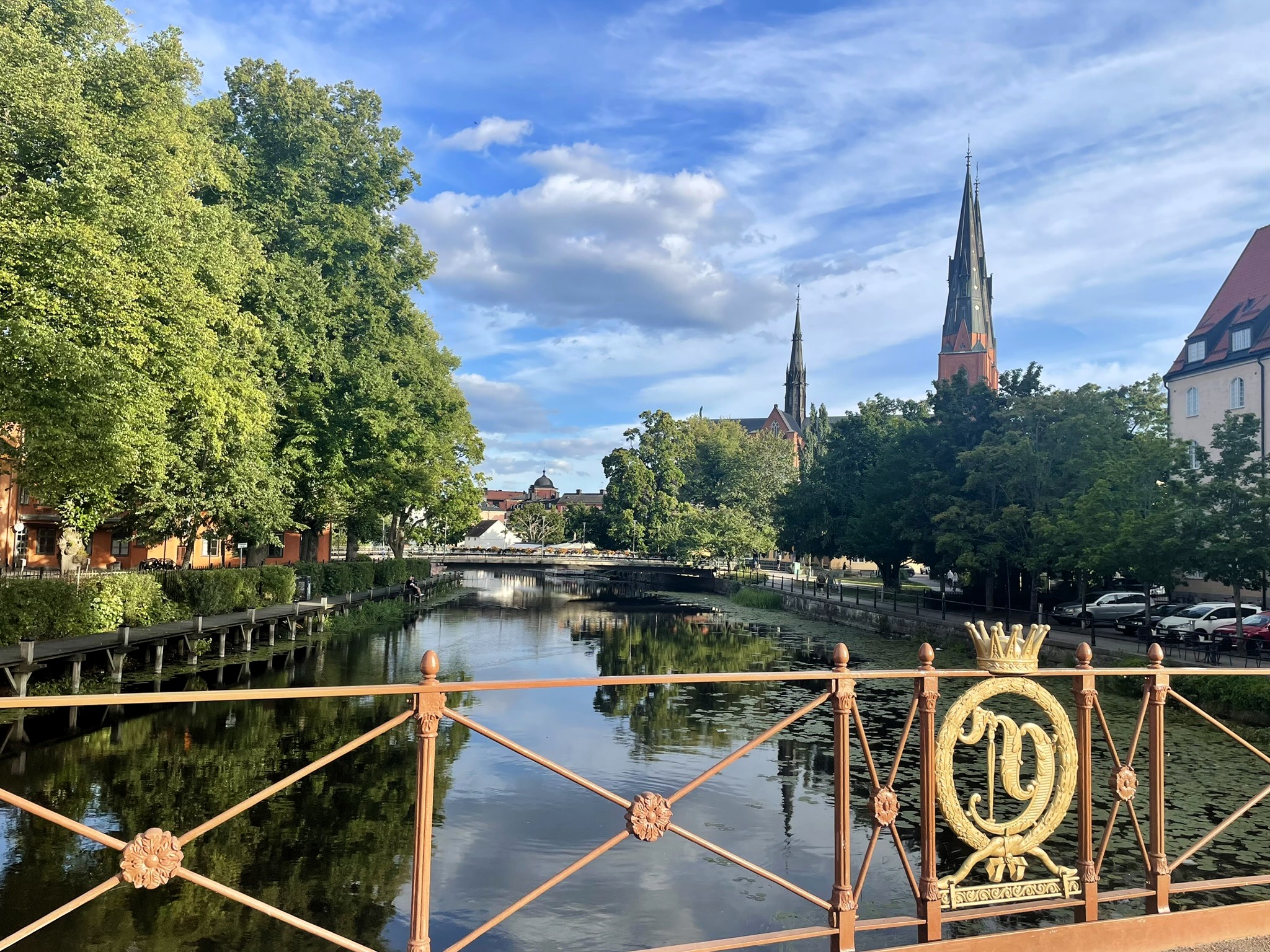
Uppsala from the Iron Bridge over the Fyris River

On the morning of our fourth day, we packed up our backpacks and said goodbye to Gamla Stan. After three nights there, we had grown comfortable. We knew which way to turn when we stepped outside, recognized the streets around us, and had settled into our little corner of Stockholm.

Naturally, that meant it was time to move on.

We walked to Stockholm Central to catch a train to Uppsala. Google Maps led me slightly astray near the station, and we ended up in the wrong place and missed the train I had planned for us to take. Fortunately, this was not much of a crisis. Uppsala is close to Stockholm, trains run frequently, and so I had not bought tickets in advance for this particular trip. We just course corrected, found the train station and departures, and caught the next train.

This was the first of several train journeys we would make as we traveled around Sweden, and it was an easy beginning. We settled in with our backpacks and had a quiet, comfortable, 40-minute ride north to Uppsala.

We arrived in Uppsala, and our accommodation was only about a five-minute walk from the train station. Once again, we got lucky. Even though we arrived around 10:00 in the morning, our room was already available, so we were able to drop our backpacks and settle in right away.

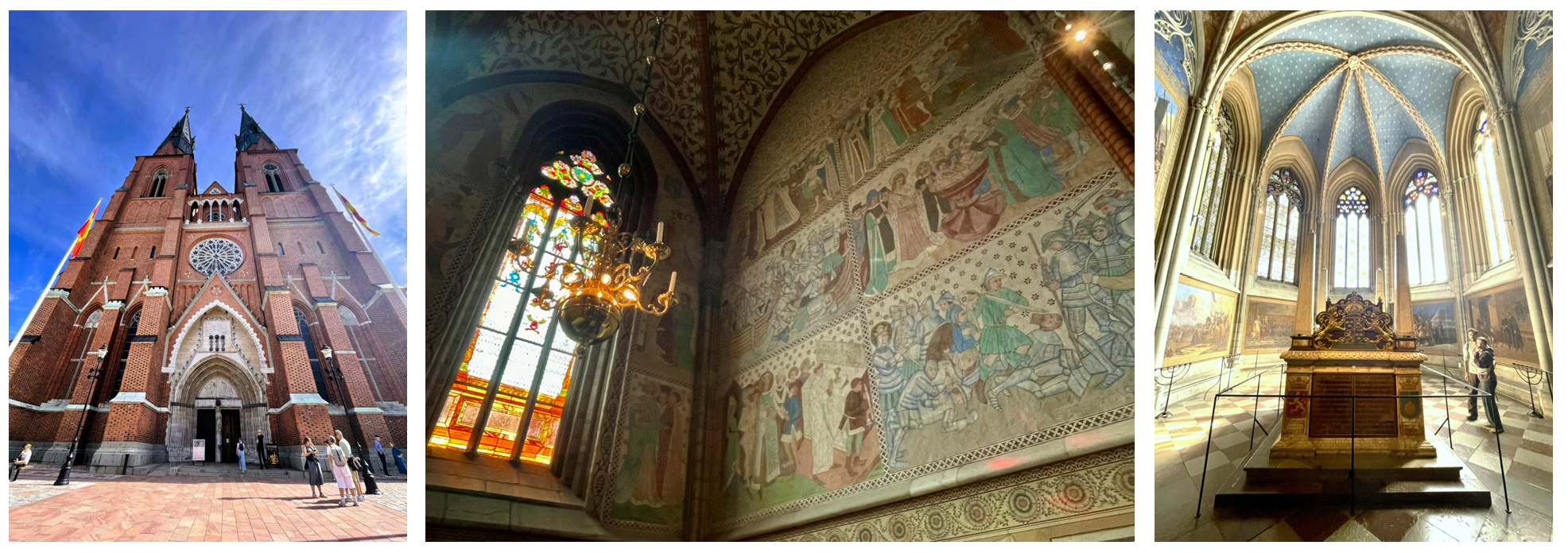
Uppsala Cathedral – the beautiful facade, frescos, stained glass, and the Vasa Chapel bathed in sunlight

This would be the smallest room of our trip, and it immediately reminded me of the sleeping compartment we had on the overnight train from Helsinki to Rovaniemi in Finland. The room was windowless, but it was perfectly sufficient for our needs. We had bunk beds, a small table that folded down from the wall, and folding chairs that hung on the wall when they were not in use. It was all very compact and very efficiently arranged. Very Scandinavian. We dropped our backpacks, freshened up a little, and headed back out to explore Uppsala.

From our accommodation, it was a quick walk into the center of town, where we crossed the Fyris River for the first time. The river runs right through central Uppsala, crossed by a series of small bridges, and it gives the city a particularly lovely feel. I would end up walking alongside it, or crossing back and forth over it, several times before the day was over.

Our first stop was Uppsala Cathedral. This was not just another pretty European church. Construction began in 1270 and continued until its completion and consecration in 1435. At nearly 119 meters high, it is the largest church in the Nordic countries, and Swedish kings and queens were crowned here from 1441 until 1719.

Inside the cathedral, what stood out most to me were the stained glass and the frescoes. I have come to find that I have a fondness for church frescoes. We saw several beautiful examples in the churches of Kosovo last year. They are beautiful, but I also love the way they tell stories visually. For centuries, they brought biblical stories to life, making them accessible to people who could not read or could not afford books.

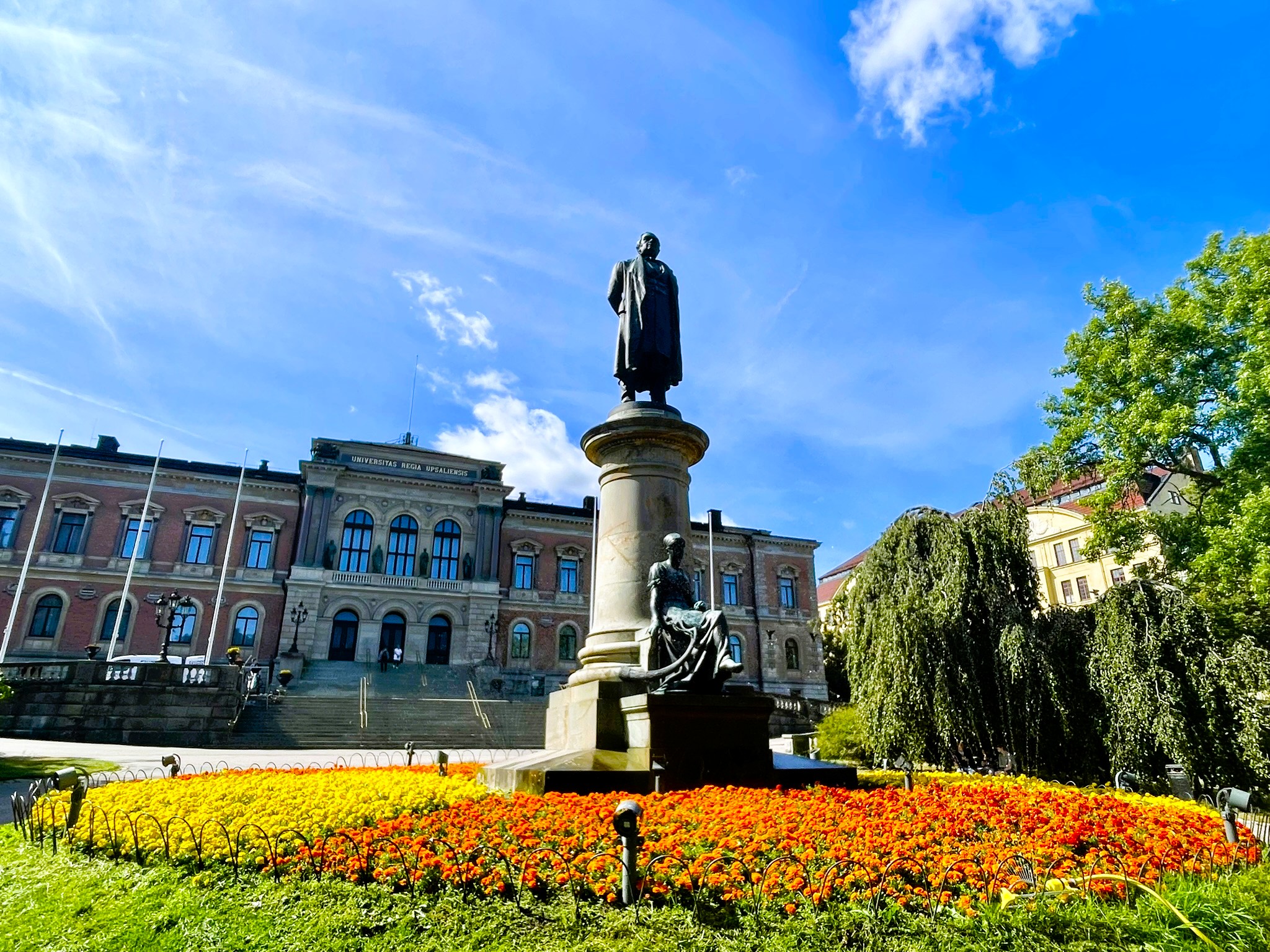
That plaza in front of Uppsala University’s main building

The Vasa Chapel was particularly striking. Gustav Vasa and two of his queens are buried there, and the chapel is located at the eastern end of the cathedral, behind the main altar. When we visited, it was bathed in golden sunlight, which made the painted walls and ceiling and the tomb in the center even more beautiful.

From the cathedral, we walked over to Uppsala University. Founded in 1477, it is the oldest university in Sweden and the oldest in the Nordic countries. My daughter is 14 and just beginning high school, so college is still several years away, but she is beginning to think about where she might eventually want to go. Right now, the world is full of possibilities.

We wandered around the campus and stopped at Gustavianum, the oldest surviving building at Uppsala University. It is probably best known for its 17th-century Anatomical Theatre, although we did not go up to see it. What my daughter really wanted was the museum shop. She loves collecting T-shirts from places we have visited, and she was hoping to find one from Uppsala University. Success.

Walking around the university also got both of us thinking a little about the future. What if she actually went to university here someday? And, naturally, that led to what I would do. Maybe I could live in Uppsala too? It was fun to imagine.

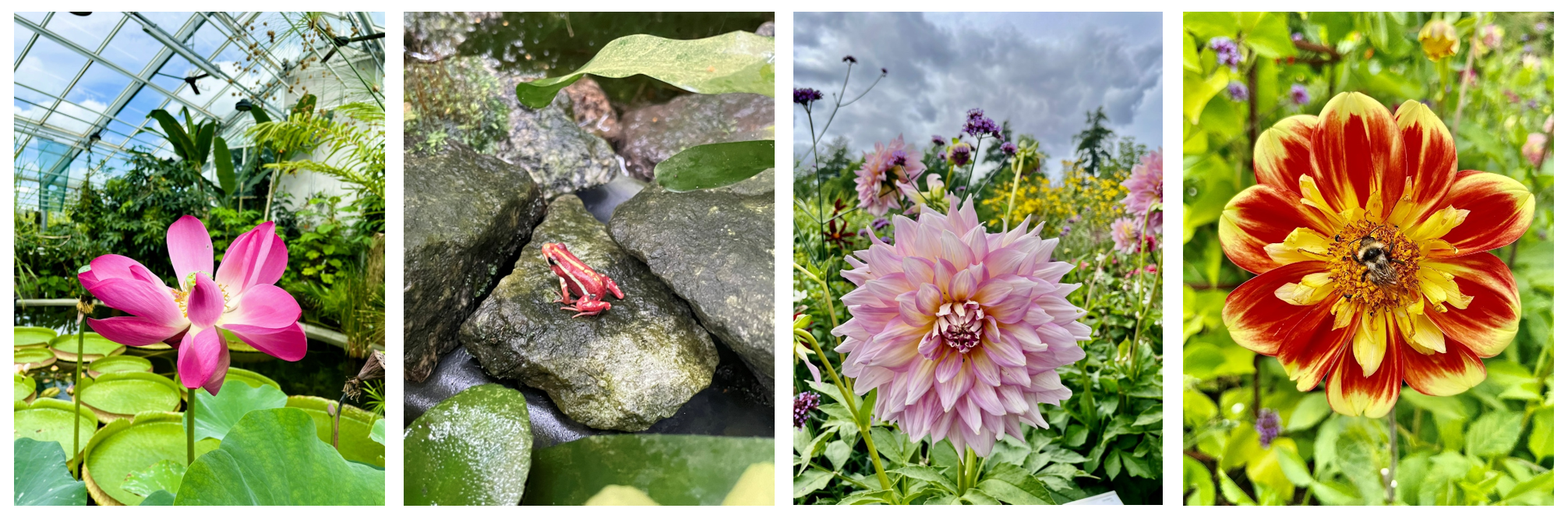
Some of the beautiful flowers of the Uppsala Uni botanical garden, including the Anthony’s Poison Arrow Frog

After visiting the cathedral and university, it was time for lunch. Earlier, as we were walking through town, my daughter had announced, “I smell burgers. We have to have burgers for lunch.” So we found the interestingly named Bastard Burgers, a Swedish fast-food chain founded just ten years ago. While we were eating, I looked it up and found there was quite a bit more to like about it than just the burgers. The chain is New York-inspired, but very Swedish in its approach, with an emphasis on fresh ingredients, local sourcing, and sustainability. The burgers were some of the best I have ever had from a fast-food chain. C and I both gave it a thumbs up, and it was so tasty, we would visit Bastard Burgers two more times during our time in Sweden.

After lunch, we headed toward the botanical gardens. My original plan had been to visit the Linnaeus Garden and the house where Carl Linnaeus lived while he was a professor at Uppsala University. Linnaeus is one of Sweden’s most famous scientists and is best known for developing the system used to classify and name plants and animals. He became a professor at Uppsala University in 1741 and also took over its botanical garden.

Somehow, though, I managed to end up at a different botanical garden.

This was not entirely as random as it sounds. The Linnaeus Garden was Sweden’s first botanical garden, founded in 1655. By the late 1700s, it had become overcrowded and was also prone to flooding because of its location near the river. In 1787, King Gustav III donated part of the gardens of Uppsala Castle to the university for a new botanical garden. The plants were eventually transferred to the new garden, which opened in 1807.

So I had still found a Linnaeus-related botanical garden. Just not the one I had intended to visit.

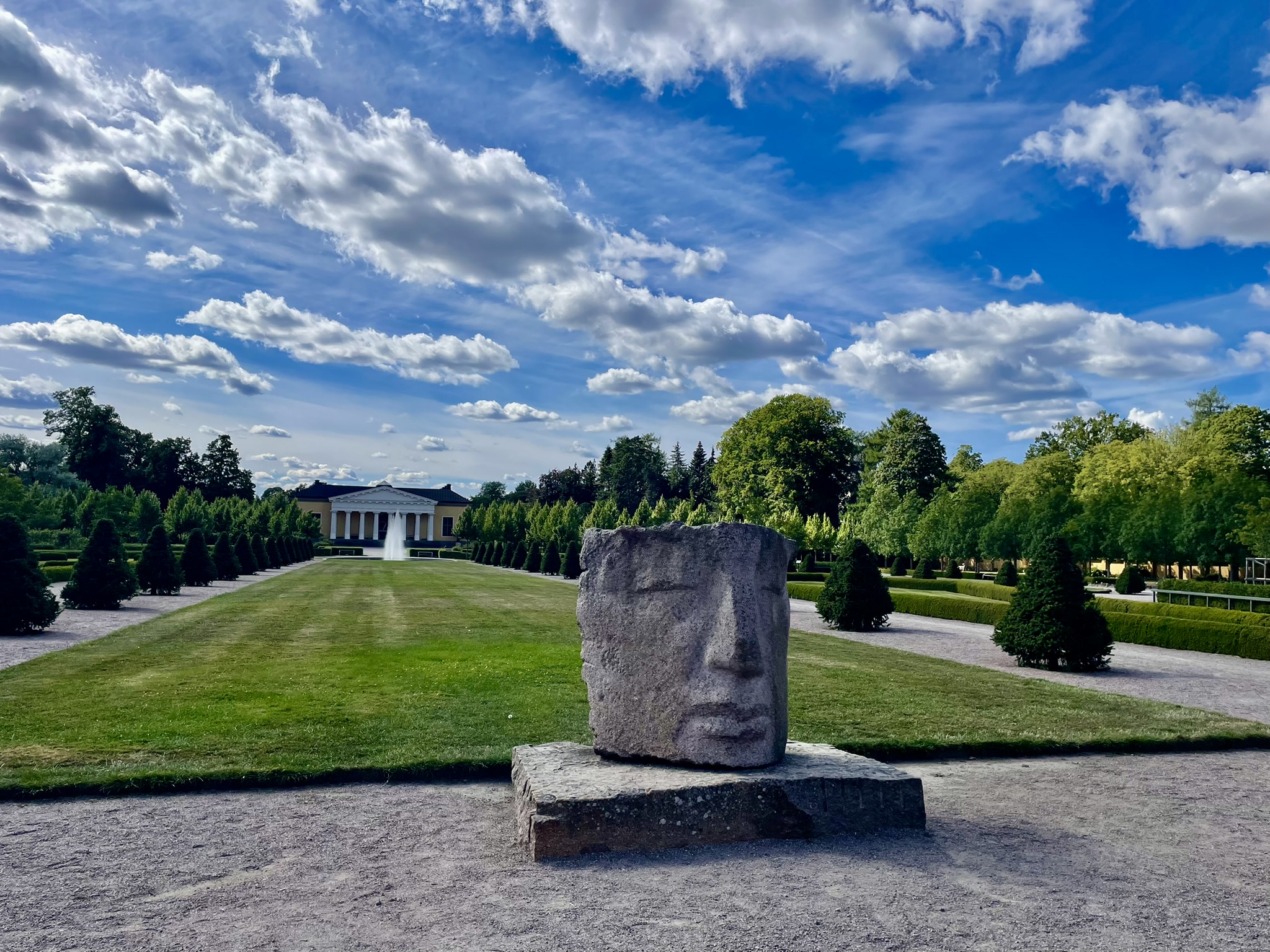
The Baroque Gardens of the Uppsala Botanical Garden

We walked through the formal gardens toward the Linneanum, the large building at the far end. King Gustav III also provided money for its construction, and it opened in 1807 as part of the new botanical garden. I had been trying to get there before it closed, so there was a certain amount of determined walking involved.

Once inside, however, it felt strangely empty. With the exception of a succulent greenhouse that had little to make it a standout, there were no other exhibits in the halls and the other rooms were closed. This was quite frankly a let down. After some online sleuthing while we stood there, I discovered it was due to the season. During the summer, many of the plants kept inside had been moved outdoors. We had walked past them outside, and honestly, I had hardly noticed them.

This could not be all there was in a botanical garden with such history! I recalled a sign I had seen directing visitors to the garden’s Tropical Greenhouse across the street. Online information noted it was still open for about another hour and C and I decided to check it out.

As we headed over, I was reading more about the greenhouse and discovered that one of the rooms is home to a colony of poison dart frogs! I kept that little bit of information to myself for a while until we were inside. There I told C. No worries though, poison dart frogs in captivity have a different diet from those in the wild, they are no longer poisonous. So now we had a new goal: find one.

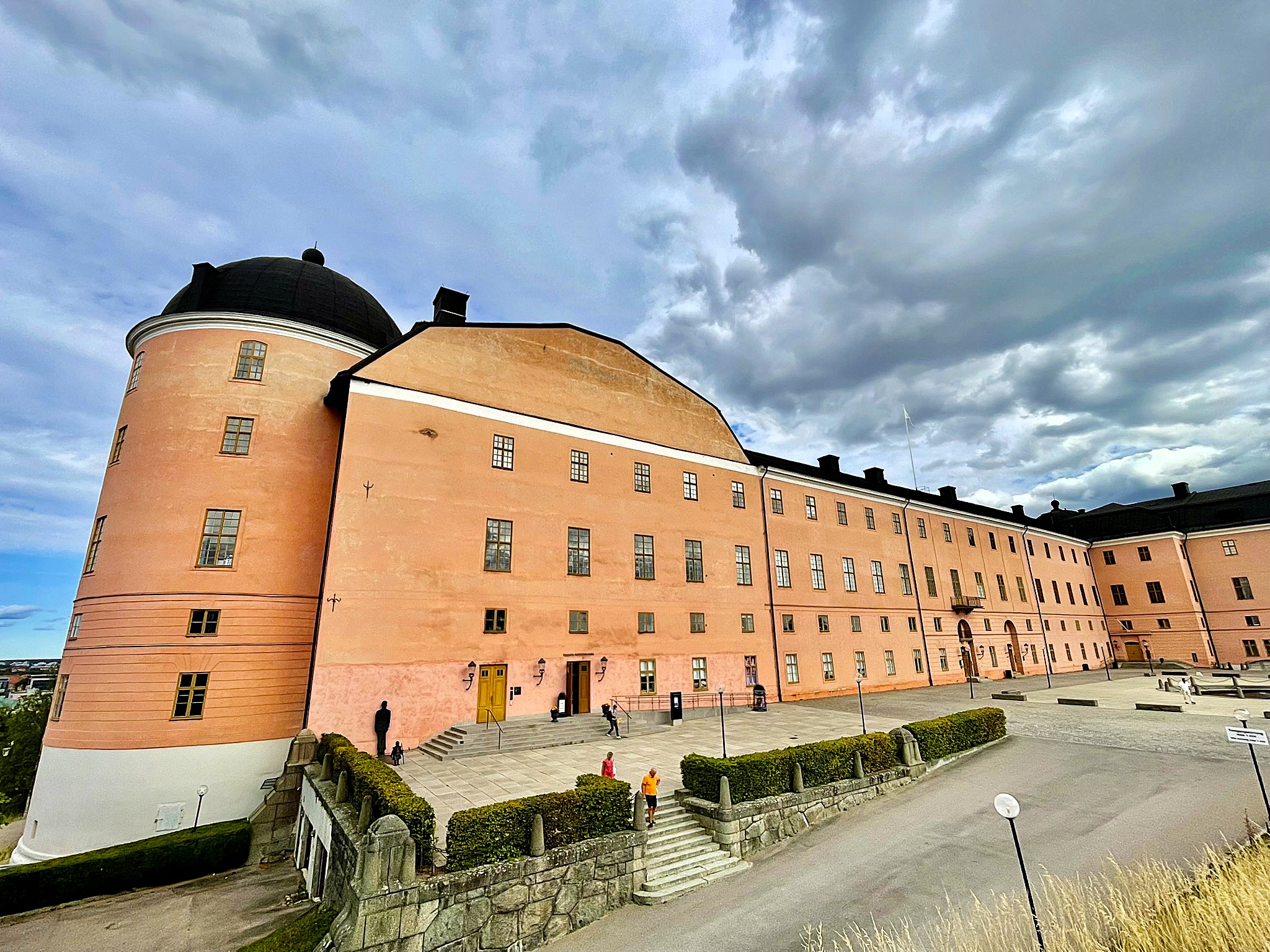
Uppsala Castle

We started searching the room, looking especially around the bases of trees and near the small streams and other damp areas where we thought a frog might be hiding. It took a little while, which made it feel like a scavenger hunt. Eventually, C spotted one near the water. We were both enthusiastic about our find and told other visitors where they could spot it too. C immediately posted that she had found a poison dart frog to her social media. It was an unexpected and very fun addition to our visit.

After leaving the greenhouse, we walked up to Uppsala Castle. The castle has played a prominent role in Swedish history since Gustav Vasa began construction in 1549, and Queen Christina famously abdicated the Swedish throne there in 1654. By the 1600s, it had also become the seat of the regional governor, and the County Governor still has an official residence there today.

Because the castle is still a functioning government residence, there was only so much of it we could see, but the hilltop location made the visit worthwhile. From there, we had lovely views over Uppsala and toward the cathedral, whose twin spires dominate the skyline.

Afterward, I took C back to the room because she wanted to rest for a while. Late afternoon was also a good time for her to catch up with friends back in the United States. I headed back out on my own, much as I had in Gamla Stan. I enjoy getting in some extra walking, and I can move at my own pace, stop for photos as often as I want, and linger over things that C has absolutely no interest in photographing.

I walked the length of the main street and then made my way back along the Fyris River. I stopped for some ice cream and sat outside by the water near one of the bridges. By then it was golden hour again, and Uppsala looked especially pretty in the late-afternoon light.

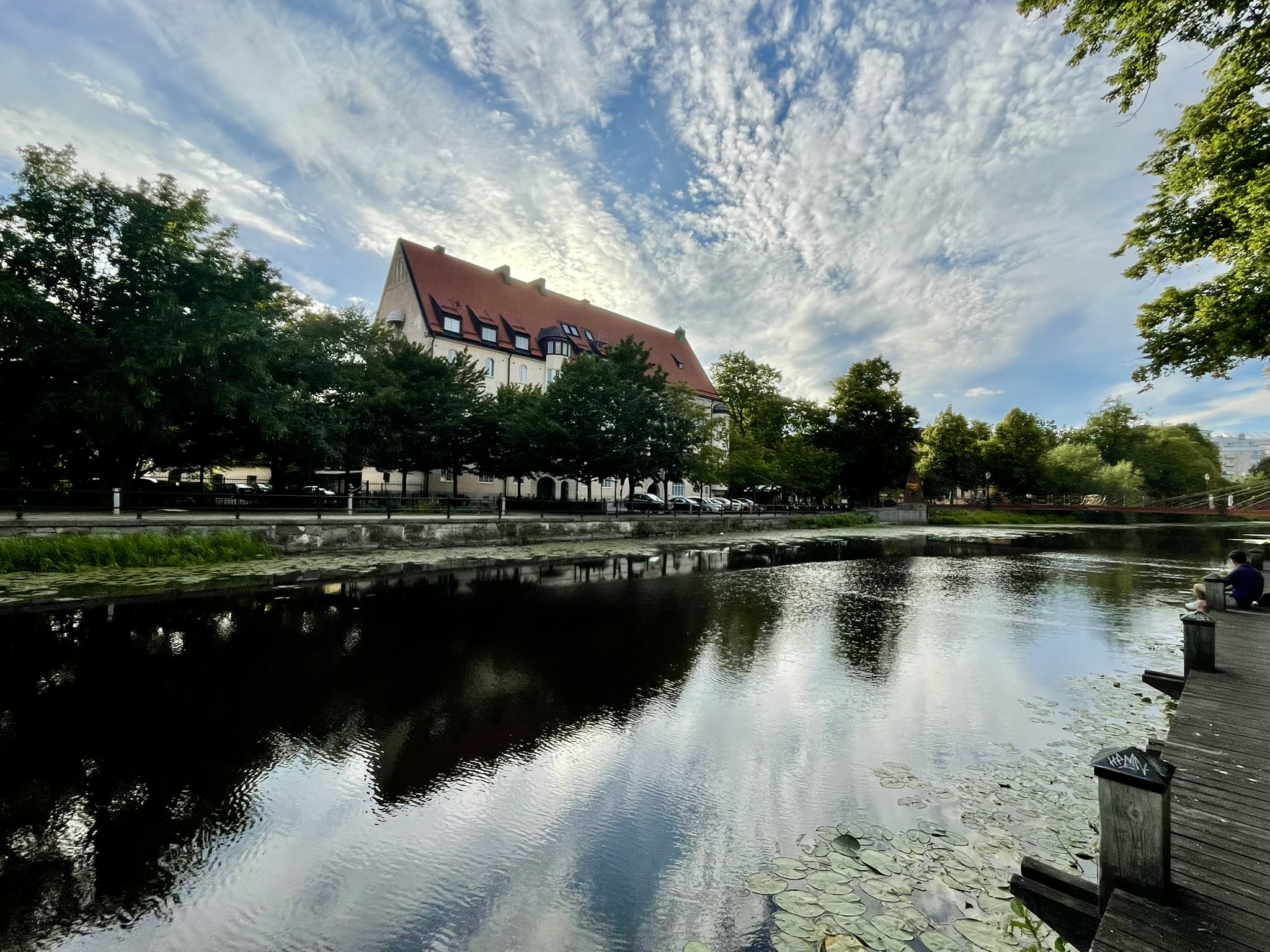
Another view across the Fyris River in Uppsala

The Fyris River runs right through the center of town, and Uppsala has grown around it in a way that makes the river feel like part of the city rather than something running beside it. There are mills and reminders of its more practical past, but today the bridges, paths, and buildings along the water make it a particularly lovely place to walk. There were so many beautiful spots that I took many photos.

Before heading back to the room, I stopped at a supermarket and picked up a few things for dinner. Our one day in Uppsala had been very full, but it felt satisfying. The next morning, we would pack up again and head on to our next destination.

Sweden Summer, Part Two: Stockholm from Shipwrecks to SkyView

The second installment of my daughter and my August 2026 visit to Sweden.

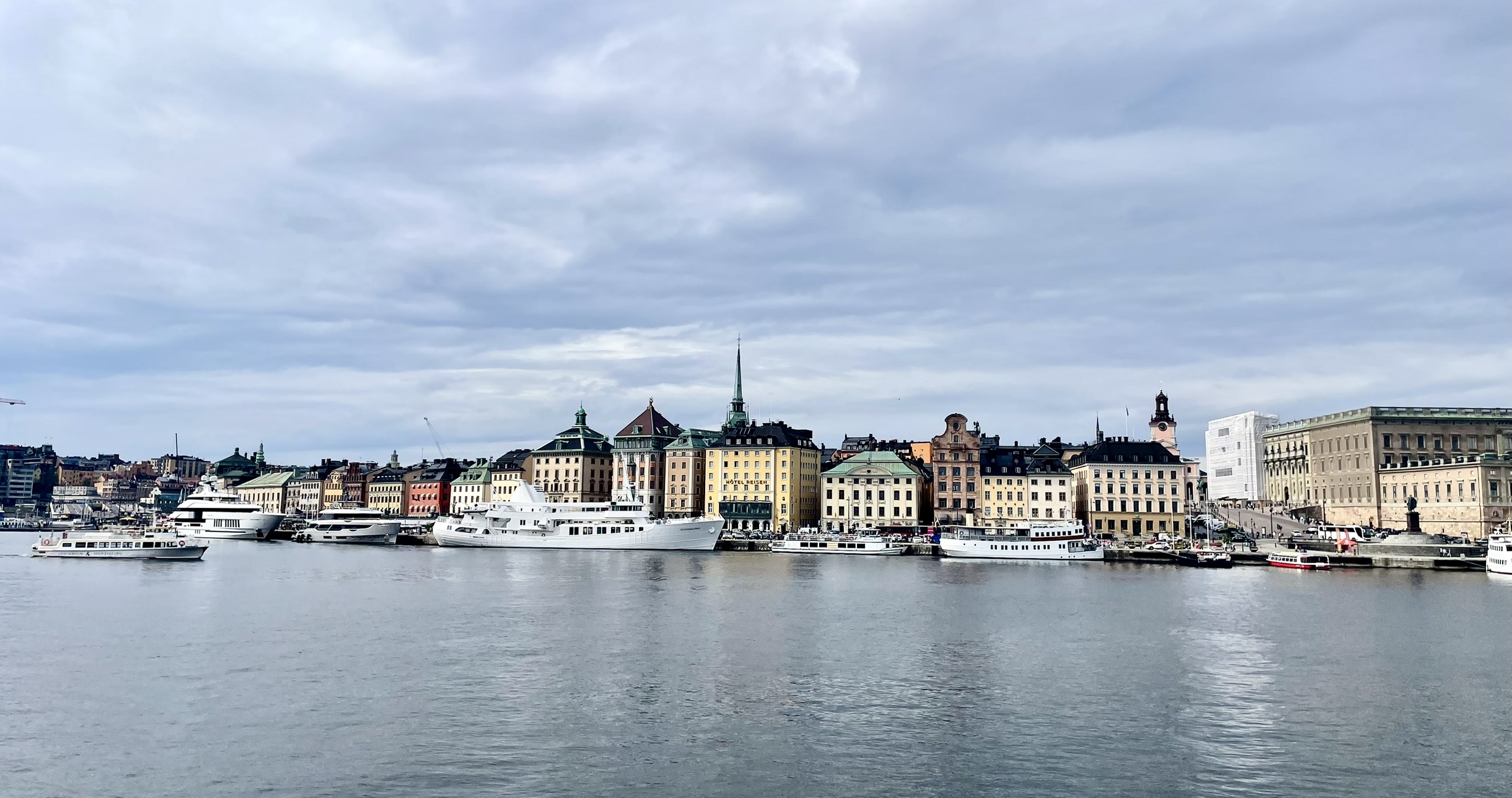
Gamla Stan from the bridge to Skeppsholmen

C and I slept well and woke up early, so I felt my plan to beat jet lag was working. It was overcast and raining slightly as we set out. I had been watching the forecast carefully because we had two more days in Stockholm: one for museums and one with more time outdoors. The rainy day was clearly the day to visit the museums on Djurgården.

We set out through a light mist, planning to walk the roughly 30 minutes to Djurgården and take the ferry back. Google Maps led us from Gamla Stan onto Skeppsholmen, the neighboring island. The bridge was lovely, with a beautiful view back across the water toward Gamla Stan. Skeppsholmen itself was green and surprisingly hilly, with several lovely old buildings. We walked up a rise and down the other side, following the map toward Djurgården. Only when we reached the water did I realize that the route ahead was a ferry, not a continuation of our walk.

The ferry was approaching, so we got on. Unfortunately, it was headed back toward Gamla Stan. We stayed aboard and rode it back toward Djurgården, stopping a second time at Skeppsholmen along the way. The unexpected detour gave us a chance to see the islands from the water, and the approach to Djurgården was particularly nice. The ferry landed right in front of Gröna Lund, Sweden’s oldest amusement park, and from there we headed for the Vasa Museum.

Although we had woken up early, we had not left quite as early as I had planned, and I had not expected the Vasa Museum to attract such a crowd on a weekday in August. The line stretched up the rise toward another museum. Rather than join it immediately, we sat down for fika. C had hot chocolate and a snack, and I had tea and a cinnamon roll—a Swedish invention and one of Sweden’s great contributions to the world. It was fantastic, and the first of many I would enjoy on this trip. When we finished, the line had hardly changed, so we decided to visit the Wreck Museum first.

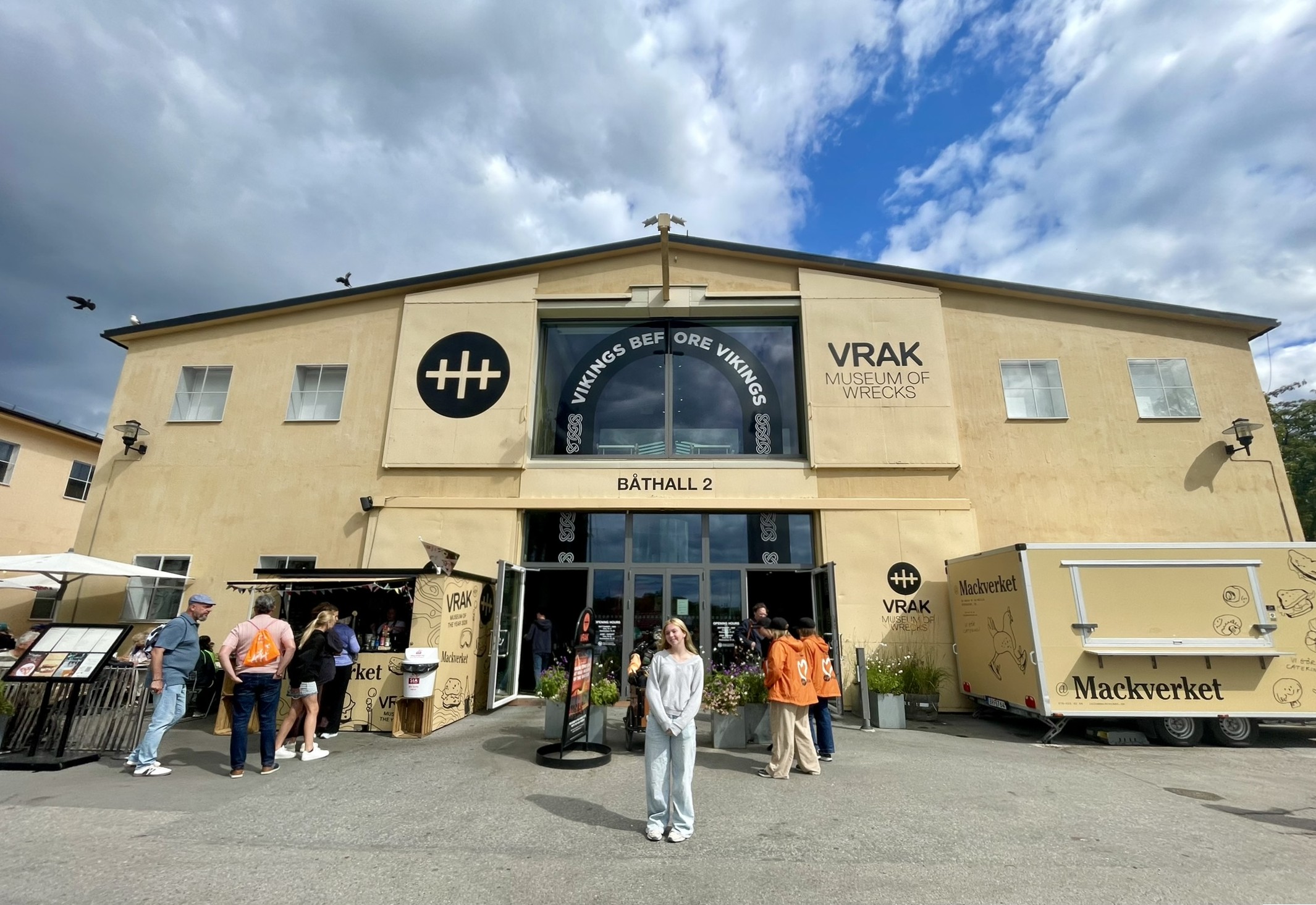
C outside the Vrak Museum

Vrak, or the Museum of Wrecks, is an award-winning interactive museum on the Djurgården waterfront (it was a finalist for the European Museum of the Year Award in 2024 and won Sweden’s Museum of the Year Award in 2026). It is housed in a World War II-era boat hangar. We took few photos inside because we were too busy with the exhibits: a VR dive that let us search an underwater wreck, an immersive film telling the Baltic Sea’s story, and holographic images of objects from the wreck of a 17th-century ship. We learned not only about famous Swedish wrecks, but also about how people search for them and salvage objects from them. It was quite cool, and we really enjoyed it.

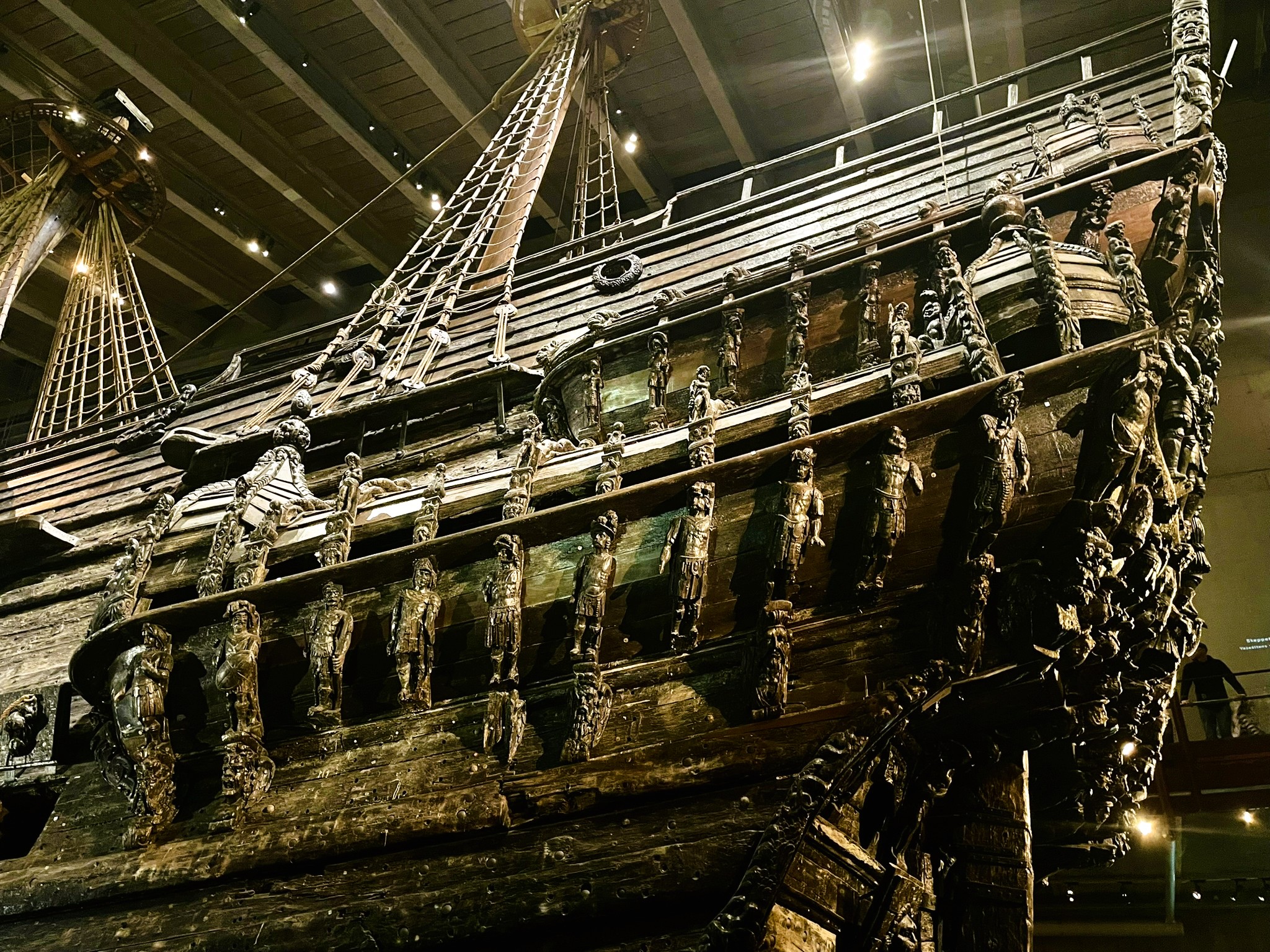
After visiting Vrak, we returned to the Vasa Museum. The line was significantly shorter, and I am so glad we visited the museums in that order. Vrak may have won awards, but after seeing Vasa, nothing could compare. As soon as we walked in, there was the ship towering before us. It took my breath away. It was several stories high—an entire seventeenth-century warship standing inside a building—and its craftsmanship and carvings were gorgeous. I was enthralled.

Vasa was built at Stockholm’s navy yard between 1626 and 1628. It set sail on its maiden voyage on August 10, 1628, but after about 20 minutes began taking on water and sank. Only a little way into our visit did it occur to me that we were there on August 10—398 years to the day after Vasa set sail. That felt extraordinary, and I wondered whether the anniversary might have helped explain the size of the crowd that morning. The ship was raised in 1961, after 333 years underwater, and more than 98 percent of its original structure survives.

The museum is built around the ship and tells so much more of its story: the people who built and sailed it, life aboard, its brief maiden voyage and sinking, and its eventual discovery and salvage. We spent probably three hours there and left only because we were hungry. We could have stayed longer, and I think even C could have stayed a while more—though perhaps not quite as long as I would have. It is one of the most incredible museums I have ever visited.

Just some of the magnificence of the ship Vasa

Motivated by food, C and I left Djurgården behind. We had considered the ABBA Museum, which sounded fun, but the reviews I read suggested it was small and pricey. After seeing Vasa, I was good, and C was as well. We were tired after a good four hours of museuming. We walked back across the bridge to the mainland and had lunch at an Italian restaurant in the elegant Östermalm neighborhood. Afterwards, we meandered through the streets back to our hotel in Gamla Stan. We had had such a busy first day, followed by another busy day, that I did not want to pack anything else in. We needed time to rest and reflect on what we had done so far.

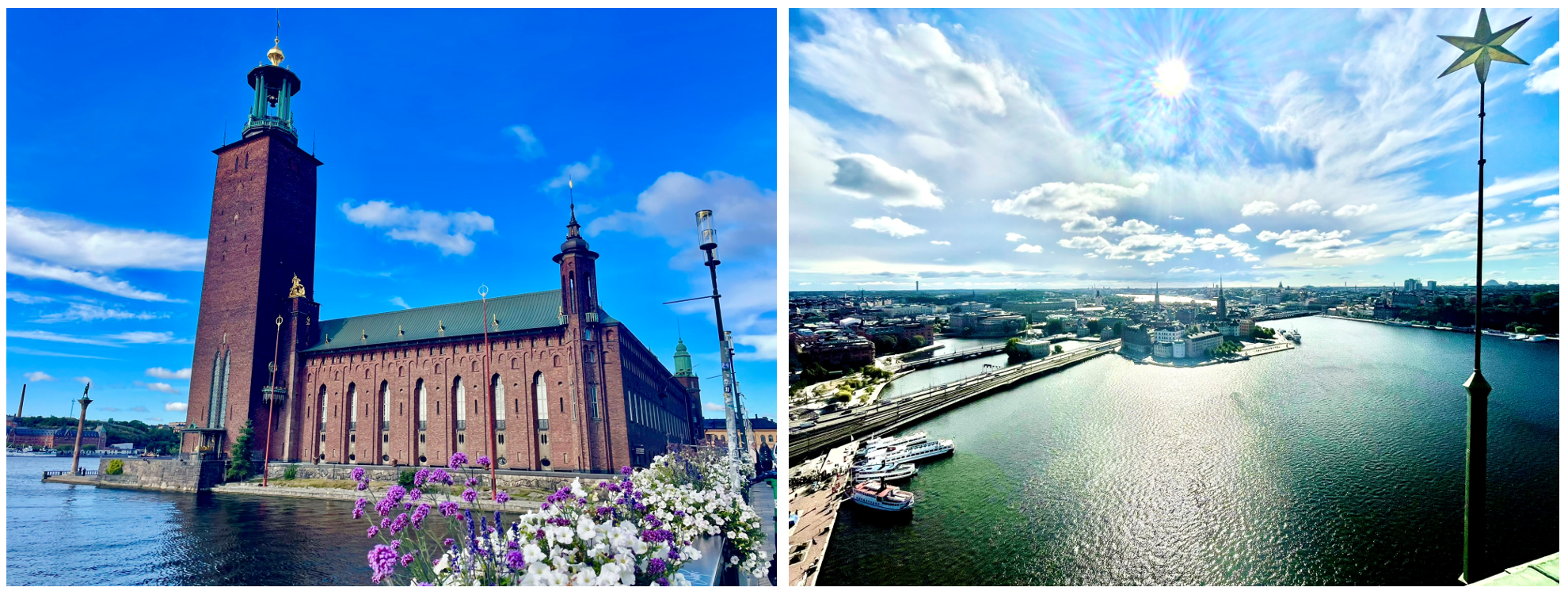
We woke early on our third day in Sweden to head to Stockholm City Hall for a tour of its tower. Completed in 1923, Stockholm City Hall sits on the northern shore of Riddarfjärden, a broad stretch of Lake Mälaren in central Stockholm. The building has hosted the annual Nobel Prize banquet since 1930.

Although it is called a tower tour, it is not guided. The tower is open to visitors only during the summer months, and the number of people admitted during each 40-minute block is limited. We were given 10 minutes to climb, 20 minutes at the top, and 10 minutes to descend. At 348 feet high, the tower offers a panoramic view over central Stockholm. It was a bright, gorgeous morning, and although it was windy at the top, we had a tremendous view across the water and several of the islands that make up Stockholm, including Gamla Stan.

Stockholm City Hall and the view from the tower toward Gamla Stan

Just a two-minute walk from City Hall was the departure point for our boat to Drottningholm Palace. The trip took about an hour, winding among the large islands and narrow waterways of Lake Mälaren. I was surprised to learn that we were traveling on a lake at all. It looked much more like a network of rivers than any lake I had seen before.

The boat was crowded, and all the seats on the upper deck were taken. Given how chilly it was on the water, however, I was quite happy for C and me to huddle on benches near the snack bar inside, stepping outside whenever I wanted a better look at the view. We also took advantage of the snack bar for a morning fika. I had my second cinnamon roll of the trip, and it was every bit as delicious as the first.

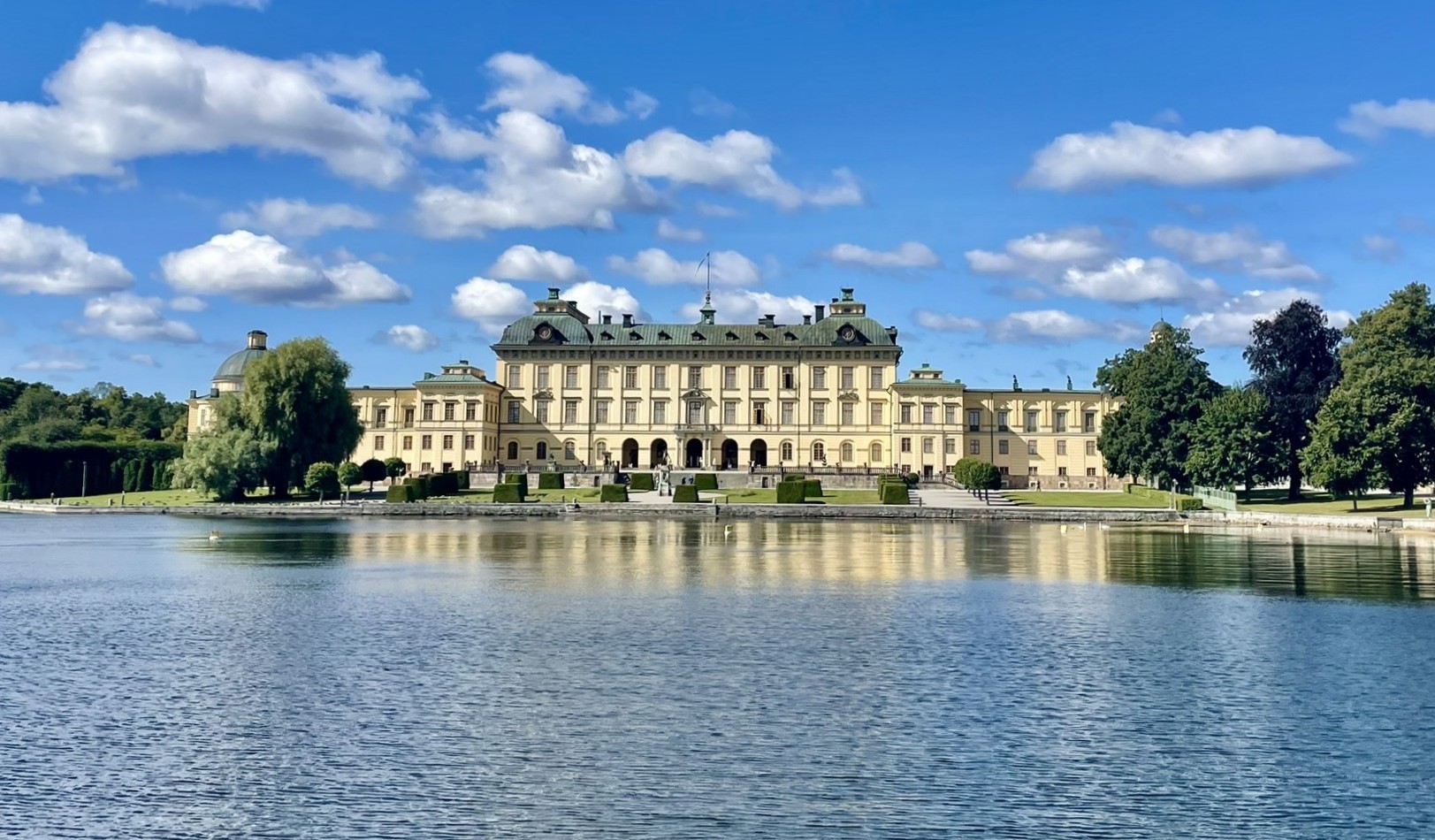
As we drew closer to Drottningholm, I went outside to watch our approach. Arriving at the palace by water is spectacular. Its sunny yellow façade appeared ahead of us against a startlingly clear blue sky, and even before we docked, I could see why the royal estate had been named a UNESCO World Heritage Site.

Drottningholm is Sweden’s best-preserved royal palace from the 1600s and remains the home of the Swedish king and queen. Because it is still a functioning royal residence, only part of the palace is open to visitors, and, as at the Royal Palace in Gamla Stan, it did not take us particularly long to walk through the available rooms. I loved the building itself. Inside, however, I discovered that I apparently have a much higher tolerance for grand architecture than for gilded interiors. After a certain number of royal residences, one lavish room begins to blur into the next.

Once outside, I connected with Drottningholm in a way I had not inside. The gardens were still carefully shaped and unmistakably royal in scale, but they felt like a place to explore rather than a collection to admire from behind a rope. The palace and grounds were French-inspired and borrowed heavily from French Baroque design, making the connection to Versailles easy to see. Yet Drottningholm, though one of Sweden’s top tourist attractions, did not come with the crowds found at Versailles. The farther we wandered from the palace, the fewer visitors we encountered.

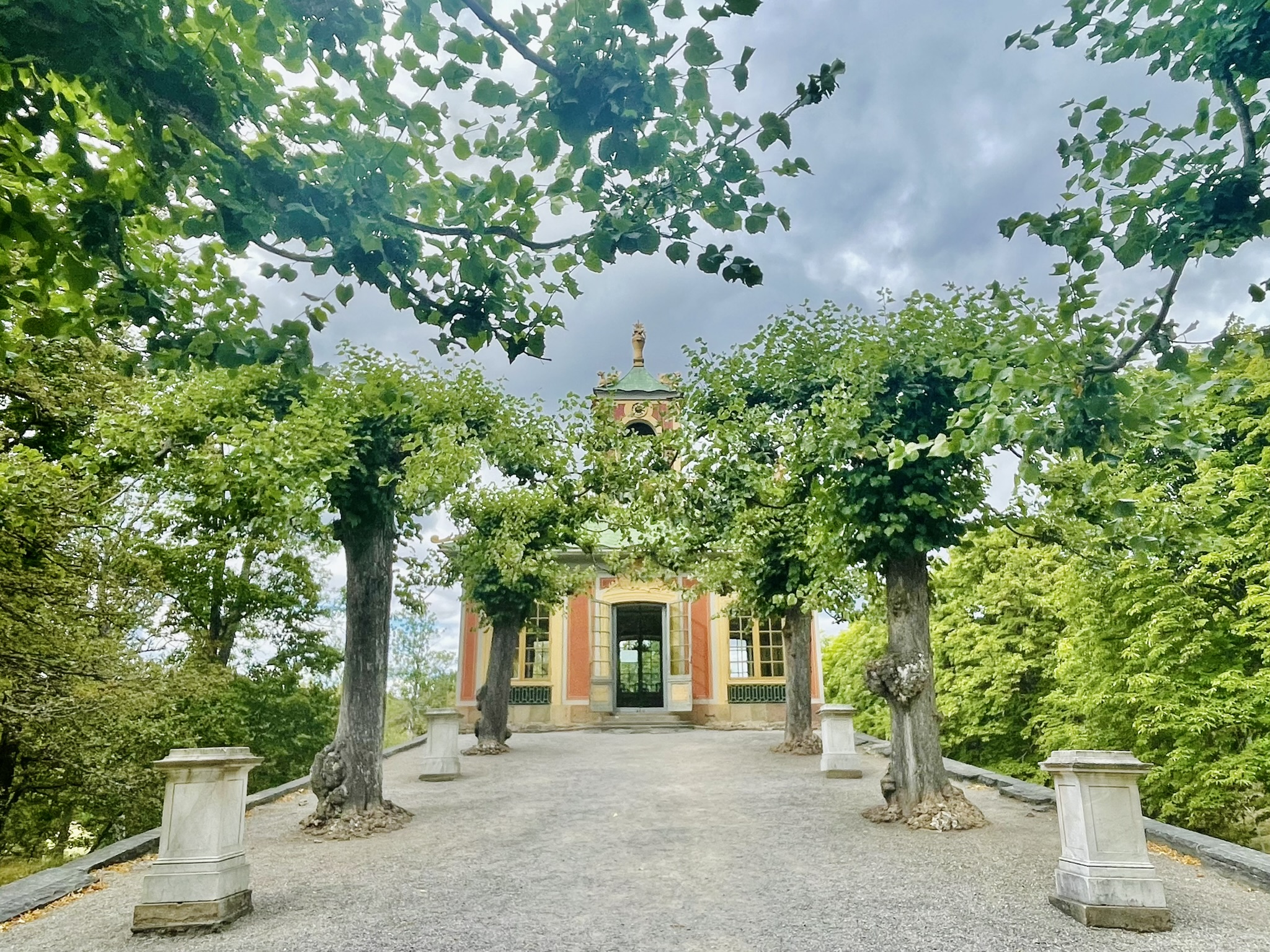
My favorite part of the grounds was the Chinese Pavilion and the quiet area surrounding it. I particularly liked the long path lined with chestnut trees and the views across the open spaces framed by long rows of trees. Tucked away a substantial walk from the main palace, the pavilion felt far enough removed to serve as the royal family’s getaway from the big house. It began as a birthday gift from King Adolf Fredrik to Queen Lovisa Ulrika in 1753—because what do you give a queen who already lives in a palace? A vacation mini-palace, apparently. European royalty at the time was a bit obsessed with all things Chinese, and that enthusiasm carried through not only the architecture but also the wallpaper, furnishings, and decorative details inside. Having spent quite a bit of my own life living in, working in, and traveling through China and elsewhere in East Asia, I could understand their interest.

The dining pavilion at Drottningholm’s Chinese Pavilion

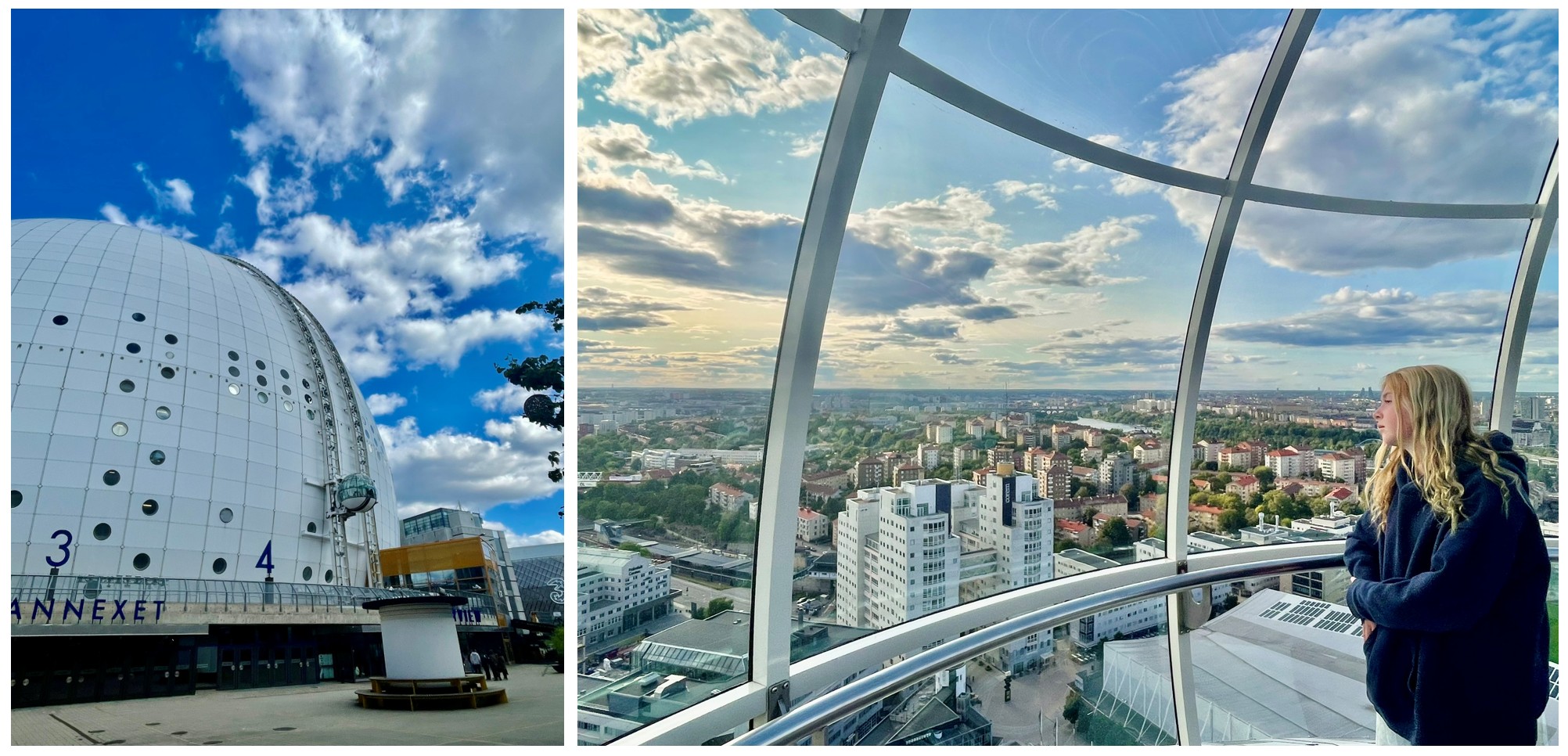
We had lunch at the Palace Café and then, rather than returning by boat, took a bus and the subway to the Avicii Arena in southern Stockholm. We were there to ride SkyView, a one-of-a-kind attraction—the only one in the world—in which a clear, spherical gondola crawls up the outside of the Avicii Arena, the world’s largest spherical building.

We arrived at the SkyView ticket counter at 3:15 p.m. only to learn that a group of more than 100 people had booked several rides just before us. There are only two gondolas, each holding 12 people, and a complete ride, including boarding, takes about 25 minutes. The next available tickets were for 5:30 p.m. We had nothing else planned for the day, and the Avicii Arena is next to a shopping mall, so we bought the tickets and headed to the mall to look around.

There, we discovered Normal, a super-fun non-pharmacy drugstore. It was sort of like CVS in the United States, but with a cute, maze-like layout, colorful displays, and lots of delicious imported snacks and sweets. Exploring Normal and enjoying some more fika helped the time pass quickly.

Finally, it was our turn to board SkyView. We were supposed to watch an introductory video first, but someone forgot to show it to us. No matter. We went directly into the gondola, where only two other passengers joined us.

The gondola slowly crawled up the side of the arena until it reached the top, 130 meters, or about 425 feet, above sea level. It paused there for a few minutes so that we could take in the view. The immediate surroundings were more residential and commercial than picturesque, but beyond them Stockholm spread out below us, and we could see toward Gamla Stan and the historic center. It was another gorgeous, clear afternoon; on a cloudy day, I doubt the view would have been quite as spectacular. SkyView was one of those special activities to check off the list—something we could do nowhere else in the world.

Left: A gondola travels along the side of the Avicii Arena; Right: C looks out at Stockholm from inside a gondola at the top of the Avicii Arena

Afterwards, we returned to the subway and rode back to Gamla Stan. We picked up a few things from the supermarket to make dinner in our room. Once again, C remained at the hotel while I took one more late-afternoon spin through the gorgeous streets of Gamla Stan. Then I returned to the room so that we could both prepare for the next day, when we would leave Stockholm for our next destination.

Sweden Summer, Part One: Planning and Arrival in Stockholm

Crossing from the island of Stadsholmen, where Gamla Stan is located, to the mainland; Weather on our first was fabulous.

Late last year, only a few months after our wonderful summer road trip through Kosovo, Albania, and Montenegro, I began thinking about where C and I might go the following summer. The Balkans had been C’s idea and, delighted by how well that trip had turned out, she was keen to see another part of Europe. Italy initially rose to the top of the list, but the thought of traveling there during the heat of August gave me pause. A few years earlier, after a DNA test estimated that C was around 10 percent Scandinavian, she had expressed an interest in learning more about Sweden and visiting someday. August also seemed one of the best times to go. And with that, we had our destination.

Once I settled on Sweden, I began imagining how we would travel through it. I love traveling by train and have fond memories of rail journeys in China, Australia, New Zealand, and across Europe, as well as our more recent cross-country trip from Chicago to Los Angeles. Sweden seemed like an ideal place to build an itinerary largely around train travel. We would ultimately take a little bit of everything, but this would not be another self-drive trip. To make it easier to board trains and walk between stations and hotels, C and I would also leave our suitcases at home and travel with backpacks.

Sweden has a reputation for being expensive, and when I backpacked through Europe in my twenties, I largely avoided Scandinavia and other places where my limited budget would not go very far. More than two decades later, I could finally make Sweden happen, but I still wanted to keep the costs under control. I booked our plane tickets using miles, chose relatively inexpensive accommodations, and used hotel points for about a third of our stays.

Using miles meant accepting a less-than-ideal itinerary: Dulles to Rome, Rome to Munich, and finally Munich to Stockholm. Two connections were not ideal, but since I was paying little more than the taxes, I went with it. Then the war with Iran began, oil prices rose, and I started hearing about shorter flights within Europe being cancelled. I worried that one of our European flights might disappear. I figured that once we were in Europe, we could always take a train—but Rome is a very long way from Stockholm, and getting there by rail would have taken days and unraveled much of our carefully planned itinerary.

Then, in May, the trip faced a far more personal threat when I developed a debilitating case of sciatica. For three days I could barely get out of bed, and for a time I struggled to walk even with a cane. This was not going to be a relaxing beach holiday; our plans depended upon my being able to carry a backpack, walk between train stations and hotels, and spend full days sightseeing. I became genuinely worried that I would not be physically capable of taking the trip at all.

By August, however, none of our flights had been cancelled and, although I had not fully recovered, I had recovered enough to go. I would ultimately do remarkably well in Sweden, but I did not know that when we arrived at Dulles. I was simply thrilled that after months of worrying about whether the trip would happen, C and I were finally on our way.

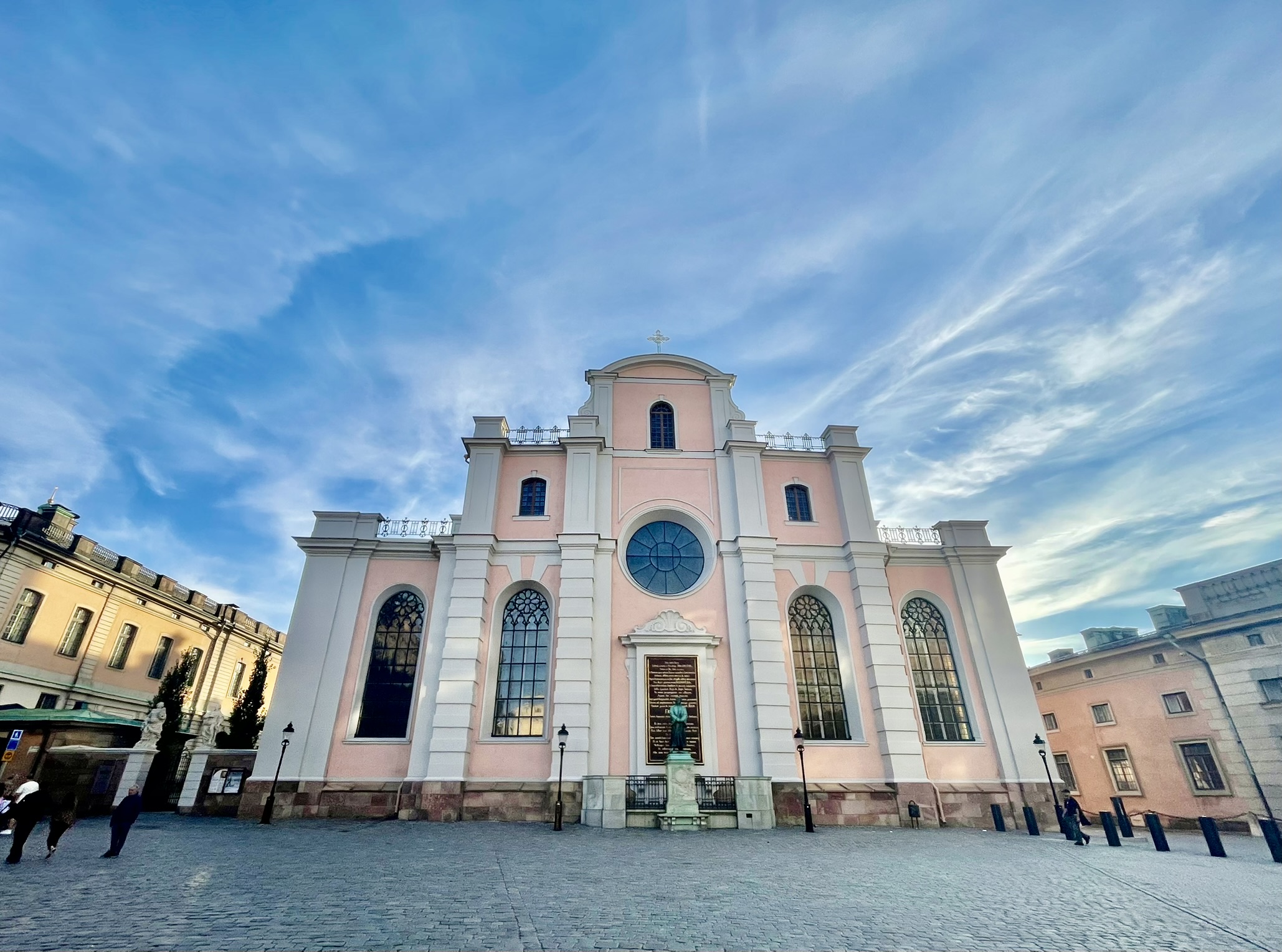
Storkyrkan or the Stockholm Cathedral bathed in late afternoon light of our first evening

Or so I thought.

Nine minutes before boarding, United apparently discovered that our flight did not have pilots. Storms had snarled air traffic that day, leaving our assigned crew stranded elsewhere. United announced a two-hour delay, but two and a half hours passed before we finally took off. We had only a three-hour layover in Rome. It did not look good.

Before takeoff, one of the pilots walked through each section of the plane to apologize. He told us that he thought he could make up nearly an hour during the flight. Everyone cheered—and he did it. We landed in Rome shortly after 3 PM, leaving us about an hour and a half before our next flight departed.

We followed the signs for transit, passed through immigration to enter the European Union, and then somehow found ourselves all the way outside the secure area. We had to go upstairs, pass through security again, and find our gate. By then, we were running. A good portion of the plane had already boarded when we arrived, but we made it.

Our flight from Munich to Stockholm also departed about 40 minutes late. Instead of arriving just before midnight, we landed closer to o-dark-thirty and did not reach our airport hotel until 1 AM. It had been a very long journey, but we were finally in Sweden.

Knowing that we would arrive late, I had planned for us to spend our first night at a hotel near the airport. We arrived even later than expected, but after a good night’s sleep, we were up early and ready to begin our first full day in Sweden. We returned to the airport and took a bus into central Stockholm. The train would have been faster, but shortly before the trip I learned that the bus cost roughly a third as much. Given that we were not in any particular hurry that morning, the bus won.

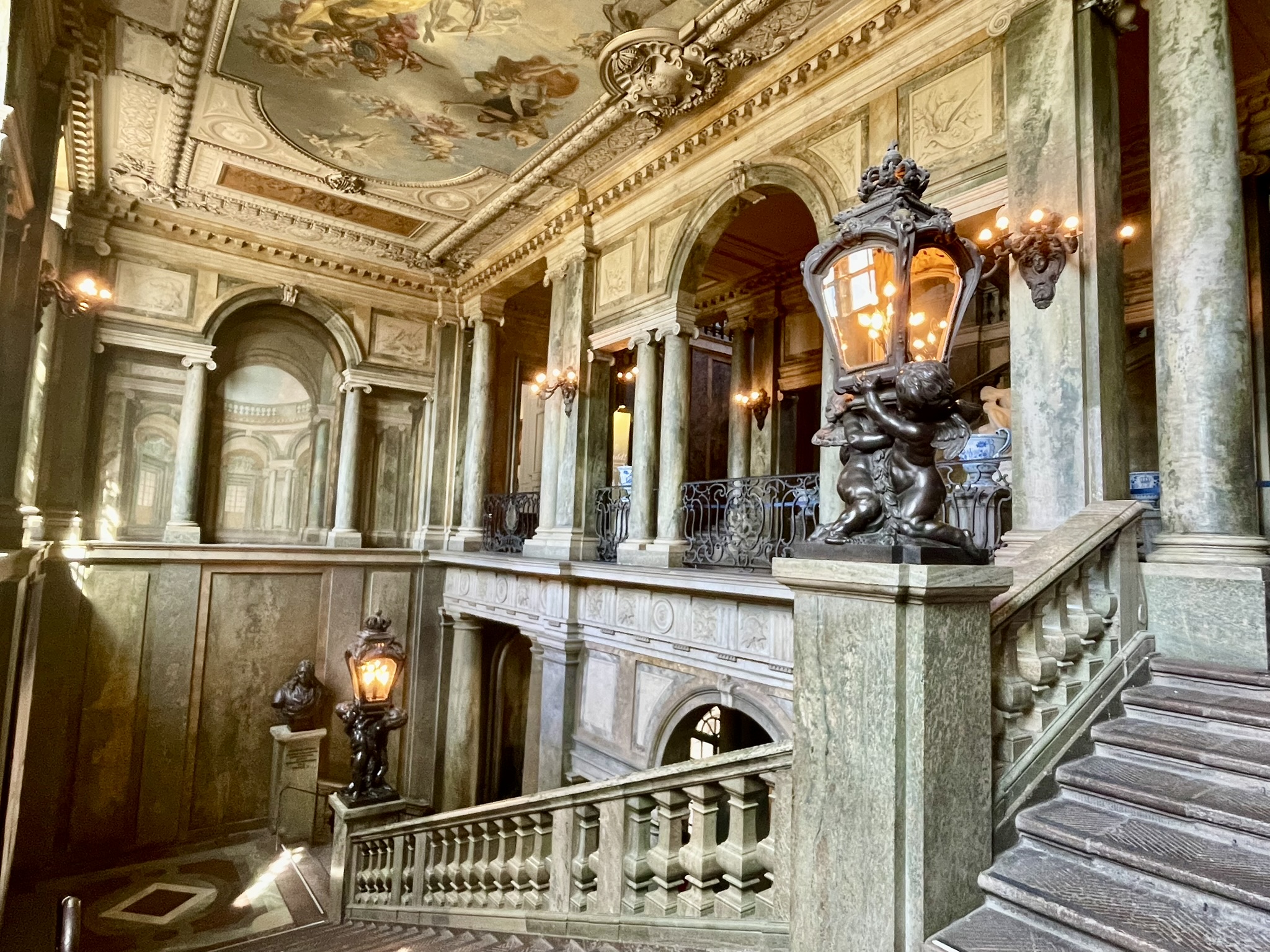
The grand west staircase in Stockholm’s Royal Palace

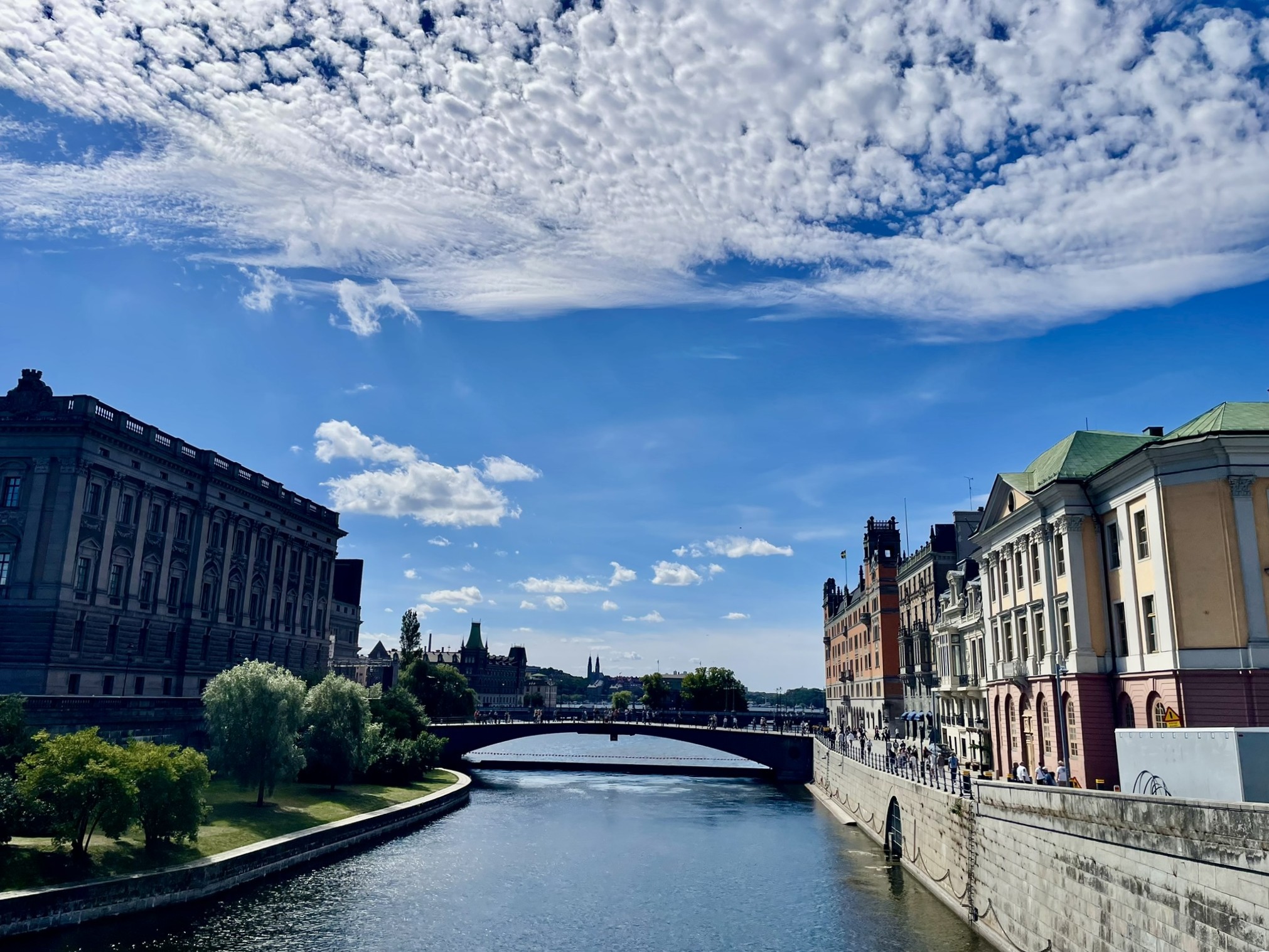
From Stockholm Central Station, we walked toward Gamla Stan, Stockholm’s historic old town. Stockholm began to take shape there in the 13th century, and the district still retains its medieval lanes and street pattern. Many of the buildings seen today, however, date from the 16th through the 18th centuries, with much of the architecture reflecting the Swedish Empire period.

I very much wanted us to stay in Gamla Stan. I loved the idea of being able to step outside and wander its old cobblestone streets early in the morning or later in the evening, after many of the tourist hordes had departed. I have stayed in the historic centers of several cities and find something extraordinary about briefly feeling as though those streets are also part of my neighborhood.

Our accommodations were simple: a small room with two twin beds and a shared bathroom, the only one we would have during the trip. It was C’s introduction to one of the “joys” of backpacking—accepting fewer amenities in exchange for a central location at a price that did not break the bank. We would be just steps from history, although, honestly, it is difficult not to be steps from history in Stockholm.

Even better, although we arrived well before the usual check-in time, our room was already ready. We dropped off our backpacks, turned around, and headed straight back out. Our first stop was the Royal Palace.

The Royal Palace was just a hop, skip, and a jump from our modest accommodations. The area outside the palace and neighboring cathedral was already full of people, and as we approached, C spotted three Scouts sitting at the base of a nearby statue. “Let’s go talk to them,” I said, at which point C promptly disappeared around the corner of a building while I went over to introduce myself. I learned that they were British Scouts on a Scouting holiday in Sweden and had spent the previous week on an island with some Swedish Scouts. It seemed like a pleasant but incidental encounter at the time. Later in our trip, however, it would make a significant difference.

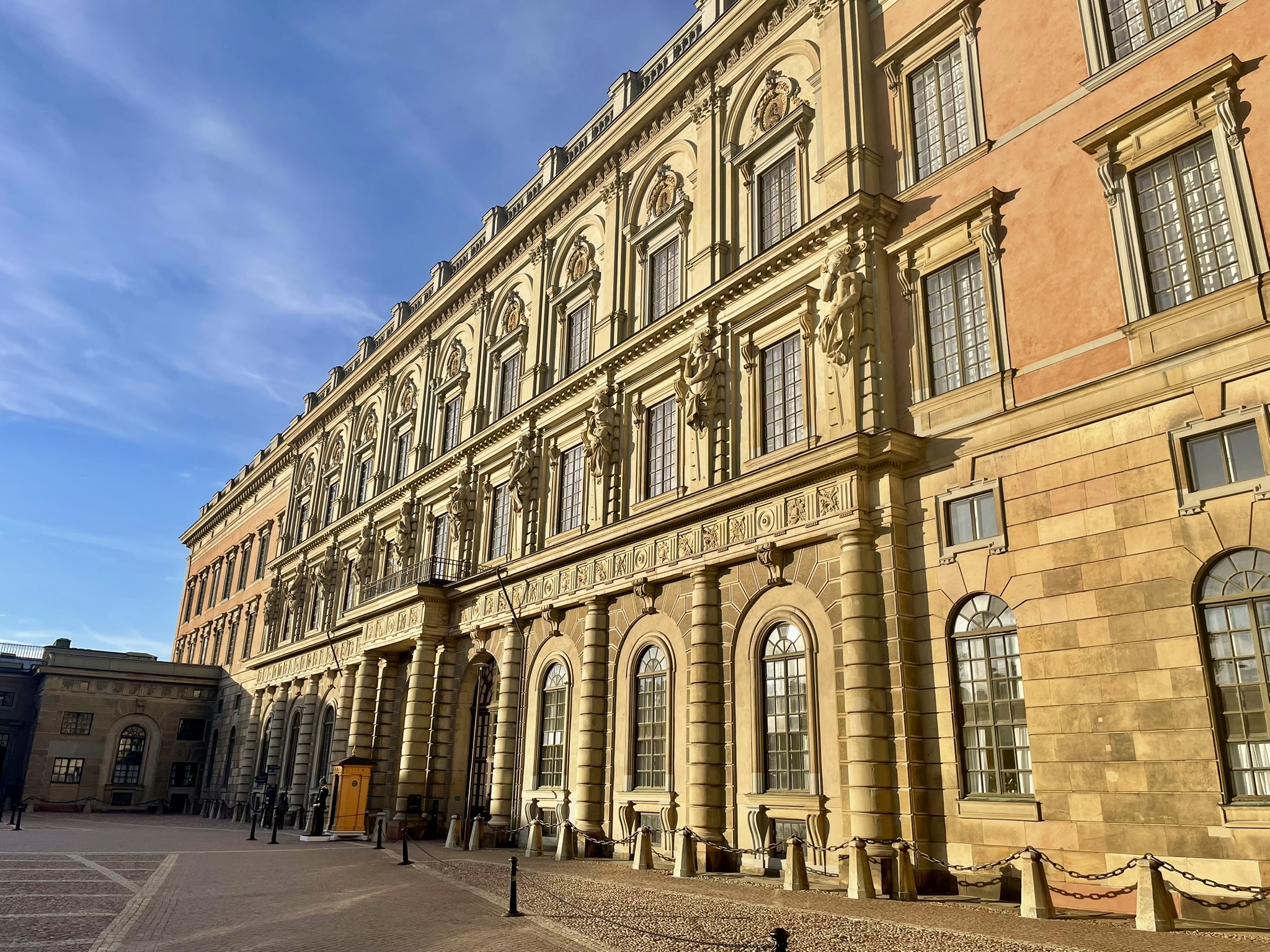
The front facade of the Royal Palace during my golden hour walk of our first evening

Like much of Gamla Stan, the Royal Palace has medieval bones beneath its Baroque exterior. We opted for a self-guided tour through the 23 lavishly decorated state rooms open to visitors—a small portion of a palace with more than 600 rooms. I am always struck by the layout of old palaces, where one room opens directly into the next, whether a bedroom or dining room, rather than onto a hallway. The palace felt to me like an urban Versailles, while its location in the old city reminded me of Luxembourg Palace. C and I spent about an hour wandering through the rooms but opted not to visit the Treasury.

Just across from the palace stands Stockholm Cathedral, its warm, peach-colored Baroque exterior concealing a church whose history stretches back to the 13th century. It is the oldest church in Stockholm and served for centuries as the coronation church for Swedish monarchs. Among its treasures is the striking wooden sculpture of Saint George and the Dragon, dating from 1489. Of all the cathedrals I have dragged C to over the years, I had never seen her take such an interest in one. She really took her time looking around and seemed to enjoy it even more than the palace.

After leaving the cathedral, we crossed one of the bridges linking Gamla Stan to the rest of central Stockholm. I had promised C that we would visit the shopping area, although this was not exactly how I had envisioned spending our first day in Sweden. She particularly wanted to visit Brandy Melville. Never mind that there is a Brandy Melville in Georgetown that she visits regularly; this was the first and only Brandy Melville in Sweden, and she hoped to find some Sweden-specific merchandise. Unfortunately, the last of it had sold that very morning, only hours before we arrived. Still, she was happy to have gone. We continued along the shopping streets, stopped for a few nibbles, and then returned to our room for a short rest.

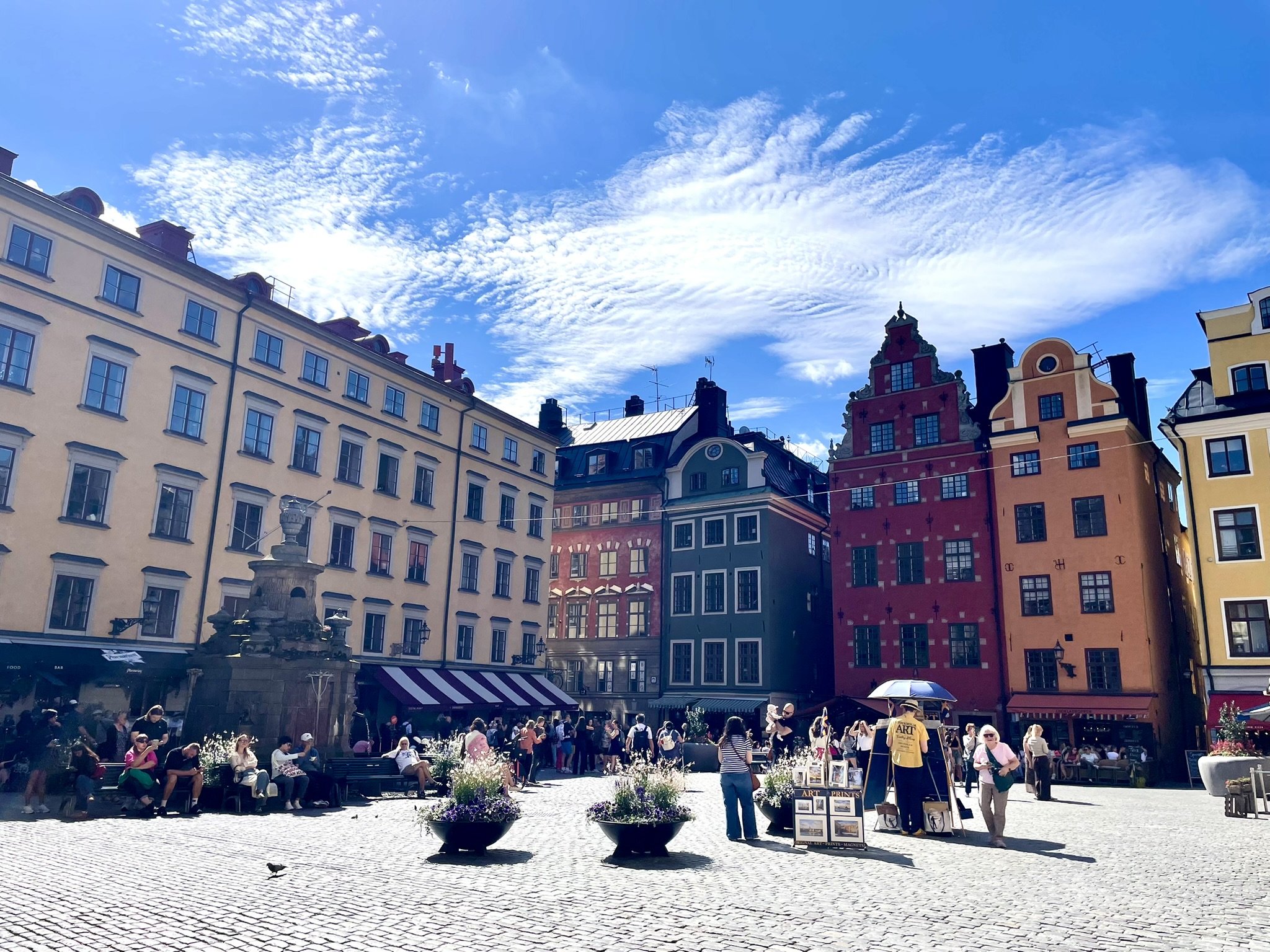
Later, we headed to the Nobel Prize Museum on Stortorget, Stockholm’s oldest square. The museum is housed in the former Stockholm Stock Exchange Building, constructed in the 1770s and now also home to the Swedish Academy, which selects the recipient of the Nobel Prize in Literature.

For visitors, the entire museum is on one floor, and that floor also includes the entrance, the information and ticket desk, a café, and the museum shop. That does not leave all that much space for exhibits. One of the museum’s more unusual features is that Nobel Prize recipients are asked to donate a personal item that reflects their journey. Some of their choices are certainly interesting. Among the objects we saw were a jar of peanut butter and a pair of nail clippers, both of which we found especially odd. Overall, C and I were amused, but not particularly engaged, and we stayed for less time than I had expected.

The stunning Stortorget, meaning “Great Square.”

Afterward, we had dinner at a restaurant on Stortorget. C was ready to return to our room, while I took advantage of the golden hour to walk the streets of Gamla Stan by myself and take photos after the crowds had thinned. My solo walk also gave me time to take stock of our day. After all my worries that the trip might not happen—or that I might not be physically able to manage it—we had made it. I had walked nearly 25,000 steps, and we had seen so much on our first day. Our summer trip to Sweden was off to a great start.