Sweden Summer, Part Seven: Swedish Rail and Stopovers

The seventh installment of my daughter and my August 2026 visit to Sweden.
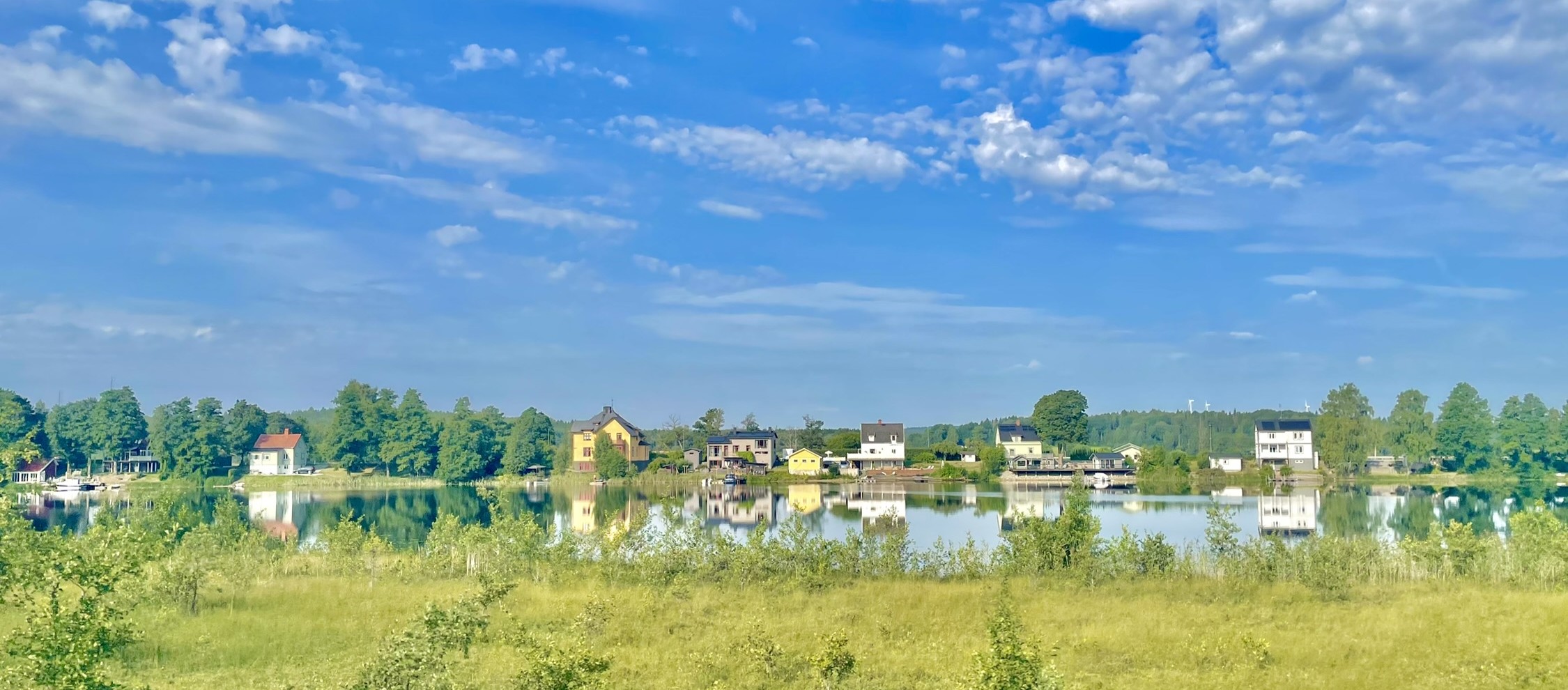
A Swedish countryside view from the train

Over the past several posts, I have shared our adventures exploring Stockholm, Uppsala, Falun, and Göteborg. But another part of our Swedish journey deserves some attention: traveling between those destinations via train. Instead of renting a car, I chose to travel by train, aiming to combine comfortable journeys and beautiful scenery, and experiencing unexpected stops and one significant disruption.

As I mentioned at the beginning of this series, I have long enjoyed traveling by train. During my travels around the world in 2000, I spent part of that time backpacking through Europe, most often traveling by train. I have wonderful memories of those journeys, and I wanted C to experience a little of that kind of travel herself. Of course, traveling through Sweden in 2026 was not quite the same as my backpacking adventures from decades earlier, but there was something familiar about navigating railway stations, making train connections, and settling into the gentle rocking of the railcars or stumbling down the aisle.

Swedish rail would deliver us a combination of comfortable and easy journeys, beautiful scenery, expected and unexpected stops, and one significant disruption.

All Aboard!

Sweden’s trains were clean, modern, and very comfortable. We traveled in second class, with assigned seats on just one of our journeys. C took the train journeys and transfers in stride, while I appreciated being able to settle into a comfortable seat, relax, and enjoy the ride.
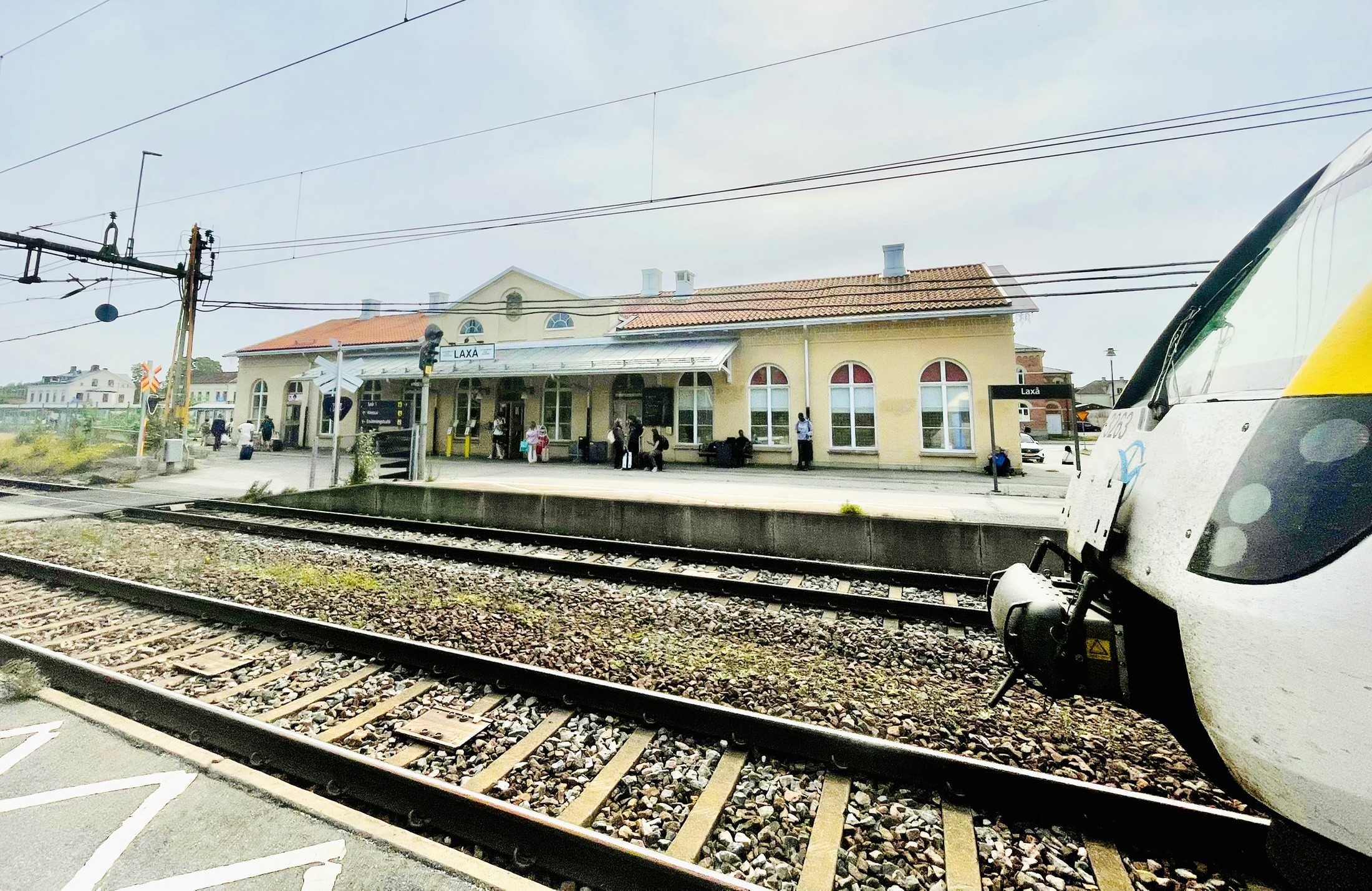
At Laxa train station; one of our stops on the Falun to Goteborg train-bus-train-bus adventure

One of the biggest differences between this trip and my earlier railway adventures was the technology. When I backpacked around Europe in 2000, I relied on printed timetables, station departure boards, and the kindness of railway employees or fellow passengers. There were times when things did not go quite according to plan. I missed trains, missed stops, and got schedules wrong, sometimes because of unexpected time zone changes or simply being on the wrong platform. I had one particularly memorable experience when the car I was riding in was uncoupled from the train during a midnight stop somewhere in Romania…Those experiences certainly made for interesting travel stories, though they were cause for some anxiety at the time!

Traveling through Sweden in 2026 was considerably easier, largely thanks to the SJ app. SJ or Statens Järnvägar (Swedish State Railways) is Sweden’s national passenger railway operator, and its app became an invaluable travel companion. I could search for journeys, purchase tickets, and view schedules, including connections involving other railway operators. Once aboard, I could follow our progress along the route, see the remaining stops, and check scheduled and updated arrival and departure times.

The app also showed us which platform to use and, in some cases, exactly where to stand to board the train. That might sound like a small thing, but when faced with a long platform, a relatively short train, and only a few minutes before departure, knowing where to wait was enormously helpful. Most of our trains ran on time, and I rarely felt rushed or uncertain about where we needed to be. Compared with trying to interpret railway announcements in an unfamiliar language in the middle of the night, it was remarkably easy.

Of course, even the best technology cannot eliminate every complication, as we would discover.

An Unexpected Introduction to Gävle

Our journey from Uppsala to Falun included a connection in Gävle, a small city on Sweden’s eastern coast. We had approximately 40 minutes between trains, leaving perhaps half an hour to explore. Rather than wait around the station, we headed out with our backpacks to see what we could find. Speed sightseeing.
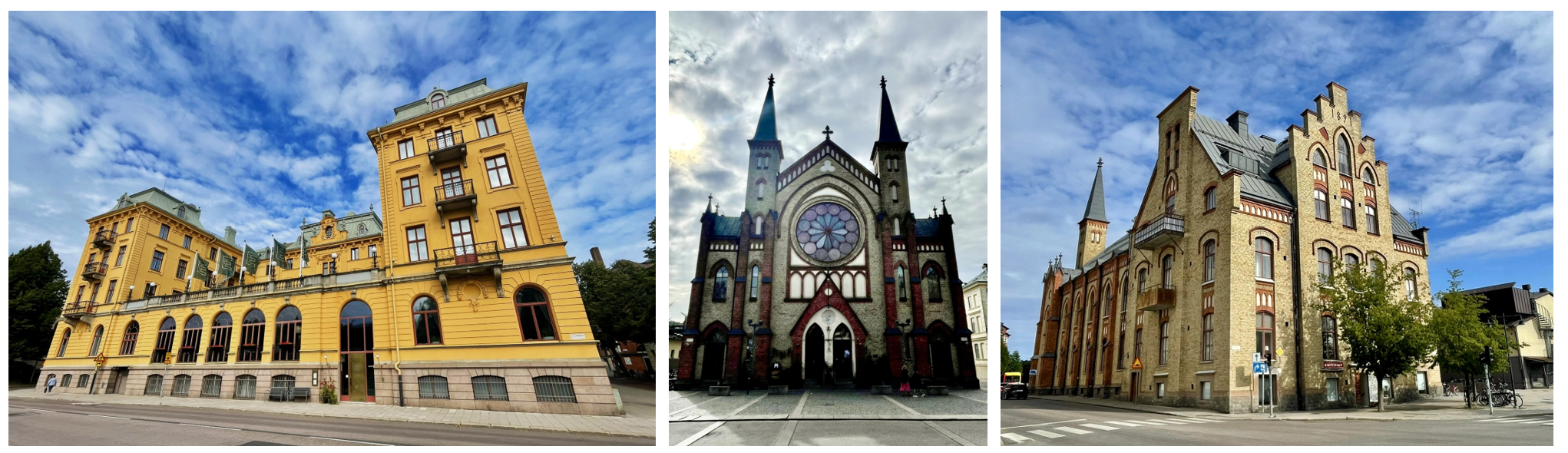
A sightseeing sprint through Gavle– Left: the Elite Grand Hotel; Center: the front of the beautiful Mariner’s Church; Right: the back of the Mariner’s Church

I was immediately struck by the beautiful architecture around the station. Just adjacent to the station stood a pretty and imposing Gothic Revival building with twin spires, a magnificent rose window, and unusual brickwork. I learned it was originally the Sjömanskyrkan, or the Mariners’ Church, built in 1891 to serve sailors visiting Gävle, then an important Swedish port. Threatened with demolition in the 1970s, the public rallied to preserve the building, and it is now a cultural and music venue.

Another building that caught my attention was the gorgeous yellow Elite Grand Hotel. Opened in 1901, the hotel was considered exceptionally modern for its time, with electricity and an elevator! After years of being used for other purposes, it was restored and reopened as a hotel in 2013. Another beautiful survivor!

I later read a little more about Gävle and learned that it is actually the oldest city in Norrland, dating back to 1446. Much of the city center was destroyed by a devastating fire in 1869, and many of the beautiful buildings we saw dated from the city’s reconstruction. I also learned that Gävle is the birthplace of Gevalia coffee, which takes its name from the Latin name for the city. I do not drink coffee, but I always enjoy learning where familiar brands originate. It is a bit like my interest in visiting the World of Volvo, even though I have never owned a Volvo and have no desire to own one.

Our whirlwind excursion barely scratched the surface of Gävle, but it prompted me to look into the city and discover how much more there was to see. What had begun as a simple railway stop introduced us to a place with beautiful architecture and an unexpected amount of character. The city deserved more than the 30 minutes we had given it.

Sweden Through the Train Windows

One of my favorite aspects of traveling by train was watching the Swedish countryside unfold outside our windows. Our itinerary focused largely on cities and towns, but between them lay an entirely different Sweden.
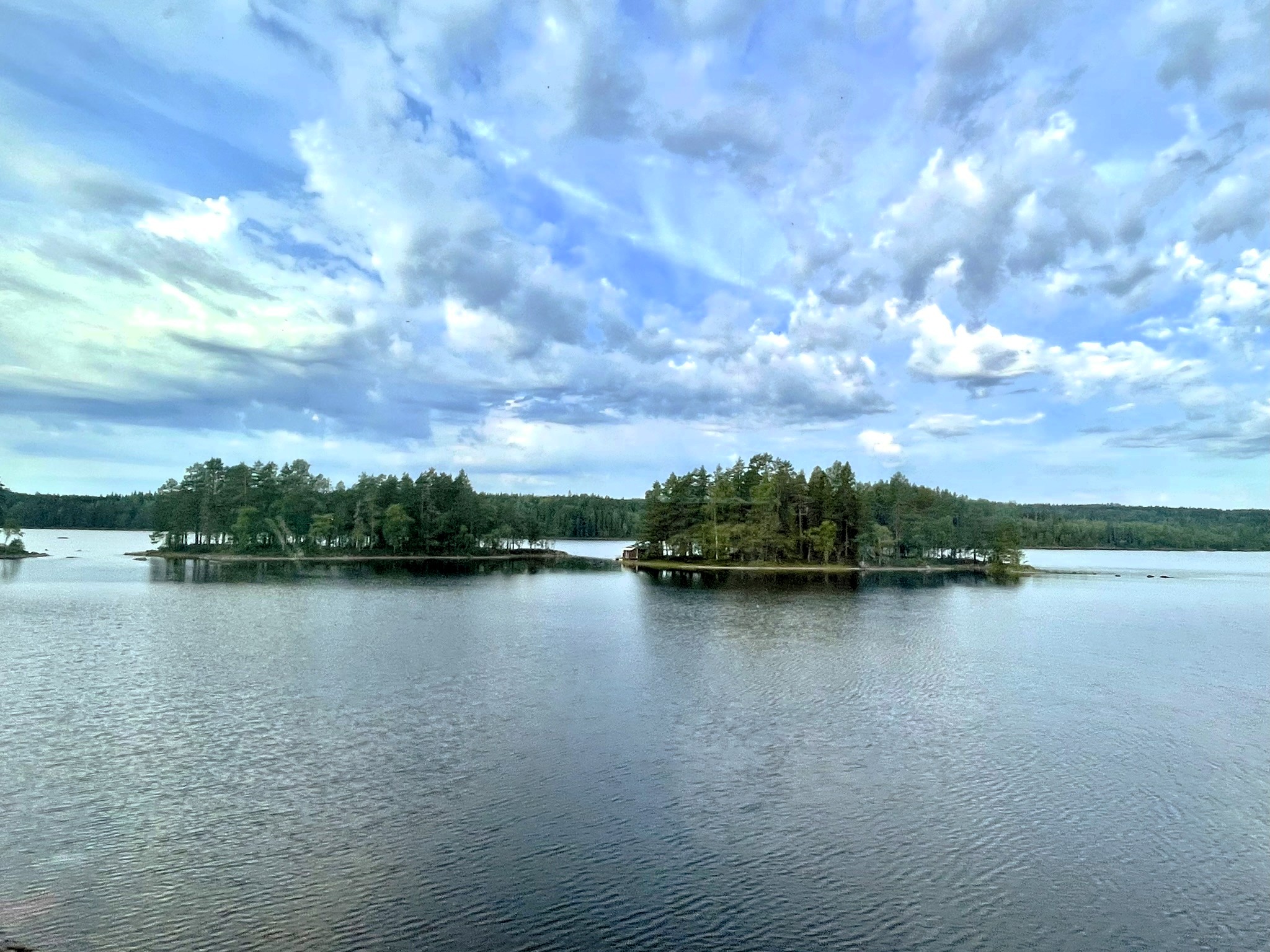
Another railcar view

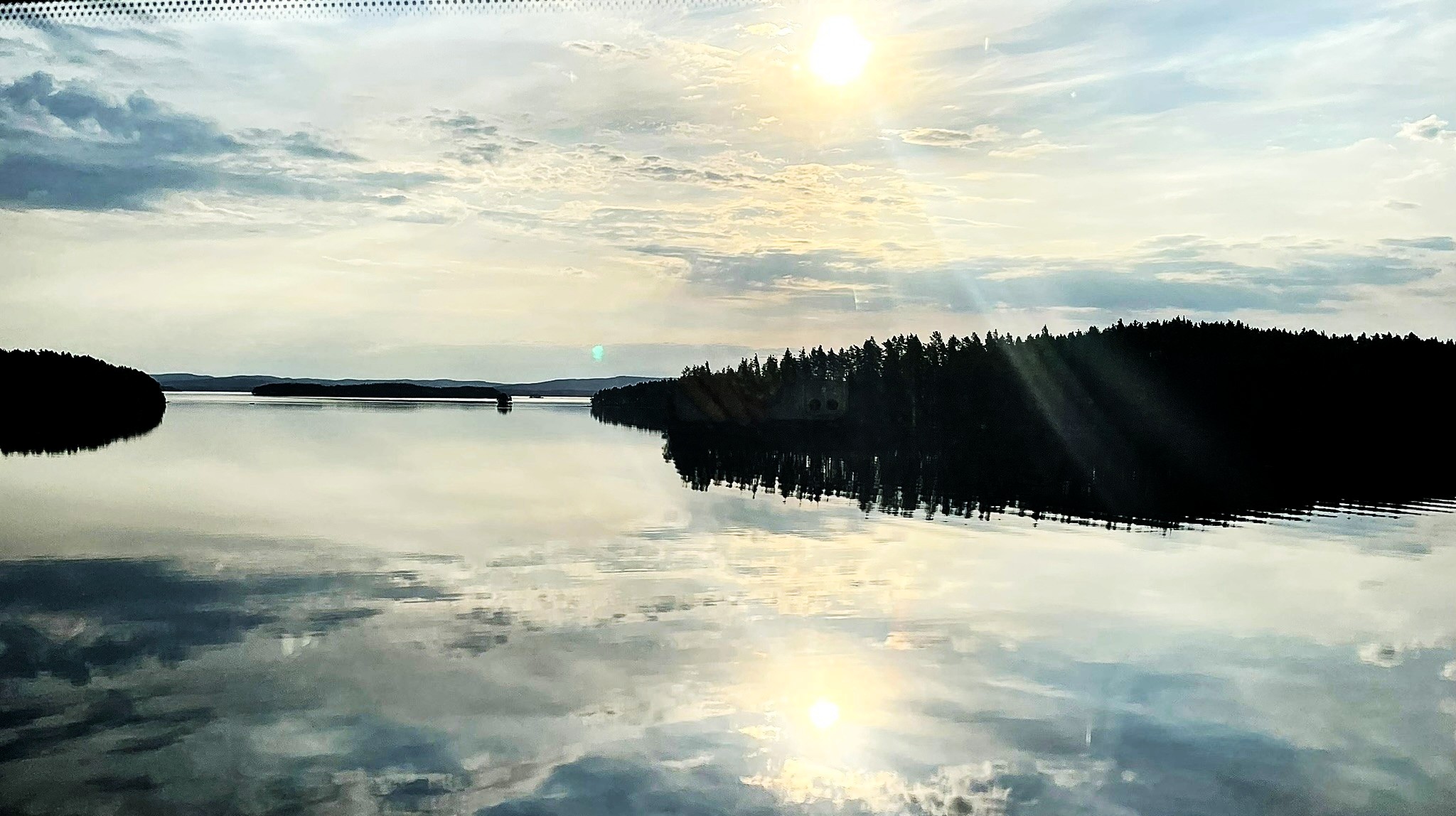
We passed through forests, alongside beautiful lakes, and across stretches of farmland. There were fields of green and gold, weathered barns, clusters of traditional red wooden houses, and occasional glimpses of small communities nestled among the trees. Some lakes seemed to stretch endlessly into the distance, while others were dotted with tiny, wooded islands. On several occasions, the still water reflected the surrounding trees and clouds so perfectly that it was difficult to distinguish the landscape from its reflection.

This was precisely the sort of experience I had hoped for when I chose to travel by train. I could sit with my journal, writing about our adventures, and then look up to discover another beautiful scene framed by the window. Unfortunately, the train journey I had been looking forward to the most did not go quite as planned.

When I originally researched the route from Falun to Göteborg, I looked forward to a nearly six-hour train journey through western Sweden, with reportedly some fantastic scenery along the way. Unfortunately, scheduled summer railway maintenance meant that the route I had expected was unavailable. Instead, we faced a substantial detour and a complicated combination of trains and replacement buses. The changes added an hour and a half of travel time and meant missing out on much of the uninterrupted scenic train journey I had planned.

I found it surprising that Sweden would undertake major railway maintenance during the summer tourist season. Why schedule such disruptive work during one of the nicest times of the year? But as I learned, there was a good reason for it. Sweden has a relatively short window of favorable weather for certain types of railway work, and with so many Swedes away on summer vacation, there were fewer commuters and business travelers to inconvenience. By late August, however, the traditional Swedish summer holiday period is coming to an end, schools are reopening, and people are returning to their usual routines.

Of course, understanding the reasoning did not make me any happier about missing out on the scenery I had anticipated. But at least the decision made more sense. And while our journey was not the relaxing, uninterrupted train ride I had planned, we still enjoyed some beautiful countryside along the way and reached Göteborg without too much difficulty.

Three Hours in Örebro

On our return journey from Göteborg to Stockholm, we had a three-hour stopover in Örebro, giving us time to visit two places on my sightseeing list: Örebro Castle and Wadköping. We left our backpacks in lockers at the train station and headed off to explore.
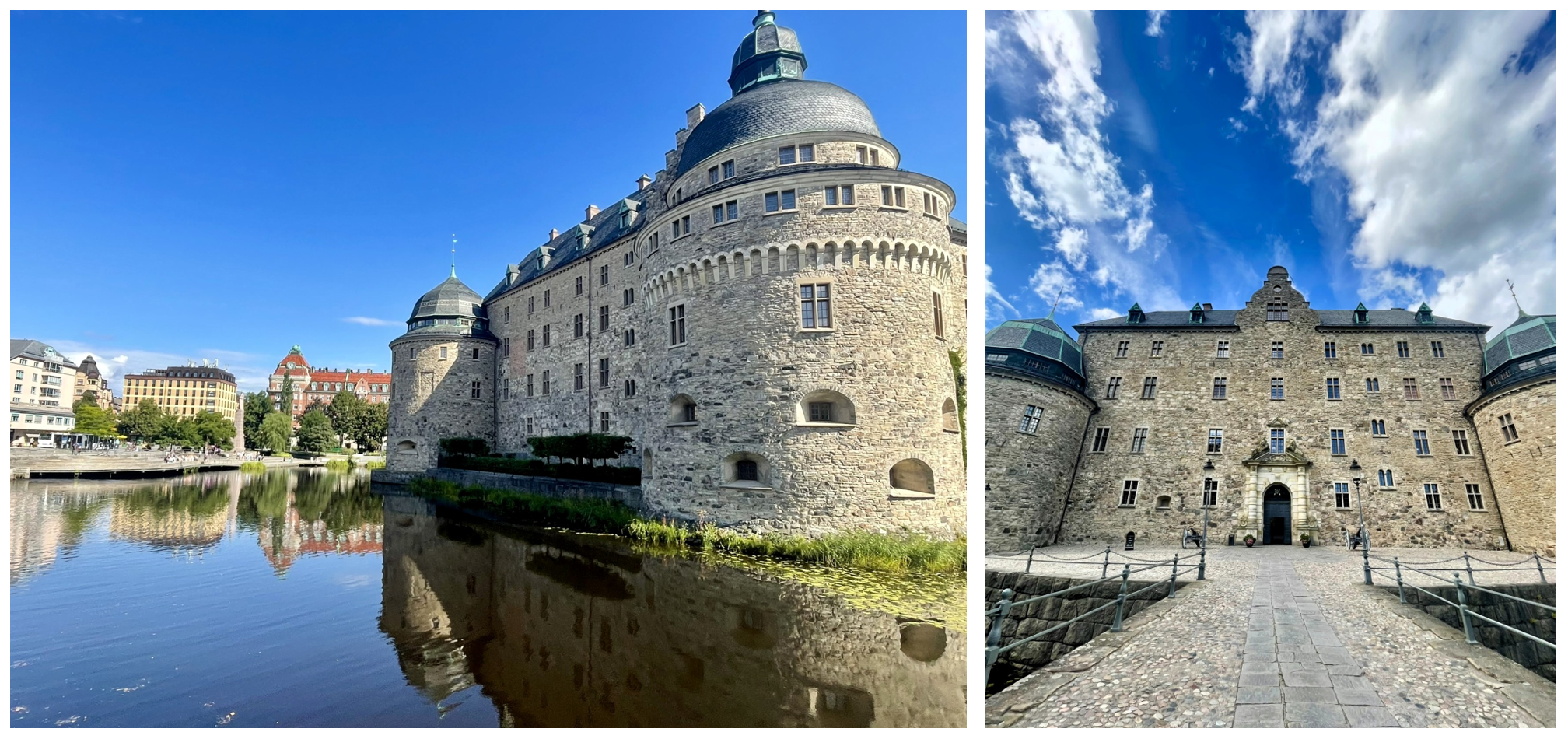
The stunning Orebro Castle

Örebro is one of the most perfectly preserved, water-locked Renaissance castles in Europe and it sits smack dab in the middle of one of Sweden’s largest cities. The castle sits on an island in the Svartån River, surrounded by water that gives it the appearance of being protected by a moat. Its massive stone walls, rounded towers, and distinctive roofs make it an impressive sight, particularly when reflected in the water. It was really a lovely sight.

The castle has a long and fascinating history, with origins dating to the late medieval period. It began as a defensive stronghold and was later transformed into a Renaissance castle under Duke Charles, who became King Charles IX. Another curious chapter in Örebro’s history occurred in 1810, when a French marshal who had served under Napoleon was selected as Sweden’s crown prince. He eventually became King Charles XIV John, establishing the Bernadotte dynasty, which remains Sweden’s royal family today!

Although we did not have time for a guided tour, we did venture inside the castle to wander on our own. The rooms we visited were sparsely furnished, and not of much interest. Still, I was very glad we had made the stop as the exterior was very much worth it as the castle was every bit as beautiful as I had hoped.

From the castle, we made a rather brisk walk to Wadköping, an open-air museum of historic wooden buildings. Established in 1965, Wadköping brings together older buildings relocated from different parts of Örebro, creating an impression of what the city’s historic neighborhoods once looked like. I had expected something more along the lines of Colonial Williamsburg or Jamestown in Virginia, perhaps with people in period costumes or demonstrations of traditional crafts. Instead, it was exceptionally quiet. Though of course we were visiting on a random weekday in late August, after the Swedish summer holidays had largely ended.

In some ways, the quiet was probably just as well. We had a train to catch, and had there been an interesting performance or activity underway, I might have been disappointed to leave. We had also already explored Ellsborg, an actual historic neighborhood of traditional wooden houses in Falun, so Wadköping felt a little less distinctive than it otherwise might have. It was nonetheless pretty and picturesque with the Falun-red painted buildings against a bright blue sky.
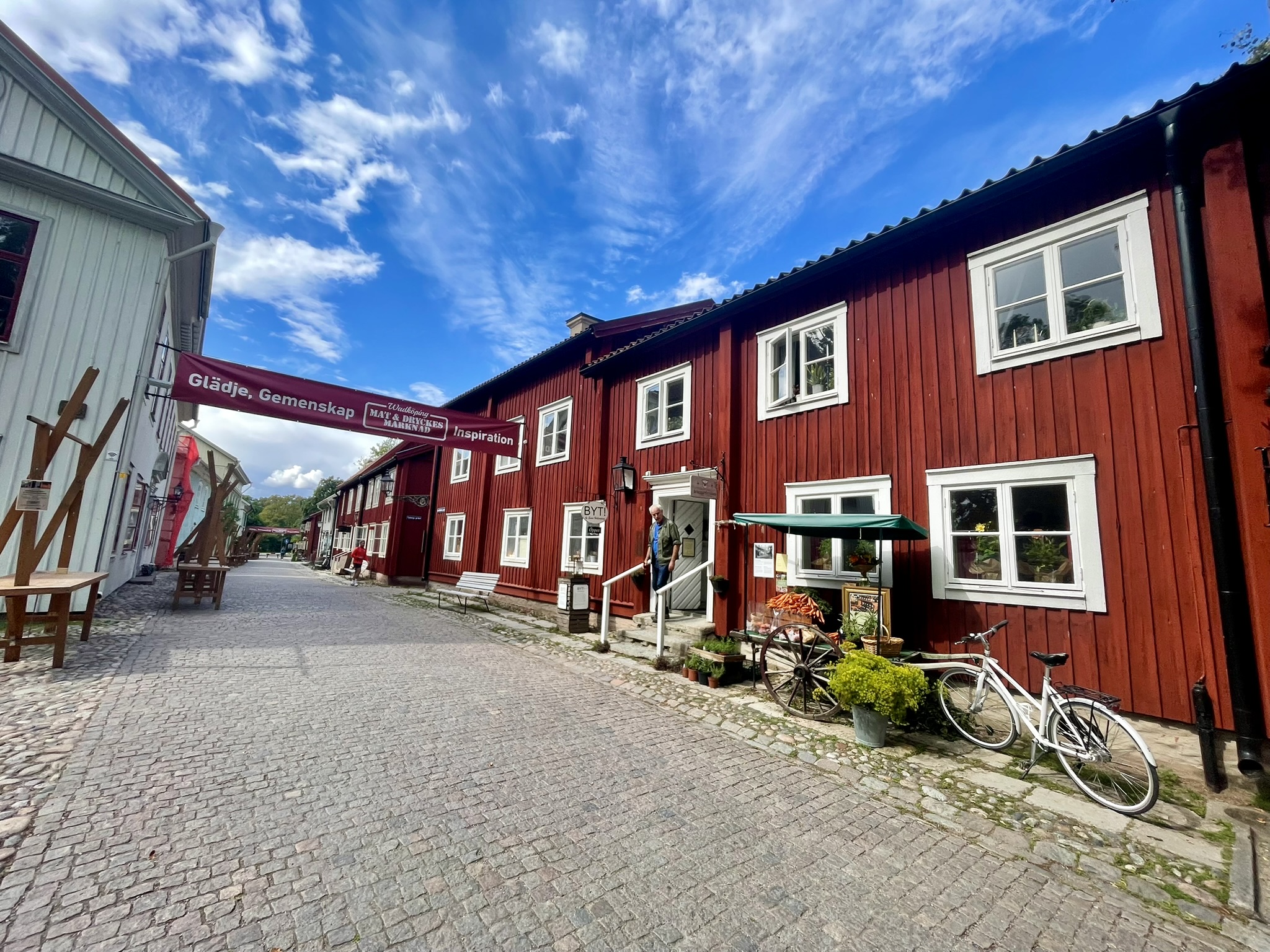
A cobblestone street of Wadkoping

With our sightseeing complete, we returned to the railway station, retrieved our backpacks, and continued toward Stockholm. We were off on the next stage of our Sweden adventure.

The End of the Line

Our arrival back in Stockholm marked the end of our railway travels in Sweden. Although the journey had not gone entirely as planned, we had explored some wonderful destinations and enjoyed beautiful countryside along the way. Our brief excursion in Gävle was also a reminder that even a short stop can introduce us to somewhere worth exploring further.

While our rail journey had come to an end, our Swedish adventure was far from over. From Stockholm, we would continue our travels by another means of transportation, this time heading for the island of Gotland.
Sweden Summer, Part Five: Getting to Goteborg and Riding Roller Coasters

The fifth installment of my daughter and my August 2026 visit to Sweden.

We left Falun early Saturday morning for Göteborg (roughly pronounced “YUHT-uh-bawry”), beginning what would be our longest travel day of the trip.

Early morning lake views from the train

My original plan had been simple: six hours by train, with only one quick transfer early in the journey. I had imagined it as the quintessential long train journey—time to settle in, visit the snack car, gaze out the window, walk through the train to stretch our legs, journal, and maybe nap. Yet when on our first night in Falun I went online to buy our tickets, I discovered that summer track work had changed our routing, turning our six hour journey into seven and half to as long as twelve.

I considered cutting Göteborg from the itinerary. One of the places I had hoped to visit there, Nya Älvsborg Fortress, was already off the table because the reduced late-summer ferry schedule did not fit our visit, so I spent a few hours looking at alternatives. But the track work affected other routes too, hotels were filling up, and nothing I found seemed worth changing the trip for. In the end, Göteborg stayed. We took the shortest option, leaving Falun just before 7:30 in the morning, and instead of one easy train change, we made three: train to bus to train to bus.

It was not the leisurely journey I had envisioned, as it meant watching the time and our connections more carefully, but it still gave Chloe another useful travel lesson—the ability to adapt when plans change. We still had time to relax along the way, and in the end the extra hour and a half cost us surprisingly little. We arrived at the same time as originally planned.

Once off the bus at Göteborg’s Central Station, it was only a hop, skip, and a jump to our hotel. The Hyatt Place Gothenburg Central is integrated into the station complex itself, which made for a very easy arrival after such a long travel day. We checked in, shed our bags, and rested for about an hour before heading back out to get to know the city where we would stay the next few days.

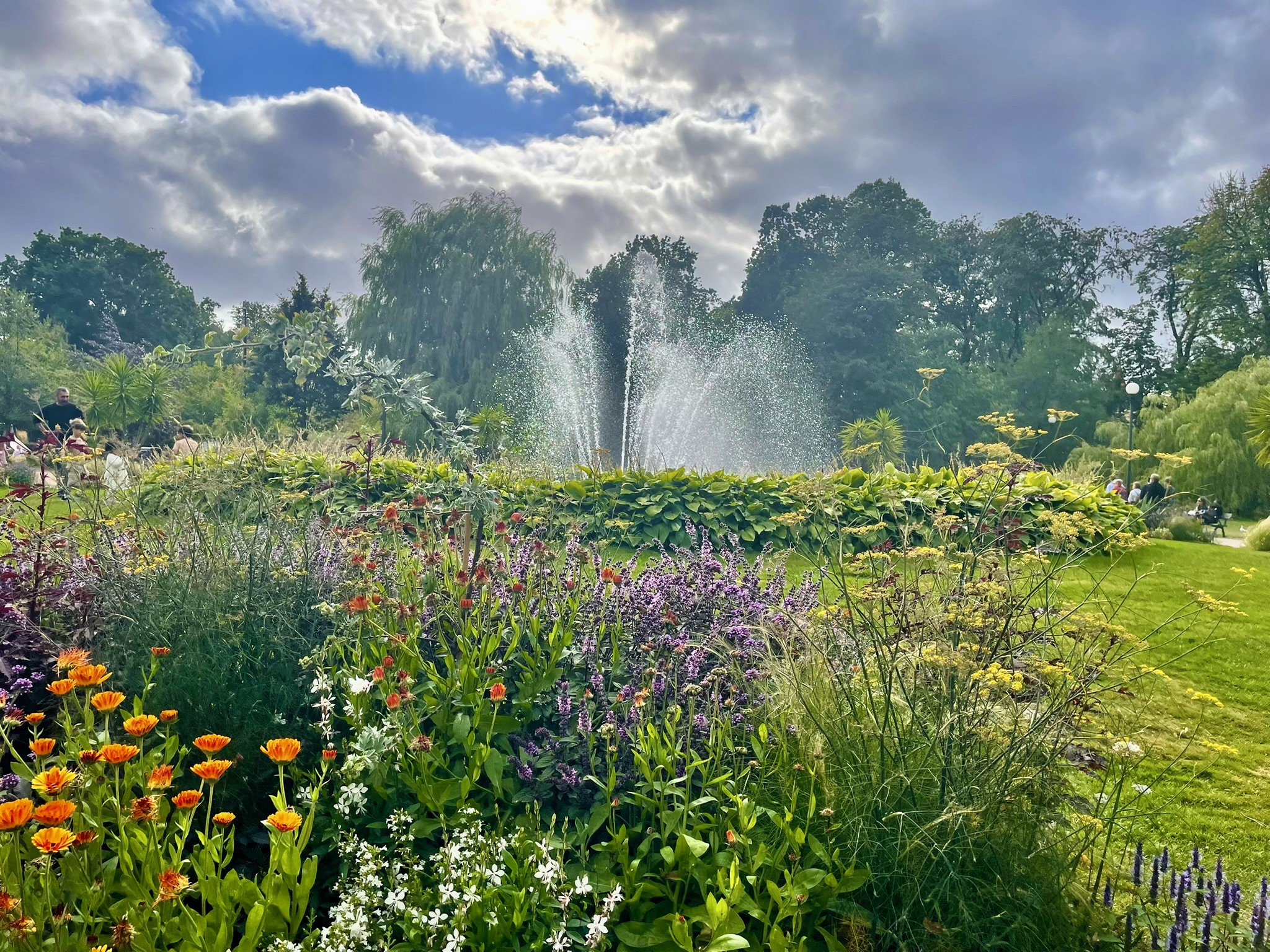
Fountain and flowers at Trädgårdsföreningen

We headed first to Trädgårdsföreningen, the Garden Society of Göteborg, one of Europe’s best-preserved 19th-century parks. At its center is the Palm House, a glass-and-cast-iron greenhouse built in 1878 and modeled on London’s Crystal Palace. The original Crystal Palace was later destroyed by fire in 1936, making Göteborg’s smaller interpretation an interesting survivor of that Victorian style.

We entered the Palm House and wandered inside a bit. Unfortunately, several of the rooms were closed due to renovation, and honestly, after Uppsala’s tropical greenhouse, complete with its poison dart frogs, the pretty Palm House could not compete.

What was unexpected was the nightclub immediately beside the park. At 5 PM it was already in full swing, with people dancing outside and loud, thumping music carrying straight into the gardens. I did not exactly hate the music (though C did), but it did strike me as odd. I had not expected a late afternoon stroll through a European park to come with a ear splitting soundtrack.

From the Garden Society, we continued through Kungsparken, passing a few pretty churches along the way before reaching Haga, one of Göteborg’s oldest neighborhoods. I had wanted to see the area for its cobblestone streets and historic character, but by the time we arrived, C was very much ready to head back to the hotel, and making this known, repeatedly.

We stayed only about ten minutes before turning around. The journey to Göteborg had gone smoothly after all, but it had still been a long day, and we had another walk ahead of us to get back. We took a different route along the canals, having gotten a nice taste of the historic and cultural heart of the city, and returned to the hotel for dinner and some much-needed downtime.

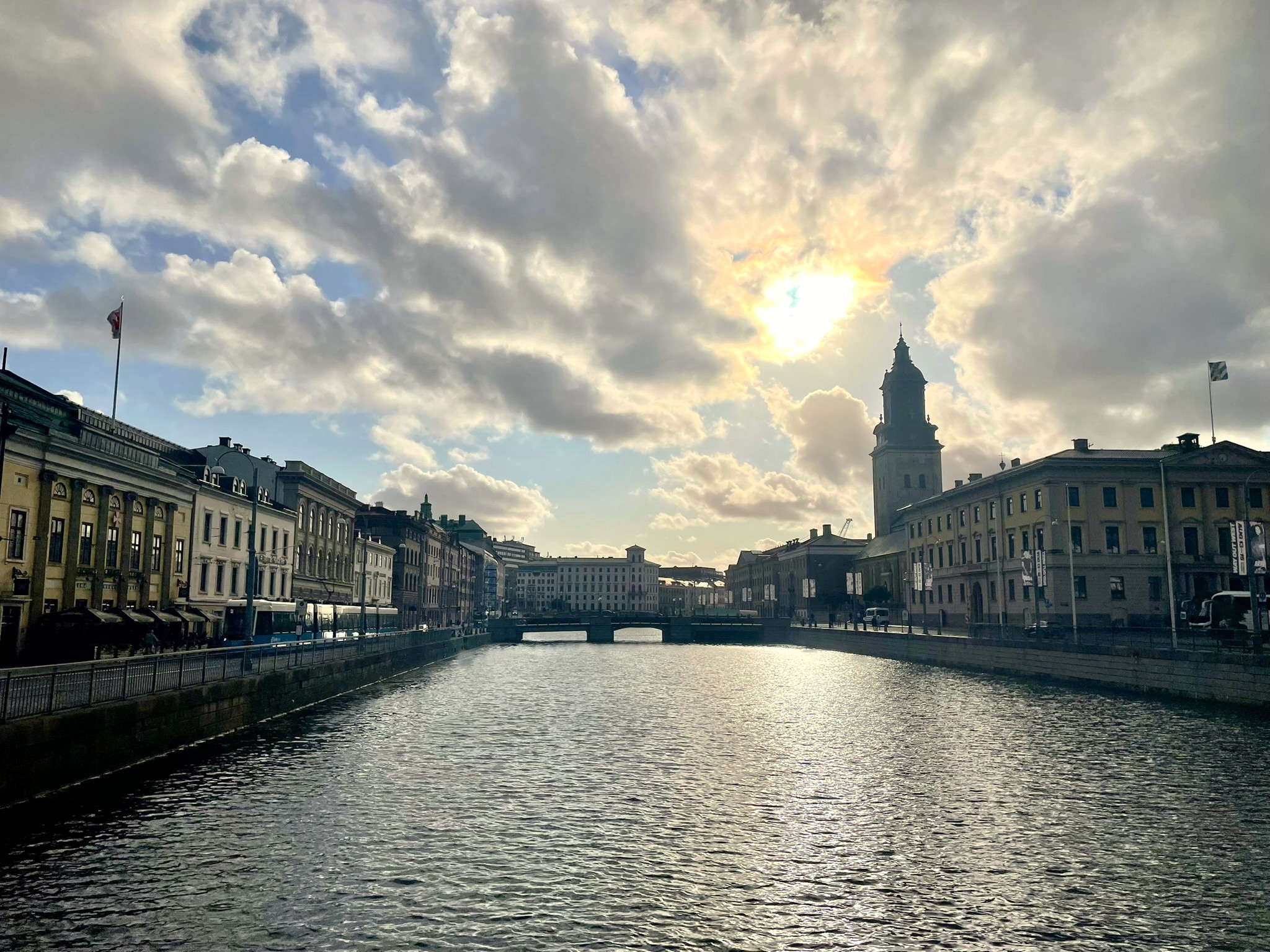
Late afternoon on the Stora Hamnkanalen or the Great Harbor Canal

The next morning, we headed out for one of Göteborg’s classic sightseeing experiences: a Paddan boat tour. The low, open boats travel through the city’s canals and old moat before heading out into the harbor, a little like the canal boats in Amsterdam. The tour lasted about 50 minutes, and we had good weather for it, even if I had managed to end up with a terrible seat.

The guide was informative and funny, and what I enjoyed most were the little bits of history I probably never would have learned otherwise. Göteborg was founded much later than Stockholm, after repeated Swedish attempts to establish a western port ran up against a much more powerful Denmark. An earlier city here was even burned by the Danes before Göteborg was formally founded in 1621. It was another reminder that the Scandinavian countries, which today can seem so closely connected, spent centuries as rivals.

And then there were the bananas. Göteborg was Sweden’s banana port for more than a century, and Swedes apparently developed quite an enthusiasm for a fruit that could not possibly grow anywhere nearby. The guide told us about the country’s prodigious banana consumption, songs about bananas, and how much people missed them when imports largely disappeared during World War II. Of all the history we heard during the tour, somehow the Swedish devotion to bananas was one of the things that stuck with me.

After the Paddan tour, we made our way back toward the train station and caught a tram to Liseberg, Göteborg’s historic amusement park. First opened in 1923, it is regularly ranked among the best in the world.

C and I love amusement parks! We have visited all six Disney parks around the world, along with a handful of other parks in the U.S. I have also visited amusement parks on my own travels in places including South Korea, Indonesia, and Brunei. But this would be C’s first non-Disney amusement park outside the U.S., and I was excited for us to both to try it out. After all the castles and cathedrals, museums and historic neighborhoods, Liseberg stood out as both historic and fun.

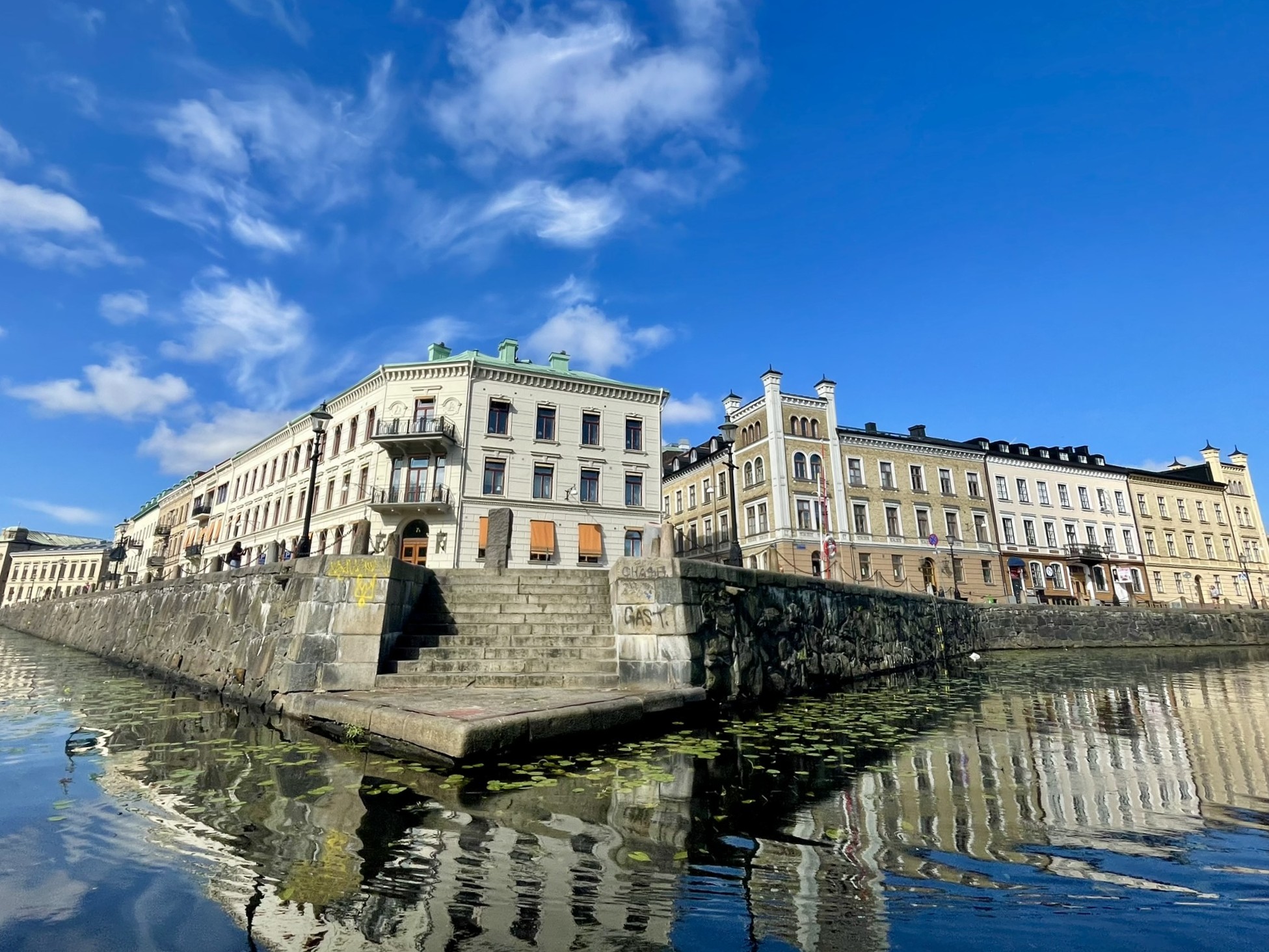
A stunning view of Goteborg’s old town from the Vallgraven, the old defensive moat, during our Padden boat tour

One of the things I liked most about Liseberg was how the park used the hillside. It is not a huge park, so it is easy to get around, but the rides are built into and along the slope, with stairs, escalators, and even an elevator helping visitors move between levels. That gave the park a more interesting layout than I expected and made some of the rides feel even more dramatic because of their position on the hill.

We started with Helix, one of the park’s signature roller coasters and often ranked among the best in Europe. The posted wait was only about 30 minutes, which felt like a gift for a major coaster. And it was worth it. Helix has multiple inversions and plenty of speed, and it was thrilling from start to finish. C and I both loved it, and it easily landed among my favorite roller coasters.

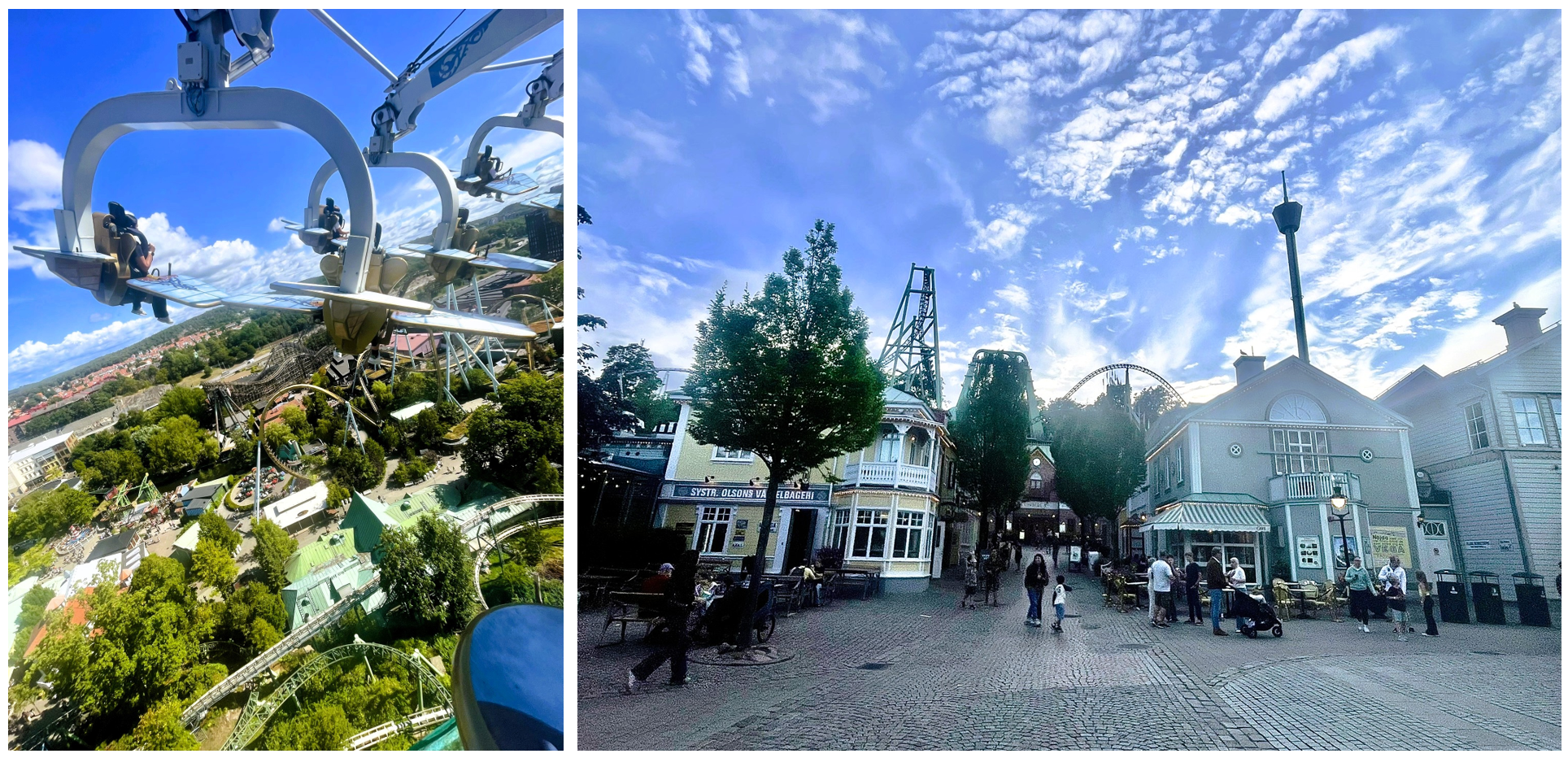
Another ride that surprised me was AeroSpin. Each rider sits in an individual plane styled like an old biplane, and a lever lets you control the wings enough to make the plane roll. C was working hard to get hers all the way upside down and came close. I took a different approach. The ride was already plenty exciting without my help.

AeroSpin climbs high above the park and spins around a central tower, but because it sits on the hillside, it feels even higher than it actually is. From the top, you get a sweeping 360-degree view over Liseberg and the surrounding city. Between the height, the spinning, and the possibility of flipping yourself upside down, it turned out to be far more thrilling than I had expected.

We ended up riding every single coaster in the park. Balder, the big wooden coaster, was fun, though it was not one of my favorites. Valkyria, Europe’s tallest and longest dive coaster, surprised me. I have avoided dive coasters thinking they were far too scary. I rode the TMNT Shellraiser coaster at Nickelodeon Universe, a dive coaster currently listed as the world’s steepest, and I hated it because it was so shaky. Valkyria though had the same sort of terrifying pause before the plunge, but the ride felt very smooth in comparison. Still, Helix won my heart as the best coaster at Liseberg and easily one of my favorites anywhere.

Lunch was another pleasant surprise. There was the usual amusement park food, but also Mexican and, rather unexpectedly, Hungarian lángos—a fried flatbread often topped with sour cream and cheese. C decided to try one and really liked it.

Liseberg– Left: an amazing view of the park from the AeroSpin; Right: some of the park’s cute storefronts

And of course, we had to try our luck at a few games. The prizes included enormous bars of chocolate, including Toblerone and Marabou. They were easily two feet long, and we wanted to win. But we were traveling light, and I had no idea how we would carry something that size for the rest of the trip. Unfortunately (fortunately?), luck was not with us, and we did not leave the park with an absurdly large candy bar.

All in all, Liseberg was a fantastic choice. For about $100 for the two of us, we spent the day riding every coaster in the park, ate well, rarely waited very long, and had a really fun day. I would easily put Liseberg near the top of the amusement parks I have visited, and I am so glad I worked it into our itinerary.

When we finally left, we skipped the tram and walked the roughly 30 minutes back to our hotel at the train station. It had been another beautiful day in Göteborg and another great day in Sweden. We had spent most of it outside in fantastic weather, doing something completely different from another museum or historic site and simply having fun together. Those are some of the travel days I treasure most—the ones when C and I get to share something we both love and just enjoy being together. Back at the hotel, we settled in for the evening and got ready for whatever the next day would bring.

Going WAY North for the Winter (Part 1)

Part 1 0About 14 months ago, while chatting online with one of my best friends CZ, she happened to mention her interest in taking her son Little C to Rovaniemi, the small city in northern Finland, in the region of Lapland, known as the Official Hometown of Santa Claus, around Christmas.  She had just read an article about it.  Funny thing is, I had also just read a similar article and had stayed up late researching the possibilities just the night before.  We went back and forth a few times – excitedly discussing the possibilities, sending one another links to possible activities and lodging – but then it fell out of our conversation.  Lapland seemed really far away, further away than just time and distance.  Nonetheless, the seeds of this adventure were planted.
Last July during our Home Leave, we visited CZ in North Carolina, and our conversation again turned to the topic of winter vacation in Lapland.  And this time, the planning came fast and furious.  I messaged my colleague in Malawi to ask if he were okay with my taking leave in early December.  Although likely a wee bit annoyed I was asking about it in July, he agreed.  CZ and I arranged our flights – she with points, me with miles – and then a week later, with each of us in different locations, we logged on to the Finnish railway website to simultaneously purchase our Santa Express overnight train tickets (in adjacent compartments).  In August, I happened to find a great place to stay on Airbnb; I messaged CZ while she was out shopping, and that afternoon (evening for me) we had our lodging.  Holy moly – we were heading to Lapland in December!  Nothing would stop us now (unless my new boss denied my leave – but thankfully that did not happen).

Once back in Lilongwe, with all the primary logistics worked out, I settled back into my Malawi routine.  Actually, work was really busy, nothing felt routine, and thoughts of heading north for the winter were pushed to the back of my mind.  Around October though, it began to dawn on me what I had done.  We were going to the Arctic Circle in WINTER.  What had I been thinking??  I may have grown up in the U.S state of Virginia and spent a few years working in Washington, D.C., so I had, of course, experienced some cold weather, but for much of my adult life I have largely followed what I term my “winter avoidance strategy.”  I have lived in Indonesia, Singapore, Hawaii, California, the Philippines, and now Malawi: in places where it is rarely, if ever, cold.  Even in Ciudad Juarez and Shanghai snow was rare.  In the winter, my modus operandi is to head south, to tropical climes.  I bought a condo in Florida for goodness sakes.  Yet, here I was willingly preparing to head somewhere guaranteed to be quite cold, and where literally the sun would not shine, or rather never rise above the horizon in the dead of winter.

Arrival in Helsinki

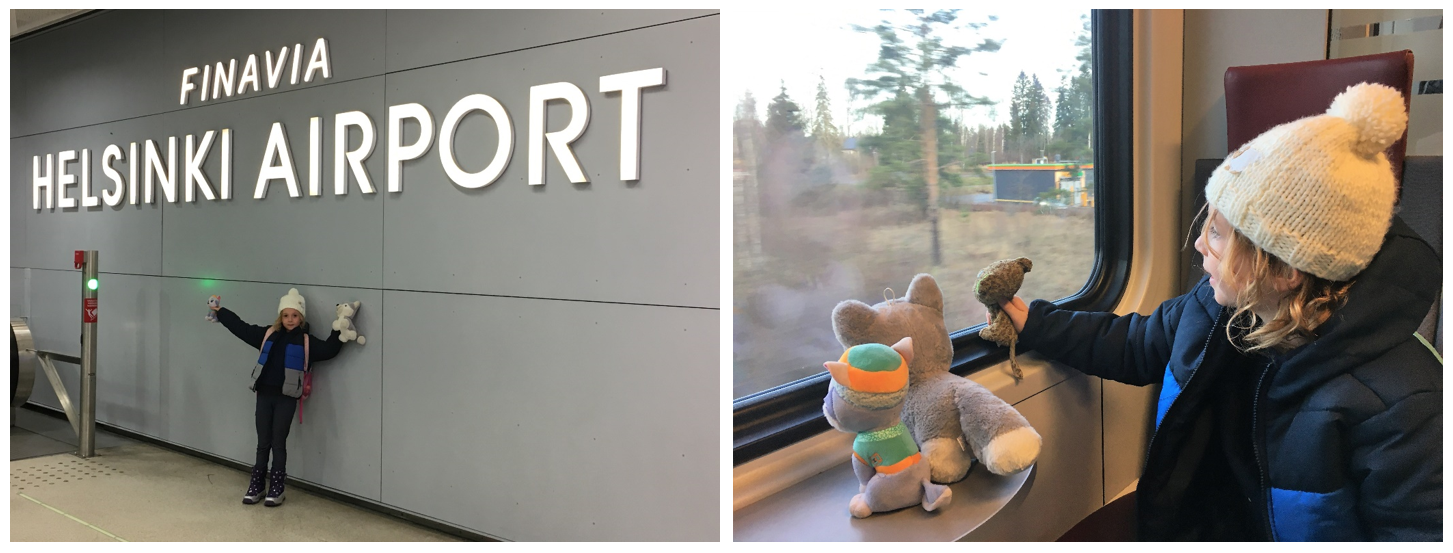
Arrival in modern developed Finland

I needed to be more prepared!  I looked up websites about what to wear in Lapland in winter and either purchased the necessary gear (thick, non-cotton socks, ski gloves, ski jackets, ski pants, long underwear, waterproof winter boots, fleece hats) or CZ, who skis, would bring to loan us.  Given our location and mail situation, I needed to purchase items by late October for guaranteed delivery before we departed on December 7.  There could be no returns. CZ and I scoured the Internet for activity ideas and, being the planners we are, started a day-by-day itinerary for our trip.  To get C excited about our overnight journey on the Santa Express, I bought the movie The Polar Express and hosted a movie-watching party for (21!) kids in our Embassy community.

And then there was nothing really more to do but wait for the day to come.

Except freak out.

Because this vacation was one in which I was putting myself WAY out of my comfort zone.  If it wasn’t the freezing temperatures then it might be the 2 1/2 hours of daylight (or rather the 21 1/2 hours of darkness) that would get to me.  I would bear all of this to take my child to see Santa Claus before Christmas, to possibly secure myself the Mother of the Year trophy.  Or die trying.

Helsinki in Winter

Right: Helsinki around 2:30 PM from the steps of the Cathedral overlooking the Christmas market; Left: Downtown Helsinki around 5 PM

On December 7 we began our journey.  Any travel from sub-Saharan Africa to Europe is tricky.  From the less-visited Malawi to Helsinki trickier still.  And then throw in the random routing from my “free” ticket and you get our Lilongwe-Addis-Istanbul-Helsinki routing.  It wasn’t pretty, but we landed in Helsinki around 11 AM on December 8, excited as we could be.

We changed from our travel clothes to our Helsinki in winter clothes, then caught the train to the city center.  Along the way, C marveled at the sights from the train window.  What caught her eye first and foremost?  Orderly, pothole-free, multi-lane roads and functioning traffic lights! (“Mom, look!  Look at these roads!  Imagine if Malawi had roads like this?! Look at the lights, they are working!!”)  Even the train and the train station were delights.  We stashed our luggage in the left luggage lockers at the station, then got some lunch.  While there CZ and Little C, who had arrived in Helsinki two days before, met us.

We had a few hours to kill before our 18:49 departure on the Santa Express from Helsinki to Rovaniemi, so we headed first to the Christmas market located in the square below the city’s iconic Cathedral.  We browsed the quaint Christmas booths, bought hot Gluhwein and hot cocoa, and sipped our drinks in heated outdoor seating booths.  It was cold, but not THAT cold.  And it was after all a novelty for C and myself to be wearing winter jackets, to have our noses twitch in the chilly air.  The atmosphere was festive and lively and we were with our best friends.  Even the sun setting at 3:15 in the afternoon was novel and amusing.

From the market, we headed over a few blocks to the Children’s Town at the Helsinki City Museum to let the kids burn off some energy before the train.  With the early morning arrival in Rovaniemi, we wanted the kids to be ready for bed shortly after boarding.  The museum did its trick.  We stayed til the 5 PM closing, then walked back to CZ’s hotel, gathered up her luggage, and returned to the train station.

Part 1 E

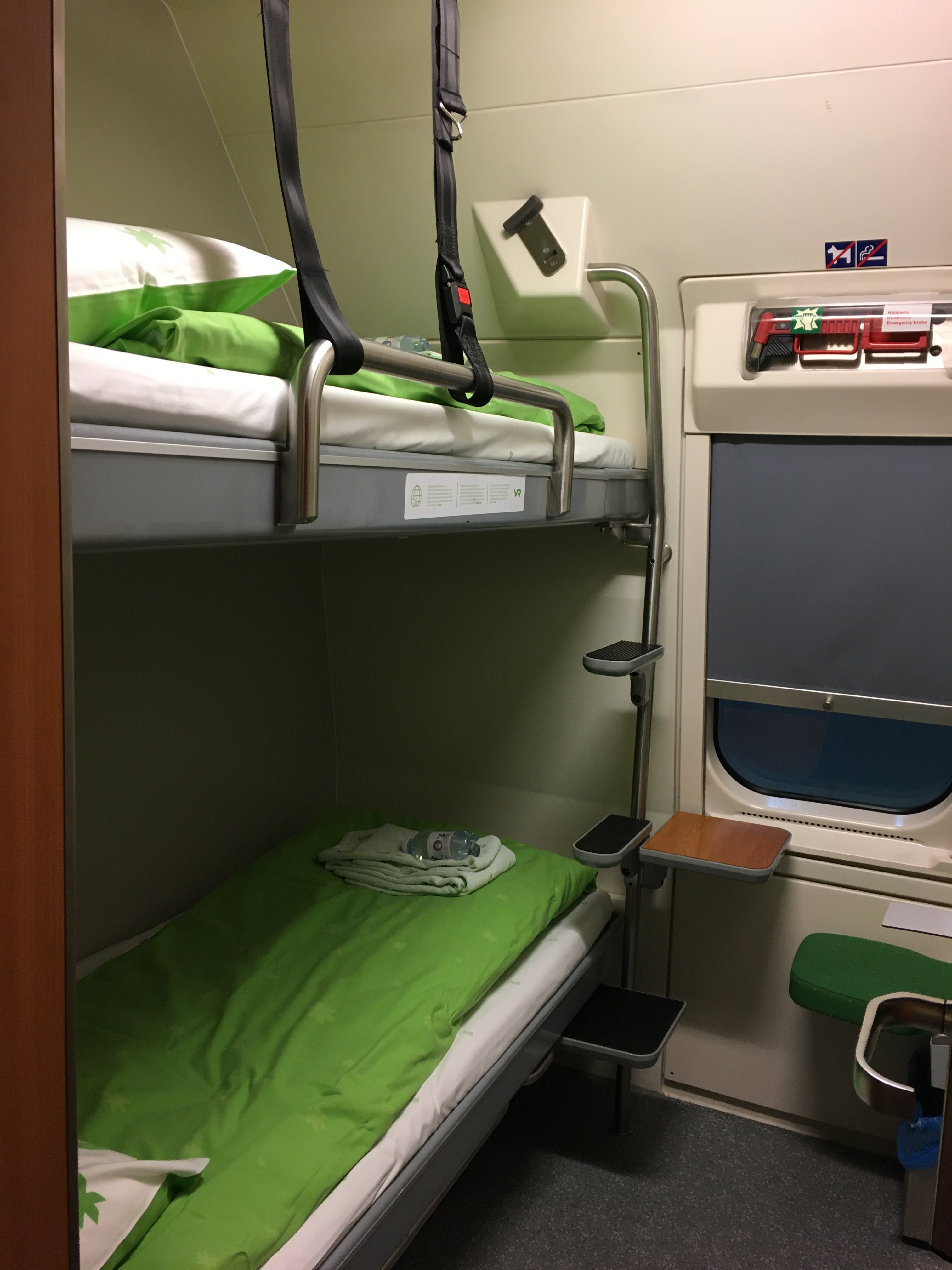
C’s and my compartment on the Santa Express

How do I even begin to describe the Santa Express?  I used to backpack quite a bit in my 20s and early 30s and spent many a time on long train journeys in Europe and Asia.  I was nostalgic for the feel of riding the rails and excited to be sharing this experience with C and our friends.  CZ and I had each booked a two bunk sleeping compartment with en suite bathroom for the 12 1/2 hour journey.  The compartments were tiny but well equipped.  We had a small chair, table, two bunks with an alarm clock and charging stations,  and could shift one wall in the tiny bathroom to reveal a shower.  So clever!  Scandanavian efficiency at its best.

We boarded as efficiently as one can with large suitcases and small children in a foreign country (i.e. not elegant), got our things quickly into the compartments, and then headed down to the dining car so we could park ourselves at a table.  Our plan worked beautifully.  We had the first choice of tables and no line at the restaurant counter service and could keep the kids and ourselves busy until bedtime.  By 9 PM we were ready to turn in.

I so want to be able to say that I slept like a baby, lulled to sleep by the gentle rocking of the train as it slipped north.  The berth mattress was not uncomfortable; we were not cold beneath the provided comfortor.  The train’s rhythmic swaying and muffled clickety-clack were comforting.  But I had a cold I had picked up in Addis Ababa where I had been the week before on a business trip and coughed enough to keep me awake, and I could hear poor Little C, also with a cold, coughing on his side of our thin shared wall.  C insisted she needed to sleep with me and we were wedged together in one berth.  Not terrible mind you, but I had very little space to maneuver.  And though we had few stops en route, I awoke each time with the squealing of brakes then lurching re-start with the train whistle.  Not altogether unpleasant sounds, but unfamiliar and I am not as sound a sleeper as C.

We woke around 6:30 to prepare for the 7:15 arrival at Rovaniemi.  We changed into our “really cold weather” clothes, packed up our bags, and pulled up the compartment blinds.  Outside it was dark, and yet not the sort of black night that descends upon Malawi.  Perhaps it was the 3/4 sized moon (waxing gibbous) reflecting brightly off the snow-covered ground, but certainly, there were electric lights on the train and from the stations and towns we passed that also contributed to the relative brightness.  There was definitely a lot of snow on the ground.  Ice encrusted our compartment window.  We had traveled through the night to awaken in a true winter wonderland.   We were here!

Arrival in Rovaniemi

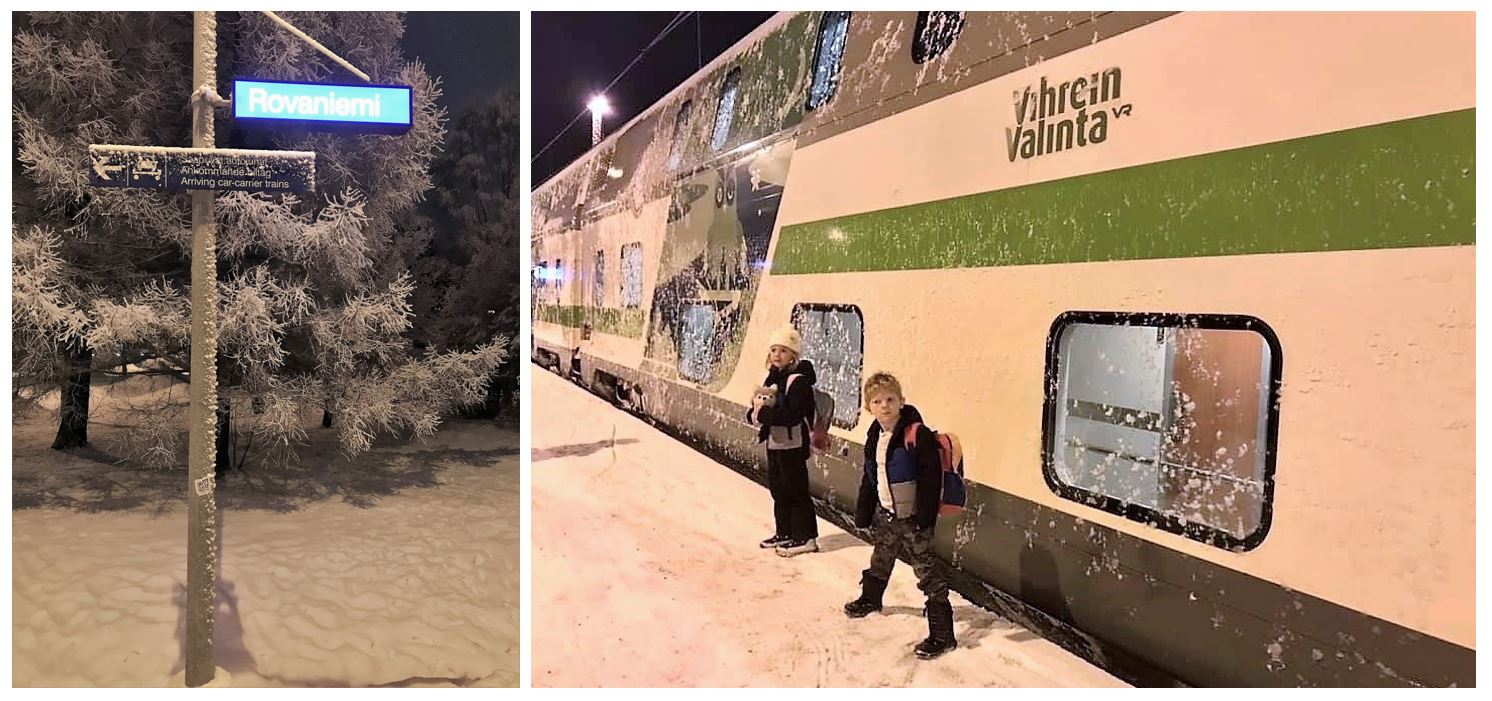
Arrival at the snow and ice-encrusted Rovaniemi

We readied to disembark and then, well, things happened.  Things that happen to moms when traveling with kids.  In the final shuddering of the train as it braked into Rovaniemi station, Little C, sitting in the upper bunk, lost the contents of his stomach.  CZ managed a record-breaking speedy clean-up and final gathering of belongings, and we all flung ourselves gracelessly off the train.  C and Little C speeding like bullets aimed themselves directly at the biggest piles of snow.  CZ and I circled the wagons so to speak, gathering our belongings to do the necessary arrival checks.  CZ noticed Little C was in the snow sans his hat and a quick search of her bags indicated it had not made it off the train.  Back onto the train, she emerged a minute later victorious, only to find her phone was then missing.  I pulled off my gloves and fumbled to locate my phone with newly-installed European SIM card, turn it on, and then call her phone.  Back into the train she went, once again returning triumphant.  Whew!

Santa stuff

Santa, or his spies, are everywhere in Rovaniemi

C and Little C, oblivious to the whole drama, continued to frolic in the snow.  Though we were both a wee bit rattled at the close call and thanked our lucky stars the train stopped for 20 minutes at Rovaniemi before heading to its final destination, CZ and I congratulated ourselves in making it this far.  We were the last people standing on the snowy platform so we corralled the kids and began trudging towards the station to flag a taxi to our lodging.