The second installment of my daughter and my August 2026 visit to Sweden.
C and I slept well and woke up early, so I felt my plan to beat jet lag was working. It was overcast and raining slightly as we set out. I had been watching the forecast carefully because we had two more days in Stockholm: one for museums and one with more time outdoors. The rainy day was clearly the day to visit the museums on Djurgården.
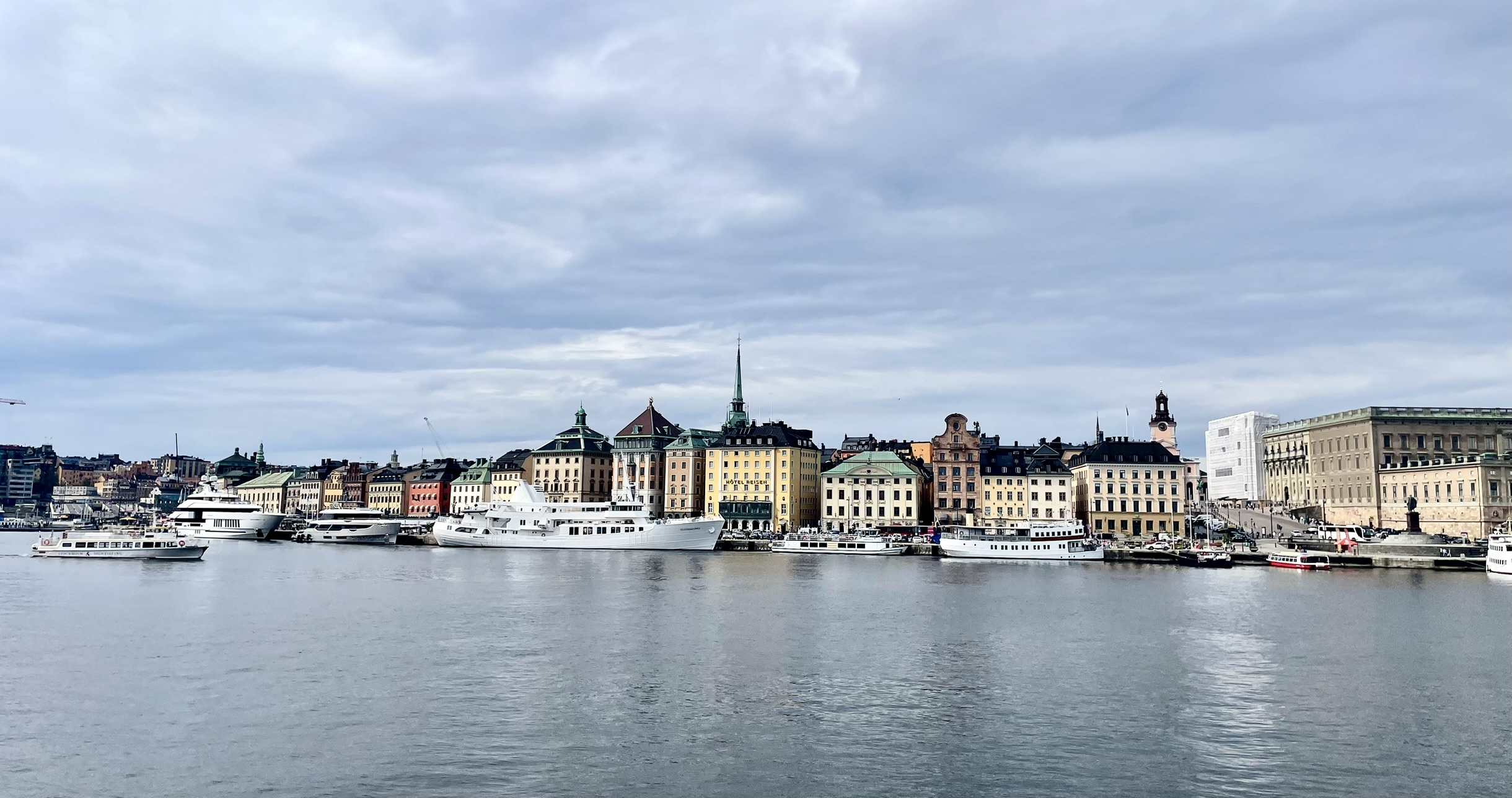
We set out through a light mist, planning to walk the roughly 30 minutes to Djurgården and take the ferry back. Google Maps led us from Gamla Stan onto Skeppsholmen, the neighboring island. The bridge was lovely, with a beautiful view back across the water toward Gamla Stan. Skeppsholmen itself was green and surprisingly hilly, with several lovely old buildings. We walked up a rise and down the other side, following the map toward Djurgården. Only when we reached the water did I realize that the route ahead was a ferry, not a continuation of our walk.
The ferry was approaching, so we got on. Unfortunately, it was headed back toward Gamla Stan. We stayed aboard and rode it back toward Djurgården, stopping a second time at Skeppsholmen along the way. The unexpected detour gave us a chance to see the islands from the water, and the approach to Djurgården was particularly nice. The ferry landed right in front of Gröna Lund, Sweden’s oldest amusement park, and from there we headed for the Vasa Museum.
Although we had woken up early, we had not left quite as early as I had planned, and I had not expected the Vasa Museum to attract such a crowd on a weekday in August. The line stretched up the rise toward another museum. Rather than join it immediately, we sat down for fika. C had hot chocolate and a snack, and I had tea and a cinnamon roll—a Swedish invention and one of Sweden’s great contributions to the world. It was fantastic, and the first of many I would enjoy on this trip. When we finished, the line had hardly changed, so we decided to visit the Wreck Museum first.
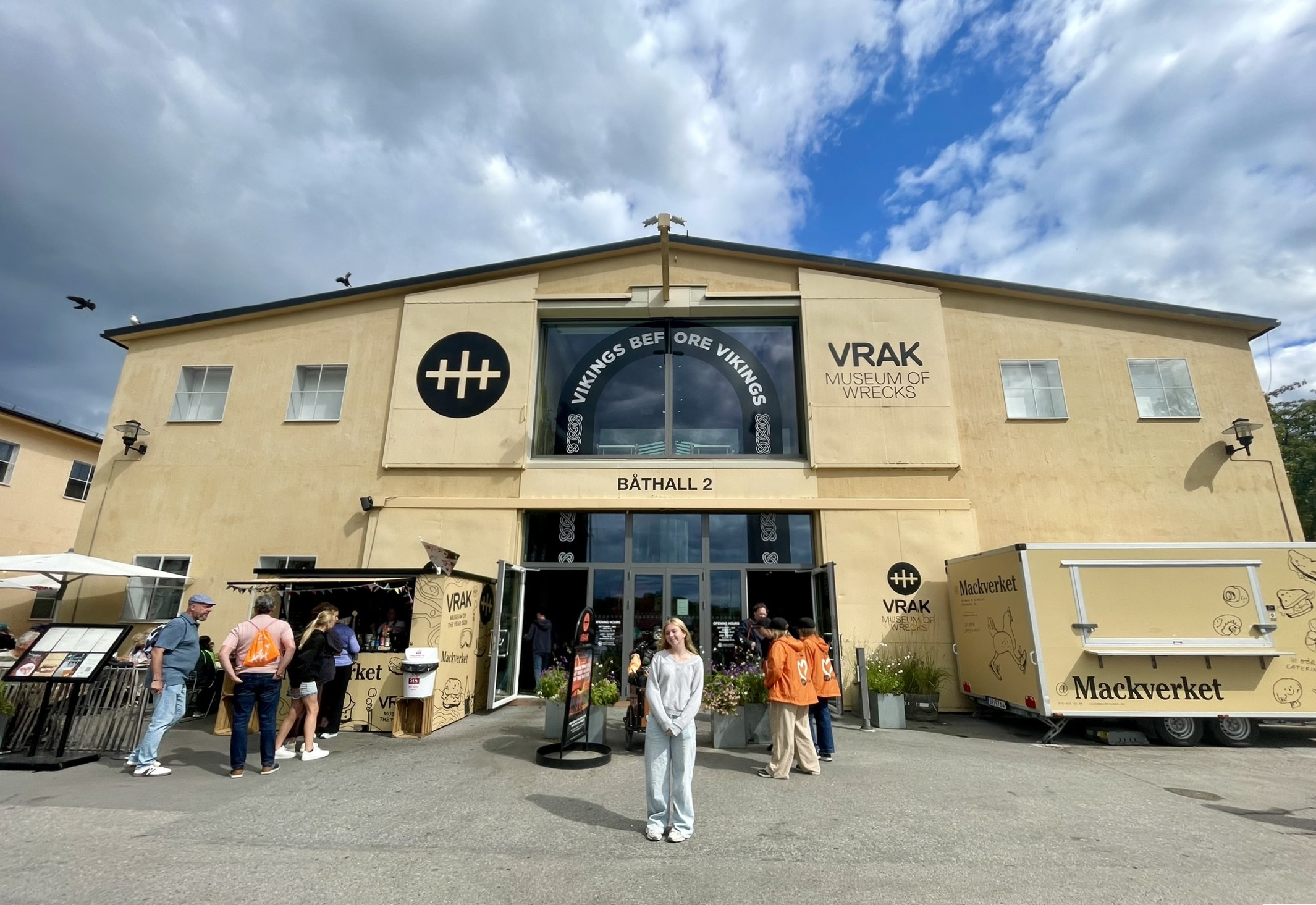
Vrak, or the Museum of Wrecks, is an award-winning interactive museum on the Djurgården waterfront (it was a finalist for the European Museum of the Year Award in 2024 and won Sweden’s Museum of the Year Award in 2026). It is housed in a World War II-era boat hangar. We took few photos inside because we were too busy with the exhibits: a VR dive that let us search an underwater wreck, an immersive film telling the Baltic Sea’s story, and holographic images of objects from the wreck of a 17th-century ship. We learned not only about famous Swedish wrecks, but also about how people search for them and salvage objects from them. It was quite cool, and we really enjoyed it.
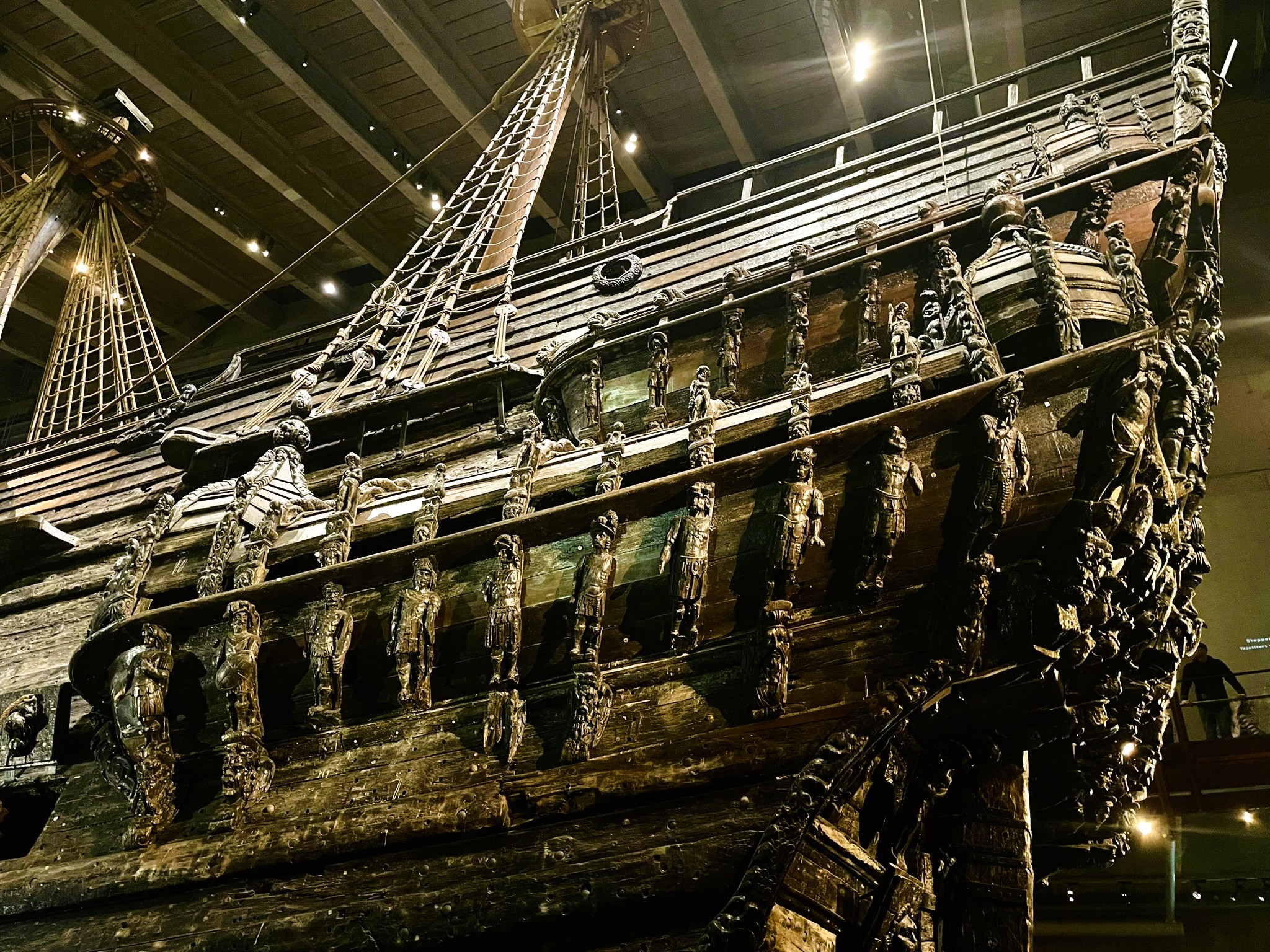
After visiting Vrak, we returned to the Vasa Museum. The line was significantly shorter, and I am so glad we visited the museums in that order. Vrak may have won awards, but after seeing Vasa, nothing could compare. As soon as we walked in, there was the ship towering before us. It took my breath away. It was several stories high—an entire seventeenth-century warship standing inside a building—and its craftsmanship and carvings were gorgeous. I was enthralled.
Vasa was built at Stockholm’s navy yard between 1626 and 1628. It set sail on its maiden voyage on August 10, 1628, but after about 20 minutes began taking on water and sank. Only a little way into our visit did it occur to me that we were there on August 10—398 years to the day after Vasa set sail. That felt extraordinary, and I wondered whether the anniversary might have helped explain the size of the crowd that morning. The ship was raised in 1961, after 333 years underwater, and more than 98 percent of its original structure survives.
The museum is built around the ship and tells so much more of its story: the people who built and sailed it, life aboard, its brief maiden voyage and sinking, and its eventual discovery and salvage. We spent probably three hours there and left only because we were hungry. We could have stayed longer, and I think even C could have stayed a while more—though perhaps not quite as long as I would have. It is one of the most incredible museums I have ever visited.
Motivated by food, C and I left Djurgården behind. We had considered the ABBA Museum, which sounded fun, but the reviews I read suggested it was small and pricey. After seeing Vasa, I was good, and C was as well. We were tired after a good four hours of museuming. We walked back across the bridge to the mainland and had lunch at an Italian restaurant in the elegant Östermalm neighborhood. Afterwards, we meandered through the streets back to our hotel in Gamla Stan. We had had such a busy first day, followed by another busy day, that I did not want to pack anything else in. We needed time to rest and reflect on what we had done so far.
We woke early on our third day in Sweden to head to Stockholm City Hall for a tour of its tower. Completed in 1923, Stockholm City Hall sits on the northern shore of Riddarfjärden, a broad stretch of Lake Mälaren in central Stockholm. The building has hosted the annual Nobel Prize banquet since 1930.
Although it is called a tower tour, it is not guided. The tower is open to visitors only during the summer months, and the number of people admitted during each 40-minute block is limited. We were given 10 minutes to climb, 20 minutes at the top, and 10 minutes to descend. At 348 feet high, the tower offers a panoramic view over central Stockholm. It was a bright, gorgeous morning, and although it was windy at the top, we had a tremendous view across the water and several of the islands that make up Stockholm, including Gamla Stan.
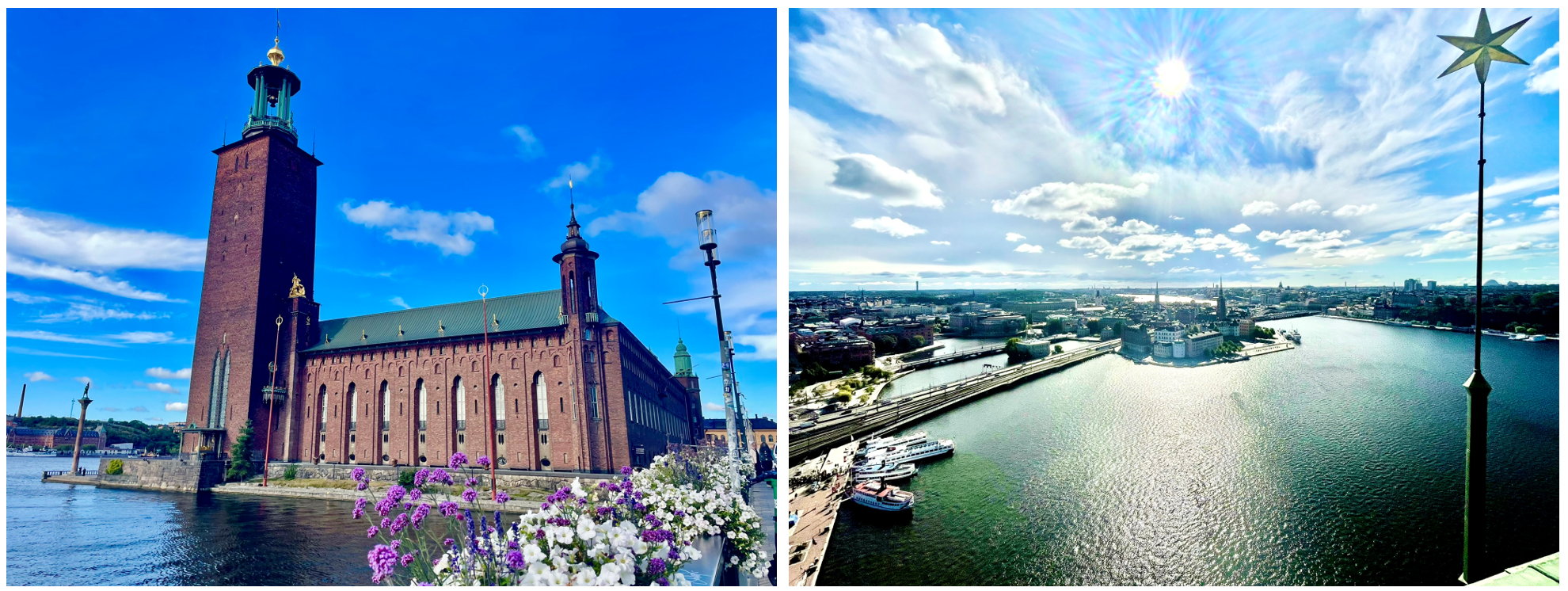
Just a two-minute walk from City Hall was the departure point for our boat to Drottningholm Palace. The trip took about an hour, winding among the large islands and narrow waterways of Lake Mälaren. I was surprised to learn that we were traveling on a lake at all. It looked much more like a network of rivers than any lake I had seen before.
The boat was crowded, and all the seats on the upper deck were taken. Given how chilly it was on the water, however, I was quite happy for C and me to huddle on benches near the snack bar inside, stepping outside whenever I wanted a better look at the view. We also took advantage of the snack bar for a morning fika. I had my second cinnamon roll of the trip, and it was every bit as delicious as the first.
As we drew closer to Drottningholm, I went outside to watch our approach. Arriving at the palace by water is spectacular. Its sunny yellow façade appeared ahead of us against a startlingly clear blue sky, and even before we docked, I could see why the royal estate had been named a UNESCO World Heritage Site.
Drottningholm is Sweden’s best-preserved royal palace from the 1600s and remains the home of the Swedish king and queen. Because it is still a functioning royal residence, only part of the palace is open to visitors, and, as at the Royal Palace in Gamla Stan, it did not take us particularly long to walk through the available rooms. I loved the building itself. Inside, however, I discovered that I apparently have a much higher tolerance for grand architecture than for gilded interiors. After a certain number of royal residences, one lavish room begins to blur into the next.
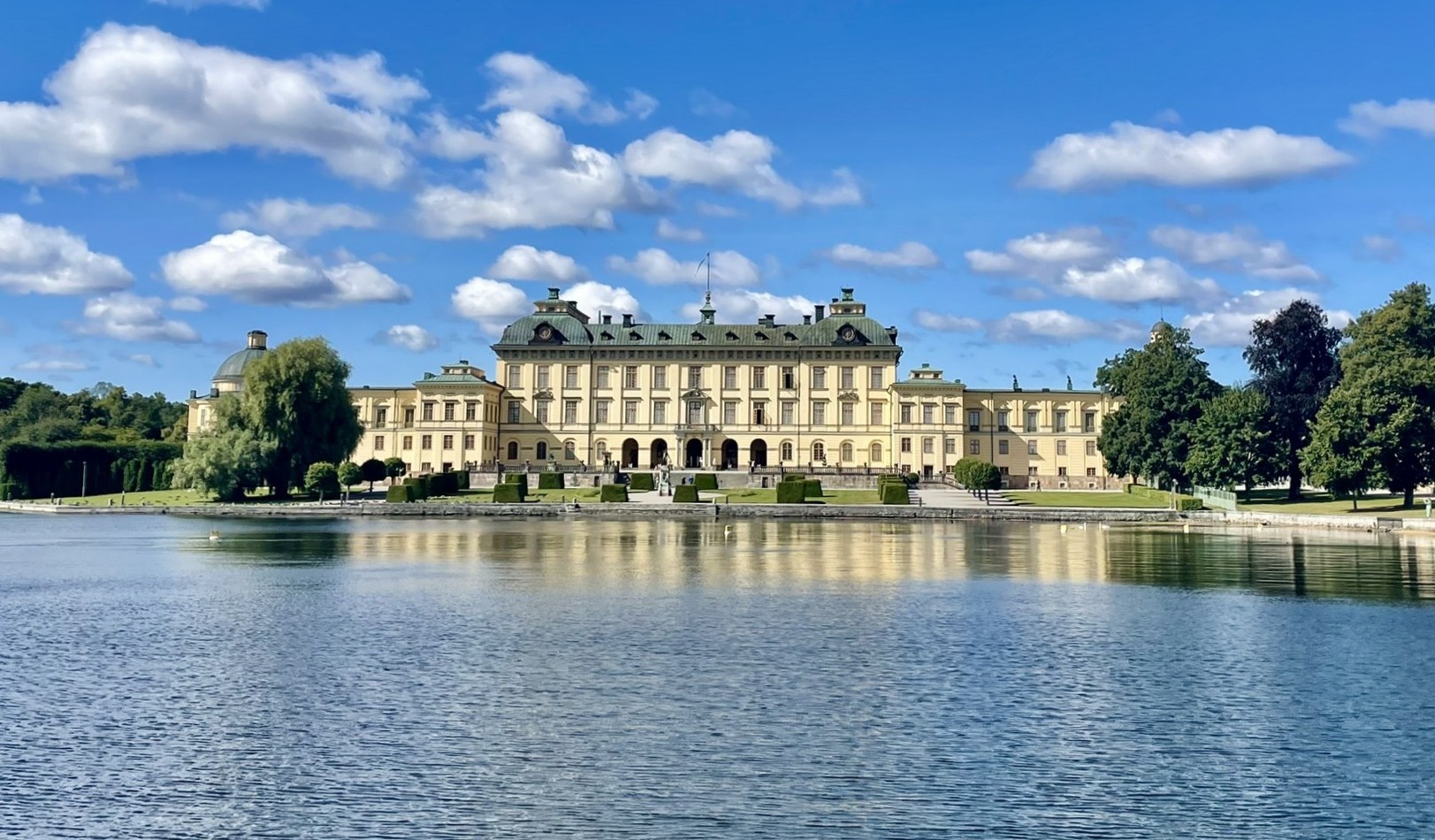
Once outside, I connected with Drottningholm in a way I had not inside. The gardens were still carefully shaped and unmistakably royal in scale, but they felt like a place to explore rather than a collection to admire from behind a rope. The palace and grounds were French-inspired and borrowed heavily from French Baroque design, making the connection to Versailles easy to see. Yet Drottningholm, though one of Sweden’s top tourist attractions, did not come with the crowds found at Versailles. The farther we wandered from the palace, the fewer visitors we encountered.
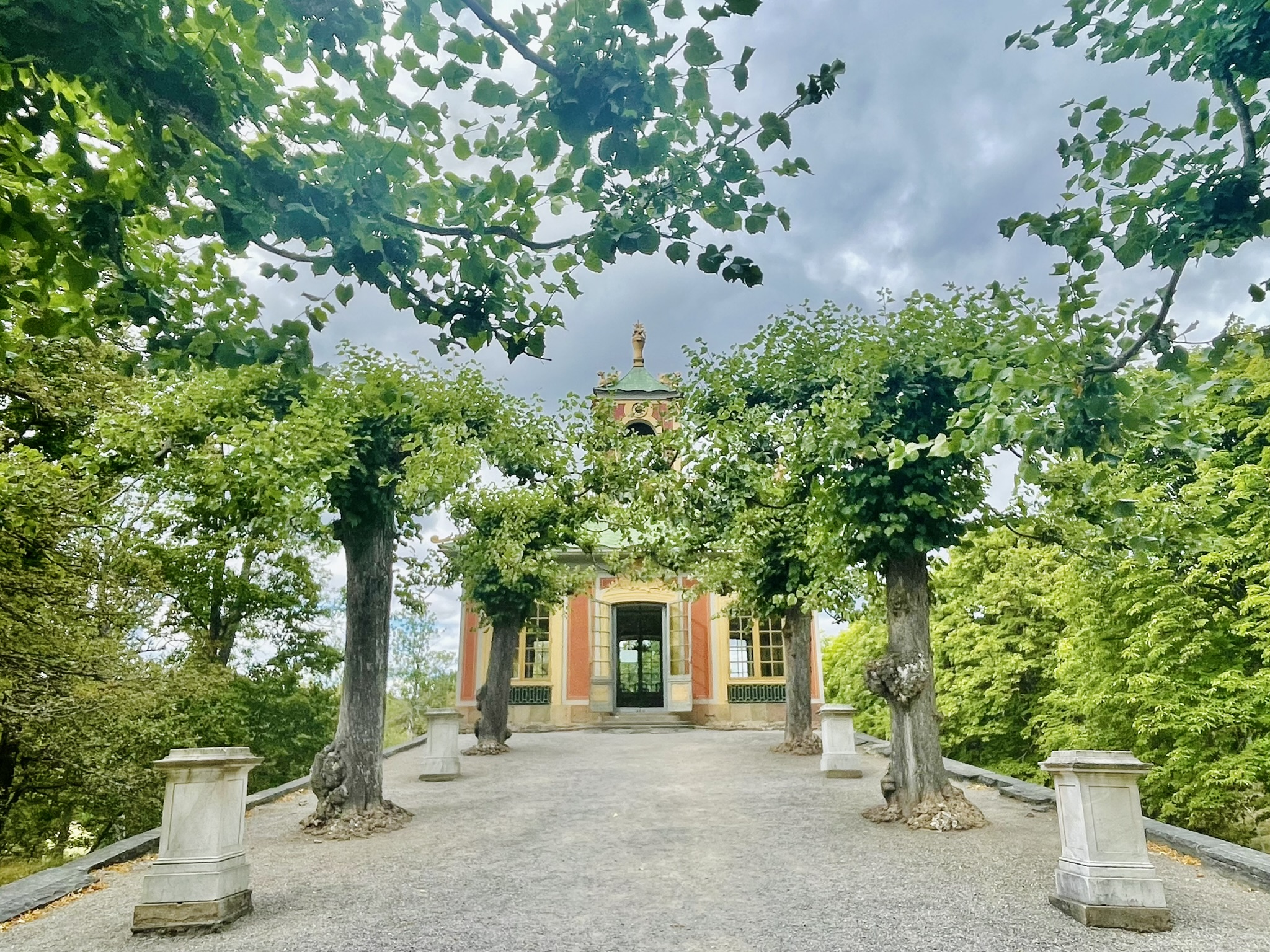
My favorite part of the grounds was the Chinese Pavilion and the quiet area surrounding it. I particularly liked the long path lined with chestnut trees and the views across the open spaces framed by long rows of trees. Tucked away a substantial walk from the main palace, the pavilion felt far enough removed to serve as the royal family’s getaway from the big house. It began as a birthday gift from King Adolf Fredrik to Queen Lovisa Ulrika in 1753—because what do you give a queen who already lives in a palace? A vacation mini-palace, apparently. European royalty at the time was a bit obsessed with all things Chinese, and that enthusiasm carried through not only the architecture but also the wallpaper, furnishings, and decorative details inside. Having spent quite a bit of my own life living in, working in, and traveling through China and elsewhere in East Asia, I could understand their interest.
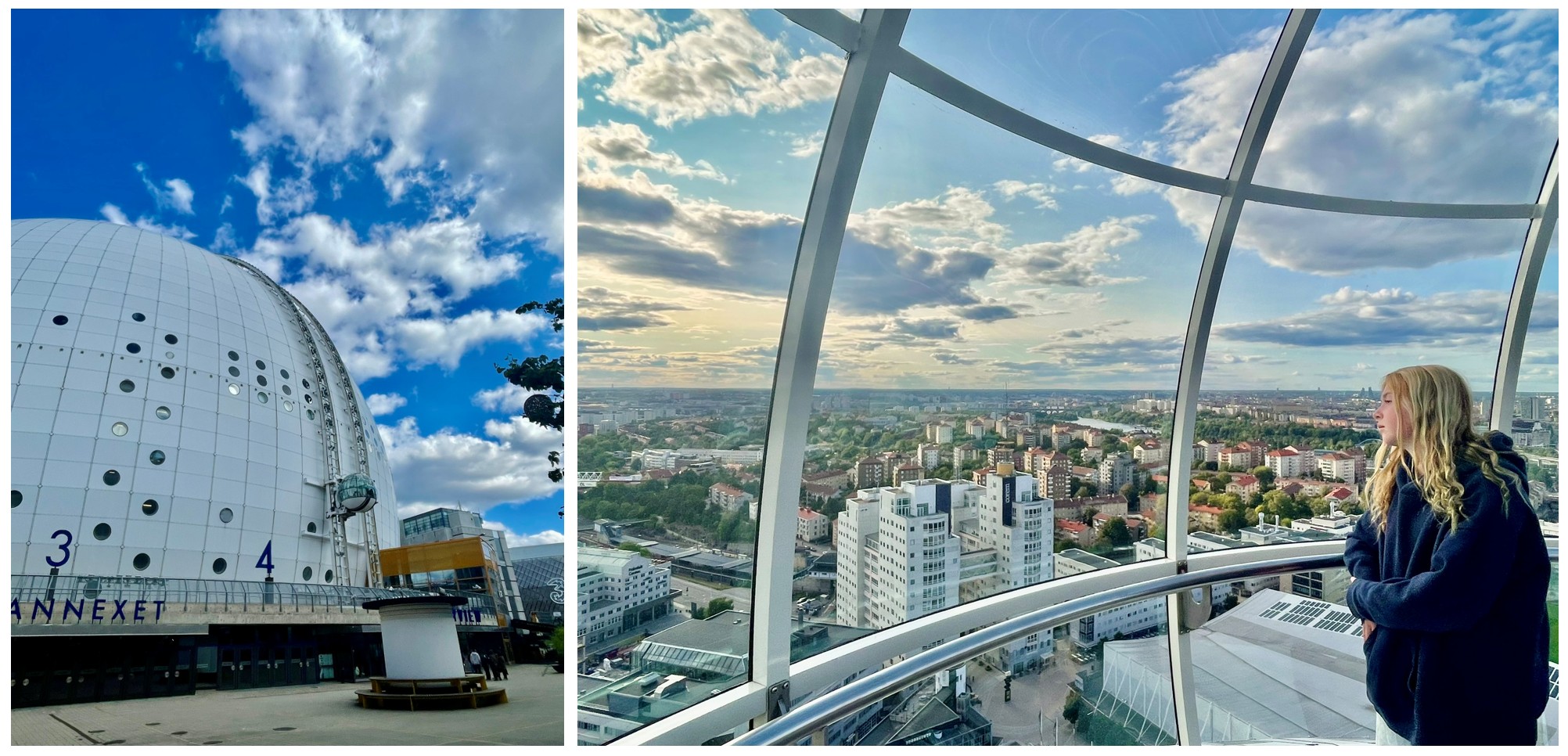
We had lunch at the Palace Café and then, rather than returning by boat, took a bus and the subway to the Avicii Arena in southern Stockholm. We were there to ride SkyView, a one-of-a-kind attraction—the only one in the world—in which a clear, spherical gondola crawls up the outside of the Avicii Arena, the world’s largest spherical building.
We arrived at the SkyView ticket counter at 3:15 p.m. only to learn that a group of more than 100 people had booked several rides just before us. There are only two gondolas, each holding 12 people, and a complete ride, including boarding, takes about 25 minutes. The next available tickets were for 5:30 p.m. We had nothing else planned for the day, and the Avicii Arena is next to a shopping mall, so we bought the tickets and headed to the mall to look around.
There, we discovered Normal, a super-fun non-pharmacy drugstore. It was sort of like CVS in the United States, but with a cute, maze-like layout, colorful displays, and lots of delicious imported snacks and sweets. Exploring Normal and enjoying some more fika helped the time pass quickly.
Finally, it was our turn to board SkyView. We were supposed to watch an introductory video first, but someone forgot to show it to us. No matter. We went directly into the gondola, where only two other passengers joined us.
The gondola slowly crawled up the side of the arena until it reached the top, 130 meters, or about 425 feet, above sea level. It paused there for a few minutes so that we could take in the view. The immediate surroundings were more residential and commercial than picturesque, but beyond them Stockholm spread out below us, and we could see toward Gamla Stan and the historic center. It was another gorgeous, clear afternoon; on a cloudy day, I doubt the view would have been quite as spectacular. SkyView was one of those special activities to check off the list—something we could do nowhere else in the world.
Afterwards, we returned to the subway and rode back to Gamla Stan. We picked up a few things from the supermarket to make dinner in our room. Once again, C remained at the hotel while I took one more late-afternoon spin through the gorgeous streets of Gamla Stan. Then I returned to the room so that we could both prepare for the next day, when we would leave Stockholm for our next destination.

