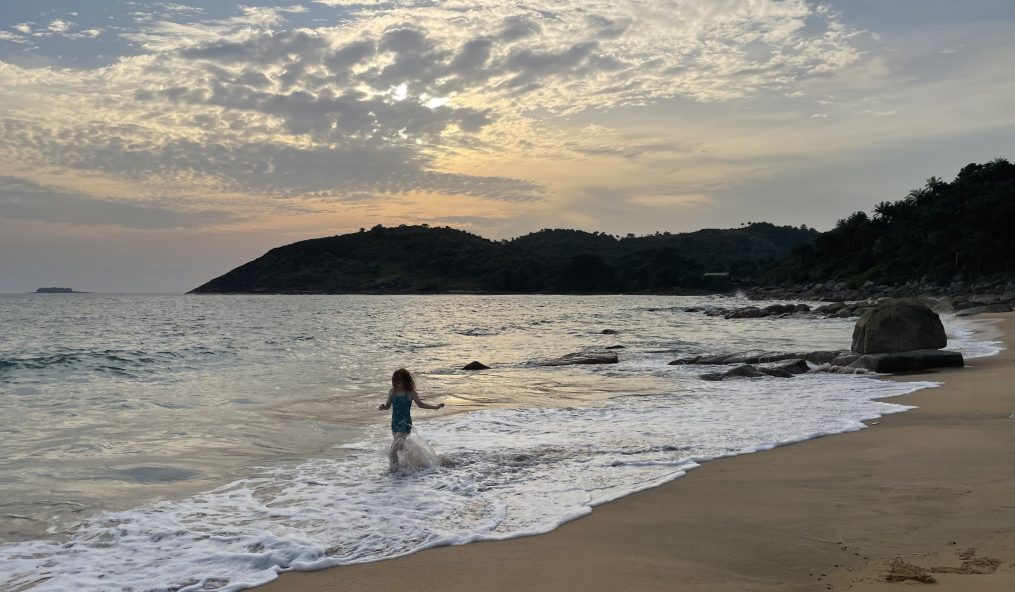
The ninth and final installment of my daughter and my August 2026 visit to Sweden.
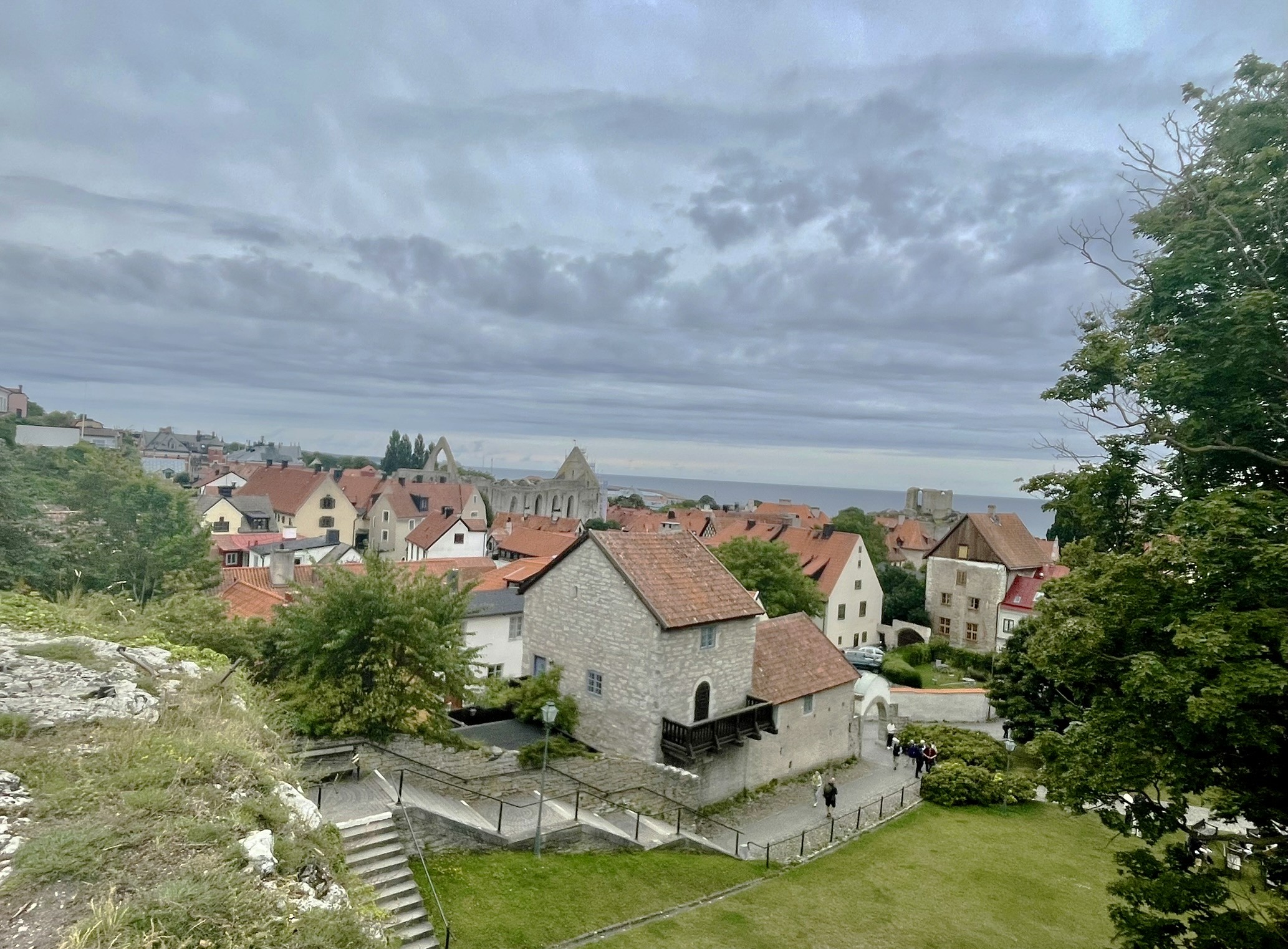
On our third and final morning in Visby, we slept in. Our flight back to Stockholm was not until 4 p.m., so we had several hours to take one last look around town. I had considered renting bicycles, but with limited rental options and rain in the forecast, we decided to spend the morning on foot instead. Naturally, the rain never materialized!
After finishing some food we had bought at the supermarket the previous evening, we packed our bags, left them at the hotel, and headed out for one last walk through Visby.
Our walk took us back to Stora Torget first, where I wanted C to see the interior of the ruins of Saint Karin Church. She also had some unfinished shopping to attend to. During an earlier visit to the square, she had spotted some rings at the market that she particularly liked, and this time she was able to buy them.
From there, we made our way to Visby Cathedral, which I had largely missed on my previous wander through town. The cathedral looked especially atmospheric against the overcast sky, and the surrounding streets and elevated walkways offered lovely views of the church and the town below.
We arrived just as the cathedral bells began chiming for noon. Along with the more traditional bell music, we heard what sounded like a contemporary pop song. I think it might even have been Taylor Swift! It was certainly not what I expected to hear ringing out over a medieval Swedish town.
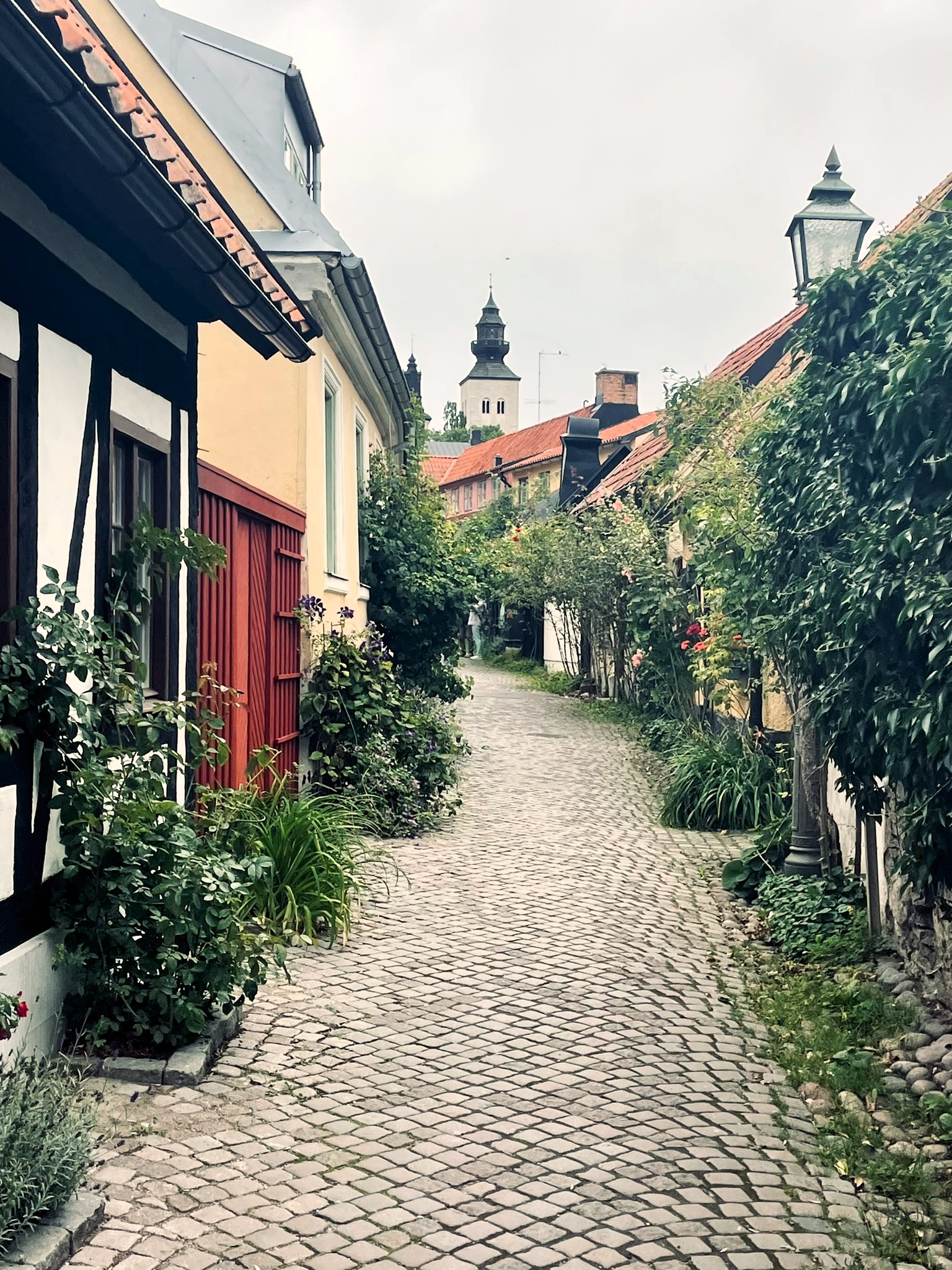
We kept exploring, climbing steps and following elevated paths that offered views over the rooftops and surrounding walls. Eventually, we reached another section of Visby’s medieval fortifications, where we stopped to photograph the gates and briefly listened to a nearby English-language tour. Then we followed the city wall along the sea before reentering the old town through Fiskarporten, the historic Fisherman’s Gate. This brought us back toward Fiskargränd, that wonderfully photogenic little street lined with flowers that had so captivated me on our earlier walks.
It was a particularly pleasant morning, not least because C seemed to be enjoying the sightseeing more than she had on some of our previous outings. We took our time, stopped for photographs, and simply enjoyed being together as we wandered through the streets.
We returned to the old town through Donner Square and gradually made our way back to the hotel. After collecting our luggage, we took a taxi to the airport, this time arranging one in advance. Our flight returned to Stockholm, where we checked into a hotel near Arlanda Airport once again.
The following morning, we set out for Sigtuna, Sweden’s oldest continuously inhabited town. Years earlier, I had visited Ribe, Denmark’s oldest town, and loved discovering how a place that seems relatively small today could have played such an important role in shaping a country. So, when I read about Sigtuna, I knew I wanted to visit.
Founded around 980 AD by King Eric the Victorious (you have to love a king with a name like that!), Sigtuna became an important royal and commercial center during the Viking Age. It was also here that Sweden’s first coins were minted.
Sigtuna sits along the shores of Lake Mälaren, a vast lake dotted with islands and connected waterways. You can travel by boat from Stockholm to Sigtuna, winding through the lake and its many islands; we had come part of the way when we took the boat to Drottningholm Palace. The town’s waterfront location also helps explain its historical importance, especially when waterways were vital routes for trade and transportation.
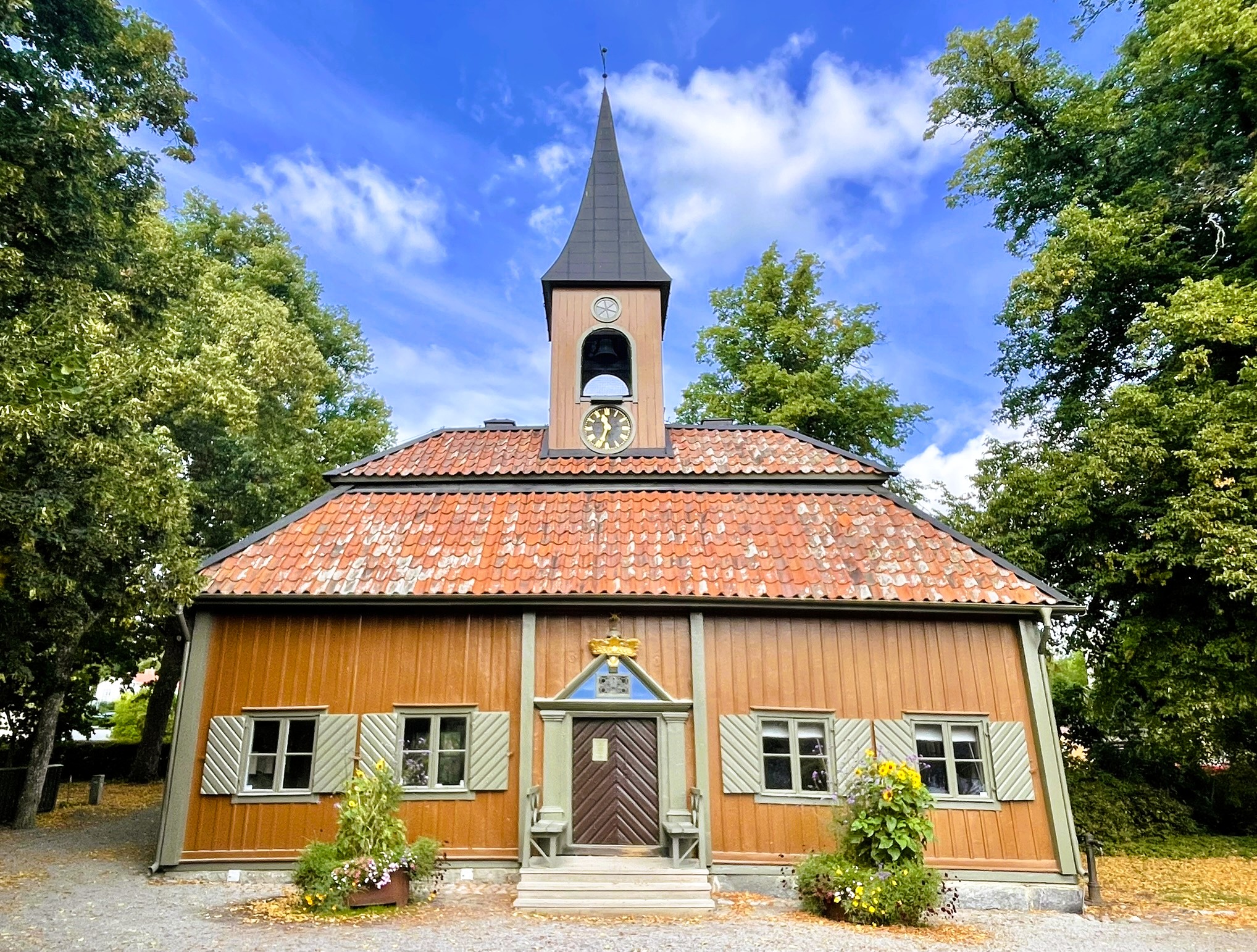
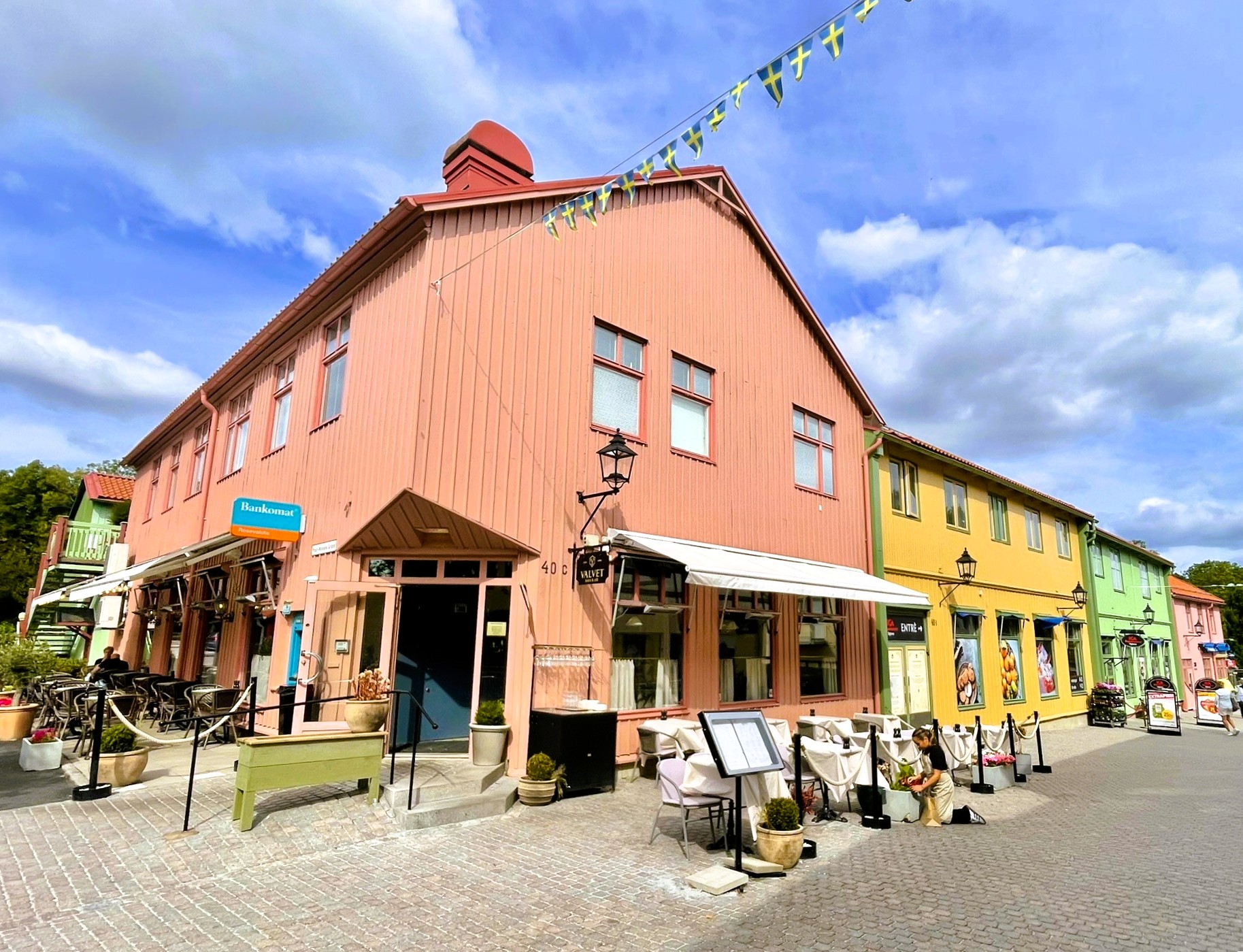
We began our exploration by walking along Stora Gatan, the town’s historic main street. One of our first stops was Stora Torget, where we admired the Town Hall, which dates from 1744. It is Sweden’s smallest surviving town hall, and it is absolutely charming!
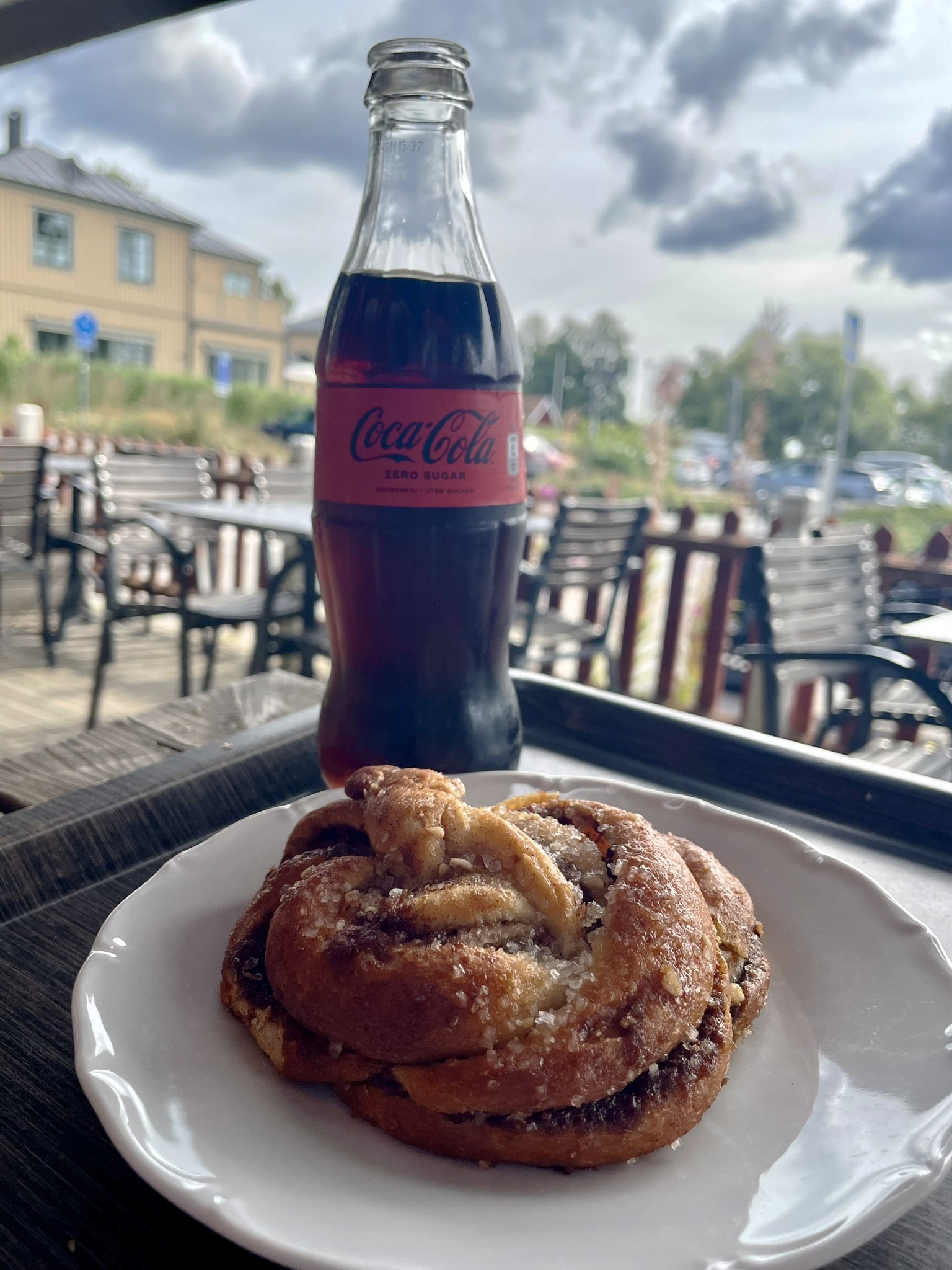
At the end of Stora Gatan, we took some steps down to the lakefront. By this point, we were getting hungry; it was time for fika. We found a little café fronting the water, where C ordered lunch while I ordered my favorite Swedish repast: a Coke Light and a Swedish cinnamon roll. I knew this would probably be my last opportunity to enjoy a traditional fika during our visit, and I was determined to make the most of it.
The weather could hardly have been nicer. Although a hint of the cooler weather that would soon arrive in Sweden lingered, the day was still warm, bright, and beautifully clear. We had a lovely view of the lake, and it was a wonderful place to sit and enjoy a leisurely break.
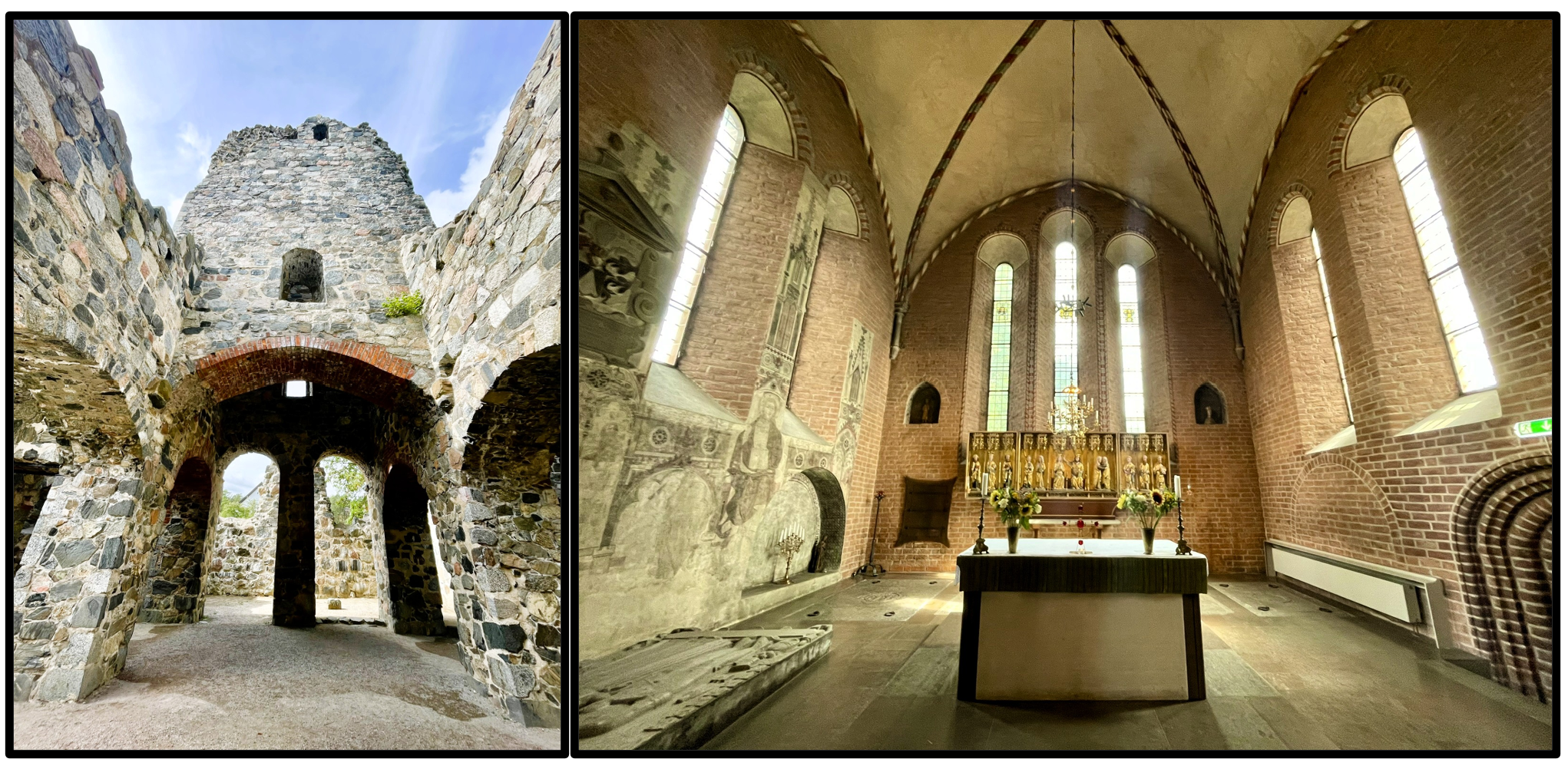
After our fika, we continued to the ruins of St. Olaf’s Church, dating to around 1100, when Sigtuna was an important religious center in Sweden’s early Christian years. Although much of the church has disappeared over the centuries, substantial sections of its stone walls and arches remain. Surrounded by a beautifully maintained cemetery, the ruins were an attractive, evocative sight, especially against the bright blue sky.
Adjacent to St. Olaf’s ruins is St. Mary’s Church (Mariakyrkan). Its brick exterior belies its age. I think of brick as modern and was surprised to learn Dominican monks built the church around 1230. It is the oldest building still in use in Sigtuna, and it has served as a place of worship for nearly 800 years. I was even more surprised by how beautiful the church was inside. Among its historical features are medieval frescoes, which, as anyone who has followed my travels knows, are something I particularly enjoy discovering in old churches.
Sigtuna is apparently the most rune-rich town in the world, with an extraordinary concentration of these ancient inscriptions both within the town and in the surrounding area. Runes were characters of an alphabet used by Germanic peoples before the Latin alphabet became widespread in Scandinavia. During the Viking Age, the Old Norse runic alphabet consisted of just 16 characters. People often carved these symbols into stones, including memorials to deceased relatives.
After visiting the churches, we had a little fun searching for some of Sigtuna’s runestones. We found several in and around the cemetery at St. Olaf’s, as well as a few elsewhere in town. We didn’t try to find them all, but spotting these centuries-old inscriptions as we wandered around town was like a little scavenger hunt.
From the churchyard, we climbed a small hill, passing another runestone along the way. At the top stood Sigtuna’s clock tower, an interesting wooden structure with its upper portion painted the familiar copper-red color that we had seen so often throughout Sweden. Although the clock tower is considerably newer than many of Sigtuna’s historic buildings, it was an attractive landmark, and the hill offered lovely views over the town and out toward Lake Mälaren.
We then made our way back down to the town center to visit the Sigtuna Museum. It is housed in several historic buildings near the Town Hall. Though not large, it is well organized and interesting. Before leaving town, we stopped at the supermarket one last time to pick up a few things for the evening, along with some Swedish sweets and snacks for the journey home. Then we caught the bus back to the airport and our hotel.
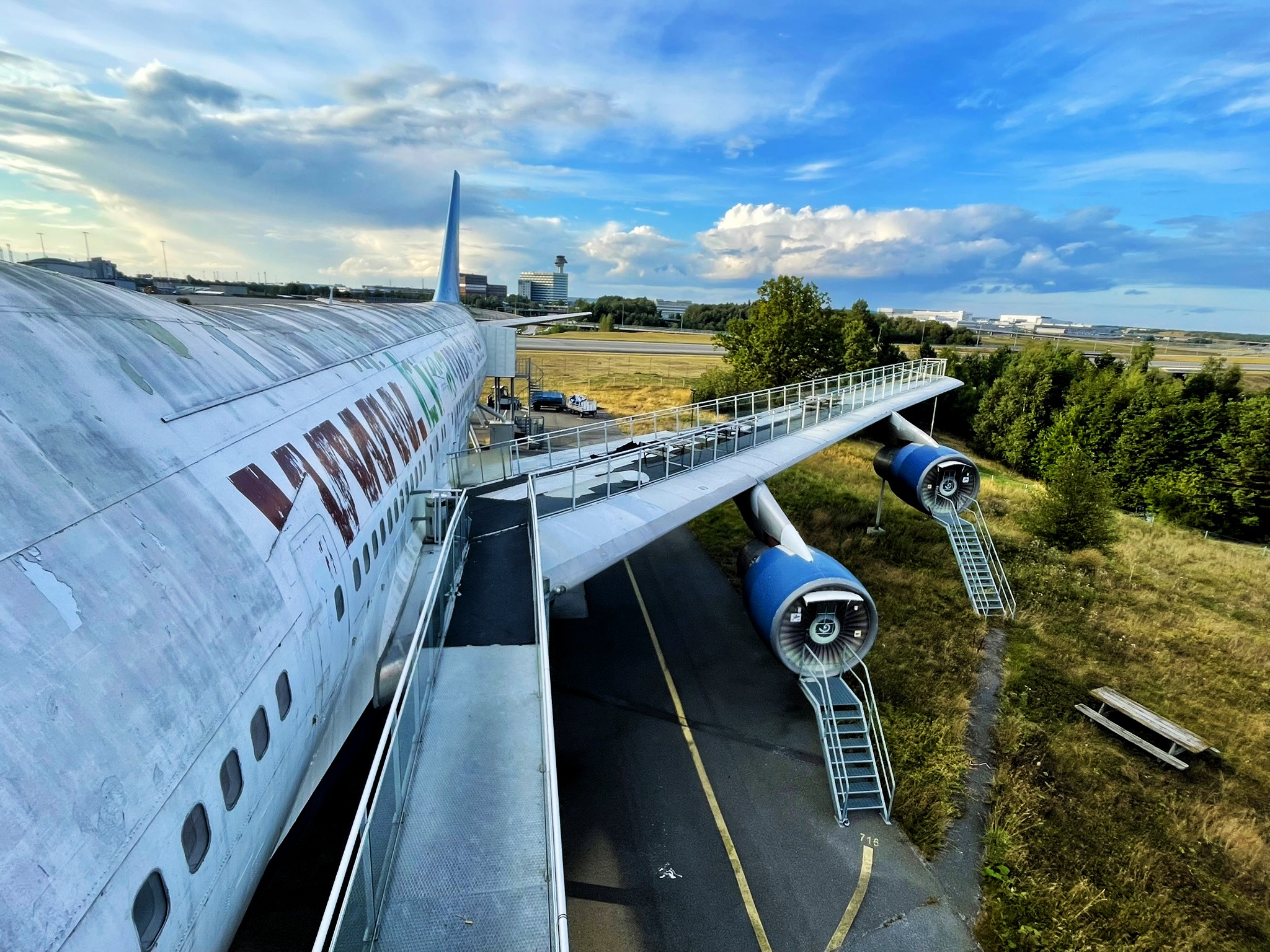
One final place I wanted to visit before leaving Sweden was right across the street from our hotel. Years earlier, while researching unusual places to stay, I had come across Jumbo Stay, a hotel housed inside a decommissioned Boeing 747 at Arlanda Airport. I thought the idea of spending a night inside a jumbo jet was absolutely fantastic, and it had remained on my travel wish list ever since.
Unfortunately, Jumbo Stay had closed in March 2025, a little over a year before our visit. The airplane was still there, however, with its exterior stairs and other hotel infrastructure still in place. So, of course, I had to walk over to take a look. I was not the only one. A few other people had also wandered over to see the airplane, perhaps sharing my curiosity or disappointment that this unusual accommodation was no longer available. It was a little sad to see it sitting there, looking much as it had when it welcomed guests, but with no chance to look inside or spend the night. So close, and yet too late! At least I finally got to see it.
The following morning, we were up very early for our flight home, bringing our Swedish adventure to an end.
Over more than two weeks, C and I had traveled through centuries of Swedish history, from the Viking Age and medieval kingdoms to Sweden’s rise as a major European power and its development into the modern country we know today. We had explored royal palaces and castles, wandered through medieval towns, visited magnificent churches and their ruins, and learned about the people and events that shaped Sweden. We traveled by just about every means of transportation imaginable – planes, trains, buses, trams, ferries, boats, bicycles, and, of course, our own two feet. And we enjoyed some of Sweden’s best-known contributions to the world, from Volvo automobiles to Swedish candy and the delightful tradition of fika, accompanied by plenty of delicious cinnamon rolls.
I have been fortunate to visit many fascinating places around the world, but Sweden stands out as one of my favorite trips. There was such a variety of things to see and do, and I particularly enjoyed the opportunity to explore so much of the country’s history and culture. More than anything, I loved sharing these experiences with C.
And Sweden had certainly given us an amazing adventure.

