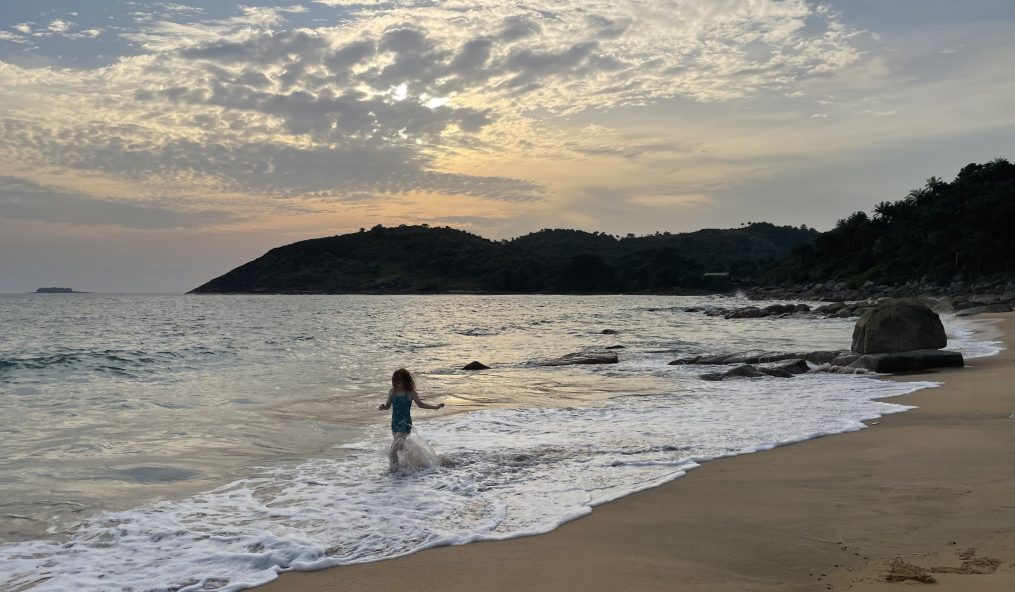
The eighth installment of my daughter and my August 2026 visit to Sweden.
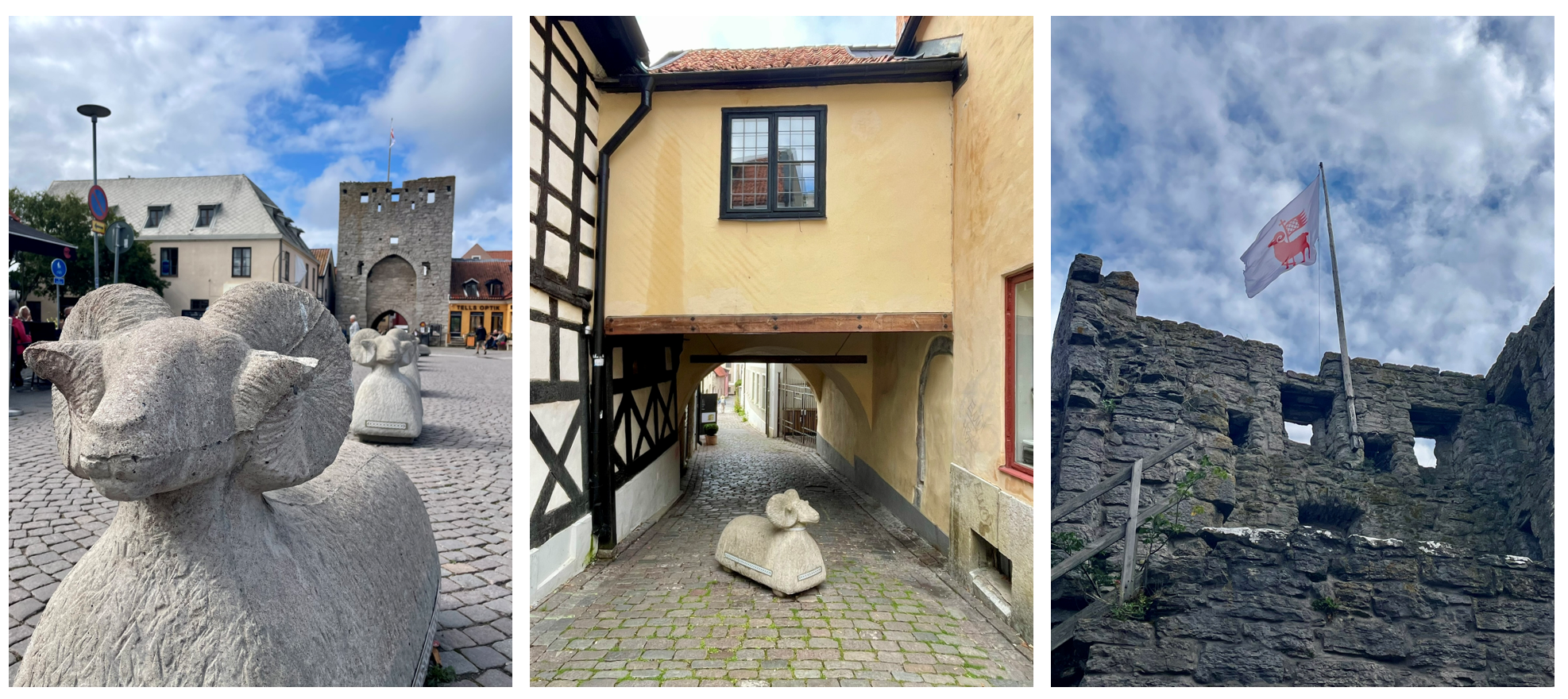
Although our Swedish rail journey had ended, our adventure was not over. When planning our two-week trip, I had wanted to explore Sweden primarily by train but struggled to choose among the many places I hoped to visit. One thing was certain, however: if we were going all the way to Sweden, I could not miss the chance to visit Visby, a medieval walled town on the Baltic island of Gotland, even if it meant deviating from our rail itinerary.
A few years ago, my friend CZ and I were considering European cruises for our kids. One itinerary included a stop in Visby, a destination that hadn’t been on my radar before. Reading about its medieval walls, remarkable history, and status as a UNESCO World Heritage Site captured my imagination. Although we ultimately chose a cruise to Norway instead, Visby remained on my travel wish list.
I have also long been fascinated by historic walled towns, particularly those where people still live and work surrounded by centuries of history. Over the years, I have visited several, including Dubrovnik in Croatia, Kotor in Montenegro, Avila in Spain, and Galle in Sri Lanka. I knew Visby was exactly the sort of place I would love to explore.
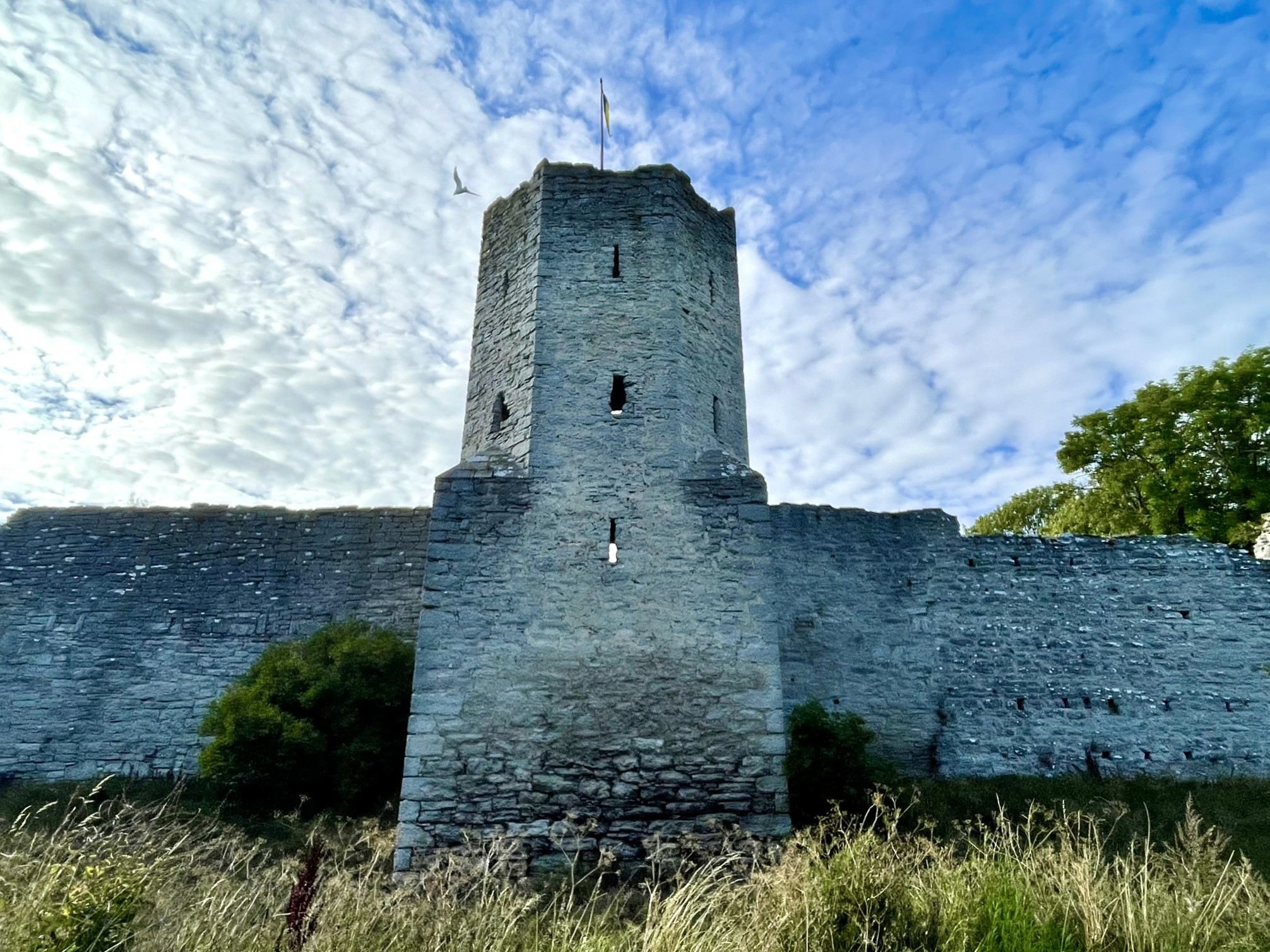
Gotland, Sweden’s largest island, has been an important Baltic trading center since the Viking Age. During the Middle Ages, Visby flourished, becoming a key center of the Hanseatic League, a powerful trading network linking cities across Northern Europe. The wealth generated by this trade helped transform Visby into a prosperous medieval town with impressive defensive walls, churches, and merchants’ houses. Much of that medieval town has survived, including its 13th-century walls and numerous church ruins, earning Visby UNESCO World Heritage Site status in 1995.
We took an early morning flight from Stockholm to Visby and spent the night before at a hotel near the airport. The flight was short, only 45 minutes, but we enjoyed lovely views over the Baltic Sea, with clouds and water creating a rather atmospheric scene. Unfortunately, as we descended toward Gotland, we could see that the weather had taken a turn… After more than a week of beautiful weather during our travels around Sweden, we arrived in Visby to find gray skies and heavy rain.
The rain was not our only unwelcome surprise. We had planned to take the airport bus into Visby, but while standing at the bus stop in the rain, I checked the schedule and discovered that the service had ended for the summer just five days earlier! Although it was still August, the kids were already back in school, another reminder that Sweden’s summer season was winding down. Fortunately, Visby was only about ten minutes away by taxi, so it was a relatively minor inconvenience.
Our luck had also run out with early check-ins. Throughout our trip, we had been fortunate to go straight to our room no matter how early we arrived. Not this time. We left our luggage at reception and walked into town for a bit of fika and a little window shopping. After browsing a few cute shops, we headed back to our accommodation to rest up. By early afternoon, however, the rain had disappeared, the clouds had cleared, and the sun was shining. Once again, we had been blessed with an absolutely glorious day in Sweden!
After lunch, I was eager to explore Visby, but C said she was tired and wanted to return to our accommodation. I suspected she was also looking forward to some downtime, probably watching TikTok videos or chatting with friends. Fair enough. We had been traveling together for nearly two weeks, and I was quite happy to spend a few hours exploring on my own. Since we had already walked the route between town and our accommodation, I let her head back with the key while I went sightseeing.
I entered the old town through Österport, one of the gates in Visby’s medieval walls, and spent the next several hours exploring at my own pace. I had no particular destinations in mind. I wandered through the narrow streets, following whatever caught my interest, stopping to explore or take photos along the way. With the rain gone and the sun shining, I was in no hurry to be anywhere else.
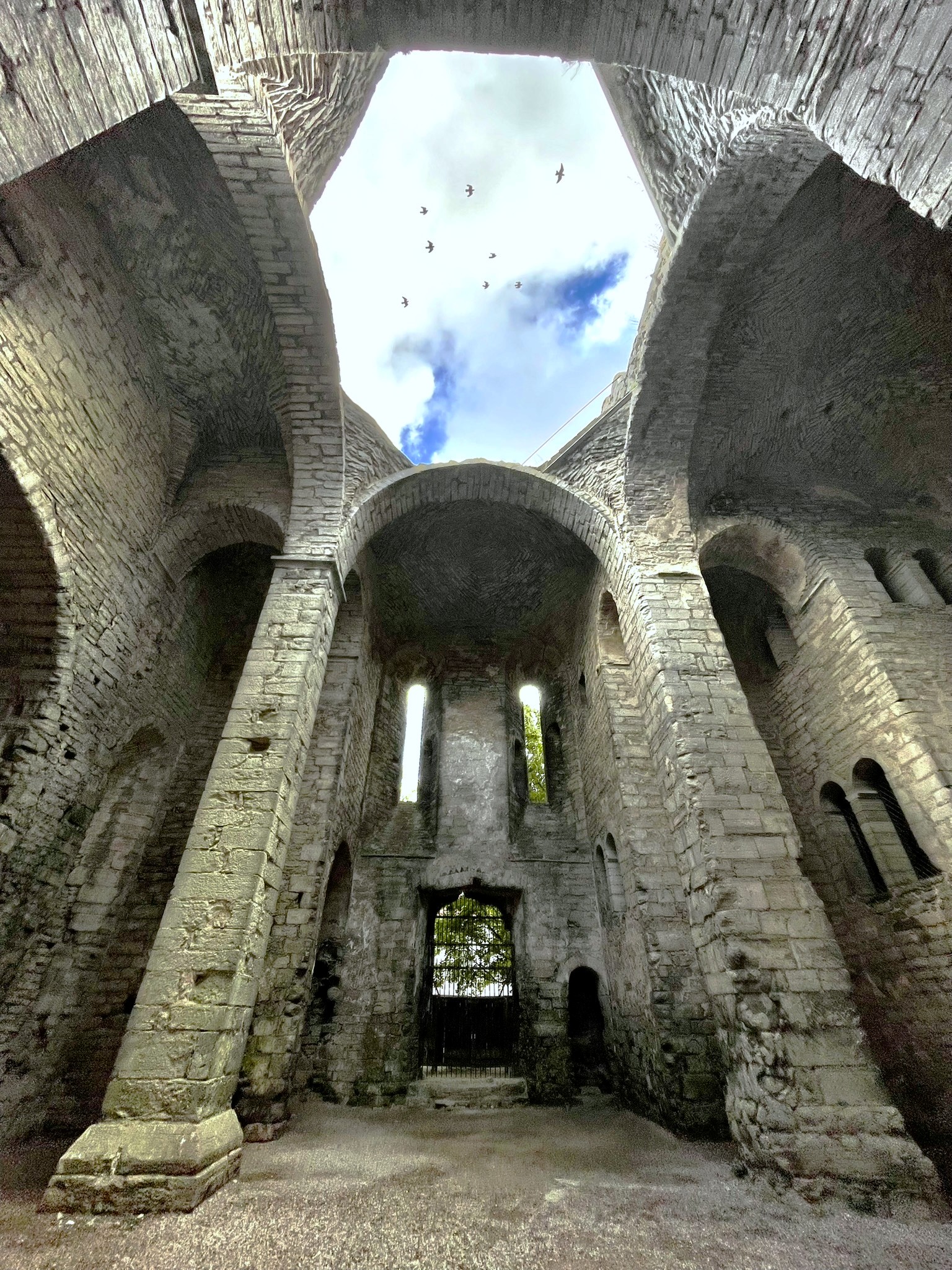
One stop was Stora Torget, Visby’s main square, dominated by the atmospheric ruins of Sankta Karin, a medieval Franciscan church. Although its roof disappeared centuries ago, much of the stone structure remains, including soaring Gothic arches and towering walls. I enjoyed wandering through the ruins, looking up through the arches into the blue sky. I also stopped at the nearby ruins of St. Lars, where I had the entire place to myself.
I made my way to Fiskargränd, one of Visby’s most photographed streets. This narrow cobblestone lane, lined with houses and climbing roses, was every bit as beautiful as I had imagined. From there, I left the old town through Fiskarport, one of the gateways through the medieval walls, and then circled back to our room.
After a bit of rest, I persuaded C to come back out with me. She was not thrilled, but I was not about to let her spend our first day on Gotland holed up in our room! She did, however, put on a pretty top for the occasion, knowing I wanted to take some photographs of her. We headed back into the old town through Österport, stopping at Stora Torget and Fiskargränd. The churches were already closed, but there were plenty of beautiful spots for photographs, and C was a willing model. After an hour of wandering and taking pictures, we picked up some food at a supermarket and headed back to our accommodation for the evening.
The next morning, we set out for Fårö, a small island just north of Gotland. I needed to rent a car for the day, but it wasn’t easy to find one. Most big rental companies were based at the airport, so prices were higher and there was a hassle. Eventually, I found a local company with better rates and a pickup spot closer to town. The booking process was a bit different since everything was done by email and text instead of an online system. I just hoped it would all work out.
Collecting the car was even more unusual. I was given coordinates for a gravel parking lot near the cruise terminal, about a 30-minute walk from our accommodation, and told that the keys and rental contract would be waiting beneath the front floor mat. I decided to walk there myself, giving C a little more time to get ready while I enjoyed another opportunity to explore on foot. Fortunately, the car was exactly where it was supposed to be, with the keys and paperwork tucked inside. I drove back to collect C, and we were on our way.
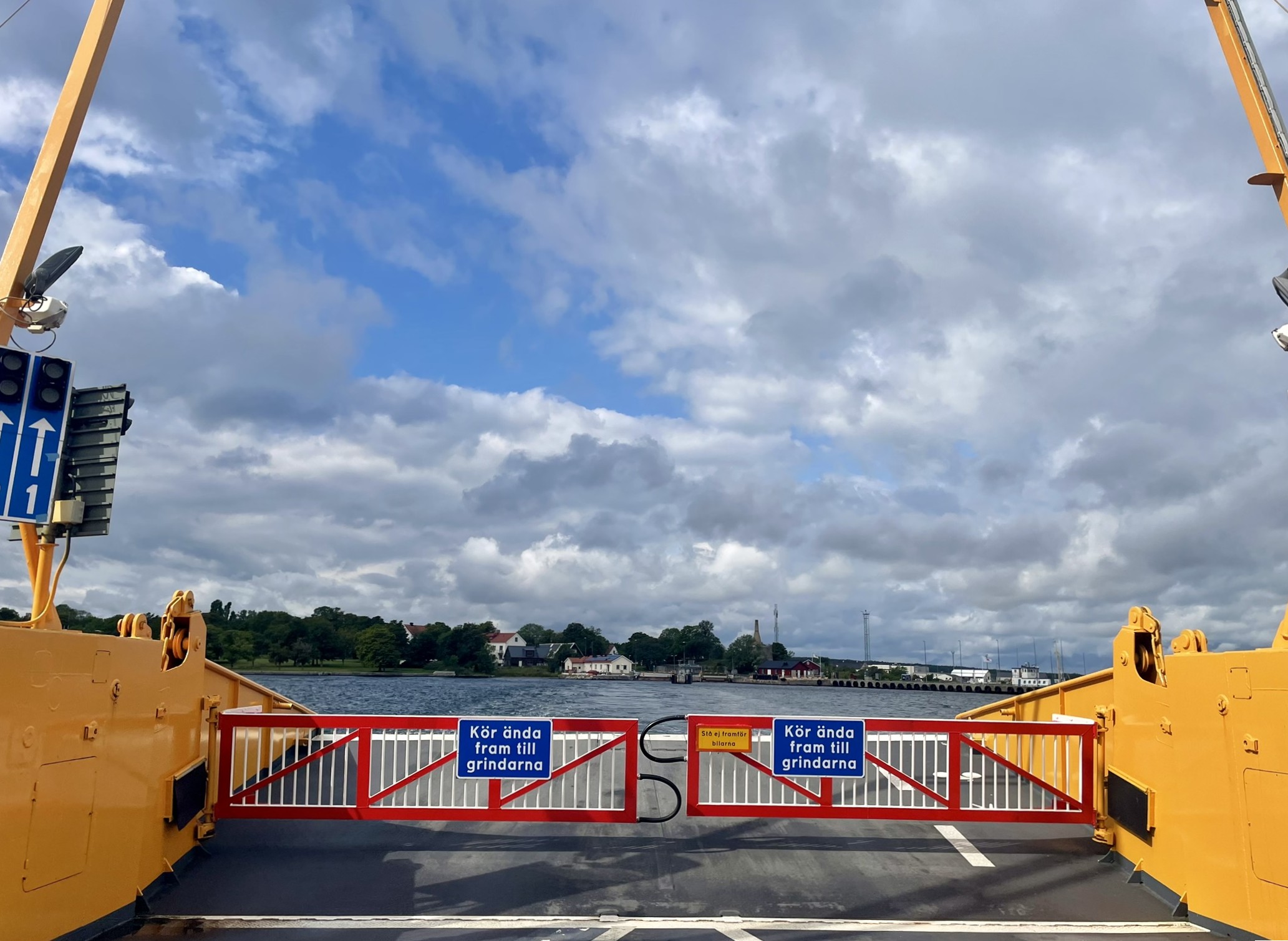
We headed directly north to Fårösund, where a free car ferry connects Gotland with Fårö. The drive took about an hour, but there was no wait when we arrived; we drove straight on. The ferry crossing took only a few minutes, but the other side offered a landscape entirely different from the medieval streets of Visby.
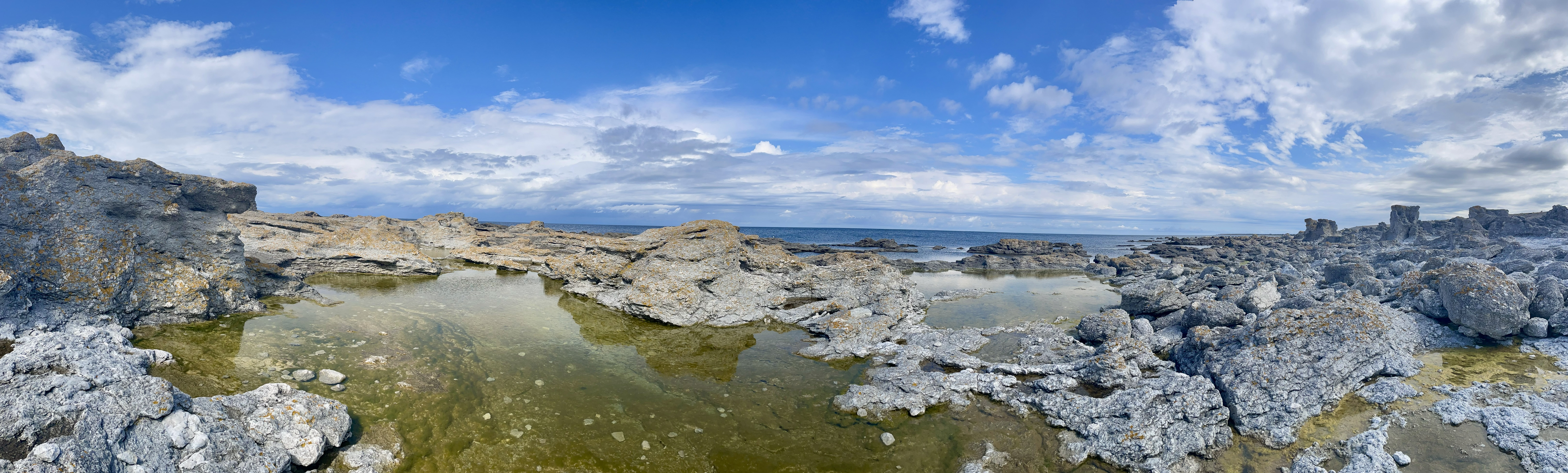
Our first stop was Digerhuvud Nature Reserve, home to Sweden’s largest concentration of rauks, the unusual limestone sea stacks found along the coasts of Gotland and Fårö. The limestone dates back more than 400 million years, but the rauks took shape much later as waves gradually wore away the softer rock around them. As the land rose and the sea retreated, these strange formations were left standing along the coast.
We stopped at several scenic lay-bys to wander the coastline, step over pale limestone, and explore the rocky shore. Even without the impressive rauks, the landscape would have been memorable. It was stark and windswept, with shallow pools of water among the rocks and an extraordinary range of grays and blues in the sea and sky. After the narrow streets and historic buildings of Visby, this felt like an entirely different world. On Fårö, the scenery was the main character.
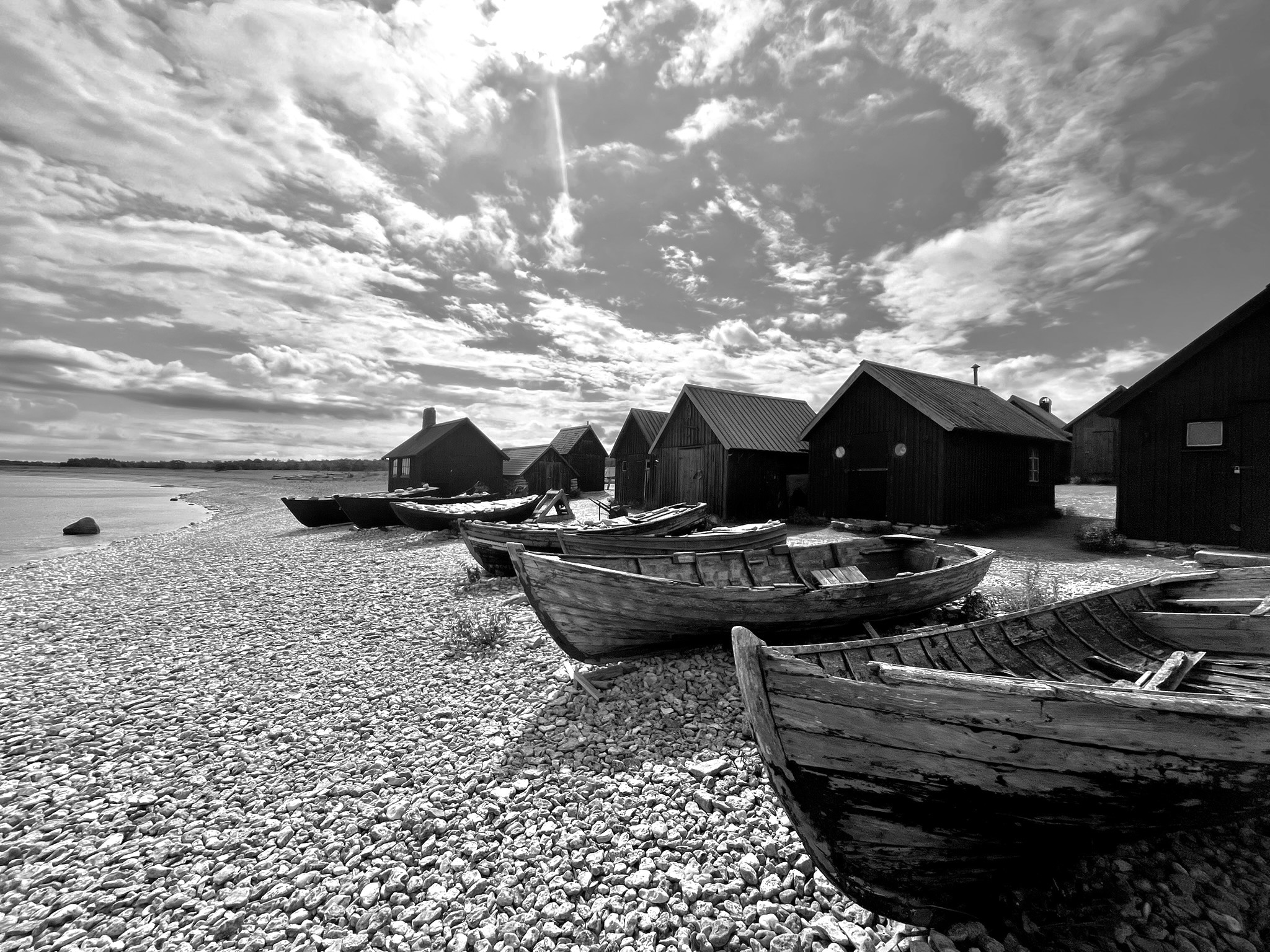
Continuing along the coast, we stopped at Helgumannen Fishing Village, a preserved 19th-century fishing settlement. I was struck by the place’s stark beauty. Few bright colors appeared, but the variations in blue, gray, and brown were extraordinary, from the darker tones of the sea and sky to the weathered wood of the huts and boats. Some of the boats were overturned, while others sat in various states of disrepair. The whole scene was incredibly atmospheric. It was the kind of place that would look beautiful in black-and-white photography.
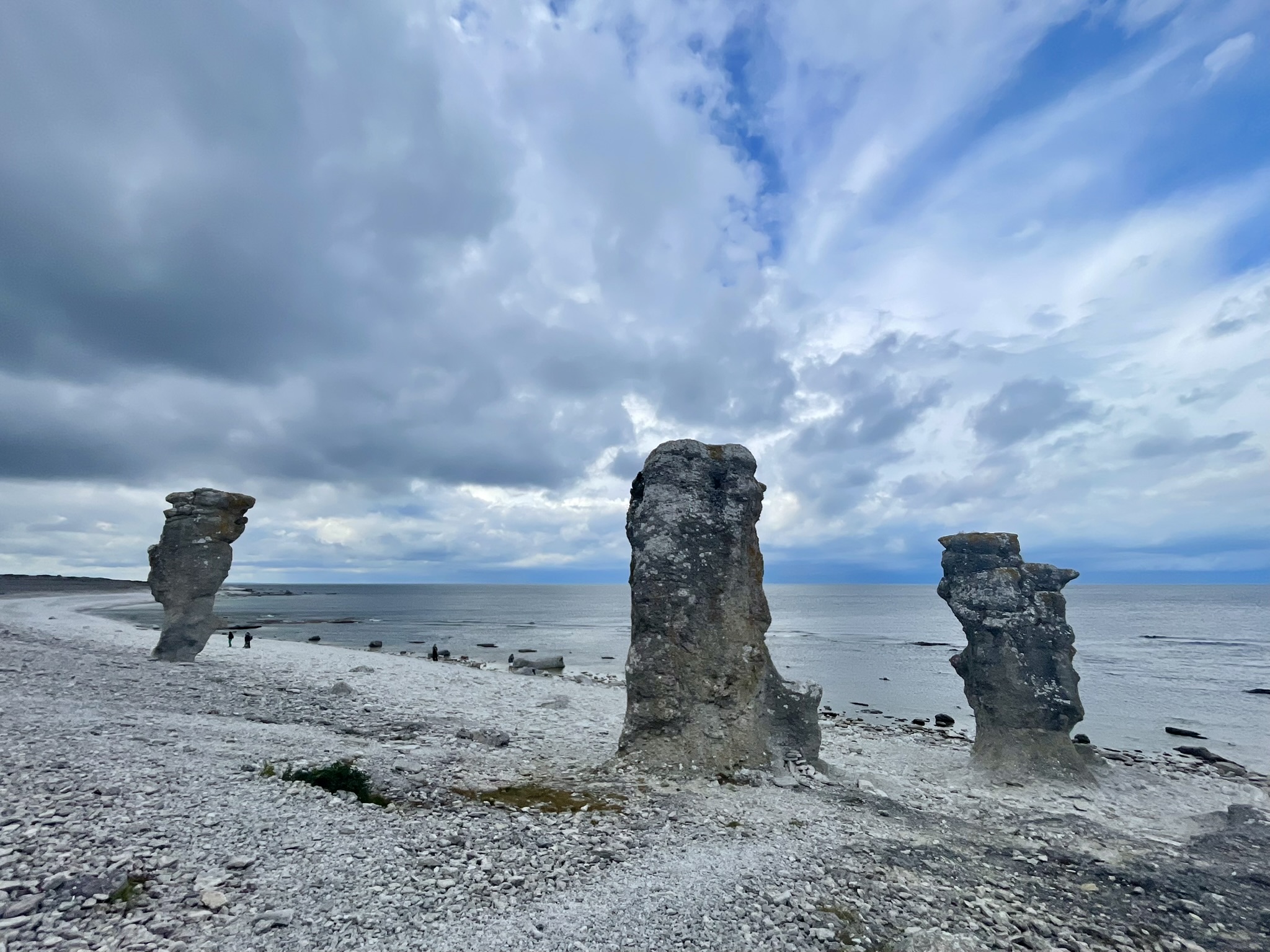
Our next stop was Langhammars Nature Reserve, where the rauks were even more dramatic. A few enormous limestone pillars rose from the rocky shoreline, towering above the people wandering among them. Although more visitors were here than at Digerhuvud, it was hardly crowded. Traveling toward the end of the summer season had its disadvantages, but one definite benefit was enjoying these spectacular places without large crowds.
The weather added another dimension to the experience. The clouds had been gathering as we explored Langhammars, and just as we got back into the car, the skies opened and rain came pouring down. We were lucky with our timing, as other visitors were caught outside in the sudden downpour. Within about ten minutes, however, the rain had passed. It became a pattern throughout the day: bursts of heavy rain followed by sunshine.
In fact, I think the unsettled weather made Fårö even more beautiful. The dramatic clouds hanging over the Baltic Sea, the gray limestone, and the shifting light gave the coastline an atmosphere that would have been entirely different beneath a cloudless blue sky.
On the way to lunch, we passed one of Fårö’s old windmills, another picturesque feature of the island’s landscape. We then stopped at Crêperie Tati, a wonderfully quirky establishment surrounded by rusting vintage cars, old trucks, and assorted objects that made the place look rather like a junkyard. We enjoyed enormous crêpes topped with ice cream, whipped cream, and chocolate sauce. As we ate, another heavy shower swept through. It was a little chilly, and I was quite content to linger over my tea until the rain passed. Once again, our timing worked out perfectly. By the time we were ready to leave, the rain had stopped, and the sun was returning.
Our next stop was Fårö Church, partly because it looked interesting and partly because I knew that the internationally known Swedish filmmaker Ingmar Bergman, who had lived on Fårö, was buried there. It turned out to be an even more interesting stop than I had expected. The church was picturesque, and I particularly loved its nautical theme, including a model sailing ship suspended from the ceiling.
Even more fascinating was a 1618 painting commemorating the extraordinary survival of a group of local seal hunters stranded on drifting ice in the Baltic Sea in 1603. It offered a wonderful glimpse into the island’s maritime history and the dangers its inhabitants faced centuries ago. We also stopped briefly at Bergman’s grave in the churchyard. By then, the clouds had largely disappeared, and the church stood beneath a brilliant blue sky, as though it had never rained that day.
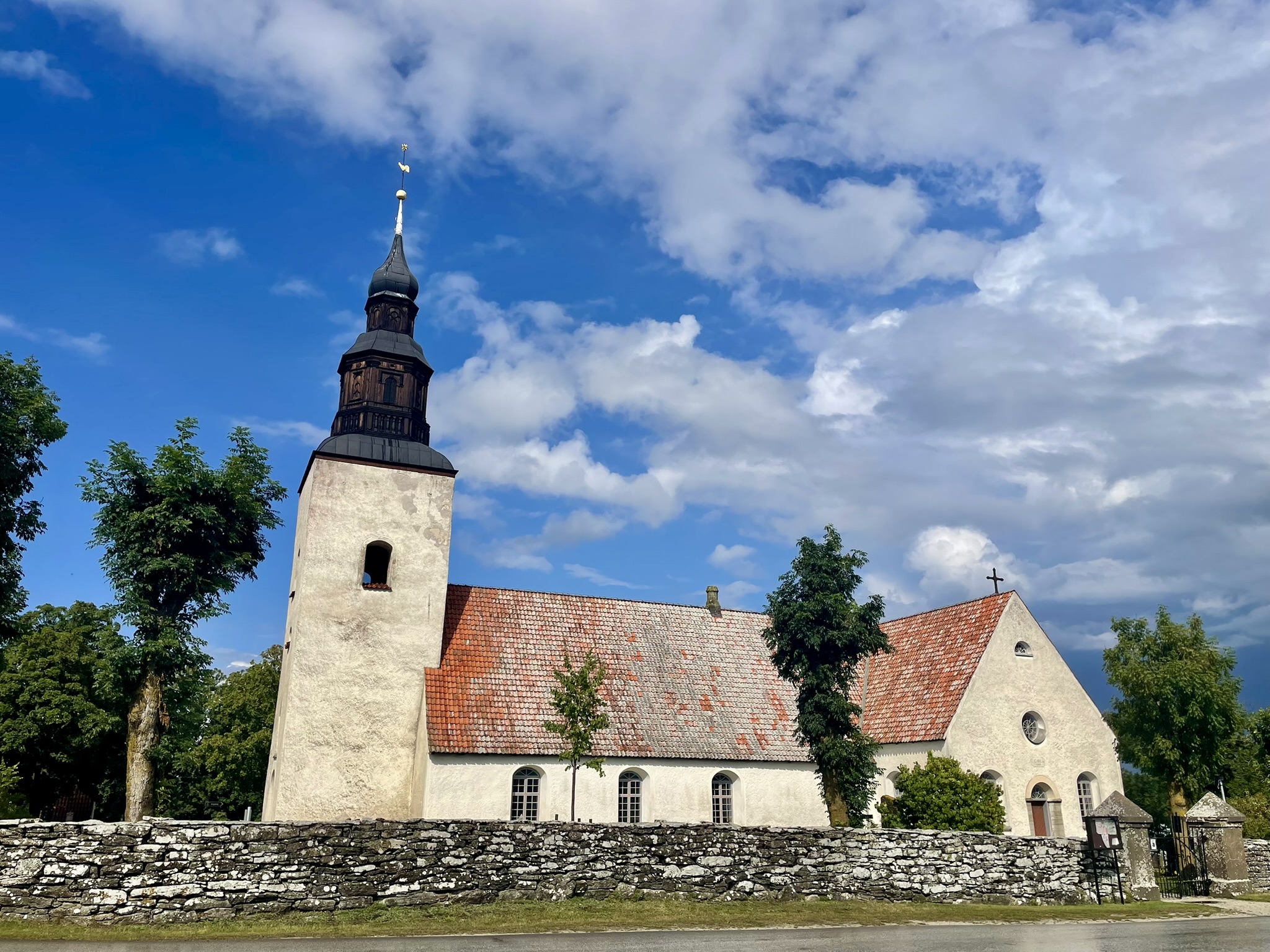
Afterward, we returned to the ferry for the short crossing back to Gotland, where we still had time for a couple more stops before heading back to Visby. The first was Lärbro Church (C refused to get out of the car), distinguished by its unusual octagonal medieval tower. Originally taller, the tower was damaged in a severe storm in 1522, and its upper section was later removed. Nearby stands a separate 12th-century defensive tower, later converted into a bell tower. Together, the two towers made for a striking, unusual sight.
Our final stop was along the coast at Jungfrun Nature Reserve, where a 12-meter-high limestone sea stack known as Jungfrun, or the Maiden, stands dramatically near the edge of a cliff. The scenery here differed from Fårö’s exposed rocky beaches, with wooded limestone cliffs overlooking the clear blue Baltic Sea. It was a lovely place to stop, enjoy the views, and take a few more photos of C before returning to Visby.
Back in town, I dropped C off at our accommodation and drove the rental car back to the gravel parking lot near the port. Again, I was instructed to leave the keys under the floor mat, which seemed like a questionable arrangement in such an isolated-looking location. I called to make sure I had understood correctly, but the rental company’s response was brief and entirely unconcerned. Apparently, this was perfectly normal! So, I followed their instructions and went on my merry way.
With the car returned, I enjoyed another leisurely walk through Visby, taking the opportunity to explore a little more of the town before picking up dinner for C and me. After a full day of extraordinary landscapes, medieval churches, dramatic weather, and unexpected discoveries, it was a pleasure to end the evening wandering the streets of Visby once again.

