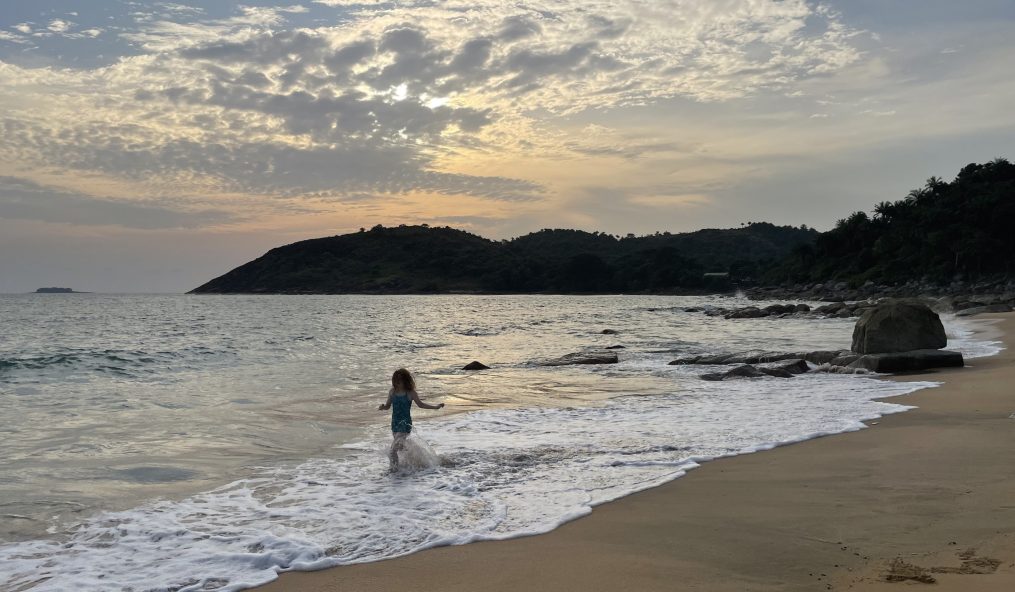
The continuation of my three-week Pacific Island travels in the summer of 2004, just after completing a research assistantship in Honolulu. From the Big Island of Hawaii, I would head 3,000 miles due south to the small 15-island nation known as the Cook Islands. Named after British navigator Captain James Cook who “discovered” the islands in 1773, the islanders are now considering changing their name to one that better reflects their Polynesian nature.

Kia Orana or “hello” in Cook Islands Maori – how lucky to find the #1 license plate
The regional jet departed Honolulu full to the gills. Many of the passengers were Samoans who would disembark at Pago Pago in American Samoa. I would continue on to Rarotonga in the Cook Islands. Most of my second leg fellow passengers appeared to be locals, and they all seemed to know one another. At landing at 12:30 in the morning, the flight attendant announced, “Checked luggage can be found at Carousel 3… Mind you, we have only one carousel.” This made everyone on the flight laugh. We needed something to wake us up. As we stumbled toward the terminal, it suddenly came to life. The lights were made brighter, a ukulele player began to play and sing, and the two immigration officers opened for business. To get the 22 of us through took only ten minutes.
I had reservations at the Tiare Village Hostel, located just behind the airport. I made these reservations frantically by phone from the Honolulu Airport when I realized that very morning that booked accommodation was a requirement for entry into the Cook Islands. Although no one actually checked, I was happy to have someone picking me up at the airport at nearly 1 AM.

Cooks Corner — downtown Avarua
The following morning, a Saturday, I woke up early as I was told the hostel manager would drive newcomers into town on the first day for “orientation.” It turned out to be quite informal with the orientation only consisting of the manager just pointing out the market, the banks, the information center (closed weekends), and the center of town. The tour took just a few minutes. Taking advantage of the lift into town, I ate lunch at a busy cafe/pizza/ice cream joint in the center of town near the roundabout (the only one on the island), then wandered about town for a bit, bought groceries, and walked back the 30 minutes to the hostel. As I was quite tired from the flight and early morning arrival, I spent the rest of the day lazing about.
The Cook Islands are a group of 15 islands in the South Pacific. They are divided into two groups, the Southern and the Northern. The Northern Group is quite isolated and made up of smaller islands, generally accessible only by yachties. The Southern Group is the more populated. The total population of the island nation is about 15,000 with around 8,000 living on the main administrative island of Rarotonga. The Cook Islands are a self-governing nation in free association with New Zealand. It has its own government, parliament, and prime minister as well as traditional government districts. There are eight traditional tribes on Rarotonga, seven of them are led by females. But more Cook Islanders live outside of the nation than in, mostly in New Zealand and Australia. The islands use New Zealand money, though they also mint their own, including the very collectible three-dollar bill.
 On Sunday morning I attended church at the Cook Islands Christian Church (CICC). The service was mostly in Maori, the traditional language of the Cooks. The local patrons were dressed in their finest – with women in colorful flower-patterned dresses and traditional straw hats; the men in flowered shirts. The pews and beams and pulpit are made of a warm reddish medium wood, while the walls are a white stucco and the ceiling painted an aquamarine green – the kind popular in the sixties. Though it seemed an odd color in and of itself, it worked in this church with its simple stained-glass windows. Those sitting in the center section were clearly the most serious of church goers. They stood up first for songs, sang the loudest, and sat down last. They were also the best dressed. Those on the lower section’s outer seats seemed the second tier of church goers. Maybe they had not arrived quite in time to claim the middle seats for the day, but they were still dressed in their colorful finest and sang the hymns with vigor.
I sat in the upper section, which just might be the area for those who treat church more as a social occasion than a religious one. There were many children up here, in bare feet, fidgeting. Many simply ran around. One boy scooted his way across a pew on his stomach. We moved our feet to let him scoot by. The boys on the opposite side seemed intent on poking each other as much as possible and looking at some cards they had brought with them to pass the time. Two young, mischievous girls sitting in front of me played with their rubber bracelets, each other’s hair, and whispered things to each other and giggled. A young teenage girl to their right sat with her mother or aunt – a very serious churchgoer who seemed to choose the upper section as a perfect vantage point to carefully watch the congregation, maybe so she could gossip later about those she felt were not properly pious. Her daughter too gave the giggling girls a hard stare, though it was more for her mother’s benefit I think, as she looked as if she longed to join them.
The primary reason I attended the service was to hear the congregation sing, as they are famous for their harmonies. Indeed, it was lovely. Maybe, in part, because they sang in Maori? But also, the men and women sing different verses almost the fashion of a round. Most of the time the singing was pretty much in tune. At times, it did seem the words and tune were getting away from the singers and the reverend seemed to stare at the ceiling, on to heaven, willing his flock to find their way back to the harmony. It was a very enjoyable hour. Afterwards, the reverend invited myself and the two other hostellers to tea and we might have joined if we were not scheduled to attend something else in the afternoon – Piri Puruto III’s great show!

Piri Puruto III lecturing us
Piri Puruto III is a 60-something-year-old man who performs his show most days of the week. On Sundays he includes a traditional Cook Island lunch and dinner prepared in the umu – the underground oven. We picked leaves for our plates, large leaves for the lunch, and then we weaved our plates for the dinner. Piri believes everyone should participate in the cooking to truly appreciate the food. I had to fetch a whole chicken from a bucket of saltwater, stuff it with local spinach, wrap it in noni leaves, then wrap the whole package with larger leaves, tying it together with the spine of the leaf. After all the food was prepared, we placed it in the umu, and covered with many leaves, with Piri yelling orders at us like children with short attention spans. He asked us to call him teacher. He would yell at us, “students, get the leaves! Get them! Hurry. Why are you moving so slow? Teacher tells you do something, you do it!”
Then the show began. Piri Puruto III climbs coconut trees. We all sat in a circle while Piri prepared. He had changed from his tank top and sport shorts to a tanned leaf skirt, bare chest, and coconut husk helmet. He chanted in Maori as he entered the circle and began to tell his life story. Born on one of the other islands, as a child he witnessed the last inter-tribal war. He moved to Rarotonga as a teen, and then went on to Auckland to participate in boxing tournaments – winning his first title in 1959, and holding on to that title until 1964. And now he boxes coconut trees. We all follow him down the rocks in his backyard to the beach, and across to the beach to a magnificent palm, I don’t know how high – maybe 50 feet or more. He makes some speeches. Tells us that when he climbs, we must be ready to take pictures. When he tells us “Students, prepare your cameras!” Then we are to do so immediately, or else miss the picture. The guy was a complete ham. But climb the tree he did. With a rope binding his feet together, he spit into his palms, wet his toes, and scurried up the trunk, high into the air. At the top he made his way into the fronds, stood atop the palm, picked a coconut, yelled at us to get our camera’s ready, and threw the coconut into the air. Then he checked we indeed had taken a picture. On the way down he did some acrobatics, skirting the trunk of the tree, holding the trunk and throwing his feet out to the left and to the right. He all clapped as we were certainly expected to! It was all shameless attention, but good fun to watch for sure. He made his way back down and we headed back to the house for dinner.
Before we could eat though, we had to make fire! The traditional way. From the coconut tree, Piri had brought back a coconut, as we needed coconut fiber #1, coconut fiber #2 and coconut fiber #3 to do this properly. I was a lucky one to help with the fire making, as my spit was used to roll together coconut fiber #2. Then the men were to help with the logs, and we all had to chant following Piri’s example. He told us the making of fire was like the act of making love. The whole circle had a good laugh at this, and he said, “no don’t laugh, I’m serious.” He said he would translate our chant in English. It went something like Bang 1. Bang 2. Bang 3. Bang 4. Bang 5. Bang 6. I am man. You are woman. Fire! And he furiously rubbed some bark against the log. And a spark started. Coconut fiber #1 is used to catch the spark. It is then burrowed into coconut fiber #2. Then the whole thing flamed with coconut fiber #3 and we had a big flame! The dinner of baked chicken, potatoes, fish, and lamb, with local spinach, coconut and bananas was ready for the eating. It was all in very good fun.

One phase of sunset in Avarua harbor
It is fascinating to go back to my diary and stories from this visit. I remember little of the things I wrote about, but I recall other details. For instance, standing in Avarua harbor to watch the most incredible sunset I had ever seen. With the quiet pace of island life, a 30-minute walk to town is not only exercise but an enjoyable activity. So, one afternoon I strolled from the hostel to the center of Avarua, the Cook Islands’ capital and administrative center of the island of Rarotonga. I stood marveling at the late afternoon light bathing the green volcanic hills rising behind the Avarua fishing harbor. Then I turned to face the other direction and my breath caught in my throat. Even to this day, I have not seen a sunset that equaled the extraordinary beauty of that one. The sky changed from daylight blue to yellow, then orange, pink, purple, and finally to blue. Standing alone in the shallow, rocky waters of Avarua bay at low tide just waiting and watching the sun and its light slowly sink below the horizon might be one of the most magical moments of my life.

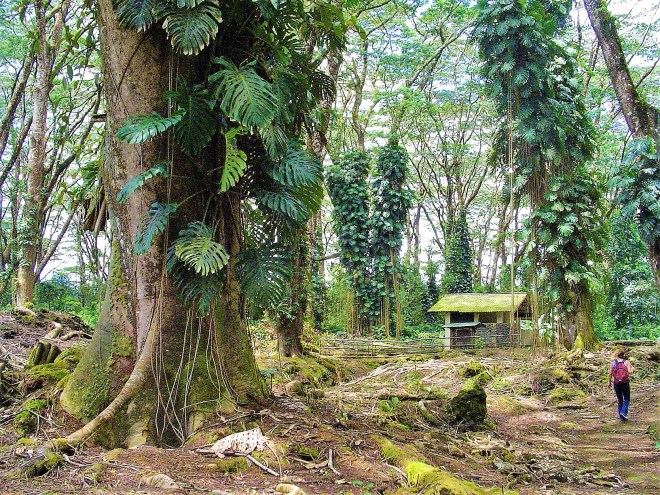


 Nowadays the Historical Park is peaceful. The wall of the compound is all that still exists from traditional times beside white sand, a glittering sea, and reconstructed straw huts. In one large boat house, an old native Hawaiian carves the traditional totem or Ki’i that guard the entrance to the landing lagoon reserved only for ali’i, and the site of some reconstruction, from evil spirits. In the small lagoon a sea turtle swam around, another basked in the sun.


 As we bid Sharifa farewell at the airport, I made a reservation for my own rental car the next day. This was a big deal for me as I could not recall the last time I had driven a car. The Kona hostel, located in a residential area, was not easy to find because there was not a sign at all. The manager had a weird laugh after just about everything he said. He was young, around 30 years of age, and although he laughed, he did not seem pleasant. Carmen immediately told me in the room she did not want to stay there another night. I also felt bad karma from that guy. The hostel was new and clean, but the guy made the whole thing feel like an episode of the Twilight Zone. Carmen and I walked down to the supermarket to get fixings for dinner and spent an early evening in the hostel reading, showering, watching tv, and eating.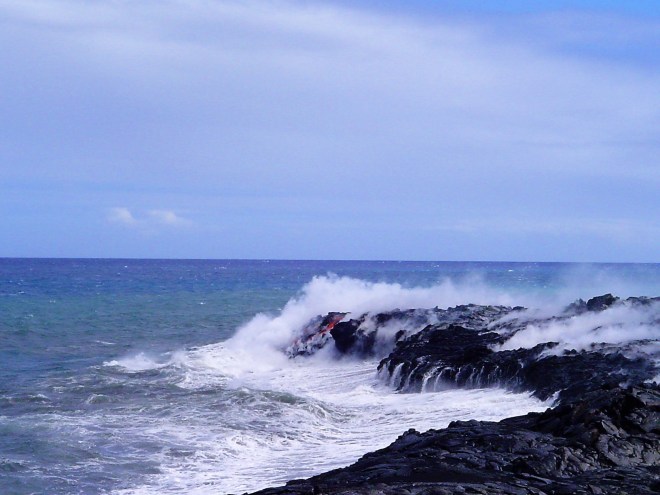

 We dropped them in the center of Otjiwarongo and then headed southwest. This road too was paved and in good shape, but I had miscalculated the distance and it took us an hour longer than expected. As we approached the coast the green scrubs gave way to desert, and a fog descended, the clouds swallowing up the blue sky.


 There was so much more to do in Swakopmund I was reluctant to leave, but we were heading south-east, back inland, to the Namib-Naukluft Desert, the oldest desert in the world.
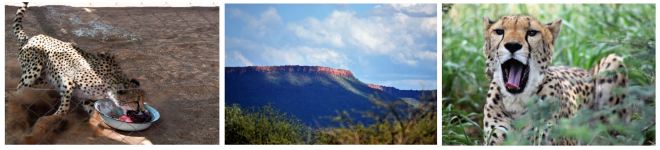
 Miles and miles of sandy gravel — stunning vistas but with few, if any, signs of civilization. No houses, no gas stations, and almost no other cars. It was exhilarating and also a wee bit scary. This is where I was especially worried that I would blow a tire, run out of gas (although I had filled up before leaving Walvis Bay), or have some other car trouble, like run into an oryx that suddenly jumped out in front of me. I had a long, long time to think, to daydream, and also come up with crazy stranded by the side of the road scenarios. There were enough cars that should something happen someone would likely be along in about an hour, and we had plenty of water, but not something I wanted to experience with C on vacation (or ever).
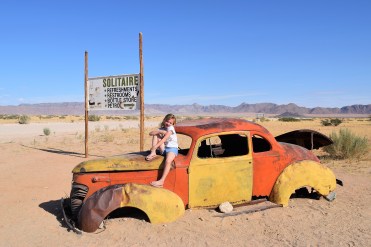 At long last we arrived at the town of Solitaire. Well, town might be a bit of a stretch. Solitaire is a gas station, bakery, lodge, cafe, general store, and mechanics at a t-junction, the only stop between the coast at Walvis Bay and the dunes at Sossusvlei. The population is probably less than 100 souls. The sandy yard around the settlement is littered with colorful and photogenic old rusting cars. We stayed at the Solitaire Desert Farm seven kilometers away, down a sandy track towards some rocky red hills, that at sunset burned crimson. The evening was still, with the exception of what I guess were jackals yipping playfully somewhere near our lodge.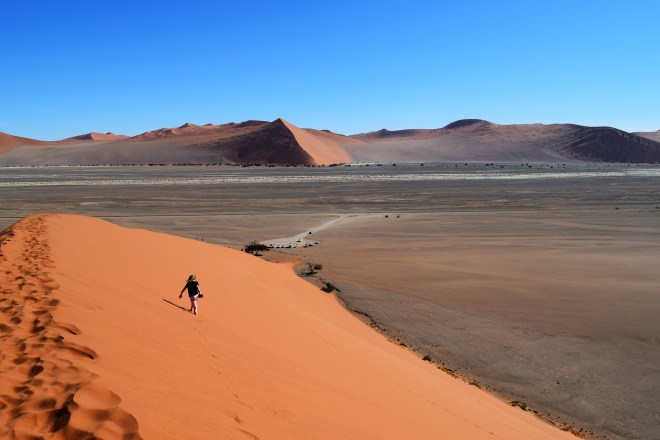


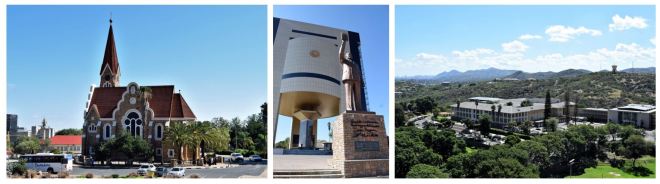
 We then crossed the street to the Parliament building, built orginally as the headquarters for the German colonial administrative offices, and its gardens. We then headed a short way up the road, at the corner of Robert Mugabe Avenue and Fidel Castro Street, to the Independence Memorial Museum. The building is jarring. Modern, yes, but also leaning on eyesore. No surprise then that it was built by a North Korean firm in the socialist-realist style. The bronze statue of Namibia’s first President was also made by North Korea. Behind the museum we ended the tour in the currently closed Alte Feste, once the headquarters of the imperial German military, in front of which stands the Genocide statue (also gifted by North Korea) representing the brutal extermination and punishment of Herero and Namaqua people during the 1904-1907 Namibia-German war, and how the indigenous people of Namibia overcame repression. We left the tour there and headed to the museum, which while informative, most certainly had that same socialist-realist vibe. We swung by the kudu statue and then headed back to the hotel.
 The following day it was time to begin our Namibia road trip. Now, back in Malawi, having finished the Namibian vacation, knowing we survived the drives is so different from before it began. Back when I was planning the trip I thought most about doing the driving. I wanted the freedom driving ourselves would bring. C and I have gone on a few day group bus trips. They have been convenient and sometimes fun. But there have been those, like the one to the Cape of Good Hope, where we were too much at the mercy of other tourists who had their own agenda at the expense of everyone else. I did not want to do that for a whole trip. Yet I am a single parent, who has limited (my diplomatic way of saying non-existent) car repair skills, traveling with a 7-year old long distances in a country I have never been to. I have traveled to many places, I am intrepid, but honestly, the driving had me a tad worried.
 Heading north from Windhoek toward Etosha National Park though, I had nothing to worry about. It was a long four hour drive but on the most beautifully tarred road. There was not much to see along the way, a few times we saw warthogs and baboons, but mostly miles and miles of green shrubs, every once in awhile a town that we could drive through in minutes.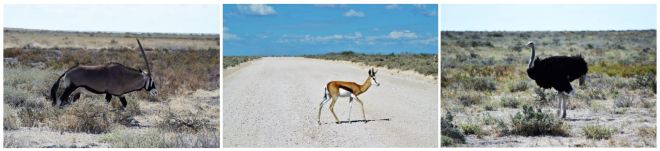
 Our Lilongwe weekend included a visit to another grocery store (wow), a stop at the Woodlands Farmers Market, held on the last Saturday of the month, and a lunch at the lovely Kumbali Country Lodge, where Madonna stays whenever she is in Malawi.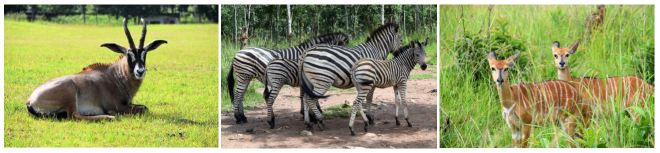


 Following breakfast on our second day we took an hour guided walk. We strolled from the Huntingdon gardens on to the red-orange dirt road fenced in on both sides by the bright green hedges of tea. Then we turned and waded through it uphill heading to the taller shrubs of coffee. The blindingly azure sky against the emerald green tea took my breath away.



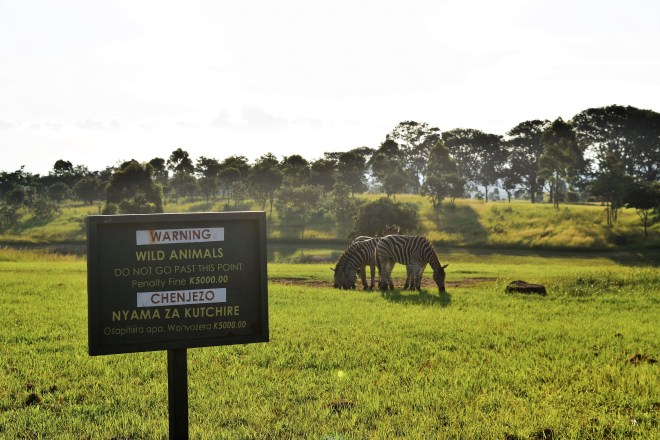
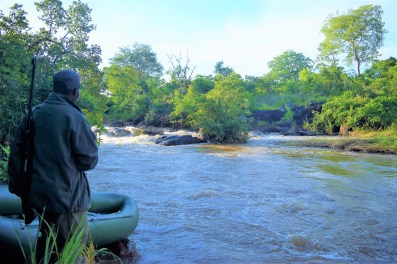
 For our second getaway over the three-day President’s Day weekend, we headed east and north to the Nkhotakota Wildlife Reserve, a new destination for C and I. Google maps told me the drive would take approximately four hours — three to Nkhotakota town, then an additional hour to the park entrance and through the park to our lodge. But Google maps does not account for Malawian roads. Turning north from Salima the road initially was better, but soon grew worse. There were many potholes, pedestrians, single lane bridges, and construction work to Nkhotakota town. Eight kilometers later we turned on to an “earthen” road for another eight kilometers to the entrance were we were met by a safari jeep from the lodge. Although I drive a SUV, the lodge suggested I arrange transport to and from the park gate to the lodge due to the rainy season effects on the park’s dirt roads. To drive the 18 kilometers (11 miles) over the rutted, undulating earth took 45 minutes. So all told from door to door took 5 1/2 hours.












 The Wanderlust Diaries